
 With the advent of December, it’s time to prepare for the 2021 literary contest season.
I recently attended a virtual meeting of one of the professional organizations I belong to, PNWA (Pacific Northwest Writers Association). The discussion revolved around the submission guidelines and rules for their 2021 literary contest.
One point that was brought up and underscored was the importance of following the submission requirements strictly, with no deviations.
A manuscript has the potential of getting 100 points – and I have seen several stellar submissions that did just that.
Be warned, an association like PNWA will take ten points off your submission for each deviation from these requirements, but not more than twenty. If you are starting at 80 points instead of 100, you have already blown your chance.
You might think this is harsh and wonder why they would assess such a penalty.
These are professional organizations, with many best-selling authors in their ranks. They expect their members to have a high standard of professionalism.
Hobbyists generally don’t see the point of these rules and weed themselves out by virtue of not complying. Quite honestly, if an author cannot adhere to a contest’s submission guidelines, their manuscript might also be a mess.
Most writers are hobbyists for many years before they go full time as authors. By the time they decide writing is their career, they will have made all the newbie mistakes. They will better understand how the industry works and what is expected of us, no matter who we are or how great we think our work is.
PNWA and most other literary contests accept submissions through a service like Submittable. All manuscripts will be read “blind.”
Before you click the “submit” button, check and double-check each requirement to ensure your submission complies in full with every step. Once that button has been pressed, there is no turning back.
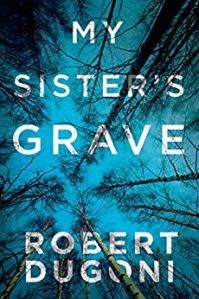
2015 Nancy Pearl Award
When entering most literary contests, the first rule is: do not include your name anywhere in your manuscript file.
That means that there should be absolutely NO identifying marks on the manuscript to indicate who the author might be. This ensures a fair contest, where each entry is judged on its merits rather than its provenance.
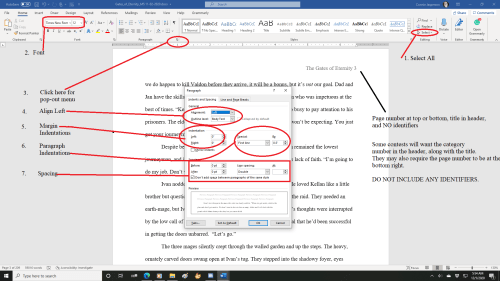
Most contests require submissions to follow specific guidelines, so first up is the font and general layout.
I use MS WORD, but Google Docs and Open Office have similar functions. On the Home tab, click on select all to highlight the entire manuscript.
Go to the font group on the left-hand end of the ribbon. Unless you write with a particular font, the default font, or pre-designed value or setting, will probably say ‘Calibri (Body),’ and the size will be .11.
- Change font size on the home tab by clicking on the little grey square in the font menu’s right-hand corner and accessing the drop-down menu. Scroll down to Times New Roman and set it to .12. Clicking on that will change the font for the whole thing.
- On the Home tab, look in the group labeled ‘Paragraph.’ On the lower right-hand side of that group is a small grey square. Click on it. A pop-out menu will appear, and this is where you format your paragraphs.
- Align left. DO NOT justify the text. In justified text, the spaces between words and letters (known as “tracking”) are stretched or compressed. Justified text aligns with both the left and right margins. It gives you straight margins on both sides, but this type of alignment only comes into play when a manuscript is being made ready for publication.
- Indentation: leave that alone or reset both numbers to ‘0’ if you have inadvertently altered it.
- Where it says ‘Special’: on the drop-down menu, select ‘first line.’ On the ‘By’ menu, select ‘0.5.’
- ‘Line Spacing’: set to ‘double.’
- Click the little box that says, “Don’t add space between paragraphs of the same style.”
Once you have it formatted and submitted, the readers/judges will be examining the work closely. Points will be assessed for each aspect of the submitted piece.
Some of the things they will judge:
Synopsis: When submitting an unpublished novel, the synopsis is critical, as you won’t be submitting the entire manuscript. Did the synopsis convey the essence of the novel, showing a full arc, including the ending? Did the author fit it into the page/word count as required by the contest rules? Do NOT exceed the word/page count for this. DO include the who, what, when, where, why, and how it ends.
Submission’s Overall Word/Page Count: Most short stories contests are limited to 14 pages, which is around 4000 words. Do not exceed this page/word count. AT ALL.
Novels are different. If the submission is limited to the first twenty pages of a novel, including the synopsis, did the author stick to that rule absolutely? Don’t cut a sentence or paragraph in half—end it a hair short of the upper limit rather than that. Do not exceed the limit, or you will lose 10 points off the top of your score.
In a “blind” contest, your name and reputation won’t come into it at all, so what will your work be judged on?
- Plot
- Structural arc
- Viewpoint
- Characterization
- Dialogue/Internal Narrative
- Conflict/Tension/Pacing
- Hooks/Transitions
- Setting/Description
- Voice
- Mechanics: Does the author demonstrate an understanding of grammar, industry practices, etc.?
- Appeal (This is purely subjective and genre-driven. Don’t submit a literary fantasy to a sci-fi contest.)
Electronic submissions will be accepted through a service such as Submittable. In fact, Submittable will have a list of open calls for submissions, so check it regularly.
Some contests will still accept mail-in submissions, although this is more labor-intensive and requires someone to process them by hand. Many organizations don’t have that sort of office help, so they will only accept digital submissions.
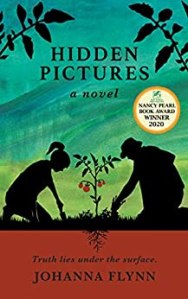
2020 Nancy Pearl Award
Don’t worry that you won’t be credited for your work if you don’t have your name on it. Your name and bio will be in the Submittable profile and cover letter. Also, your entry will automatically be electronically linked to your profile.
It’s a good idea to go out to Submittable in advance and create a professional profile, with a short, professional bio less than 100 words and in the third person. Keep it simple; keep it professional.
Entry Fees will be listed if there are any. Non-profits who use a service like Submittable will have to charge one, as they must pay for that service.
To see what quality of work you are up against if you choose to submit to a professional organization’s literary contest, I highly recommend Robert Dugoni’s My Sister’s Grave, and Johanna Flynn’s Hidden Pictures. Both are winners of PNWA’s Nancy Pearl Award.
“Blind” submissions and strict submission rules level the playing field. Every author, famous and award-winning, or completely unknown, is held to the same standard.
Your work will be judged on its merits, which is the real test of your skill. Some contests give the authors the judge/readers’ critiques. Because there are no preconceptions or bias, they tend to be honest and kindly worded. I think those are well worth any entry fees.
Happy writing, and good luck if you choose to submit to 2021’s upcoming literary contests.


 Life in the Realm of Fantasy