
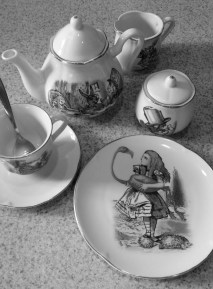
My teacup has a fundamental problem. I no sooner fill it up than it is empty. I feel this is a prime example of particle physics in action. I set the cup filled with hot tea on my desk, write a few words, and it is empty when I reach for it a short while later.
 It’s a mystery. The cup is full, and then it is empty, a Schrodinger’s cup of tea, there and not there.
But I digress.
A few years ago, I reconnected with an old word, one regaining popularity in the English language: schadenfreude (shah-den-froid-deh). This word from our Germanic roots describes the experience of happiness or self-satisfaction that comes from witnessing or hearing about another person’s troubles, failures, or humiliation.
It’s a feeling we are all familiar with, as we often experience it on a personal level.
When the rude neighbor steps in the pile of dog doo her puppy left on the sidewalk (and which she chose not to clean up), we feel a little schadenfreude.
Schadenfreude is a complex emotion. Rather than feeling sympathy towards someone’s misfortune, we find a guilty pleasure in it. Writing a little hint of schadenfreude into our narrative makes our characters feel more natural.
Decent people don’t promote bullying or harassment as a positive thing. But in the written narrative, we do want to inspire that feeling of “payback” in the reader whenever a little instant karma temporarily halts the antagonist. It’s an uncharitable emotion, but it is natural.
 Humans are amused by things and incidents that violate the accepted way things should work and which do so in a non-threatening manner. We see the characters having difficulty in certain situations and find humor in the fact their dilemmas are so relatable.
When an author injects a little self-mocking humor into a narrative, the reader feels an extra burst of endorphins and keeps turning the pages. The way the characters react to these situations is what keeps me reading.
I love exchanges of snarky dialogue, mocking irreverence, and sarcasm. They liven up regrouping scenes and add interest to moments of transition from one scene to the next.
I am keenly aware that what appeals to me might not to you.
The truth is, humor is as much cultural as it is personal. The things we find hilarious vary widely from person to person. Sometimes the strangest things will crack me up, things another person sees no humor in.
Some people have an earthy sense of humor, while others are more cerebral. For me, the best comedy occurs when the conventional rules are undercut or warped by a glaring incongruity, something out of place, contrasted against the ordinary.
I have never liked slapstick as a visual comedy because I see it as a form of bullying, and I just can’t watch it. But in the narrative, putting your characters through a little ironic disaster now and then keeps a dark theme moving forward.
Gallows humor is more than merely mocking ill fortune. The tendency to find humor in a desperate or hopeless situation is a fundamental human emotion. When I was growing up, my family ran on “gallows humor” and still does, to a certain extent. We put the “fun” in dysfunctional.
This is why gallows humor finds its way into my work. We all need something to lighten up with now and then.
Humor in the narrative adds both depth and pathos to the characters. It humanizes them, and you don’t need to resort to an info dump to show their personality. Each character’s sense of humor (or lack thereof) demonstrates who they are and why we should care about them.
I can’t know what you find humorous, but I do know what makes me smile. I like snark and witty comments, a bit of banter back and forth in the face of impending trouble.
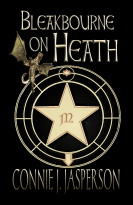 I like things that surprise me, situations that detour sharply from the expectations of normal. In Bleakbourne on Heath, I took this to an extreme with the characters of the two knights, Lancelyn and Galahad. I gave Lance a real problem – all magic rebounds from him. Only one person can remove that spell, Morgause, because she cursed him with it.
In a world of sorcerers and magic, that is a curse offering many opportunities for trouble. (Heh heh!)
I like putting my protagonists in situations where they must deal with embarrassment, do a dirty job, and learn they are merely human after all.
It adds a little fresh air at places where the character arcs could stagnate.
The act of writing humor occurs on an organic level, frequently arising during the first draft before the critical mind has a chance to iron it out. It falls out of my mind with the bare bones of the narrative.
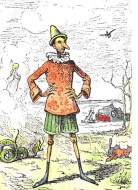 I do have a cruel streak when it comes to my written characters. The ability to laugh at oneself and to learn from missteps is critical in real life. Admitting you are the architect of your own disaster and accepting your own human frailty is a major step to adulthood.
So, now that I have finished that rant, I shall refill my Schrodinger’s-brand teacup and relax on the balcony, daydreaming and watching the street below. Perhaps this time, I won’t lapse into a fugue state as I drink it.


I have an adverse reaction to ‘funny’ videos where babies or animals get hurt falling off things. I will go back to my story thinking of how I can torture my characters (in a nice way) to elicit a little shadenfraude. Good reminder. I will never look at my cup of tea in the same way again!
LikeLiked by 1 person
Hello! We share a similar feeling of sympathy for the babies, I think. And my day is fueled by tea!
LikeLiked by 1 person
I really like this, Connie. I think we all get a giggle at harmless payback in stories. I enjoy tea too!
LikeLiked by 1 person
Hello Traci – We think alike! Thank you for stopping by!
LikeLike
Schroedinger’s cup comes to me, too.
LikeLiked by 1 person
❤ Salute!
LikeLiked by 1 person
Pingback: History, Will We Ever Learn Our Lessons? by Traci Kenworth – A Dash of Words with Loleta Abi Romance Author
Thank you for the pingback, Traci!
LikeLike