
I am drawn to books where the protagonist faces their personal demons and finds a hero within themselves. I love the story of someone who meets the unknown and finds the courage to do what they believe is morally right.
 This is a literary theme and is known as the hero’s journey. But it is only the overarching theme. For that hero’s main character arc to work, they need subthemes.
Subthemes are personal. In a movie score, a particular musical motif plays whenever a specific character enters the scene, and we feel their emotional state. When you discover a character’s void, the thing they lack, you have found the subtheme you need to expand on.
Here are three of the many themes that can help you shape a character’s arc of change:
- Learning to live with grief.
- Overcoming a lack of self-worth.
- Moving beyond an unrequited romantic love.
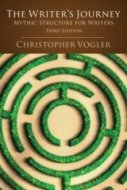 What is the “hero’s journey” and why am I so fond of it? Christopher Vogler broke it down for writers in his book, the Writer’s Journey. But what is essentially is is this:
The concept of the heroic journey was first introduced by the American mythologist, writer, and lecturer Joseph Campbell in The Hero with a Thousand Faces (published in 1949). In this ground-breaking work, he discusses the monomyth or the hero’s journey. He describes how this motif is the common template of a broad category of tales that involve
- a hero going on an adventure,
- and who, in a decisive crisis, wins a victory,
- and who then returns to his home, changed or transformed.
Take Tolkien’s masterpiece, The Hobbit:
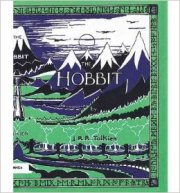 When Bilbo Baggins fights the giant spiders, he also faces his own cowardice and is amazed that he could do such a thing. This is only the first step in his personal arc. As the story progresses, he discovers that he has courage, which has nothing to do with the invisibility conferred on him by the ring he found earlier. Bilbo has courage, and yes, he is afraid. But he is not afraid to be courageous.
This is a core concept of this book and is the central theme of the entire Lord of the Rings series.
The theme of courage is one I find important and admirable, and it emerges in my writing. Courage is a strength beyond the physical. We’re often filled with self-doubt about our ability to do what might be needed in an emergency.
What genre are you drawn to read? That is most likely the genre in which you will write.
Some novels are set against the backdrop of a political power struggle. Political corruption, terrorism, and warfare are common themes. The characters within these stories have personal themes, voids they must overcome to resolve the situation.
Some novels focus on developing romantic relationships. The characters must have personal themes, inner voices they must overcome, as well as the external forces keeping them apart. The romance novel’s conflict and climax are devoted to the overarching theme of growing love. These novels might feature subplots that do not specifically relate to the main characters’ romantic love but enable them to overcome their voids. They must become strong enough to overcome the roadblocks to their happily ever after.
 Other novels are entirely character-driven, focusing on the protagonist of the narrative. Much thought is given to how prose is crafted stylistically, using a wide vocabulary. These novels feature thoughtful, in-depth character studies of complex, often troubled, characters. The story is in their day-to-day dealings with these issues. Action is less important than introspection, and the setting frames the characters and their arcs of growth.
The character arc is vital even if we’re writing science fiction. Yes, we want to set our characters in a realistic future based solidly on adequate knowledge of real-world science. If we intend to write hard sci-fi, we need a good understanding of the scientific method, so our plot doesn’t evolve into fantasy. Science and technology are dominant themes, but our characters are what will keep the readers reading. They will have personal voids, so sub-themes such as morality and love will arise, and the setting is only the backdrop.
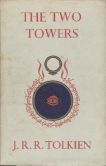 Let’s look again at J.R.R. Tolkien’s LOTR series. Personal growth and the many forms heroism can take are central themes of his stories. While many side-quests take the different characters away from the physical journey of the One Ring, Tolkien never strayed from the concept of the hero’s journey. The arcs of each character, as they go through their adventures and meet and overcome their personal void, support the overall theme of heroism in the face of death.
Any person’s fundamental fears and insecurities can become a character’s sub-theme, the thread you can expand on to shape their relationships.
On the surface, the many genres of books look widely different. However, they all have one thing in common–they have protagonists and side characters. These people will all have to deal with and react to the book’s overarching theme, but each will have their own story and personal journey.
The world in which a narrative is set is like a picture frame. It is the environment against which the story’s themes play out. The characters are shaped by a force beyond their control—the author.
The central theme of your story emerges when you are laying down the first draft. If your inspiration seems to faint somewhere in the middle, it may be that you have lost track of what you initially imagined your story was about. The characters no longer know what they are fighting for. Was it love? Was it destiny? Was it the death of hope?
 When we are constantly prodded to make our work focus on action and events, it becomes easy to forget that characters have an internal arc. They must grow for good or ill.
Ask yourself if the action has been inserted for its shock value. Or is this scene necessary to force change and growth on the protagonist and companions? How will their fundamental ethics and ideals be challenged by this event?
- If there is no personal cost or benefit to the characters, there is no need for that scene.
Remember, just because an idea no longer works for this novel doesn’t mean it won’t work in another. You never know when you will need those ideas, so don’t throw them away—always keep the things you cut in a separate file.
I label that file “outtakes,” and believe me, it has come in handy when I need an idea to jump-start a new story.
In many ways, writing genre fiction can become a trap. Sometimes we are so busy plotting roadblocks for our protagonist and his nemesis that the action takes over, and the main theme becomes tenuous.
- The action should force the character to change. If you absolutely must have that action, find a way for it to force growth on or otherwise affect the characters involved in it.
When we are deep in the creative process, it’s easy to forget that characters must evolve.
 I step away from my project for a week or two or even longer when stuck. When I come back to it, the characters and their journey is new again, inspiring me to finish their story. This is why I am a slow writer.
I write for a niche market–people like me. If I’ve learned nothing else over these last few years, it’s that as an indie, I have all the time in the world to get my work as right as I can make it.
Our next post will look at ways of discovering the personal void that initially holds our characters back, and how that void shapes them.


 Life in the Realm of Fantasy
Excellent analysis and examples, Connie! Is it OK to share this on LinkedIn–all attributed to you?
LikeLiked by 1 person
Absolutely, John. Thank you!
LikeLike
Reblogged this on Kim's Musings.
LikeLiked by 1 person
❤ Thank you for the reblog, Kim!
LikeLiked by 1 person
Reblogged this on Chris The Story Reading Ape's Blog.
LikeLiked by 1 person
Thank you for the reblog, Chris ❤ I hope you're keeping cool!
LikeLiked by 1 person
Cool and occasionally wet, Connie 😂
LikeLike
I jump genres almost as often as I change my clothes, lol. I am drawn to personal development in the characters though, more so than the setting of the book. I want to see them grow, overcome, or even just let someone else see through their defenses to the real ‘them’. My writing reflects that a little…all over the place.
LikeLiked by 1 person