
One character archetype essential to any tale is the villain. Yet, despite being crucial to the story, this character is often less developed and two-dimensional.
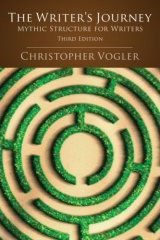 In his book, The Writer’s Journey, Mythic Structure for Writers, Christopher Vogler discusses how the villain of a piece represents the shadow. The enemy injects the narrative with the momentum of dark energy, powering the plot.
Some of the best narratives I’ve read feature the antagonist as the protagonist. We want to see them succeed, yet we fear they will and know it can’t end well. This tension creates a memorable narrative.
One novel that stuck with me was Grunts! by Mary Gentle. She features the orcs as the protagonists, and one feels a great deal of sympathy for the devil.
From Wikipedia:
Grunts! (1992) is a satiric fantasy novel by British writer Mary Gentle. It is set in a basic fantasy world taken from the usual The Lord of the Rings mould, with orcs and elves using magic and typical medieval weaponry, but it plays heavily on black comedy and strong doses of violence and graphic description, frequently depicting scenes “over the top.”
The story follows a group of orcs who always find themselves on the front lines of battle against the carefully prepared and always triumphant forces of good. The orcs decided to organize themselves and fight back. As a satire of high fantasy the novel mocks most of the conventions of the genre from using traditional villainous races, orcs, as the protagonists, to having the noble characters have much less than noble motivations and secrets.
The opening of the book plays up the orc warleader sent to reclaim a weapons cache in preparation for the ‘Last Battle’ between good and evil, which is well on its way. They are assisted by a pair of halflings whose cute demeanor is contrasted with extremely violent acts. [1]
In any narrative, the shadow provides opportunities for contrast. Whether a person, a creature, or a natural disaster, the antagonist represents darkness (evil), against which light (good) is shown more clearly. Also, the shadow, whether a person, place, or thing, provides the roadblocks, the reason the protagonist must struggle.
Large predatory animals will be aggressive toward humans because hunters need a large habitat and hefty prey. They are unpredictable and will attack when we enter what they see as their territory. This is plot-fodder for many a scary horror novel.
Storms and natural disasters make perfect antagonists. Everyone loves a good disaster novel or movie because when nature throws a tantrum, it’s terrifying and deadly. People love nothing more than tales of humanity surviving and overcoming the worst that nature can do.
Animals and natural disasters are straightforward antagonists with little room for backstory.
 However, when the antagonist is a person, I ask myself, why this person opposes the protagonist? What drives them to create the roadblocks they do? Why do they feel justified in doing so?
Perhaps you are writing a memoir. Who or what is the antagonist? After all, memoirs are written to shed light on the difficulties the author has overcome, so who or what frustrated your efforts? In some autobiographies, it is a parent or guardian. Other times it is society, the standards and values we impose on those who don’t fit into the slots designated for them.
For many novels, the enemy is the protagonist’s inhibitions and self-doubt.
In others, the two main characters have a sharply defined good versus evil chemistry. (Trust me, the antagonist is a main character, or the hero has nothing to struggle against.)
The struggle makes the story. The characters on both sides of the battle must recognize and confront the darkness within themselves. They must choose their own path—will they fight to uphold the light? Or will they take the easier way, following the shadow?
When the protagonist must face and overcome the shadow on a profoundly personal level, they are placed in true danger. The reader knows that if the hero strays from the light, they will unknowingly offer up their soul.
The best shadow characters are shown to have many layers, and not all of them are bad. They are charismatic because we can relate to their struggle. We may hope events will change them for the better but know in our hearts they won’t.
Characters portrayed as evil for the sake of drama can be cartoonish. Logic must support their actions, or the villain is not believable.
The most fearsome villains have deep stories. Yes, they may have begun life as unpleasant children and may even be sociopaths. Something started them down that path, reinforcing their logical reasons for what we consider villainy.
Speculative fiction has a trap waiting to snare the unwary writer. When the plot centers around the pursuit of a desired object, authors spend enormous amounts of time working on all the supporting reasons for the quest. They give the hero firm, logical reasons for struggling to acquire the Golden McGuffin.
Where some fantasies fail is in depicting the enemy. The villain must also have a plausible explanation for going to the lengths they do to thwart our heroes.
A mere desire for power is NOT a good or logical reason unless it has roots in the enemy’s past. Why does Voldemort desire that power? What fundamental insecurity drives them to acquire absolute control over every aspect of their life and to exert control over the lives of their minions?
 We must remember that the characters in our stories don’t go through their events and trials alone. We drag the reader along for the ride the moment we begin writing the story. They need to know why they’re in that handbasket and where the enemy thinks they’re going, or the narrative will make no sense.
Ask yourself a few questions:
- What made your villain turn to the darkness?
- What events gave them the strength and courage to rise above the past, twisted though they are?
- What is the void that drives their agenda?
- What do they hope to achieve?
- Why do they believe achieving their goal will resolve the wrongs they’ve suffered?
None of this backstory needs to be dumped into the narrative. It should emerge in tantalizing bits and hints as the plot progresses and conversations happen.
We must make the hero’s ultimate victory evoke emotion in the reader. But we also want them to think about the dilemmas the characters have faced.
The villains we write into our stories represent humanity’s darker side, whether they are a person, a dangerous animal, or a natural disaster. They bring ethical and moral quandaries to the story, offering food for thought long after the story has ended.
Credits and Attributions:
[1] Wikipedia contributors, “Grunts!,” Wikipedia, The Free Encyclopedia, https://en.wikipedia.org/w/index.php?title=Grunts!&oldid=1117040155 (accessed August 6, 2023).


 Life in the Realm of Fantasy
I’ve never given much thought to the ‘bad guys’ of the tales I enjoy….but now I understand why some stories I read just don’t do it for me. The antagonists are too one dimensional, not ‘fleshed out’. The best stories have someone I ‘love to hate’….and now I know what my one WIP is lacking……
Thank you! 💞💞💞
LikeLiked by 1 person
Hello Dawn! I’m glad you found something useful here today. I feel sure your hard work will make a great story. ❤
LikeLiked by 1 person
Thanks so much! 💞
LikeLiked by 1 person
Pingback: Dark energy—villainous motivation #amwriting | Kim's Musings
Thank you for the reblog, Kim!
LikeLike