
I love novels that become series. I think this is because I hate to see the story end, or maybe I wonder how the whole thing started. Most of the time, when an author first writes a novel, they don’t consider that it may end up with a sequel or two. (Or 30). Many cozy mystery and sci-fi fantasy series begin this way.
 Sometimes, a first novel is well-received, with engaging characters and a plot arc that moves along to a satisfying conclusion. People want more, and so the series begins.
But then, there are authors who know at the outset that one book won’t tell the story. They build a plot outline around two or more novels.
Even if you plan a series at the outset, the novel that opens the series must have a complete story arc, a finite, satisfying ending, and be able to stand alone. I say this because it takes time to write a novel. Readers nowadays are impatient and are vocal about it on social media, with a tendency to heap criticism on the offending author.
A projected series is a universe unto itself, even if it is set in the real world. It is the story of that universe, told over the course of several books.
Speaking as a reader, if you are writing a series, you must plan the overall structure well in advance. Every book in the series needs to have its own plot and must end at a place that doesn’t leave the reader wondering what the hell just happened.
There are two kinds of series, episodic and continuing, or as I like to think of them, finite and infinite.
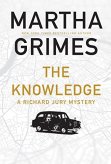 The episodic series is like a television series. Each novel has a new adventure for a previously established set of characters. In some ways, these are easiest to write, especially when each book features established characters in an established world. (Sorry about the repetition there.) Many cozy mysteries and fantasy series are episodic. They are an infinite series of standalone stories.
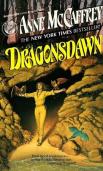
Some episodic series follow a particular group of characters, but others might feature a different protagonist. They are all set in a specific world, whether they follow one protagonist or several. The installments often jump around in that universe’s historical timeline. Think Anne McCaffrey’s Pern series or L.E. Modesitt Jr.’s Recluce series.
The continuing series requires some advance planning. It is a finite multi-volume series of books covering one group’s efforts to achieve a single epic goal. While each book may be set in an established world, it might feature an entirely different set of characters and their storyline.
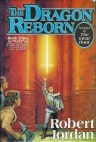 The story usually has a strong theme that unites the series. It might be a theme such as the hero’s journey or young people coming of age. Or it might follow the life of one main character and their sidekicks as they struggle to complete an arduous quest. Robert Jordan’s (and Brandon Sanderson’s) The Wheel of Time series is a prime example of the continuing series.
An episodic series is easier to plan as each one is a single novel. There are no loose ends, so if the author stops writing in that series, nothing is left hanging.
A continuing series must have a complete plot arc for each book. Each novel is only a section or chapter of the larger story. Speaking as a reader, please keep track of the subplots via an outline. I say this so you don’t leave loose ends but also to ensure the subplots come together at the final battle.
Sequels happen when an author is in love with their characters, and those characters and their stories resonate with readers. Sequels are how trilogies become series.
Companion novels occur simultaneously alongside the main story but feature side characters doing their own thing.
 Prequels are one of my favorite kinds of novels. I am always curious as to how the whole thing started.
Spin-offs might feature side characters or the protagonist’s descendants.
So, how do we manage the character arc for one group over the course of a series? I suggest storyboarding. Write a synopsis of what you think the Big Picture is, the entire story. Write it out even if that synopsis goes for 5,000 to 10,000 words.
If that storyboard looks too large for one book, separate the sections into however many novels of reasonable length it will take.
An outline will help you decide on your structure. You’ll have a better idea of how each plot will unfold.
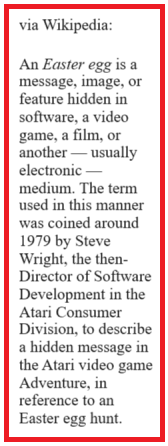 Once you have figured out the entire arc of the series, make an outline of book one. This allows your creative mind to insert foreshadowing. This will happen via the clues and literary easter eggs that surface as the series goes on.
I suggest waiting to outline the next book until after book one is finished and ready for the final edit. Plots constantly evolve as we write. Book one is the foundation novel of the series, so it must be completed before you begin building the rest of the story.
Maps and calendars are essential tools for the author, no matter what genre you are writing in. Regardless of how you create your stylesheet/storyboard, I suggest you include these elements:
An OUTLINE of events including a prospective ending. Update it as things evolve.
A GLOSSARY is especially important. I suggest you keep a list of names and invented words as they arise, all spelled the way you want them.
MAPS are good but don’t have to be fancy. All you need is something rudimentary to show you the layout of the world.
A CALENDAR of events is especially important.
Outlining the next novel should be simpler if you kept a record of all the changes that evolved to your original outline. The stylesheet/storyboard is a good tool for fantasy authors because we invent entire worlds, religions, and magic systems. We don’t want to contradict ourselves or have our characters’ names change halfway through the book—with no explanation.
 Next week, we will look at creating a calendar for stories set in a speculative fiction world. We will look at some of my failures and see why simpler is usually better.


 Life in the Realm of Fantasy
What a fantastic post, Connie. I like writing series. My first book was intended to be a standalone, but it became too large for one book. Book 4 is currently being critiqued and there is going to be a book 5, and probably a book 6. All are complete, but with a few strands left open, including the main one, although at the end of this it appears the antagonist appears to be dead.
I’m also currently writing a series of standalone historical novels following a family through the ages. So far there are two published, one in Roman Britain and the second in Viking Britain. Great fun to write.
LikeLiked by 2 people
Wow, V! Those are some awesome accomplishments. And thank you for the kind words. It means a lot!
LikeLiked by 1 person