
November is National Novel Writing Month—and I am and always will be a November Writer. It’s the month I dedicate to writing new material. However, I no longer participate in the organization known as NaNoWriMo.
 I was a dedicated municipal liaison for the Olympia, Washington Region for twelve years and a regular financial donor, but I walked away after the organization’s implosion last November. I will get my 50,000 new words in November but will not sign up to participate through the NaNoWriMo website.
Instead, my region is preparing to go rogue with our own creative contest, milestones, and rewards. We stay connected through our Facebook page and our Discord Channel.
Last year’s tomfoolery within the national organization’s headquarters included accusations of ignoring child endangerment and grooming in a particular forum, rumors of mismanaged donations (never substantiated), and the overt power grab and subsequent “cleansing of MLs” by NaNo HQ’s new regime. Those shenanigans have poisoned the waters for me.
This Lit Hub article was the capper—I’m walking away from what was once the best part of my writing life. NaNoWriMo defends writing with AI and pisses off the whole internet. ‹ Literary Hub (lithub.com)
Whether you choose to go the NaNoWriMo route and participate through their website or go rogue like me, October is #Preptober, and the world is full of writing challenges to participate in.
 Set your goal, keep a record of your daily word count or pages edited, or whatever, and let National Novel Writing Month be your month to achieve your goals. I have had buttons and stickers made as rewards for our region’s writers, and we will have write-ins as we have always done.
We are committed to supporting all writers, whether they are traditionalists participating through the national website or rogue writers, and the community we have built over the last twelve years remains strong. More than ever, we are committed to our original goals of writing a novel (or completing a project) in 30 days.
National Novel Writing Month is about accountability. We set goals and devote thirty days to working toward certain milestones. Each milestone we achieve gets us closer to a finished project. On November 30th, we can look back and take pride in what we have accomplished in only thirty days.
So, what is #Preptober all about? It’s getting ready to spend 30 days writing new words, self-editing last year’s novel, or any number of creative projects.
During the month of November, before my husband’s Parkinson’s became a problem, I might pound out 60,000 or so words, but my novels were only half finished at that point. Maybe a year or so later, I would have a coherent first draft that tops out at around 120,000 words. Three more years and six or eight drafts later, my novel was publishable at about 90,000 words.
For me, succeeding at getting the bare bones of a novel’s first draft written during the 30 days of November requires a pre-flight checklist. The checklist becomes my permanent stylesheet/outline for that novel.
I found Excel useful when I first began writing, and I use it to this day to keep my plots and background information organized. I also use Excel to keep track of my daily word count. This was my personal April challenge–unfortunately my husband was hospitalized before the end of the challenge, so my word count ends before April 30th:

Google Docs, pencil and paper—ANY document or spreadsheet program will work.
Once I’m done winging it through the story and am in revisions, some scenes will make more sense when placed in a different order than originally planned. At that point, an outline allows me to view the story’s arc from a distance. The outline is a visual aid that keeps my stream-of-consciousness writing flowing.
If I am editing a story for a client who has no outline, I make one as I go.
The outline is an editing tool, an overview that allows me to see where the plot arc might be flatlining. Perhaps an event should be cut entirely as it no longer works. (I always save my outtakes in a separate file for later use.)
Over the next few weeks, we’ll talk more about my process.
But first, WHAT is our project? Are we using November for writing or editing or writing music or painting landscapes?
This is how I start my pre-flight checklist for winging it through the merry month of November. Whether we are writing a novel or editing it, the basic premise of any story in any genre can be answered in eight questions. Considering these questions on a chapter-by-chapter level is a good editing tool—when you note your observations on the outline, you can see the rise and fall of the action, follow the character arcs, and ensure the pacing is on point.
- Who are the players?
- Who is the POV character?
- Where does the story open? This is worldbuilding, so make the setting feel real.
- What does the protagonist have to say about their story? What do they want, and what will they do to get it?
- Who is the antagonist? What do they want, and what will they do to achieve it?
- What is the major obstacle to our characters’ achieving their desires?
- What other roadblocks hinder them?
- How does the story end? Is there more than one way this could go?
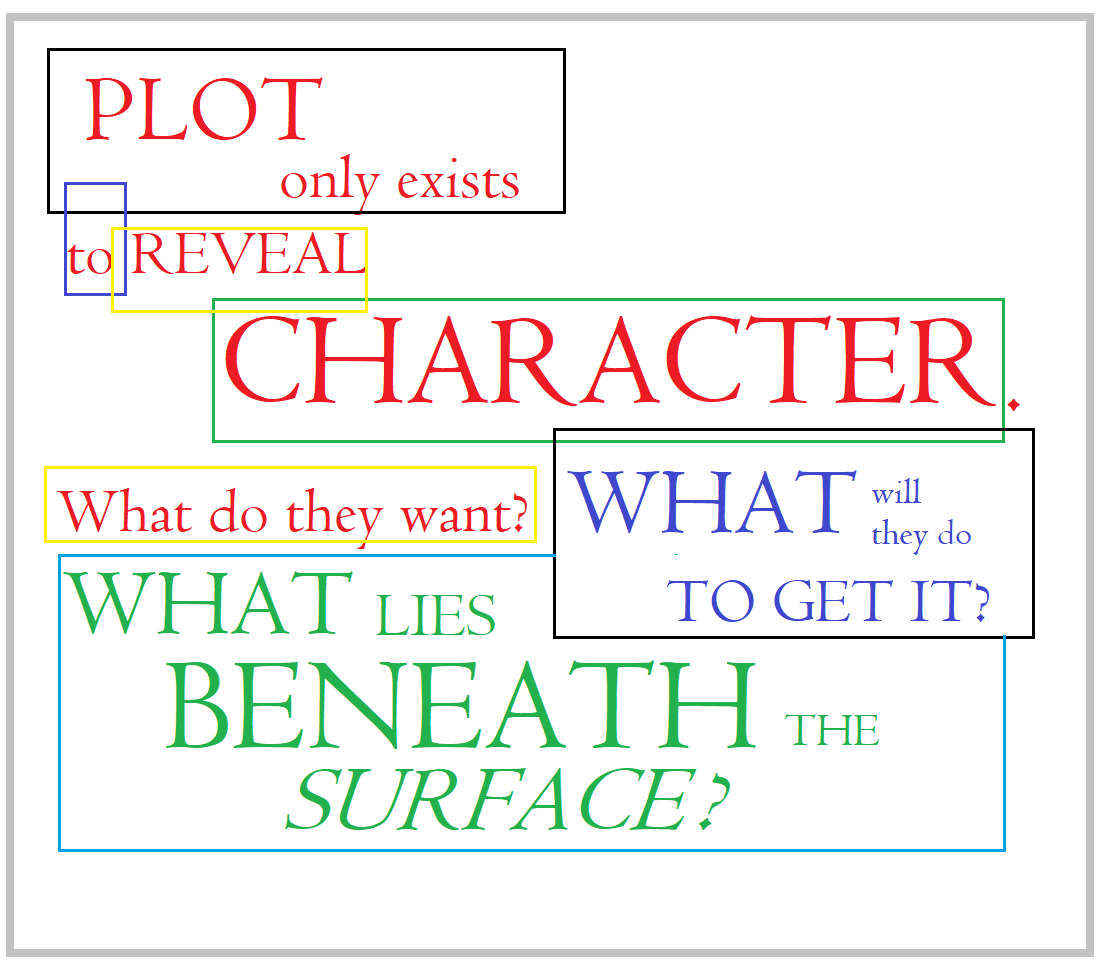 The answer to question number one kickstarts the plot: who are the players? Once I know the answer to this question, I can write, and write, and write … although most of what I write at that point will be background info. The answers to the other questions will emerge as I write the background blather.
I write fantasy stories most often, and they always begin with the characters. Characters usually arrive in my imagination as new acquaintances inhabiting a specific environment. That world determines the genre.
 They share some of their story the way strangers on a long bus ride might. I see the surface image they present to the world, but they keep most of their secrets close and don’t reveal all the dirt. These mysteries will be pried from them over the course of writing the narrative’s first draft.
That little bit of mind-wandering gives me the jumping-off point, which is all I need to get my story off the ground.
Knowing who the protagonist is, having an idea of their story, and seeing them in their world is a good first step.
Write those thoughts down so you don’t lose them. Keep adding to that list as ideas about that world and those characters come to you.
But what if you plan to edit last year’s novel rather than write a new project? We will go into productive self-editing next week.
 And what if you are writing poems or short stories? Graphic novels? We will also go into preparing to “speed-date your muse” when embarking on those aspects of writing.
We will look at all areas of creativity this #Preptober, because November is a month for exploring creativity on every level, and many sites offering November writing quests are springing up. We will explore the ever-expanding list of NaNo alternatives, and we will be prepared to have fun.


 Life in the Realm of Fantasy
Nice post 🌺🌺
LikeLiked by 1 person
Hello Satyam! Thank you 😀
LikeLike
Preptober is a great idea, Connie! Sorry for the delay. I got visited by the virus, and now i am trying to restructure my brain cells. Lol Best wishes, Michael
LikeLike
Michael, It’s always good to see you. I’m sorry you were ill! Get well soon!
LikeLike
I’m not doing NANO this year, either. Not for the reasons you mention,(I’d not heard of any of them), but because I’m increasingly finding it hard to make the time. I’ve given up beating myself up for not getting on with my novel, and am being cool about having days when I don’t write.
Mind you, if I knew about the issues you mentioned I would probably give up on them, too.
Pre-October sounds like a good idea.
LikeLiked by 1 person
Hello V! There are times in our lives when it’s more difficult to carve out time for intensive writing. I have the “luxury” of being housebound and unable to sleep more than 4 to 6 hours a night, as my spouse is prone to waking every two hours. I’m writing blather right now but it’s keeping me sane, lol!
LikeLiked by 1 person