
Speculative fiction … it’s a subcategory of fiction, a genre. But what is a genre, exactly?
 In this case, genre is a category of literature that features similarities in form, style, or subject matter, or tropes. Speculative fiction is an overarching term for a genre that bookstores break into two main subcategories: science fiction and fantasy. Each category is subdivided into many smaller sub-genres.
We should consider the meaning of those two words, “speculative fiction.“
Speculative = conjectural, suppositional, theoretical, hypothetical, academic, abstract, risky, hazardous, unsafe.
Fiction = novels, stories, creative writing, prose literature, narration, storytelling, romance, fable, imaginative writing, works of the imagination.
Speculative fiction takes risky, often theoretical ideas and expresses them through storytelling.
The two words, speculative fiction, give an author permission to leave the boundaries of our known world. It frees authors and philosophers to examine deep and profound concepts by exploring them in a fictional environment.
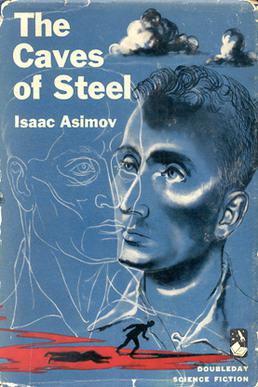 In 1953’s The Caves of Steel, Isaac Asimov took us into the future, a time when humanity had divided into two factions—spacers and earthmen. The Blurb:
Like most people left behind on an over-populated Earth, New York City police detective Elijah Baley had little love for either the arrogant Spacers or their robotic companions. But when a prominent Spacer is murdered under mysterious circumstances, Baley is ordered to the Outer Worlds to help track down the killer.
The relationship between Baley and his Spacer superiors, who distrusted all Earthmen, was strained from the start. Then he learned that they had assigned him a partner: R. Daneel Olivaw. Worst of all was that the “R” stood for robot—and his positronic partner was made in the image and likeness of the murder victim!
In 1953, racism was endemic, institutionalized. When Asimov wrote this novel, he took on bigotry and equality in a palatable way by showing us a civilization where androids are denied equality. To murder a human is a crime, but in this society, many otherwise good people refuse to believe that androids are sentient beings with a right to life. Yet, in R. Daneel Olivaw, we meet a sentient being and feel compassion for him.
Isaac Asimov trusted his readers.
Does the above example mean that speculative fiction only meant to point out our society’s shortcomings?
Not at all.
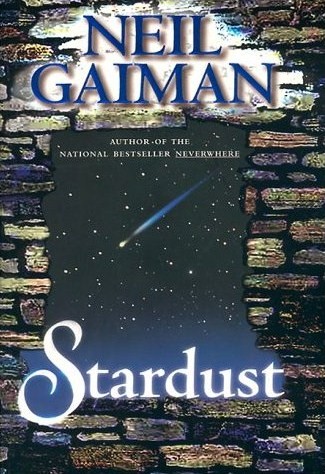 Neil Gaiman’s Stardust qualifies as a speculative fiction novel, even though it’s a literary fantasy. It is a fairytale that explores the core theme of transformation and is told with beautiful prose in an unhurried fashion. A story can be told leisurely, poetically, and still pack a punch.
In my opinion, good writing conveys a story in a crafted style. Words are chosen for their impact, and the prose is delivered with a voice that is uniquely that of the author.
Fairytales are often dark, scary stories, and always offer us morals. In Stardust, Gaiman shows us truth. He lays bare the lies we tell ourselves through the simple fairytale motif that real love is not gained through prodigious deeds. All through the narrative, Gaiman explores the difference between desiring a person and loving them. By the end of the tale, we know that love requires truth if it is to survive.
Neil Gaiman trusts his readers. That is something we all need to do. Sometimes a story needs to emerge slowly and be told with beautiful, immersive prose, and we need to trust that our readers will enjoy it if we craft it well.
There is room in the bookstore for books with a less urgent story to tell, as well as those that ambush the reader and beat them bloody with non-stop action.
Asimov showed us that tight, straightforward prose works.
Gaiman shows us that sometimes you can just have a little fun with it.
The genre of speculative fiction grew out of the repression of the 1940s and 1950s and has always been the literary field in which ideas that challenge society’s norms were sown. Radical concepts could be conveyed when couched fantasy and set in fictional worlds.
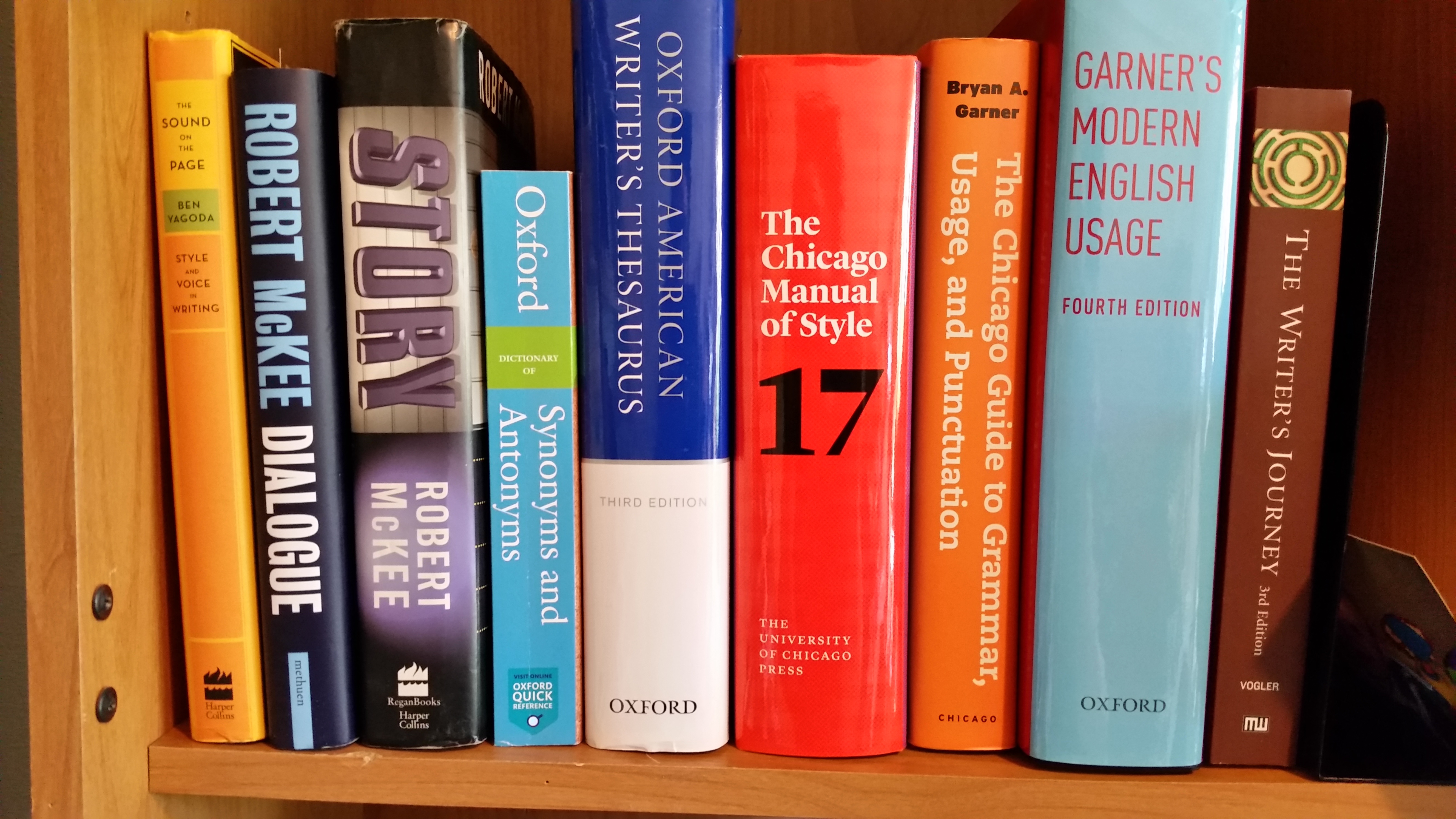 Dedicated authors are driven to learn the craft of writing, and it is a quest that can take a lifetime. It is a journey that involves more than just reading “How to Write This or That Aspect of a Novel” manuals. Those are important and my library is full of them. But how-to manuals only offer up a part of the picture. The rest of the education is within each of us, an amalgamation of our life experiences and what we have learned along the way.
I’ve said this before, but whenever I come across an author whose work resonates with me, I go back and reread it. The second time, I take notes. I study how they crafted their work, look at their word choices. Then I ask myself why it moved me.
I do the same with the books that left me feeling robbed—where did the author go wrong? What can I do to avoid this in my work?
I always learn something new from looking at how other authors combine and use words to form the moods and emotions that drive the plot. For me, writing is a journey with no finite destination other than the satisfaction of making small steps toward improvement.
Sometimes my work is good, other times Aunt Maudine’s budgie wouldn’t want the bottom of its cage lined with it. But when I look back at my early work, I can see improvement over time, which is all we can ever hope for.
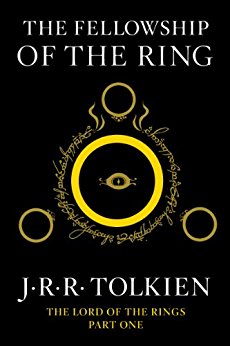 Authors write because we have a story to tell, one that might also embrace morality and the meaning of life. To that end, every word we put to the final product must count if our ideas are to be conveyed.
Don’t lose heart, and don’t give up just because you think you can’t write like your favorite author. Write for yourself and write because you have something that needs to be said.
And don’t quit until you arrive at the place where you write “the end” on the last page.


Pingback: Reblog: Speculative Fiction—Genre and the Liberation of Ideas #writing | Jeanne Owens, author
Thank you, Jeanne ❤
LikeLike
I agree with you. There’s plenty of room for different types of story, and different paces and voices.
LikeLiked by 1 person
Vivienne, hello! I hope your writing is going well!
LikeLiked by 1 person
Yes, thanks. Connie. I’ve just spent an hour or so checking my manuscript against some critiques, so I’m feeling pretty good.
How about you?
LikeLiked by 1 person
My goal for November was 1 chapter a day. I’m managing to turn out a chapter a day, but I’m bouncing between two manuscripts. I had hoped to finish the older one, but that may be wishful thinking, as my brain isn’t working at top speed these days.
LikeLiked by 1 person
Love this explaination of speculative fiction, Connie! (And I’m off to find a paperback copy of The Caves of Steel!) Thanks!
LikeLiked by 2 people
Hello Felicia! It is a classic, a foundation book for what we consider science fiction. Asimov was the boss!
LikeLiked by 1 person