
I’m sitting here on a cloudy Sunday morning in May, sipping tea and wondering what to write for this post. Things have been crazy on the home front for a couple of months. Well, for the last year, really. Now my husband is settled in a good place where he can be properly cared for around the clock. I am adjusting to having more time on my hands than I’m used to.
 He’s in a lovely, caring home now. I go there to visit him every morning after I tend our small veggie plot in the community garden. And yes, although I do have the time now, I struggle to find the ambition to reorganize my jumble of an office.
However, while housekeeping still bores me, and I no longer have a valid excuse for not doing it, I always feel like writing.
Which seems more important than filing the pile of medical and legal documents that depress me.
I just don’t always know what to write.
And, sometimes, it’s hard to know where a story should actually begin. Is it the eve of a party? Is it the day of a friend’s funeral? Where does the story begin?
Wherever the story starts, I want the reader to keep turning the pages, and a little foreshadowing can encourage them to do that.
Hints that all is not what it seems are an important aspect of the narrative. They pique the reader’s interest and make them want to know what is really going on and how the book will end.
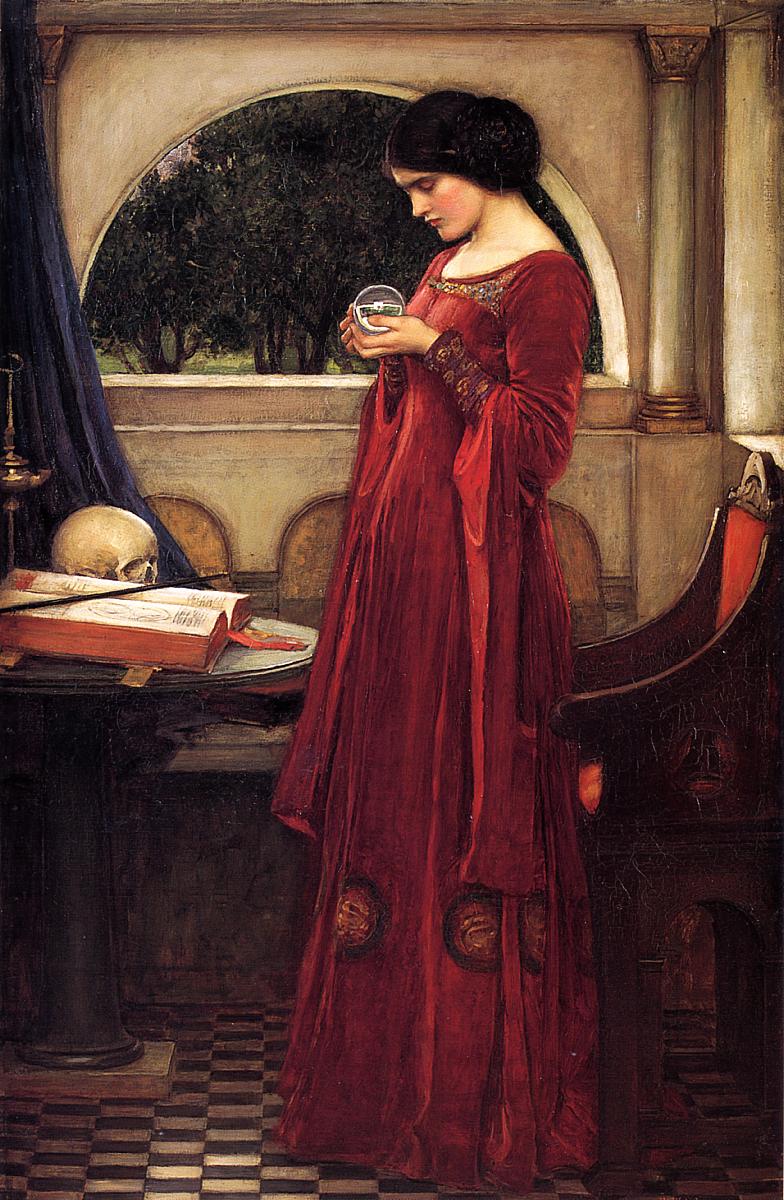 But what is foreshadowing? It is the subtle warning that danger lurks ahead, a few clues embedded in the first quarter of the story to subliminally alert the reader that things may not go well for the protagonist. We include small warning signs of future events, bait, if you will, to lure the reader and keep them reading
In the opening paragraphs, I will focus on the protagonists and hint at their problems. Novels are built the same way as a Gothic cathedral. Each scene is a small arc of action and reaction. These arcs support other arcs in layers, creating an intricate structure that rises high and withstands all that nature can throw at it.
In the first draft, we all commit sins of craftsmanship. These are secret codes, road signs for us to examine in the second draft:
- Clumsy foreshadowing, baldly stating what is going to happen later. We rewrite those scenes to make the clues less obvious.
- Or we might commit the opposite sin, neglecting to foreshadow so that events seem to arrive out of nowhere.
Recognizing those signals can be a challenge, but hopefully, our beta readers will notice and comment. My writing group is central to my work process.
We all know the opening paragraphs are vital. They are the hook and must offer a reason for the reader to continue past the first page. These paragraphs usually sell the book.
Getting the pacing right in those opening paragraphs and maintaining it to the last page is, in my opinion, the most challenging part of writing.
How much exposition is needed? What can be cut without making the story choppy and confusing? What must stay? When a possibility is briefly, almost offhandedly mentioned, but almost immediately overlooked or ignored by the protagonists, that is a form of foreshadowing.
Is that hint enough for the reader to understand what is going on? It’s easy to accidentally frontload the opening pages with a wall of backstory. I learned the hard way that long lead-ins ruin the chances of your book making readers happy.
 I try to open the story with my characters in place and get the introductions out of the way. Within the first few pages, a question of some sort must be raised, or I must get the inciting incident underway. This is crucial for the pacing as it sets the characters and the reader on the trail of the answer, throwing them into the action.
Usually, there is no reason for the characters to hear the twelve-paragraph saga of the Caverns of Despair before they enter them. The readers also don’t need to know that history. The name is descriptive and is an indicator of what lies ahead. Names of places can be a form of foreshadowing that don’t slow the pacing.
Often, side characters will drop clues regarding things the protagonist doesn’t know, knowledge that affects the plot. Subplots that advance the main story’s plot arc are excellent ways of introducing the emotional part of the story, but beware.
Side quests are often fun in a video game but can ruin the pacing of a novel. They can be distracting and make for a haphazard story arc if they don’t relate to the central quest. I think side quests work best if they are presented once the book’s overall atmosphere is established and the core crisis is underway, and only if they are necessary for the completion of the principal quest.
 Like Bilbo finding the One Ring.
Sometimes, we open the story by dropping our characters into the middle of an event. Even if we do that, we still need a pivotal event at the 1/4 mark that completely rocks their world. The event that changes everything is the jumping-off point for the story.
As a reader, I notice when a character suddenly displays a new skill or knowledge, something they never showed before. When this happens, it’s usually explained away as a Chekhov’s Skill. I usually stop reading at that point and forget about finishing the book.
Without briefly foreshadowing that superior ability, the reader will assume the character doesn’t have it, and the narrative becomes unbelievable. A casual mention early on of the characters using or training to use that skill would make it believable.
The most crucial aspect of foreshadowing is the surprise a reader feels when the clues come together to form a complete picture of the imminent disaster. This is the moment when the reader says, “I should have seen that coming.”
We have many reasons to pursue good foreshadowing skills. In my opinion, the most important is that it helps avoid using the clumsy Deus Ex Machina (pronounced: Day-us ex Mah-kee-nah) (God from the Machine) as a way to miraculously resolve an issue.
That literary faux pas occurs when, toward the end of the narrative, an author inserts a new event, character, ability, or otherwise resolves a seemingly insoluble problem in an unexpected and miraculous way.
 Pacing is a combination of action and reaction. Transitions bookend each scene. They are a door into the scene and the way out. The way out is always the way into the next scene. How we use those transitions determines the importance of the passage. The bookends determine the narrative’s pacing.
Transition scenes get us smoothly from one event or conversation to the next. They push the plot forward and control pacing.
- Action, reaction, information, reaction, action, reaction, rinse, and repeat until the story reaches its conclusion.
So, now that I have rambled on about writing, I will get busy and clear up my office. I always feel better once a disagreeable task is properly finished.
And then, maybe I will make some headway on my work in progress. Working in a lovely, organized space—what a concept!
Credits and Attributions:
IMAGE: The Crystal Ball by John William Waterhouse, 1902. Wikimedia Commons contributors, “File:John William Waterhouse – The Crystal Ball.JPG,” Wikimedia Commons, https://commons.wikimedia.org/w/index.php?title=File:John_William_Waterhouse_-_The_Crystal_Ball.JPG&oldid=1009616986 (accessed May 11, 2025).
IMAGE: The One Ring, Wikimedia Commons contributors, “File:One Ring Blender Render.png,” Wikimedia Commons, https://commons.wikimedia.org/w/index.php?title=File:One_Ring_Blender_Render.png&oldid=914989927 (accessed May 11, 2025).


 Life in the Realm of Fantasy
It’s good your husband is in a good place.
Foreshadowing is something I struggle with. This is helpful to understand it.
LikeLiked by 1 person
Hello Vivienne! I struggle with foreshadowing too. But I have good friends in my writing group who aren’t afraid to point out where it needs more work and fewer words, lol!
LikeLike