
I have always thought of myself as a writer. During the 1970s and into the early 1990s, my pen and ink ramblings were poems and random scenes that contained ideas that later evolved into full-fledged short stories.
 My typewriter sat beside the hamster cage in the corner of the kitchen (a poor placement choice). While my kids did homework, I pecked away at short stories.
Eventually, I acquired a secondhand computer and began writing a novel. Five years and 225,000 words later, I had a rambling mess on my hands that would never be finished.
I didn’t know what to do with it. I couldn’t figure out how to end it, and it was filled with grammar and punctuation errors. I had no idea how to make it look professional, as I had never heard of “industry standards.” My enthusiasm exceeded my knowledge and ability, and I didn’t know how to rectify the problem.
In 1990, a book that would change my life was featured in the Science Fiction Book Club catalog: “How to Write Science Fiction and Fantasy” by Orson Scott Card. The day that book arrived in my mailbox was the day I embarked on my quest to learn everything I could about the craft of writing.
I’m still learning. Since acquiring that book, I have amassed a library on the craft. Some are brilliant, while others are not, but I always learn something.
Diving into the deep end of writing contests and seeking a publisher can be both scary and wonderful. Every experience, good and bad, educates you just a little more. What follows are a few things I wish I had known in 2010 when I was directed to the (now defunct) organization that was NaNoWriMo. and began this journey in earnest.
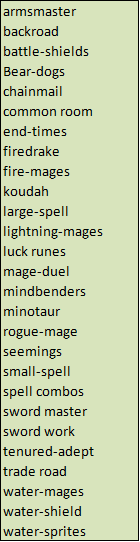 One: Make a style sheet (also known as a storyboard or bible) as you go.
Build a glossary of words and spellings unique to your story and be sure to list names. I use an Excel spreadsheet, but you can use any tool you like to help you stay consistent with your spelling.
And even though I work at developing a thorough glossary, my editor will find many words to add to it.
Two: Nothing hurts worse than completely losing an entire manuscript. Develop a logical, consistent system for naming your files. Save your document regularly and back up your files to an external thumb drive or to the cloud.
Save each version of your manuscript in its own master file, and give each subfile a different name so you can go back and retrieve bits you may need later. I use a system like this:
- The master file might be titled: Lauras_Story
- The subfile might be L_S_V5.docx
That stands for Laura’s Story version five. I work out of Word, so the extension is automatically a docx. Each master file will contain many subfiles before a story or book is published.
Three: Find a local group of writers to meet with and talk about the craft.
Authors need to network with other authors because we need to discuss the craft with someone whose eyes don’t glaze over.
I found a fantastic local group by attending write-ins for NaNoWriMo. The Tuesday Morning Rebel Writers have my back, and I have theirs. Since the pandemic, and with several of our members now on the opposite side of Washington State, we meet weekly via Zoom. We are a group of authors who write in a wide variety of genres.
Yes, we help each other bring new books into the world through beta reading and critiquing. But more than that, we are good, close friends who support each other through life’s twists and turns.
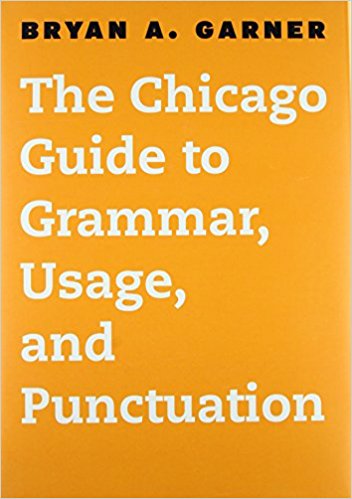 Four: Never stop educating yourself. It requires dedication and a small investment of money, but you can do it.
Learn how to say what you mean with your unique voice and style. A college education may be out of reach, but you can buy books on grammar, style, substance, and writing craft.
Learn about structure and pacing from successful authors. Spend the money to attend conventions and seminars. You will learn so much about the craft of writing, the genre you write in, and the publishing industry as a whole. These are things you can only learn from other authors.
Five: Don’t even consider signing with the slick-talking publisher that contacts you out of the blue.
In 2010, I made my word count and became a firm believer in the principle that was behind the founding concept of NaNoWriMo. If you sit down and write at least 1,667 words every day, you will complete the first draft of your novel in 30 days. If you have a community of like-minded authors to encourage you, you are more likely to succeed. That is what NaNoWriMo was originally intended to be, as Chris Baty envisioned.
I didn’t know that while a novel might have the complete story arc, it isn’t finished.
 Here is where experience can be a painful teacher. The year that followed was filled with serious mistakes and naïve bungling.
Legitimate publishers NEVER contact you. You must submit your work to them, and they prefer to work with agented authors. I didn’t know this. I placed my book in the hands of someone who was not qualified to publish. 2011 was filled with low points, ending with a devastating falling out with my publisher. Fortunately, I retained the rights to my work.
Authors are perfect targets for predators. Be smart. Ask yourself how a publisher could possibly want work they haven’t seen? And why should you pay them for “editing” or any other aspect of publishing? And how did they get your email address?
Make use of SFWA’s Writer Beware site. Predator publishers profit from our deep desire to be published. They will charge you for services they don’t provide and publish your work in its raw, unedited form, and you will never see a dime.
Six: even though you’re writing that novel, keep writing short stories, too.
 Short stories and micro-fiction are a training ground, a way to hone your skills. Submitting your work to magazines, anthologies, and contests is the best way to get it published. Each story that gets published increases your visibility, and you develop a reputation as a reliable author. I suggest building a backlog of work ranging from 100 to 5,000 words in length. Keep them ready to submit whenever magazines, anthologies, or contests announce a call for submissions.
Remember, every scene and vignette that rolls through your head can be made into something you can use.
Get the Submittable App and start submitting your work, and don’t let rejections stop you. Keep sending that work to new places because someone will want it.
Seven: Never Stop Reading. I say this all the time. Read widely and in all genres. Read critically and apply what you learn about writing, both good and bad, to your work.
These are a few of the many things that I wish I had known when I first started writing professionally but didn’t.


 Life in the Realm of Fantasy
Excellent advice. Thank you for sharing your experiences 😊.
LikeLiked by 1 person
Hello! Thank you. If I can save one person from the predator-publisher trap, I’ll feel the bad year was worth it.
LikeLiked by 1 person
I love this blog! It’s like a pep talk for writers. Thanks for all you do for writers out there.
LikeLiked by 1 person
Thank you for the kind words, Johanna. I feel like new writers sometimes need a cheerleader to tell them they aren’t crazy, lol!
LikeLike