Tag Archives: Archetypes

Idea to story part 4 – the roles of side characters #writing

We are designing a fantasy story, and we are going to write it for us, writing as freely as we want. We’re writing like no one will ever read it but us, so it will be our story, flowing from our vision.

So far, we have created our protagonist and the initial antagonist and have an idea of what their quest is.

We have discovered that our novel might be a Romantasy, as the enemies-to-lovers trope seems to be developing. Now, let’s look at the allies that help our characters as they each strive to fulfill their quest. These are the friends and supporters who enable them to achieve their goals.

The Writer’s Journey, Mythic Structure for Writers, by Christopher Vogler, details the various traditional archetypes that form the basis of most characters in our modern mythology, or literary canon.

The following is the list of character archetypes as described by Vogler:

  1. Hero: someone who is willing to sacrifice his own needs on behalf of others.
  2. Mentor: all the characters who teach and protect heroes and give them necessary gifts.
  3. Threshold Guardian: a menacing face to the hero, but if understood, they can be overcome.
  4. Herald: a force that brings a new challenge to the hero.
  5. Shapeshifters: characters who constantly change from the hero’s point of view.
  6. Shadow: a character who represents the energy of the dark side.
  7. Ally: someone who travels with the hero through the journey, serving a variety of functions, including that of sacrificial lamb.
  8. Trickster: embodies the energies of mischief and desire for change.

Side characters are essential, especially characters with secrets because they are a mystery. Readers love to work out puzzles. However, the job of the supporting cast is to keep the attention focused on the protagonist and the antagonist and their quest.

For that reason, I recommend keeping the number of allies limited. Too many named characters can lead to confusion in the reader. For the sake of simplicity, I am limiting the number of characters in each party to 3 trusted cohorts.

The quest is simple: Our protagonist and antagonist are co-regents of twelve-year-old King Edward. Both seek to keep him alive, but they have radically different ideas about his upbringing. Both believe the other is the cause of Edward’s wasting illness.’

At this point in the planning process, Edward is a MacGuffin, and if he has a personality, it will emerge as time goes on. So, how does Val’s party line up?

  1. First is the ally who is also the trickster. This character is as yet unnamed, but they are the core of Val’s spy network and will be fun to write. This ally will also serve as the sacrificial lamb, bringing pathos into the story.
  2. Val’s second in command fills the role of paladin, a common fantasy character trope. He is a trusted officer in the royal guards. He does not trust the spy, bringing friction and mutual distrust into play and offering opportunities for our spy to vent his humor at the paladin’s expense.
  3. Val’s third ally is a healer, a woman who was young King Edward’s nurse when he was a baby. She also has the role of mentor when wisdom is required.

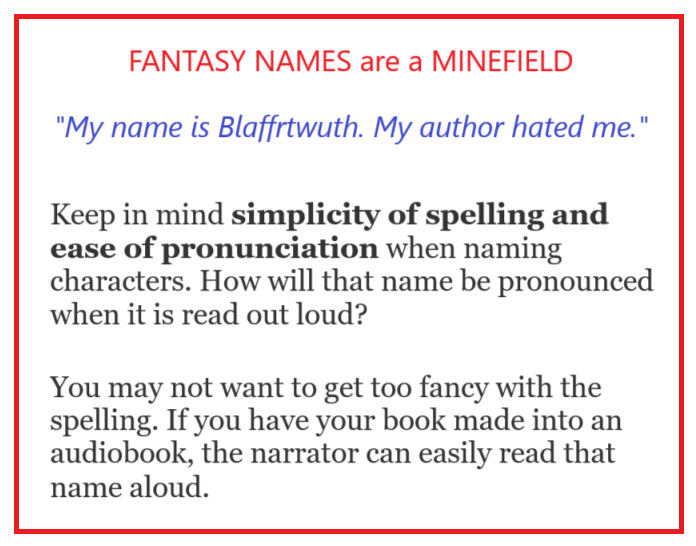
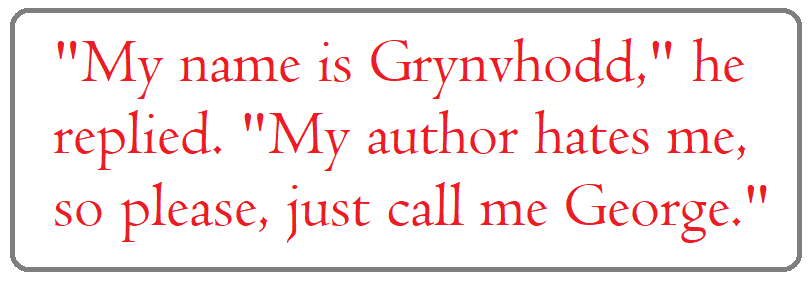
Our sidekicks are as yet unnamed, BUT we might have our novel made into an audiobook. Thus, we must consider ease of pronunciation when a name is read aloud.

Every core character that the protagonists are surrounded by should project an unmistakable surface persona, characteristics that a reader will recognize as unique from the outset.

Kai Voss will also have three trusted allies.

  1. Kai’s much older (illegitimate) half-brother is also a sorcerer and has long served as Kai’s mentor. He is also the Shadow, the suave, worldly character who subtly brings the energy of the dark side.
  2. Two soldiers have sided with Kai, both firmly believing they are the salvation of the young king. One is the paladin, a man who believes in honor and loyalty to the king and the traditions that he believes in.
  3. One soldier has the role of herald and will be the sacrificial lamb when he uncovers an uncomfortable truth.

From the moment they enter the story, we should see glimpses of weaknesses and fears. We should see hints of the sorrows and guilts that lie beneath their exterior personas. These characters are not the protagonist, so their backstory must emerge as a side note, a justification for their inclusion in the core group.

Old friends have long histories, and the protagonist knows most of their secrets at the outset—but perhaps not all. Unspoken secrets will emerge only at critical points if and when they affect the protagonist or antagonist, and only if they  provide the reader with information they must know.

If these friends are new to the protagonist, their stories should emerge in the form of information needed to complete the quest.

In real life, everyone has emotions and thoughts they conceal from others. Perhaps they are angry and afraid, or jealous, or any number of emotions we are embarrassed to acknowledge. Maybe they hope to gain something on a personal level. If so, what? Small hints revealing those unspoken motives are crucial to raising the tension in the narrative.

As writers, our task is to ensure that each character’s individual story intersects smoothly and doesn’t jar the reader.

To do that, the motivations of the side characters must be clearly defined. You must know how the person thinks and reacts as an individual.

Ask yourself what deep desires push this character onward? Just as you have done with the hero of your story, ask yourself what the side characters’ moral boundaries are and what actions would be out of character for them?

  • Write nothing that seems out of character unless there is a good, justified reason for that behavior or comment.

We want to create empathy in the reader for the group as a whole, but we want to keep the pace of the plot arc moving forward.

Certain plot tricks function well across all genres, from sci-fi to romance, no matter the setting. In most novels, one or more characters are “fish out of water” in that they are immediately thrust into an unfamiliar and possibly dangerous environment.

In our current manuscript, it is our antagonist, Kai Voss, who will be thrust into the unknown by a traitor acting on their secret agenda, and we will talk about that in our next installment.

7 Comments

Filed under writing

Character Creation: the mentor #amwriting

Wisdom is not about having all the answers. As we experience the sorrows and joys of life, we remain filled with as many questions as answers. Perhaps the questions aren’t intellectual as much as they are emotional—a longing for a lost time of contentment, a time of security and peacefulness that wasn’t appreciated as much as it should have been.

WritingCraftSeries_mentorMaybe that moment in time that we long for didn’t shine with the golden glow that the mirror of memory now gives it. Nevertheless, we hope to feel that innocent happiness that we will never experience again.

Wisdom—a word that represents so many things. In a mentor, it’s an implied knowledge of a fundamental human truth: naïve enjoyment of life is gone forever, and accepting its loss makes us feel old. Experience makes us wiser and can change us in two ways. We can become hardened and callous as a form of self-preservation. Conversely, we can become gentler, more understanding of human frailty.

Tolkien took much of the philosophy for his world of Middle Earth and the character of Aragorn from the 6th-century poem, The Wanderer. As a Professor of Anglo Saxon Studies at Oxford, he had translated it into modern English and had a deep connection to the epic story told in the poem.

In that poem, the speaker reflects upon his life while spending years in exile. He considers what he has lost but goes beyond his personal sorrow. For this reason, some scholars consider The Wanderer a “wisdom poem.” The speaker tells us that the disintegration of earthly glory is inescapable, supporting the medieval Christian view of the underlying theme: salvation through faith in God.

The sense of loss and resulting strength that the protagonist in The Wanderer offers us is reflected most strongly in the way Tolkien portrays Aragorn. He is wise as a mentor, more approachable than Gandalf, and is relatable because he has suffered many losses. Aragorn has spent most of his life wandering and fighting to protect people who look upon him with disdain. Now, as he approaches middle-age, he “looks foul but feels fair.”

An excellent short talk on the original medieval poem can be found on YouTube here: WANDERER | The Profound Anglo-Saxon Poem that Tolkien Used in Lord of the Rings: The Two Towers

The first scene where Aragorn is introduced adds a new character into the mix, a man of mystery and one who feels a little dangerous. Yet, we sense there is more to him than we see in the dark, smoky taproom of the Prancing Pony. Aragorn is only known as Strider, and in that role, he offers them the information they need.

In that chapter, titled “Strider,” Frodo reads Gandalf’s letter. Having read it, Frodo says, “I think one of his (Sauron’s) spies would – well, seem fairer and feel fouler, if you understand.”

“I see,” laughed Strider. “I look foul and feel fair. Is that it? All that is gold does not glitter, not all those who wander are lost.”

Lord_of_the_Rings_-_The_Two_Towers_(2002)In the scene at the Prancing Pony, Aragorn is quoting a poem that is later revealed to reference him as the Heir of Isildur. He is the prophesied king who will once again wield the Blade that was Broken. These are wise words from a poem-within-the-story, a signature literary device Tolkien used regularly.

“All that is gold does not glitter,

Not all those who wander are lost;

The old that is strong does not wither,

Deep roots are not reached by the frost.”

By quoting those words, Strider (Aragorn) cautions Frodo to look beyond the surface and see the strength that lies beneath. He also implies that the converse can be true, that beauty can disguise what is evil.

In Aragorn, we have a mentor who is later revealed to be the heir of Isildur, the last King of Gondor. Yet, he may as well be heir of nothing, for all the good it does him in the first half of his life. He leads the Rangers, the Dúnedain of the North, the descendants of his ancestor’s knights. The respectable landlord of the Prancing Pony looks down on him, seeing Aragorn as little more than a vagrant.

In the guise of Strider, Aragorn is a good mentor from the first moment we meet him. This is because he is shown as having history. While the history is only implied, and Frodo knows nothing about him, he knows Strider is a friend of Gandalf. Frodo senses the knowledge that Strider possesses, the wisdom he has to offer. Frodo feels he can trust Strider’s guidance, even when he disagrees with him.

When we create a mentor character, we must give the reader reasons to believe in them as having wisdom our protagonist needs. Strider arrives in his first scene with the impact of unspoken history, an immediate sense that here is a person who has seen much and survived many things.

Here is a person who knows what secret Frodo carries but won’t try to steal it. He understands the comfortable life Frodo has sacrificed to take the Ring to Rivendell and knows what the hobbit faces further down the road. Here is a person who genuinely wants to help Frodo escape the Black Riders.

At the outset, when we find Strider in the Prancing Pony observing Frodo making his worst blunder, we feel there is more to this unkempt vagrant than we see on the surface.

Lord_of_the_Rings_-_The_Two_Towers_bookAs I create my mentors, I hope to convey a sense that they have history without beating the reader over the head with it. I want to evoke a feeling of rightness, that this person knows things we don’t, that this person has knowledge our protagonist must gain.

Creating a mentor with depth and a sense of history without dumping info is tricky. This is where getting good insights from my writing group really comes into play. Their thoughts and opinions nudge my creative mind to find solutions for rewriting muddy characterizations and confusing passages.

Hopefully, their insights will guide me to write memorable narratives filled with characters who leave an impact.


Credits and Attributions:

Quote from The Two Towers, by J.R.R. Tolkien, Publisher: Houghton Mifflin Harcourt; Illustrated edition (February 15, 2012); Fair Use.

Wikipedia contributors, “The Lord of the Rings: The Two Towers,” Wikipedia, The Free Encyclopedia, https://en.wikipedia.org/w/index.php?title=The_Lord_of_the_Rings:_The_Two_Towers&oldid=1018153423 (accessed April 18, 2021).

Images:

The Lord of the Rings: The Two Towers theatrical release poster. Release Date December 5, 2002.  © 2002 Production Companies New Line Cinema, WingNut Films; Fair use under United States copyright law.

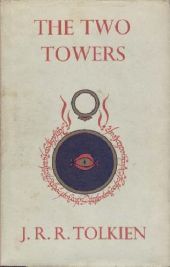
Wikipedia contributors, “The Two Towers” first edition book cover, Wikipedia, The Free Encyclopedia, https://en.wikipedia.org/w/index.php?title=The_Two_Towers&oldid=1006164402 (accessed April 18, 2021).

3 Comments

Filed under writing

The Role of the Trickster #amwriting

My lead characters always have companions, and one of them is usually the trickster. In his famous book, The Hero With a Thousand Faces, philosopher Joseph Campbell discusses his theory of the journey of the archetypal hero found in world mythologies.
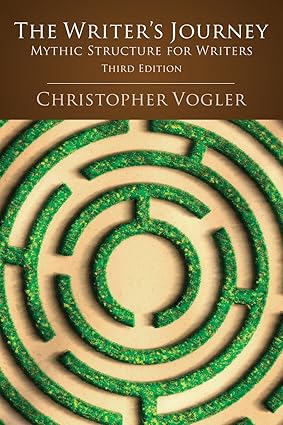
Christopher Vogler takes Campbell’s concept of the monomyth and applies it to modern storytelling.  His 2007 book, The Writer’s Journey, Mythic Structure for Writers, offers insights into character development and takes the mythical aspects of the hero’s journey and places it into pop culture, from movies to television, to books.

I am on my third copy of this book.

In my last post, I mentioned that tricksters:

  • Cross Boundaries
  • Break rules
  • Disrupt ordinary life
  • Charm us with their wit and charisma

Wikipedia tells us:

All cultures have tales of the trickster, a crafty creature who uses cunning to get food, steal precious possessions, or simply cause mischief. In some Greek myths, Hermes plays the trickster. He is the patron of thieves and the inventor of lying, a gift he passed on to Autolycus, who in turn passed it on to Odysseus. In Slavic folktales, the trickster and the culture hero are often combined. [1]

Often in mythology, the bending/breaking of rules takes the form of tricks or thievery.  When I need a thief, I automatically think of Loki—the consummate trickster of Norse mythology. Loki sometimes helps the gods and other times he is the villain. Loki is the god you love to hate.

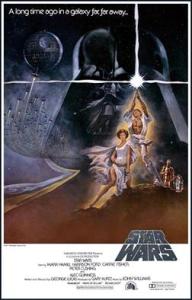
Who is a good example of the trickster in modern mythology? Let’s look at the first three Star Wars movies, and the character of Han Solo.

This is a man who is slightly older than the rest of the cast and has been around long enough to become jaded. He’s contradictory, in that he doesn’t believe in the force but relies on his luck.

Always courageous but not stupid, Han Solo takes incredible chances, and usually comes out on top. He rarely learns anything from his failures.

Han Solo’s primary role is keep everyone grounded. No one gets to be a princess around him, not even an actual princess. He points out to our hero that a blaster is more reliable than the force, and has no problem cold-bloodedly murdering a bounty hunter in a crowded bar.

What I love about the character of Han Solo is the way he livens things up. He is the ray of sunshine in what is actually a dark tale.

Vogler describes the trickster as: someone who embodies the energies of mischief and desire for change. [2]

I think the word energy is key. The rogue’s job is to inject energy into the story.

The loveable rascal is an important component of any epic tale. In the book versions of J.R.R. Tolkien’s Lord of the Rings trilogy, Pippin and Merry tend to go their own way sometimes and by doing so, they serve in the role of tricksters.

Quote from Wikipedia: The critic Tom Shippey notes that Tolkien uses the two hobbits and their low simple humour as foils for the much higher romance to which he was aspiring with the more heroic and kingly figures of Theoden, Denethor, and Aragorn: an unfamiliar and old-fashioned writing style that might otherwise have lost his readers entirely.

He notes that Pippin and Merry serve, too, as guides to introduce the reader to seeing the various non-human characters, letting the reader know that an ent looks an old tree stump or “almost like the figure of some gnarled old man”. The two apparently minor hobbits have another role, too, Shippey writes: it is to remain of good courage when even strong men start to doubt whether victory is possible, as when Pippin comforts the soldier of Gondor, Beregond, as the hordes of Mordor approach Minas Tirith. [3]

The trickster brings the essence of fallible humanity to a group of characters that can be otherwise too perfect. Their influence on the hero also offers us moments of hilarity and pathos.

The character who plays the trickster guides us through the darker aspects of a story with their wit and ironic humor. Thanks to them, the story is not quite so frightening, even when things are really bad.

The trickster sometimes emerges in my work, but I don’t always recognize them until my reading posse gets my manuscript. They will point out areas where I could use this character to better show certain aspects of the action.

I highly recommend The Writer’s Journey, Mythic Structure for Writers, by Christopher Vogler. It is one of the foundation books in my reference library, and I refer back to it often, especially in the early stages of a manuscript.

Hero, villain, mentor, or trickster—knowing what archetype a character embodies helps me identify their potential role within the story.


Credits and Attributions:

Star Wars movie poster © 1977 Lucasfilm Ltd., via Wikimedia Commons. Production company: Lucasfilm Ltd. Distributed by 20th Century Fox Release date May 25, 1977 (United States) Fair Use.

[1] Wikipedia contributors, “Trickster,” Wikipedia, The Free Encyclopedia, https://en.wikipedia.org/w/index.php?title=Trickster&oldid=811022016 (accessed December 5, 2017).

[2] Wikipedia contributors, “The Writer’s Journey: Mythic Structure for Writers,” Wikipedia, The Free Encyclopedia, https://en.wikipedia.org/w/index.php?title=The_Writer%27s_Journey:_Mythic_Structure_for_Writers&oldid=804454608  (accessed December 5, 2017).

[3] Wikipedia contributors, “Pippin Took,” Wikipedia, The Free Encyclopedia, https://en.wikipedia.org/w/index.php?title=Pippin_Took&oldid=1010711687 (accessed March 9, 2021).

7 Comments

Filed under writing

The Depths of the Word-Pond: Archetypes #amwriting

Down at the bottom, lodged in the mud of the Word-Pond we call Story are the foundations, the underpinnings. One of these foundations is archetype.

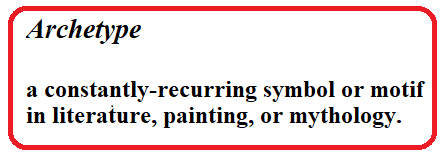
An archetype is an ancient pattern, describing a type of character that exists across different cultures and eras of human history. In ancient times, we had no communication with different cultures, yet our myths and legends share these common, recognizable characters we call archetypes.

I am a great fan of both Joseph Campbell and Christopher Vogler, and the hero’s journey is central to much of my work. In his book, The Hero With a Thousand Faces, Campbell discusses his theory of the journey of the archetypal hero found in world mythologies.

Quote from Wikipedia, the fount of all knowledge:

In his 1949 work, The Hero with a Thousand Faces, Campbell described the basic narrative pattern as follows:

A hero ventures forth from the world of common day into a region of supernatural wonder: fabulous forces are there encountered, and a decisive victory is won: the hero comes back from this mysterious adventure with the power to bestow boons on his fellow man.

There are other archetypal characters that we find in all sorts of guises. Consider the “wise old man/woman/mentor.” This character exists in the stories of all ancient cultures, offering advice, and pushing the protagonist to achieve the goal. The mentor is Obi-Wan Kenobi, Glenda the Good Witch—or even a small, green dispenser of wisdom called Yoda.

Psychology says that an archetype is a recognizable behavioral pattern. In a story, the archetypal character is the embodiment/reflection of that familiar pattern of behavior.

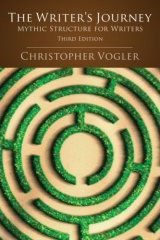
The Writer’s Journey, Mythic Structure for Writers, by Christopher Vogler, details the various traditional archetypes that form the basis of most characters in our modern mythology, or literary canon.

The following is the list of character archetypes as described by Vogler:

  1. Hero: someone who is willing to sacrifice his own needs on behalf of others
  2. Mentor: all the characters who teach and protect heroes and give them gifts
  3. Threshold Guardian: a menacing face to the hero, but if understood, they can be overcome
  4. Herald: a force that brings a new challenge to the hero
  5. Shapeshifter: characters who constantly change from the hero’s point of view
  6. Shadow: a character who represents the energy of the dark side
  7. Ally: someone who travels with the hero through the journey, serving a variety of functions
  8. Trickster: embodies the energies of mischief and desire for change

Christopher Booker, author of The Seven Basic Plots: Why We Tell Stories, tells us that the following basic archetypes underpin the plots of all stories:

  1. Overcoming the Monster
  2. Rags to Riches
  3. The Quest
  4. Voyage and Return
  5. Comedy
  6. Tragedy
  7. Rebirth

We feel comfortable with these basic recognizable plots, no matter how differently they are presented to us. They are peopled with characters we feel we know, friends who occupy the familiar traditional roles. Even in a non-heroic story, we have these archetypes:

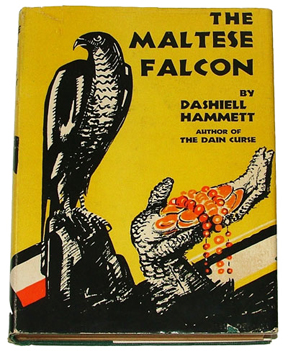
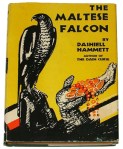
Take The Maltese Falcon, by Dashiell Hammett. The archetype of the plot is a Quest.

On the surface, this is a detective novel, a thriller, nothing at all like The Hobbit, which is an obvious quest tale. However, The Maltese Falcon most definitely is a quest tale.

Yes, it’s a quest with a twist.

The object of the quest is a black statuette of significant value. However, the statue itself is a classic example of a MacGuffin. The MacGuffin’s importance to the plot is not the object or goal itself, but rather the effect it has on the characters and their motivations—in this case, the quest changes Sam’s life. The sole purpose of the MacGuffin is to move the plot forward.
The object of the quest was not the purported “Maltese Falcon” after all, despite the obvious quest to acquire it and the lengths the characters must go to in the process. The true core of the story is the internal journey of both Sam Spade (the hero) and Brigid O’Shaunessy (the shapeshifter/trickster), two people brought together by the quest, and whose lives are changed by it.

So, The Hobbit and The Maltese Falcon begin with the same character archetype of the unintentional hero. Bilbo (the hero) is hired to steal the Arkenstone back from a Dragon for Thorin (the trickster) and the dwarves, and Sam Spade is hired to obtain the Maltese Falcon for Brigid O’Shaunessy.

In both tales, another archetypal role that appears is that of the mentor: Bilbo has Gandalf the Wizard, and Sam Spade has Caspar Gutman. Despite their very different personalities and reasons for offering wisdom, both are mentors.

The fundamental stories are the same: the hero endures hardship to acquire an object (the Maltese Falcon or the Arkenstone) but finds that the object is no longer that important. Sam never acquires the true Maltese Falcon but finds out who really killed his business partner. He loses much in the process and emerges a different man.

Bilbo also loses his naïveté, and after all the work of finally finding it, he hides the Arkenstone because of Thorin’s uncharitable actions toward the Wood-elves and the Lake-men who have suffered from the Dragon’s depredations.

Despite the similarities on the level of archetypes, these are radically different novels.

And that is the beauty of the deeper level of the story. Something so fundamentally similar as plot archetypes and character archetypes can be written so differently that the same story emerges completely unique and wildly dissimilar from others based on that archetype.

I highly recommend this book for anyone interested in learning more of what archetypes are and how they fit into the story:

The Writer’s Journey, Mythic Structure for Writers, by Christopher Vogler


Credits and Attributions:

Wikipedia contributors, “Archetype,” Wikipedia, The Free Encyclopedia, https://en.wikipedia.org/w/index.php?title=Archetype&oldid=906671691 (accessed July 23, 2019).

Christopher Booker (2004). The seven basic plots: why we tell stories. London: Continuum. ISBN 978-0826452092. OCLC 57131450.

Wikipedia contributors, “The Writer’s Journey: Mythic Structure for Writers,” Wikipedia, The Free Encyclopedia, https://en.wikipedia.org/w/index.php?title=The_Writer%27s_Journey:_Mythic_Structure_for_Writers&oldid=804454608  (accessed July 23, 2019).

Wikipedia contributors, “Trickster,” Wikipedia, The Free Encyclopedia, https://en.wikipedia.org/w/index.php?title=Trickster&oldid=811022016  (accessed July 23, 2019).


Comments Off on The Depths of the Word-Pond: Archetypes #amwriting

Filed under writing