
Speaking just for myself, I’d have to say that I feel undermotivated most days. Yeah, there’s battling the dragon that is my laundry pile and the eternal quest to find the bottom of the laundry hamper.
 Then, there’s hunting down and killing the trash and recycling so that we don’t live in a slum, alongside the unlovely side-quest for a clean bathroom. I do these tasks, but they don’t “bring me joy.” I do them so I can get to the good stuff, the best part of the day—which is writing.
Bet you didn’t see that one coming!
I always have multiple projects in the works. This last week, I had a brainstorm that set me in the direction I need to go in order to finish writing the second half of a long novel that has been in the works since 2016. It will be a duology, and while the first half is completed, the second half is barely started. I refuse to publish the first half until the second is ready to go. Readers want the complete story.
The problem I have had with this story is plotting the second half. I have plotted the high points and events, but why must Character B go to such an out-of-the-way place?
 Motivations drive emotions, and emotions drive the plot. People have reasons for their actions, and I needed to give my bad guy a good one. Now I know why he must go there.
B has enemies, more than merely our protagonist. A sub faction, a group acting alone, secretly hopes to stop him. Therefore, someone in B’s inner circle, a person he relies on, will die as the result of a botched assassination attempt on B’s life.
- This death must be laid squarely at the protagonist’s hands (wrongly in this case), and that will stoke the hatred Character B already feels for Character A.
- B is aware that he needs muscle, a company of super soldiers to fill out his army. But he is a traditionalist, and they must be of the tribes. His tribeless soldiers are somewhat trained but don’t really know how to fight. Thus, he needs these highly trained, uber-traditional soldiers, and he needs a lot of them.
In December, I wrote a post, Motivation, and the Council of Elrond. It explores what lies behind each character’s actions and reasoning. Frodo and Samwise end up going to Mount Doom alone, and the Council of Elrond foreshadows the events that occur to make this happen.
And I will just say this now – Boromir had to die because his death raises the stakes and is one of the most heart-wrenching scenes in the book.
 Sometimes, the story demands a death, and 99% of the time, it can’t be the protagonist. But death must mean something, wring emotion from us as we write it. Since the characters we have invested most of our time into are the antagonist and protagonist, we must allow a beloved side character to die.
Character B’s motivations must be clearly defined. Killing a side character can’t be only a means of livening up a stale plot. If a character must die, even a side character, it must galvanize the other characters, force them to action.
And most of all, I want to feel as if I have lost a dear friend when that side character dies.
It must be an organic part of the storyline, move the other characters, and force them to action. Thus, the character who must die in my novel was doomed from the first moment I decided to add them to the mix.
I’ve said this before, but we form our characters out of Action and Reaction. It’s a kind of chemistry that happens on multiple levels.
- It occurs within the story as the characters interact with each other.
- At the same time, the chemistry happens within the reader who is immersed and living the story.
- The reader begins to consider the characters as friends, sometimes even the bad guys.
And in the novel I am working on, my antagonist is a good guy, one who believes he is on the right side. I love this guy. He triggered a mage trap and was corrupted by an evil god, but he is fundamentally still the same person he always was.
It’s just that now he is fighting for the devil.
That emotional attachment is why every sacrifice our characters make must have meaning. It must advance the plot, or your reader will hate you.
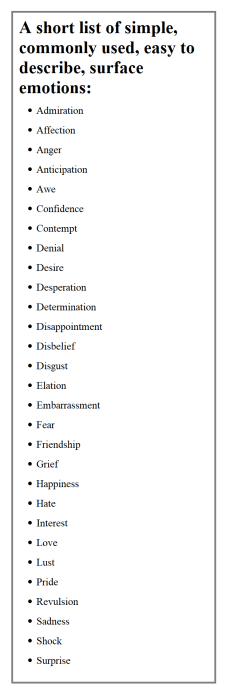
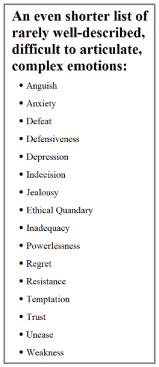 Motivations add fuel to emotions. Emotions drive the scene forward.
So, now I am designing a side character, a kindly mentor for Character B. When the arrow strikes, I want the reader to feel the emotions as strongly as my antagonist. This will involve a balance of more showing than telling, but I find strong emotions are easy to show.
What I struggle with is showing the subtler emotions.
Which is why it takes so long for me to finish writing a book.
Credits and Attributions:
IMAGE: Front Cover of The Emotional Craft of Fiction: How to Write the Story Beneath the Surface – Kindle edition by Maass, Donald. Reference Kindle eBooks @ Amazon.com.


 Life in the Realm of Fantasy