Tag Archives: gallows humor

Schadenfreude, Schrodinger’s Tea Cup, and Gallows Humor #amwriting

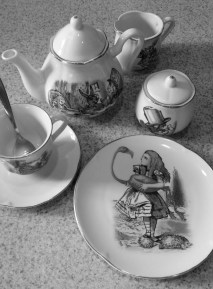
My teacup has a fundamental problem. I no sooner fill it up than it is empty. I feel this is a prime example of particle physics in action. I set the cup filled with hot tea on my desk, write a few words, and it is empty when I reach for it a short while later.
WritingCraft_Dark_EnergyIt’s a mystery. The cup is full, and then it is empty, a Schrodinger’s cup of tea, there and not there.

But I digress.

A few years ago, I reconnected with an old word, one regaining popularity in the English language: schadenfreude (shah-den-froid-deh). This word from our Germanic roots describes the experience of happiness or self-satisfaction that comes from witnessing or hearing about another person’s troubles, failures, or humiliation.

It’s a feeling we are all familiar with, as we often experience it on a personal level.

When the rude neighbor steps in the pile of dog doo her puppy left on the sidewalk (and which she chose not to clean up), we feel a little schadenfreude.

Schadenfreude is a complex emotion. Rather than feeling sympathy towards someone’s misfortune, we find a guilty pleasure in it. Writing a little hint of schadenfreude into our narrative makes our characters feel more natural.

Decent people don’t promote bullying or harassment as a positive thing. But in the written narrative, we do want to inspire that feeling of “payback” in the reader whenever a little instant karma temporarily halts the antagonist. It’s an uncharitable emotion, but it is natural.
desaturated alice Tea setHumans are amused by things and incidents that violate the accepted way things should work and which do so in a non-threatening manner. We see the characters having difficulty in certain situations and find humor in the fact their dilemmas are so relatable.

When an author injects a little self-mocking humor into a narrative, the reader feels an extra burst of endorphins and keeps turning the pages. The way the characters react to these situations is what keeps me reading.

I love exchanges of snarky dialogue, mocking irreverence, and sarcasm. They liven up regrouping scenes and add interest to moments of transition from one scene to the next.

I am keenly aware that what appeals to me might not to you.

The truth is, humor is as much cultural as it is personal. The things we find hilarious vary widely from person to person. Sometimes the strangest things will crack me up, things another person sees no humor in.

Some people have an earthy sense of humor, while others are more cerebral. For me, the best comedy occurs when the conventional rules are undercut or warped by a glaring incongruity, something out of place, contrasted against the ordinary.

I have never liked slapstick as a visual comedy because I see it as a form of bullying, and I just can’t watch it. But in the narrative, putting your characters through a little ironic disaster now and then keeps a dark theme moving forward.

Gallows humor is more than merely mocking ill fortune. The tendency to find humor in a desperate or hopeless situation is a fundamental human emotion. When I was growing up, my family ran on “gallows humor” and still does, to a certain extent. We put the “fun” in dysfunctional.

This is why gallows humor finds its way into my work. We all need something to lighten up with now and then.

Humor in the narrative adds both depth and pathos to the characters. It humanizes them, and you don’t need to resort to an info dump to show their personality. Each character’s sense of humor (or lack thereof) demonstrates who they are and why we should care about them.

I can’t know what you find humorous, but I do know what makes me smile. I like snark and witty comments, a bit of banter back and forth in the face of impending trouble.
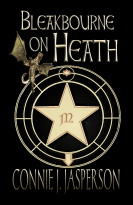
Bleakbourne front Cover medallion and dragon copyI like things that surprise me, situations that detour sharply from the expectations of normal. In Bleakbourne on Heath, I took this to an extreme with the characters of the two knights, Lancelyn and Galahad. I gave Lance a real problem – all magic rebounds from him. Only one person can remove that spell, Morgause, because she cursed him with it.

In a world of sorcerers and magic, that is a curse offering many opportunities for trouble. (Heh heh!)

I like putting my protagonists in situations where they must deal with embarrassment, do a dirty job, and learn they are merely human after all.

It adds a little fresh air at places where the character arcs could stagnate.

The act of writing humor occurs on an organic level, frequently arising during the first draft before the critical mind has a chance to iron it out. It falls out of my mind with the bare bones of the narrative.
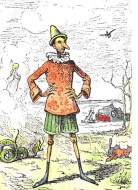
Enrico Mazzanti (1852-1910), Public domain, via Wikimedia CommonsI do have a cruel streak when it comes to my written characters. The ability to laugh at oneself and to learn from missteps is critical in real life. Admitting you are the architect of your own disaster and accepting your own human frailty is a major step to adulthood.

So, now that I have finished that rant, I shall refill my Schrodinger’s-brand teacup and relax on the balcony, daydreaming and watching the street below. Perhaps this time, I won’t lapse into a fugue state as I drink it.
8 Comments

Filed under writing

Schadenfreude and Humor #amwriting

September is conference month for me. I just finished attending the Southwest Washington Writers’ Conference in Centralia, Washington. On Thursday the 12th of September, I will be in Seattle for four days at the Pacific Northwest Writers’ Association Conference.

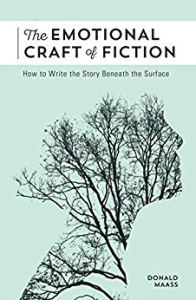
I will be attending a masters’ class offered by Donald Maass, on exploring depth with The Emotional Craft of Fiction.

Writers’ conferences are great ways to connect with agents and publishers, but they are also excellent ways to connect with other writers. A good conference offers the best education a new and beginning author can get.

This last Saturday, while in a seminar on injecting humor into the narrative, I reconnected with an old word that is making a resurgence in the English language: Schadenfreude (shah-den-froid-deh) This word from our Germanic roots describes the experience of happiness or self-satisfaction that comes from witnessing or hearing about another person’s troubles, failures, or humiliation.

I discovered this lovely (Deutsch) German word years ago while in college and had forgotten it. However, we are all familiar with it, as we experience it on a personal level quite often.

About schadenfreude, Via Wikipedia:

Schadenfreude is a complex emotion, where rather than feeling sympathy towards someone’s misfortune, schadenfreude evokes joyful feelings that take pleasure from watching someone fail. This emotion is displayed more in children than adults; however, adults also experience schadenfreude, though generally concealed.

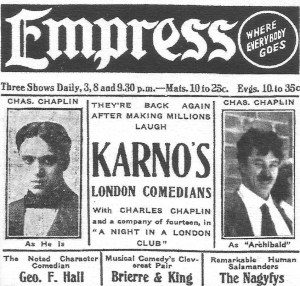
In other words, we know it’s an uncharitable emotion, and we don’t like it in others. But for many centuries, popular humor had an aspect of schadenfreude to it. Charlie Chaplin, The Three Stooges, and Jerry Lewis were all popular comedy acts of the 20th century who employed physical comedy that evoked a feeling of schadenfreude in the audience.

Since the ancient Greeks, Chinese, and Egyptians began writing plays, people have always enjoyed seeing other people’s missteps and pratfalls as long as the comedian recovers with a smile and “keeps on keepin’” on. Aristotle said that we are amused when we feel superior to others.

Dr. Adam Potthast, in his 2016 thesis on the Ethics of Slapstick Humor discussed how the recurring themes of clowns and idiots in popular slapstick comedy evoke a subtle feeling of superiority and also desensitizes us to violence. It makes bullying acceptable.

And, until recent years, dealing with bullying has been a common theme of childhood that teachers and parents, all former victims of bullying, weren’t equipped to deal with. According to Andy Luttrell in his post for Social Psych Online, psychologists believe we find something funny when it’s a “benign violation.” In other words, we are amused by things and incidents that violate the way we think things should work and which do so in a non-threatening manner.

In our current society, we don’t want to promote bullying or harassment as a positive thing in any form. But in the narrative, we do want to inspire that feeling of “payback” in the reader whenever roadblocks—instant karma—temporarily halt the Antagonist. If we can inject a little humor into a narrative, the reader feels an extra burst of endorphins and keeps turning the pages.

Exchanges of snarky dialogue (mocking irreverence and sarcasm) liven up regrouping scenes, transitions from one event to the next.

Humor and what is hilarious can vary widely from person to person. E. B. White wrote, “Humor can be dissected, as a frog can, but the thing dies in the process, and the innards are discouraging to any but the purely scientific mind.”

He was right. I can’t know what you find humorous, but I do know what makes me smile. I like snark and witty comments. I like things that surprise me, and which take a sudden detour from the expectations of normal.

Some of us have an earthy sense of humor, while others are more cerebral. For me, humor occurs when conventional rules are undercut or warped by incongruity. I have never liked slapstick as a visual comedy, but Horror authors often have it right: in the narrative, putting your characters through a little comedic disaster now and then can’t hurt.

When I was growing up, my family ran on “gallows humor” and still does, to a certain extent. We put the “fun” in dysfunctional.

That grim and ironic tendency to find humor in a desperate or hopeless situation is a fundamental human emotion.

This is why I often find myself writing gallows humor into my own work. We all need something to lighten up with now and then.

Adding a little humor can add both depth and pathos to the characters, humanizing them without your having to resort to an info dump. Each individual character’s sense of humor (or lack thereof) shows more of who they are and why the reader should care about them.

For many reasons, humor is an aspect of depth in the narrative that is impossible to fully define, but which adds a little fresh air at places where the story arc could otherwise stall.

Humor in literature occurs on an organic level, arising during the first draft before the critical mind has a chance to iron it out. Have you found yourself writing the occasional hilarity into your work? If not, why not? What holds you back from expressing this aspect of your personality in your work?

Comments Off on Schadenfreude and Humor #amwriting

Filed under writing

#FlashFictionFriday: The Cat was a Bastard

I love rhyming poems especially those with a simple, traditional feeling meter. And, every now and then I get in a silly mood, a moment where a single line will stick in my head, a simple, off-the-wall sentence that becomes something upon which to hang a comic poem. When that happens, all bets are off and this sort of thing is the result.

In this case, it was the stray memory of a joke my late father frequently told (and my mother deplored), “Home is where you can spit on the floor and call the cat a bastard.” This inappropriate oneliner morphed in my head to: The Cat was a Bastard, an equally inappropriate poem, displaying my low origins and affection for gallows humor.


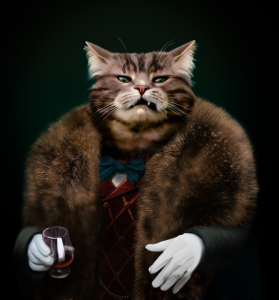
boss-cat-id-72054715-mariia-sigova-dreamstime

The Cat was a Bastard


Around the corner and down the lane

Hurtled my car through hard, driving rain.

And from the brush near the verge of the road

Came running a cat, now dead as a toad.


I stopped the car, to check on the corpse,

A cottage did see, the cat’s home of course.

And bearing the body through pouring down rain,

I pressed on the doorbell, and then pressed again.


A lady quite elderly, shriveled, and old,

Opened the door and eyed me, quite cold.

“Your cat, I presume?” I gravely inquired.

“He’s met his end, with the aid of my tire.”


Her gaze was quite steely, as coolly she said,

“And what’s it to me that the old wretch is dead?

“I always knew his would be a bad end,

“His tomcatting ways he never would mend.”


Mystified, I thought an error had been made

For she looked like a cat-lady, proper and staid.

“Are you speaking of this cat, Madame?” I said,

“This flat-headed cat, who surely is dead?”


“The cat was a bastard,” the woman replied.

“We’re glad to see the old lecher has died.

“An untidy end for the bastardly cat,

“The lazy old thing who ne’er caught a rat.”


Shocked, I just stared, then set down the corpse

And turned to depart, bewildered, of course.

Let this be a lesson to tomcats who stray,

Don’t cross the road on a cold, rainy day.


The Cat was a Bastard © Connie J. Jasperson 2017, All Rights Reserved

Stock Illustration:

Boss Cat ID 72054715 © Mariia Sigova | Dreamstime.com

3 Comments

Filed under #FlashFictionFriday, Poetry, writing