Tag Archives: motivation

Emotional show and tell part 2 – motivation #writing

Speaking just for myself, I’d have to say that I feel undermotivated most days. Yeah, there’s battling the dragon that is my laundry pile and the eternal quest to find the bottom of the laundry hamper.
MyWritingLife2021Then, there’s hunting down and killing the trash and recycling so that we don’t live in a slum, alongside the unlovely side-quest for a clean bathroom. I do these tasks, but they don’t “bring me joy.” I do them so I can get to the good stuff, the best part of the day—which is writing.

Bet you didn’t see that one coming!

I always have multiple projects in the works. This last week, I had a brainstorm that set me in the direction I need to go in order to finish writing the second half of a long novel that has been in the works since 2016. It will be a duology, and while the first half is completed, the second half is barely started. I refuse to publish the first half until the second is ready to go. Readers want the complete story.

The problem I have had with this story is plotting the second half. I have plotted the high points and events, but why must Character B go to such an out-of-the-way place?
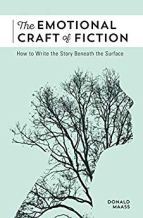
Maas_Emotional_Craft_of_FictionMotivations drive emotions, and emotions drive the plot. People have reasons for their actions, and I needed to give my bad guy a good one. Now I know why he must go there.

B has enemies, more than merely our protagonist. A sub faction, a group acting alone, secretly hopes to stop him. Therefore, someone in B’s inner circle, a person he relies on, will die as the result of a botched assassination attempt on B’s life.

  1. This death must be laid squarely at the protagonist’s hands (wrongly in this case), and that will stoke the hatred Character B already feels for Character A.
  2. B is aware that he needs muscle, a company of super soldiers to fill out his army. But he is a traditionalist, and they must be of the tribes. His tribeless soldiers are somewhat trained but don’t really know how to fight. Thus, he needs these highly trained, uber-traditional soldiers, and he needs a lot of them.

In December, I wrote a post, Motivation, and the Council of Elrond. It explores what lies behind each character’s actions and reasoning. Frodo and Samwise end up going to Mount Doom alone, and the Council of Elrond foreshadows the events that occur to make this happen.

And I will just say this now – Boromir had to die because his death raises the stakes and is one of the most heart-wrenching scenes in the book.
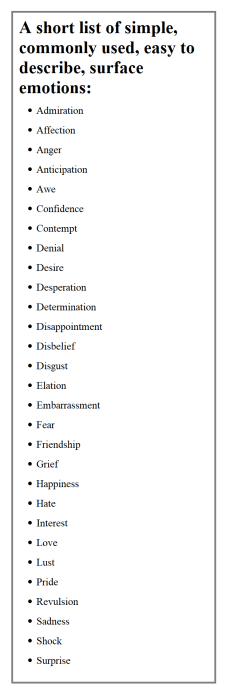
emotionwordslist01LIRF06232020Sometimes, the story demands a death, and 99% of the time, it can’t be the protagonist. But death must mean something, wring emotion from us as we write it. Since the characters we have invested most of our time into are the antagonist and protagonist, we must allow a beloved side character to die.

Character B’s motivations must be clearly defined. Killing a side character can’t be only a means of livening up a stale plot. If a character must die, even a side character, it must galvanize the other characters, force them to action.

And most of all, I want to feel as if I have lost a dear friend when that side character dies.

It must be an organic part of the storyline, move the other characters, and force them to action. Thus, the character who must die in my novel was doomed from the first moment I decided to add them to the mix.

I’ve said this before, but we form our characters out of Action and Reaction. It’s a kind of chemistry that happens on multiple levels.

  • It occurs within the story as the characters interact with each other.
  • At the same time, the chemistry happens within the reader who is immersed and living the story.
  • The reader begins to consider the characters as friends, sometimes even the bad guys.

And in the novel I am working on, my antagonist is a good guy, one who believes he is on the right side. I love this guy. He triggered a mage trap and was corrupted by an evil god, but he is fundamentally still the same person he always was.

It’s just that now he is fighting for the devil.

That emotional attachment is why every sacrifice our characters make must have meaning. It must advance the plot, or your reader will hate you.
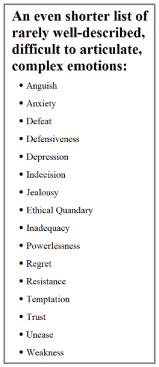
emotionwordslist02LIRF06232020Motivations add fuel to emotions. Emotions drive the scene forward.

So, now I am designing a side character, a kindly mentor for Character B. When the arrow strikes, I want the reader to feel the emotions as strongly as my antagonist. This will involve a balance of more showing than telling, but I find strong emotions are easy to show.

What I struggle with is showing the subtler emotions.

Which is why it takes so long for me to finish writing a book.


Credits and Attributions:

IMAGE: Front Cover of The Emotional Craft of Fiction: How to Write the Story Beneath the Surface – Kindle edition by Maass, Donald. Reference Kindle eBooks @ Amazon.com.

5 Comments

Filed under writing

Motivation, and the Council of Elrond #amwriting

Authors talk a lot about motivation, often speaking in general terms. In a writing group, if a fellow member is stuck, we will ask them what their characters want most and what they’re willing to do to obtain it.

writing craft functions of the sceneThat question is a good place to start, but it is only the surface layer of the pond.
  • Motivation is sometimes defined as the overall quest.
  • Motives are more intimate, secrets held closely by the characters.

I like to use a watershed scene from the book The Fellowship of the Ring, as an example of this. If you have only seen the movie, you haven’t seen the real story as Tolkien himself told it. Let’s look at the Council of Elrond.

This scene is the only one where most of the characters are gathered in one place. They are there to decide who will mount the quest to destroy the One Ring. The scene is set in Rivendell, Elrond’s remote mountain citadel.

Each character attending the council has arrived there on a separate errand. Each has different hopes for what will ultimately come from the meeting. Despite their various agendas, each is ultimately concerned with the Ring of Power. Each wants to protect their people from Sauron’s depredations if he were to regain possession of it.

This scene serves several functions:

Information/Revelation: The Council of Elrond conveys information to both the protagonists and readers.

the fellowship of the ringIt is a conversation scene, driven by the fact that each person in the meeting has knowledge the others need. Conversations are good when they deploy necessary information. Remember, plot points are driven by the characters who have critical knowledge.
The fact that some characters are working with limited information creates tension. At the Council of Elrond, many things are discussed, and the whole story of the One Ring is explained, with each character offering a new piece of the puzzle. The reader and the characters receive the information simultaneously at this point in the novel.

Every person in the Fellowship is motivated by the need to keep the One Ring from falling into Sauron’s hands. This is the acknowledged reason for their accompanying Frodo and is the core plot point around which the story unfolds.

Yet, everyone attending the council has an unspoken agenda that will affect Frodo’s mission. Ultimately, those secret motives are the undoing of some and the making of others.

Samwise is a loyal friend who refuses to leave Frodo’s side. Fear that Frodo will need him forces him to insist on being included.

Pippin and Merry have similar but different reasons—they don’t want to be left out if Frodo and Sam are going on an adventure. Their motives are simple at the outset but become more complicated as their stories diverge and unfold.

Boromir desires the Ring for what he believes is a noble purpose and intends to take it to Minas Tirith. He knows the power of the Ring and believes that if he possesses it, Gondor will return to its former glory and be safe forever. He will rule the world with a just hand.

Thus, Boromir’s true motive is a quest for personal power. His agenda kicks into place at Amon Hen.

The Council of Elrond serves several functions:

The_Fellowship_of_the_Ring_coverInformation/Revelation: The Council of Elrond conveys information to both the protagonists and readers. It is a conversation scene, driven by the fact that each person in the meeting has knowledge the others need. Plot points are propelled by the characters who have critical knowledge. Again, limited information creates tension.
Interracial bigotry emerges, and a confrontation ensues. At the Council of Elrond, long-simmering racial tensions between Gimli the Dwarf and Legolas the Elf surface. Each is confrontational by nature, and it’s doubtful whether they will agree to work together.

Sometimes, a verbal confrontation gives the reader the context needed to understand why the action occurred. The conversation and reaction give the scene context, which is critical. A scene that is all action can be confusing if it has no context.

Other conflicts are explored, and heated exchanges occur between Aragorn and Boromir.

Pacing: We have action/confrontation in this vignette, followed by conversation and the characters’ reactions.

Negotiation: What concessions will be required to achieve the final goal? These concessions must be negotiated.

First, Tom Bombadil is mentioned as one who could safely take the Ring to Mordor as it has no power over him. Gandalf feels he would simply lose the Ring or give it away because Tom lives in his own reality and doesn’t see Sauron as a problem.

Bilbo volunteers, but he is too old and frail. Others offer, but none are accepted as good candidates for the job of ring-bearer for one reason or another.

Each justification Gandalf and Elrond offer for why these characters are wrong for the job deploys a tidbit of information the reader needs.

Turning Point: After much discussion, revelations, and bitter arguments, Frodo declares that he will go to Mordor and dispose of the Ring, giving up his chance to live his remaining life in the comfort and safety of Rivendell. Sam emerges from his hiding place and demands to be allowed to accompany Frodo. This is the turning point of the story.

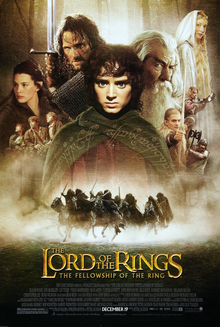
The_Lord_of_the_Rings_The_Fellowship_of_the_Ring_(2001)_theatrical_posterThe movie portrays this scene differently, with Pip and Merry hiding in the shadows. Also, in the book, the decision about who will accompany Frodo, other than Sam, is not made for several days, while the movie shortens it to one day.
The fundamental laws of physics, the rules that govern the universe, are in force here: Everything in that chapter happens for a reason. There is always a causative factor.

  • Without a cause, there is no effect.
  • Cause is motivation.
  • Effect becomes cause, which becomes motivation.
  • Motivation is a chain reaction of cause and effect, which becomes the story.

And it’s all traceable back to the character’s desire to do or have something.

Characters that feel too shallow sometimes lack sufficient personal motivations. The reader can’t see why they would buy into the larger quest.

If we have supplied each character with a secret backstory, those hinted-at motives can sometimes push the story into newer, more original waters.

And, isn’t that what we readers are looking for? We read because we are searching for a story that feels new, one that offers us a fresh view of the world through the characters’ eyes.


Credits and Attributions:

The Lord of the Rings: The Fellowship of the Rings, Theatrical release poster, New Line Cinema, © 2001, all rights reserved. Wikipedia contributors, “The Lord of the Rings: The Fellowship of the Ring,” Wikipedia, The Free Encyclopedia, https://en.wikipedia.org/w/index.php?title=The_Lord_of_the_Rings:_The_Fellowship_of_the_Ring&oldid=1186704895 (accessed December 3, 2023). Fair Use.

Comments Off on Motivation, and the Council of Elrond #amwriting

Filed under writing

Dark energy—villainous motivation #amwriting

One character archetype essential to any tale is the villain. Yet, despite being crucial to the story, this character is often less developed and two-dimensional.

WritersjourneysmallIn his book, The Writer’s Journey, Mythic Structure for Writers, Christopher Vogler discusses how the villain of a piece represents the shadow. The enemy injects the narrative with the momentum of dark energy, powering the plot.

Some of the best narratives I’ve read feature the antagonist as the protagonist. We want to see them succeed, yet we fear they will and know it can’t end well. This tension creates a memorable narrative.

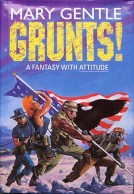
One novel that stuck with me was Grunts! by Mary Gentle. She features the orcs as the protagonists, and one feels a great deal of sympathy for the devil.

From Wikipedia:

Grunts! (1992) is a satiric fantasy novel by British writer Mary Gentle. It is set in a basic fantasy world taken from the usual The Lord of the Rings mould, with orcs and elves using magic and typical medieval weaponry, but it plays heavily on black comedy and strong doses of violence and graphic description, frequently depicting scenes “over the top.”

Grunts!The story follows a group of orcs who always find themselves on the front lines of battle against the carefully prepared and always triumphant forces of good. The orcs decided to organize themselves and fight back. As a satire of high fantasy the novel mocks most of the conventions of the genre from using traditional villainous races, orcs, as the protagonists, to having the noble characters have much less than noble motivations and secrets.

The opening of the book plays up the orc warleader sent to reclaim a weapons cache in preparation for the ‘Last Battle’ between good and evil, which is well on its way. They are assisted by a pair of halflings whose cute demeanor is contrasted with extremely violent acts. [1]

In any narrative, the shadow provides opportunities for contrast. Whether a person, a creature, or a natural disaster, the antagonist represents darkness (evil), against which light (good) is shown more clearly. Also, the shadow, whether a person, place, or thing, provides the roadblocks, the reason the protagonist must struggle.

Large predatory animals will be aggressive toward humans because hunters need a large habitat and hefty prey. They are unpredictable and will attack when we enter what they see as their territory. This is plot-fodder for many a scary horror novel.

Storms and natural disasters make perfect antagonists. Everyone loves a good disaster novel or movie because when nature throws a tantrum, it’s terrifying and deadly. People love nothing more than tales of humanity surviving and overcoming the worst that nature can do.

Animals and natural disasters are straightforward antagonists with little room for backstory.

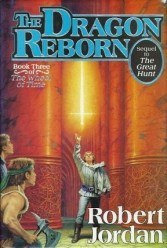
WoT03_TheDragonRebornHowever, when the antagonist is a person, I ask myself, why this person opposes the protagonist? What drives them to create the roadblocks they do? Why do they feel justified in doing so?
Perhaps you are writing a memoir. Who or what is the antagonist? After all, memoirs are written to shed light on the difficulties the author has overcome, so who or what frustrated your efforts? In some autobiographies, it is a parent or guardian. Other times it is society, the standards and values we impose on those who don’t fit into the slots designated for them.

For many novels, the enemy is the protagonist’s inhibitions and self-doubt.

In others, the two main characters have a sharply defined good versus evil chemistry. (Trust me, the antagonist is a main character, or the hero has nothing to struggle against.)

The struggle makes the story. The characters on both sides of the battle must recognize and confront the darkness within themselves. They must choose their own path—will they fight to uphold the light? Or will they take the easier way, following the shadow?

When the protagonist must face and overcome the shadow on a profoundly personal level, they are placed in true danger. The reader knows that if the hero strays from the light, they will unknowingly offer up their soul.

The best shadow characters are shown to have many layers, and not all of them are bad. They are charismatic because we can relate to their struggle. We may hope events will change them for the better but know in our hearts they won’t.

Characters portrayed as evil for the sake of drama can be cartoonish. Logic must support their actions, or the villain is not believable.

The most fearsome villains have deep stories. Yes, they may have begun life as unpleasant children and may even be sociopaths. Something started them down that path, reinforcing their logical reasons for what we consider villainy.

Speculative fiction has a trap waiting to snare the unwary writer. When the plot centers around the pursuit of a desired object, authors spend enormous amounts of time working on all the supporting reasons for the quest. They give the hero firm, logical reasons for struggling to acquire the Golden McGuffin.

Where some fantasies fail is in depicting the enemy. The villain must also have a plausible explanation for going to the lengths they do to thwart our heroes.

A mere desire for power is NOT a good or logical reason unless it has roots in the enemy’s past. Why does Voldemort desire that power? What fundamental insecurity drives them to acquire absolute control over every aspect of their life and to exert control over the lives of their minions?

LarrysPostRapturePetSittingService_EllenKingRiceWe must remember that the characters in our stories don’t go through their events and trials alone. We drag the reader along for the ride the moment we begin writing the story. They need to know why they’re in that handbasket and where the enemy thinks they’re going, or the narrative will make no sense.

Ask yourself a few questions:

  • What made your villain turn to the darkness?
  • What events gave them the strength and courage to rise above the past, twisted though they are?
  • What is the void that drives their agenda?
  • What do they hope to achieve?
  • Why do they believe achieving their goal will resolve the wrongs they’ve suffered?

None of this backstory needs to be dumped into the narrative. It should emerge in tantalizing bits and hints as the plot progresses and conversations happen.

We must make the hero’s ultimate victory evoke emotion in the reader. But we also want them to think about the dilemmas the characters have faced.

The villains we write into our stories represent humanity’s darker side, whether they are a person, a dangerous animal, or a natural disaster. They bring ethical and moral quandaries to the story, offering food for thought long after the story has ended.


Credits and Attributions:

[1] Wikipedia contributors, “Grunts!,” Wikipedia, The Free Encyclopedia, https://en.wikipedia.org/w/index.php?title=Grunts!&oldid=1117040155 (accessed August 6, 2023).

5 Comments

Filed under writing