Tag Archives: NaNoWriMo

#NaNoPrep: What we think the story might be about #amwriting

This is the third installment of our NaNoWriMo Prep series. I’ve listed links to the previous posts at the end of this rant. We now have an idea of who our characters are. We also know a bit about the world in which our narrative will be set. We know the genre we’re writing in.
WritingCraft_NaNoPrep_101Now, we’re going to hear what our characters have to say about what their story might be.

Our characters step from our imagination and onto the first page. When we begin writing, we see them as people we are just getting to know. At first, our characters want us to think they’re unselfish. They desperately desire what they believe they deserve. They will evolve as we write because they will tell us their backstory. But we have an idea of their personality and how they might react.

In real life, people are a mix of good and bad at the same time. Some lean more to good, others to bad. Either way, most people have good, logical reasons for their decisions. How they deal with the hurdles you will present to them will show you who they are. By the end of November, you will know them well.
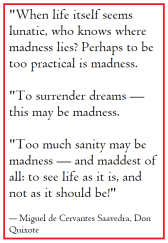
where-madness-lies-miguel-de-cervantesAn important point to remember is that no matter how decent they are, people lie to themselves about their motives. It’s human nature to obscure truths we don’t want to face behind other, more palatable truths. Those secrets will emerge as you write.

So, what is the story about at this early stage? Do you have an idea of the core conflict, the central problem that all the other events lead up to?

Sometimes, we have a banger of a plot, and the book writes itself. Other times, we have brilliant characters but only a vague idea of their conflict.

Consider the beginning: At the outset of any good story, we meet our protagonist and see them in their surroundings. An event occurs (the inciting incident), and the hero is thrown out of his comfort zone and into the situation, which is the core idea of your plot. 

This is the circumstance in which your protagonist finds himself at the story’s beginning. This is where I ask myself several questions.

  • How will the story start?
  • In the first paragraph on page one, what is the hero’s condition (strength, health, emotional state)?
  • What event could possibly entice her out of her comfort zone?
  • What is the core conflict?

If you know what the situation is, write it down:
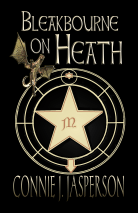
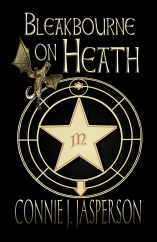
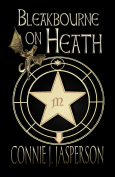
  • Bleakbourne front Cover medallion and dragon copyIn my most recent book, Bleakbourne on Heath, Leryn the Bard hunts for strange folk tales and new songs (how it starts).
  • He wants to find a wife and have a normal life (what he wants).
  • But he has stopped in Bleakbourne on the river Heath and immediately becomes caught up in Merlin’s troubles (the conflict).
  • Leryn cares about the distinctly different people of Bleakbourne, who become his family. By the midpoint, he is driven to protect Bleakbourne and the people he loves no matter the cost (how far he will go to achieve his goal).

A few sentences detailing your flashes of inspiration will remind you of what you need when you begin writing. You don’t have to go into detail, just jot those ideas down and keep the list handy.

This kind of pre-writing serves an important purpose for novels I intend to begin in November.

I do it so I don’t become desperate and resort to off-the-wall events or killing off characters (ala G.R.R. Martin) just to stir things up.
route recalculatingI’m going off-topic here for a moment. While the death of a character stirs the emotions, it must be a crucial turning point in that story. It must be planned and be the impetus that changes everything. The death of a character must drive the remaining characters to achieve greatness.

Death for the shock value doesn’t help because you run out of characters. Readers don’t like it when you kill off someone they’ve become attached to, and you might wish you had that character later. Nothing says “oops!” more clearly than bringing a dead character back to life (Bobby Ewing).

Yeah, you can pretend the entire last year was all a dream as they did in the TV series Dallas. But I think keeping the characters I’ve invested so much time into creating alive is a lot easier than trying to bring them back from the dead.
But I'm not superstitious, LIRFUnless, of course, you are writing paranormal fantasy. Death and resurrection may be the whole point if that’s the case.

Once I begin work on my November novel, a more detailed outline of my story arc will evolve. As mentioned a gazillion times, I keep my notes in an Excel workbook. It contains maps, calendars, and everything about any novel set in that world, keeping it in one easy-to-find place.

As the writing progresses, the plot evolves and deviates from what I originally planned. It always does because nothing is engraved in stone. The characters themselves will drive the story in a different direction than was first imagined. I will note those changes on the outline and update my list of made-up words. Also, (if needed), I will edit my sketchy maps.

Many writers will fall by the way and never finish their novels, as they forget what they’re writing, don’t know how to go forward, and then lose momentum. I suggest you write those first ideas down when they occur to you, so when you begin writing the novel, you will have these keys to unlock the story.
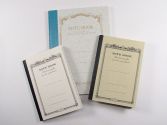
800px-NotebooksIf your employment isn’t a work-from-home job, using the note-taking app on your cellphone to take notes during business hours will be frowned upon. I suggest keeping a pocket-sized notebook and pencil or pen to write those ideas down as they come to you.

That is an old-school solution but will enable you to discreetly make notes whenever you have an idea that would work well in your story. The best part is that you don’t appear distracted or off-task, and you will have those ideas in November when you need them.

Next up, we’ll look a little deeper into discovering what the core of the story might be.


Previous posts in this series:

#NaNoPrep: creating the characters #amwriting | Life in the Realm of Fantasy (conniejjasperson.com)

#NaNoPrep: The initial setting #amwriting | Life in the Realm of Fantasy (conniejjasperson.com)
5 Comments

Filed under writing

#NaNoPrep: The initial setting #amwriting

If you are new to NaNoWriMo (or to writing in general), this series of posts is for you. The goal of participating in NaNoWriMo is to write 50,000 words on your novel in the month of November. A successful NaNoWriMo is easier to achieve if we have a preflight checklist (which can be found at the bottom of this post).

WritingCraft_NaNoPrep_101We talked about getting a start on our characters in Monday’s post. Today, we’re going to visualize the place where our proposed novel is set, the place where the story opens.
Where do you see your story taking place? In the real world? A fantasy realm? Space? An alternate dimension? Alternate Earth? Today, we’re focusing on the opening setting.

I write fantasy, and much of my work is set in an invented world. I began creating this world as the storyline for a post-apocalyptic anime-style RPG game for PC (that never went into production).

Fifteen years on, most of what I need to know about this world is canon and can’t be changed. But at the outset in 2007, all I knew was the premise of the conflict: the gods had been at war, and it involved three worlds. I needed to see how that conflict had changed the landscape because a disaster on that scale would dramatically affect the people of three worlds.

In science fiction and other genres, in series that are set in one world/universe, the word canon refers to historic and previously established events and occurrences in that reality. When something is declared impossible in the early narratives, it cannot be possible in later novels without some logical explanation.

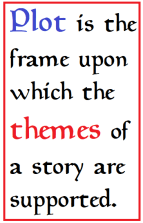
plot is the frame upon which the themes of a story are supportedAll worldbuilding must show a world that feels as natural to the reader as their native environment. I used the forests and lowlands of Western Washington State as my template. The entire series evolved out of three paragraphs that answered the following question:

  • The “War of the Gods” broke three worlds – how did that affect their civilizations?

The War of the Gods is central to Neveyah’s religion, a trauma that shapes their lives as much as it does their world. One can never escape the visible scar, the immensity that divides the world in half: the Escarpment. It is the wound where the World of Cascadia was joined to the World of Neveyah.

Once I have a mental image of the visuals of the world I am writing, I ask myself, “Does the environment shape society?”

Since this example is set in a post-apocalyptic world, the characters live in a low-tech agricultural society. Resources are scarce.

  • How can the environment create tension in the narrative?

I want to see that raw, just-born environment when I begin writing. In the case of this world, one fundamental theme binding the narratives together is the balance of nature and how delicate it is.

Here is a quick, easy exercise in worldbuilding, one that will take less than five minutes:

  • Close your eyes and visualize your real-world environment.
  • Then, without looking around, write a word picture of it.

I am sitting on a balcony. My chair is a saucer chair, not easy to get out of but comfortable once I’m in it. Traffic on the street below is noisy, but the sun is shining, and rain is expected to move in over the next few days.

Once you have written a paragraph or two that describes your personal world, you understand how worldbuilding works. You can visualize your characters’ community and write a two-paragraph word picture of that imaginary place.

So—about the storyboard we discussed in Monday’s post. Now is a good time to start if you haven’t already done so. Here is a screenshot of the tabs on my storyboard/stylesheet that has been fifteen years in the making:

tabs of a stylesheet

Your storyboard/stylesheets will be much simpler, just one page to start out with.

If your work is set in an actual location, you should know where to find resources for appropriate slang, urban myths, and other local peculiarities. My co-municipal Liaison, Lee French, reminds us that we don’t have to immerse ourselves immediately. We just want to lay the groundwork for November, to have things handy when we start writing in earnest on November 1st.

Sci-fi writers should bookmark or list sites for any science you may need. If it takes place on a spaceship, you should have a good idea of what the ship looks, sounds, and smells like, a floorplan, and maybe consider what might power it.

Fantasy writers, if your novel is set in a made-up universe/world/town, what is the big-picture of your setting? Is the starting point near a river, forest, an ocean, or a desert? Again, you don’t have to know everything in precise detail, but you should put down some starter notes, because environment determines food and resources that may come into play later.

If you’re writing in the real world as we know it—make good use of Google Earth. Bookmark (or make a list of) the websites that offer accurate information about those places.

If you intend to add sci-fi or fantasy elements, such as zombies, magic, dragons, or future tech to our current world, you’ll want to think about the effect those elements will have on the environment. The presence of large flying predators would limit outdoor activities. Even if your dragons aren’t carnivorous, they are usually depicted as rather birdlike in appearance and habit.

dragonSeagulls are a good example of what could happen. They fly and do their business while on the wing, and sometime find enjoyment in “bombing” windshields.
That sort of package dropping from the sky could make for a startling end to the average family barbecue. Grandma’s potato salad would likely be served indoors so as to not encourage dragonly target practice.

My RPG-based world has creatures that cast certain magic as weapons or defensively. Their presence in the wild makes traveling without guards dangerous. Thus, the environment offers plot opportunities for employment.

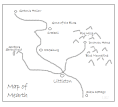
sample-of-rough-sketched-mapSome of us (Me! Me!) will make pencil-sketched maps of our fantasy world or the sci-fi setting. I find that maps are excellent brainstorming tools for when I can’t quite jostle a plot loose. It’s a form of doodling, a kind of mind wandering, and helps me find creative solutions to minor obstacles.
But you don’t have to go to all that trouble at one sitting. Just briefly note your ideas for worldbuilding because we will come back to this and flesh out the details later. For now, all you need is the overview of the world on the day your story opens.

Previous in this series:

#NaNoPrep: creating the characters #amwriting | Life in the Realm of Fantasy (conniejjasperson.com)

NaNoPrep-pre-flight-checklist-LIRF09302021

6 Comments

Filed under writing

#NaNoPrep: creating the characters #amwriting

If you are new to NaNoWriMo, or to writing in general, this post is for you. A successful NaNoWriMo is easier to achieve if we have a preflight checklist (which can be found at the bottom of this post). Today, we will take an hour or so to do some pre-writing, building our main character and their sidekicks.

nano prep namesNo matter how many characters you think are involved, one will stand out. That person will be the protagonist.
Character creation crosses all genres. Even if you are writing a memoir detailing your childhood, you must know who you were in those days. You want the reader to see the events that shaped you, but not through the lens of memory. They must see the events as they unfold.

I have mentioned (a gazillion times) that I use Excel, a spreadsheet program, to outline my projects. But you can use a notebook or anything that works for you. You can do this by drawing columns on paper by hand or using post-it notes on a whiteboard or the wall. Everyone thinks differently, so we all have to find the way that works best for us. I just happen to like working with Excel or Google Sheets.

Some people use a dedicated writer’s program like Scrivener—which I find mind-bogglingly incomprehensible. No matter your method, the characters aren’t fully formed when you begin writing the first chapters. They will evolve as a result of the experiences you write for them, but you want an idea of who they are now.

The storyboard is where I brainstorm characters and plot. When I find myself floundering in the writing process, I can see where I have gone off the rails and into the weeds.

First, we want to get to know who we’re writing about. I always have a reasonably good idea of how my characters look. However, that image can drift as the first draft evolves, and brown eyes are suddenly green (yes, this did happen, but my editor is amazing).

But don’t get too detailed. Readers have their own image of beauty, so don’t force your idea of loveliness on them. General descriptions and the reactions of other characters should convey how they look. Skin tones and hair color, curly or straight, are pretty much all you need.

a storyboard is your friendOnce I know the basic plot, I make a page in my workbook with a bio of each character, a short personnel file. Sometimes, I include images of RPG characters or actors who most physically resemble them and who could play them well—but this is only to cement them in my mind.
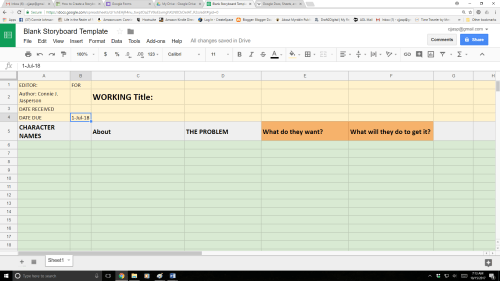
The personnel file is laid out this way:

Column A: Character Names. I list the important characters by name and the point where they enter the story.

Column B: About: Their role, a note about that person or place, a brief description of who and what they are.

Column C: The Problem: What is the core conflict?

Column D: What do they want? What does each character desire?

Column E: What will they do to get it? This column usually remains empty until I am well into the first draft, because at this point, I don’t know how far they will go to achieve their desire.

This is an image of a Storyboard Template, created in Google Sheets which is a FREE spreadsheet program. Google Docs is also free and is a perfectly fine word-processing tool if you don’t have the money for MS Office 360 or other programs.

Google Sheets Storyboard Template Screenshot 2017-10-15 07.13.09 cjjaspNames say a lot about characters. If you give a character a name that begins with a hard consonant, the reader will subconsciously see them as more intense than one whose name starts with a soft sound. It’s a little thing, but it is something to consider when conveying personalities.
Also, I’ve said this before, but with the growing popularity of audiobooks, I suggest writing names that are easy to pronounce. It will simplify the process of having your book narrated—but again, that is your choice.

A great story evolves when the antagonist and protagonist are powerful but not omnipotent. Both must have character arcs that show personal growth or an inability to grow. For the antagonist to be realistic, this must be clearly established, so once we know who they are, they should also get a personnel file.

So first, let’s create a main character. The story will grow from her experiences, so she must be someone you want to know.

Our protagonist is Lilly. For this exercise, I chose a flower name, suggesting someone who is kind, a good friend.

Who is this person? Start with the basics: race, ethnicity, age, gender, sexuality, appearance/coloration.

Race: This is a post-apocalyptic world. When the survivors prepared to leave the catacombs, they divided into 50 tribes. They blended the various races and ethnicities as evenly as possible to widen the gene pool. Everyone is of mixed-race heritage, regardless of outward coloring and appearance.

Appearance and coloration: Lilly is tall and physically fit and has straight black hair, brown eyes, and dark coloring.

Ethnicity: She was born into Asgrim’s tribe, which settled in the north.

Age: 27

Gender/sexuality: This is important, as gender and sexuality play a role in my novel. A broad view of gender/sexuality is a fact of life in their culture. Lilly and Kaye are life partners.

My co-municipal liaison, Lee French, suggests you write one sentence to describe them and move on. I’m not good at one-sentence descriptions, so a paragraph is more my style.

I suggest you write what comes to mind, and don’t worry if you can’t think of anything at this stage. Once you begin writing the narrative, the characters will tell you what you need to know.

It sounds hokey, but it’s true.

Characters don’t leap onto the page fully formed. They begin to reveal who they really are as we lay down the first draft, and this is why my narratives rarely keep to the original outline.

One thing that helps when creating a character is identifying the verbs embodied by each individual’s personality. Lilly’s verbs are: fight, defend, create, care. These words tell me how she will react in any given situation.

Also, I try to identify each character’s motivation, the metaphorical “hole” in their life. What pushes them to do the crazy stuff they do? Sometimes, that loss or lack doesn’t emerge until you’re well into writing the first draft.

What we are doing is pre-writing. It helps me to have the characters in place when I begin writing a novel on November 1st. Below is a PNG image of my pre-flight checklist. Feel free to right-click and save as a PNG or .jpeg for your own use!

We have looked at steps one and two. Next up is step three: the world as it is when the story opens.

Previous in this series:

#NaNoPrep: What do I want to write? #nanowrimo | Life in the Realm of Fantasy (conniejjasperson.com)

NaNoPrep-pre-flight-checklist-LIRF09302021

11 Comments

Filed under writing

#NaNoPrep: What do I want to write? #nanowrimo

Two weeks ago, we talked about discovering our writing style. Some people plot, some write by the seat of their pants, and others are somewhere in the middle. I plot for a while and then find myself winging it. The plot goes in a new direction until I hit a wall, and then I replot until I know what has to happen. And then I let the words fly as they will.

crows-clip art clicker vector dot comEvery year I participate in NaNoWriMo (National Novel Writing Month). I sit down and write, and by doing that for two hours every day, I manage to crank out the high points of a story and get my wordcount and the “winners” certificate. A year or so later, I have connected the dots and end up with a coherent first draft that tops out at around 120,000 words.

Three years and six drafts later, it will be publishable at about 90,000 words.

For me, succeeding at getting the bare bones of a novel’s first draft written during the 30 days of November requires a bit of pre-writing—a pre-flight checklist.

I found Excel useful when I first began writing, and I use it to this day to keep my plots and background information organized. But any document or spreadsheet program will work. The aforementioned pre-flight checklist becomes my permanent stylesheet/outline for that novel.

The outline is a visual aid that keeps my stream-of-consciousness writing flowing.

Once I’m done winging it through the story and am in revisions, some scenes will make more sense when placed in a different order than originally planned. At that point, an outline allows me to view the story’s arc from a distance.

I can see where it might be flatlining. Perhaps an event should be cut entirely as it no longer works. (I always save my outtakes in a separate file for later use.)

Over the next few weeks, we’ll talk more about my process.

But first, what are we writing?

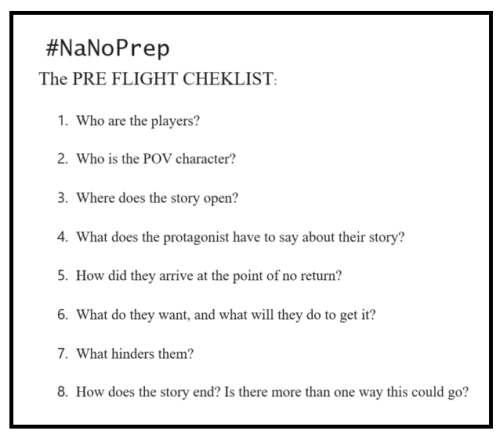
The basic premise of any story in any genre can be answered in eight questions.

  1. Author-thoughtsWho are the players?
  2. Who is the POV character?
  3. Where does the story open?
  4. What does the protagonist have to say about their story?
  5. How did they arrive at the point of no return?
  6. What do they want, and what will they do to get it?
  7. What hinders them?
  8. How does the story end? Is there more than one way this could go?

We’re starting with question number one: who are the players?

My stories always begin with the characters. They come to me, sharing some of their story the way strangers on a long bus ride might. They tell me some things about themselves. They give me the surface image they want the world to see. But as strangers always do, when I first meet them, they keep most of their secrets close and don’t reveal all the dirt. These are mysteries that will be pried from them over the course of writing the narrative’s first draft.

That little bit of sharing gives me the jumping-off point. I sit and write one or two paragraphs about them, as if meeting them for a job interview. That little word picture of the face they show the world is all I need to get my story off the ground when the real writing begins.

But before we go any further, I must ask, “What genre are we writing to?” This is important because tropes will guide the reader to see the world I envision.

Most of the time, I write a fantasy of some sort. I love alternate medieval, alternate Arthurian, and other subgenres.

Sometimes, I go nuts and write women’s fiction. I write whatever I’m in the mood to read. The story is the picture, and the genre is the frame. When selecting the frame for a picture, do I lean toward heavily carved and gilded frames, simple polished wood, or sleek polished steel?

The choice of frame depends on the picture and the room in which I intend to hang it. For my story, the frame (genre) will be determined by the reader I intend the book for. Mostly, I write for myself, so my genre is usually fantasy.

lute-clip-artCharacters usually arrive in my imagination as new acquaintances inhabiting a specific environment. That world determines the genre.
Julian Lackland, Billy Ninefingers, and Huw the Bard are alternate medieval novels because the characters live in a low-tech society with elements of feudalism. Waldeyn is an alternate world because I saw it as a mashup of 16th-century Wales, Venice, and Amsterdam with a touch of modern plumbing. I gave women the right to become mercenary knights as a way of escaping the bonds of society.

Also, I changed how religion works in that world. The church is an institution with hard and fast rules and exists to train men and women with the ability to wield magic. So, magic occurs in that world as a component of nature and spawns creatures like dragons, but they aren’t the point of those books.

Magic, dragons, and fairies are aspects of set dressing. They are the tropes readers of specific subgenres of fantasy expect, the backdrop against which the relationships and personal struggles play out.

Knowing your characters, having an idea of their story, and seeing them in their world is a good first step.

Write those thoughts down so you don’t lose them. Keep adding to that list as ideas about that world and those characters come to you.

This is how I start my pre-flight checklist for winging it through NaNoWriMo. Next week we’ll go a little deeper into the process.


Previous posts in this series:

#NaNoPrep: Discovering your writing style #amwriting | Life in the Realm of Fantasy (conniejjasperson.com)

1 Comment

Filed under writing

#NaNoPrep: Discovering your writing style #amwriting

Are you a ‘pantser’ or a ‘plotter?’ For me, the answer lies somewhere in the middle. I plot, get two paragraphs in, and then find myself winging it, and the plot goes in a new direction. Then I replot and let it fly again.

crows-clip art clicker vector dot comAlso, my first drafts are not written linearly. I write what I am inspired to, skipping the spots I have no clue about. I fill in those places later. Even after completing the first draft, things will change structurally with each rewrite.
But what if you aren’t interested in writing a novel? What if you are a poet or your best skill is the short story?

In thirteen years of participating in NaNoWriMo, I have discovered that there is no one way that fits everyone. You’ve had this idea rolling around your head for a while now for something you’d like to read. You wish your favorite author would write it. In my experience, you must write it yourself, or it will never happen.

Your favorite author can only write so fast. Not only that, but what they’re in the mood to write might not be your wished-for book.

I’ve noticed a trend—most authors don’t live beyond 100 years of age. Unfortunately, dead authors rarely publish new books unless they are ghostwriters.

So, there you go–if you want that book, write it yourself.

My addiction to NaNoWriMo began innocently, as all good habits do: A young writer in the Philippines whom I had met through a gaming website mentioned he planned to do this writing challenge. I had never heard of it.

nano-computer-word-count

November’s Goal

It was a worldwide thing where hundreds of thousands of people began writing a novel on November 1, intending to have it finished by November 30.  The catch was that you couldn’t start until 12:01 a.m. on November 1st; it had to be at least 50,000 words long, but it could be longer. And you had to have it validated by 11:59 p.m. on November 30th to earn the coveted winners’ goodies.

I wasn’t sure I could do this crazy thing. All I had to do was write 1,667 words daily, which I felt I could do. I figured the worst that could happen was that I would fail to have anything to write about.

Fear of failure had never stopped me from ruining my life, so I googled the national website and signed up. I chose the handle dragon_fangirl.

At 6:30 a.m. on November 1, 2010, I looked at my laptop and had no idea what to do. I wrote the first line as if I were telling myself a fairy tale. Inspired by my misspent childhood reading such disparate works as Don Quixote and the heartily misogynistic adventures of Fafhrd and the Gray Mouser, I wrote:

There was a cabin in the woods.

Author-thoughtsIt wasn’t exactly literary brilliance, but it gave my idea a jumping-off point. I just began telling the story as it fell out of my mind. Surprisingly, I discovered my word count averaged 2,500 to 3,000 words daily. By day fifteen, I knew I would have no trouble getting to 50,000, and by November 21st, I had passed the 50,000-word mark.
At the 68,000-word point, I had completed my rollicking tale of snark and medieval derring-do. It was utterly unpublishable (say that hokey phrase three times!), but I didn’t know that until later.

What I did know was that I had written a complete novel and told the kind of tale I would have sought out at the bookstore.

All it needed was rewriting, editing, revising, rewriting, and putting it in a drawer, never to be seen again.

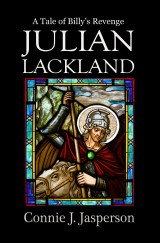
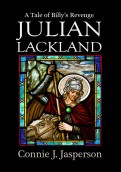
Julian_Lackland Cover 2019 for BowkersBut I took that incoherent mess apart, and over the next ten years, it became three books: Huw the Bard, Billy Ninefingers, and Julian Lackland.

One rule they tell you at NaNoWriMo is never to delete and don’t self-edit as you go along. This is all strictly stream-of-consciousness, so write how it falls out of your head. That was hard for me, but eventually, I got into the swing of things.

My rules for NaNoWriMo:

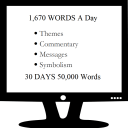
  1. Write at least 1,670 words every day. Technically, it’s three more words than the pros suggest, but it gives me a little cushion and takes about 2 hours. I’m not fast at this.
  2. Write daily whether you have an idea worth writing about or not. Write that grocery list if you have nothing else. When stuck, I work on my characters’ personnel files, visualizing them as people I might want to know. Every word counts toward your ultimate goal. We will talk about my approach to writer’s block next week.
  3. NANO CrestIt helps to check in on the national threads each day. Look at your regional threads on the national website to keep in contact with other local writers. You will find out when and where write-ins are scheduled.
  4. Be brave! Attend an in-person write-in or join a virtual write-in at NaNoWriMo on Facebook. The company of other writers keeps you enthused about your project.
  5. Try NOT to self-edit as you go. Just get that story down from beginning to end.
  6. Delete nothing. Passages you want to delete later can be highlighted, and the font turned to red or blue so you can easily separate them later.
  7. Remember, not every story is a novel. If your story ends, draw a line at the bottom of the page and start a new one in the same manuscript. You can always separate them later; that way, you won’t lose track of your total word count.
  8. Update your word count every day. It’s an honor system, but you get little badges for updating every day and achieving specific goals. One badge is for updating your word count more than once in one day. I try to earn all the badges, and most years I do.

In 2015, I took a different path from the usual novel-in-thirty-days approach. I named my project November Tales. I suffered from a bout of pneumonia and worked from my bed for most of the month. Even so, I managed 42 short stories, all fueled by Nyquil and desperation, totaling 107,000 words.

Bleakbourne front Cover medallion and dragon copyIncluded in this mess were ten dreadful poems, along with chapters 7 through 11 of Bleakbourne on Heath.
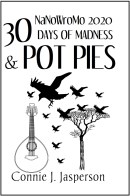
The following year began the same, this time with a severe case of bronchitis. I named my project November Tales 2016 – 30 Days of Madness and Pot Pies. I started by writing short stories, flash fiction, drabbles, and poems. Within five days, I was writing the first draft of a novel and managed to get 90,000 wonky, misspelled words.

That novel is still in the first draft stage, but I intend to finish it in this year’s NaNo rumble.

If you choose to join this writing free-for-all, go to www.nanowrimo.org and sign up! Pick your name, start your author profile, and look up dragon_fangirl (that’s me). Add me as your writing buddy, and I will be part of your writing posse, cheering you on when you need a morale boost.

3 Comments

Filed under writing

What is National Novel Writing Month, and should I participate? #NaNoWriMo

September is in full swing, and with it comes writers’ conferences. This last weekend, I attended the Southwest Washington Writers’ Conference in Centralia, Washington. I sat in on presentations by Lindsay Schopfer, Mellissa Hart, Elizabeth Goddard, and many other writers, all discussing the craft of writing. I also gave a small presentation on adding depth to our heroes and villains.

2020_nano_Project_coverConferences are excellent places to make good connections with other writers. You meet people you can talk to about every aspect of the experience of writing as well as craft. No one’s eyes glaze over when you try to explain your main character’s inner demons and you find people with struggles similar to your own.

You also meet industry professionals who will help you on your road to a finished project.

I have another conference in two weeks, this one in Seattle. After PNWA’s 2023 conference, I will plow through my notes for new info, as conferences always give me plenty of fodder for several blog posts.

September is also the time of year when I begin pulling together the characters and plot of my next novel. I’m a Municipal Liaison for NaNoWriMo (National Novel Writing Month).

If you haven’t heard of this, it’s a worldwide event taking place in November. Each year, thousands of people in all parts of the world dedicate themselves to writing a 50,000-word narrative in only thirty days.

NaNoWriMo is a contest in that you have achieved your goal if you write 50,000 words and have your word count validated through the national website. But it is not a contest in any other way as there are no monetary prizes or fame for those winners, only a PDF winner’s certificate that you can fill out and print to hang on your wall.

Depending on your intended audience, a manuscript of only 50,000 words is a short novel. It’s a good length for YA or romance but is only half a novel for epic fantasy or literary fiction.

nano-computer-word-count

November’s Goal

Regardless of the planned length of their finished novel, a dedicated author can get a book’s basic structure and storyline down in those thirty days. They sit for an hour or two each day and write at least 1667 words.

That’s all you need to do. At the end of 30 days, you will have written 50,000 words.

Author Lee French and I are co-MLs for the Olympia Region for NaNoWriMo. Every year, many writers in our area create profiles at www.nanowrimo.org and embark on the writer’s journey. Lee and I work together to ensure they have all the necessary tools and support to achieve their goals.

We’ve been doing this for a while and have seen a pattern among our writers. The first roadblock happens when reality sets in, and the writers realize that writing is work. This usually occurs within the first few days. A small percentage will never get more than 2,000 words written.

They discover writing isn’t their jam, after all.

The majority of new NaNo writers are people who “always wanted to write a book.” Often, they don’t know what they want to write and have no clue how to be disciplined enough to write any words, much less the number it takes to make a novel.

They start, get 30 to 1,000 words in, and realize they have nothing to say. But in our region, many people will reach the 10,000-word mark before they stop writing. That’s an achievement—it’s almost a novella.

NANO CrestSome new writers are completely fired up for their novels, obsessed. They go at it full tilt for a week or even two, and then, at the 20,000-word mark, they take a day off. Somehow, they never get back to it. These writers will continue to write off and on and may participate in NaNoWriMo again.

Even seasoned writers who have crossed the finish line at NaNoWriMo in previous years may find that the commitment to sit and write 1,667 words daily is not doable. Things come up—life happens, and it’s okay to set the writing aside. You can always come back to it later.

But by November 30th, a third of the writers in our region will make it to the 50,000-word mark. Some will reach above 80,000, and a few will exceed 100,000.

Some of these novels have complete story arcs and are ready for revisions. Most are not, but more work could make these proto-novels publishable.

It takes commitment and discipline to write 1,667 new words every day. You are not revising old work. Instead, you’re writing something new and not looking at what you wrote yesterday.

To do this, you must sit at the keyboard, open the document to where you left off, and begin writing forward. I have some tips and tricks to simplify this process, and we will discuss them later.

I’m not a good typist. The words that fall out of my head during NaNoWriMo are not all golden, just so you know. When writing stream-of-consciousness, many words will be garbled and miss-keyed.

This means that the revision process is a long and winding road for me.

I began writing Ruins of Abeyon, my forthcoming novel in November 2017, on the spur of the moment when I had a sudden flash of “what if.” I started with no outline, so the story arc evolved as I wrote the book. I listed the events in a separate document as I went. Later, when revising, it was easy to see the arc and make an outline. I could see when it was best to move certain events to more logical places and even when things needed to be cut.

Still, it has taken five years to get this book to where it is ready to be published.

Succeeding in writing even a short story gives one the confidence to continue.

If you have a novel in your soul and it’s bursting to get out, this might be your chance. However, planning for a successful NaNoWriMo is like preparing for a marathon.

We let our families know what we are planning well in advance and share how vital reaching our goal is to us. That way, we have their emotional support. We also plan ahead for meals and family time so the essential people in our lives aren’t neglected. In the US, this means fixing a Thanksgiving dinner on the last Thursday of November and enjoying the things that matter most.

Pumpkin-Pie-Whole-SliceCooking is my love language. I have many tips and ideas for getting word count and having a proper family feast. As a dedicated writer, I know how to plan for all aspects of life.
In many ways, we’re physically and mentally preparing for a marathon. We build our strength and get our families behind us by ensuring we have prepared well in advance.

Over the next few weeks, we will focus on laying the groundwork for our novels so that we will be ready and able to write when November comes.

Much of what I will discuss has emerged from my 13 years of experience and my co-ML Lee’s ideas for prep work.

I have made life-long friends through participating in my local NaNoWriMo group. The emphasis is on having fun and meeting personal goals, commiserating when goals can’t be met, and just enjoying the experience of creating something that is ours. We have the support and encouragement of the worldwide community of writers and people of all nations and walks of life.

Everyone has a story. Some people will write those stories, and I will be first in line at the eBook store, eager to read them.

NaNoWriMo-General-Flyer

3 Comments

Filed under writing

When life interferes with writing #amwriting

I have been prepping for NaNoWriMo 2023, trying to complete the outline so I can hit the ground running on November 1st. As always, I’m mentally committed to writing at least 1,667 (or more) new words every day during that writing rumble.

MyWritingLife2021By just doing that, I will have 50,000 (or more) words by midnight on November 30th.
Every year, I wonder how I’ll meet this goal. I don’t have a one-size-fits-all answer for that, as authors must be able to pay their bills, or no books will ever be written.

Sometimes, I feel guilty for taking the time to indulge in such a profoundly personal pleasure. It does take time. I tend to resent anything stopping me from having at least one hour of dedicated writing time each day.

But life tosses up roadblocks. We’re retired, and even so, keeping to a regular routine for writing is difficult. One would think we could do whatever we want and to heck with the world’s demands.

But life is not that way. Even people who are retired have obligations that take them away from home. Extra work and other activities that come along with living our lives take up space in our heads as well as the calendar. Finding the energy to be creative is a challenge.

When I was younger, I was a single parent. I had two jobs and children and sang in the choir at our church. I had many demands upon my time, but somehow, I always managed a little time for writing. Admittedly, it wasn’t much.

In those days, I wrote while my children were doing their homework. Sometimes I wrote for half an hour or so at night after they were asleep, pouring my angst into lyrics for songs. This is why my poetry has a more traditional rhyming rhythm. I’m a songwriter at heart, and there is always a melody in my head.

Everyone has a different creative process. What works in December might not work in April. When the tried-and-true fails, give yourself permission to change and find a way that works.

how-to-play-gin-rummy-1Be willing to be flexible. Do you work best in short bursts? Or, maybe you’re at your best when you have a long session of privacy and quiet time. Something in the middle, a melding of the two, works best for me.
But what if the way that worked last month no longer works? Varying my projects and writing in bursts broken up by daily activities works best for my schedule nowadays.

We must be open to finding the way that makes us feel productive, whether it works for someone else or not. We feel good when we’re productive.

I have my best ideas when I’m about to leave the house—no joke. If that is you too, do as I do and write those thoughts down. I keep a notebook around just for those moments.

You will be productive once you find your best style.

But first—you must give yourself permission to write.

I have plenty of downtime between my daily tasks. That is when I work on whatever revisions are needed. You would be amazed at what you can get done in ten-minute bursts.

We who wish to write must set aside time to do it. This allows us to be creative and still support our families, who all have activities and interests of their own.

As I have said many times before, being a writer is to be supremely selfish about every aspect of life, including family time.

ICountMyself-FriendsA good way to ensure you have that time is to encourage your family members to indulge in their own interests and artistic endeavors. That way, everyone can be creative in their own way during that hour, and they will understand why you value your writing time so much.
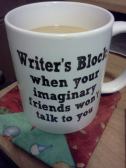
A balanced life is a happy one. Don’t become so obsessed with writing about fictional lives that you aren’t present in your own.

  • Some people manage to fit short bursts of writing into their daily schedule, writing at work during breaks or at lunch.
  • Others must schedule a dedicated block of time for writing, either rising two hours before they depart for work or skipping some TV in the evening.
  • Write in small increments—ten minutes here, half an hour there. These short bursts add up.

Perhaps your mind has gone blank. An idea is locked in your head, but you don’t have the words to free it. Step back and view your story from a distance:

  • Write several paragraphs detailing what must happen in your story, such as: Next morning, Stan arrives with the recruits. His drama ensues. Ends well, with Neela asking him to walk to the market with her.

Taking a break and doing something completely different is a good thing. When you return to writing, you may have nothing to add to the old project, but something new may be forming.

Write it.

I always have many manuscripts in the works because I come to a point where I begin flailing. I move between each project as I have inspiration for them. Right now, I have a short story, a novella, a novel in the final stage of editing, a novel at the halfway point, and this blog to keep me interested and writing something every day.

I am a slow keyboard jockey, and I can do about 1,100 wonky, misspelled words an hour during NaNoWriMo. Remember, misspelled or not, in NaNoWriMo every word counts and moves you closer to having a completed first draft. The important thing is to get the whole story down from the beginning to the end. Once that is done, you can fiddle with phrasing to your heart’s content.

My Coffee Cup © cjjasp 2013Writers and other artists do have to make some sacrifices for their craft. It’s just how things are. But don’t sacrifice your family for it.
If the urge to write is there, get up an hour early to have that quiet time. Or give up something ephemeral and unimportant, like one hour of TV.

I always encourage writers who are falling behind and unsure they can “do” NaNoWriMo to live their lives and write in short bursts during the moments between other things. We should write what we’re inspired to, and find the blessings in each day. If we do that, the words will come.

Happy writing!

13 Comments

Filed under writing

Plotting alternate history #amwriting

A few years ago, about ten minutes into a NaNoWriMo write-in, I accepted a dare to write an Arthurian tale with a steampunk twist.

MyWritingLife2021I quickly regretted that decision.

Everyone was quietly typing away in that coffee shop, getting impressive word counts.

But not me.

I sat there asking myself where Arthurian and steampunk connect well enough to make a story. On the surface, they don’t. I experienced the mental blankness we all feel when a story refuses to reveal itself.

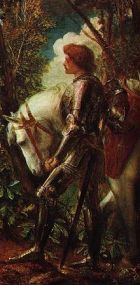
220px-Sir_Galahad_(Watts)Arthur and his court originated as ordinary 5th or 6th-century warlords. But the tales featuring them were written centuries later. Their 11th-century chroniclers presented them in contemporary armor as worn by Crusaders and with medieval customs and moral values.
Over the centuries, subsequent authors continued to romanticize the story but with their own twist. Alfred Tennyson’s Idylls of the King reworked the entire narrative of Arthur’s life to fit the romantic ideals of the Victorian era.

When I agreed to the challenge, I decided my protagonists must be real people, flesh and blood. They would be subject to the same emotions and physical needs as any other person.

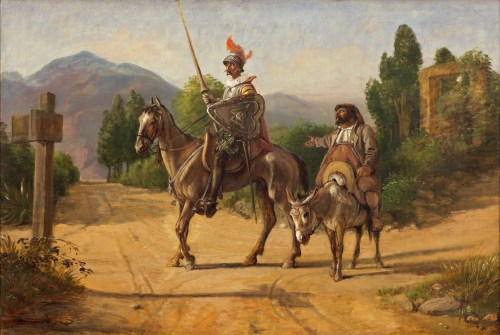
Galahad is traditionally portrayed as a knight errant, which means wandering. The knight-errant was a popular character in medieval romance literature. Miguel de Cervantes‘ mad knight, Don Quixote, believed he was a knight errant and lived his fantasy with hilarious abandon.

Wilhelm_Marstrand,_Don_Quixote_og_Sancho_Panza_ved_en_skillevej,_uden_datering_(efter_1847),_0119NMK,_Nivaagaards_Malerisamling

Wilhelm Marstrand, Don Quixote and Sancho Panza (after 1847) via Wikimedia Commons

The Chivalric Code was a system of values combining a warrior culture, devotion to the Christian faith, and courtly manners. Adherence to the code of chivalry ensured a knight epitomized bravery, honor, and nobility.

They roamed the land looking for heroic tasks, engaged in knightly duels, or went in pursuit of courtly love. The medieval romance of highly ritualized courtly love was a rigid literary structure. It defined the written behaviors of noble ladies and their lovers and was woven with the principles of chivalry.

Medieval and Victorian authors loved superheroes. To them, nothing was more impossible or super-heroic than a man who lived a virtuous and self-sacrificing life.

I randomly picked an Arthurian knight, Galahad, and began making notes as I pondered the problem. What kind of a person might Galahad have been had he truly existed?

The established canon dictates that Galahad isn’t attracted to women. He goes on quests to find strange and magical objects, such as the Holy Grail. Since he’s not attracted to women, how about men? I asked myself, what if Galahad and Gawain were lovers?

And what really happened after the Grail was found? With no answer to that, I moved on to the next question. Where does steampunk come into the story? Steampunk is science fiction set in Edwardian times using only technology available during the reign of King Edward VII, who reigned from 1901 to 1910.

Thinking about what steampunk really is triggered the cascade of plot points:

What if finding the Grail somehow opened a door in time?

What if all the magic in the world vanished with the Grail?

What if Galahad was marooned in Edwardian England with Merlin?

How would Galahad get back to Gawain?

I sat in the coffee shop with my friends, all of them writing their novels. The November rains pounded on the windows and drowned passers-by, but I didn’t care—I had the plot I needed.

Julian Lackland Cover 2019 copyI am an abject fangirl for Don Quixote, so different versions of both Galahad and Quixote appear regularly in my work. Julian Lackland was inspired by my love of Don Quixote. they’re both insane, both deeply committed to doing good, and both have moments of hilarity mixed with the tragedy.
And Galahad–nowadays he’s considered a minor knight. However, what we regard as canon about him is taken from Sir Thomas Malory’s 1485 work, Le Morte d’Arthurin which he and his quest have a prominent role.

Malory’s collection was a reworking of traditional tales that were hundreds of years old, even in his day. Also, he wrote it while in prison for a multitude of crimes, so we can be sure it’s not historically accurate.

Traditionally, Galahad is an illegitimate son of Lancelot du Lac. He goes on the quest to find the Holy Grail and immediately goes to heaven, raptured as a virgin.

When I began plotting the tale my friend had challenged me to write, I wondered why Malory said Galahad was raptured. Why was the notion of a virgin knight and being taken to heaven before death so important to medieval chroniclers? Why would they write a saint’s virginity and rapture as though it were factual recorded history?

People always rewrite history to suit the times in which they live.

Religion and belief in the Christian truths espoused by the Church were in the very air the people of the time breathed. All the physical and material things of this world were entwined and explained by the religious beliefs of the day.

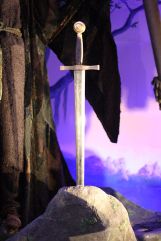
Excalibur London_Film_Museum_ via Wikipedia

Excalibur London_Film_Museum_ via Wikipedia

Literature in those days was filled with religious allegories, the most popular of which were the virginity and holiness of the Saints, especially those deemed holy enough to be raptured.

Death was the common enemy, an inescapable event kings feared as much as beggars did. Those saints who were raptured did not experience death. Instead, they were raised to heaven, living in God’s presence for all eternity.

Galahad as written by Malory and later authors never married. But humans tend to be human, so why assume he was a virgin? Galahad’s state of virginity and grace was written to exemplify what all good noblemen should aspire to.

The High Middle Ages was the period of European history that commenced around the 10th century and lasted until the 14th century (or so). That era saw a flowering of historical-fantasy writing among the clergy and educated nobility. Medieval chroniclers detailed the people and events of 300 to 400 years prior. Their sources were the oral histories as told in well-known bardic tales and local legends.

Malory was writing during the final decades of the Crusades and trying to fit the old stories into his modern time. Rumors and stories passed down became historical truths, reshaped to justify the desire for conquest. After all, the New World was just over the horizon, vast cities of Inca gold ripe for the taking.

We 21st-century authors have excellent records of 15th and 16th-century political struggles. Yet, we make things up about the Tudors and Elizabethans, because they were interesting people. We love to imagine what they must have been like.

We all know the written records from before the time of Elizabeth I are highly questionable. Sifting medieval fact from fiction is the life’s work of many historical scholars. However, they’re entertaining fantasy reads, leaving fangirls like me free to riff on them and create our own mythologies.

So, that is how my creative process works. Someone gives me an impossible idea, and I fight with it until it beats me. Once that idea has me by the throat, I know what has to be written. That tale became a short story, Galahad Hawke.

Bleakbourne front Cover medallion and dragon copyAnd sometimes a theme refuses to let go of me. I took Arthurian myth and the chivalric code and turned them inside out with the characters of Lancelyn and Galahad in Bleakbourne on Heath.
I feel quite sure I haven’t written my last Alternate Arthurian tale. Galahad Hawke may get an expansion into a novel–after all, he didn’t get the traditional happy ending.

Or maybe not. I do have an epic fantasy on deck so … maybe next year.

Comments Off on Plotting alternate history #amwriting

Filed under writing

Idea to book – Project Management #amwriting

Authors who want to take their books from idea to paperback must become project managers. Like any other endeavor, writing and successfully taking your novel to publication has many steps, from “what if” to proto product, and from there to completion. It doesn’t matter if you are going indie or sticking to the traditional route.

project managementThen there is the marketing of the finished product, but that is NOT my area strength, so I won’t offer any advice on that score.
Even on the surface, writing fiction is complex.

We all know a high-quality product when we see one. The manufacturer didn’t make it out of cheap components. They put their best effort and the finest materials they could acquire into creating it. Because the manufacturer cared about their product, we are proud to own it.

For authors, the essential component we must not go cheaply on is grammar. We don’t have to be perfect—after all, the way we habitually structure our prose (our voice) adds to the feeling of depth.

to err is human to edit divineHowever, we must have a fundamental understanding of basic mechanical skills. These rules are the law of the road, and readers expect to see them. Knowledge of standard grammar and punctuation rules prevents confusion. Readers who become confused will set the book aside and give it a one-star review.
If you have limited knowledge of grammar, your first obligation is to resolve that. The internet has many easy-to-follow self-education websites to help you gain a good understanding of basic grammar in whatever your chosen language is. One site that I like is https://grammarist.com/.

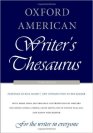
If you are writing in US English, I recommend getting a copy of the Chicago Guide to Punctuation and Grammar. If you write in UK English, purchase the Oxford A – Z of Grammar and Punctuation.

Authors who are just starting out often write erratic prose. They will be inconsistent with capitalizations, insert random commas where they think it should pause, and use exclamation points instead of allowing the narrative to show excitement. They don’t know how to punctuate dialogue, which leads to confusion and garbled prose.

We must know the rules of grammar to break them with style and consistency. How you break the rules is your unique voice.

Readers expect words to flow in a certain way. If you choose to break a grammatical rule, you must be consistent.

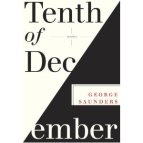
Tenth_of_DecemberErnest Hemingway, Alexander Chee, and George Saunders all have unique voices in their writing. They all break the rules in one way or another, but they are deliberate and consistent. Each of these writers has written highly acclaimed work.  You never mistake their work for anyone else’s.

Alexander Chee employs run-on sentences and dispenses with quotation marks (which I find excruciating to read).

George Saunders writes as if he is speaking to you and is sometimes choppy in his delivery. But his work is wonderful to read.

We who write need a broad vocabulary, but we also need to be careful not to get too fancy. To be successful, we need an understanding of the tropes readers expect to find in our chosen genre. We must employ those tropes to satisfy the general expectations of our readers. How we do that is our twist, the flavor that is our unique “secret sauce.”

We don’t consciously think about this, but organizational skills are critical because we want the story to flow easily from scene to scene. This is why successful authors are project managers, even if they don’t realize it.

Identify your Project Goals. Your story is your invention. Your effort, your ideas, and the skills you have developed will determine the quality of the finished novel.

Queen of the Night alexander cheeEach author is different, and the length of time they take on a book varies. Some authors are slow—their books are in development for years before they get to the finish line. Others are fast—their novels complete and ready to be published in a relatively short time. Regardless of your timeline, this is where project management skills really come into play.
I use a phased (or staged) approach to project management. This method breaks down and manages the work through a series of distinct steps to be completed.

Concept: You have a brilliant idea. Make a note of it so you don’t forget it.

The Planning Phase: creating the outline. Some people don’t need this step, but I do.

The Construction Phasewriting the first draft from beginning to end. Take it though as many revisions as you need in order to get it the way you envision it.

Monitoring and Controlling—This is where you build quality into your product.

  • Creating a style sheet as you go. See my post on style sheets here: Self-editing: Ensuring Consistency.
  • Finding beta readers and heeding their concerns in the rewrites.
  • Taking the manuscript through as many drafts as you must to have the novel you envisioned.
  • Employing a good line editor to ensure consistency in the quality of your product.
  • Finding reliable proofreaders. (Your writing group is an invaluable resource.)

Completion—things we don’t have to worry about just yet while we are in the construction phase. But they will come up later.

  • Employing a cover designer if you are going indie.
  • Finding an agent if you are taking the traditional route.
  • Employing a professional formatter for the print version if you are going indie.
  • Courting a publisher if you are taking the traditional route.

After that comes marketing, something you must do whether you are going indie or traditional. Both paths will require serious effort on your part. 

ozford-american-writers-thesaurusBut as I said earlier, I have no skills in the area of marketing and no advice worth offering.
What I do know is this: write the basic story. Take your characters all the way from the beginning through the middle and see that they make it to the end.

Once you have completed the story and have it written from beginning to end, you can concentrate on the next level of the construction phase: revisions. This is where we flesh out scenes and add depth to the bones of our story.

Over the next few posts, I will work on some of the sublayers of depth in our next series on the craft of writing. First up, we will think about why a story isn’t finished just because it has an ending.

7 Comments

Filed under writing

The Story is in the Drama #amwriting

Drama and disaster can and will happen on a wide scale in our real lives. Tornadoes, hurricanes, earthquakes, volcanoes, droughts—the path of a natural disaster is erratic. Sometimes they miss you, and other times, your home is in their way.

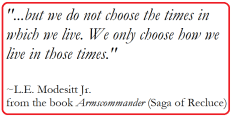
modesitt quote the times we live LIRF11012022Lesser dramas might only touch us on a peripheral level, yet they can affect our sense of security and challenge our values.
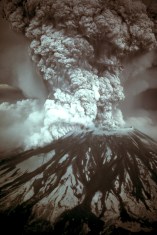

On May 18th, 1980, my friends and I watched the eruption of Mt. St. Helens from atop a hill in the middle of nowhere. My children had visited their father for the weekend, so my friends and I planned a fishing trip to a beaver pond in the next county. It was a long drive on narrow, dirt logging roads, but the possibility of trout for supper was just an excuse for a day spent in the deep forest.

We loaded our gear into my boyfriend’s Land Rover and set off at about 5:00 am, all five of us laughing and having a great time. The radio never worked, but the cassette deck played Led Zeppelin, Robin Trower, Genesis, and Ritchie Blackmore’s Rainbow as the soundtrack to our trek through the gorgeous country.

At about 09:00, we came up over the top of a treeless hill. The view was breathtaking, as if all of Lewis County lay before us in springtime glory.

Above it all towered a sight I will never forget, turning the blue sky black.

MSH80_eruption_mount_st_helens_05-18-80-dramatic-edit

Eruption of Mt. St. Helens May 18, 1980 Public Domain, via Wikimedia Commons

Conversations suddenly silenced, and we stopped, turning the engine off. We got out and stared, first at the raging column of dust, rocks, and lightning that dwarfed the mountain and then at each other. Helicopters and airplanes from news agencies and the USGS circled like so many carrion birds. What so many people had thought was just hysteria was true—the mountain had blown.

We never did make it to the beaver pond. The only fish we caught that day were the tuna sandwiches we had packed. Conversations were sober as we picnicked on that hilltop and watched the incredible show.

We had no way of hearing the news, but we knew it was terrible, that some people had died and others had lost everything. We had no idea just how bad it was, that one of our favorite places to fish, the Mount St. Helens Lodge at Spirit Lake, had disappeared along with its cantankerous owner. Harry R. Truman had become famous in the weeks before the eruption for refusing to evacuate.

Toward midafternoon, we returned to Olympia, all of us grateful to have homes to go to. When I turned on the television and found that more than fifty people had lost their lives, I felt devastated for them.

The true story of that day in my life is in disaster contrasted against calm and tranquility.

The story is in the hectic start to the morning, of five friends off on a day trip to go fishing. It is in the peace of the deep woods along those old dirt roads.

640px-St_Helens_before_1980_eruption_horizon_fixedThe camera zooms out and now we see the idyllic serenity of a clear sunny morning on Spirit Lake and Harry doing his morning chores.
This allows us to see what will be lost.

Then disaster strikes. The side of the mountain gives way, and the eruption is on.

Contrast that catastrophe against five people serenely picnicking on a hill, observing the apocalypse as it happens. The drama is in old Harry R. Truman’s stubborn end, and how it didn’t occur to us who watched from a distant hill that we would never rent a boat from him or fish in that lake again.

The bad juxtaposed against the good is the plot, but the experiences of those who witnessed it is the story. Contrast provides drama and texture, turning a wall of “bland” into something worth reading.

Stories of apocalyptic catastrophes resonate because disaster drives humanity to bigger and better things, and those who survive and rise above it become heroes. Readers love the drama of it all.

Disaster isn’t always apocalyptic, though. Dramas regularly happen on what seems an unimportant level to people who have resources. Not everyone has money, and not everyone can surmount the odds. The story is in the battle.

Think about those small daily tragedies people face, deeply personal catastrophes, which only they are experiencing. Love and loss, safety and danger, loyalty and betrayal are the eternal themes of tragedy and resolution. These are the seeds of a good story.

30 days 50000 wordsWe writers must make our words count. We must show our characters in their comfort zone in the moments leading up to the disaster. Not too much of a lead in, but just enough to show what will soon be lost.

Then, we bring on the disaster and attempt to write it logically, so it makes sense.

Contrast is a crucial aspect of worldbuilding and storytelling. In the end, we want readers to think about the story and those characters long after the last paragraph has been read. Drama and resolution are the keys to a great story.

Comments Off on The Story is in the Drama #amwriting

Filed under writing