
As many of you know, every November I set a writing quest goal for myself. Some years, it is to write the skeleton of an entire novel in 30 days. Other years, the goal might be to write a complete short story every day.
 This year, my goal is to write the skeleton of a novel that is the second half of a duology. I can’t publish the first book until the second book is finished, as I intend to publish the two halves of that story simultaneously.
Also, I need to source the proper cover art for a different book that is ready for the final stage of the publication process. I have found some good candidates, but none are exactly what I am looking for.
Writing 50,000 words in thirty days has never been a problem for me. I just sit down and let my fingers spew random stuff that sometimes turns into a usable novel, so getting a desired word count has never been a problem.
Unfortunately, meeting the goal of writing a complete story arc for a novel in only 30 days is, and always will be, a struggle. Thus, I work from an outline. That helps rein in the randomness.
Writing for at least an hour every day without fail for an entire month takes determination.
Meeting that goal builds discipline.
I do have some strategies I developed during my 12 years as a municipal liaison for the now-defunct organization, NaNoWriMo.
- Set aside time to write every day, at least one hour.
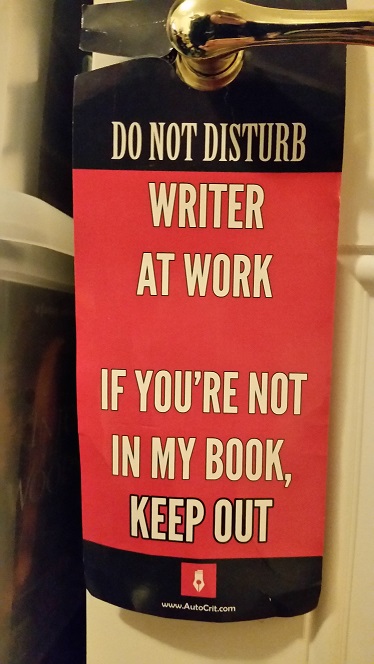
 If you need quiet time, make that hour inviolable, an hour during which you are NOT to be bothered unless an amputation has occurred or the house is on fire. When I was still working, I found that by rising an hour early, the kids were still sleeping and the house was quiet. I also wrote while everyone else was watching TV.
The most important thing about developing a writing process is to find one that works for you.
Give yourself permission to try different things until you find something that works.
- Do you work best in short bursts?
- Are you at your best when you have a long session of privacy and quiet time?
- Or is your process something in the middle, a melding of the two?
What if my style changes? What if the way that worked last month no longer works?
Give yourself permission to change and find a way that works best for you. Be willing to be flexible.
I have my best ideas when I’m about to leave the house. That’s no joke. If that is a problem you also have, do as I do and write those thoughts down. I keep a notebook in my bag just for those moments.
You will be productive once you find your best style.
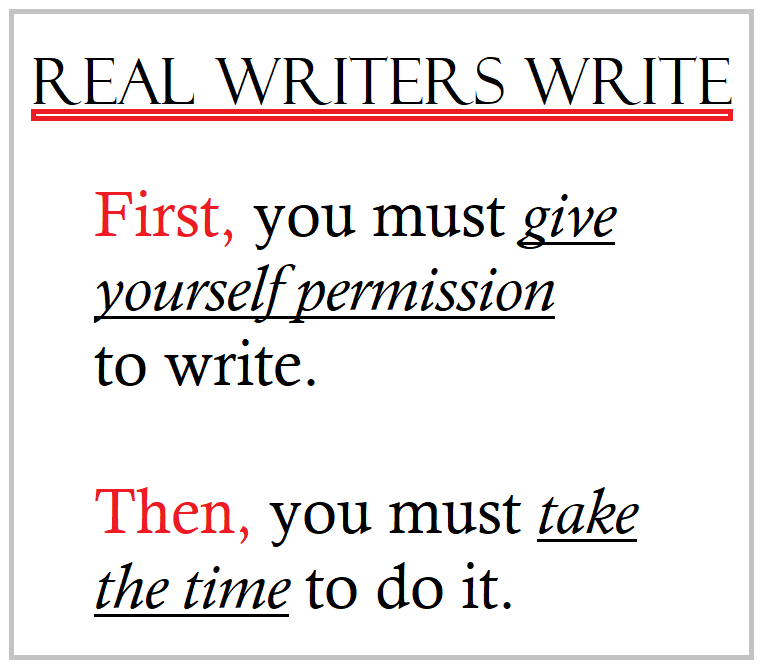
But first, you must give yourself permission to write.
- Go to a coffee shop or the library to write. You might find the place packed with other writers!
 My regional NaNoWriMo group had over 250 writers. Your region may have had that many or more. We have evolved into a more diverse group, one that is not focused on achieving word count in November. Your local region may have also reformed with a new direction.
As a group, we old hands are nurturing budding novelists, playwrights, poets, and songwriters. We hold in-person write-ins at coffee shops and also virtual write-ins via Zoom. New and aspiring writers in our area can find us through our Facebook group and also through our Discord channel.
- Sit your backside down and write your ideas as they come into your head. Don’t delete and don’t cut anything just yet.
Don’t worry about story arc, or worldbuilding, or anything like that. Get the characters and the plot on paper. Once you begin writing those characters, their story and their world will take shape. You can worry about info dumps and issues like that later.
The exposition you put into your first draft is your brain doing the worldbuilding and character development that is necessary to take the story from the opening page to “the end.” You will trim back the exposition and expand on the important things after the first draft is finished and revisions have begun. Right now, you need the info your crafty mind is dumping into the story.
- To be happy, we must have a balanced life.
Writers and other artists must make sacrifices for their craft. It’s just how things are.
But you don’t have to sacrifice your family for it. Sacrifice one hour of sleeping in, or something ephemeral and unimportant, like one hour of TV.
That is why I scheduled my writing time when I had to hold down a job. I had to cook and clean for my family and ferry them to their various after-school activities. They helped with the housework if I nagged long enough, but sometimes it was easier to admit defeat and do it myself.
I take comfort in the fact that they are raising their own teenagers now.
(Insert evil laugh here.)
Give yourself small rewards for every milestone, writing or otherwise. It might be a batch of cookies or an afternoon of binging on that show you love so much.
I’m a grandma now and living alone, as my spouse has late-stage Parkinson’s. He is being well cared for in an Adult Family Home, one staffed by wonderful people who are trained to care for patients who require that much assistance. I visit him every morning without fail, and I schedule everything, including my writing, around his needs.
 Nowadays, I have to force myself to do the ordinary household tasks (like laundry, my least favorite of all). My reward for doing that is an hour or two of reading or writing, whichever I am in the mood for.
However, for the month of November, my afternoons will be spent writing.
I will reward myself for achieving my writing goals. My self-indulgence is rewatching my favorite episodes of “The Brokenwood Mysteries.” Smart dialogue, wildly creative plots, great cast, and lovely New Zealand scenery.
Whatever your writing goals and however you choose to reward yourself, I hope you have a great and productive November.
 If you are looking for something similar to the old NaNoWriMo (before it went off the rails) ProWriting Aid is running a Novel November quest, with a wordcount counter and plenty of ways to connect with other writers. I have signed up for this, just to see if it’s a good fit for me.
Go to What is Novel November? – ProWritingAid Help Center
Credits and Attributions:
Caution I stop for Hallucinations © Connie J. Jasperson 2025
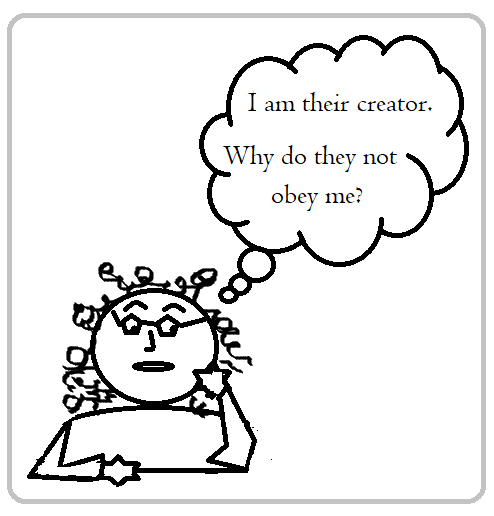
I am their creator © Connie J. Jasperson 2025


 I’m like everyone else. I can’t write creatively when life is too stressful. But I can always write a blog post, which is how I keep my writing muscles in “fighting form.”
 The second piece of wisdom is a little more challenging but is a continuation of the first point: Write something new every day, even if it is only one line. Your aptitude for writing grows in strength and skill when you exercise it daily. This is where blogging comes in for me—it’s my daily exercise. If you only have ten minutes free, use them to write whatever enters your head, stream-of-consciousness.
 Authors must overcome roadblocks in their personal life. Everyone has times of trouble, and they affect our ability to be creative. During the years I was raising my children, I had three failed marriages, worked three part-time jobs as a single mother, and struggled to find time and the energy to write.
 The story is the goal; everything else is a bonus.


 Life in the Realm of Fantasy