
Some questions have been raised in an online writing group about the use and abuse of apostrophes, so I thought this would be a good day to revisit a post from February of 2019. Nothing has changed, and apostrophes remain as useful and confusing for new writers today as they were then. Hopefully, this rant will clear the murky waters of one of the English grammar’s most useful punctuations, the apostrophe.
The apostrophe has many uses, but I will only delve into the most common ways we use it in creative writing today.
 In creative writing, the apostrophe is a small morsel of punctuation that, on the surface, seems simple. However, certain common applications can be confusing, so as we get to those I will try to be as concise and clear as possible.
First up, we all know that we use the apostrophe to denote possession:
- This is George’s cat. (George owns this cat.)
- This is Jorgensen’s cat. (A person who is going by the surname of Jorgensen owns the cat.)
Where this gets a little tricky is in the possessive form of a surname when it refers to the whole family. In this case, you insert a grammatical article (the) and make the name plural, and then add the apostrophe:
- This is the Jorgensens’ cat. (The Jorgensen family owns the cat.)
If the Jorgensen family have a sign made for their front porch, they would have it made to read “The Jorgensens’ Home” (not “The Jorgensen’s Home,” as that would imply that only one Jorgensen lives there, and his legal name is “The Jorgensen.”)
When two or more people (or other entities such as businesses) are described as separately owning something, each name should be in the possessive form:
- “Ralph’s and Janet’s cars are the same model.”
However, if Ralph and Janet share a possession, include an apostrophe and an s after the last name only:
- “Ralph and Janet’s car is a Prius.”
In some cases, we need to use plurals of abbreviations. In a military thriller, you might need to say, “They disarmed several IEDs.” (We would not use an apostrophe.)
Writing a year numerically has been an area of confusion for me. This is because I rarely have had to write years in this way until recently and the use of an apostrophe for this is now considered outdated. However, this is how they should be written:
- The tavern culture of the 1600s was flourishing. (1600’s would not be considered incorrect, just old fashioned.)
- Dresses in the 1960s were shorter than in previous years.
An apostrophe should follow a number only if it is possessive.
- It was 1985’s worst storm. (Some editors feel this is awkward, but I let it stand when I see it in a client’s manuscript.)
 Numbers are frequently written numerically when writing books for middle grade and YA readers, as these stories often center around schools and sports.
A single digit, such as 7, is made plural with the addition of an s: 7s
Insert an apostrophe to denote possession when you must use a number to stand in for a person in an article, such as when an athlete is identified by a uniform number:
- Number 8’s tackle won the day.
Contractions can be confusing. Two words made into one word are joined by an apostrophe:
- Do not = don’t
- We are = we’re
- You are = you’re
- They are = they’re
And so on. A list of contractions to watch for can be found at the fount of all knowledge, Wikipedia: Wikipedia: List of English contractions
Conjunctions also can be tricky. Simply add an s, such as in the phrase “There are no ifs, ands, or buts about it” or “A list of dos and don’ts follows.” We do keep the contractive apostrophe in don’t and simply add an s to make it plural.
Sometimes a single letter looks awkward when we just use an s to indicate plurality.
- “How many h’s do you spell shh with?” (just writing “hs” would look odd and be confusing.)
When pluralizing capital letters, we don’t use an apostrophe: Mike earned three Ds in English this year but still passed the class.
In a narrative, the two most common missions that apostrophes have are to denote possession or indicate a contraction.
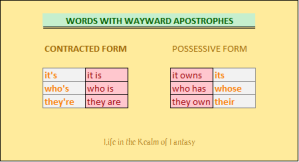
- Who’s is the contraction of “who is” or, less commonly, “who has.”
- Whose is the possessive of “who” or, somewhat controversially, “which.”
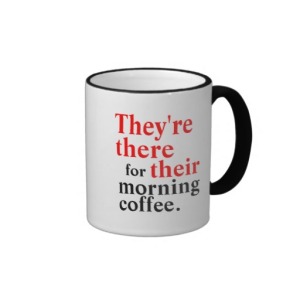
- Their(s) is the possessive of “they.” (They’re proud to own it, it’s theirs, and it’s not there.)
- Its is the possessive of “it,” and “it’s” is a contraction of it is.
Note that for both they and it, there is no apostrophe in the possessive form.
- The texture of the wall —it’s rough. (contraction: it is rough.)
- I scratched myself on its surface. (possession: the wall’s surface.)
In most English words an apostrophe indicates possession but can also indicate a contraction. The difficulty arises in the fact that both it and they are frequently part of contracted words.
In the effort to standardize English usage, early linguists made a choice to eliminate the apostrophe in the possessive form. They did this in the (futile) hope of ending confusion.
- It’s is the contraction of “it is” and sometimes “it has.”
- Its denotes possession: It owns it.
- Their: they own it
- They’re: they are
As with so many things that “seemed like a good idea at the time,” its and it’s will always cause problems for new and beginning writers. Inadvertent misuse happens even for old hands like me when I’m zipping along laying down the first draft of a manuscript.
 We have to be vigilant and ensure we have looked for proper usage of its and it’s during revisions. Even the big traditional publishing houses admit sneaky errors like those like to go unnoticed until after publication.
In closing, the most common uses of the apostrophe aren’t too difficult once we learn the rules. Remember, apostrophes are integral parts of the traffic control system, signals that keep your words moving along at the right rate. Using them the way they are intended (and which readers expect) keeps the reader from throwing your book away.
I always suggest you set some time aside for writing new words every day, even if only for fifteen minutes. When we force ourselves to think about and use the basic rules of grammar regularly, we retain what we have learned.
This post first appeared on Life in the Realm of Fantasy on 13 Feb 2019 as The Apostrophe. https://conniejjasperson.com/2019/02/13/the-apostrophe-amwriting/
 When your spouse has Parkinson’s, problems tend to arrive en masse, like an unstoppable horde of lemmings. Dealing with life’s lemmings requires a bit more creativity than merely making a cool, relaxing drink. While you may never gain control of the migrating mob, you must somehow steer them in the right direction.
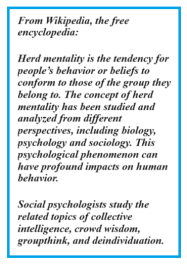 Wikipedia says:
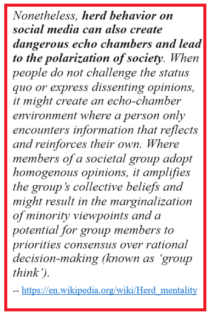 But back to the lemmings. We know how mob mentality works in humans, and it seems to happen in other creatures.
 Two weeks ago, my husband fell, sustaining a minor injury. Two days later, he was fighting off an infection, and we spent last Saturday in Urgent Care from 8:00 am to 7:00 pm. Rather than put him in the hospital, we were given the chance to participate in the
 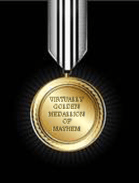 No one is perfect, but I like to do my best work. I’ll admit that publishing a post discussing a picture but with no image of that art piece is a humorous blooper. We did get a laugh out of it.
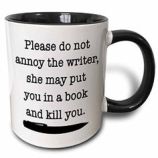 I try to write my posts on Saturdays and proof them on Sundays, so having only two to deal with will allow me time to proofread them and work on my other creative writing projects.


 Life in the Realm of Fantasy