
Most engineering disasters (and divorces) are preceded by one or more points of no return. The average hydroelectric dam is a miracle of applied physics, modern construction materials and knowledge, and years of engineering and planning.
 But what happens when a few insignificant cracks appear in that construction? What is the point of no return for the people living downstream?
Wikipedia says:
Dams are considered “installations containing dangerous forces” under International humanitarian law due to the massive impact of a possible destruction on the civilian population and the environment. Dam failures are comparatively rare, but can cause immense damage and loss of life when they occur. In 1975 the failure of the Banqiao Reservoir Dam and other dams in Henan Province, China caused more casualties than any other dam failure in history. The disaster killed an estimated 171,000 people and 11 million people lost their homes. [1]
A chain of events is set into motion when even a tiny, seemingly inconsequential mistake is made in the planning or construction of a hydroelectric dam.
Despite the diligence of the engineers, the construction workers, and the maintenance personnel, the flaw may go unseen until it is too late, and the dam experiences catastrophic failure.
If this is the plot for an epic disaster film or novel, where do we feature the first point of no return. What will be the opening incident from which there is no turning back?
 We must identify this plot point, and by mentioning it in passing, we make it subtly clear to the reader that this moment in time will have far-reaching consequences. Knowing something might be wrong and seeing the workers unaware of a problem ratchets up the tension.
For the writer, the moment cracks appear in the dam, the dangers previously hinted at are put into action, and the story is off and running.
I’ve faced personal disasters many times in my real life, unpleasant things that could have been avoided had I noticed the cracks in the metaphoric dam. When you look at history, humanity seems hardwired to ignore the “turn back now” signs.
In every novel, a point of no return, large or small, comes into play. Let’s look at the points of no return, moments when disaster could have been averted in F. Scott Fitzgerald’s novel of reckless excess and gray morality, The Great Gatsby.
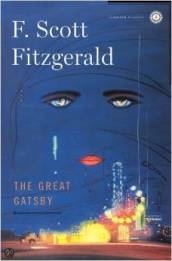 Nick Carraway, the unreliable narrator, leaves the Midwest and moves to New York. He sells bonds, so ambition and greener pastures drive him there. His new neighbor is a mysterious millionaire, Jay Gatsby.
- Nick reconnects with a cousin, Daisy, and her husband, Tom Buchanan. They introduce him to Jordan, and the two begin an affair of convenience. It emerges as the narrative progresses that neither is entirely straight sexually.
- Nick attends a party at Gatsby’s mansion and is intrigued by the man and his history. Jay Gatsby is the protagonist, but we only know him through Nick’s eyes, and Nick is a bit bedazzled by him. This bias is critical to how the reader perceives the story.
- Nick tacitly accepts Tom’s affair with Myrtle despite his utter dislike of the man.
- Nick facilitates Gatsby’s reunion with Daisy.
Of course, the infidelities come out. Tom loves Daisy but won’t let go of Myrtle, whose husband is unaware of the affair. Daisy declares she loves both Tom and Gatsby.
That doesn’t go well.
Later, while driving Gatsby’s car, Daisy strikes and kills her husband’s mistress, Myrtle, who is standing on the highway because she thinks Tom is driving the car and she is waiting for him.
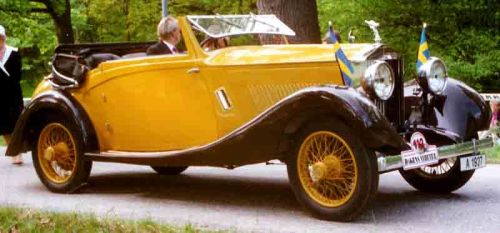 Fitzgerald is deliberately unclear if this act is deliberate or accidental—the murkiness of Daisy’s intent and the chaos of that incident lend an atmosphere of uncertainty to the narrative. If Nick had turned back at any of the above-listed points, Daisy wouldn’t have been driving Gatsby’s yellow Rolls Royce and wouldn’t have killed Myrtle in a hit-and-run accident.
The tragedy of this dive into the decadence and dissolution of the 1920s is this: Nick knows he could have changed the outcome if he had turned back at any time before he reunited Daisy and Gatsby. That was the point where nothing good was going to come of the whole debacle. Something terrible was bound to happen, but Myrtle, poor silly woman that she was, wouldn’t have died.
Tom Buchannon wouldn’t have sought revenge by telling Myrtle’s husband, George, that Gatsby owned the car that had run her down, implying Gatsby was driving. George wouldn’t have murdered Jay Gatsby and then killed himself.
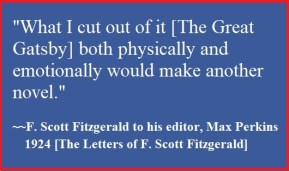 When I am writing a first draft, the crucial turning points don’t always make themselves apparent. It’s only when I have begun revisions that I see the opportunities for mayhem that my subconscious mind has embedded in the narrative.
If I am paying attention, those scenes become pivotal.
And sometimes, scenes I thought were important (because I was hyper-focused on the wrong story-within-the-story) end up being discarded. I don’t always see what the story is really about until someone in my writing group points out where I’ve missed an opportunity.
Credits and Attributions:
[1] Wikipedia contributors, “Dam failure,” Wikipedia, The Free Encyclopedia, https://en.wikipedia.org/w/index.php?title=Dam_failure&oldid=943367090 (accessed March 2, 2024).
IMAGE: Wikimedia Commons contributors, “File:Rolls-Royce 20 HP Drophead Coupe 1927.jpg,” Wikimedia Commons, https://commons.wikimedia.org/w/index.php?title=File:Rolls-Royce_20_HP_Drophead_Coupe_1927.jpg&oldid=824489843 (accessed March 2, 2024).


 Life in the Realm of Fantasy