Tag Archives: Preptober

#Preptober: some things I learned from Lee French #writing

Every year since 2010, I have participated in the annual challenge of writing a 50,000-word (or more) novel in November. I was a Municipal Liaison for the now defunct organization known as NaNoWriMo for twelve years, but dropped that gig when the folks at NaNo HQ got too full of themselves and lost the concepts the organization was founded on.

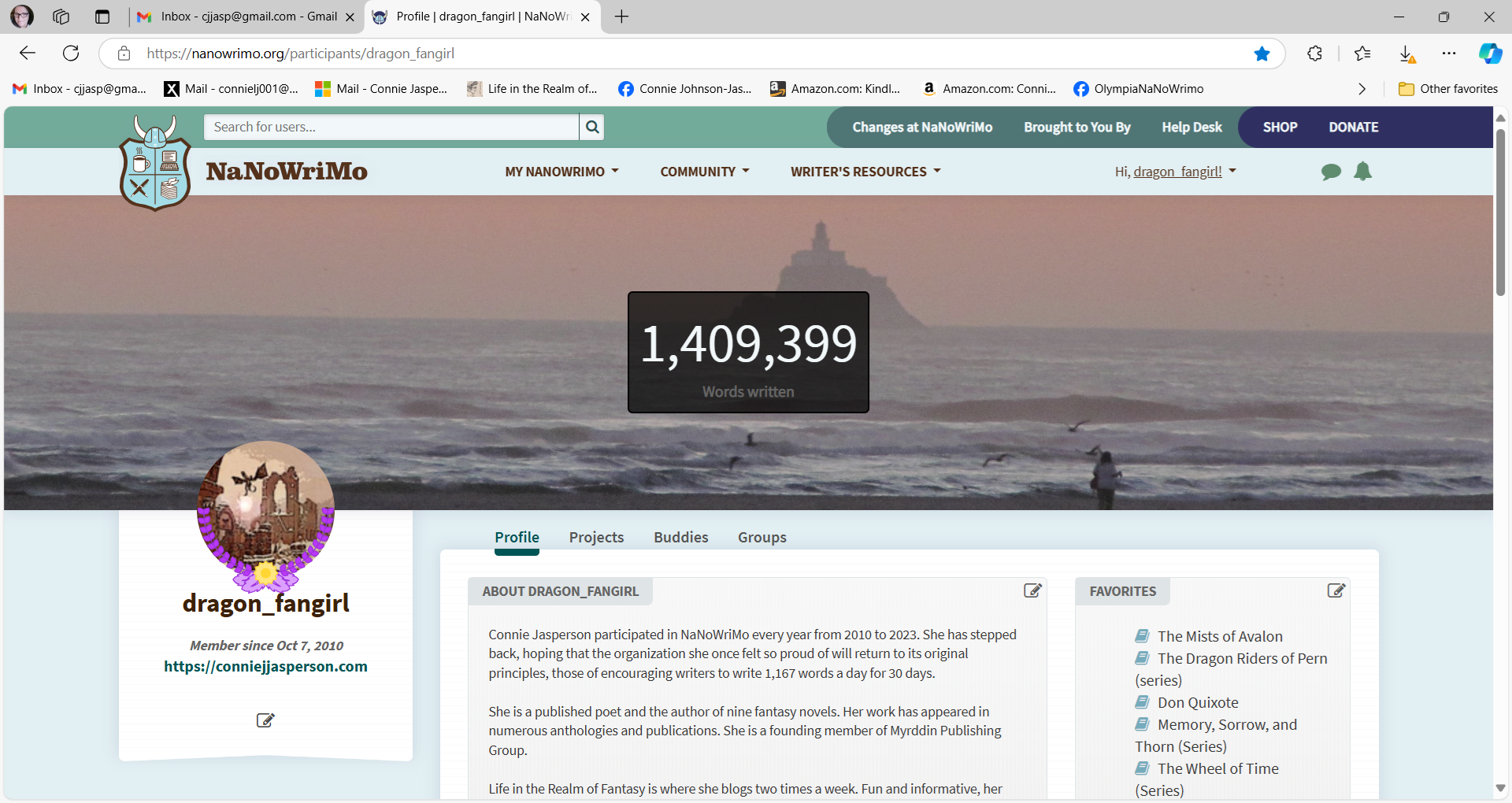
I still participated, just not on their website. Before I deleted my account, I took a screenshot of my header, as it showed my accumulated wordcount. During those years I wrote 1,409,399 words. Some years were easier than others, but I always came away with something useful.
Spending the time every day to get a certain number of new words written forces me to become disciplined. It requires me to ignore the inner editor, the little voice that slows my productivity down and squashes my creativity.

For those two reasons alone, I will most likely always be a November Writer.

I love the rush, the thrill of having laid down the first draft of something that could become better with time and revisions. I am competing against my lazy self and really making the effort to get a complete story arc on paper.

Have I ever mentioned how my family loves Indy Car and the Memorial Day Weekend extravaganza known as the Indy 500? Well, if I haven’t, it’s true.
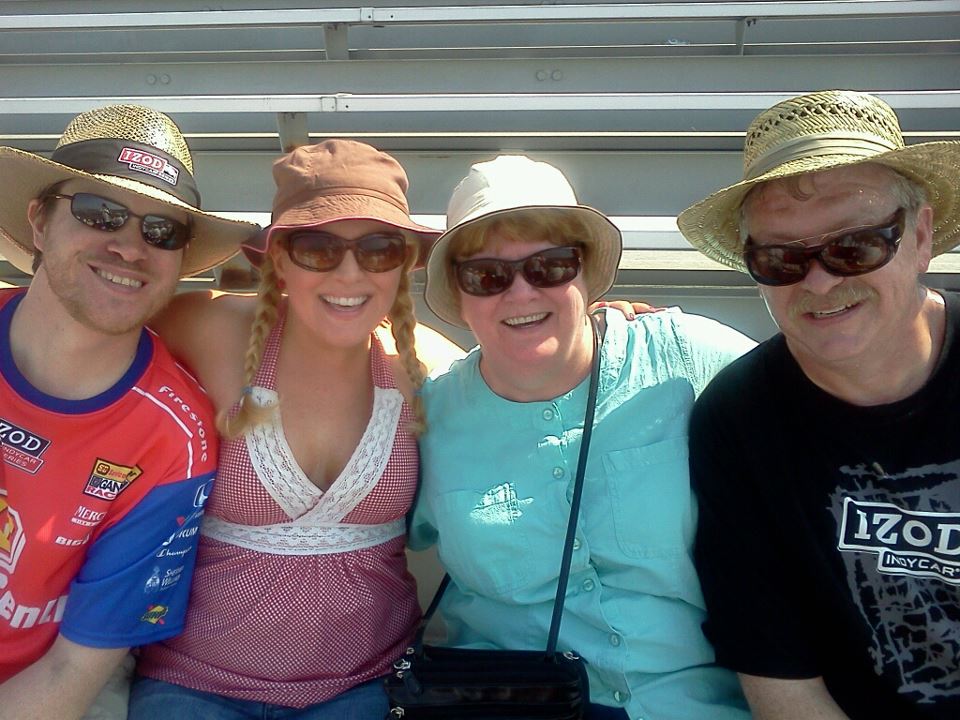
Jasperson clan at Indy 2012.

I have had many favorite drivers, one of whom is Takuma Sato . You may ask how an Indy Car driver is relevant to my completion of November’s writing rumble, and I will tell you.

He approaches competing like a samurai warrior, and that is how I see making a daily wordcount goal in November. No Attack, No Chance: The Takuma Sato Story – THOR Industries

As Takuma Sato says, “No attack, no chance.”

To really commit to this and get your word count, you must become a Word Warrior. Even if you intend to wing it, a little advance prep is helpful.

Author Lee French, who was my co-ML and dear friend for all those years had a pep-talk she would give our writers, beginning in October, or Preptober as we veterans call it. She has kindly allowed me to quote her notes from 2020:

Pick any of these things you want to write about or with. Be as specific as possible for each thing. These things can come from a number of different categories, such as but not limited to:

  1. Creatures – Dragons, demons, fae, vampires, elves, aliens, babies, wolves, mosquitoes, and so on. This includes anything nonhuman, and may refer to heroes, villains, or side characters of any importance.

  2. Natural disasters – Tornadoes, earthquakes, hurricanes, tsunamis, melting polar ice caps, climate change effects, etc. This can mean a story that takes place during or after a disaster, or it can mean there’s a disaster looming and the goal is to prevent or mitigate it.

  3. Themes – Love, death, survival, good vs. evil, prejudice, etc. Any theme will do. You can mix two, but should steer clear of more than that. If you’re not sure what constitutes a theme, google “story themes” for an array of options.

  4. Relationships – Siblings, romance, platonic love, friendship, breaking up/divorce, etc.

  5. Moods – Grim, utopian, dark, gritty, light, noble bright, comedic, etc.

  6. Geography/type of area – Forest, mountains, urban, rural, caves, isolated, etc.

  7. Phenomena – Magic, psychic powers, supernatural whatnot, miracles, and the like.

Once you have your list, take the time to think about it. Sit back, ruminate on each thing, and make some notes. This could take a few days, or as little as an afternoon. In 2020,

Lee’s five things looked like this:

Magic

  1. Secondary world fantasy.
  2. Other races exist.
  3. The MC uses magic in a lowkey way.
  4. Magic is not commonly used by ordinary people.
  5. There’s a squirrel.

Romance

  1. Cishet. Female MC, male Love Interest.
  2. The guy is different in some important way, like being nonhuman or following a religious path that’s frowned upon by most folk.
  3. The romance is a value-added bonus, not the plot.

Unexpected Ice Age

  1. Caused by magic.
  2. Affects the entire world.
  3. Makes survival challenging, especially for food and fuel.
  4. The cold is enough to kill fairly swiftly.

Good vs. Evil

  1. Bad guy is the leader of the city.
  2. No, wait. It’s two bad guys. They’re partners. Siblings?
  3. Good guy is in hiding.
  4. I think I need a secondary bad guy too, like a lieutenant.

Refuge City of Debris

  • Jagged edges, abrupt changes in material, faded colors.
  • The population is in the 2-5 thousand range.
  • Surrounded by a wall or cliffs. Or both!

I have always loved the way her mind works.

For me, once I begin writing my new manuscript on November 1st, the hardest part is NOT SELF-EDITING!!! But overcoming that habit is crucial, and not just for wordcount. We need to get the ideas down while they are fresh, and any step backwards can stall the project.
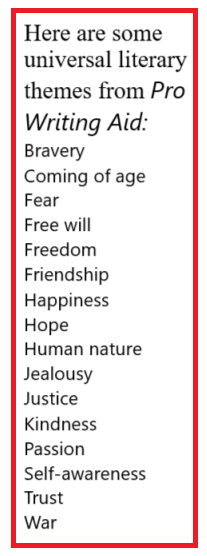
Tips from me for a good November:

Never delete and don’t self-edit as you go. Don’t waste time re-reading your work. You can do all that in December when you go back to look at what you have written.

Make a list of all the names and words you invent as you go and update it each time you create a new one, so the spellings don’t evolve as the story does.

If wordcount is your goal, write 1670 words every day and you will have 50,000 words on November 30th.

This year for me, wordcount is important but not the entire enchilada. Writing the second book in my unfinished duology is the project that I intend to complete.

Here are some Resources to Bookmark in advance:

Three websites a beginner should go to if they want instant answers in plain English:

Most importantly, enjoy this experience of writing. There is no other reason to put yourself through this.


Credits and Attributions:

Special thanks to best-selling author of YA Fantasy and Sci-fi, Lee French, for allowing me to quote her work notes. She is an inspiration to me!
Comments Off on #Preptober: some things I learned from Lee French #writing

Filed under writing

#Preptober: Names as a part of worldbuilding #writing

October has arrived, or as many writers will tell you, Preptober. This is the month when November Writers begin preparing for November’s annual writing rumble, the event formerly known as NaNoWriMo. They may create a list of characters and their respective roles.

Text only: NaNo Prep, character creation, names and the people who have them.Some, like me, will begin with worldbuilding, drawing a map of where the story will take place and thinking about the people who will bring that world to life.

Creating characters and maps means devising names for people and places. If you are setting your story in a real-world environment, half of the work is done for you. All you have to do is download a few Google Maps, and you have your world.

However, you still need to give your people names. You may also need to invent a town or county that doesn’t exist, but which will fit seamlessly into the real world.

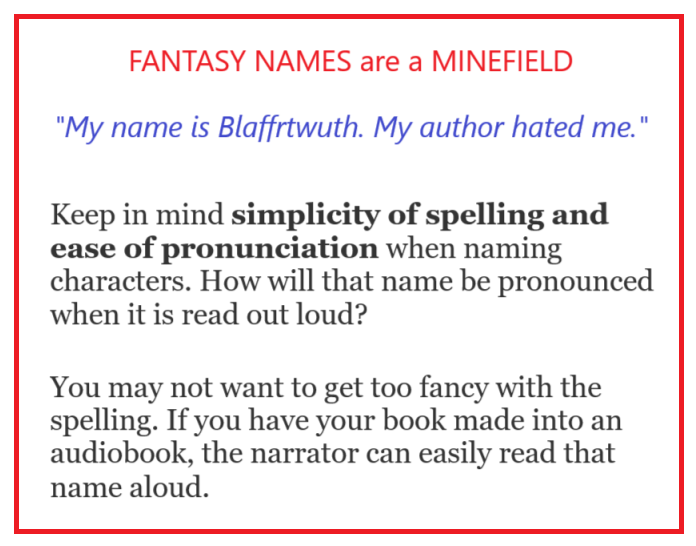
Text only: Fantasy names are a minefield. Keep it simple and think about ease of pronunciation when it comes to how you spell them. Names are a part of the subtext, an aspect that adds to the reader’s mental view but usually goes unnoticed. The names you assign people and places are a part of worldbuilding. If you give your characters names that don’t fit the time, society, and geographical area, readers will find them jarring.

Although I usually start with an outline, my first drafts are often a mess. My stream of consciousness takes over, and I give every walk-on a name, right down to the dog.

This happens because when I am in the creative zone, I forget to look at the outline.

During the first stage of revisions, I whittle down my cast of thousands to a reasonable level.

Here are three rules for deciding who should be named and who should not. Don’t worry about these rules when you are laying down the first draft. Think about them when the story is finished and you are making revisions, as that is when you are making the story flow better.

  1. Is this character someone the reader should remember?
  2. Does the person return later in the story?
  3. Only give names to characters who advance the plot.

These suggestions are true of a novel, a screenplay, or a short story. Names alert us, telling us a character will play an important role in the story.

In my experience as a reader, the pacing an author is trying to establish comes to a halt when a character who is only included for the ambiance has too much time devoted to them.

Book Cover image “Story” by Robert McKee.

Novelists can learn a lot about writing a good, concise scene from screenwriters. An excellent book on craft is an older one, but it’s still relevant. Story by Robert McKee.

We want the reader to stay focused on the protagonist(s) and their story. Having too many named characters in a scene is easy to fix. Consider removing characters from the scene if they have nothing to contribute. An example of this is one I’ve used before. It is a transition scene between two characters involved in solving a mystery. One has learned something crucial and needs to meet with the other before he stumbles into trouble.

Julie entered the café at 3:30. All the seats were taken, except for one at the counter, between a man in paint-stained coveralls and a woman with a briefcase at her feet. She caught Nathan’s eye, and he brought her a coffee. “We need to talk,” she whispered. “I’ll wait until you’re free.”

Nathen raised an eyebrow. “I get off at four. See you then.” He refilled several coffees at the counter, then carried the pot to the tables.

This scene depicts Nathan in his job, serving as both worldbuilding and character development. Julie doesn’t need to talk to the people on either side of her onscreen, as idle chit-chat is not necessary and fluffs up the wordcount. The scene can skip forward, and the conversation with Nathan will pick up outside the café after he is off work.

Transition scenes between action scenes are dangerous because the tendency to make every random character memorable is one we can’t indulge. The reader will become confused and irritated if too many characters are named. If a character is set dressing, they should be like the furniture, included solely to lend atmosphere to the scene.

So what about the names we give our people? I’ve mentioned before that I learned a lesson the hard way about naming characters. I have a main character named Marya in one of my early novels, and she’s central to that series. Also, in the first book, a side character was important enough to have a name, but my mind must have been in a rut when I thought that one up.

For some reason, I named her Marta. Marya … Marta … the two names are nearly identical.

To make that faux pas worse, halfway through the first draft of the second book in the series, Marta suddenly became a protagonist with a significant storyline. She actually becomes Marya’s mother-in-law in the next book.

Fortunately, I was in the final stages of editing Book One for publication. I immediately realized I had to make a major correction, and Marta was renamed Halee.

An author should introduce as many characters as necessary to tell the story but should also use common sense.

Inset with text only: Names matter. Keep them simple, keep them separate, and make them count.One last thing to consider is how that name will be pronounced when read aloud. Something that looks good on paper might be impossible to pronounce. Audiobooks have become a big thing, so you may not want to get too fancy with the spelling. That way, a narrator can easily read that name aloud.

In conclusion, don’t confuse your readers by giving unimportant walk-on characters names, and never give two characters names that are nearly identical.

Consider making your spellings of names and places pronounceable, just in case you decide to have your novel made into an audiobook. Your narrator will thank you!

5 Comments

Filed under writing

#NovemberWriter: How the story ends, and how it begins #writing #PrepTober

Today, we’re continuing to prep our novel by thinking about the arc of a plot and the story our characters will live out on the page.

We’ll start by jumping to the end.

Olympia Rebel Writers Sticker 2024(I know it’s rude to read the end of a book before you even begin it, but I am the kind of writer who needs to know how it ends before I can write the beginning.)
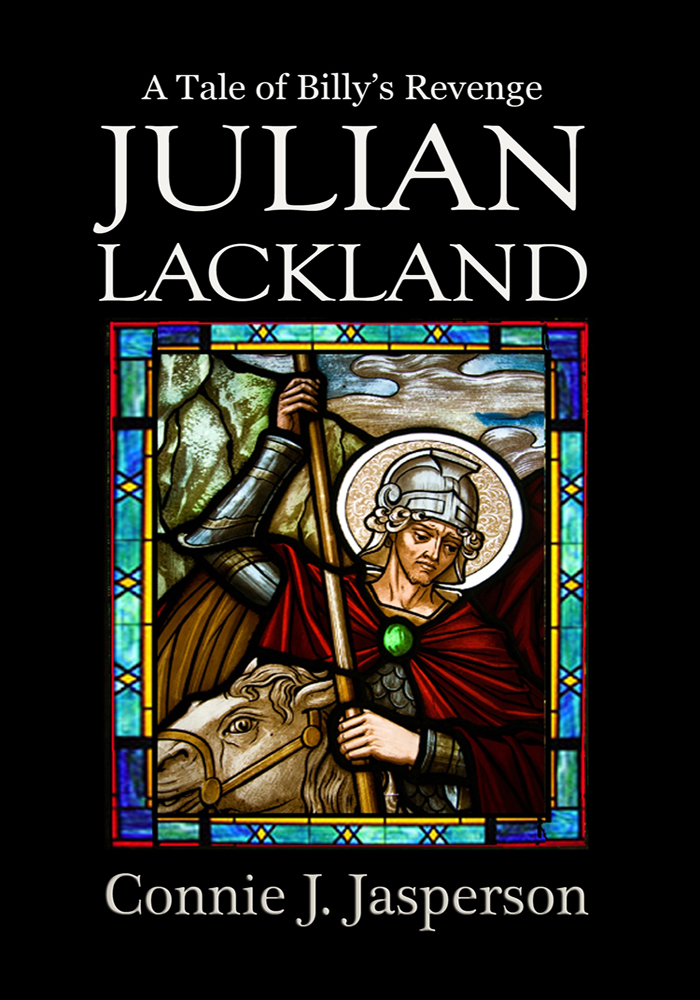
Julian Lackland was my first completed novel. The first draft of this novel was my 2010 NaNoWriMo project. The entire novel was inspired by a short story of about 2500 words that I had written about an elderly knight-at-large. Julian was a Don Quixote type of character and he had returned to the town where he had spent his happiest days in a mercenary crew.

Golden Beau, Julian’s life-partner has died. Julian enters the town and finds it completely changed. The town has grown so large that he becomes lost. Julian talks to his horse, telling him how wonderful the place they are going to is and all about the people he once knew and loved. When he does find the inn that he’s looking for, nothing is what he expects.

Julian_Lackland Cover 2019 for BowkersOn October 28, 2010, I was scrambling, trying to find something I could write, but my thoughts kept returning to the old man’s story. The innkeeper had referred to him as the Great Knight, stupidly brave but harmlessly insane. Had he always been that way? Who had he been when he was young and strong? Who did he love? How did Julian end up alone if the three of them, Julian, Beau, and Mags, were madly in love with each other?
What was their story? On November 1, I found myself keying the hokiest opening lines ever written, and from those lines emerged the story of an innkeeper, a bard, three mercenary knights, and the love triangle that covered fifty years of Julian’s life.

If I know how the story will end, I can build a plot to that point. This year, in November, I plan to finish a novel that has been on the back burner for five years.

I know how it will end because it is a historical sidenote in the Tower of Bones series. The story is canon because it has always been mentioned as a children’s story, the tale of an impossibly brave hero who does amazing and impossible things.

The novel separates Aelfrid-the-shaman from the myth of Aelfrid Firesword. It details both the founding of the Temple and the truth about Daryk, the rogue-mage who nearly destroyed it all.

I have written a synopsis of what I think will be the final chapters of Aelfrid’s story. It consists of two pages and is less than a thousand words.  Each paragraph details a chapter’s events, and I’ve included a few words detailing my ideas for the characters’ moods and the general emotional atmosphere.

The way the final battle ends is canon. I have some notes, but I will choreograph the actual battle when I get to it. It is pivotal, but I won’t drag it out. I’ll show the crucial encounters and tell the minor ones, as I dislike reading drawn-out fight scenes and usually skip over them, just reading the high points.

So now, let’s go back and look at the place where the story begins. We want to focus on the day that changed everything because that is the moment we open the story.

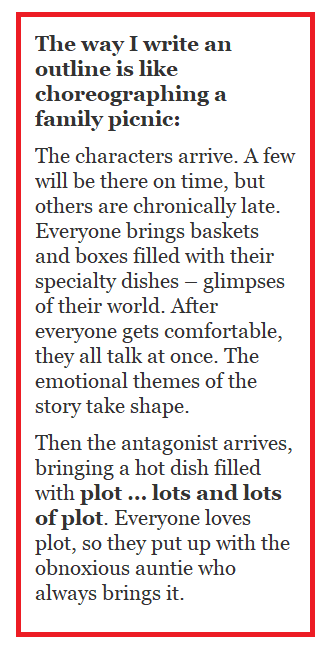
plotting as a family picnicI suggest writing a short synopsis of the story as you see it now. This will be as useful as an outline but isn’t as detailed. It will allow you to riff on each idea as it comes to you and is a great way to develop the storyline.
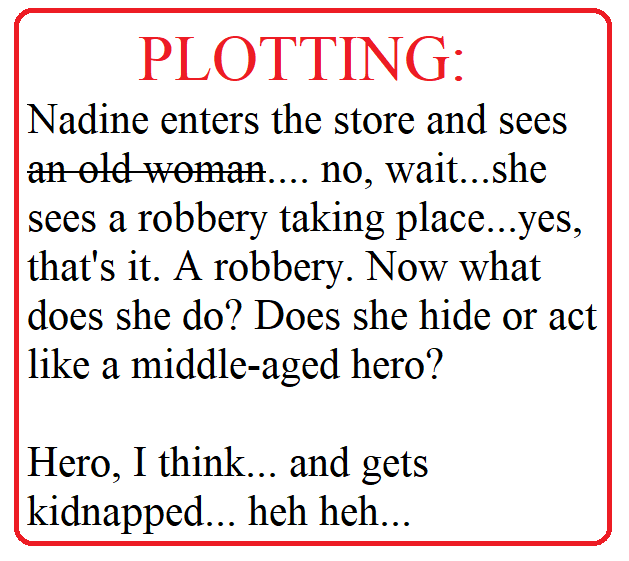
Open the document and look at page one. Let’s put the protagonists in their familiar environment in the opening paragraphs. This chapter is the hook, the “Oh, my God! This happened to these nice people! chapter.” This chapter is where the author can hook or lose the reader.

How? We see the protagonist content in their life, or mostly so. A nice cup of tea might start the day, but by evening, a chain of events has begun. A stone has begun rolling downhill, the first incident that will become an avalanche of problems our protagonist must solve.

But how do we lose the reader when this is the most coolest, bestest story ever written?

When we are new in this craft, we have a burning desire to front-load the history of our characters into the story so the reader will know who they are and what the story is about.

Don’t do it.

plottingLIRF07122020Fortunately for me, my writers’ group is made up of industry professionals, and one in particular, Lee French, has an unerring eye for where the story a reader wants to know begins.
I have to remind myself that the first draft is the thinking draft. In many ways, it’s a highly detailed outline, the document in which we build worlds, design characters, and forge relationships.

  • The first draft, the November Novel, is the manuscript in which the story grows as we add to it.

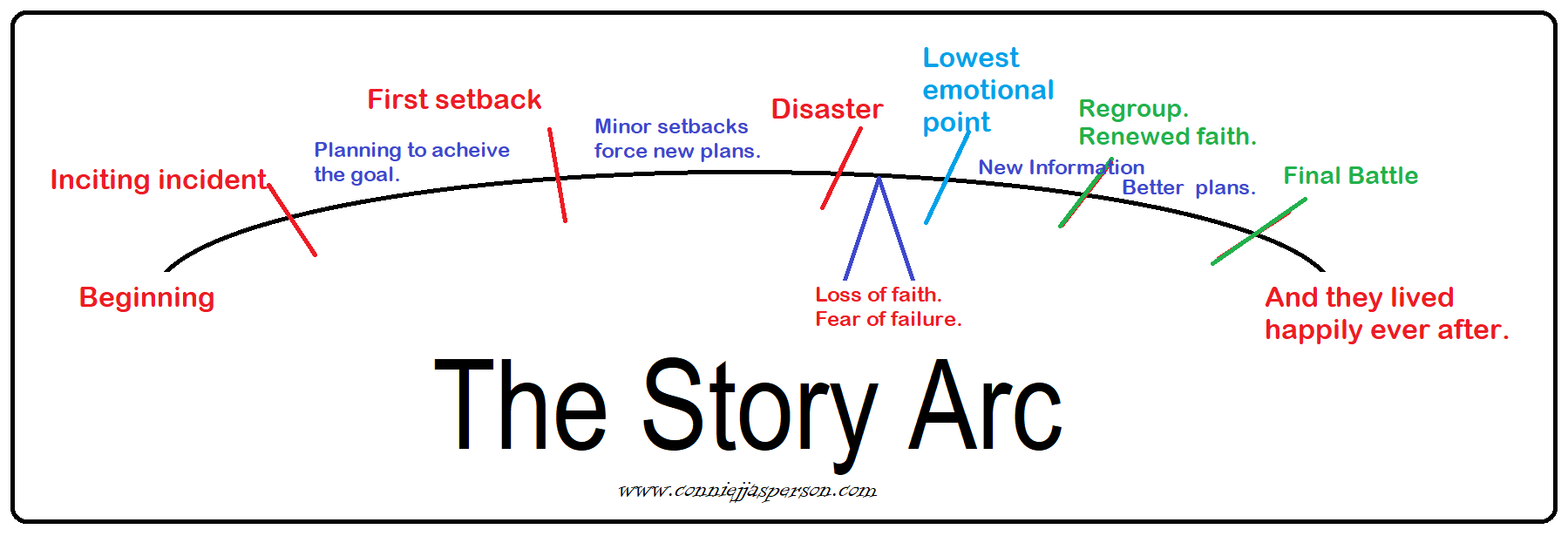
We need a finite starting point, an incident of interest. If you’re like me, you have ideas for the ending, so you have a goal to write to. At this point, the middle of the story is murky, but it will come to you as you write toward the conclusion.

The inciting incident is the beginning because this is the point where all the essential characters are in one place and are introduced:

  • The reader meets the antagonist and sees them in all their power.
  • The protagonistknows one thing—the antagonist must be stopped. But how?

The story kicks into gear at the first pinch point because the protagonist’s comfortable existence is at risk.

What else will emerge over the following 60,000 or more words (lots more in my case)?

storyArcLIRF10032021The protagonist will find this information out as the story progresses and only when they need to know it. With that knowledge, they will realize they’re doomed no matter what, but they’re filled with the determination that if they go down, they will take the enemy down, too.
If you dump a bunch of history at the beginning, the reader has no reason to go any further. You have wasted words on something that doesn’t advance the plot and doesn’t intrigue the reader.

As you write, the people who will help our hapless protagonist will enter the story. They will arrive as they are needed. Each person will add information the reader wants, but only when the protagonist requires it. Some characters, people who can offer the most help, will be held back until the final half of the story.

We know how the story begins, and we know how it ends. The middle will write itself, and by the end of the novel, the reader will have acquired what they want to know.

With the last bits of information, the final pieces of the puzzle will fall into place. The promise of gaining all that knowledge is the carrot that keeps the reader involved in the book.

For the last #PrepTober installment, we will look at science and magic and why it’s important to start out knowing the rules for each.

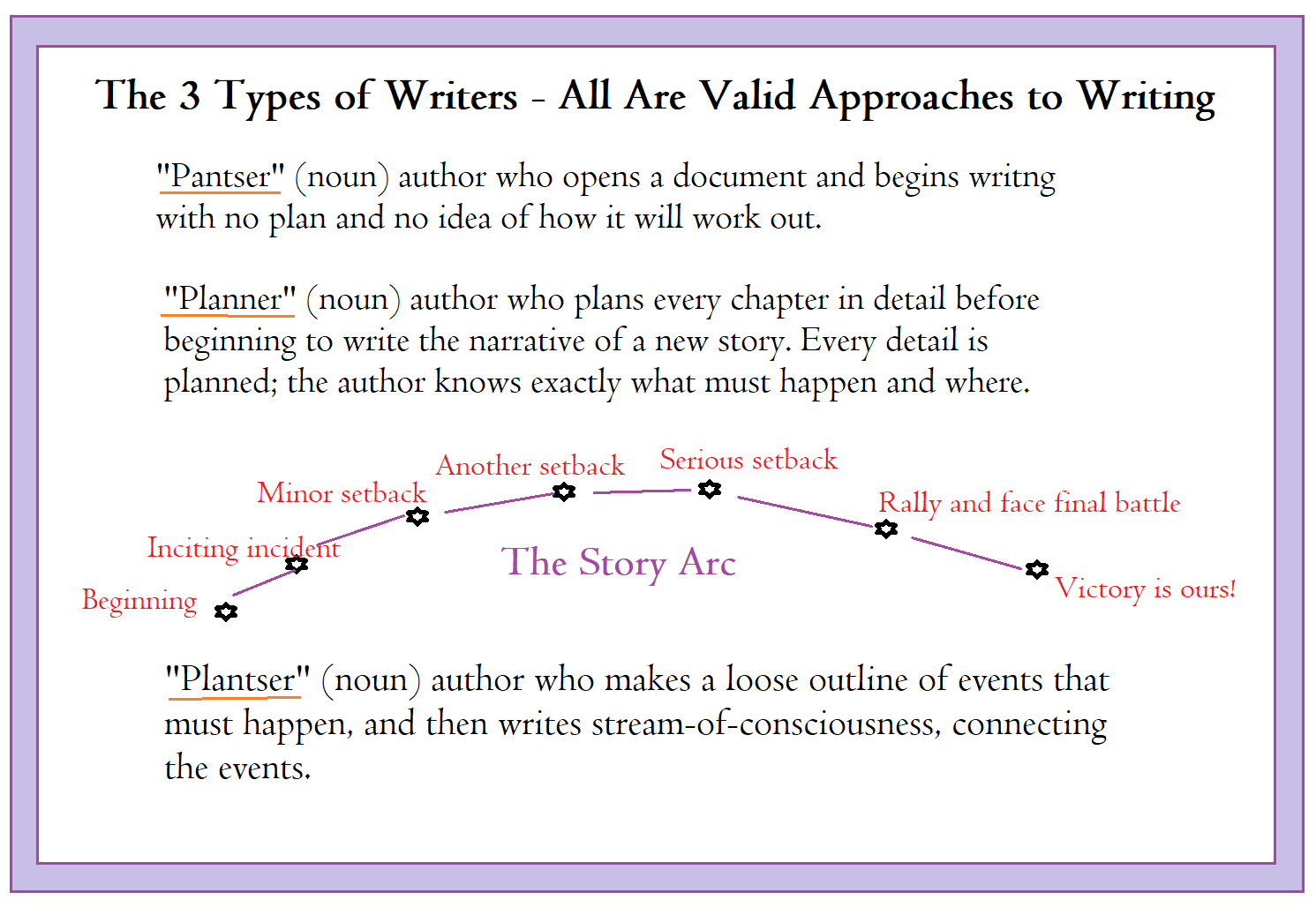
panster-planner-planner-stpery-arc-10012021LIRF

Comments Off on #NovemberWriter: How the story ends, and how it begins #writing #PrepTober

Filed under writing

#NovemberWriter: Preparing to speed-date your muse #preptober #writing

November is National Novel Writing Month—and I am and always will be a November Writer. It’s the month I dedicate to writing new material. However, I no longer participate in the organization known as NaNoWriMo.

MyWritingLife2021I was a dedicated municipal liaison for the Olympia, Washington Region for twelve years and a regular financial donor, but I walked away after the organization’s implosion last November. I will get my 50,000 new words in November but will not sign up to participate through the NaNoWriMo website.
Instead, my region is preparing to go rogue with our own creative contest, milestones, and rewards. We stay connected through our Facebook page and our Discord Channel.

Last year’s tomfoolery within the national organization’s headquarters included accusations of ignoring child endangerment and grooming in a particular forum, rumors of mismanaged donations (never substantiated), and the overt power grab and subsequent “cleansing of MLs” by NaNo HQ’s new regime. Those shenanigans have poisoned the waters for me.

This Lit Hub article was the capper—I’m walking away from what was once the best part of my writing life. NaNoWriMo defends writing with AI and pisses off the whole internet. ‹ Literary Hub (lithub.com)

Whether you choose to go the NaNoWriMo route and participate through their website or go rogue like me, October is #Preptober, and the world is full of writing challenges to participate in.

Olympia Rebel Writers Sticker 2024Set your goal, keep a record of your daily word count or pages edited, or whatever, and let National Novel Writing Month be your month to achieve your goals. I have had buttons and stickers made as rewards for our region’s writers, and we will have write-ins as we have always done.

We are committed to supporting all writers, whether they are traditionalists participating through the national website or rogue writers, and the community we have built over the last twelve years remains strong. More than ever, we are committed to our original goals of writing a novel (or completing a project) in 30 days.

National Novel Writing Month is about accountability. We set goals and devote thirty days to working toward certain milestones. Each milestone we achieve gets us closer to a finished project. On November 30th, we can look back and take pride in what we have accomplished in only thirty days.

So, what is #Preptober all about? It’s getting ready to spend 30 days writing new words, self-editing last year’s novel, or any number of creative projects.

During the month of November, before my husband’s Parkinson’s became a problem, I might pound out 60,000 or so words, but my novels were only half finished at that point. Maybe a year or so later, I would have a coherent first draft that tops out at around 120,000 words. Three more years and six or eight drafts later, my novel was publishable at about 90,000 words.

For me, succeeding at getting the bare bones of a novel’s first draft written during the 30 days of November requires a pre-flight checklist. The checklist becomes my permanent stylesheet/outline for that novel.

I found Excel useful when I first began writing, and I use it to this day to keep my plots and background information organized. I also use Excel to keep track of my daily word count. This was my personal April challenge–unfortunately my husband was hospitalized before the end of the challenge, so my word count ends before April 30th:

Word count spreadsheet

Google Docs, pencil and paper—ANY document or spreadsheet program will work.

Once I’m done winging it through the story and am in revisions, some scenes will make more sense when placed in a different order than originally planned. At that point, an outline allows me to view the story’s arc from a distance. The outline is a visual aid that keeps my stream-of-consciousness writing flowing.

If I am editing a story for a client who has no outline, I make one as I go.

The outline is an editing tool, an overview that allows me to see where the plot arc might be flatlining. Perhaps an event should be cut entirely as it no longer works. (I always save my outtakes in a separate file for later use.)

Over the next few weeks, we’ll talk more about my process.

But first, WHAT is our project? Are we using November for writing or editing or writing music or painting landscapes?

This is how I start my pre-flight checklist for winging it through the merry month of November. Whether we are writing a novel or editing it, the basic premise of any story in any genre can be answered in eight questions. Considering these questions on a chapter-by-chapter level is a good editing tool—when you note your observations on the outline, you can see the rise and fall of the action, follow the character arcs, and ensure the pacing is on point.

  1. Who are the players?
  2. Who is the POV character?
  3. Where does the story open? This is worldbuilding, so make the setting feel real.
  4. What does the protagonist have to say about their story? What do they want, and what will they do to get it?
  5. Who is the antagonist? What do they want, and what will they do to achieve it?
  6. What is the major obstacle to our characters’ achieving their desires?
  7. What other roadblocks hinder them?
  8. How does the story end? Is there more than one way this could go?

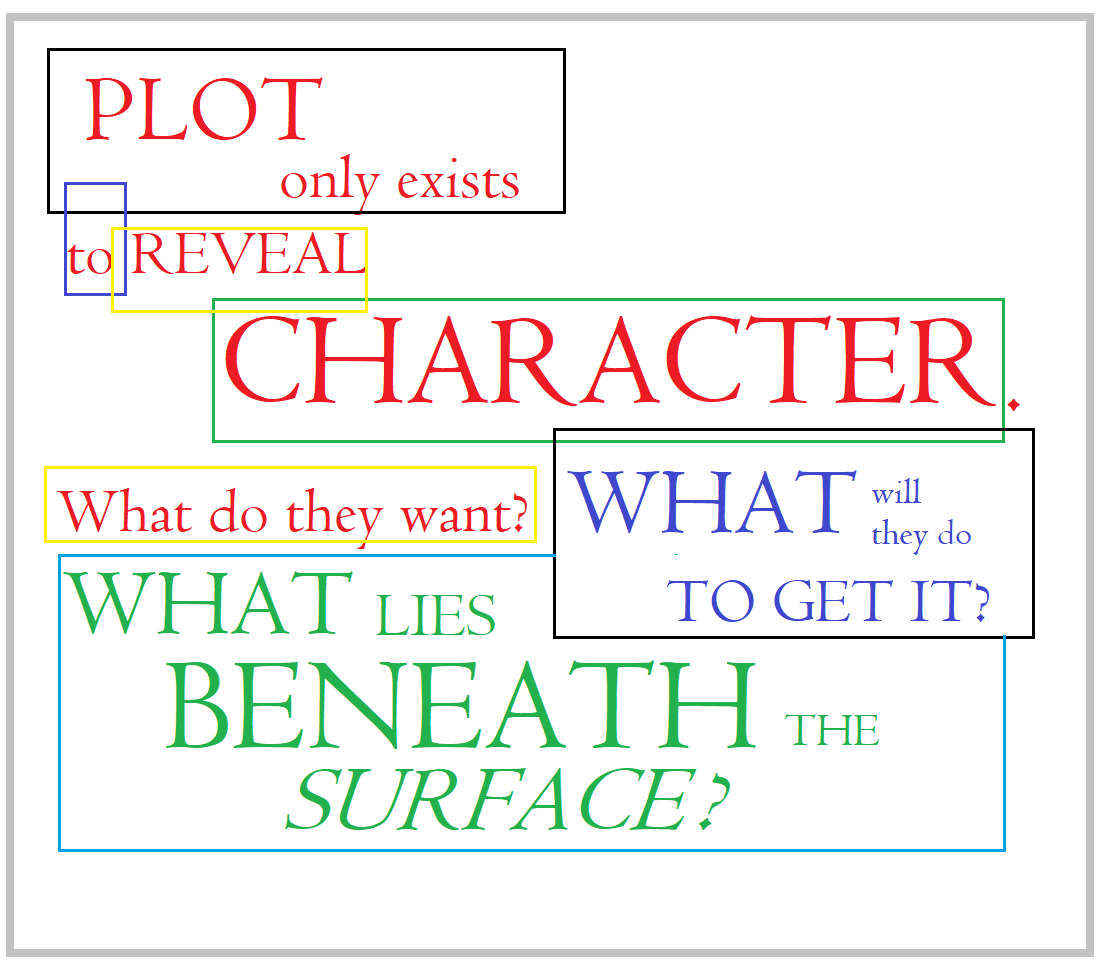
Plot-exists-to-reveal-characterThe answer to question number one kickstarts the plot: who are the players? Once I know the answer to this question, I can write, and write, and write … although most of what I write at that point will be background info. The answers to the other questions will emerge as I write the background blather.
I write fantasy stories most often, and they always begin with the characters. Characters usually arrive in my imagination as new acquaintances inhabiting a specific environment. That world determines the genre.

Who are youThey share some of their story the way strangers on a long bus ride might. I see the surface image they present to the world, but they keep most of their secrets close and don’t reveal all the dirt. These mysteries will be pried from them over the course of writing the narrative’s first draft.
That little bit of mind-wandering gives me the jumping-off point, which is all I need to get my story off the ground.

Knowing who the protagonist is, having an idea of their story, and seeing them in their world is a good first step.

Write those thoughts down so you don’t lose them. Keep adding to that list as ideas about that world and those characters come to you.

But what if you plan to edit last year’s novel rather than write a new project? We will go into productive self-editing next week.

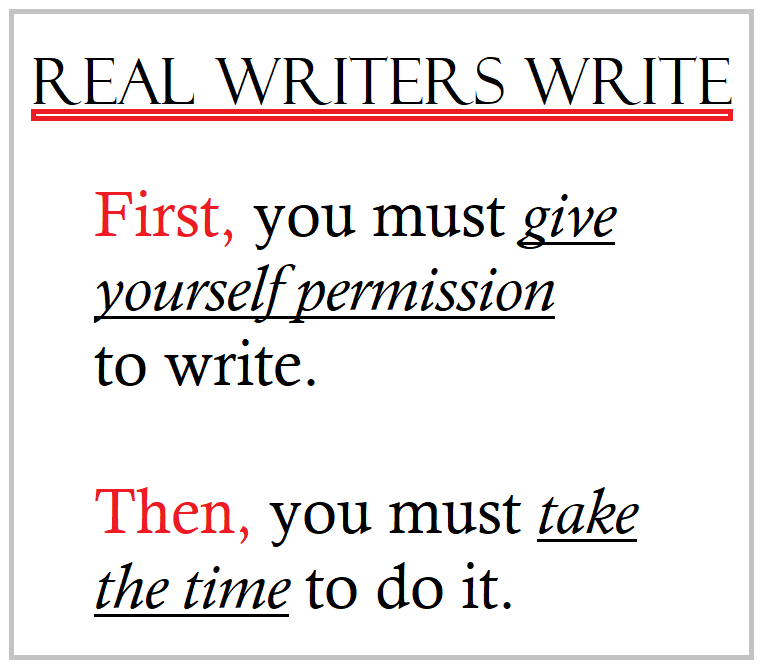
real-writers-writeAnd what if you are writing poems or short stories? Graphic novels? We will also go into preparing to “speed-date your muse” when embarking on those aspects of writing.

We will look at all areas of creativity this #Preptober, because November is a month for exploring creativity on every level, and many sites offering November writing quests are springing up. We will explore the ever-expanding list of NaNo alternatives, and we will be prepared to have fun.

6 Comments

Filed under writing