Tag Archives: proofreading vs editing

Proofreading, Beta Reading, and Editing – three different stages of #writing

Proofreading is not editing, nor is beta reading. These are three different stages of preparing a manuscript for publication.
depthPart1revisionsLIRF05252021Beta Reading is the first look at a manuscript by someone other than the author. The first reading by an unbiased eye is meant to give the author a view of their story’s overall strengths and weaknesses so that the revision process will go smoothly. This phase should be done before you submit the manuscript to an editor. It’s best when the reader is a person who reads for pleasure and can gently express what they think about a story or novel. Also, look for a person who enjoys the genre of that particular story. If you are asked to be a beta reader, you should ask several questions of this first draft.

Setting: Does the setting feel real?

Characters: Is the point of view character (protagonist) clear? Did you understand what they were feeling? Were they likable? Did you identify with and care about them? Were there various character types, or did they all seem the same? Were their emotions and motivations clear and relatable?

Dialogue: Did the dialogue and internal narratives advance the plot?

Pacing: How did the momentum feel?

Does the ending surprise and satisfy you? What do you think might happen next?

What about grammar and mechanics? At this point, a beta reader might comment on whether or not you have a basic understanding of grammar and industry practices that suits your genre.

I am fortunate to have excellent friends willing to do this for me. Their suggestions are thoughtful and spot-on.
Leonid_Pasternak_-_The_Passion_of_creationEditing is a process unto itself and is the final stage of making revisions. The editor goes over the manuscript line-by-line, pointing out areas that need attention: awkward phrasings, grammatical errors, missing quotation marks—many things that make the manuscript unreadable. Sometimes, major structural issues will need to be addressed. Straightening out all the kinks may take more than one trip through a manuscript.

There are different kinds of editing, as the various branches of literature have requirements that are unique to them. In creative writing, editing is a stage in which a writer and editor work together to improve a draft by ensuring consistency in style and grammatical usages.

The editor does not try to change an author’s voice but does point out errors. When an author’s style goes against convention and it is their choice, the editor ensures it does so consistently from page one to the end of the manuscript. At the same time, attention is paid to transitions and the overall story arc.

Proofreading is its own thing.
jack-kerouac-quote-memeA good proofreader understands that the author has already been through the editing gauntlet with that book and is satisfied with it in its current form. A proofreader will not try to hijack the process and derail an author’s launch date by nitpicking their genrestyle, and phrasing. 

The proofreader must understand that the author has hired a professional line editor and is satisfied that the story arc is what they envisioned. The author is confident that the characters have believable and unique personalities as they are written. The editor has worked with the author to ensure the overall tone, voice, and mood of the piece is what the author envisioned.

I used the word ‘envisioned‘ twice in my previous paragraph because the work is the author’s creation, a product of their vision. By the time we arrive at the proofing stage, the prose, character development, and story arc are intentional. The author and their editor have considered the age level of the intended audience.

If you feel the work is too dumbed down or poorly conceived and you can’t stomach it, simply hand the manuscript back and tell them you are unable to do it after all.

If you have been asked to proofread a manuscript, please DON’T mark it up with editorial comments. Don’t critique their voice and content because it will be a waste of time for you and the author.

  • And, if your comments are phrased too harshly at any point during this process, you could lose a friend.

If the person who has agreed to proof your work cannot refrain from asking for significant revisions regarding your style and content, find another proofreader, and don’t ask them for help again.
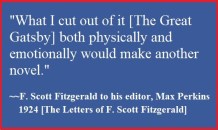
f scott fitzgerald quoteThe problem that frequently rears its head among the Indie community occurs when an author who writes in one genre agrees to proofread the finished product of an author who writes in a different genre. People who write sci-fi or mystery often don’t understand or enjoy paranormal romances, epic fantasy, or YA fantasy.

Also, some people can’t proofread because they are fundamentally driven to critique and edit.

Indies must hope their intended proofreader is aware of what to look for. In traditional publishing houses, proofreading is done after the final revisions have been made. Hopefully, it is done by someone who has not seen the manuscript before. That way, they will see it through new eyes, and the small things in your otherwise perfect manuscript will stand out.

What The Proofreader Should Look For:

Spelling—misspelled words, autocorrect errors, and homophones (words that sound the same but are spelled differently). These words are insidious because they are real words and don’t immediately stand out as being out of place. The human eye is critical for this.

  • Wrong: There cat escaped, and he had to chase it.
  • Wrong: The dog ran though the house
  • Wrong: He was a lighting.

Kusakabe_Kimbei_-_Writing_Letter_(large)Repeated words and cut-and-paste errors. These are sneaky and dreadfully difficult to spot. Spell-checker won’t always find them. To you, the author, they make sense because you see what you intended to see. For the reader, they appear as unusually garbled sentences.

  • Wrong: It is accepted thoughts italicize thoughts.

Missing punctuation and closed quotes:

  • Wrong: “What do you know about the dead man? asked Officer Shultz.

Numbers that are digits:

Miss keyed numbers are difficult to spot when they are wrong unless they are spelled out.

  • Wrong number: There will be 30000 guests at the reception.

Dropped and missing words:

  • Wrong: Officer Shultz sat at my kitchen table me gently.

I have to be extra vigilant when making corrections my proofreader has asked for. Each time I change something in my already-edited manuscript, I run the risk of creating another undetected error.
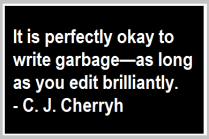
ok to write garbage quote c j cherryhAt some point, your manuscript is finished. Your beta readers pointed out areas that needed work. The line editor has beaten you senseless with the Chicago Manual of Style. The content and structure are as good as you can get them. Your proofreader has found minor flaws that were missed.

If you don’t have access to a proofreader, there is a way to proof your own work. I find that making a printout of each chapter and reading it aloud helps me to see the flaws I have missed when reading my work on the screen. I hope this helps you on your writing journey!


CREDITS/ATTRIBUTIONS:

The Passion of Creation, Leonid Pasternak [Public domain], via Wikimedia Commons

Writing letter, By Kusakabe_Kimbei [Public domain], via Wikimedia Commons
3 Comments

Filed under writing

The Proofreader #amwriting

I see the process of getting a manuscript ready for publication as a four-part process.

  1. Writing the first draft.
  2. Beta Reading and revising the manuscript to your satisfaction.
  3. Sending it to the editor and making suggested revisions.
  4. Having the edited manuscript proofread.

Proofreading is done after the final revisions have been made. Even though an editor has combed your manuscript and you have made thousands of corrections, both large and small, there will be places where the reader’s eye will stop.

It is best if this task is done by someone who has not seen the manuscript before. That way, they will see it through new eyes, and the small things hiding in your otherwise-perfect manuscript will stand out.

Some things your proofreader must understand:

  • The proofreader should not try to hijack the process and derail an author’s launch date by nitpicking his/her genrestyle, and phrasing.
  • The proofreader must understand that the author has been through the process with a professional line editor. At this point, they are satisfied that the story arc is what they envisioned, and the characters are believable with unique personalities. The author worked with an editor to ensure the overall tone, voice, and mood of the piece is what the author envisioned.

You will note that I have used the word envisioned twice in the above list. If a proofreader can’t restrain their unasked-for editorial comments, you should find a different reader.

The edited manuscript is the author’s creation, a product of his/her vision, and by the time we arrive at the proofing stage, it is intentional in the form it is in.

This is why a professional proofreader is a good investment. The proofreader must realize that the author and his/her editor have considered the age level of the intended audience. A proofreader does not go through a manuscript with a red pen and mark it up with editorial comments. They do not critique the author’s voice or content because that is not their job.

A proofreader does highlight places where typos and other proofing errors exist and ruin the narrative.

A proofreader understands that every typo and error is different. These little landmines are insidious and may not leap out at first glance, which is why they aren’t always caught during the editorial process. Any number of small, hard-to-detect things can occur during the process of making even minor revisions.

In case you didn’t see it when I mentioned it above, I will say it again: proofreading is not editingEditing is a process that I have discussed at length elsewhere.

At the outset, the proofreader must understand that no matter how tempting it may be, they have not been invited to edit the manuscript for content. If they cannot refrain from asking for large revisions regarding your style and content, find another proofreader.

The proofreader should look for misspelled words, and homophones (words that sound the same but are spelled differently). Spell-checker may or may not catch these words, so a human eye is critical for this.

  • Wrong:  Cissy wint out the door, slamming the screen.
  • Right:  Cissy went out the door, slamming the screen.
  • Wrong: There dog escaped, and he had to chase it
  • Right: Their dog escaped, and he had to chase it.

The proofreader must also look for repeated words and cut-and-paste errors. These are the kind of error frequently introduced into a manuscript when a tired author is making revisions. When we are pushing ourselves, even the most meticulous of authors unknowingly introduce errors when cutting and moving entire sections, rearranging portions of the narrative for a more logical flow.

You must rememberthe editor won’t see any errors you introduce when you implement their editorial suggestions. Once an editor has made their recommendations and returned your manuscript to you, they are done and won’t see the book again until it is published. You will have to make those revisions, and that is where many typos and errors occur.

Cut and paste errors are insidious and difficult to spot, and spell-checker won’t always find them. But a proofreader will notice them because the prose will contain unusually garbled sentences, and sometimes, two periods (full stops) at the end of a sentence.

  • Wrong: It is is accepted practice to italicize thoughts.
  • Wrong: Itis accepted practice to thoughts.
  • Wrong: First of all, it is accepted to ot thoughts..
  • Right: It is accepted practice to italicize thoughts.

Dialogue that is missing quotes can be a problem for many authors. When they are in a hurry, they sometimes don’t hit the quote key at the end of a sentence. Also, for US authors, they must be closed (double) quotes rather than single quotes.

  • Wrong: “Doctor Mendel, you’re new to the area,’ said Officer Shultz. “What do you know about the dead man?
  • Right: “Doctor Mendel, you’re new to the area,” said Officer Shultz. “What do you know about the dead man?”

Numbers that are digits are acceptable to use when writing notes and emails. They can also be used if you are writing a blogpost, but ask any bookkeeper – digits are as easy to accidentally mess up as words.

  • Wrong: There will be 3000 guests at the reception.
  • Wrong: There will be 003 guests at the reception.
  • Right: There will be 300 guests at the reception.
  • Right: There will be three hundred guests at the reception. (In literature, we write it out.)

Dropped and missing words will make the prose seem garbled and hard to follow.

  • Wrong: Officer Shultz sat at my table, me gently.
  • Right: Officer Shultz sat at my table, grilling me gently.

Something you must be aware of if you have paid for someone to proofread for you—each time you tweak the phrasing or create a new passage in your edited manuscript, you run the risk of creating another undetected error. Never make revisions when you are tired or not fully on your toes.

If you are happy with the way your manuscript was edited, I suggest you do not ask a different editor to proofread your manuscript, as they may be unable to resist suggesting larger changes. Each editor sees things differently and editing is their nature and their job.

The problem is that this can go on forever, and you run the risk of ironing the life out of your manuscript and losing the feeling of spontaneity, making it feel contrived. You also risk publishing a manuscript that looks unedited because of the flaws that were introduced in the proofing process.

Before you publish your book, do yourself a favor and have it proofread by an intelligent reader. Find someone who understands what you are asking them to do and who is willing to do only that. If you are a member of a writing group, you have a good resource of readers there.

13 Comments

Filed under writing

#amwriting: proofreading vs. editing #NotTheSame

The last stage of getting a manuscript ready for publication is critical.  This is where the final person in the process comes in–the proofreader. Perhaps you have volunteered to proofread a friend’s book. The friend arrives with the proof copy (or maybe you have been sent a manuscript). They ask you to look for typos, cut-and-paste-errors, or autocorrect errors. These are things they and their editor may have missed.

Before we go any further, proofreading is not editing.

Editing is a process that I have discussed at length elsewhere and is completed long before we get to the proofreading stage. A good proofreader will understand that the author has already been through the editing gauntlet with that book and is satisfied with it in its current form. A proofreader will not try to hijack the process and derail an author’s launch date by nitpicking his/her genrestyle and phrasing. 

The proofreader must understand that the author has hired a professional line editor and is satisfied that the story arc is what they envisioned and the characters are believable with unique personalities. The editor has worked with the author to ensure the overall tone, voice, and mood of the piece is what the author envisioned.

You will note that I have used the word envisioned twice in my previous paragraph. This is because the work is the author’s creation, a product of his/her vision, and by the time we arrive at the proofing stage, it is intentional in the form it is in.

At this point, the author and his/her editor have considered the age level of the intended audience, so if you feel their work is too dumbed down or poorly conceived and you can’t stomach it, simply hand the manuscript back  and tell them you are unable to do it after all. DON’T go through it with a red pen and mark it up with editorial comments, or critique their voice and content because it will be a waste of time for you and the author.

But what if it is your manuscript that needs proofing? What should you ask from a proofreader?

Even though an editor has combed your manuscript and you have made thousands of corrections, both large and small, there may be places where the reader’s eye will stop. Words have been left out, punctuation is missing–any number of small, hard-to-detect things can occur despite the most thorough of edits.

If the person who has agreed to proof your work cannot refrain from asking for large revisions regarding your style and content, find another proofreader, and don’t ask the first reader for help again.

The problem that frequently rears its head among the Indie community occurs when an author who writes in one genre agrees to proofread the finished product of an author who writes in a different genre. People who write sci-fi or mystery often don’t understand or enjoy paranormal romances, epic fantasy, or YA fantasy.

These are genres with specific styles and reader expectations, and many authors don’t understand this. For this reason, some otherwise wonderful people become terrible, arrogant readers, when they have been asked to proofread in a genre they don’t care for, or for an author whose voice they don’t like. They can’t proofread because they are fundamentally driven to critique and edit.

It is your task to ensure that your intended proofreader is aware of what they are to look for.

In the publishing industry, proofreading is done after the final revisions have been made, and hopefully, it is done by someone who has not seen the manuscript before. That way, they will see it through new eyes, and the small things in your otherwise perfect manuscript will stand out.

What The Proofreader Should Look For:

Spelling—misspelled words, autocorrect errors, and homophones (words that sound the same but are spelled differently). These words are insidious because they are real words and don’t immediately stand out as being out of place.  A human eye is critical for this.

  • Wrong: There cat escaped, and he had to chase it
  • Right: Their cat escaped, and he had to chase it.
  • Wrong: The dog ran though the house.
  • Right: The dog ran through the house.
  • Wrong: He was a lighting mage.
  • Right: He was a lightning mage.

Repeated words and cut-and-paste errors. These are sneaky and dreadfully difficult to spot. Spell-checker won’t always find them. To you the author, they make sense because you see what you intended to see. For the reader, they appear as unusually garbled sentences.

  • Wrong: First of all, First of all, it is accepted practice to italicize thoughts.
  • Wrong: First of all, it is accepted practice to practice thoughts.
  • Wrong: First of all, it is accepted to ot  thoughts.
  • Right: First of all, it is accepted practice to italicize thoughts.

Missing punctuation and closed quotes:

  • Wrong: “Doctor Mendel, you’re new to the area. What do you know about the dead man? asked Officer Shultz.
  • Right: “Doctor Mendel, you’re new to the area. What do you know about the dead man?” asked Officer Shultz.

Numbers that are digits:

Miskeyed numbers are difficult to spot when they are wrong unless they are spelled out.

  • Wrong number: There will be 3000 guests at the reception.
  • Better number (but still written wrong): There will be 300 guests at the reception.
  • Right: There will be three-hundred guests at the reception.

Dropped and missing words:

  • Wrong: Within minutes the place was crawling with cops, and Officer Shultz was sitting at my kitchen table me gently.
  • Right: Within minutes the place was crawling with cops, and Officer Shultz was sitting at my kitchen table grilling me gently.

Make your corrections with care. Each time you create a new passage in your already edited manuscript, you run the risk of creating another undetected error.

At some point, your manuscript is done. The line editor has beaten you senseless with the Chicago Manual of Style. The content and structure are as good as you can get them. At this stage, all you want is one last eye looking for small flaws that may have been missed.

Before you upload that masterpiece to Kindle or wherever, do yourself a favor and have it proofread by several intelligent readers who understand what you are asking them to do and who are willing to do only that.


Credits/Attributions:

The Passion of Creation, Leonid Pasternak [Public domain], via Wikimedia Commons

Writing letter, By Kusakabe_Kimbei [Public domain], via Wikimedia Commons

6 Comments

Filed under Publishing, writing