Tag Archives: Roger Zelazny

Voice and Style vs. the Grammar Police #writing

Many of my blog posts revolve around grammar and the mechanics of writing. As authors, it’s important to understand the rules of the language in which we write. Yet, powerful writing often breaks those rules, and we are better for having read it.

MyWritingLife2021So why am I always pressing you to use proper punctuation? Authors must know the rules to break them with style. Readers expect words to flow in a certain way. If you break a grammatical rule, be consistent about it.

We who are serious about the craft of writing attend critique groups, and we submit our best work. At first, we feel bombarded with reprimands, spotlights highlighting the flaws in our beloved narrative.

  • Show it, don’t tell it.
  • Simplify, simplify.
  • Don’t write so many long sentences.
  • Don’t be vague—get to the point.
  • Don’t use “ten-dollar words.”
  • Cut the modifiers—they muck up your narrative.

These comments are painful but necessary. Putting this knowledge to work enables us to produce work our readers will find enjoyable.

However, all rules can be taken to an extreme. I’ve said this before, but it bears repeating. The most important rules are:

  • Trust yourself,
  • Trust your reader.
  • Be consistent.
  • Write what you want to read.

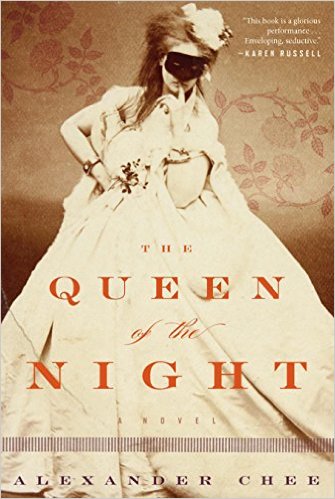
Queen of the Night alexander cheeErnest Hemingway, James Joyce, Alexander Chee, and George Saunders all have unique voices in their writing. Each of these writers has written highly acclaimed work. Their prose is magnificent. When you have fallen in love with an author’s work, you will recognize their voice.

Ernest Hemingway used commas freely, passing them around in his narratives like party favors. Alexander Chee employs sentences that run on forever and doesn’t use quotation marks when writing dialogue.

James Joyce wrote hallucinogenic prose and, at times, dispensed with punctuation altogether.

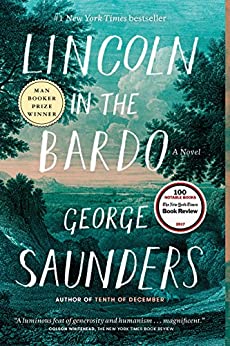
George Saunders writes as if he is speaking to you and is, at times, choppy in his delivery.

But their voices work because they know the kind of reader they are writing for. Each of the above authors breaks those rules consistently, and their work stands the test of time. Readers fall into the rhythm of their prose.

I HAVE A CONFESSION. I had to take a college class to understand James Joyce’s work.

Also, I grew frustrated and resorted to listening to the audiobook of Alexander Chee’s The Queen of the Night. Not setting dialogue apart with quotes? AAAAAAUGH!!! I’m an editor, and it’s my job to notice those things. It’s difficult for me to set that part of my awareness aside, but the audiobook resolved that issue.

I can hear the grumbles now. I just mentioned literary authors, and you are writing a cozy mystery, a fantasy, a romance, women’s fiction, or sci-fi. Shall I toss out a few more names?
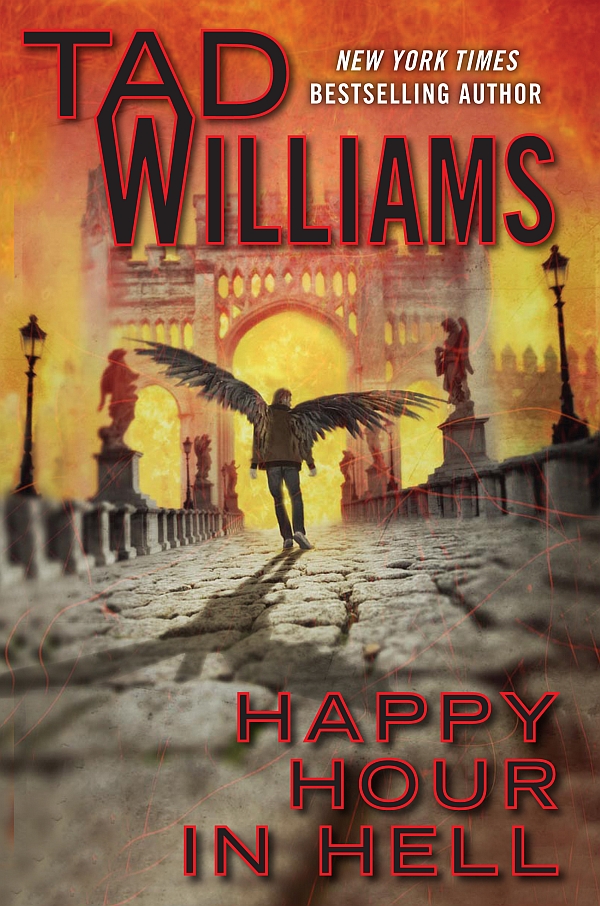
Happy Hour In Hell, Bobby Dollar 2 - Tad WilliamsTad Williams mixes his styles. His Bobby Dollar series is Paranormal Film Noir: dark, choppy, and reminiscent of Sam Spade. In this series, he seems to be somewhat influenced by the style of crime authors, such as Raymond Chandler or Dashiell Hammett. Each installment is a quick read for me and is commercial in that casual readers would enjoy Bobby’s predicaments as much as I did.

Yet Tad’s Memory, Sorrow, and Thorn Trilogy was a groundbreaking series that inspired countless fantasy authors. Those first three books and the subsequent novels set in that world are solidly epic fantasy. They are written for serious fantasy readers, people who want big stories set in big worlds.

These readers like BIG books. In that series, Tad Williams employs lush prose, multiple storylines, and dark themes. Beginning slow and working up to an epic ending is highly frowned upon in local writing groups, but Tad broke that rule, and believe me, it works. His powerful writing has generated millions of fans who are thrilled that he’s written more work in that amazing world.

Roger Zelazny wrote one of the most famous fantasy series of all time, the Chronicles of Amber, and was famous for his crisp, minimalistic dialogue. The style of his contemporary wisecracking, hardboiled crime authors also influenced him.
LincolnInTheBardo_SaundersCraft your work to make it say what you intend in the way you want it said, but be prepared to defend your choices if you deviate too widely from the expected.

Sometimes, I feel married to a particular passage, and it breaks my heart when someone points out that my beautifully crafted passage adds nothing to the narrative.

The fact is, some words and phrases are distracting. It is easy to fluff things up with descriptors and modifiers, which only increase the wordiness. Those mucky morsels are known as “weed words,” and I make an effort to cut them before my editor sees them, as she will gladly point out each one in a sea of red.

There will be times when you choose to use a comma in a place where an editor might suggest removing it. If asked, you should explain that you have done this to make something clear. Conversely, you might omit a comma for the same reason.

An editor might ask you to change something you did intentionally. Remember, you are the author, and it’s your manuscript. If you know the rule you are breaking, you will be able to explain why you are doing so.

Most editors will gladly ensure that you break that rule consistently—mine surely does.

Voice is how you break the rules. When you understand what you are doing and do it deliberately, your work will convey the story to the reader in the way you want.

The great blessing for those of us who pull novels out of our souls is this: the majority of readers are not editors or professional writers. Readers will either love or hate your work based on your voice, but they won’t know why.

powerwordsWordCloudLIRF06192021

4 Comments

Filed under writing

#My5: Genesis of the Tower of Bones series #amwriting


Today’s post is part of a project begun by author K.M. Alexander, called My5. It’s hard to narrow it down to only five, but here, in no particular order are five major influences that helped shape my career as a writer.

Number One: I’m a gamer. I’ve always been a reader, so when I discovered the Super Nintendo and Final Fantasy style RPGs, I found an activity that had the ability to suck me in and keep me as enthralled as my favorite books could. I’m just going to come out and say it—I play both PC and console-based RPG video games, sometimes to excess. Me and my old beater PlayStations 2 and 3 are best friends.

My epic fantasy series, Tower of Bones, got its start in life back in 2009 as the storyline for an old-school style RPG computer game that was intended to be built using RPG Maker XP, but for various reasons, it never got built. But, I had the story and the maps I had drawn, so three years later, I managed to pull a novel, Mountains of the Moon, out of my hat. This prequel to Tower of Bones was sprung from the original idea I’d had of what would make a great storyline for an epic RPG, if only I could entice Square-Enix to build it.

Number Two: I’m a huge Fritz Lieber fan. My first completed novel, written long ago in a galaxy far, far away, began with the idea of writing a book Fritz might write if he were still alive (and if he had consumed several hallucinogenic mushrooms). I had just finished re-reading my collection of Fritz Lieber tales, and had Fafhrd and the Gray Mouser on the brain. These two characters are scoundrels, living in a decadent world where a lack of scruples a requirement for survival.

What I actually produced had no resemblance to Fafhrd and the Gray Mouser, and was nothing like anything Fritz would have written, but within the uneven plot and frequently overblown dialogue, it had the bones of a good story. Eventually, the shreds of that manuscript spawned the novel featuring one of my favorite characters, Huw the Bard, and I have good old Fritz to thank for him. That proto novel also spawned Billy Ninefingers, which has entered the editing process and will be published in August 2017. Huw makes an appearance toward the end of Billy’s tale.

Number Three: Jack of Shadows by Roger Zelazny was a watershed book for me as a reader. In what can only be described as a genius move, Zelazny introduces the concept of the Trickster as the hero-antihero. Originally conceived as a serial for F&SF in 1971, it was published in book form that same year by Walker and Company. Lester del Rey was unimpressed with this tale, but I read this book to shreds. What I loved about this book was the typical Zelazny mystique—many questions abound regarding Shadowjack, and answers come at a slow pace, just information enough to keep you interested, and be warned: not all your questions will be answered. Even the ending is a question.

Jack is an awesome character. He is good, and he is bad. He has deep compassion and can be moved to do great deeds that benefit all of humanity at the cost of his own life. Conversely, he can be the smallest, meanest man over a tiny little slight to his ego, capable of inflicting great cruelty. He abuses his powers, and also uses them for good.

In this book, Zelazny fully realized the concept of “shadow.” It is neither light nor dark, and it is not here or there. It is all of those and none of them. Thus the unanswered questions. What Zelazny did in this less well-known of his books is create a story in which the reader decides what is true.

Number Four: I gravitate to tales written with guts and substance. Give me the Flawed Hero over the Bland Prince any day. Tad Williams is an author who absolutely understands the craft of writing brilliant, deep prose and creates compelling characters who aren’t exactly squeaky clean. He knows what makes epic fantasy EPIC. There is just the slightest hint of the rebellious indie in his work, which makes his work a little wild.

I became a confirmed fan of epic fantasy in 1988 when I first entered this world of Osten Ard and the books of Tad Williams. The Dragon Bone Chair blew me away.  Each character was deserving of a novel, and the diverse races whose cultures were so clearly shown fascinated me. The arrogance some members of each race have with regard to their innate superiority struck me as illustrating a fundamental truth about the real world.

Number Five: George Saunders is famous for his short stories. He has the ability to get inside each of his characters’ heads, showing them sharply as unique individuals. They aren’t always nice, and certainly not always moral as I see morality, but Saunders portrays them with such vivid strokes that you feel as if you understand their reasoning.

For me, the most powerful short story I have ever read was in Saunders’ collection of short stories, The Tenth of December,  “Escape from Spiderhead.”  This sci-fi tale has an almost Vonnegut-like flavor. It is a stark journey into the depths to which we humans are capable of sinking in the pursuit of knowledge for the sake of knowledge. Where does punishment end and inhumanity begin? This story lays bare concepts regarding our view of crime and punishment that are difficult, but which are important to consider. The scenario is exaggerated, as it is set in a future world, but it exposes the callous view society has regarding criminals and what punishment they might deserve.


So those are #My5,  the “tip of the iceberg” of the authors and ideas that influenced the creation of the Tower of Bones series, and also Huw The Bard. This strange collection of books, and video games has profoundly influenced my concept of story and shaped what I write, at least in my fevered mind if not in the execution.

I’m not alone in detailing #My5! I have joined many other authors who have written their #My5. If you choose to participate, go to K. M. Alexander’s post and follow the instructions at the bottom of the page. You can find some awesome articles by following the links below. Each article is really intriguing – it never ceases to amaze me how diverse and unique we authors are, and yet how similar.

1 Comment

Filed under writing

#amwriting: breaking the rules with style

a writer's styleMuch of my blog time revolves around grammar and the mechanics of writing. As authors, it’s important to understand the rules of how the language in which we write works, no matter what that language is. Yet powerful writing often breaks those rules, and we are better for having read it.

So why am I always pressing you to buy and use the Chicago Manual of Style?

Authors must know the rules to break them with style.

Readers expect words to flow in a certain way. If you break a grammatical rule, know what you are breaking and  be consistent about it.

Ernest Hemingway, James Joyce, Alexander Chee, and George Saunders all have unique voices in their writing. Each of these writers has written highly acclaimed work. Their prose is magnificent. When you have fallen in love with one of these authors’ works, you will recognize their voice.

Ernest Hemingway used the word “and” in place of commas too freely.

Alexander Chee employs run-on sentences and dispenses with quotation marks.

James Joyce wrote hallucinogenic prose and at times dispensed with punctuation completely.

George Saunders writes as if he is speaking to you, and is, at times, choppy in his delivery.

But their voices work. They each break certain rules as set down by Strunk and White, but they produce brilliant prose that stands the test of time. Readers fall into the rhythm of their prose.

I will admit, I had to take a college class to be able to understand James Joyce’s work, and I did have to resort to the audio book for Alexander Chee’s work. It’s the hypercritical editor coming out in me, making it difficult for me to set that part of my awareness aside. It’s my job to notice those things.

I can hear you now: these are literary authors, and you are writing genre fantasy fiction or sci-fi. Shall I toss out a few more names?

Tad Williams mixes his styles. His Bobby Dollar series is Paranormal Film Noir: dark, choppy, and reminiscent of Chandler’s Philip Marlowe stories. In this series, he seems to be somewhat influenced by the style of crime authors, such as Raymond Chandler or Dashiell Hammett. It is a quick read and is commercial in that it is for casual readers.

Raymond Chandler was the creator of Philip Marlowe, the original hard-boiled, disillusioned, copper-turned-private-eye. His people take center stage, rather than the violence that characterizes so many detective novels of his era.

In his article, The Chandler Style, Martin Edwards writes:  Devising puzzles was always less important to him than style. He said, ‘I don’t really seem to take the mystery element in the detective story as seriously should,’ and joked about solving plot problems by having a man come to the door with a gun  Style mattered much more: ‘I had learn American just like a foreign language. To learn it I had to study and analyse it. As a result, when I use slang . . . I do it deliberately.’  And as he told one magazine editor whose proof-reader presumed to tidy up the Chandler grammar, ‘When I split an infinitive, God damn it, I split it so it will stay split.’

Chandler understood how grammar worked. He knew what he was doing and did it deliberately. He was able to convey (to those who didn’t appreciate his style) why he broke those rules and was secure enough in his choice to continue writing in his own voice.

But Chandler also had to deal with the sort of sniping we all must deal with in our writing groups. Wikipedia says: The high regard in which Chandler is generally held today is in contrast to the critical sniping that stung the author during his lifetime. In a March 1942 letter to Blanche Knopf, published in Selected Letters of Raymond Chandler, he wrote, “The thing that rather gets me down is that when I write something that is tough and fast and full of mayhem and murder, I get panned for being tough and fast and full of mayhem and murder, and then when I try to tone down a bit and develop the mental and emotional side of a situation, I get panned for leaving out what I was panned for putting in the first time.”

Yet, although he writes Bobby Dollar in a Chandler-esque style,  Tad Williams’s Memory Sorrow and Thorn Trilogy is true epic fantasy, with lush, poetic prose, multiple story-lines, and dark themes. It is written for serious fantasy readers who want nothing less than the big novel. The story starts slow, but the powerful writing has generated millions of fans who are thrilled to know he has set more work in that world.

Beginning slow, going off on side quests, writing poetic prose, and gradually working up to an epic ending is highly frowned upon in today’s writing groups, but Tad broke that rule and believe me, it works.

Roger Zelazny wrote one of the most famous fantasy series of all time, the Chronicles of Amber, and was famous for his crisp, minimalistic dialogue, and he was also heavily influenced by the style of wisecracking hard-boiled crime authors like Chandler.

Most readers are not editors. They will either love or hate your work based on your voice, but they won’t know why. Voice is how you break the rules, but you must understand what you are doing, and do it deliberately. Craft your work so it says what you want, in the way you want it said.
GRRM Meme 3If your editor asks you to change something you did deliberately, you are the author. Explain why you want that particular grammatical no-no to stand, and your editor will most likely understand. If you know the rule you are breaking, you will be better able to explain why you are doing so.

However, if I am your editor, you must be prepared to break that rule consistently. Readers do notice inconsistencies.

5 Comments

Filed under writing