Tag Archives: short fiction

Revisiting the double circular story arc #writing

The story arc can take several forms. It can be linear, a straight shot from the inciting incident to the conclusion. This kind of story takes our protagonist through a series of events that all lead to one ending, a point well away from where it began. The protagonist has left his roots behind and is transformed into a hero.

WritingCraft_short-storyAnother arc takes the protagonist on a journey that can end several different ways, all of them taking our characters down a winding path with many choices, roads not taken. They also are altered by their experiences for good or ill.

Yet another arc takes the protagonist back to their beginnings, transformed and ready to face their future.

My favorite arc to play with is the double circular arc, also known as the infinity arc. The majority of this post appeared here in November 2023, so if you have read it already, thank you for stopping by. The infinity arc is on my mind as it’s a method I am employing in a current short work-in-progress.

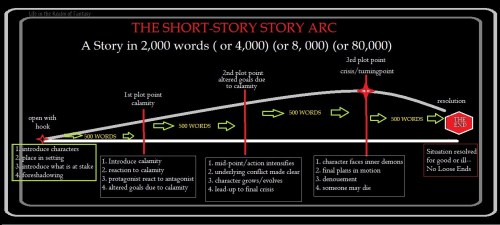
When I plan a story, I divide the outline into 3 acts. In a 2,000-word story, act 1 has 500 words, act 2 has 1,000, and act 3 has 500 more words to wind up the events. No matter the length of any story, if you know the intended word count, you can divide the plot outline that way.
The Infinty Story ArcKnowing my intended word count helps me create a story, from drabbles to novels. For me, it works in stories with a traditional arc as well as those with a circular arc.

In any story, the words we use to show the setting, combined with a strong theme, will convey atmosphere and mood, so fewer words are needed.

The story I’m using for today’s example is the Iron Dragon, a 1,025-word story I wrote during NaNoWriMo 2015. That was the year I focused on experimental writing, putting out at least one short story every day and sometimes two.

This is a story of the web of time glitching and the perceptions of the characters who experienced it.

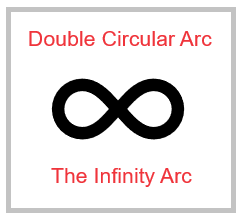
Some speculative fiction stories work well as a double circular arc—something like an infinity sign, a figure-eight lying on its side:

dragonIn a circular narrative, the story begins at point A, takes the protagonist through life-changing events, and brings them home, ending where it started. The starting and ending points are the same, and the characters return home, but they are fundamentally changed by the story’s events.

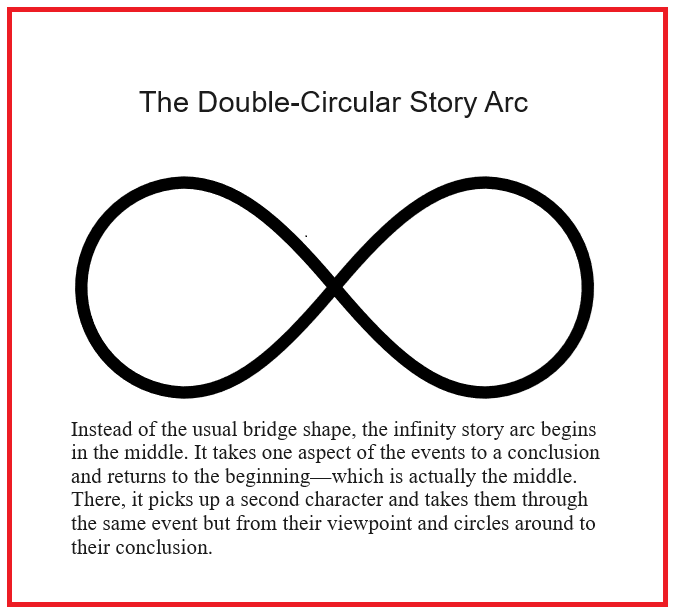
The infinity arc presents one story from two different viewpoints. The story begins with character 1, takes them through the events, and brings them back. At that point, the story takes up character 2 and retells the events through their point of view, bringing them back to where they began. (Two circular story arcs joined by one event.)

Both characters begin at the same place, experience the event(s) concurrently but separately, and arrive back at the same place. The worldview of both is challenged by what they have lived through.

The two characters may not meet. In the Iron Dragon, my characters physically don’t meet in person. However, they briefly occupy the same patch of ground during a glitch in the space-time continuum.

This story ends where it began but with the two sets of characters having seemingly experienced two different events. Their perception of the meeting is colored by the knowledge and superstitions of their respective eras.
The Infinty Story Arc

The first paragraph of the Iron Dragon begins in the middle of a story—the center of the infinity sign. Those opening sentences establish the world, set the scene, and introduce the first protagonist. The following three paragraphs show the situation and establish the mood. They also introduce the antagonist—what appears to be an immense dragon made of iron.

At this point, our first protagonist knows that he must resolve the problem and protect his people, which he does. There is more to his side of the story, of course. But this is a story with two sides. Aeddan’s point of view is not the entire story.

Again, I had to set the scene and establish the mood and characters. Here, we meet the second protagonist, an engine driver named Owen. He has the same needs as Aeddan and also resolves the problem. Neither character would have understood the strange physics of what just occurred had Michio Kaku been around to explain it to them. Both do what they must to protect their people.

The final paragraphs wind it up. They also contribute to the overall atmosphere and setting of the second part of the story. As a practice piece, this story has good bones. I didn’t feel it was the right kind of story for submission to a magazine or contest, as it’s not a commercially viable piece. So, I posted it here on this blog on November 4th, 2016. #flashfictionfriday: The Iron Dragon

Flag_of_Wales.svgWord choices are essential in showing a world and creating a believable atmosphere when limited to only a small word count. I had challenged myself to write a story that told both sides of a frightening encounter in 1000 words, give or take a few. I wanted to expand on the theme of dragons and use it to show two aspects of a place whose national symbol is the Red Dragon (Welsh: Y Ddraig Goch).

But I also wanted to use the double circular story arc, seeing it as a way to tell one story as lived by two protagonists separated by twelve centuries and a multitude of legends. That meant I had 1000 words to tell two stories.

Short fiction allows us to experiment with both style and genre. It challenges us to build a world in only a few words and still tell a story with a beginning, a middle, and an end.

The act of writing something different, a little outside my comfort zone, forces me to be more imaginative in how I tell my stories. It makes me a better reader as well as a better writer.


Credits and Attributions:

Wikimedia Commons contributors, “File:Flag of Wales.svg,” Wikimedia Commons, https://commons.wikimedia.org/w/index.php?title=File:Flag_of_Wales.svg&oldid=808619174 (accessed November 19, 2023).

3 Comments

Filed under writing

Christmas at the Drunken Sasquatch #merrychristmas

Today’s offering is a short story that was written and first posted here in 2016, Christmas at the Drunken Sasquatch. It features one of my favorite characters, Dan Dragonsworthy, were-dragon. Dan has taken on a life of his own and is featured in my short story, the Elevator Pitch. (Available at Amazon for .99 cents).

So now, live from the Other Side of Seattle, I bring you everyone’s favorite were-dragon and Christmas at the Drunken Sasquatch. As always, no vampires were harmed in the making of this tale.


Vampires have a sick sense of humor, especially Alfredo, although he pretends to be cultured. Just over a year ago he got me banned from the Drunken Sasquatch, by switching my orange juice for an orange soda… that dirty trick was more than embarrassing. Covering the cost of the damages to the scorched floor, replacing the furniture, and buying Sylvia Wannamaker a new coat ate into my hoard quite heavily.

Worst of all, I was banned from participating in November’s darts tournament.

However, I’m a were-dragon. We like our revenge served up cold and well calculated.

The anniversary of my disgrace has passed, which would have been the obvious day for me to seek retribution. Most people have forgotten the whole incident.

But not me.

I know I look like any other old has-been reporter. I’m still hanging in there, digging up the political dirt in Seattle with the best of them, and yes, I tend to go on and on about the glory days. While that observation isn’t real flattering, it’s true. I drink more orange juice than is good for either of my livers, and I hang out here at the Drunken Sasquatch because I have nowhere else to go.

I don’t discuss it for obvious reasons, but during my years in the Middle East, Dan Dragonsworthy was far more than just a flying battle wagon. One thing I learned was how to be patient, and how to spot the chinks in your opponent’s armor.

I’ve been watching Alfredo since New Year’s Eve when Bloody Bill finally lifted my punishment and allowed me back. I don’t intend to harm the old bloodsucker, but I’m going to give him a taste of his own medicine. I’m a reporter—I know for a fact there are substances vampires shouldn’t ingest, and Alfredo may have forgotten that.

A vampire tripping on chocolate is bad for everyone. I’d never do that, especially to Alfredo. Fortunately, they don’t like the flavor of it.

However, they do have a passion for maraschino cherries, which can cause problems for the weaker willed vampire since those fruity morsels of goodness are frequently found wrapped in dark chocolate.

With one exception, the smart ones don’t succumb to temptation inside the Drunken Sasquatch, because Bloody Bill won’t tolerate that sort of behavior.

Most importantly for my purposes, vampires can’t tolerate coffee. On tiny amounts, they tend to pee themselves copiously, which the rest of us find hilarious. Vampires get quite huffy when their vampiric dignity is besmirched.

As if MY dignity meant nothing to me.

When you want to impress Alfredo, you buy him a jar of the special maraschino cherries from Italy, made with the best cherry liqueur. He can smell maraschino liqueur from anywhere in the room and, being a vampire, he lacks a conscience.

No maraschino is safe from Alfredo.

The annual Christmas party and the gift exchange drives him mad. Every witch, wizard, or elf has a recipe for that most wonderful of traditional holiday treats, maraschino chocolate cordials. These kind friends are always generous with their gifts to those of us who lack their magical culinary skills.

It’s more than his old vampire heart can stand, and despite having received his own jars of cherries sans-chocolate, he takes incredible risks.

I’ll give Alfredo credit—he’s good. I’ve watched him sneak up behind Grandma and suck the cherries out of a box of cordials without getting his fangs dirty. She suspected it was him but could never prove it. Fangs do leave holes, but it could have been any vampire.

It takes a brave (or desperate) vampire to mess with Grandma. I’d tell you to ask the Big Bad Wolf, but you can’t.

She’s wearing him.

So, anyway, last week, Grandma and I had a chat. I got on the internet and ordered the finest ingredients. They were delivered the day before yesterday, and she immediately got busy in the kitchen.

This year, one unattended box of cordials under the tree at the Drunken Sasquatch will have cherries in liqueur with unique centers. This particular batch will be vampire safe—no chance of accidental hallucinations here. Grandma created white-chocolate shells filled with Cherry brandy, with a maraschino cherry floating in the middle.

However, each cherry will be filled with a special coffee liqueur.

It will be a joy to watch Alfredo try to deny his culpability in this year’s draining of the maraschinos as the evidence spreads around his feet.

I hope vampire pee isn’t too acidic, although I’ve heard the stench is an excellent Zombie repellent, and no matter how you scrub, it’s impossible to get rid of the odor. Sylvia Wannamaker swears by it in a diluted form as a slug repellent in the garden, as using it there will turn your hydrangeas the brightest blue. They don’t make good cut flowers though, as they smell too bad to keep in the house.

I’m sure a pool of vampire urine won’t be as dangerous for the innocent bystanders as when he caused me to inadvertently belch fire in close quarters.

Come the day after this year’s Christmas party at the Drunken Sasquatch (even though his cash outlay won’t come near matching the damages I had to pay when he slipped me the Mickey) at least Alfredo will be out the cost of a new pair of boots.

And if he can’t find a good dry cleaner, he’ll be out the cost of replacing that gaudy, lace-trimmed, purple velvet suit he thinks is so stylish.

Grandma and I are both looking forward to this year’s party. Christmas could just become my favorite holiday.

To meet Alfredo, Grandma, and Sylvia Wannamaker, Dan’s next adventure, The Elevator Pitch,  is Available at Amazon for .99 cents.


Credits and Attributions:

Christmas at the Drunken Sasquatch, © 2016-2020 Connie J. Jasperson, All Rights Reserved. Originally published 02 December 2016, on Life in the Realm of Fantasy, and reprised on 26 December 2018.

3 Comments

Filed under writing

Writing the Short Story part 1: experimenting with the circular story arc #amwriting

When I plan a story, I divide the outline into 3 acts. In a 2,000-word story, act 1 has 500 words, act 2 has 1,000, and act 3 has 500 more words to wind up the events. No matter the length of any story, if you know the intended word count, you can divide the plot outline that way.

WritingCraft_short-storyKnowing my intended word count helps me create a story, from drabbles to novels. For me, it works in stories with a traditional arc as well as those with a circular arc.

In any story, the words we use to show the setting, combined with a strong theme, will convey atmosphere and mood, so fewer words are needed.

The story I’m using for today’s example is the Iron Dragon, a 1,025-word story I wrote during NaNoWriMo 2015. That was the year I focused on experimental writing, putting out at least one short story every day and sometimes two.

This is a story of the web of time glitching and the perceptions of the characters who experienced it.

Some speculative fiction stories work well as a double circular arc—something like an infinity sign, a figure-eight lying on its side:

dragonIn a circular narrative, the story begins at point A, takes the protagonist through life-changing events, and brings them home, ending where it started. The starting and ending points are the same, and the characters return home, but they are fundamentally changed by the story’s events.

The infinity arc presents one story from two different viewpoints. The story begins with character 1, takes them through the events, and brings them back. At that point, the story takes up character 2 and retells the events through their point of view, bringing them back to where they began. (Two circular story arcs joined by one event.)

Both characters begin at the same place, experience the event(s) concurrently but separately, and arrive back at the same place. The worldview of both is challenged by what they have lived through.

The two characters may not meet. In the Iron Dragon, my characters physically don’t meet in person. However, they briefly occupy the same patch of ground during a glitch in the space-time continuum.

This story ends where it began but with the two sets of characters having seemingly experienced two different events. Their perception of the meeting is colored by the knowledge and superstitions of their respective eras.

The first paragraph of the Iron Dragon begins in the middle of a story—the center of the infinity sign. Those opening sentences establish the world, set the scene, and introduce the first protagonist. The following three paragraphs show the situation and establish the mood. They also introduce the antagonist—what appears to be an immense dragon made of iron.

The Infinty Story ArcAt this point, our first protagonist knows that he must resolve the problem and protect his people, which he does. There is more to his side of the story, of course. But this is a story with two sides. Aeddan’s point of view is not the entire story.

Again, I had to set the scene and establish the mood and characters. Here, we meet the second protagonist, an engine driver named Owen. He has the same needs as Aeddan and also resolves the problem. Neither character would have understood the strange physics of what just occurred had Michio Kaku been around to explain it to them. Both do what they must to protect their people.

The final paragraphs wind it up. They also contribute to the overall atmosphere and setting of the second part of the story. As a practice piece, this story has good bones. I didn’t feel it was the right kind of story for submission to a magazine or contest, as it’s not a commercially viable piece. So, I posted it here on this blog on November 4th, 2016. #flashfictionfriday: The Iron Dragon

Flag_of_Wales.svgWord choices are essential in showing a world and creating a believable atmosphere when limited to only a small word count. I had challenged myself to write a story that told both sides of a frightening encounter in 1000 words, give or take a few. I wanted to expand on the theme of dragons and use it to show two aspects of a place whose national symbol is the Red Dragon (Welsh: Y Ddraig Goch).

But I also wanted to use the double circular story arc, seeing it as a way to tell one story as lived by two protagonists separated by twelve centuries and a multitude of legends. That meant I had 1000 words to tell two stories.

Short fiction allows us to experiment with both style and genre. It challenges us to build a world in only a few words and still tell a story with a beginning, a middle, and an end.

The act of writing something different, a little outside my comfort zone, forces me to be more imaginative in how I tell my stories. It makes me a better reader as well as a better writer.


Credits and Attributions:

Wikimedia Commons contributors, “File:Flag of Wales.svg,” Wikimedia Commons, https://commons.wikimedia.org/w/index.php?title=File:Flag_of_Wales.svg&oldid=808619174 (accessed November 19, 2023).
3 Comments

Filed under writing

Micro Fiction: Goals and Rewards #amwriting

The habit of creative writing usually begins small. It’s an idea, something we wish someone would write. At first, it’s a hobby we must fit around our work schedule and family obligations. Somehow, that hobby grows and grows. For some of us, it becomes a second job that pays little and demands a great deal of attention.

WritingCraft_short-story-drabbleWhen a new writer decides to begin their career by embarking on writing a novel, the magnitude of the undertaking soon becomes apparent.
At first, they are fired up about the project. For several pages, the words flow. Unfortunately, the fire of enthusiasm burns low as creativity fails.

They have the idea. They have the characters. But they don’t have the skills to write something as long and involved as a novel.

Many people see that as a sign that they are untalented. They put it away and never write again.

But the truth is, the project was too ambitious for their skill level. They haven’t learned the tools of the trade and received no reward for their efforts.

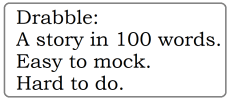
I suggest people begin by writing micro fiction. Drabbles are a form of micro fiction, an entire story in exactly 100 words.

Some forms of poetry, such as haiku, are not micro fiction, as they don’t tell a fully developed story.

My Coffee Cup © cjjasp 2013 iconWriting a drabble takes less time than writing a 3,000-word story or a 70,000-word novel, but all writing is a time commitment. When writing a drabble, you can expect to spend an hour or more getting it to fit within the 100-word constraint.
First, we need a prompt, a jumping-off point. We have 100 words to write a scene that tells the entire story of a moment in a character’s life.

Some contests give whole sentences for prompts. Others offer one word, and still others have no prompt at all.

prompt is a word or visual image that kick-starts the story in your head. If you need an idea, go to Reedsy’s Weekly Writing Prompts.

But prompts are only the beginning. To write a story of any length, we need these essential components:

  • A setting
  • One or more characters
  • A conflict
  • A resolution.

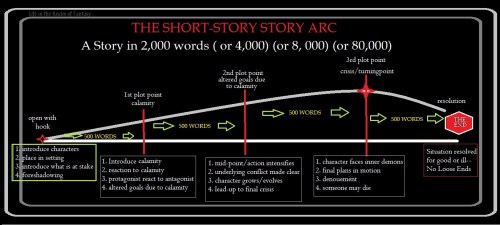
writer_at_work_nanowrimo_signI use a loose outline to break the arc of every story I write into acts, each with a specific word count. (I’ve included a graphic at the bottom of this post.)
A drabble may have only 100 words, but my process works the same as for a novel.

For a novel, I divide my outline this way: 10,000 or so words to open the story, set the scene, introduce the characters and get to the inciting incident. 50,000 or so words for the heart of the story. 10,000 or so words for the conclusion.

A micro fiction is outlined the same way:

  • I have about 25 words to open the story and set the scene.
  • I have about 50 – 60 for the heart of the story.
  • I give myself 10 – 25 words to conclude it.
  • The story must be told in precisely 100 words. (Not more, and not less—exactly 100 words.)

Writing micro fiction teaches you to tell a story without exposition.

However, you should save the clumps of exposition and backstory in a separate file because they do come in usefully as part of your world-building and character development exercises.

  • Every word you write and discard might be useful in a later story.
  • Label the file with a title that says what it is.
  • Save it in a master file that contains ideas for longer stories.

Drabble_LIRF_1_jan_2018_cjjapI mentioned rewards in the title of this post. The completed story is a small gift you give yourself, and the surge of endorphins you experience in that moment of “Yes! I can write after all!” are the reward.
When you write to a strict word count limit, every word is precious and must be used to the greatest effect. By shaving away the unneeded info in the short story, the author has more room to expand on the story’s theme and how it supports the plot.

I suggest you save your drabbles and short scenes in a clearly labeled file for later use. Each one has the potential to be a springboard for writing a longer work. Or you might want to submit it to a drabble contest.

Contests for micro fiction abound on the internet. Whether you choose to submit a drabble to a contest or hang on to it doesn’t matter. Either way, the act of writing micro fiction hones your skills, and you will have captured the heart of your brilliant idea.

Micro fictions are the distilled essence of novels. They contain everything the reader needs to know about that one moment in time. The reader wants to know what happens next.

You will have succeeded in writing your story, and that success is a reward in itself.

short-story-arc

25 Comments

Filed under writing

Submitting to Contests vs. Submitting to Magazines and Anthologies #amwriting

One question I frequently see in various writers’ forums, is “how can an indie get their name out there and gain fans for their work?”

WritingCraft_short-storyMy answer is simple. We write short stories and submit them to magazines, anthologies, and contests.
Every time your short work is published or places well in a contest, you stand the chance of getting your name out there and it’s nice to have a little extra cash in your pocket.

Despite the changes in the publishing industry as a whole, writing short stories is still the way to get your foot in the door and increase your visibility. Anthology calls from traditional large publishing houses and reputable small and mid-size publishers that are willing to pay for your work are sometimes open to new authors.

Also, magazines that are SFWA approved regularly post open calls for submission, so it pays to check each magazine and publisher’s website for opportunities.

Submitting to contests is good too.theRealStoryLIRF01102021 If you have a story that was a contest winner, you may be able to sell it to the right publication.
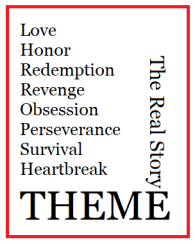
Writing for anthologies and contests have similar requirements. You must learn how to write to a specific length. Often, you must make use of a specific theme, one that may not be of your choosing.

So, what do editors of anthologies and magazines look for versus how contests are judged? Trust me, editors work hard, and more than anything, they love to read.

And all publisher and editors want to discover brilliant work written by new authors.

I have worked on both sides of the publishing industry. I know the frustrations of the author who waits to hear back regarding their submission, and I’ve seen the publisher’s inbox. I’ve read for many contests and edited several anthologies.

First, your work will receive a far closer inspection from a contest than from a publisher. Contests have readers who are either editors or authors, and who do their best to judge each entry on their merits. This means two people will have read the submission and each reader will have looked at the technical aspects of the piece as well as the overall story and characters.

Contest readers must judge:

  1. Plot: the sequence of events and the overall story arc.
  2. Setting: did the world building include a location, time, hints of the weather, and hints of the environment? Was the world solid to the reader?
  3. Viewpoint/narrative mode: how was the story told? Was the POV consistent or did it inadvertently drift, say between present tense to a few paragraphs in past tense, and then back to present. Was it consistently first-person, (or second, or third, or omniscient, etc.)?
  4. Characters: Were the characters believable, and did they have an arc?
  5. Did the dialogue, both spoken and internal, advance the story? Did each speaker have their own voice and style?
  6. Transitions and hooks: Did the opening lines hook the reader? Did the narrative move from scene to scene smoothly, without jarring the reader out of the story? Did each transition hook the reader, enticing them to keep reading?
  7. Showing versus telling: did the author understand how to show the action?
  8. Mechanics: Did the author have a good grasp of grammar, punctuation, and industry standards? Did they follow word count and length requirements, and obey formatting directions as listed in submission guidelines?

Editors for anthologies will look at each submission with the above guidelines in mind, but they will have two more caveats:

  1. Theme: did the author understand and incorporate the theme into their story?
  2. Appeal: did that story strike a chord, make them want to read more of that author’s work?

Contest readers/judges read every word in each submission and base their opinions on how well the first eight conditions were met.

Anthologies and magazines have a slightly different style of judging what they will accept.

The main difference between publishers of anthologies and those of magazines is the sheer volume of work that is submitted, and the number of people/editors available to read it.

51AvRGmiMQLAnthologies will close on a specific date, or after a certain number of submissions have been received.
The inbox of a large publisher fills up every day. Larger publishers may have a gatekeeper reading submissions, but most editors do their own work. For this reason, the editor will look at the first page of the story and based on what she sees there, she will decide whether to continue reading or reject it.

If all ten of the above criteria are clearly shown in the first paragraphs, the editor will read further. If the work continues to be engaging and professional, they will read it to the end.

At that point, criteria number ten is most important condition to be met—your story must have wowed the editor.

Once you have written a short story  with the intention of submitting it to a specific publisher or contest, you must edit it. Then you must format the manuscript to make it submission-ready, by reading and following the guidelines published on their website.

I’ve said this before, but it bears mentioning again: if you don’t follow your prospective contest or publisher’s submission guidelines, you have wasted your time submitting it.

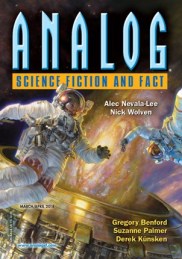
AFF_MarApr2018_400x570These steps demonstrate your level of professionalism. Editors at magazines, contests, and publishing houses have no time to deal with unedited, poorly formatted manuscripts. Their inboxes are full of well-written and properly formatted work, so they will reject the amateurs without further consideration.

I hope knowing the requirements your work will be judged by will help you find good homes for your work.

If you have any doubts about the quality of your work, consider running it past your critique group to hear their opinions on characterization, story arc, and other features of your work.

It’s hard to hear a bad verdict, but sometimes you should completely rethink certain aspects of a piece before you submit it, and this is where the external eye can help you.

7 Comments

Filed under writing

Writing the Short Story part 5: The Narrative Essay #amwriting

We’re working our way through a series on writing short fiction. However, we’re not done—yet another short form of writing to explore is the essay. For Indy authors who wish to earn actual money from their writing, the narrative essay is often easier to sell to reputable magazines. This is because they appeal to a broader audience than genre fiction does.

narrative essayNarrative essays are drawn directly from real life, but they aren’t necessarily factual or accurate representations of events. They often detail a fictionalized experience or event that affected the author on a personal level.
One of my favorite narrative essays is 1994’s Ticket to the Fair (now titled “Getting Away from Already Being Pretty Much Away from It All“) by David Foster Wallace and published in Harpers. Told in the first person, it is a humorous, eye-opening story of a “foreign” (east coast) journalist’s assignment to cover the 1993 Iowa State Fair.

At the outset, Wallace states he was born several hours drive from the fair but had never attended it. A city boy, he has no knowledge of farms, farm culture, or animals. After high school and college, he had left the Midwest for the East Coast and never looked back. When the essay opens, Wallace hasn’t really thought about the fair beyond the fact that he is getting his first official press pass for covering the fair for Harpers.

Wikipedia summarizes Ticket to the Fair this way: Wallace’s experiences and opinions on the 1993 Illinois State Fair, ranging from a report on competitive baton twirling to speculation on how the Illinois State Fair is representative of Midwestern culture and its subsets. Rather than take the easy, dismissive route, Wallace focuses on the joy this seminal midwestern experience brings those involved.

The primary purpose of an essay is thought-provoking content. The narrative essay conveys our ideas in a palatable form, so writing this sort of piece requires authors to think. You must consider both content and structure.

Just like any other form of short fiction, a narrative essay has

  • an introduction,
  • a plot,
  • characters,
  • a setting,
  • a climax,
  • an ending

oxford_synonym_antonymChoose your words for impact! Writing with intentional prose is critical. A good essay has been put into an entertaining form that expresses far more than mere opinion. Narrative essays sometimes present deep, uncomfortable concepts but offer them in a way that the reader feels connected to the story.
Good essays offer a personal view of the world, the places we go, and the people we meet along the way. Names should be changed, of course.

Literary magazines want well-written essays with fresh ideas about wide-ranging topics. Some will pay well for first publication rights.

If you want to be published by a reputable magazine, you must pay strict attention to grammar and editing. Never send out anything that is not your best work. After you have finished the piece, set it aside for a week or two. Then come back to it with a fresh eye and check the manuscript for:

  • Spelling—misspelled words, autocorrect errors, and homophones (words that sound the same but are spelled differently). These words are insidious because they are actual words and don’t immediately stand out as being out of place.
  • Repeated words and cut-and-paste errors. These are sneaky and dreadfully difficult to spot. Spell-checker won’t always find them. To you, the author, they make sense because you see what you intended to see. For the reader, they appear as unusually garbled sentences.
  • Missing punctuation and closed quotes. These things happen to the best of us.
  • Digits/Numbers: Mis-keyed numbers are difficult to spot when they are wrong unless they are spelled out.
  • Dropped and missing words.

Don’t be afraid to write with a wide vocabulary. With that said, never use jargon or technical terms only people in certain professions would know unless it is a piece geared for that segment of readers.

Above all, be intentional and active with your prose, and be a little bold. I enjoy reading David Foster Wallace and George Saunders because they are adventurous in their work. Saunders’ style is always approachable, but others may find Wallace wordy and difficult to wade through. He was often accused of being too “literary” in the arrogant sense of the word.

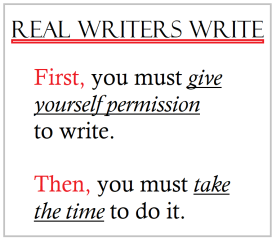
real-writers-writeAnd on that note, we must be realistic. Not everything you write will resonate with everyone you submit it to.  Put two people in a room, hand them the most exciting thing you’ve ever read, and you’ll get two different opinions. They probably won’t agree with you.

Don’t be discouraged by rejection. Rejection happens far more frequently than acceptance, so don’t let fear of rejection keep you from writing pieces you’re emotionally invested in.

This is where you have the chance to cross the invisible line between amateur and professional. Always take the high ground—if an editor has sent you a detailed rejection, respond with a simple “thank you for your time.” If it’s a form letter rejection, don’t reply.

And when you receive that email of acceptance—crack open the fancy cider and celebrate! There is no better feeling than knowing someone you respect liked your work enough to publish it.


Credits and Attributions:

Wikipedia contributors, “A Supposedly Fun Thing I’ll Never Do Again,” Wikipedia, The Free Encyclopedia, https://en.wikipedia.org/w/index.php?title=A_Supposedly_Fun_Thing_I%27ll_Never_Do_Again&oldid=815132504 (accessed January 9, 2018).

3 Comments

Filed under writing

Writing the Short Story part 2: indirect speech #amwriting

In a short story, our words are limited, so we must craft our prose to convey a sense of naturalness. Scenes have an arc of rising and ebbing action, so let’s consider how conversation fits into the arc of the scene.

J.R.R. Tolkien said that dialogue must have a premise or premises and move toward a conclusion of some sort. If nothing comes of it, the conversation is a waste of the reader’s time.

What do we want to accomplish in this scene? Ask yourself three questions.

  1. Who needs to know what?
  2. Why must they know it?
  3. How many words do you intend to devote to it?

My rule of thumb is, keep the conversations short and intersperse them with scenes of actions that advance the plot.

Author James Scott Bell says dialogue has five functions:

  1. To reveal story information
  2. To reveal character
  3. To set the tone
  4. To set the scene
  5. To reveal theme

So now that we know what must be conveyed and why, we find ourselves in the minefield of the short story: 

  • Delivering the backstory.

Don’t give your characters long paragraphs with lines and lines and lines of uninterrupted dialogue. A short story has no room for bloated exposition.

Let’s look at a scene that opens upon a place where the reader and the protagonists must receive information. The way the characters speak to us can take several forms:

  1. Direct discourse. Nattan said, “I was going to give it to Benn in Fell Creek, but he wasn’t home, and I had to get on the road.”
  2. Italicized thoughts: Nattan stood looking out the window. Benn’s not home. What now?
  3. Free indirect speech: Nattan stood looking out the window. Benn wasn’t home, so who should he give it to?

Examples two and three are versions of indirect speech, which is a valuable tool in your writer’s toolbox

Wikipedia describes free indirect speech this way:

Free indirect speech is a style of third-person narration which uses some of the characteristics of third-person along with the essence of first-person direct speech; it is also referred to as free indirect discoursefree indirect style, or, in Frenchdiscours indirect libre.

Free indirect discourse can be described as a “technique of presenting a character’s voice partly mediated by the voice of the author” (or, reversing the emphasis, “that the character speaks through the voice of the narrator”) with the voices effectively merged. This effect is partially accomplished by eliding direct speech attributions, such as “he said” or “she said”.

The following is an example of sentences using direct, indirect and free indirect speech:

  • Quoted or direct speechHe laid down his bundle and thought of his misfortune. “And just what pleasure have I found, since I came into this world?” he asked.
  • Reported or normal indirect speechHe laid down his bundle and thought of his misfortune. He asked himself what pleasure he had found since he came into the world.
  • Free indirect speechHe laid down his bundle and thought of his misfortune. And just what pleasure had he found, since he came into this world?

According to British philologist Roy Pascal, Goethe and Jane Austen were the first novelists to use this style consistently and nineteenth century French novelist  Flaubert was the first to be consciously aware of it as a style. [1]

When I began writing seriously, I was in the habit of using italicized thoughts and characters talking to themselves as a way to express what was going on inside of them.

That isn’t necessarily wrong. When used sparingly, thoughts and internal dialogue have their place. When they are used as a means for dumping information, they can become a wall of italicized words.

The_Pyramid_Conflict_Tension_Pacing

In the last few years, as I’ve evolved in my writing habits, I am drawn more and more to the various forms of free indirect speech as a way of showing who my characters think they are and how they see their world.

The main thing to watch for when employing indirect speech in a short story is to stay only in one person’s head. Remember, short stories are limited for space, so it’s essential to only tell the protagonist’s story.

In  longer pieces, such as novels, you could show different characters’ internal workings provided you have clear scene or chapter breaks between each character’s dialogue.

If you aren’t careful, you can slip into “head-hopping,” which is incredibly confusing for the reader. First, you’re in one person’s thoughts, and then another—it’s like watching a tennis match.

When you are limited in word count, you must find the most powerful ways to get the story across with a minimum of words. Showing important ruminations as an organic part of the unfolding plot is one way to give information and reveal a character while keeping to lean, powerful prose.


Credits and Attributions:

[1] Wikipedia contributors, “Free indirect speech,” Wikipedia, The Free Encyclopedia, https://en.wikipedia.org/w/index.php?title=Free_indirect_speech&oldid=817276599 (accessed March 30, 2021).

7 Comments

Filed under writing

Christmas at the Drunken Sasquatch #merrychristmas

Today’s offering is a short story that was written and first posted here in 2016, Christmas at the Drunken Sasquatch. It features one of my favorite characters, Dan Dragonsworthy, a man who has taken on a life of his own and who found romance in my short story, the Elevator Pitch. (Available at Amazon for $ .99).

So now, live from the Other Side of Seattle, I bring you everyone’s favorite were-dragon and Christmas at the Drunken Sasquatch. As always, no vampires were harmed in the making of this tale.


Vampires have a sick sense of humor, especially Alfredo, although he pretends to be cultured. Just over a year ago he got me banned from the Drunken Sasquatch, by switching my orange juice for an orange soda… that dirty trick was more than embarrassing. Covering the cost of the damages to the scorched floor, replacing the furniture, and buying Sylvia Wannamaker a new coat ate into my hoard quite heavily.

Worst of all, I was banned from participating in November’s pool tournament.

However, I’m a were-dragon. We like our revenge served up cold and well calculated.

The anniversary of my disgrace has passed, which would have been the obvious day for me to seek retribution. Most people have forgotten the whole incident.

But not me.

I know I look like any other old has-been reporter. I’m still hanging in there, digging up the political dirt in Seattle with the best of them, and I know I tend to go on and on about the glory days. While that observation isn’t real flattering, it’s true. I drink more orange juice than is good for either of my livers, and I hang out here at the Drunken Sasquatch because I have nowhere else to go.

I don’t discuss it for obvious reasons, but during my years in the Middle East, Dan Dragonsworthy was far more than just a flying battle wagon. I spent a lot of time on covert missions, and one thing I learned was how to be patient, and how to spot the chinks in your opponent’s armor.

I’ve been watching Alfredo since New Year’s Eve when Bloody Bill finally lifted my punishment and allowed me back. I don’t intend to harm the old blood-sucker, but I’m going to give him a taste of his own medicine. I’m a reporter—I know for a fact there are substances vampires shouldn’t ingest, and Alfredo may have forgotten that.

A vampire tripping on chocolate is bad for everyone. I’d never do that, especially to Alfredo. Fortunately, they don’t like the flavor of it.

However, they do have a passion for maraschino cherries, which can cause problems for the weaker willed vampire since those fruity morsels of goodness are frequently found wrapped in dark chocolate.

With one exception, the smart ones don’t succumb to temptation inside the Drunken Sasquatch, because Bloody Bill won’t tolerate that sort of behavior.

Most importantly for my purposes, vampires can’t tolerate coffee. On tiny amounts, they tend to pee themselves copiously, which the rest of us find hilarious. Vampires get quite huffy when their vampiric dignity is besmirched.

As if MY dignity meant nothing to me.

When you want to impress Alfredo, you buy him a jar of the special maraschino cherries from Italy, made with the best cherry liqueur. He can smell maraschino liqueur from anywhere in the room and, being a vampire, he lacks a conscience.

No maraschino is safe from Alfredo.

The annual Christmas party and the gift exchange drives him mad. Every witch, wizard, or elf has a recipe for that most wonderful of traditional holiday treats, maraschino chocolate cordials. These kind friends are always generous with their gifts to those of us who lack their magical culinary skills.

It’s more than his old vampire heart can stand, and despite having received his own jars of cherries sans-chocolate, he takes incredible risks.

I’ll give Alfredo credit—he’s good. I’ve watched him sneak up behind Grandma and suck the cherries out of a box of cordials without getting his fangs dirty. She suspected it was him, but could never prove it. Fangs do leave holes, but it could have been any vampire.

It takes a brave (or desperate) vampire to mess with Grandma. I’d tell you to ask the Big Bad Wolf, but you can’t.

She’s wearing him.

So, anyway, last week, Grandma and I had a chat. I got on the internet and ordered the finest ingredients. They were delivered the day before yesterday, and she immediately got busy in the kitchen.

This year, one unattended box of cordials under the tree at the Drunken Sasquatch will have cherries in liqueur with unique centers. This particular batch will be vampire safe—no chance of accidental hallucinations here. Grandma created white-chocolate shells filled with Cherry brandy, with a maraschino cherry floating in the middle.

However, each cherry will be filled with a special coffee liqueur .

It will be a joy to watch Alfredo try to deny his culpability in this year’s draining of the maraschinos as the evidence spreads around his feet.

I hope vampire pee isn’t too acidic, although I’ve heard the stench is an excellent Zombie repellent, and no matter how you scrub, it’s impossible to get rid of the odor. Sylvia Wannamaker swears by it in a diluted form as a slug repellent in the garden, as using it there will turn your hydrangeas the brightest blue. They don’t make good cut flowers though, as they smell too bad to keep in the house.

I’m sure a pool of vampire urine won’t be as dangerous for the innocent bystanders as when he caused me to inadvertently belch fire in close quarters.

Come the day after this year’s Christmas party at the Drunken Sasquatch (even though his cash outlay won’t come near matching the damages I had to pay when he slipped me the Mickey) at least Alfredo will be out the cost of a new pair of boots.

And if he can’t find a good dry cleaner, he’ll be out the cost of replacing that gaudy, lace-trimmed, purple velvet suit he thinks is so stylish.

Grandma and I are both looking forward to this year’s party. Christmas could just become my favorite holiday.


Credits and Attributions:

Christmas at the Drunken Sasquatch, © 2016-2020 Connie J. Jasperson, All Rights Reserved. Originally published 02 December 2016, on  Life in the Realm of Fantasy, and reprised on 26 December 2018.

For more of Dan’s adventures, The Elevator Pitch is Available at Amazon for $ .99.

6 Comments

Filed under writing

The Short Story: Need, Limits, and Theme #amwritng

When writing a short story, it helps to know how it will end. I suggest you put together a broad outline of your intended story arc. I’m a retired bookkeeper, so I have a mathematical approach to this. Divide your story arc into quarters, so you have the important events in place at the right time.

Assume you have a 4000 word limit for your short story.

You have less than three paragraphs before a prospective editor sets your work aside. If those paragraphs don’t grab her, she won’t buy your story. Pay attention: you absolutely must have a good opening paragraph.

The first 250 words are the setup and hook. The next 750 words takes your character out of their comfortable existence and launches them into “the situation” –will they succeed or not?

The next 2,500 words detail how the protagonist arrives at a resolution.

The final 500 words of your story are the wind-up. You might end on a happy note or not—it’s your story, but no matter what else you do, in a short story, nothing should be left unresolved. For this reason, I feel subplots should not be introduced into the short story unless they directly advance the larger story. You need to use every word you are allowed to make that story the one the publication’s editor can’t put down.

I am a plotter, so I write my short works to an outline. However, I will deviate from my original plot if I have an idea that works. I need that structure when I begin writing, or my plot will stall, and the story will never be completed. When I don’t know how the story will end, the plot wanders all over the place, and I have a story that will garner a pile of rejections.

Theme is an essential tool for writing a coherent short story, and many anthologies are themed. When you assemble your outline, ask yourself these questions:

  • What will be your inciting incident? How does it relate to the theme?
  • What is the goal/objective? How does it relate to the theme?
  • At the beginning of the story, what could the hero possibly want to cause him to risk everything to acquire it?
  • How badly does he want it and why?
  • Who is the antagonist?
  • What moral (or immoral) choice is the protagonist going to have to make in his attempt to gain that objective?
  • What happens at the first pinch point?
  • In what condition do we find the group at the midpoint?
  • Why does the antagonist have the upper hand? What happens at the turning point to change everything for the worse?
  • At the ¾ point, your protagonist should have gathered his resources and companions and should be ready to face the antagonist. How will you choreograph that meeting?
  • How does the underlying theme affect every aspect of the protagonists’ evolution in this story?

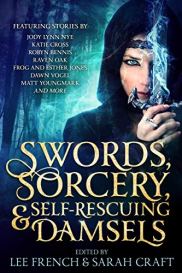
What narrative mode will you use? Who is the best person to tell the story? One of my favorite short stories to write, Thorn Girl, is in the forthcoming anthology, Swords, Sorcery, and Self-rescuing Damsels. I could easily have told her story in third omniscient POV, but I had a compelling main character with a real, gut-wrenching story.

Originally, I tried to write her tale in my usual narrative mode of Third Person. As I worked, that mode didn’t feel as close, as intimate as I wanted.

My MC had to tell her own story.

The theme was a good theme, but it was a challenge to write something original and not overdone. It was an excellent opportunity to think wide.

In the first draft, there were several places that I thought were the beginning. As always, I had difficulty deciding where the story actually began. After reading that first draft, my writing group pointed out that the narrative had to begin at the point of no return, as there is no room for backstory.

I tossed out the first half of the original story and begin at what I had originally thought was the middle. That was when things began to fall together.

What did my character actually know? Realistically, she could only know what she witnessed.

I spent some time figuring out what she really could have witnessed or overheard, and then worked only with that information.

What did my protagonist want? At first glance, it seemed obvious, but the purported quest was only an impetus, a prod to move her down the path she needed to travel. Her true quest was to find herself as a human being, as much as it was to honor a promise made and quickly regretted.

What was she willing to do to achieve it? I didn’t know. She didn’t know either, and until I wrote the last line, I didn’t know what she was capable of or if she had the backbone to accomplish it.

Short stories are a real training ground for authors because words must be rationed. Writing short stories forces me to consider how my limited number of words can be used to their best advantage. It requires me to tell a large story using a limited number of words carefully chosen for their impact. Word choice and sentence structure must convey a massive amount of information: mood, atmosphere, setting, hints of backstory – all packed into a finite space that is already occupied by knowable characters, a coherent plot, and an ingenious resolution.

I try to keep conciseness and creative word choice in mind when writing longer works.

To wind this rant up, need drives the short story, theme stitches it together, and word-count limits force concise storytelling.

10 Comments

Filed under writing

#Drabble “Ted”

Today is the first day of 2018! An area of writing that I really enjoy is called The Drabble. Writing such short fiction forces the author to develop economy of words. We will be exploring Drabbles and the craft of writing short fiction more closely here on Life in the Realm of Fantasy during the month of January.

A Drabble is an extremely short story, usually no more than 100 words, although some contests will allow as much as 300 words.

My first Drabble was this one, penned in 2013, and it remains one of my favorite short pieces.


TED

Edna stirred her coffee and looked out the window toward the shed.

“Did you feed the chickens?” Marion always asked, despite knowing Edna had.

Edna tore her gaze from the shed. “Of course.” Her eyes turned back to the small building. “We won’t be able to keep him in there much longer. He’s growing too big. We should have a barn built for him.”

“Ted was always a greedy boy.” Marion sipped her coffee. “I warned him he behaved like a beast, and now look.”

A rumbling bellow shook the shed. A long green tail snaked out of the door.


“Ted,” by Connie J. Jasperson ©2013 – 2018

Garden Shed, Australia, By Rod Waddington from Kergunyah, Australia (Garden Shed, Australia) [CC BY-SA 2.0 (https://creativecommons.org/licenses/by-sa/2.0) ], via Wikimedia Commons

Comments Off on #Drabble “Ted”

Filed under #FineArtFriday, #FlashFictionFriday, writing