
When I have an idea for a new writing project, I ask myself, “What genre will be best for this story?” This is important because how I incorporate certain expected tropes will determine what kind of reader will be interested in this novel.
 I write what I am in the mood to read, so my genre is usually a fantasy of one kind or another. However, I sometimes go nuts and write women’s fiction.
I think of a novel as if it were a painting created from words. The story is the picture, and the genre is the frame. When selecting the frame for a picture, what are my choices? Perhaps a heavily carved and gilded frame (literary fiction), or maybe simple polished wood (fiction that appeals to a broader range) … or should we go with sleek polished steel (sci-fi)? I’ll usually opt for the simple wooden frame.
The many subgenres of fantasy usually incorporate aspects of magic, mythical beasts, vampires, or other races, such as elves or dwarves, into the story. These tropes are often used as the set-dressing part of worldbuilding, even when they are characters in that story.
 But regardless of the genre, the basic premise of any story can be answered in eight questions that we will ask of the characters.
- Who are the players?
- Who is the POV character?
- At what point in their drama does the story open?
- What does the protagonist have to say about their story?
- How did they arrive at the point of no return?
- What do they want, and what will they do to get it?
- What stands in their way, and how will they get around it?
- How does their story end? Is there more than one way this could go?
So, now we discover who the players are. My stories always begin with the characters, but the ideas for them come to me out of nowhere.
Characters usually arrive in my imagination as new acquaintances inhabiting a specific environment. That world determines the genre.
The idea-seed that became the three Billy’s Revenge novels came about in 2010 when I was challenged to participate in something called NaNoWriMo. It wasn’t really a challenge—it was more of a dare, and I can’t pass one of those up.
Anyway, I had been working on several writing projects for the previous two years and didn’t want to begin something new. But one autumn evening, a random thought occurred to me. What happens when a Hero gets too old to do the job? How does a Hero gracefully retire from the business of saving the world?
Then I thought, perhaps he doesn’t.
Maybe there are so few Heroes that there is no graceful retirement. And then I wondered, how did he find himself in that position in the first place? He had been young and strong once. He must have had companions. Why did he not quit when he was ahead? At that point, I had my story.
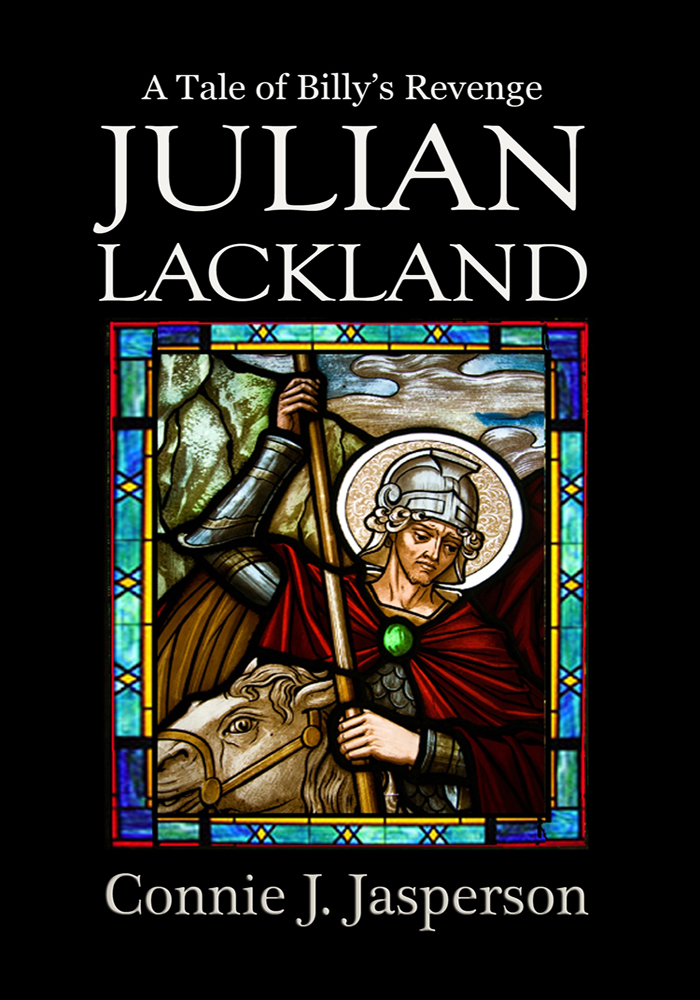 And thus Julian Lackland and Lady Mags were born, and Huw the Bard and Golden Beau. But they needed a place to live, so along came Billy Ninefingers, captain of the Rowdies, and his inn, Billy’s Revenge. When I first met Billy and his colorful crew of mercenaries, I was hooked. I had to write the tale that became three novels: Julian Lackland, Billy Ninefingers, and Huw the Bard.
The fantasy subgenre for that series is “alternate medieval world” because the characters live in a low-tech society with elements of feudalism. Waldeyn is an alternate world because I imagined it as a mashup of 16th-century Wales, Venice, and Amsterdam with a touch of modern plumbing. I gave women the right to become mercenary knights as a way of escaping the bonds of society.
It’s never mentioned in the books, but I have always seen Waldeyn as a human-colonized world. Magic occurs in that world as a component of nature, and it affects the flora and fauna. It spawns creatures like dragons, but the dangerous environment and creatures aren’t the point of those books. I see it as a colony cut off from its home world, one that nearly lost the battle to survive but found a way to make it work. Now, a millennium later, they no longer remember their origin and don’t care.
Once I have an idea for a protagonist, I imagine them as people who begin sharing some of their stories the way strangers on a long bus ride might.
I sit and write one or two paragraphs about them as if meeting them for a job interview. They tell me some things about themselves. At first, I only see the image they want the world to see. As strangers always do, they keep most of their secrets close and don’t reveal all the dirt.
However, that little word picture of the face they show the world is all I need to get my story off the ground when the real writing begins.
Excalibur London_Film_Museum_ via Wikipedia
The unspoken bits of human error and hidden truths they wish to conceal are still mysteries. But those secrets will be pried from them over the course of writing the narrative’s first draft.
Knowing who your characters might be, having an idea of their story, and seeing them in their world is a good first step. Write those thoughts down so you don’t lose them. Keep writing as the ideas come to you, and soon, you’ll have the seeds of a novel.
And I will be here to read it.


 Life in the Realm of Fantasy