
I have always thought of myself as a writer. Unfortunately, for about forty years I didn’t know how to write anything longer than a poem or a song. I wrote hundreds of poems and songs and sang them to my children, went to open mics, and performed in various bands.
 During the 1980s and 90s, I listened to music on the stereo, writing my thoughts and ideas in a notebook while my kids did their homework. I drew dragons and fantasy landscapes and worked three part-time jobs to pay the bills.
My pen and ink ramblings weren’t writing as I see it now. However, they were frameworks containing ideas that later became full-fledged stories. In 1987, my father bought me a secondhand IBM Selectric Typewriter, and my writing addiction took off. My typewriter sat beside the hamster cage in the kitchen—not a wise placement choice—and while my kids did homework, I pecked away at short stories.
One of those frameworks evolved into a proto-novel in 1994 when we were given a secondhand Apple Macintosh Performa, and I began writing a novel. Five years and 225,000 words later (including a switch to a Windows 98 PC), I realized I had a mess on my hands that would never be finished.
I didn’t know what to do with it.
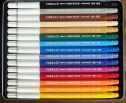 For most of my writing life, I was like a toddler given a package of magic markers and told to go wild. My enthusiasm exceeded my ability.
- I didn’t have the information I needed to make my work readable or know how to get it.
- I felt embarrassed for even thinking that I could be an author.
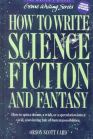
One day in 1990, I stumbled upon a book offered in the Science Fiction Book Club catalog: How to Write Science Fiction and Fantasy by Orson Scott Card. The day that book arrived in my mailbox changed my life. Since acquiring that book, I have amassed a library of books on the craft. Some are brilliant, some not so much, but I always learn something from them.
Personal experience, good and bad, is a great teacher. So, here are a few things I wish I had known in 2010 when I stumbled upon NaNoWriMo and began this journey in earnest:
One: Make a style sheet (also known as a storyboard or bible) as you go.
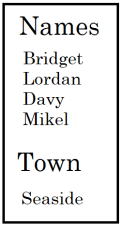 Build a glossary of words and spellings unique to your story, and be sure to list names. I use an Excel spreadsheet, but you can use anything you like to help you stay consistent in your spelling.
And even though I think I am developing a thorough glossary, my editor will find many words to add to it.
Two: Develop a logical, consistent system for naming your files. Save your document regularly.
Save each version of your manuscript in its own master file, and give each subfile a different name so you can go back and retrieve bits you may need later. I use a system like this:
 The master file might be titled: Lenns_Story
- The subfile might be: L_S_V5.docx
That stands for Lenn’s Story version five. I work out of Word, so the extension is automatically a docx. Each master file will contain many subfiles before a story or book is published.
Three: Find a local group of writers to meet with and talk about the craft.
Authors need to network with other authors because we need to discuss the craft with someone whose eyes don’t glaze over.
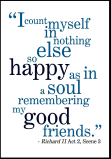 I gained a fantastic local group through attending write-ins for NaNoWriMo, the Tuesday Morning Rebel Writers. Since the pandemic, and with several of our members now on the opposite side of Washington State, we meet weekly via Zoom. We are a group of authors writing in a wide variety of genres.
We’re like midwives, helping each other bring new books into the world through beta reading and critiquing. But more than that, we are good, close friends who help each other through life’s twists and turns.
Four: Never stop educating yourself. It requires dedication and a small investment of money, but you can do it.
Learn how to say what you mean with your unique voice and style. A college education may be out of reach, but you can buy books on grammar, style, substance, and writing craft.
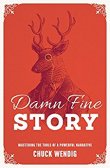 Learn about structure and pacing from successful authors. Spend the money to go to conventions and attend seminars. You will learn so much about the craft of writing, the genre you write in, and the publishing industry as a whole—things you can only learn from other authors. I gained an extended professional network by joining The Pacific Northwest Writers Association and attending their conferences.
Five: Don’t even consider signing with the slick-talking publisher that contacts you out of the blue.
In 2010 I made my word count and became a firm believer in the principles behind NaNoWriMo. If you sit down and write at least 1,667 words every day, you will complete your novel.
I didn’t know that while a novel might have the complete story arc, it isn’t finished.
 The year that followed was filled with mistakes and struggles. Legitimate publishers NEVER contact you. You must submit your work to them, and they prefer to work with agented authors.
I, of course, didn’t know this. There were some low points and a devastating falling out with my first publisher. Ultimately, I retained the rights to my work. After years of revisions, I did finally bring that novel back to a new life in 2020. But that is another story.
Ask yourself this: how can a publisher possibly want work they haven’t seen? And how did they get your email address?
Make use of SFWA’s Writer Beware site. You won’t benefit from the predator publisher’s “services,” but they will profit from your desperation to be published. They will charge you for services they don’t provide and publish your work in its raw, unedited form, and you will never see a dime.
Six: even though you’re writing that novel, keep writing short stories too.
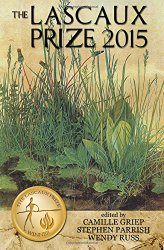 Short stories and micro fiction are a training ground, a way to hone your skills. They’re also the best way to get your name out there. I suggest you build a backlog of work from 100 to 5,000 words in length. Keep them ready to submit to magazines, anthologies, and contests.
Every scene and vignette that rolls through your head can be made into something you can use.
Get the Submittable App and start submitting your work, and don’t let rejections stop you. Keep sending that work out to new places because someone will want it.
Seven: Never Stop Reading. Read widely and in all genres. Read critically and apply what you learn about writing, both good and bad, to your work.
These are a few of the many things that I wish I had known when I first started writing professionally but didn’t. I hope it makes your writing life a little smoother.
Credits and Attributions:
Image: Macintosh Performa, Wikimedia Commons contributors, “File:Macintosh Performa 5200.jpg,” Wikimedia Commons, https://commons.wikimedia.org/w/index.php?title=File:Macintosh_Performa_5200.jpg&oldid=729233027 (accessed July 23, 2023).
Image: Markers, Wikimedia Commons contributors, “File:Caran d’Ache Filzstifte.JPG,” Wikimedia Commons, https://commons.wikimedia.org/w/index.php?title=File:Caran_d%27Ache_Filzstifte.JPG&oldid=506240371 (accessed July 23, 2023).
 Regardless of your publishing path, you must budget for certain things. You can’t expect your royalties to pay for them early in your career – and many award-winning authors must still work at their day jobs to pay their bills.
 Conferences are an extension of the self-education process. I have discovered so much about the craft of writing, the genres I write in, and the publishing industry as a whole—things I could only learn from other authors. I gained an extended professional network by joining
 Sometimes I am invited to participate in panels or offer a workshop, and I can share my experiences with others. Either way, I learn things. In September, I will be on a panel with




 Life in the Realm of Fantasy