Tag Archives: The Council of Elrond

Motivation, and the Council of Elrond #amwriting

Authors talk a lot about motivation, often speaking in general terms. In a writing group, if a fellow member is stuck, we will ask them what their characters want most and what they’re willing to do to obtain it.

writing craft functions of the sceneThat question is a good place to start, but it is only the surface layer of the pond.

  • Motivation is sometimes defined as the overall quest.
  • Motives are more intimate, secrets held closely by the characters.

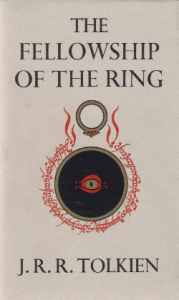
I like to use a watershed scene from the book The Fellowship of the Ring, as an example of this. If you have only seen the movie, you haven’t seen the real story as Tolkien himself told it. Let’s look at the Council of Elrond.

This scene is the only one where most of the characters are gathered in one place. They are there to decide who will mount the quest to destroy the One Ring. The scene is set in Rivendell, Elrond’s remote mountain citadel.

Each character attending the council has arrived there on a separate errand. Each has different hopes for what will ultimately come from the meeting. Despite their various agendas, each is ultimately concerned with the Ring of Power. Each wants to protect their people from Sauron’s depredations if he were to regain possession of it.

This scene serves several functions:

Information/Revelation: The Council of Elrond conveys information to both the protagonists and readers.
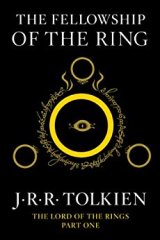
the fellowship of the ringIt is a conversation scene, driven by the fact that each person in the meeting has knowledge the others need. Conversations are good when they deploy necessary information. Remember, plot points are driven by the characters who have critical knowledge.

The fact that some characters are working with limited information creates tension. At the Council of Elrond, many things are discussed, and the whole story of the One Ring is explained, with each character offering a new piece of the puzzle. The reader and the characters receive the information simultaneously at this point in the novel.

Every person in the Fellowship is motivated by the need to keep the One Ring from falling into Sauron’s hands. This is the acknowledged reason for their accompanying Frodo and is the core plot point around which the story unfolds.

Yet, everyone attending the council has an unspoken agenda that will affect Frodo’s mission. Ultimately, those secret motives are the undoing of some and the making of others.

Samwise is a loyal friend who refuses to leave Frodo’s side. Fear that Frodo will need him forces him to insist on being included.

Pippin and Merry have similar but different reasons—they don’t want to be left out if Frodo and Sam are going on an adventure. Their motives are simple at the outset but become more complicated as their stories diverge and unfold.

Boromir desires the Ring for what he believes is a noble purpose and intends to take it to Minas Tirith. He knows the power of the Ring and believes that if he possesses it, Gondor will return to its former glory and be safe forever. He will rule the world with a just hand.

Thus, Boromir’s true motive is a quest for personal power. His agenda kicks into place at Amon Hen.

The Council of Elrond serves several functions:
The_Fellowship_of_the_Ring_coverInformation/Revelation: The Council of Elrond conveys information to both the protagonists and readers. It is a conversation scene, driven by the fact that each person in the meeting has knowledge the others need. Plot points are propelled by the characters who have critical knowledge. Again, limited information creates tension.

Interracial bigotry emerges, and a confrontation ensues. At the Council of Elrond, long-simmering racial tensions between Gimli the Dwarf and Legolas the Elf surface. Each is confrontational by nature, and it’s doubtful whether they will agree to work together.

Sometimes, a verbal confrontation gives the reader the context needed to understand why the action occurred. The conversation and reaction give the scene context, which is critical. A scene that is all action can be confusing if it has no context.

Other conflicts are explored, and heated exchanges occur between Aragorn and Boromir.

Pacing: We have action/confrontation in this vignette, followed by conversation and the characters’ reactions.

Negotiation: What concessions will be required to achieve the final goal? These concessions must be negotiated.

First, Tom Bombadil is mentioned as one who could safely take the Ring to Mordor as it has no power over him. Gandalf feels he would simply lose the Ring or give it away because Tom lives in his own reality and doesn’t see Sauron as a problem.

Bilbo volunteers, but he is too old and frail. Others offer, but none are accepted as good candidates for the job of ring-bearer for one reason or another.

Each justification Gandalf and Elrond offer for why these characters are wrong for the job deploys a tidbit of information the reader needs.

Turning Point: After much discussion, revelations, and bitter arguments, Frodo declares that he will go to Mordor and dispose of the Ring, giving up his chance to live his remaining life in the comfort and safety of Rivendell. Sam emerges from his hiding place and demands to be allowed to accompany Frodo. This is the turning point of the story.
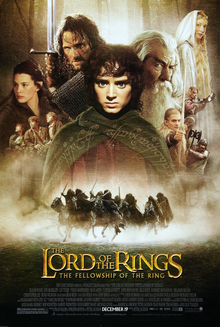
The_Lord_of_the_Rings_The_Fellowship_of_the_Ring_(2001)_theatrical_posterThe movie portrays this scene differently, with Pip and Merry hiding in the shadows. Also, in the book, the decision about who will accompany Frodo, other than Sam, is not made for several days, while the movie shortens it to one day.

The fundamental laws of physics, the rules that govern the universe, are in force here: Everything in that chapter happens for a reason. There is always a causative factor.

  • Without a cause, there is no effect.
  • Cause is motivation.
  • Effect becomes cause, which becomes motivation.
  • Motivation is a chain reaction of cause and effect, which becomes the story.

And it’s all traceable back to the character’s desire to do or have something.

Characters that feel too shallow sometimes lack sufficient personal motivations. The reader can’t see why they would buy into the larger quest.

If we have supplied each character with a secret backstory, those hinted-at motives can sometimes push the story into newer, more original waters.

And, isn’t that what we readers are looking for? We read because we are searching for a story that feels new, one that offers us a fresh view of the world through the characters’ eyes.


Credits and Attributions:

The Lord of the Rings: The Fellowship of the Rings, Theatrical release poster, New Line Cinema, © 2001, all rights reserved. Wikipedia contributors, “The Lord of the Rings: The Fellowship of the Ring,” Wikipedia, The Free Encyclopedia, https://en.wikipedia.org/w/index.php?title=The_Lord_of_the_Rings:_The_Fellowship_of_the_Ring&oldid=1186704895 (accessed December 3, 2023). Fair Use.
Comments Off on Motivation, and the Council of Elrond #amwriting

Filed under writing

The Functions of the Scene #amwriting

Now that we are in the midst of December, many people are reviewing what they wrote during NaNoWriMo and trying to put it in order. This is a good time to look at the function of the scene.

ScenesNovels consist of a string of moments united by a common theme. These scenes combine to form a story when you put them together in the right order and link them with a plot featuring a compelling protagonist who must overcome adversity.

I see the scene as a story within a larger story, a moment with an arc of its own.

Scenes are the building blocks of the story. Small arcs of action form chapters, which form the larger arc of plot. They combine to form a cathedral-like structure: the novel.

If you ask a reader what makes a memorable story, they will tell you that the emotions it evoked are what they remember, and why they loved that novel.

Therefore, no scene can be wasted. Each moment of the story must have a function, or the story fails to hold the reader’s interest. I work to make each scene as emotionally powerful as I can without going overboard.

A few things a scene can show:

  • Capitulation
  • Catalyst
  • Confrontation
  • Contemplation/Reflection
  • Decision
  • Emotions
  • Information
  • Negotiation
  • Resolution
  • Revelation
  • Turning Point

Make one or more of these functions the core of the scene, and you will have a compelling story.

Let’s return to a watershed chapter I’ve discussed before. In the Fellowship of the Ring, book one of J.R.R. Tolkien’s Lord of the Ring series, the longest chapter in the book details the Council of Elrond. The scene is set in Rivendell, Elrond’s remote mountain citadel.

The characters attending the Council have arrived there on separate errands. Each has different hopes for what would ultimately come from the meeting.

Despite their various agendas, each is ultimately concerned with the One Ring. Each has their own idea of how to use it to protect the people of Middle-earth from the depredations of Sauron, who is desperate to regain possession of it. This chapter is comprised of several scenes and serves more than one function.

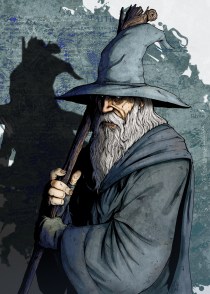
GANDALF

Gandalf the Grey, by Nidoart, CC BY-SA 3.0

Information/Revelation: The Council of Elrond conveys information to both the protagonists and the reader. It is a conversation scene, driven by the fact that each person in the meeting has knowledge the others need. Conversations are an excellent way to deploy required information.

Remember, plot points are driven by the characters who have vital knowledge.

The fact that some characters are working with limited information creates high emotional tension.

At the Council of Elrond, many things are discussed, and the history of the One Ring is explained. This is not done in an info dump; instead, each character offers a new piece of the puzzle at the moment the reader needs to know it.

The reader and the characters receive the information simultaneously at this point in the novel.

Confrontation: A scene comprised only of action can be confusing if it has no context. A properly placed confrontational conversation (an argument/dispute) gives the reader the context needed to understand the reason for the action.

At the Council of Elrond, long-simmering racial tensions between Gimli the Dwarf and Legolas the Elf surface. Each is possessed of a confrontational nature, and it isn’t clear whether they will be able to set aside their prejudice and work together or not.

Other conflicts are explored, and heated exchanges occur between Aragorn and Boromir.

Negotiation: What concessions will have to be made to achieve the final goal? These concessions must be negotiated. Tom Bombadil is mentioned as one who could safely take the ring to Mordor as it has no power over him. Gandalf feels he would simply lose the ring or give it away. He explains that Tom lives in his own reality and doesn’t see the conflict with Sauron as a problem.

Bilbo volunteers, but he is too old and frail. Others offer, but none are accepted as good candidates for the job of ring-bearer for one reason or another. Each reason that is provided for why these characters are deemed less than satisfactory by Gandalf and Elrond deploys information the reader needs.

Turning Point: After much discussion, many revelations, and bitter arguments, Frodo declares that he will go to Mordor and dispose of the ring, giving up his chance to live his remaining life in the comfort and safety of Rivendell. Sam emerges from his hiding place and demands to be allowed to accompany Frodo. This is the turning point of the story.

(The movie portrays this scene differently, with Pip and Merry hiding in the shadows. Also, in the book, the decision regarding who will accompany Frodo, other than Sam, is not made for several days, while the movie shortens it to one day.)

Within the story’s arc are smaller arcs of conflict and reflection, each created by scenes. The arc of the scene is like any other: it begins, rises to a peak, and ebbs, ending on a slightly higher point of the overall story arc than when it started.

The scene must reveal something new and push the story toward something unknown.

959px-One_Ring_Blender_Render

The One Ring, Peter J. Yost, CC BY-SA 4.0

We are also pushing the character arc with each scene, raising the stakes a little. Our protagonist grows and is shaped by receiving needed information through action and conversation, followed by reaction and regrouping. This allows the reader to experience the story as the protagonist does.

The reader can then reflect and absorb the information gained before moving on to the next scene.

I will continue this discussion in my next post, which will focus on transitioning from scene to scene. Transitions are vital as they affect pacing and keep the story moving forward.


Credits and Attributions:

Gandalf the Grey, by Nidoart, CC BY-SA 3.0 <https://creativecommons.org/licenses/by-sa/3.0&gt;, via Wikimedia Commons (artwork by Nidoart nidoart.blogspot.fr)

Wikimedia Commons contributors, “File:GANDALF.jpg,” Wikimedia Commons, the free media repository, https://commons.wikimedia.org/w/index.php?title=File:GANDALF.jpg&oldid=608049709 (accessed December 12, 2021).

The One Ring, Peter J. Yost, CC BY-SA 4.0 <https://creativecommons.org/licenses/by-sa/4.0&gt;, via Wikimedia Commons.

Wikimedia Commons contributors, “File:One Ring Blender Render.png,” Wikimedia Commons, the free media repository, https://commons.wikimedia.org/w/index.php?title=File:One_Ring_Blender_Render.png&oldid=575573354 (accessed December 12, 2021).

9 Comments

Filed under writing

Dissecting the Scene: plot points #amwriting

Scenes are the Legos, the building blocks of the story. We all loved building things with our Legos, but readers are impatient. For that reason, no scene can be wasted, written just to entertain us, the writer. All of those scenes are background and world building, and should be saved in a separate file.

We want to ensure that each scene has a function. When I am writing the first or even the second draft, I can find myself at a loss as to what needs to happen next to advance the story.

I keep a list of plot points that could be explored and try to nudge my plot forward by exploring one of these actions:

  • Information
  • Confrontation
  • Reunion
  • Revelation
  • Negotiation
  • Decision
  • Capitulation
  • Catalyst
  • Contemplation/Reflection
  • Turning Point
  • Resolution
  • Deep emotions

Exploring each of these plot points alters the characters’ view of their world. Every change in a character’s awareness directly impacts the direction of the story and doles out information the reader and/or the characters require to advance.

I like to use a watershed scene from the book, the Fellowship of the Ring, as an example of this. If you have only seen the movie, the version you know is quite different. You haven’t seen the real story as J.R.R. himself told it.

So, toward the end of book one of J.R.R. Tolkien’s Lord of the Ring series, we come to The Council of Elrond. The scene is set in Rivendell, Elrond’s remote mountain citadel.

Each character attending the Council has arrived there on a separate errand. Each has different hopes for what will ultimately come from the meeting. Despite their various agendas, each is ultimately concerned with the ring of power. Each wants to protect their people from Sauron’s depredations if he were to regain possession of it.

This scene serves several functions:

Information/Revelation: The Council of Elrond conveys information to both the protagonists and the reader.

It is a conversation scene, driven by the fact that each person in the meeting has knowledge the others need. Conversations are an excellent way to deploy necessary information. Remember, plot points are driven by the characters who have critical knowledge.

The fact that some characters are working with limited information is what creates the tension. At the Council of Elrond, many things are discussed, and the full story of the One Ring is explained, with each character offering a new piece of the puzzle. The reader and the characters receive the information at the same time at this point in the novel.

Inter-racial bigotry and confrontation: A well-placed verbal confrontation gives the reader the context they need to understand why the action occurs.

At the Council of Elrond, long-simmering racial tensions between Gimli the Dwarf and Legolas the Elf surface. Each is possessed of a confrontational nature, and it isn’t clear whether they will be able to work together or not.

Thus, we have action/confrontation in this vignette, followed by conversation, followed by the characters’ reactions.

The conversation and reaction give the scene context, which is critical. A scene that is all action can be confusing if it has no context.

Other conflicts are explored, and heated exchanges occur between Aragorn and Boromir.

Negotiation: What concessions will have to be made to achieve the final goal? These concessions must be negotiated.

First, Tom Bombadil is mentioned as one who could safely take the ring to Mordor as it has no power over him. Gandalf feels he would simply lose the ring or give it away because Tom lives in a reality of his own and doesn’t see Sauron as a problem.

Bilbo volunteers, but he is too old and frail. Others offer, but none are accepted as good candidates for the job of ring-bearer for one reason or another.

Each justification Gandalf and Elrond offer for why these characters are wrong for the job deploys a small bit of information the reader needs.

Turning Point: After much discussion, many revelations, and bitter arguments, Frodo declares that he will go to Mordor and dispose of the ring, giving up his chance to live his remaining life in the comfort and safety of Rivendell. Sam emerges from his hiding place and demands to be allowed to accompany Frodo. This moment is the turning point of the story.

(The movie portrays this scene differently, with Pip and Merry hiding in the shadows. Also, in the book, the decision about who will accompany Frodo, other than Sam, is not made for several days, while the movie shortens it to one day.)

The arc of the story is supported by smaller arcs. These arcs of conflict and reflection are scenes.

The arc of the scene is like any other: it begins, rises to a peak, and ebbs, ending on a slightly higher point of the overall story arc than when it started, leading to the brief transition scene.

Transitions can be as simple as a change of setting, one character leaving the room for a breath of air. They can be hard transitions; the scene ends, and with it, so does that chapter.

Within a chapter, conversations can serve as good transitions that propel the story forward to the next scene, offering a chance to absorb what just happened. This rhythm of action – reaction – action – reaction is how we adjust the pacing. Pacing is how we affect the reader’s emotions.

With each scene, we push the character arc, raising the stakes a little. Our protagonist is shaped by experiencing events and receiving needed information through action and conversation.

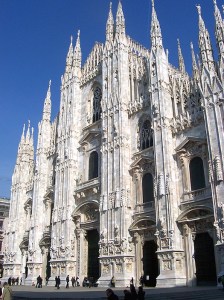
All the arcs together form a cathedral-like structure: the novel.

By creating small arcs, we offer the reader the chance to experience the rise and fall of tension, the life-breath of the novel at the same time as the protagonist does. This is how we give the reader a sense of immediacy.


Credits and Attributions:

Facade of the Cathedral of Milan, Italy, in February 2009, after its cleaning.  MarkusMark, CC BY-SA 3.0 <https://creativecommons.org/licenses/by-sa/3.0&gt;, via Wikimedia Commons

6 Comments

Filed under writing