
As I said in my previous post, Foreshadowing and the Strong Opening, I am writing the first draft of a new novel. I am filling in and altering the outline as I go. This means that nothing is canon, and many plot points, even major ones, will have changed by the time I am ready to publish this mess.
 Some novels are character-driven, others are event-driven, but all follow an arc. I’m a poet, and while I read in every genre, I seek out literary fantasy, novels with a character-driven plot. These are works by authors like Naomi Novik, Tad Williams, and Patrick Rothfuss. These writers spend time crafting every aspect of their novels. For that reason, they cannot churn a new book out every year or even every two years.
Literary fantasy is a subgenre whose novels appeal to dedicated and determined readers. The authors spend time crafting prose that reflects a deep and often dark storyline, so if you prefer easily-digested fantasy, this is not for you. Complex themes play with and sometimes warp the expected fantasy tropes.
This subgenre focuses on the characters and how they are changed by their circumstances. Plot elements take place in a richly developed fantasy world. However, both setting and events are not the point of the story—they only frame and enable a character’s evolution.
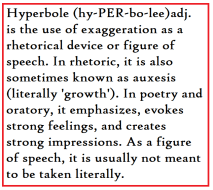 And the prose … words with impact, words combined with other words, set down in such a way that I feel silly even thinking I can write such works. Thankfully, my editor weeds out pretentious hyperbole and slaps me back to reality.
I am working on the first draft of a character-driven novel, trying to get the plot out of my head and noting events in the outline as I go. I have the first quarter nailed down reasonably well.
The midpoint of a novel is the longest section. It covers the second and third quarters of the book’s overall word count. In this section, emotions intensify, and the action does too. From this point on, the forces driving the plot are a train on a downhill run, picking up speed, and there is no stopping it or turning back now. The characters continue to be put to the test, and subplots kick into gear.
From the midpoint to the final plot point, pacing is critical.
And this is where I struggle as a writer.
These events tear the heroes down. They must break them emotionally and physically so that in the book’s final quarter, they can be rebuilt, stronger, and ready to face the enemy on equal terms.
As you approach the midpoint of the story arc, personal growth begins to drive the plot.
In the story I am plotting, two of the protagonists lose faith in themselves. One has a crisis of conscience, which is the result of the inciting incident. The other carries on doing what hasn’t worked in the past. Both have heavy burdens of guilt that must be shed.
Each must learn to live with who they are rather than who they wish to be.
Other characters know bits of the history behind these two, but no one knows everything. In this section, information must gradually emerge, showing the reader why they react the way they do. In the process, the four will learn to work together, setting aside their insecurities. By the final act, they must be hardened, able to function as a team, and determined to finish the task.
 This part of the novel is often difficult for me to get right. The protagonist must be put through a personal crisis. Their inner world must be shaken to the foundations.
But what is the lynchpin of this disaster?
It must be a logical outcome of events to that moment. My editor must be able to say, “Yes, that’s how it would happen.”
So now I need a terrible event. At this point in laying down the story, I don’t know what it is, but somehow, the protagonists have suffered a severe loss.
- How are they emotionally destroyed by the events?
- How was their own weakness responsible for the bad outcome?
- How does this cause the protagonist to question everything they once believed in?
- What gives them the courage to keep on going?
- How does this personal death and rebirth event change them?
The midpoint is crucial because the truth underlying the conflict now emerges. As we approach the final act, the enemy’s weaknesses become apparent. My protagonists will overcome their crises and exploit those flaws—I just don’t know how yet.
I do know part of the plot. I have plans for the midpoint’s second half, an event where the protagonists must make hard decisions. They will scrape up the courage to do what must be done.
I haven’t discussed the enemy much, but I haven’t neglected them. They have had their day in the sun, and to my protagonists, it looks like the opponent has won. But even so, our heroes will reach into the depths of their souls and do what must be done, make that final effort.
 This emotional low point is necessary for our characters’ personal arcs. It is the place where they are forced to face their weaknesses and rebuild themselves. They must discover they are stronger than they ever knew.
At this point in the novel, if I have done it right, my editor (who is also my first reader) will be worried, hoping everyone can hold it together long enough to overcome the hardships.
Fingers crossed, and with a fully fleshed-out outline at hand, it might happen. My writing group is a resource I will turn to as the plot progresses. They will kindly keep me from going off the rails, and that is a blessing.



 Life in the Realm of Fantasy