
Once a writer has been bitten by the publishing bug, they begin to seek out publications with open calls and submit their work. Anthologies proposed by various independent writing groups are often the first door that opens to a new author.
 Writing groups can be quite different in their areas of focus. Some are critique groups, and some are more support groups. No matter what the group focuses on in its meetings, the anthology is meant to showcase that group’s professionalism.
Certain elements will be required of each entry, no matter what genre or theme has been chosen to tie the anthology together.
The story must embody the desired theme, and the editors want the most creative work they can find.
No one wants to publish junk.
I always have a member of my writing group read my work first, acting as a beta reader. Their comments help ensure that my story hits all the marks.
We’re all readers, and we gravitate to specific genres and themes. When the stories are all in the same genre and explore a common theme, the readers who purchase the anthology will most likely stay with the book until the end. They will read and enjoy your work, even if it is featured toward the end of the volume.
Some editors post calls stating, “We want your best work.” What do they mean by that?
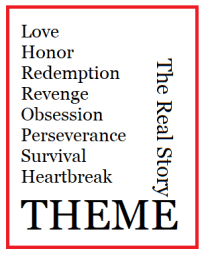 “Your best work” gets off to a great start when the story is written with the central theme of the anthology in mind, a central facet of the story.
A well-planned anthology will contain stories in the same genre and theme but unique, with a wide range of plots and characters. Without a unifying theme, you have a patchwork of disparate tales by random authors. The unifying theme ensures continuity.
All the characters must have fully developed arcs. How does this theme affect the protagonist?
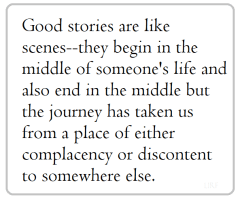
How does the theme drive the story? The story arc must be coherent and logical, with a fully developed beginning, middle, and end. The theme binds everything together.
World building is critical in a short story, so the setting must be clearly shown.
As I mentioned above, a beta reader is critical to ensure all plot holes have been identified and resolved in a way that will satisfy the reader.
Finally, I suggest you let it sit for a few days and then read it aloud to proofread it before submission.
Literary themes, by nature, are common to most stories. The most challenging aspect of this is to think of a unique approach a story that has been told since the dawn of time.
Let’s say we want to submit a story to an imaginary anthology with a theme of facing reality. The working title of the book will be Reality Bites. The genre is sci-fi and the word count limit for each submission is 1500 words, so we have to tell what happened using words with the most impact and do it in a very short space.
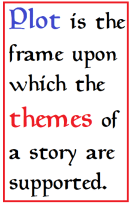 The editors have said that one can face the reality of the past, present, or future—it’s up to each author to write their story. We must find ways to layer that theme into the character arcs, plot, and world building.
When you sit down to write the first draft of a story meant for a themed anthology, ask several questions of it:
- What is the inciting incident? How does it relate to the specified theme?
- What is the goal/objective, the quest the characters must complete? How does it relate to the theme?
- Have you stayed within the maximum word count? If the guidelines say no more than 1500 words per entry, that is what they mean. Failure to comply will result in rejection.
Once you have edited the piece to the best of your ability, you must format your manuscript for submission according to the guidelines set out by the anthology’s editor.
For most anthologies, editors want the work formatted according to the guidelines as described by William Shunn. Those guidelines are the overall publishing industry standard for submissions and can be found in detail at this website: Classic Manuscript Format | William Shunn
 Basically, his guidelines say you must use Times New Roman (or sometimes Courier) .12 font. You must also ensure your manuscript is formatted as follows:
- It is aligned left (NOT justified).
- It has 1 in. margins on all sides.
- Page numbers are in the upper right.
- It is double-spaced (to allow room for the editor’s comments).
- The body of the story has formatted indented paragraphs (NOT indents made by hitting the TAB key, as that screws up everything when the manuscript is uploaded to a digital format).
- The header contains the title and author name—UNLESS otherwise specified.
- The first page contains the author’s mailing address and contact information in the upper left-hand corner—unless otherwise specified.
If the group with an open call for an anthology has a Facebook page or private chatroom, the formatting guidelines will be posted there.
Sometimes, we find out at the last minute that an opportunity to get a piece into an anthology is open. Some folks might think they can cobble a piece together in a day or two.
I advise against succumbing to this temptation, as it is rare that “best work” emerges when a story is slapped together. Rushing things makes it hard to avoid proofing errors.
 The editor of the anthology has posted a public call for the best work that authors can provide, and they will receive a landslide of submissions. They will receive far more stories than they will have room for, and the majority of them will be memorable, wonderful stories.
All but the most outstanding of these great stories will not make the cut because the book will have a total word count limit of around 80,000 words to keep production costs down. Only the best of the best will be accepted.
This is good because you want your work to be included with the best the industry has to offer.
Do NOT rush it. You have a great idea for what could be the best story you have ever written.
Take the time to do it right. Remember, anything you submit to a prospective editor represents you and what you are capable of.




 Life in the Realm of Fantasy