
I think of books, stories, and literature in general, as a window through which readers can see a small slice of the wider world. The scene we can view through that window is narrow because it is expressed through the eyes of the narrator: the point of view.
 If we move to a different window, the view changes. Some views are better than others.
We focus our readers’ attention on specific details by manipulating the narrative point of view. We narrate the story in one of three different ways by telling it from a first-person, second-person, or third-person narrative point of view.
Other factors will come into play, and we will get to those later, but first, let’s look at the basics.
First-person point of view is relatively common and is told from one protagonist’s personal point of view. The narrator admits they are relating the tale, using the pronouns “I-me-my-mine,” allowing the reader or audience to see their opinions, thoughts, and feelings.
It is told from the view and knowledge of the narrator and not of other characters. As such, it is that of an unreliable narrator. You, as the author, must remember that no one has complete knowledge of anything. The protagonist cannot be all-seeing and all-knowing. The reader will find out the information as the protagonist does, and that will keep them interested in the story.
Second-person point of view, in which the author uses “you” and “your,” is rarely found in a novel or short story. In fiction, it is the mode of an unreliable narrator, as “you” aren’t omniscient and can’t know everything.
It is, however, commonly used in guidebooks, self-help books, do-it-yourself manuals, interactive fiction, role-playing games, gamebooks such as the Choose Your Own Adventure series, musical lyrics, and advertisements.
I find using this narrative mode in fiction is tricky. Some authors don’t carry it off well, and it reads like a walkthrough for an RPG. That difficulty is why this mode is rarely used in fiction.
 Books like “Gone Girl” by Gillian Flynn prove it can work well. (Flynn also uses first-person present tense in that book, and we’ll discuss it at length next week when we take a deep dive into voice.)
Now, we’ll move on to the third-person point of view. This is the most commonly used narrative mode in literature. It offers a wide range of flexibility because an author can zoom in close or go to a wide-angle view of the action. In this narrative mode, the characters are referred to by the pronouns “he,” “she,” “it,” or “they.”
Third-person point of view is that of an invisible person describing the events and thoughts of all the characters as they happen.
- The writer may choose the third-person omniscient mode, in which the thoughts of every character are open to the reader, or third-person limited, in which the reader enters only one character’s mind, either throughout the entire work or in a specific section.
- Third-person limited differs from first-person because while we see the thoughts and opinions of a single character, the author’s voice, not the character’s voice, is what you hear in the descriptive passages. This narrative mode is also that of the unreliable narrator.
- The Flâneur (idler, lounger, loiterer.) This is traditionally a form of third-person point of view, but I like to think of it almost as a fourth point of view. Many of you have heard of it as third-person objective or third-person dramatic. The flâneur is an unreliable narrator.
The flâneur is a voice that observes and comments but is not a character. They are the witness to the events, and they narrate the story as they see it.
- The flâneur is not reliable—he has his own personality, offering subtle judgments and unconscious opinions on the behavior of the characters. Therefore, just as in a first-person narrative, the reader cannot be sure he is telling the unbiased truth.
- The narrator tells the story without describing any of the character’s thoughts, opinions, or feelings. So, the reader can only guess at character motivations and must assume the objective observer truly is objective. We must hope he has told the truth as he discusses what he sees.
- It separates the reader from the intimacy of the action and slows the pace down. In some narratives, this mode is exactly what the story needs.
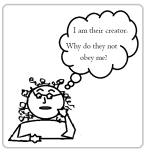 Last week, I mentioned head–hopping, a disconcerting literary no-no that occurs when an author switches point-of-view characters within a single scene. I’ve noticed it happens more frequently in third-person omniscient narratives because it’s a mode in which the thoughts of every character are open to the reader.
Head-hopping is a first-draft error. Our characters are all speaking as we write. Each character’s thoughts are important, but on paper, they can be chaotic, like a holiday dinner in my family.
Each character’s mental ruminations add something meaningful to the story, but let’s have some manners here. Thoughts are unspoken dialogue, and each scene or chapter should detail the internal dialogue of one character.
As we write, we know what every character is thinking. In the first draft, we may write passages that detail every character’s viewpoint. First, we’re in Joe’s head, and then we are in Mary’s.
Head-hopping will confuse the reader, who will no longer be able to suspend their disbelief.
We don’t want that.
When a side character has something to say that is important for the reader to know, I give that character a separate chapter, even if it is a short one.
 I find that when I can’t get a handle on a particular character’s personality, I open a new document and have them tell me their story in the first person.
Then, when I go back to the manuscript, I feel like I know them as a friend.
I hope this little refresher on narrative mode helps you in your work. I have written in all the above narrative modes and find myself using either first person or close third person point of view most often.
Next up, we’ll talk about narrative tense and how it can change the tone of a story.
 Some stories work best with a first-person point of view, while others are too large and require an omniscient narrator.
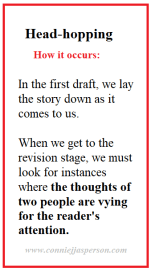 Head-hopping occurs when an author switches point-of-view characters within a single scene. It sometimes happens when using a third-person omniscient narrative because each character’s thoughts are open to the author.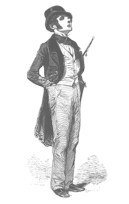
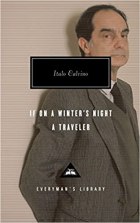 One example of a bestseller written in second person POV is


 Life in the Realm of Fantasy