
Are you a ‘pantser’ or a ‘plotter?’ For me, the answer lies somewhere in the middle. I plot, get two paragraphs in, and then find myself winging it, and the plot goes in a new direction. Then I replot and let it fly again.
 Also, my first drafts are not written linearly. I write what I am inspired to, skipping the spots I have no clue about. I fill in those places later. Even after completing the first draft, things will change structurally with each rewrite.
But what if you aren’t interested in writing a novel? What if you are a poet or your best skill is the short story?
In thirteen years of participating in NaNoWriMo, I have discovered that there is no one way that fits everyone. You’ve had this idea rolling around your head for a while now for something you’d like to read. You wish your favorite author would write it. In my experience, you must write it yourself, or it will never happen.
Your favorite author can only write so fast. Not only that, but what they’re in the mood to write might not be your wished-for book.
I’ve noticed a trend—most authors don’t live beyond 100 years of age. Unfortunately, dead authors rarely publish new books unless they are ghostwriters.
So, there you go–if you want that book, write it yourself.
My addiction to NaNoWriMo began innocently, as all good habits do: A young writer in the Philippines whom I had met through a gaming website mentioned he planned to do this writing challenge. I had never heard of it.
November’s Goal
It was a worldwide thing where hundreds of thousands of people began writing a novel on November 1, intending to have it finished by November 30. The catch was that you couldn’t start until 12:01 a.m. on November 1st; it had to be at least 50,000 words long, but it could be longer. And you had to have it validated by 11:59 p.m. on November 30th to earn the coveted winners’ goodies.
I wasn’t sure I could do this crazy thing. All I had to do was write 1,667 words daily, which I felt I could do. I figured the worst that could happen was that I would fail to have anything to write about.
Fear of failure had never stopped me from ruining my life, so I googled the national website and signed up. I chose the handle dragon_fangirl.
At 6:30 a.m. on November 1, 2010, I looked at my laptop and had no idea what to do. I wrote the first line as if I were telling myself a fairy tale. Inspired by my misspent childhood reading such disparate works as Don Quixote and the heartily misogynistic adventures of Fafhrd and the Gray Mouser, I wrote:
There was a cabin in the woods.
 It wasn’t exactly literary brilliance, but it gave my idea a jumping-off point. I just began telling the story as it fell out of my mind. Surprisingly, I discovered my word count averaged 2,500 to 3,000 words daily. By day fifteen, I knew I would have no trouble getting to 50,000, and by November 21st, I had passed the 50,000-word mark.
At the 68,000-word point, I had completed my rollicking tale of snark and medieval derring-do. It was utterly unpublishable (say that hokey phrase three times!), but I didn’t know that until later.
What I did know was that I had written a complete novel and told the kind of tale I would have sought out at the bookstore.
All it needed was rewriting, editing, revising, rewriting, and putting it in a drawer, never to be seen again.
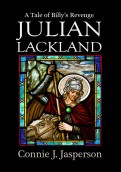 But I took that incoherent mess apart, and over the next ten years, it became three books: Huw the Bard, Billy Ninefingers, and Julian Lackland.
One rule they tell you at NaNoWriMo is never to delete and don’t self-edit as you go along. This is all strictly stream-of-consciousness, so write how it falls out of your head. That was hard for me, but eventually, I got into the swing of things.
My rules for NaNoWriMo:
- Write at least 1,670 words every day. Technically, it’s three more words than the pros suggest, but it gives me a little cushion and takes about 2 hours. I’m not fast at this.
- Write daily whether you have an idea worth writing about or not. Write that grocery list if you have nothing else. When stuck, I work on my characters’ personnel files, visualizing them as people I might want to know. Every word counts toward your ultimate goal. We will talk about my approach to writer’s block next week.
 It helps to check in on the national threads each day. Look at your regional threads on the national website to keep in contact with other local writers. You will find out when and where write-ins are scheduled.
- Be brave! Attend an in-person write-in or join a virtual write-in at NaNoWriMo on Facebook. The company of other writers keeps you enthused about your project.
- Try NOT to self-edit as you go. Just get that story down from beginning to end.
- Delete nothing. Passages you want to delete later can be highlighted, and the font turned to red or blue so you can easily separate them later.
- Remember, not every story is a novel. If your story ends, draw a line at the bottom of the page and start a new one in the same manuscript. You can always separate them later; that way, you won’t lose track of your total word count.
- Update your word count every day. It’s an honor system, but you get little badges for updating every day and achieving specific goals. One badge is for updating your word count more than once in one day. I try to earn all the badges, and most years I do.
In 2015, I took a different path from the usual novel-in-thirty-days approach. I named my project November Tales. I suffered from a bout of pneumonia and worked from my bed for most of the month. Even so, I managed 42 short stories, all fueled by Nyquil and desperation, totaling 107,000 words.
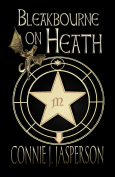 Included in this mess were ten dreadful poems, along with chapters 7 through 11 of Bleakbourne on Heath.
The following year began the same, this time with a severe case of bronchitis. I named my project November Tales 2016 – 30 Days of Madness and Pot Pies. I started by writing short stories, flash fiction, drabbles, and poems. Within five days, I was writing the first draft of a novel and managed to get 90,000 wonky, misspelled words.
That novel is still in the first draft stage, but I intend to finish it in this year’s NaNo rumble.
If you choose to join this writing free-for-all, go to www.nanowrimo.org and sign up! Pick your name, start your author profile, and look up dragon_fangirl (that’s me). Add me as your writing buddy, and I will be part of your writing posse, cheering you on when you need a morale boost.
 If you haven’t heard of this before, it’s a worldwide event that happens in November. Each year thousands of people in all parts of the world dedicate themselves to writing a 50,000-word narrative in only thirty days.
 The first roadblock happens when reality sets in and the writers realize that it is work.
 But by November 30th last year, 70 writers out of the 175 in our region had made it to the 50,000-word mark, 3 made it to above 80,000, and 1 exceeded 100,000 words.
 But I got side-tracked. On day 5, I thought about an artifact’s origin that has a role in my still-unfinished novel. 80,000 words later, that bunny trail had become a novel, The Ruins of Abeyon.
 Succeeding in writing even a short story gives many authors the confidence to continue. In their case, NaNoWriMo is about writing and completing a novel they had wanted to write for years, something that had been in the back of their minds for all their lives.
 Over the next few weeks, we will focus on laying the groundwork for our novels so that we will be ready and able to write when November comes. Much of what I will be discussing has emerged from our experience and comes from my co-ML Lee’s prep work as much as from mine.


 Life in the Realm of Fantasy