
We have two weeks to go to November 1st. If you are planning to participate in a writing quest with a specific goal, now is a good time to consider the world in which your prospective story might be set.
 I like to sit somewhere quiet and let my mind wander, picturing the place where the opening scene takes place.
Is it indoors? Are we out in the wild? How can I write this? A few notes about my thoughts will help.
A good way to develop the skill of writing an environment is to visualize the world in your real life. When you look out the window, what do you see? Close your eyes and picture the place where you are at this moment. With your eyes still closed, tell me what it’s like.
If you can describe the world around you with your eyes closed, you can create a world for your characters.
The plants and landscape of my fictional world are partly based on the scenery of Western Washington State because it’s wild and beautiful, and I’m familiar with it. The wild creatures are somewhat reality-based but are mostly imaginary.
Remember, we don’t have to immerse ourselves immediately. All we’re doing is laying the groundwork, ensuring plenty of ideas are handy when we start writing in earnest on November 1st.
Religion is a large part of my intended story, and some things are canon, as the first book in the series was published in 2012. The tagline for this series is “The Gods are at War, and Neveyah is the Battlefield.” The war of the gods broke three worlds, drastically changing the landscape of Neveyah and offering endless opportunities for mayhem.
 The novel I intend to finish this year is set at the end of the first millennium, while last year’s effort was set in the second century after the cataclysm canonically known as the Sundering of the Worlds. This means the world is very different. The forests and wildlife have had a thousand years to rebound, and while some areas are still struggling to recover, most of the west is lush in comparison.
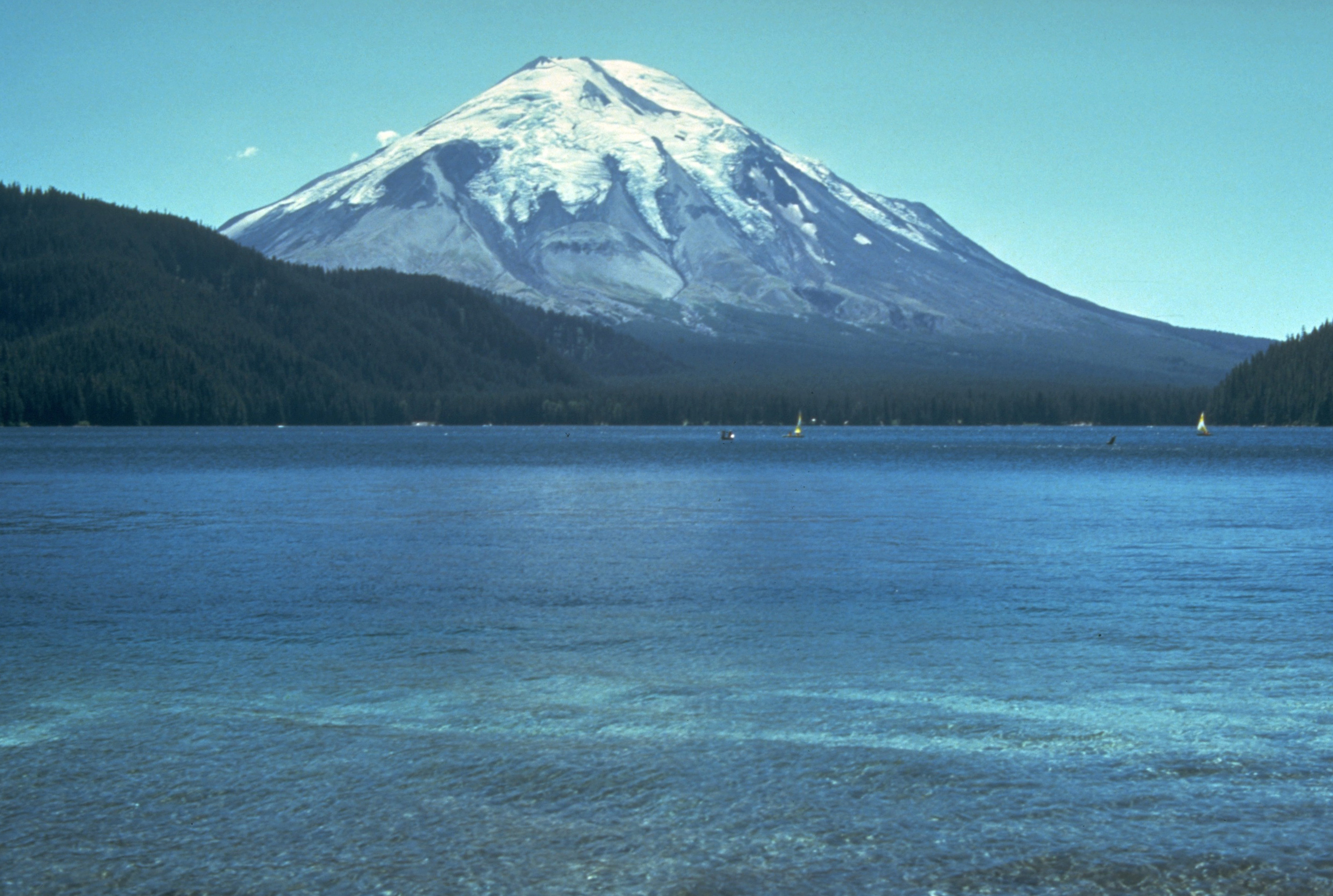
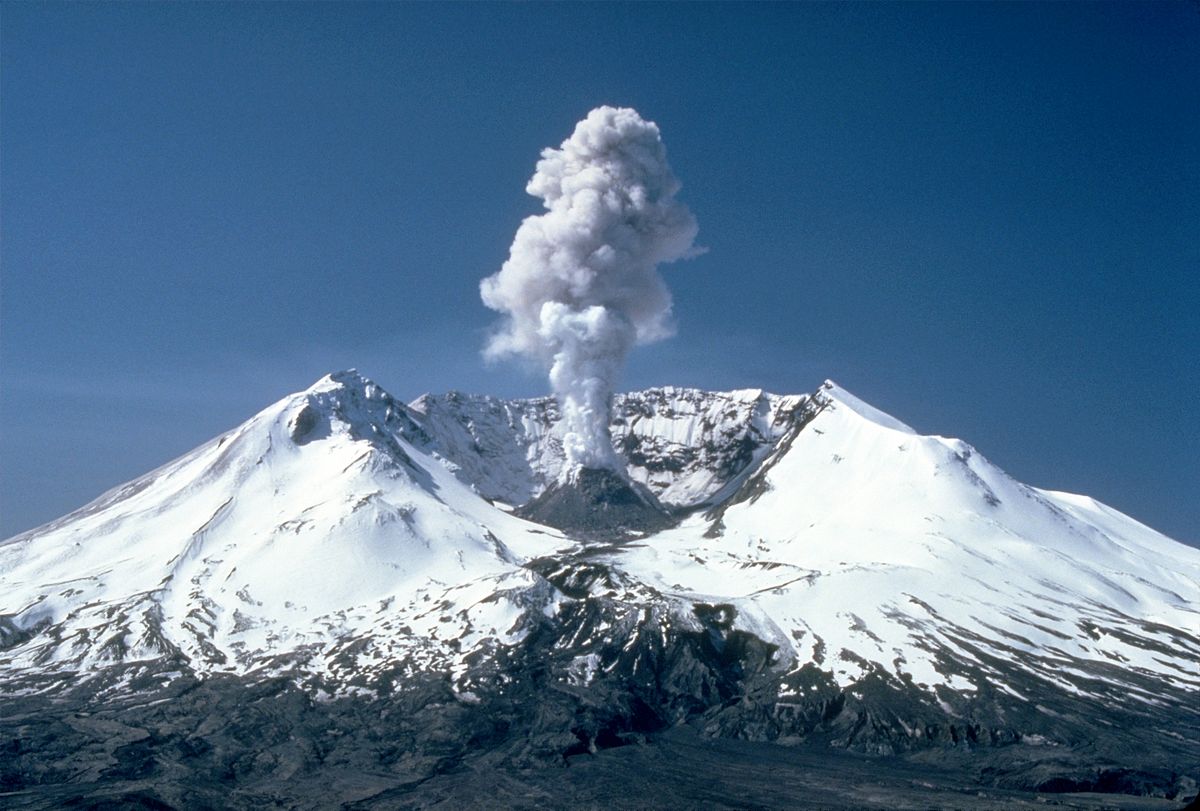 I live only sixty-five miles north of Mount St. Helens, so I have a good local example of how things look after a devastating event. I also can see how flora and fauna rebound in the years following it. Mount St. Helens – Wikipedia
Even if ecological disasters, technology, or religion aren’t the center of the plot, they can be a part of the background, lending color to the world. In Neveyah, my fictional world, the Temple of Aeos trains mages and healers who are then posted to local communities where they serve the people with their gifts.
Those communities are autonomous as the Temple doesn’t run them, but just as in real life, somebody is in charge of running things. In Neveyah, a council of elders governs most towns and cities, and the Temple is run the same way. We humans are tribal. We prefer an overarching power structure leading us because someone has to be the leader.
We call that power structure a government.
 When you create a fictional world, you create a culture. As a society, the habits we develop, the gods we worship, the things we create and find beautiful, and the foods we eat are products of our culture.
What does the outdoor world look and smell like? Mentioning sights, sounds, and scents can show the imaginary world in only a few words.
What about the weather? It can be shown in small, subtle ways, making our characters’ interactions and the events they go through feel real.
Once you have decided on your overall climate, consider your level of technology. Do some research now and bookmark the websites with the best information.
- A note about fantasy and sci-fi food: climate and soil types limit the variety of food crops that can be grown. Wet and rainy areas will grow vastly different crops from those in arid climates, as will sandy soils and clays versus fertile loams. Look up what sort of food your people will have available to them if your story is set in an exotic environment.
I will be pantsing it (writing stream-of-consciousness) for the month of November, which means I will be writing new words every day, connecting the events I have plotted on my storyboard. I never have time to think about logic once I begin the challenge, so the storyboard is crucial to me.
 To show a world plausibly and without contradictions, we must consider how things work, whether it takes place in a medieval world or on a space station. Don’t introduce skills and tech that can’t exist or don’t fit the era.
 For instance, blacksmiths create and repair things made of metal. The equivalent of a medieval blacksmith on a space station will have high-tech tools and a different job title. Readers notice that sort of thing.
Society is always composed of many layers and classes. Rich merchant or poor laborer, priest or scientist—each occupation has a place in the hierarchy and has a chain of command. Take a moment to consider where your protagonist and their cohorts might fit in their society.
Maybe your novel’s setting is a low-tech civilization. If so, the weather will affect your characters differently than one set in a modern society. Also, the level of technology limits what tools and amenities are available to them.
What about transport? How do people and goods go from one place to another?
Many things about the world will emerge from your creative mind as you write those first pages and will continue to arise throughout the story’s arc.
Consider making a glossary as you go. If you are creating names for people or places, list them separately as they come to you. That way, their spelling won’t drift as the story progresses. It happened to me—the town of Mabry became Maury. I put it on the map as Maury, and it was only in the final proofing that I realized that the spelling of the town in chapter 11 was different from that of chapter 30.
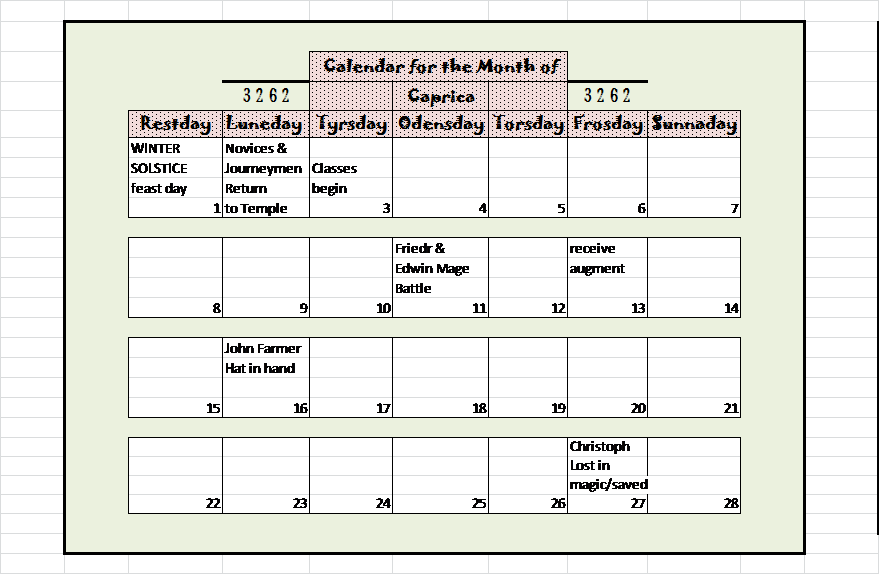
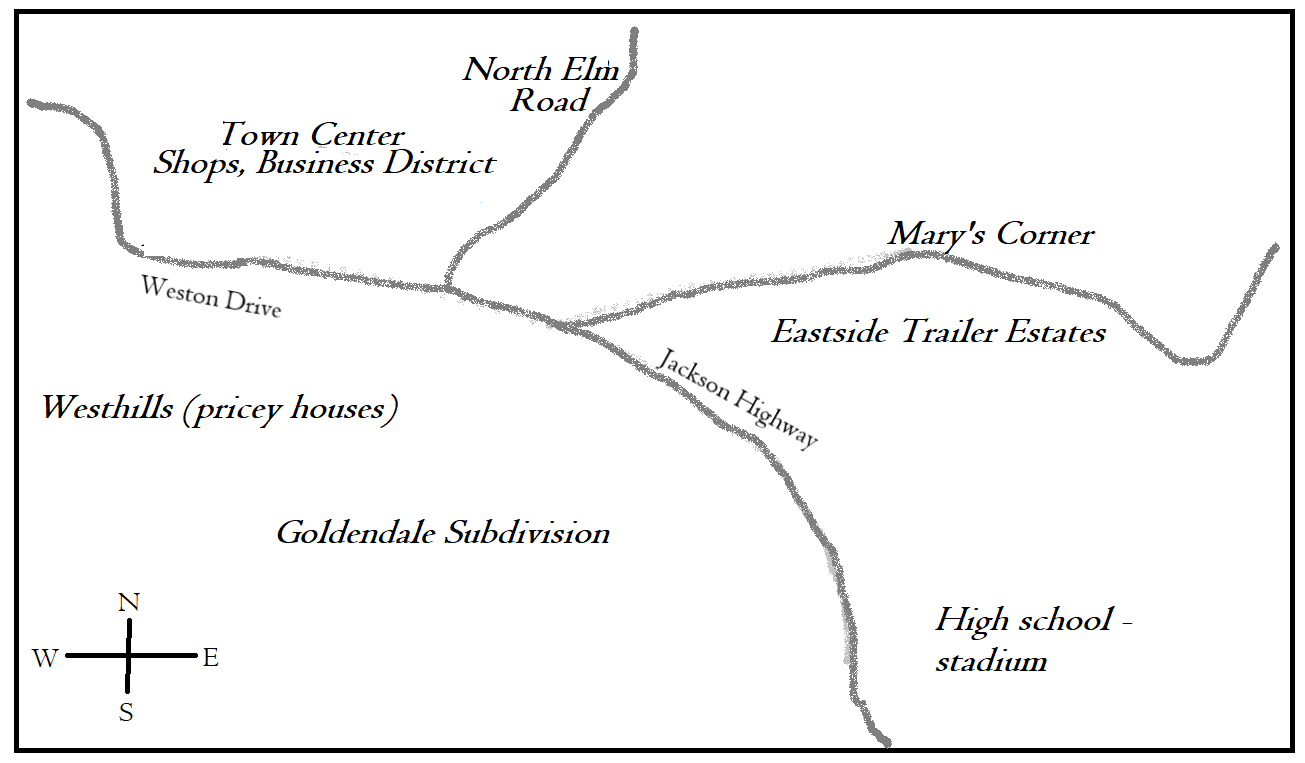 A hand-scribbled map and a calendar of events are absolutely indispensable if your characters do any traveling. The map will help you visualize the terrain, and the calendar will keep events in a plausible order.
Next week, we’ll take another look at plotting so that we have a starting point with a good hook and a bang-up ending to finish things off.
Credits and Attributions:
Wikimedia Commons contributors, “File:MSH82 st helens plume from harrys ridge 05-19-82.jpg,” Wikimedia Commons, https://commons.wikimedia.org/w/index.php?title=File:MSH82_st_helens_plume_from_harrys_ridge_05-19-82.jpg&oldid=912891712 (accessed October 13, 2024).
Wikimedia Commons contributors, “File:St Helens before 1980 eruption horizon fixed.jpg,” Wikimedia Commons, https://commons.wikimedia.org/w/index.php?title=File:St_Helens_before_1980_eruption_horizon_fixed.jpg&oldid=575896084 (accessed October 13, 2024).
 Talking about the craft of writing is soothing, something with solid rules. When everything else is chaos, writing is there, offering safety and escape.
 First, is this character someone the reader should remember? Even if they offer information the protagonist and reader must know, it doesn’t necessarily mean they must be named. Walk-through characters provide clues to help our protagonist complete their quest, but we never see them again. They can show us something about the protagonist and give hints about their personality or past—but when they are gone, they are forgotten.
 Novelists can learn a lot from screenwriters about writing good, concise scenes. An excellent book on crafting scenes is
  I took this absurdity to an extreme in
  One final thing to consider is this: how will that name be pronounced when read aloud? You may not think this matters, but it does. Audiobooks are becoming more popular than ever. You want to write it so a narrator can easily read that name aloud.
 Despite my experience of reading fantasy books aloud to my children, it didn’t occur to me that the names were unpronounceable as they were written. We ironed that out, but that hiccup taught me to spell names the way they’re pronounced whenever possible.
 Time interests me because I mostly write fantasy, although I write contemporary short fiction and poetry. Fantasy, and all speculative fiction, relies heavily on worldbuilding, and managing time is a facet of that skill.
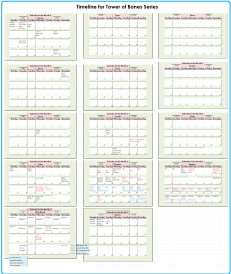 HERE is where I confess my great regret: in 2008, a lunar calendar seemed like a good thing while creating my first world.
 In an even worse bout of predictability, I went with the names we currently use when I named the days, only I twisted them a bit and gave them the actual Norse god’s name. (The gods and goddesses of Neveyah are not Norse.)
 I LEARNED from my mistakes – the timeline for the Billy’s Revenge 3-book series, Huw the Bard, Billy Ninefingers, and Julian Lackland, uses the familiar calendar we use today.


 Life in the Realm of Fantasy