Tag Archives: writer life

#NovelNovember has ended, my book isn’t done, and once again, I’m clueless #writing

Today is the first day of December 2025. Over the last 30 days, I have written more than 50,000 words to finish the plot of a novel that is ½ of a duology. The story is too big and would make a giant doorstop of a book, so I am splitting it.

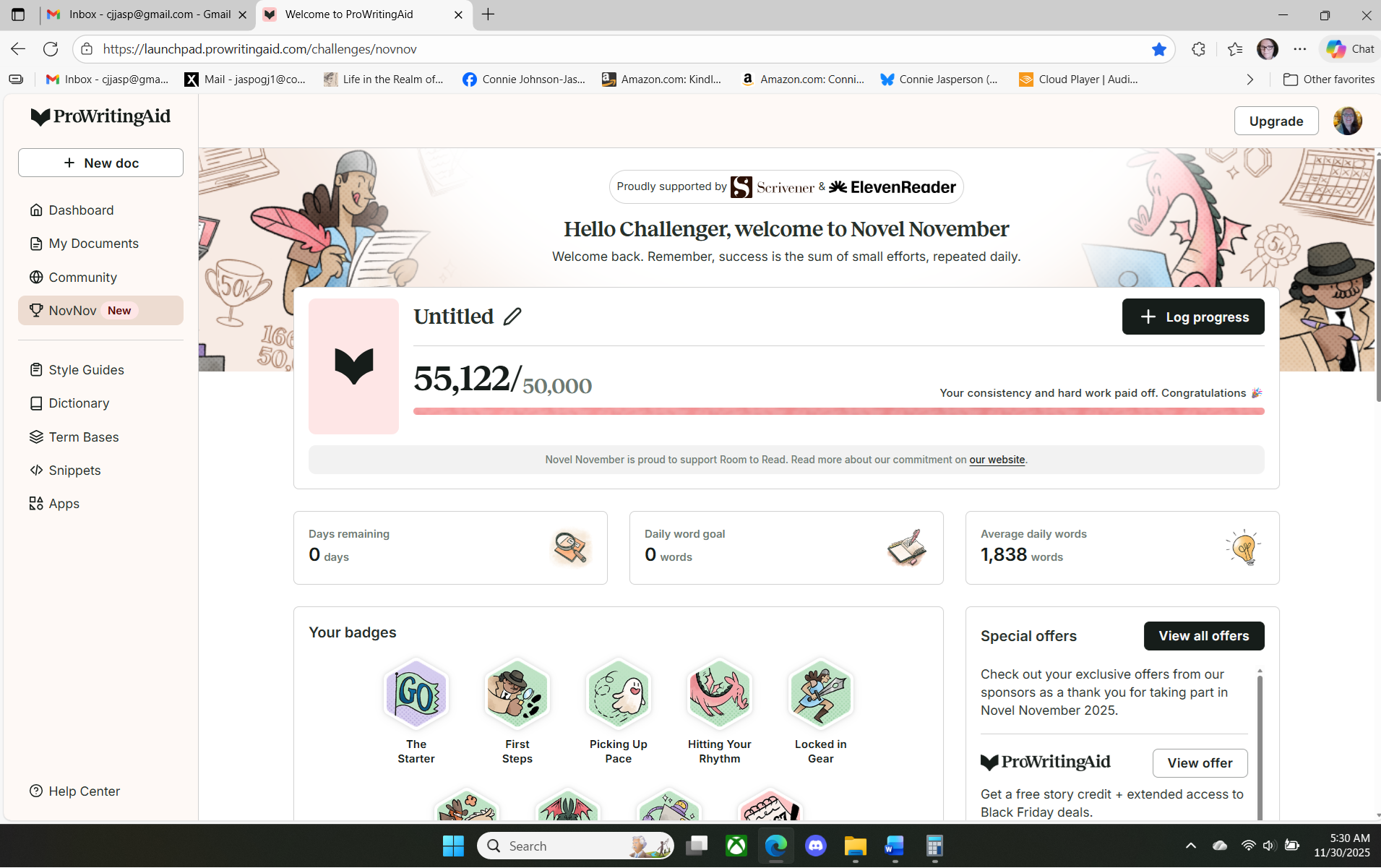
Book one is a complete first draft and desperately needs revising, but book two has barely begun. Here is the screenshot of my ProWritingAid’s NovelNovember dashboard yesterday, after I added my final wordcount for November.

I feel good about this experience, and I’ll probably do it again if they offer it next year.

As to my novel, I know how this story is supposed to end, as it is canon. The history mentioned in the series tells us that my protagonist is the founder of the Temple, and the College of Mages and Healers. The story told in these two books will end once my lovebirds clear the final hurdle to achieving those goals.

I have written the first draft of six complete chapters. It’s a good start in the main manuscript, so that is now at 16,010 words. I am now brainstorming the middle section in a separate manuscript. As of the time I am writing this post, that involves 39,112 words of thinking aloud and going back to the other books to ensure I don’t contradict myself.

Since I am rereading the main series that was published in my early days as a writer, I have found much that needs re-editing. Because I am an Indie, I can (and will) re-edit the entire series. I will do that whenever I am stalled on my current manuscript.

Unfortunately, the results of my written thinking aloud are good ideas that often don’t work for what I envision as the final product.

But they may become short stories set in that world. In the meantime, I have to make the answers to these two questions drive the plot:

  1. This is a continuation of the story that began in the previous book, so what do the characters want now that some of their goals have been achieved?
  2. What stands in the way of their achieving the final goal of defeating the Bull God’s stolen champion?

Thus, the background writing is moving along. I now have two major events to choreograph plot arcs for, and then I can connect the dots between my chosen scenes and give it an upbeat ending.

I do my mind-wandering in a separate document until I have concrete scenes. That brainstorming is productive because some of those rambles will become chapters.

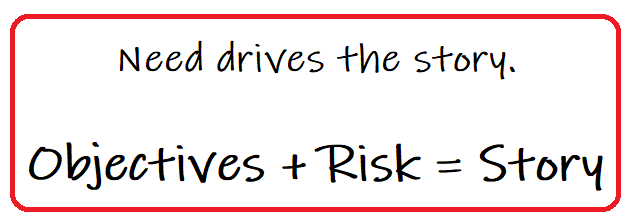
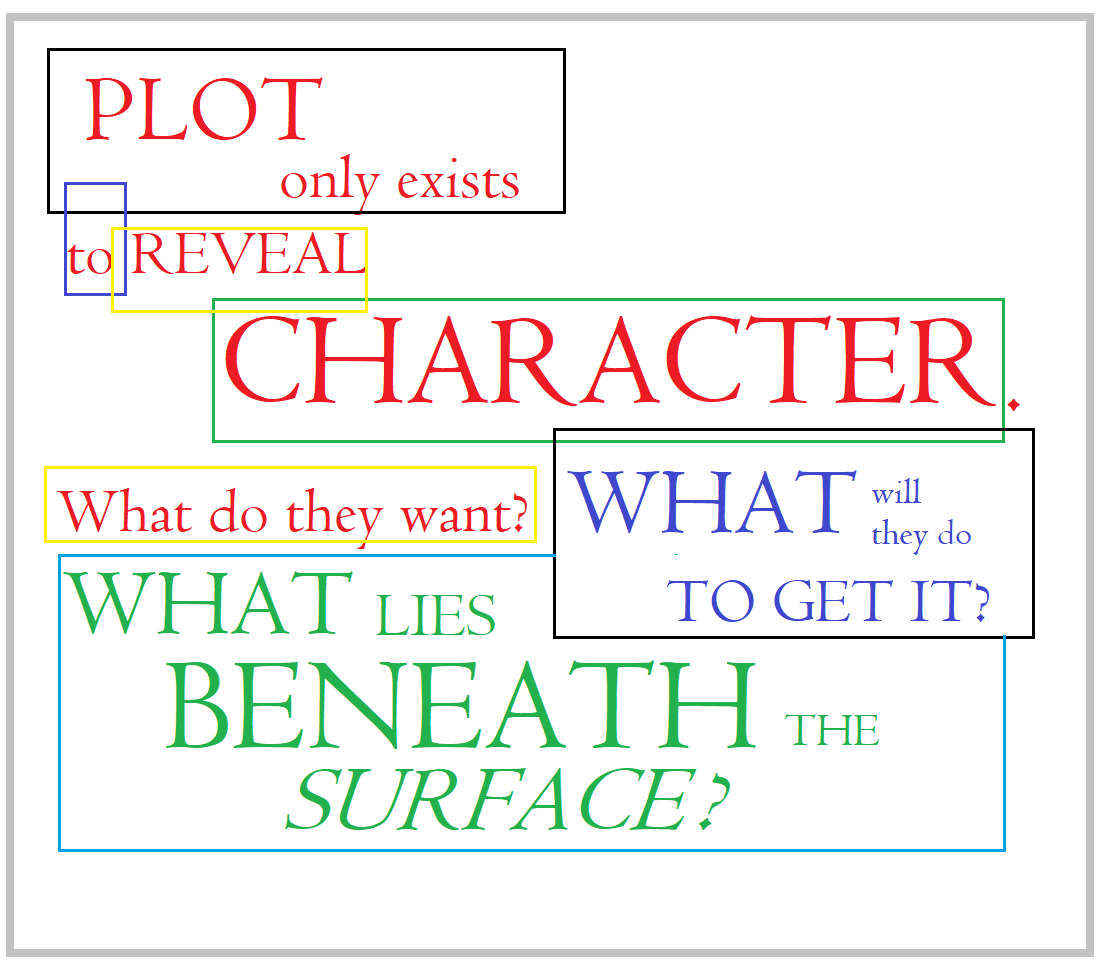
The premise of books set in this world is that the gods are at war, and the world of Neveyah is the battleground. The gods cannot interact directly with each other or undo another god’s work, so the people of their worlds are the playing pieces, albeit pawns with free will and the option to struggle against their fate.Need drives the story. Objectives + Risk= StoryMy heroes and villains both see themselves as the protagonist because the fate of their world is at stake. There must be one god for each world, and the Bull God has imprisoned his brother in an attempt to steal his brother’s wife. He can’t kill Ariend but intends to claim Aeos and add their worlds to his. That was the Sundering of the Worlds, a catastrophic event nearly destroying three of the eleven worlds.

Now, a thousand years have passed and he is once again on the move. If the protagonist wins, the Goddess of Hearth and Home will retain control of Ariend’s prison and the world Aeos created. Conversely, if the antagonist wins, the Bull God will claim it all, and the imbalance of the worlds will once again threaten the stability of their universe.

So, now I’m plotting the midpoint crisis. An important festival and a council of elders is held. My protagonist must work to sway the skeptics in his direction. In their personal arcs, he and his wife must overcome their own doubts and fears and make themselves stronger.

Then I must work on fleshing out the enemy. This mage is not a terrible person. Once a devoted follower of Aeos, he triggered a mage trap and was forcibly converted to the enemy’s side.

Now he is under an unbreakable spell and his loyalty is given to the Bull God, the Breaker of the Worlds. The god manipulates him. My antagonist’s motives stem from his imposed conviction that the Goddess is weak and that the tribes have strayed from the traditions that made them strong.

My antagonist is featured three times briefly in the first half of this tale. That story is devoted to the protagonist surviving several events that give rise to the tales that turn an ordinary warrior-shaman into the legendary hero the children’s books say he was. Now, I must write my antagonist with empathy because his fall from grace was a tragedy and a terrible personal loss to our protagonist.

Both intend to prevail at any cost. What is the final hurdle, and what will the characters lose in the process? Is the price physical suffering or emotional? Or both? This is an origin story, so history tells me who succeeds. But what is the personal cost of that success?

I know my protagonist and antagonist will meet in a large battle, face to face. Several people we love will die, enabling the desired ending. I know who must die, and I have an idea of where that will happen, because whenever I have a thought about any aspect of this story, I write it down.

By the end of this book, all the threads that began in book one will have been drawn together and resolved for better or worse.

In real life, people live happily, but no one lives a deliriously happy-ever-after. Thus, the ending must be finite and wrap up the conflict. The future must look rosy for my protagonist and his companions.

Thank you all for listening to me rant about my work. What is your project and how is it progressing? What has been your greatest struggle?

Sometimes writing is a lonely craft. It helps to have a writing group to talk to. They help me reframe ideas in a way that works better than my original plan. And when it gets to the beta reading stage, they will be there with good suggestions.

5 Comments

Filed under writing

#NovelNovember: writing in the blender of life enables world building #writing

I have said this before, but life is like a blended margarita from the ice cube’s point of view. Every now and then, Ice Cube gets a little cocky, cruising along, thinking “The s**t-storm is over! Everything is going to be fine.” Invariably, that’s when the powers-that-be turn on the blender.

Let’s be honest. This is real life.

The s**t-storm is never really over. It’s just paused and lurking in the shadows, waiting to jump-scare you, turning the blender of life on … then off. On – off. The powers-that-be love a good blended margarita, so buckle up, Ice Cube.

This is why I write fantasy. Reality can be processed more easily when it’s set in a mythic alternate universe, one where the fundamental laws of physics allow the chaos to be tamed through perseverance and a light application of plot armor.

My personal plot armor has worn thin lately.

My husband suffers from late-stage Parkinson’s, with the accompanying dementia and myriad other health issues, and last week, emergency surgery. All is well for now, but the underlying problems are not going away.

The last two weeks have been difficult here. I spend three hours writing first thing in the morning. At nine a.m., I put on my “leaving the house” clothes (as opposed to my “hanging around the house” clothes) and don my raincoat. Then I make my way around town, accompanied by driving rain and clogged drains, getting groceries and taking care of other obligations. Daily, I drive through the gloom and poor visibility, visiting my husband, whether he is in the hospital or at the Adult Family Home.

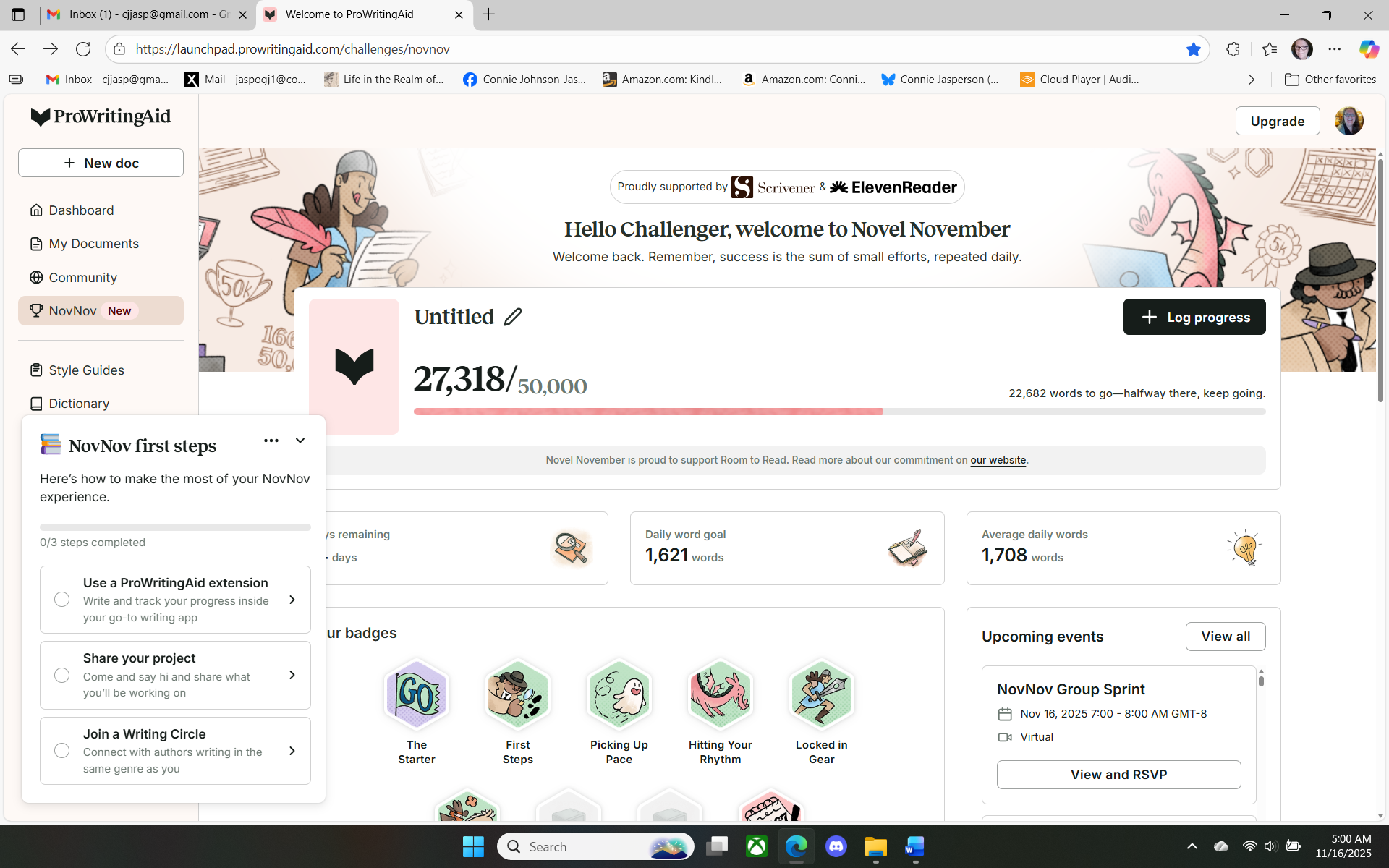
During these two strange and chaotic weeks, I have written 27,318 words, according to the word counter at ProWritingAid’s Novel November challenge. Some of those words might even advance the plot, but I suspect most are just mental fluff.

For the writer of any fiction, real life provides fodder for world-building. Look around you and take what you know, and reshape it into the world of your imagination. Take the time to write a paragraph or two of description and save it in a file for random world-building. You might not use that environment today, but a story may come along that needs it.

If I were to write a page detailing the November weather in my town, I would open a new document and write what I see as a journal entry. I would title that document Scenes_from_November_Storms2025. That title tells me what is detailed, so later, when I need ideas for a day filled with blue skies over a wide field of daisies and birdsong, I don’t have to open file after file and get frustrated.

What would I write? I would write it as if it were a conversation with myself.

The streets everywhere are lined with brown, soggy, windblown cairns built from the corpses of leaves. Wind and torrential rain have stripped many trees naked. The tattered remains of their finery cover the sidewalks, making walking slick and a bit tricky. They fill gutters to the curb, blocking street drains and forming long, soggy, decomposing ridges down the centerline of streets and alleys.

The above paragraph is true. The street-sweeper trucks can’t keep up with the leafy onslaught.

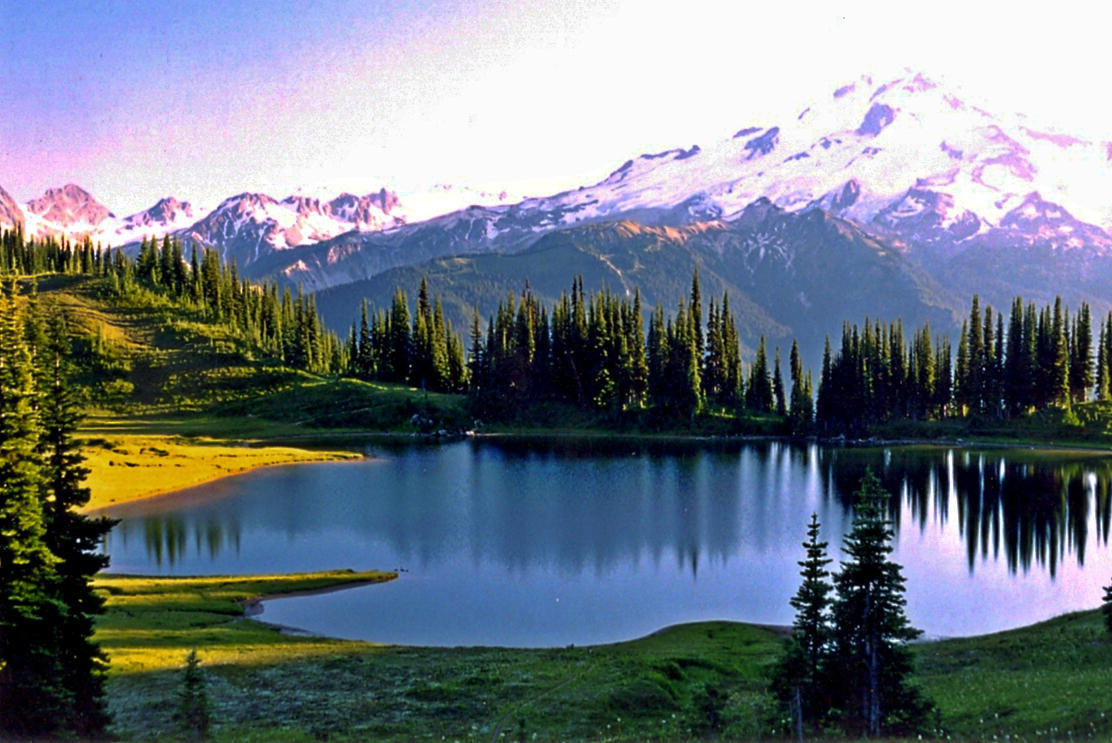
This, I suppose, is the downside of living on the lush green side of the continent. Storms roar across the Pacific and stop here, heavy black clouds blocked by the high Cascade Mountain Range, dumping rain on the lowland cities.

One must be careful when traveling, always alert for surprises. Your vehicle “gets a bit loose” when you hit that innocent-looking puddle at 60 miles per hour. Jack-knifed semi trucks shutting down the freeway during each storm give evidence of that truth. Pooling water on the interstate, combined with the actions of inexplicably stupid drivers, has caused many wrecks over the last month.

I drive the slower city streets as I have no need to take the interstate. Even there, at speeds slower than the posted limit of 25 mph, driving through a surprise puddle can liven things up. The adrenaline almost counteracts the dark, depressing scenery.

Pumpkin Soup with Garlic Croutons

Once I am home and nursing a cup of hot tea, the rain pounding on my windows feels a little cozy. Pumpkin soup with garlic toast for supper pushes back the gloom, cheery comfort food made better when followed by an evening spent with a good book.

Sometimes, that good book is the one I am working on. Some evenings I feel rested enough to make a second stab at writing, adding another 700 to 1,000 words to my daily word count.

Currently, I have no need in my novel for a world covered in moldy leaves or parking lots ankle-deep in water. But someday I might, and I will have that brief description to boost my memory. If needed, I’ll use it to create the scenery and atmosphere that will serve as the backdrop for a short story or novel.

For now, drier days are on the horizon. Spells of sunshine will return, and despite the worry, darkness, and gloom of these last few days, life is good.

I will continue to write my fantasy stories and draw inspiration from the real world. And I will continue to log descriptions of the world around me for later use.

And I will leave you with an image of the beautiful mountains that halt the storms over the lowlands. This scene was found on Wikimedia Commons and is titled Sunset at Image Lake on Miners Ridge in the Glacier Peak Wilderness by Ron Clausen, August 2001.

It’s hard to justify complaining about the dreariness and storms of November when we of the Pacific Northwest are surrounded by such beautiful scenery the rest of the year. It’s times like these that make us appreciate the bounty that lies a few hours’ drive away.


Credits and Attributions:

IMAGE: Screenshot of ProWritingAid Dashboard © Connie J. Jasperson 2025.

IMAGE: Pumpkin Soup and Garlic Croutons © Connie J. Jasperson 2025.

IMAGE:  Sunset at Image Lake on Miners Ridge in the Glacier Peak Wilderness by Ron Clausen, August 2001. Wikimedia Commons contributors, “File:Image Lake Glacier Peak Wilderness.jpg,” Wikimedia Commons, https://commons.wikimedia.org/w/index.php?title=File:Image_Lake_Glacier_Peak_Wilderness.jpg&oldid=484627222 (accessed November 16, 2025).

4 Comments

Filed under writing

My Stressless #writinglife

So, today is the first day of November, and NaNoWriMo has begun. But November is also the month of cooking, my other hobby. And it’s also a month of doctor appointments – go figure.

MyWritingLife2021On Monday, I had to drive to Seattle to take the hubby for a consult with a neurosurgeon. Getting to the doctor was fine. It was a matter of spending one hour sitting in traffic trying to leave Olympia and another hour of actually rolling forward once we made it past the Nisqually River. I had planned ahead for that, so we were on time. The upshot is no back surgery for him unless there is no other option, as Parkinson’s patients do very poorly after surgeries.
Which explains his cognitive difficulties after the hip replacement. Surgery Complications for People with Parkinson’s | APDA (apdaparkinson.org)

However, the neurosurgeon explained some of the non-surgical options which may help. Surgery is a last resort, and hopefully, one we can avoid.

The trip home was easy once I found an entrance to the southbound lanes of I-5. I found all sorts of options to go north, but Olympia is 65 miles south of Seattle, so north was the wrong direction. I finally went north, passed a southbound onramp, exited, and doubled back to that street. An hour later, we were back in Olympia.

30 days 50000 wordsSo, what am I writing today? I’m working on the second half of a novel I began writing seven years ago, so all the world-building and character creation has happened. The plot for this half is evolving. I know the ending, and over the next thirty days, my characters will take me from this high point in the middle, through several hurdles yet to be determined, to that final victory.

I expect you’re wondering how a novel goes half-finished for seven years—I sometimes wonder too, but it happened, so there you go. During that time, I wrote a novel that is nearly ready to be published. I also reworked two existing novels into one and published it (Shadows of Redemption). Also, I finished my alternate Arthurian mashup, Bleakbourne on Heath, finally getting it published.

I can write quickly during NaNoWriMo, but revisions usually take several years.

My half-finished novel was set aside when I was stricken with the idea for my forthcoming book, The Ruins of Abeyon. If all goes well with the beta read and Irene’s final edit, Ruins will be out this summer.

Our new furniture has arrived, and we no longer live like college students. Dining on a card table and sitting in a folding saucer chair was fun for the first week or two, but it wore thin after four months. Hauling my 70-year-old self out of the chair meant for teenagers was not a pretty sight.

desk_via_microsoft_stickersI’m settling into the new office. In my old house, my ramshackle desk was in the Room of Shame, a jumbled mess of a storeroom. My new desk is not duct taped together and has the right amount of storage for what I need.

All in all, this office has the best ambiance of any room I’ve ever had. Writing is easy here, and I hope this novel will fly out of my head and be finished in about 55,000 words.

Unless I am suddenly stricken with a new novel.

(Saints forbid, because I think I’m really going to finish it this time.)

Our apartment has very little storage, so I am gradually unpacking. The shelves do their appointed tasks, and the extra storage is ideal. Even so, some of what I had thought we could keep will have to go.

office chairToday, the office/guestroom walls are barren, but I hope to have all the family pictures hung by the end of this week. The hide-a-bed sofa and side chair make a pleasant conversation area or guest room, whichever is needed. All I lack is my new desk chair, which is on its way here from Norway. (Yes, I splurged on a Stressless desk chair since I spend most of my time sitting in front of my computer.) It should be here in a week or two, and I can hardly wait as my current desk chair loses its appeal after an hour or so.

November is not just for writing here at Casa del Jasperson. My oldest daughter and her family will be with us for Thanksgiving this year, so a certain amount of food preparation will happen. And yes, the vegan will roast a turkey for her son-in-law, along with all the trimmings. Thanksgiving falls on Thursday, the 23rd, so my pre-cooking will be done over the course of that week. Anything that can be cooked in advance will be, and writing will happen as always.

food and drinkWhat are some of my planned treats? Cranberry and walnut shortbread, for one thing. Shortbread is so easy and affordable to make that it always surprises me when people don’t. I have veganized all of my old traditional recipes, so everyone can sneak a treat now and then.
November is one of my favorite months. I connect with the local writing scene, meet new authors, and make lots and lots of comfort foods. I feel incredibly fortunate to be at this place in my life. Happiness means something different for each person, but for me, it’s a comfy home with my husband, a good space for writing, and food with family and friends.

So, on this first day of NaNoWriMo 2023, may you find a little joy, and may your words flow freely!

4 Comments

Filed under writing

Life, Parkinson’s, and writing to an outline #amwriting

Writers live one life on paper and another in the real world. No matter what genre we write in, the real world can be more challenging to navigate, more confusing, and more important to enjoy to its fullest.

MyWritingLife2021We have gotten a grip on my husband’s battle with Parkinson’s Disease. We can mitigate his symptoms with the right diet, exercises, and medications, simple things that help no matter what your underlying health issues are.

While rough terrain and loose soil or sand are a problem, he can still go for long walks and enjoy the natural world. We choose our paths carefully and have found that bike trails and running paths are excellent places to walk.

Our small town has a large park built around an old flooded quarry. The trail through there follows an old railroad grade and is a beautiful place to walk year-round.

As I have mentioned, we are preparing to sell our house and move twenty miles north, back to the city where we were raised. We need to be where there is good public transportation and easy access to our health care providers.

We’ve been in this house since 2005, and if I had one wish, it would be to pick our house up and move it to where we need to be. We have made many memories in this house, and it’s what our grandchildren think of as home.

When we bought this house, it was the height of the housing bubble, and for many years we owed more on the house than we could have sold it for. Now is the right time to put the house on the market. It’s a good time to embark on our new adventure.

We will indulge ourselves with plays and concerts, going to parties at night – things we haven’t been able to do since the doctor banned my hubby from driving. I don’t drive at night because of my night blindness, so he always drove after dark.

In the town where we plan to move, the streets are well-lit by streetlamps, and I have no trouble seeing even in the rain. But out here in the country, the roads are pitch black. Right now, we need to be home before sunset.

This week we are making another foray, possibly getting on the list for the apartment we want. We have our eye on three places, each with different amenities. No matter where we go, we need two bedrooms, as one will be the office.

Parkinson’s Disease has made us more aware of what truly matters in life. I’m turning seventy this June, and I feel no different than when I was thirty. I don’t have as much crazy energy, but I’m still that woman. Just a little wiser.

And slower.

And Greg is still that man. His diagnosis has motivated us to make the most of life, and in our new town, we will have plenty of opportunities to do just that.

yoga04182023LIRFLSVT BIG therapy has taught my otherwise quiet and reserved husband to live large and loud. Actually, anyone can benefit from these exercises.

I have found that the more I accomplish on the packing up and sorting front, the better I write. I’m not the world’s best housekeeper. Dust is dealt with when it becomes a problem, but I cannot handle clutter. I need my space to be visually organized, or I can’t focus.

Unfortunately, clutter is the name of the game at this point. We take a carload of objects to donate and then pack a few things we don’t want to part with. Then we stack the boxes in this corner (if they are keepers) or that one (if they are going to charity).

Things that can go to the unheated storage unit will be taken there, but pictures and certain documents must be stored in a dry heated space.

On the good side, our daughter had her piano moved to her home sixty miles north of here, which gave us a place to stack those boxes that can’t go to the storage unit.

Right now, in my writing life, my work-in-progress is at a place where I am trying to push the story forward. Below is where I am at in my outline – the crossed-out scenes have been written, and I am working on the next one, which will be crossed out when I move on to the chapter that follows this section.

Second plot point in Lenn’s Story

  1. Lenn goes to the port first, then walks back up the High Street, past the Temple complex, and to the East gate.

  2. Nutter questions him about the Tax Man. Lenn explains that the man isn’t from the Temple but is a thief.

  3. Lenn, Mikel, and Callie go to the Portside Inn, get more info on the Tax Man. The local ale hound, Rahlie, is a little too interested in Callie.

  4. Lenn steps in before she can zap the idiot with her magic. Initially upset with Lenn, Callie relaxes when he tells her he doesn’t want anyone to know she is more than just a healer. He wants her other abilities to be a secret weapon.

  5. New chapter: The following day Salyan arrives with the recruits. His drama ensues.

  6. Lenn convinces Salyan to return to glassmaking despite his father’s wishes, and it ends well. Irina asks Salyan to walk to the Odensday market with her.

boxLIRF04182023Mornings usually find us wondering what we can get done that day, and evenings are often spent contemplating what could have gone better. I write whenever I can, and often end up rewriting something that seemed like a good idea at first, but which no longer works.
But no matter how the day goes, we laugh at the silliest things. And that is what life should be – full of laughter and plenty of reasons to wake up the next day.

2 Comments

Filed under writing

Research and Development #amwriting

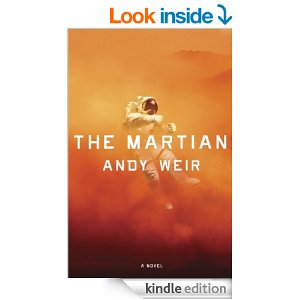
I love learning how other authors work. I recently watched a 2015 podcast, Adam Savage Interviews ‘The Martian’ Author Andy Weir – The Talking Room. This is a fabulous interview, where Andy explains his intense research for the bestseller, The Martian, and his writing process.

The MArtian Andy WeirAndy Weir is genuinely a nice person and is the best example of an inadvertent teacher that I’ve ever seen. This interview is a brilliant seminar on how to research and plot a book. He writes hard sci-fi with a heart, but the principles of creation are the same for any genre.
If you haven’t read The Martian, I have to say it is my favorite sci-fi novel of all time. DO PLEASE watch that interview—his method of writing and researching is genius.

Targeted research is crucial if you want your fiction to be plausible. Identify what you want to know, use the internet, ask an expert, and create a searchable file or database of information that backs up your assertions.

Once you establish the technological era you are writing in, you know what you need to research and how theoretical your narrative may need to be.

Here are some of my go-to sources of information. I’ve published this list before, but here it is again:

If you seek information about low-tech societies (the past):

My best source of information on low-tech agricultural (farm) life and culture comes from a book I found at a second-hand book store in Olympia in the mid-to-late-1980s. Lost Country Life by Dorothy Hartley is still available as a second-hand book and can be found on Amazon. This textbook was meticulously researched and illustrated by a historian who personally knew the people she wrote about.

I also discover a lot of information on how people once lived from the art found at Wikimedia Commons. Under the heading  Category: Painters from the Northern Netherlands (before 1830), you will find the brilliant works of the Dutch Masters, artists living in what is now The Netherlands.

These painters created accurate records of ordinary people going about everyday life. Their genre art depicts how they dressed and what was important to them in their daily lives.

Looking things up on the internet can suck up an enormous amount of your writing time. Do yourself a favor and bookmark your resources, so all you have to do is click on a link to get the information you want. Then you can quickly get back to writing.

Resources to bookmark in general:

www.Thesaurus.Com (What’s another word that means the same as this but isn’t repetitive?)

Oxford Dictionary (What does this word mean? Am I using it correctly?)

Wikipedia (The font of all knowledge. I did not know that.)

oxford_dictionaryTED Talks are a fantastic resource for information on current and cutting-edge technology.

ZDNet Innovation is an excellent source of existing tech and future tech that may become current in 25 years.

Tech Times is also a great source of ideas.

Nerds on Earth is a source of valuable information about swords and how they were used historically.

If you are writing a contemporary novel, you need to know what interests the people in the many different layers of our society. Go to the magazine rack at your grocery store or the local Big Name Bookstore and peruse the many publications available to the reading public. You can find everything from mushroom hunting, to culinary, to survivalist, to organic gardening. If people are interested in it, there is a magazine for it. An incredible amount of information can be found in these publications.

We all agree that while the early pioneers of science fiction got so much of our modern reality right, they also got it wrong. So, we can only extrapolate how societies will look in the future by taking what we know is possible today and mixing it with a heavy dose of what we wish for.

SpaceX

NASA

Digital Trends

If you write sci-fi, you must read sci-fi as that is where the ideas are. Much of what was considered highly futuristic in the era of classic science fiction is today’s current tech.

Ion drives and space stations are our reality but were only a dream when science fiction was in its infancy.

Think about it: your Star Trek communicator is never far from your side, and your teenagers won’t put theirs down long enough to eat dinner.

sample-of-rough-sketched-mapMAPS: If you are writing a story set in our real world, your characters will be traveling in places that exist in reality. You want to write the landmarks of a particular city as they should be, so bookmark google maps for that city. Even if you live there, make sure you write it correctly because readers will let you know where you have gone wrong.
GOOGLE EARTH is your friend, so use it!

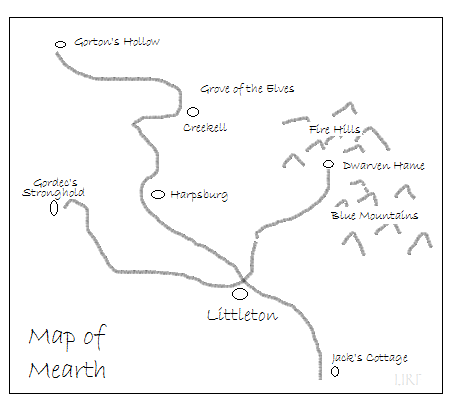
If you are writing about a fantasy world, quickly sketch a rough map. Refer to it to ensure the town names and places remain the same from the first page to the last. Update it as new locations are added.

Please, make sure your literary murders are done in a way that doesn’t fly in the face of logic. Do the research on poisons, knife wounds, and consider all the possible reasons why that particular murder wouldn’t work in reality. Then write a murder that does work.

Talk to police, talk to doctors, talk to lawyers–many are willing to help you with your quest for accuracy about their professions. Also, you can Google just about anything. Fads, fashion, phone tech, current robotics tech, automobile tech—it’s all out there.

We may be writers of fiction, but we are also disseminators of information and dreams. It’s a big responsibility!

Do the proper research, target it to your needs, and don’t allow yourself to be sidetracked by the many bunny trails that lead you away from actually writing.


2 Comments

Filed under writing

Winding up 2020: Random Thoughts on the Industry #amwriting

2020 has been a horror show in many ways. If I had written a novel based on a sketchy, random plot like this year gave us, no one would read it.

My review of 2020 is one star. The pacing was completely off. Just about the time I would begin to enjoy the year, some element of random weirdness was inserted just for shock-value. Overall, 2020 lacked believability. I found it difficult to sympathize with the main characters, possibly because they portrayed themselves as such outrageous caricatures.

All that aside, it’s been a good reading year for me. Being in lockdown for much of it has meant I had a lot of free time to devote to expanding my digital library.

I always review the books I enjoyed. I have mentioned before that for every book I feel good about recommending, I may have to read six that are just plain awful. I’m not only talking Indies here—large publishing houses publish many novels every year that are a waste of paper and digital space.

The problem goes beyond my not caring for the style or voice of the piece. Lack of proofreading and garbled sentences are problems in some. Two weeks ago, I read a traditionally published book where the editor didn’t catch a confusion between the words affect and effect, which meant the sentences the word affect was used in made no sense, “affectively speaking.”

Maybe a casual reader wouldn’t be bothered by that, but it jarred me out of the story.

I suggest looking at the first pages of a book by using the “look inside” option at Amazon and the other large online booksellers. The opening pages often show how awful or great a novel will be, so use that tool and don’t buy a book that you haven’t had a look at first.

Rushing to publish a poorly edited book isn’t limited to Indies. It happens all the time with traditionally published books, especially when the first novel in a series has had good success.

Some big publishers set impossible deadlines for the next book and race to launch what they hope will be a follow-up bestseller. However, because the authors were pushed to cough up a book prematurely, the resulting novels sometimes fail to live up to the hype.

The current state of traditionally published books is proof that the system is flawed. This last year, I read several books written by bestselling authors and published by the large publishing houses. These were novels I had anticipated and looked forward to enjoying but didn’t.

By the time I was halfway through them, it was clear the manuscripts were given a quick once over and pushed out the door, in a hurry to hit a hot market.

We have to consider our readers, who deserve the best you can give them. If you are just beginning in this craft, I have some suggestions, things I wish I had known thirty years ago.

Learn the mechanics of how to write in your native language. Grammar and punctuation are the traffic signals that keep your sentences and paragraphs from becoming traffic jams. This is a foundational skill every author must have, no matter what genre you write in.

Join a writing group and meet other authors, either in your local area or online. We grow and learn by talking to others in the industry.

Develop a thick hide. You must find an unbiased eye among your trusted acquaintances to read your work as you are writing it so you can make changes more effectively at an early stage. This way, you won’t be overwhelmed at the prospect of rewriting an entire manuscript from scratch.

Lose your ego. Your ego gets in the way of your writing.  Are you writing for yourself or for others to read and enjoy your work? There are hidden aspects to every great book, and they are all centered around knowledge of the craft.

An external eye is essential to the production of a good book. Find a good, professional editor.

  • Always check the references of anyone you engage for professional services.
  • When you do engage their services, do not take their observations personally—editorial comments are intended only to make a manuscript readable.
  • This editor must be someone you can work closely with, who makes suggestions and is patient.
  • If you disagree with a suggestion, discuss it with the editor and find out why they don’t understand what you intended to convey. Sometimes all you need to do is rephrase an idea.

If you have a symbiotic relationship with a knowledgeable editor, you will turn out a professional-looking manuscript.

Don’t give up your day job. Very few traditionally published authors receive hefty advances. Even well-known authors struggle to make ends meet.

To write well, you must read widely, no matter what your favorite genre is. You may have to read a few books you wish you hadn’t on your way to finding the book that sweeps you away.

Over the years, I have read many brilliant books by talented authors in all genres. These authors were writing on both the indie and traditional sides of the industry.

For me, finding the gems in the library makes wading through the lemons worthwhile. I especially love it when an indie book hits all the right chords.


Credits and Attributions:

IBM Selectric, By Oliver Kurmis (Self-photographed) [CC BY 2.5], via Wikimedia Commons

3 Comments

Filed under writing

5 things I’ve learned #amwriting

I’ve been writing for all of my adult life, but for most of it, not professionally. For the majority of my writing life, I was new, untutored in the craft, writing words that shouldn’t have been shown to anyone. I didn’t have the information I needed to make my work readable and didn’t know how to get it.

I felt embarrassed for even thinking that I could be an author.

One day in 1990, I stumbled upon a book that was offered in the Science Fiction Book Club catalog: How to Write Science Fiction and Fantasy by Orson Scott Card. The day that book arrived in my mailbox changed my life. It was possible for me to become a writer, and one of my favorite authors was going to tell me how to do it.

In the years since that book, I have amassed a library of books on the craft. Some are brilliant, some not so much, but I always learn something from them. However, personal experience is a great teacher, and I’ve learned many things by trial and error.

So here in no particular order are five things I would like to pass on to you:

Make a style-sheet as you go, a glossary of words and spellings unique to your story, and be sure to list names especially. I use an Excel spreadsheet, but use anything you like, and that will help you stay consistent in your spellings.

Develop a good system for naming your files and save regularly. Save each version of your manuscript with a different name so you can go back and retrieve bits you may need later. I use a system like this:

Heavens_Altar_V5.docx

That stands for Heaven’s Altar version five, and I work out of Word, so the extension is automatically a docx.

Find a local group of writers to meet with and talk about the craft. Critique groups are great, but they are only one small part of the picture. Authors need to network with other authors because we need to discuss the craft with someone who doesn’t look at you with glazed eyes. I gained my extended author network for by joining The Pacific Northwest Writers Association and going to their conferences. This is how we educate ourselves. I also gained a local support group through attending Write Ins for NaNoWriMo.

Don’t even consider signing with any slick-talking publisher that contacts you out of the blue, saying they want your work if you haven’t submitted your work to them. How can they possibly want work they haven’t seen?

Make use of SFWA’s Writer Beware site. These predators want your work all right—and want to sell you publishing services you can do for yourself. You won’t benefit from the publisher’s “services,” but they will benefit from your desperation to be published. They will publish your work unedited, and your payment is the glory of having it published, as you will never see any royalties. They will expect you to market their product and offer you all manner of for-payment services that are dubious at best. Worst of all, you will have signed away the rights to your work for nothing.

Even though you are writing that novel, write short stories. Short stories are a training ground, a way to hone your developing skills. They’re also the best way to get your name out there. My advice is to build a backlog of work in lengths from 2000 to 5000 words ready to submit to magazines, anthologies, and contests. All those fabulous scenes and vignettes that roll though your head can be made into short pieces. Get the Submittable App and see who is asking for what sort of work, and start submitting.

These are five things that I wish I had known in 2010 but didn’t.

7 Comments

Filed under writing