
 Most of my novels and short stories begin life as exchanges of dialogue between two characters. Their conversations shed light on what each character’s role in the story might be.
We all know that dialogue must do at least one (if not all) of these four things:
- It must share information the characters are only now learning.
- It should show the characters’ mood and state of mind.
- It must shed light on the relationship of the characters to each other.
- We include props that show the world and the characters’ places in their society.
So, once I have an idea for a story, I think about the characters and ask what they need to know, either about their quest or themselves. It’s a two-stage process—the scenery and background get filled in after the dialogue has been written.
I picture the scene. Then, I write just the dialogue for several back-and-forth exchanges, getting the basic words down.
“What are you doing?”
“Oh, just drawing.”
“Drawing what?”
“You’ll laugh or find a reason to mock me for it.”
Once I know what they are talking about and have the rudimentary dialogue straight, I add basic scenery and speech tags. The dialogue grows with each layer because the scene becomes sharper in my mind.
The next morning, when his stepmother came down for coffee, John was once again working on something in his notebook.
“What are you doing?” Ann’s clipped tones cut the silence.
“Oh, just drawing.” He stood, gathering his pens. The peace he’d sought had gone earlier than he hoped.
“Drawing what?”
John’s normally open features were closed, inscrutable. “You’ll laugh or find a reason to mock me for it.” Closing his sketchbook, he attempted to leave but stopped when she put her hand on his shoulder.
“Show me. Now.” When Ann repeated her demand, he reluctantly opened the book. Page after page was covered in stylized dragons, leafy vines, and runes. “Why do you waste your time with this crap? You could be brilliant, but no! People want real art, not this drivel.”
“This is how I earn my living.”
Ann poured herself a cup of coffee, pausing only to sneer. “You don’t have a pot to—”
“It pays my mortgage. What more do you want?” John reclaimed the sketchbook. “Coming back here was a mistake. I did it because David asked me to, because Dad is ill, and because it’s Christmas.”
“Don’t talk to me about David. You encouraged my son to abandon a brilliant career in the law firm that has been in the family for four generations.”
“Stop. I encouraged my stepbrother to have faith in himself. Yes, I urged him to try out for the position of symphony concertmaster, and he got the job. He’s incredibly talented and loves what he does.” John crossed toward the dining room, aware that arguing with her would change nothing. “Enjoy your breakfast.” The kitchen door closed behind him, cutting off his stepmother’s rant.
The layers that form this scene are:
 Action: She comes down for coffee. He holds a notebook, gathers pens, and stands.
- Dialogue: shows long-simmering resentment between the two players and gives us a time reference—it’s Christmas.
- Environment: a kitchen, closed off from the rest of the house.
- The story: Ann is under severe stress in her work and at home. In this story, her closed-off kitchen is symbolic of her closed-off personality. The place that is the heart of a home is walled away. She doesn’t want to examine why she is enraged by David and John’s freedom to make their own choices.
We work with layers to create each scene. With these layers, we show the reader everything they need to know about that moment in time.
Over the course of a narrative, conversations will take place in different settings. Readers will gradually see the world through the characters’ eyes. They will visualize the world without our having to dump a floor plan or itinerary on the reader. Remember our basic conversation?
“What are you doing?”
“Oh, just drawing.”
“Drawing what?”
“You’ll laugh or find a reason to mock me for it.”
Let’s keep the names and put that dialogue and the notebook into a fantasy setting. We’ll change how the characters are related to each other and see what comes up:
Logically, Ann knew John wasn’t responsible for David’s death. Two years on, and it still colored her life. But he’d come back alive when her brother hadn’t, and a secret part of her blamed him for that. Still, her curiosity grew stronger every time she saw him with his pencils beside the campfire, drawing something in his notebook.
Ann knelt and turned the flatbread so it would cook evenly. She couldn’t ask him about the stupid notebook. Why had she volunteered to cook? It was bad enough that she was traveling alone with him. The last thing she wanted was for him to think she was open to resuming their old accord.
But curiosity, her greatest curse, got the better of her. To her horror, she heard herself ask, “What are you doing?”
“Oh, just drawing.”
“Drawing what?”
“You’ll laugh or find a reason to mock me for it.” Closing his sketchbook, John attempted to rise but stopped when she put her hand on his shoulder.
“I promise I won’t. Please? I’m just curious.”
John’s guarded expression said he doubted her. Of course, he did. She’d been cold to him since David was killed. But he opened his notebook.
Page after page was covered with portraits of all the members of their clan, including her. Each looked as full of life as if they could step off the page. Tears sprang to her eyes on seeing the many portraits of her brother, handsome and laughing. “All these drawings of David … it’s the way I want to remember him.” She met his gaze. “Thank you.”
John looked away. “I dream all night long of that day and all the things I could have done to change what happened. And then I have to draw. I don’t know why.”
Ann’s eyes burned again. She owed him an apology. But how? “Maybe you draw portraits to keep the people you love alive.” She sighed, saying what she knew was the truth. “It was an avalanche. You couldn’t have changed anything.”
We used the same words as in the previous scene for the core of the conversation and included a sketchbook. We used the same names. John is still an artist, and Ann is still under stress, in this case, grief. However, with different relationships, we have different histories. We end up with different character arcs and a different outcome.
The layers that form this scene are:
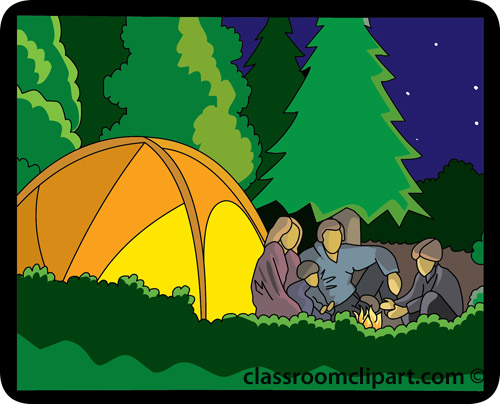
Action: Ann is cooking—the campfire is her kitchen. John opens a notebook.
Dialogue: shows a wary interaction between two people who know each other well but are estranged and who may be entering a different stage in their relationship.
Environment: a campsite, an open fire. It is set in the wide outdoors, yet in the darkness, it is intimate.
The core of the dialogue is the same, but the direction the conversation takes is changed because the story and the characters are different.
By beginning with the conversation and envisioning it as if it were a scene in a movie, I can flesh it out and show everything the reader needs to know. Readers are smart and don’t want to be told what to think. Their minds will supply the details of a kitchen or a campsite, depending on the props I include when I add the set dressing.
The layers of action, dialogue, and environment form the framework that supports the story. Where will the layers you add to your conversations take your stories? The possibilities are endless.
 In real life, we are drawn to certain people and get to know them better through conversations.
 Good conversations and mental dialogues bring written characters to life and turn them into people we want to know, our closest friends.
 Internal dialogues (rambling thoughts) are often a thinly disguised info dump in my first drafts. I seek those out in the second draft and either cut them to a line or two or eliminate them entirely. I try to avoid italics if possible, so this is how I write thoughts nowadays:
 However, I have no problem understanding an accent and visualizing a character as foreign when the author consistently uses one or two well-known words that a non-native speaker might use, such as si, ja, or oui, in place of yes. Most English speakers recognize and know the meaning of these words when they see them. All it takes is a straightforward word to convey the proper foreign flavor.
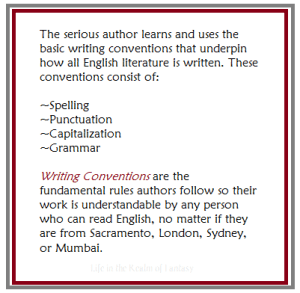
 The laws of grammar sometimes break down on the quantum level in conversations with our friends. This is also true of written exchanges.
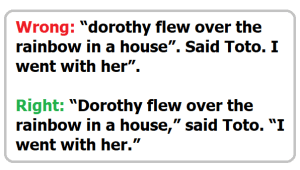
 Rule 3: Commas—Do not place a period between the closed quotes and the dialogue tag. Use a comma because when the speech tag follows the spoken words, they are one sentence consisting of clauses separated by a comma: “I’m here,” he said.
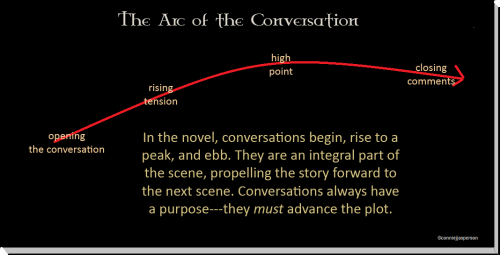
 Conversations, both spoken and internal, light up and illuminate the individual corners of the story, bringing the immensity of the overall story arc down to a personal level.







 Life in the Realm of Fantasy