Tag Archives: writing

Titling that book, or wringing blood from a stone #amwriting

A great book title can sell a book or short story to the reader:

We all start out with a working title—after all, we have to label our files somehow. But how do we come up with a catchy title for that finished product? It’s an issue we all face.

First of all, write the book and don’t obsess about the title until you are at the stage where something must be put in place on the cover. During the writing of the book the perfect title might come to you, so don’t sweat it.

What is the book’s genre? Go to the bookstore (or online to Amazon) and look at books in that genre to see how other authors are naming them. This will also give you an idea of how the cover should look if you are an indie. You will know what to ask of your cover designer.

Your friends and your writing group are good resources for brainstorming titles, so get them involved. Your writing group will know what the book is about, so their ideas will be valuable. If they haven’t been able to help and you are in the editing stage, ask your editor for some ideas.

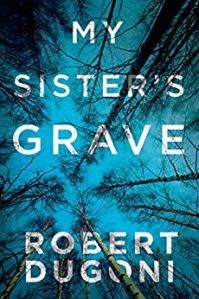
I have two books titled after the main character’s name, Huw the Bard and Billy Ninefingers. This works because their names are unique. Other authors have done this too:

Are there any scenes that depict watershed moments in the protagonist’s life, places that are turning points? Settings that represent the theme can be great titles.

What is the central plot point?

If your story is dark, you might want to emphasize that theme by going the mysterious route.

Giving your work an official title is sometimes difficult, and it’s hard to find good titles that aren’t already famous. In the US, book titles aren’t copyrighted so there may be multiple books out there with the title you want to use—take my advice and research your prospective title thoroughly.

I once was at a book signing event with my epic fantasy book, Mountains of the Moon (World of Neveyah), seated opposite an author selling a travel book, Mountains of the Moon, detailing his journeys in Africa. We laughed and helped sell each other’s books—because he was a good sport, the identical names worked to our advantage at that show, and we sold more books than we would have. But knowing what I do now, I would definitely give my book a different name–I had no idea such a place existed here in this world.

The right title is a subliminal lure enticing the reader into opening the book or clicking on the “look inside” option.

In 1989, I bought a book by Tad Williams: The Dragonbone Chair. That title hooked me, and the book itself lived up to its promise so well that I patiently waited two years between books for Mr. Williams to finish each installment in the series.

In my case, good titles are as much of a hook as an intriguing cover design.

Comments Off on Titling that book, or wringing blood from a stone #amwriting

Filed under writing

What is NaNoWriMo and why bother with it? #amwriting

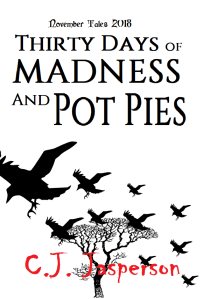
As most of you know by now, I regularly participate in the annual writing rumble known as NaNoWriMo (National Novel Writing Month). I’m a rebel in that I usually scratch out as many short stories as I am able in those thirty days.

I participate every year because for 30 precious days, writing is the only thing I “have” to do.

My friends and family all know that November, in our house, is referred to “National Pot Pie Month,” so if you drop by expecting a hot meal from Grandma, it will probably emerge from the microwave in the form of a formerly frozen hockey puck.

I usually have my “winners’ certificate” by the day they become available, but I continue writing every day through the 30th and update my word count daily.

NaNoWriMo is a contest in the sense that if you write 50,000 words and have your word count validated through the national website you ‘win.’ But it is not a contest in any other way as there are no huge prizes or great amounts of acclaim for those winners, only a PDF winner’s certificate that you can fill out and print to hang on your wall.

It is simply a month that is solely dedicated to the act of writing a novel.

Now let’s face it–a novel of only 50,000 words is not a very long novel. It’s a good length for YA or romance, but for epic fantasy or literary fiction it’s only half a novel. But regardless of the proposed length of their finished novel, a dedicated author can get the rough draft–the basic structure and story-line of a novel–down in those thirty days simply by sitting down for an hour or two each day and writing a minimum of 1667 words per day.

With a simple outline to keep you on track, that isn’t too hard. In this age of word processors, most authors can double or triple that. As always, there is a downside to this intense month of stream-of-consciousness writing. Just because you can sit in front of a computer and spew words does not mean you can write a novel that others want to read.

Every year many cheap or free eBooks will emerge testifying to that fundamental truth.

The good thing is, over the next few months many people will realize they enjoy the act of writing and are fired to learn the craft. They will find that for them this month of madness was not about getting a certain number of words written by a certain date, although that goal was important. For them, it is about embarking on a creative journey and learning a craft with a dual reputation that difficult to live up to. Depending on the cocktail party, authors are either disregarded as lazy ne’er-do-wells or given far more respect than we deserve.

As I said in my previous post on NaNoWriMo, more people do this during November than you would think–about half the NaNo Writers in my regional area devote this time journaling or writing college papers.

For a very few people, participating in NaNoWriMo will give them the confidence to admit that an author lives in their soul and is demanding to get out. In their case, NaNoWriMo is about writing and completing a novel they had wanted to write for years, something that had been in the back of their minds for all their lives.

These are the people who will join writing groups and begin the long journey of learning the craft of writing. Whether they pursue formal educations or not, these authors will take the time and make an effort to learn writing conventions (practices). They will attend seminars, they will develop the skills needed to take a story and make it a novel with a proper beginning, a great middle, and an incredible end.

They will properly polish their work and run it past critique groups before they publish it. They will have it professionally edited. These are books I will want to read.

The life of an artist or author is not one of constant accolades and fetes. After you have downloaded the PDF Winners’ Certificate from www.NaNoWriMo.org, you will rarely receive an award to show for your labors. Yes, some people will love and admire what we have created, but other times what we hear back from our beta readers and editors is not what we wanted to hear.

The smart authors haul themselves to a corner, lick their wounds, and persevere. They pull up their socks and keep to the path and don’t expect or demand overnight success.

When we write something that a reader loves—that is a feeling that can’t be described. That moment makes the months of intense work and financial sacrifice worth it.

And whether we go indie or the traditional route, writing is a career that will require financial sacrifice.

Most authors must keep their day jobs because success as an author can’t always be measured in cash or visibility in the New York Times bestsellers list. For most authors, success can only be measured in the satisfaction you as an author get out of your work. Traditionally published authors see a smaller percentage of their royalties than the more successful indies, but if they are among the lucky few, they can sell more books and earn more because of that.

The fact your book has been picked up by a traditional publisher does not guarantee they will put a lot of effort into pushing the first novel by an unknown author. You will have to do all the social media footwork yourself, tweeting, getting an Instagram account, getting a website, etc. You may even have to arrange your own book signing events, just as if you were an indie.

This is time-consuming, and you will feel as if you need a personal assistant to handle these things—indeed, some people rely on the services of hourly personal assistants to help navigate the rough waters of being your own publicist.

Every year, participating in NaNoWriMo will inspire many discussions about becoming an author. Going full-time or keeping the day job, going indie or aiming for a traditional contract—these are conundrums many new authors will be considering after they have finished the chaotic month of NaNoWriMo. While few of us have the luxury to go indie and write full-time (my husband has a good job), many authors will struggle to decide their publishing path.

However, if you don’t sit down and write that story, you aren’t an author. You won’t have to worry about it. With that in mind, November and NaNoWriMo would be a great time to put that idea on paper and see if you really do have a novel lurking in your future.

13 Comments

Filed under NaNoWriMo, writing

Who should participate in #NaNoWriMo #amwriting

As summer ends and fall approaches, those of us who are regular NaNoWriMo writers begin to plan for November, our month of committed writing. We are making notes to and jotting down ideas as they occur to us. Some of us are making brief outlines which we may or may not follow.

Some years I start with the idea for a novel. The first draft of Huw the Bard was written during NaNoWriMo 2011, although he wasn’t published until 2014.

However, for the last four years, I have written short stories and novellas during NaNoWriMo, because I have several fantasy novels in progress and what I really need are literary fiction short stories for submitting to contests and magazines.

I always enter November with my literary guns blazing. I have a list of ideas for plots and hit the keyboard at 12:01 a.m. on November 1st by attending a virtual midnight write in.

Many people have heard of NaNoWriMo, but think the month is only dedicated to novel writing. People are always glad to learn that many people with no desire to be published authors use this month to create 50,000 word manuscripts.

  • Family historians
  • Dedicated diarists
  • People working on their PhD
  • people writing cookbooks

Anyone who wants or needs a month dedicated to getting a particular thing written will do so in November.

More people do this during November than you would think–about half the NaNo Writers in my regional area are journaling or writing college papers. The support of our online group gives the graduate student an added incentive to stay focused on writing their thesis.

This support group offers moral support to diarists and encourages them to write more about their world, their thoughts, and their philosophies.

I’ve been asked many times what I see as the differences between journaling and noveling. (Sorry, word-nazis—”noveling” is a word. I invented it several years ago for a blog post and still use it regularly.)

Anyway, journaling is keeping a personal diary with an eye to stress management.  As a self-exploration tool, journaling works best when done consistently. You write on a daily basis, or at least frequently.

According to the website, Very Well Mind: Journaling allows people to clarify their thoughts and feelings, thereby gaining valuable self-knowledge. It’s also a good problem-solving tool; oftentimes, one can hash out a problem and come up with solutions more easily on paper.

Diarists detail their lives, the world around them, and how the larger events of society affect them. A famous diarist was Samuel Pepys, whose diary details the Great Fire of London and include many tidbits about the famous people he knew.

From the fount of all knowledge, Wikipedia: The detailed private diary that Pepys kept from 1660 until 1669 was first published in the 19th century and is one of the most important primary sources for the English Restoration period. It provides a combination of personal revelation and eyewitness accounts of great events, such as the Great Plague of London, the Second Dutch War, and the Great Fire of London.

Noveling is telling lies, keeping them straight, and making the world believe it until the last page.

When I first began with NaNoWriMo, I spent some time lurking on the various threads on the national website. To my utter surprise, I discovered a contingent of writers who were not trying to write a book that could be published. For them, this was a game they wanted to win at any cost, and their goal was to see how high their word count could get.

One suggestion from them for increasing your word count was to use no contractions.

Let’s be clear: I do NOT recommend this. If you ever want to publish your manuscript, you will have a lot of work ahead of you to make it readable if you do that.

Whether you are journaling or noveling, participating in NaNoWriMo helps you develop the discipline of writing daily. Write for as long as you can when you can, and that will build your ‘writing’ muscles.

As a novelist, if I dedicate 3 hours of every day in November to just writing stream of conscious, I will chunk out 2500 to 3000 words a day, half of which are miskeyed and misspelled. No one is perfect.

When I can’t find a word to express a thought, I invent one. In reality, some words I invent, and some words invent me.

If you should choose to enter this highly addictive adrenaline rush of a month-long activity, go to www.nanowrimo.org and sign up! Pick your name, get your author profile started, and look up dragon_fangirl (that’s me). Add me as your writing buddy, and I will be part of your writing posse, cheering you on when you need a morale boost.


Credits and Attributions:

Wikipedia contributors, “Samuel Pepys,” Wikipedia, The Free Encyclopedia, https://en.wikipedia.org/w/index.php?title=Samuel_Pepys&oldid=854824642 (accessed September 4, 2018).

Quote from Journaling for Stress Management, by Elizabeth Scott, MS for Very Well Mind, https://www.verywellmind.com/the-benefits-of-journaling-for-stress-management-3144611, Ⓒ 2018 About, Inc. (Dotdash) — All rights reserved (accessed September 4, 2018).

Image courtesy of National Novel Writing Month.

13 Comments

Filed under writing

Works in Progress Update #amwriting #NaNoWriMo

I don’t write quickly, as some of the authors I know do. Some write well in the first draft and can turn out a good book every six months but not me. It takes me several drafts to get a manuscript to a publishable form. I have a mind like a grasshopper in the sun, hopping around in the first draft of a manuscript with each new thought that occurs to me. While the initial outline I made for the novel is linear and details the important points of a complete story arc, the way I put the story on paper is not.

During the initial writing process, I have a friend who is a structural editor who points out plot holes and places where a story arc has flatlined. He sees the larger picture. The final draft goes to my editor, who line-edits and gets into the smaller issues of usage and style.

For me, taking a novel from concept to publication takes about four years. This is because after I finish writing each scene, I have to decide how I want to proceed with what I know must happen the next.

So, I work on something else until I get that flash of inspiration that kickstarts my brain again. The plots and characters of all my works in progress are lurking in the back of my mind at all times, which is why I always have several manuscripts in various stages of the process.

The manuscript that is currently closest to completion is in third draft form and just came back from my beta readers. I have some large changes to make, but thanks to their input this will go much more quickly than the previous drafts. I still expect to publish it next summer.

I am still working on the first draft of a new duology (2 novels) set in the world of Neveyah, a prequel to Tower of Bones. That manuscript is at the ¾ mark for the first novel and the first draft of book 1 will possibly be completed by Christmas.

I also have a contemporary fiction novel in the works that has been pushed back, but whenever I have a flash of inspiration, I do pull it out and get a bit more done on it.

But September, October, and November are what I think of as Short Story Season.

The calendar is full of conventions and NaNoWriMo events. My ability to focus on a long project becomes fractured, so I use this time to write as many short stories as I can so that I have a backlog of work to submit to magazines and anthologies.

And on the short story front, I’ve received minor edit requests on work I submitted to two anthologies, which I will have resolved today.

By using the Submittable App, I have found three more anthologies that have interesting themes that I would like to write stories to. The final dates for submissions are still six months out on these so I may have something worth sending by then.

This will be my eighth year of participating in NaNoWriMo, and my seventh as a municipal liaison. That month of merry madness forces me to become disciplined, to lose the bad habits I slip into during the rest of the year. It forces me to ignore the inner editor, that unpleasant little voice that slows my productivity down and squashes my creativity.

Also, for this one month of the year, nothing comes before writing. Some years flu season has gotten in the way, and I was in bed for part of the time. Nevertheless, I was still writing and getting my wordcount when I was awake. Thank God for NyQuil.

My rules for NaNoWriMo:

  1. Write at least 1,670 words every day (three more than is required) This takes me about 2 hours – I’m not fast at this.
  2. Write every day, no matter if you have an idea worth writing about or not. Do it even if you have to get up at 4:00 am to find the time and don’t let anything derail you.
  3. If you are stuck, write about how your day went and how you are feeling about things that are happening in your life, or write that grocery list. Use this time as a brainstorming session and just write about what you would like to see happen in your story. Change the color of the font so you can easily cut your ruminations out later.
  4. Check in on the national threads at http://www.NaNoWriMo.org and your regional thread to keep in contact with other writers.
  5. Attend a write-in if your region is having any, or join a virtual write-in at NaNoWriMo on Facebook. This will keep you enthused about your project.
  6. Delete nothing. Passages you want to delete later can be highlighted, and the font turned to red or blue, so you can easily separate them out later.
  7. Remember, not every story is a novel. If your story comes to an end and you are only at 7,000 words, start a new story in the same manuscript. Use a different font or a different color of font, and you can always separate the stories later. That way you won’t lose your word count.
  8. Validate your word count every day.

As writers, we tend to forget that output is important too. NaNoWriMo reminds us that if we don’t write a paragraph or two of new material every day we stagnate.  How unexciting it is to be stuck, going over and over the same stale passages, wondering why the book isn’t finished.

The act of sitting down and just writing whatever comes into your mind is liberating. Even if you don’t want the world to see what you write during the 30 days of NaNoWriMo, you have an outlet for your creative mind, a sounding board for your opinions and ideas.

Watching TV and playing video games all evening long doesn’t allow for creative thinking.  Your mind doesn’t get to rest from the daily grind. Creative thinking—assembling puzzles, quilting, writing, painting, building Lego cities—these activities are far more relaxing than vegetating in front of the TV. Assembling puzzles is a great way to sort out plot points.

If you have an obsession for a TV show that is interfering with your ability to find time to write, maybe this isn’t your time to be a writer.

My thought is that those shows will be available forever on Hulu, Netflix, or Amazon Prime and your favorite video games will be available too.

Something I have found  over the years is that by getting away from the TV for a while, your mind becomes sharper. By doing something different, you give your active mind a vacation. You rest better and your whole body benefits from having done something positive and restful with your free time.


Credits and Attributions

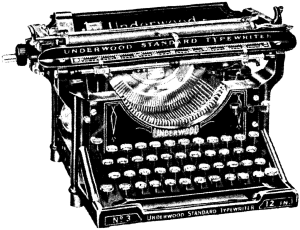
Underwood Standard Typewriter, PD|75 yrs image first published in the 1st (1876–1899), 2nd (1904–1926) or 3rd (1923–1937) edition of Nordisk familjebok.

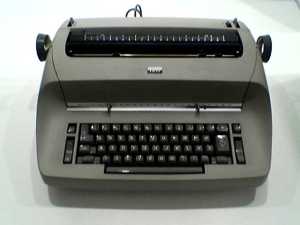
IBM Selectric, By Oliver Kurmis [CC BY 2.5 (https://creativecommons.org/licenses/by/2.5), from Wikimedia Commons

6 Comments

Filed under writing

Identifying Genre #amwriting

If you have taken my advice and written several short stories, you now have something to enter in contests and submit to various publications. However, it can be hard to know what publication to send your work to.

This is where you must learn to identify the genre of what you have written.

When I sit down and begin writing a short story, sometimes I don’t have a particular theme or plot in mind. I key the first lines with an open mind, and random ideas begin to flow. Because I am working within the limits of 3000 to 7000 words, these are the stories that stretch my writing skills.

These “orphan” short stories are widely different from my normal work and aren’t always written in a genre that is easily identified.

Mainstream (general) fiction–Mainstream fiction is a general term that publishers and booksellers use to describe works that will appeal to a broad range of readers and will have some chance of commercial success. Mainstream authors often blend genre fiction practices with techniques considered unique to literary fiction.

It will be both plot- and character-driven and may have a style of narrative that is not as lean as modern genre fiction but is not too stylistic either. The prose of the novel will at times delve into a more literary vein than genre fiction, but the story will be driven by the events and action that force the characters to grow.

Literary Fiction–Literary fiction tends to be more adventurous with the narrative, with the style of the prose taking a prominent place. Stylistic writing and the exploration of themes and ideas form the substance of the piece.

Writer’s Relief Author’s Submission Service defines literary fiction as “…fiction of ideas. While the story must be good, emphasis on action is not often as important as emphasis on the ideas, themes, and concerns of the book. Literary fiction tackles “big” issues that are often controversial, difficult, and complex.”  (end quoted text)

Literary fiction is frequently challenging to read, which is why certain readers search it out. They want to savor every word and turn of phrase. Sometimes literary fiction is experimental, wordy, and goes off topic, but the journey is the important thing to those of us who enjoy the works of David Foster Wallace, John McPhee, and George Saunders.

Science fiction–Science Fiction features futuristic settings, futuristic science and technology, space travel, time travel, faster than light travel, parallel universes, and extraterrestrial life.

If you use magic for any reason you are NOT writing any form of sci-fi, so don’t bother submitting it to a publisher who only wants science fiction.
Hard Sci-fi is characterized by rigorous attention to accurate detail in the physics, chemistry, and astrophysics. Emphasis is placed on accurately depicting worlds that more advanced technology may make possible. Soft Sci-fi is characterized by works based on social sciences such as psychology, economics, political science, sociology, and anthropology.

Other main sub-genres of Sci-fi include Space-operasCyberpunk, Time Travel, Steampunk, Alternate history, Military, Superhuman, Apocalyptic and Post-Apocalyptic.

The main thing to remember is that Science and Magic cannot coexist in the Genre of Science Fiction.

The minute you add magic to the story, you have Fantasy.

Fantasy: Fantasy commonly uses magic and other supernatural phenomena as a primary plot element, theme, or setting. Many works are set within imaginary worlds, environments where magic and magical creatures are common. Epic and high fantasy generally avoid scientific and macabre themes, although in some fantasy subgenres there can be a great deal of overlap between fantasy and horror, and fantasy mixed with science.

I’ve said it before, but every genre has its share of snobs and idiot purists, people who will argue your choice of sub-genre no matter what you choose.

High fantasy–High fantasy is defined as fantasy fiction set in an alternative, fictional world, rather than the real world. It commonly features elves, fairies, dwarves, dragons, demons, magic or sorcery, wizards or magicians, constructed languages, quests, coming-of-age themes, and multi-volume narrative. Often the prose is more literary, and the primary plot is slowed by many side quests. Think Mervyn Peake, William Morris, and J.R.R. Tolkien.

Epic Fantasy–These stories are often serious in tone and epic in scope, dealing with themes of grand struggle against supernatural, evil forces. Epic fantasy shares some typical characteristics of high fantasy and can include elements such as elves, fairies, dwarves, dragons, demons, magic or sorcery, wizards or magicians, constructed languages, quests, coming-of-age themes. These also come in multi-volume narratives. Tad Williams’s series, Memory Sorrow and Thorn is classic Epic Fantasy.

Paranormal Fantasy–Paranormal fantasy often focuses on romantic love and includes elements beyond the range of scientific explanation, blending together themes from all the speculative fiction genres. Think ghosts, vampires, and supernatural.

Urban Fantasy– can take place in historical, modern, or futuristic periods, and the settings may include fictional elements. The prerequisite is that they must be primarily set in a city.

Horror–Horror fiction, horror literature, and also horror fantasy are narratives written specifically to frighten, scare, or startle their readers by inducing feelings of horror and terror. Sometime these stories detail the experience of purely mental terror, other times they are rife with sudden graphic violence.

Romance– Novels of this type of genre fiction place their primary focus on developing a relationship despite many roadblocks, and in the end, the characters find true romantic love. These stories must have an emotionally satisfying and optimistic ending, or they are not romance.

Choose carefully what publications, anthologies, and contests you submit your work to. Read and follow their submission guidelines. Read one or two back issues so that you only submit the kind of work they publish.

Never submit anything that is not your best work, and do not assume they will edit it, because they won’t. No publisher will buy work that is poorly written, sloppily formatted, and generally unreadable.


Credits and Attributions:

How Do You Know If Your Novel Is Literary Or Mainstream Fiction? How Long Is A General Fiction Book? By Writer’s Relief Staff, Writer’s Relief Author Submission Services Blog, posted July 22, 2009. (Accessed August 14, 2018.)

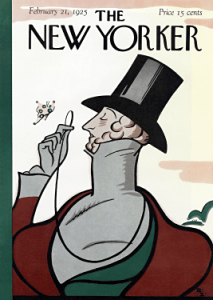
Cover of The New Yorker (first issue) in 1925 with illustration depicting iconic character Eustace Tilley,  drawn by Rea Irvin. Fair Use.

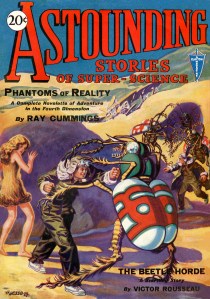
First Cover of Astounding Stories of Super Science (Analog Science Fiction and Fact) art by H. W. Wesso,  January 1930, Fair Use. Via Wikipedia.

8 Comments

Filed under writer, writing

Things to check for before submitting to a beta reader #amwriting

When we finish writing a story, an article, or a novel, we feel a rush of pride. The urge to immediately send it to a magazine or contest is strong, but the wise author must overcome it.

Don’t even show it to your writing group at this stage, because you are too involved in it, and there may be some awkward flaws that were introduced into the narrative during the rush of creation. You want their feedback to be constructive and not focused on the editable flaws.

Set your manuscript aside for a week or so then come back to it and look for

  1. Dropped or missing words.
  2. Words that spell check won’t find because they are spelled correctly but are wrong: They went their for breakfast.
  3. Extra spaces in odd places, and after sentences. Editors want one (1) space after each sentence.
  4. The paragraphs are indented, NOT WITH TABS, but by formatting the paragraphs correctly.

Tabs >.< I feel it’s important to revisit this subject, as I have recently seen two manuscripts where authors used the tab key to indent their paragraphs.

That is a huge no-no, and screams “never done this before.” Ninety percent of publications and publishing houses want electronic submissions. Too many spaces messes up the final formatting. For this reason, make sure you have removed the tabs. You may have to do it by hand which is a daunting task no publisher or editor has time for.

You want your work to look professional, even if you are only submitting it to your writing group for a critique. Always format the paragraphs by either opening the home tab and choosing ‘normal’ from the styles tab on the ribbon OR format by using the simple formatting tool:

Step 1: On the home tab, look in the group labeled ‘Paragraph.’ On the lower right-hand side of that group is a small grey square. Click on it.  A pop-out menu will appear, and this is where you format your paragraphs.

Step 2: On the indents and spacing tab of the menu: Use standard alignment, align LEFT. The reason we use this format is we are not looking at a finished product here. We are looking at a rough draft that will be sliced, diced, and otherwise mutilated many times before we get to the final product.

Step 3: Indentation: leave that alone or reset both numbers to ‘0’ if you have inadvertently altered it.

Step 4: Where it says ‘Special’: on the drop-down menu select ‘first line.’ On the ‘By’ menu, select ‘0.5.’ (Some publishers will specify a different number, 0.3 or 0.2, but 0.5 is standard.)

Step 5: ‘Spacing’: set both before and after to ‘0.’

Step 6: ‘Line Spacing’: set to ‘double.’

To summarize, standard paragraph format has:

  • margins of 1 inch all the way around
  • indented paragraphs with no extra space between
  • double-spaced text
  • Align Left. This is critical.

Do not justify the text. In justified text, the spaces between words, and letters (known as “tracking”) are stretched or compressed. Justified text aligns with both the left and right margins. It gives you straight margins on both sides, but this type of alignment only comes into play when a manuscript is published, and at that point, the publisher will handle the formatting.

Also, I have two things for you to look for before you submit your work to a beta reader or writing group, much less a prospective agent or publisher.

First up: Dialogue.

  1. Make sure every spoken sentence is enclosed in double quotes. All punctuation goes INSIDE the closed quotes, and quoted dialogue is enclosed in single quotes, ALSO inside the closed quotes.

Good: “I’m sorry, Mary. Your punctuation is horrific. Jake said, ‘I won’t accept it,’” said Helen.

When using dialogue tags, the spoken sentence ends in a comma, inside the closed quotes, followed by the dialogue tag which is NOT CAPITALIZED.

Bad: “I’m sorry, Mary. Your punctuation is horrific. Jake said, ‘I won’t accept it.’” Said Helen.

Good: “I’m sorry, Mary. Your punctuation is horrific. Jake said, ‘I won’t accept it,’” said Helen.

Next up: Commas. If you have a basic grip on commas, perfection is not needed. But commas separate clauses and act as traffic signals for our words.

  1. Use commas to separate independent clauses when they are joined by any of these seven coordinating conjunctions: and, but, for, or, nor, so, yet.

Good: My dog has fleas, and he needs to go to the vet.

Do not join dependent clauses to independent clauses with commas.

Good: My dog has fleas and needs to go to the vet.

Avoid comma splices at all cost. Use conjunctions or semicolons to join related independent clauses, not commas.

Bad: My dog has fleas, he needs to go to the vet.

Good: My dog has fleas, and he needs to go to the vet. OR if you absolutely must use a semicolon, write it as, My dog has fleas; he needs to go to the vet.

By searching for these simple errors before you submit your work,there’s a good chance that an editor will read beyond the first page.

Even if you intend to hire an editor, if you have these sorts of major amateurish flaws in your work, the editor will most likely refuse to take on the task of editing your work, as it would be too difficult to complete in a reasonable amount of time.

If I receive a request from a prospective client to edit a manuscript, and a glance through the first few chapters shows a clear lack of knowledge of how to write, my policy is to refuse it. The author owes it to herself, and the craft in general, to learn how to write.

In these instances, I am always gentle, but firm. I usually suggest the author join a writing group and invest in some books on writing craft. Many times, I see wonderful, amazing stories that are so poorly written no editor would take them.

It’s important to remember that we all begin at that place. With practice and feedback from others, we grow. These first drafts of our writing life are the beginner stories, the ones that come from the heart and which we learn from. I have a desk full of examples of “What was I thinking?” Each one of those stories had great bones. They are the foundation of all my work.

16 Comments

Filed under writing

How I became an author #amwriting

I have always been a writer, and a lover of music and art. Music was important in our house, as my parents had a large collection of vinyl records and the stereo was always cranking. Whether it was classical, jazz, or rock and roll, music was played loud enough to hear outside.

In an afternoon, you might hear the Beatles, followed by Vivaldi, Dean Martin, Herman’s Hermits, Loretta Lynn, the Monkees, and capping the evening—Mozart. Simon and Garfunkle, The Who, The Rolling Stones, 101 Strings, Electric Light Orchestra, Eddy Arnold, Count Basie, Stevie Wonder—you name it, the music was always played at a high volume in our home.

The books in our home were just as eclectic. My parents were prolific readers and were members of both Doubleday Book Club and Science Fiction Book Club. They also purchased two to four paperbacks a week at the drugstore and subscribed to Analog and several other magazines.

There was always something new and wonderful to read around our house, and most of it was literary fiction or speculative fiction, although we had the entire 54 volume leather-bound set of the Great Books of the Western World, and our father insisted we attempt to read and discuss what we could.

Some of those books were mostly understandable, such as William Shakespeare and Samuel Pepys.

Plato, not so much, and yet his work did influence me.

At the age of fourteen, I didn’t understand Pepys, but I read him, and while we were bass fishing on a Saturday morning, Dad would talk about the differences and commonalities between life and morality in Pepys’ London and our life in suburban America in 1968. His thought was that I should learn about the 17th century and the Great Fire in London from an eyewitness, just as I had learned about the war in the Pacific from John F. Kennedy‘s autobiographical novel, PT 109.

But Pepys’ London of 1666 was so different from the ‘Mod’ subculture of the London of 1968 (and the Beatles) that I was familiar with thanks to Life magazine. To me, it was almost like speculative fiction. In many ways, it was more difficult for me to believe in historical London than Tolkien’s Middle-Earth.

Everything I knew about sex, I learned from the books I stole from my mother’s nightstand.

When I married and left home, I still read every sci-fi or fantasy novel that came out in paperback, budgeting for books the way others of my acquaintance budgeted for beer. I read the classics for my irregular college classes and learned to love Chaucer and James Joyce. For a variety of reasons I never earned a college degree, but I’ve never stopped reading and researching great literature.

But reading for entertainment was still my “drug.” I jonesed for new books by the great ones, Anne McCaffreyJack Chalker, and Roger Zelazny, reading and rereading them until they were shreds held together with duct tape.

As a married student attending college in Bellingham Washington, purchasing books for pleasure became a luxury. I found a secondhand bookstore where I could get a brown paper shopping bag full of novels in too poor a condition to sell on their shelves for $2.00 a bag if you had a bag of better books to trade in.

As a college drop-out I went through a full shopping bag of books every week, and within a year, I had read every book they had.

Thus, out of desperation, I discovered a whole new (to me) genre: regency romances written by Georgette Heyer, and other romance writers of that generation. Those books, along with beat up copies of bestsellers by Jack KerouacJames Michener, and Jacqueline Susann began to show up in the pile beside my bed.

So at least some of my literary influences can be traced back to dragons, booze, morality, and England’s romantic Regency—lived vicariously through these authors’ eyes.

Always when the budget permitted, I returned to Tolkien, Zelazny, McCaffrey, AsimovBradbury, and as time passed, Piers AnthonyDavid EddingsTad WilliamsL.E. Modesitt Jr., and Robert Jordan to name only a few.

And there were so many, many others whose works I enjoyed. By the 1990s, the genres of fantasy and sci-fi were growing authors like a field grows weeds, and I loved it.

All of the books I read as a child and young adult have influenced my writing. They still inspire me.

Nowadays I rarely am able to read more than a chapter or two before falling asleep. My Kindle is full of books, and I haven’t got the time to read them because I have to write my own stories. Having the luxury to spend a day wallowing in a book is a treat to be treasured.

But it is because of the uncountable authors whose works I have been privileged to read that I was inspired to think that my own scribbles might be worth pursuing.

Writing has always been necessary for me, as natural as breathing. In the beginning, my writing was unformed, a reflection of whatever I was reading at the moment. As I matured and gained confidence, I found my own ideas and stories, and they took over my life.

Once that happened, I became a keyboard-wielding writing junkie.

Some days I write well, and others not so much, but every day I write something.

And every day I find myself looking for the new book that will rock my universe, a new “drug” to satisfy my craving, even if I know I won’t have time to read it.

I’m addicted to dreams and the people who write about them. Reading is my form of mind expanding inspiration. Without the authors whose books formed my world, I would never have dared to write.


Credits and Attributions

Potions of this article have appeared previously here on Life in the Realm of Fantasy in the post, The Genesis of an Author, © Connie J. Jasperson 2016, posted Jan 27, 2016

4 Comments

Filed under writing

logic, objective, and circumstance #amwriting

We begin any writing project with an idea, a flash of “What if….” Sometimes, that “what if” is inspired by an idea for a character, or perhaps a setting. Maybe it was the idea for the plot that had your wheels turning. Whatever the inspiration, a little pre-planning and a bit of an outline are beneficial in getting the manuscript started.

If you work at a day job and using the note-taking app on your cellphone to take down notes during work hours is frowned on, do as I still do. Carry a pocket-sized notebook and pen and write those ideas down. This is old-school but will enable you to discreetly make notes whenever you have an idea that would work well in your story, and you don’t appear to be distracted or off-task.

Once you have assembled your random ideas, and maybe even written a chapter or two, it’s time to think about where you are going with your story.

At the outset of the story, we find our protagonist and see him/her in their normal surroundings. Once we have met them and seen them in their comfort zone, an event occurs which is the inciting incident. This is the first point of no return.

Pretend we are writing a mystery/thriller: On page one, Dave, an unmarried accountant, sees a woman from across a cafe, and through a series of innocuous actions on his part, he is caught up in thwarting a spy ring.

  • What could possibly entice him out of his comfort zone? What would he spontaneously do that is out of character for him? Perhaps he buys a stranger lunch. You must show him as a shy person not given to buying lunch for strange women. This act must change his life.

Because he suddenly decided to “pay it forward” and paid for her lunch on his way out, he draws the attention of people who were following her. They suddenly think he is more than a simple accountant, that the act of buying her lunch was a secret code, making him a suspect.

Now, he is thrown out of his comfort zone and into the situation which is the core idea of your plot.

  • On his way back to his office, a white limousine pulls up alongside him, and four men in black suits hustle him into the backseat. He is forced at gunpoint onto a plane bound for Oslo, Norway, handcuffed to a suitcase. The only other key that can remove the handcuffs is at the American Embassy in the custody of a mysterious woman, Jeanne Delamont.

This is the circumstance in which your protagonist finds himself at the beginning of the story.

  • How will the next phase of the story start? Who is Ms. Delamont?
  • What is the hero’s personal condition (strength, health) at the beginning?
  • How will that condition be changed, for better or worse, by the hero himself or by the antagonistic force?

Now we come to the next part of the core of your plot: objective.

In every class I’ve taken on plotting, the instructors have said that if your main character doesn’t want something badly enough to do just about anything to achieve it over the next couple hundred pages, then he/she doesn’t deserve to have a story told about them.

  • At this point, our hero just wants to get rid of the suitcase and go back to his job. He wants that desperately.
  • What does the woman at the café for whom he bought lunch have to do with the whole mess?

Everything you will write from the point of the inciting incident to the last page will detail that quest and answer that question. Your protagonist must desire nothing more than to achieve that objective. Every scene and conversation will push the protagonist closer to either achieving that goal or failing, so if you make it a deeply personal quest, the reader will become as invested in it as you are.

I find it helps to have a broad outline of my intended story arc. Speaking as a reader, at some point near the outset of their manuscript authors need to have an idea of how it will end, so the story flows smoothly to the best conclusion.

It’s okay to have several possible endings in mind, as long as each fits logically to the events that led up to them.

Try them all and choose the one that you like best.

If you try to wing it through the whole book, you might end up with a mushy plot that wanders all over the place and a story that may not be commercially viable.

  • What will be your inciting incident?
  • What is the goal/objective?
  • At the beginning of the story, what could the hero possibly want that pushes him to risk everything to acquire it?
  • How badly does he want it and why?
  • Who is the antagonist?
  • What moral (or immoral) choice is the protagonist going to have to make in his attempt to gain that objective?
  • What happens at the first pinch point?
  • In what condition do we find the group at the midpoint?
  • Why does the antagonist have the upper hand? What happens at the midpoint to change everything for the worse?
  • At the ¾ point, your protagonist should have gathered his resources and companions and should be ready to face the antagonist. How will you choreograph that meeting?

I write fantasy novels, but I also write literary fiction. Writing fantasy does require a certain amount of planning because so much goes into world building and creating magic systems. Literary fiction must also have a logical arc or the characters won’t evolve.

In any novel, when you are winging it through a story that encompasses 75,000 to 100,000 words, it is easy to get involved in large info dumps and bunny trails to nowhere. A loose outline will tell you what must happen next to arrive at the end of the book with a logical story set in a solidly designed world.

You don’t have to go into detail in that little framework, but if you give yourself a rough outline, you will know what you must do to accomplish each task within the storyline.

I always feel it’s necessary to have an outline of the story arc even if my novel has multiple possibilities for endings, as was the case in The Wayward Son. Winging it in short bursts can be exhilarating, but my years of experience with NaNoWriMo has taught me that when we are winging it for extended lengths of time, we sometimes run out of fresh ideas of what to do next.

With a simple outline, you won’t become desperate and resort to killing off characters just to stir things up once the real work of writing starts.

Readers become frustrated with authors who randomly kill off characters they have grown to like.

Besides, you might need that character later.


Credits and Attributions

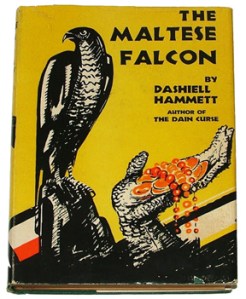
Cover of the original novel “The Maltese Falcon” 1930, by Dashiel Hammett, published by Alfred A Knopf, Fair Use. Wikipedia contributors, “The Maltese Falcon (novel),” Wikipedia, The Free Encyclopedia, 

https://en.wikipedia.org/w/index.php?title=The_Maltese_Falcon_(novel)&oldid=851535327 (accessed July 25, 2018).

6 Comments

Filed under writing

Disagreement, Dispute, and Combat #amwriting

In many books, the characters are forced to do a certain amount of fighting, whether it is a marital dispute, neighborhood quarrel, war, or a kickboxing tournament. Unfortunately, some authors don’t understand how important it is to choreograph the scenes of disagreement and disputes.

These scenes are crucial to the advancement of the story. They should be carefully planned and inserted into the novel as if one were staging a pivotal scene in a film.

Scenes involving physical action can be a morass of mindless mayhem, if  not well-choreographed to begin with. It takes time, but over the course of several hours, you can put the skeleton of your fight scene on paper. What is physically possible and what is not? The next step, after the action is laid down, is fine tuning it, so the reactions and responses of your characters are natural and real.

But there is a larger consideration for your battle: Scenes involving fighting are controlled chaos—controlled on the part of the author. The battle must advance the story.  Why did it happen? What is the purpose of injecting that conflict into the narrative?

I mentioned this in my last post on literary violence: In Billy Ninefingers, besides the obvious fact that he is seriously injured in the fight, which is the core plot point of the book, I had two other goals with that fight scene:

  1. I needed to show how the Bastard is jealous and acts on any thought that passes through his alcohol-soaked mind.
  2. In the resolution of that scene, I demonstrated that Billy, even with his life in ruins, has a sense of fair-play.

There are two sorts of fights, verbal and physical. Both have commonalities, although words are the weapons  in the verbal dispute.

Many authors get hung up on the technical side of the fight—how they were dressed, who hit who with what words or weapons, and so on.

Just as if the physical dispute were a verbal dispute, we map the violence out as we would a journey, with every slap, curse word, and gunshot occurring at its proper point in the melee. If physical violence is involved and you are not a martial arts aficionado or a weapons specialist, these are necessary elements of the combat scene that good, responsible research and an author’s diligence can resolve.

What we have to consider in each quarrel is that each character in the fight is, and must remain, a unique individual. There should be no blurring of personalities, which can happen when an author focuses too intently on the action of the fight scene, writing it as if they lived it. For the author, acting out the action ensures that the moves are reasonable and make sense, but you aren’t done writing that scene just because the hacking, slashing, and gunshots are on paper. It’s far too easy for the author’s voice to intrude in these scenes, as the author is so wrapped up in the emotion of the event they don’t see that the characters have fallen silent, and he is the one doing all the shouting.

If the dispute is verbal, the words hurled back and forth must be the words that character would use. Each character has habitual mannerisms. In real life, they wouldn’t all react the same way, so they can’t all be superheroes in your fight scene. You must go back to the first part of that section, and make sure you haven’t lost the individuality of the characters in the chaos. Each character’s reactions must be portrayed in the action sequence in such a way the reader doesn’t say, “He wouldn’t do that.”

I try to show this in small, unobtrusive ways by sitting back and visualizing the scene after the choreography is laid on paper. I replay it in my mind as if I were a witness to the events and look for the facial expressions and reactions of each combatant.

The most important reactions get briefly mentioned in the story, the reactions that push the plot forward. The others are witnessed but given less prominence, becoming part of the scenery.

When I choreograph a fight, I think of it as choreographing a conversation. In real life, people miss a few beats when they are speaking. They gather their thoughts and speak in short bursts. They shift in their chair, or stand up, or wave a hand to emphasize a point. They turn and sometimes mumble. In our literary conversations, we want to paint the impression of their individuality without boring the reader with minute details.

We must approach the fight scene the same way. When it comes to fighting, I keep it concise and linear, as drawn-out fight scenes bore me to tears. Just the facts, the immediate emotional impact, and we move on to the recovery scene.

In so many novels, battle scenes are long, drawn out, convoluted passages detailing blood and guts, but which make no sense. I don’t like books where the fights are senseless and too chaotic to follow, because I know that isn’t true to life. Violence is orderly and happens in a sequence of actions, within a fundamental framework of order.

I have been married four times, so trust me, I understand disputes and how they can escalate out of control. But I also have personal experience with physical violence. I played hockey for four years as a young woman, and I also took martial arts as a young adult. From my personal experience, I know that each fight is comprised of a specific sequence of events, despite the fact it appears to be chaotic. 

  1. the inciting incident – what triggers it
  2. the response – what each combatant does and how the opponent responds
  3. the resolution – how does it end?
  4. the aftermath

It is the swiftness of the event and the emotional impact of the violence that conveys the overwhelming sense of chaos.

Once you have the order of events, who did what and what the result of that action was, you must add the emotion, the sense of fear, the feeling that things are happening too swiftly that is the true chaos of the battle.

Every character’s emotions and reactions are individual, uniquely theirs. You, as the author, visualize them this way, but the difference between success and failure as an author is the ability to commit their uniqueness to paper. Many authors don’t succeed at this—they either fail to give enough subtle clues to the reader, or they are too specific. The fine line between enough and too much is where the author’s artistry comes in.

This has also been said before, but it bears mentioning again. Through physical actions and conversational interactions, we make our characters knowable and likable (or not, as the case may be).

Their actions as they interact with their environment and each other illustrate the world they exist in. Each scene, especially a fight scene, is your opportunity to convey the setting and the mood of your characters without resorting to an info dump.

We are painters with words. We give the impression of detail, offering the reader a framework to hang his imagination on. We use our words sparingly and with intention, giving the reader the idea and the atmosphere of the conflict as if painting the scene in the style of the impressionists.


Credits and Attributions:

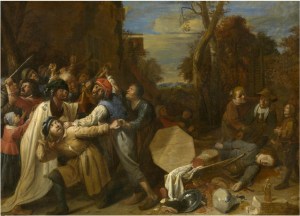
Dutch: De dood is fel en snel: Ruzie in een pub, English: Death is Violent and Fast: Quarrel in a Pub, painting by Joos van Craesbeeck, ca. 1630 – 1635 PD|100 via Wikimedia Commons.

4 Comments

Filed under writing

Information and Misinformation #amwriting

This week, I am involved in editing for clients, hosting a writing meetup, and working hard on a first draft.

Over the weekend I made good headway with new material, and now I am putting much of what we have previously discussed into action as I expand on those chapters.

I’m ensuring that within the larger story, I have a structure of smaller arcs,  scenes that will come together to create this all-encompassing two-volume drama. If I do this right, I will keep my readers’ hearts invested in the narrative until the end of the second book.

I’ve talked before about the arc of the scene vs. the overall arc of the novel.

The end of the scene is the platform from which your next scene launches. This means each scene begins at a slightly higher point on the novel’s narrative arc than the previous scene did, driving the narrative. That pulse is critical to creating the necessary tension.

At this point, I’m still fine-tuning the plot, deciding who has the critical knowledge. The fact that some characters are working with limited information is what creates the tension, a concept known as asymmetric information. This a situation in which one party has more or superior information compared to another. In business, this can prevent other companies from effectively entering and competing in an industry or market. The company with the information has a monopoly.

In real life, a monopoly of information creates a crisis. In the novel, it creates tension. A conversation scene should be driven by the fact that one person has knowledge the others need to know at that moment. Whether or not they receive the information in time is up to you in the plotting stage.

So, this is what I am doing now, making sure the information is divided up disproportionately. No one ever has all the knowledge, and what my protagonist doesn’t know at the beginning is central to the plot and the final confrontation at the end of the second half.

The reader must get answers at the same time as the other characters, gradually over the first 3/4 of each novel. Book one has the first half of the story line and a satisfying conclusion, and book two is the protagonists’ ultimate destination and final meeting with the enemy. Dispersing small but necessary bits of info at just the right moment so there are no info dumps is tricky but by the final draft of both books, all will have been smoothed out.

As I said, I am creating small arcs, scenes that pose questions, but also provide answers to previously posed questions. Large and small events occur but are linked by conversations because events don’t happen randomly. Sometimes an incident is self-explanatory, but action alone wouldn’t be enlightening.

My characters are charismatic, as they exist in my head. My task in this first draft is to show them in such a way that the reader sees the magic in them that I see. I have to create a pulse of each character’s desires and objectives, laced with information and misinformation. I am creating a trail of breadcrumbs leading to the first conclusion at the end of book one.

Book one’s final confrontation has to be good and resolve the first conflict. I hate cliff-hanger endings so there will be none of that in my work.

I will finish both books before I publish book one, with book two in the final editing stage when book one goes to press. By planning out my production schedule like this, I hope I can achieve what I envision, an epic fantasy that hooks the reader with small rewards of emotional satisfaction along the way to the big event.

My trusty beta readers will “politely” inform me (with a brick to my head) if I don’t somehow accomplish just that.

Comments Off on Information and Misinformation #amwriting

Filed under writing