Monthly Archives: June 2019

World building – immediate community #amwriting

We have discussed the larger aspects of world-building – power structures such as religion and politics. We’ve talked about food, and about how word choices convey imagery which contributes to the reader’s visualization of the written world. Now we’re going to examine the immediate world, the community your character lives in.

If I were writing a story starring me as the main character, I would open it with a couple of 50-something empty nesters moving to a small quarry town, twenty miles south of the state capitol.

But what sort of town is this?

Tenino is a bedroom community; the commute isn’t too bad and homes here are affordable, whereas homes in Olympia tend to be quite expensive. This town has a long history of boom and bust; quarrymen, loggers, and farmers settled here.

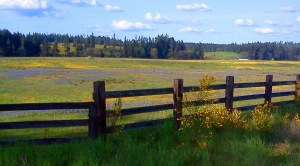
Timber is no longer big here. Nowadays our town is famous for Wolf Haven International, sandstone art, crafted whiskey, and wine. We still have a few large cattle ranches out on the Violet Prairie, but 5-to-7-acre executive “horse properties,” llama farms, alpaca ranches, goat yoga, and soap-making classes have found fertile ground here. In the early part of the 20th century bootlegging was an industry here (my maternal grandfather) so having the distilleries is the legal continuation of an old tradition.

It’s an isolated town, filled with quirky, wonderful people, and situated in a valley with heavily forested hills on the outskirts. If a fictional story were set in this town, it would feature the same political schisms that divide the rest of our country. There are other tensions. Some families have been here for generations, and  a few don’t appreciate the influx of low-paid state workers buying cookie-cutter tract homes here.

Other than the few local businesses, most people commute to work in Olympia or one of the other surrounding communities.

My street is a stretch of rough blacktop with no sidewalks. It runs east and west, with a fabulous view of Mount Rainier rising at the east end. It is lined with homes on both sides, but it’s divided. A nicely landscaped mobile home park is on the north side of the street, across from my front door. On the south side of the street is the long row of forty stick-built homes, built in 2005 just before the housing bubble crashed. On my side of the street, the row of homes are nearly identical, as there are only two types of floor plans, one for three bedrooms (mine) or the four-bedroom version.
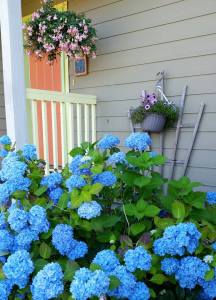
This makes for a seriously boring-looking neighborhood, so for a few years we had the only house with an orange door.

The day we moved into our brand-new home in 2005, two inches of rain fell, making moving a misery. Our new house rose out of a sea of mud and rocks. With a lot of effort, we made a pleasant yard. When the housing bubble burst, many of the people on my side of the street lost their jobs, and their homes went into foreclosure.

For several years, wherever there were two or more empty houses, it looked somewhat like a ghost town. Also, there was a long period when our house was valued at far less than we paid for it, which meant that had we wanted to, we couldn’t sell it.

My town has one grocery store, which carries the basics, but their produce is awful, and you really have to check the pull dates on things like eggs, hummus, and cottage cheese. It’s more affordable to shop in Olympia.

We have a historic district, where the buildings are all built from sandstone quarried at the old quarries. Many of the old buildings are home to antique stores. The masonic lodge is made of Tenino sandstone.

The city park is a pleasant place to go on a hot Saturday afternoon, with a large public swimming pool in one of the flooded quarries.

It’s a nice place, a quiet town with several large Baptist churches, a Catholic church, and a large number of small off-shoot fundamentalist churches. Alas, those of us of the Lutheran persuasion must go to Olympia to find God.

In the morning, birdsong fills the air. Robins, wrens, finches, hummingbirds, crows, Stellar’s jays, mourning doves – the neighborhood is alive with birds.

Odors are important. The meat department at the grocery store smokes their own ribs and other cuts, and the wind carries the scent all over the neighborhood. When they mow the fields at the edge of our town the smell of cut hay fills the air.

During the day when I go outside, I can hear the children playing at the school. In the evening, the neighborhood is filled with the sounds of kids playing in each other’s yards.

Other familiar sounds are the traffic on Highway 507, and the horns sounding from the trains passing at the west end of town. Annoyingly, helicopters from the nearby military base sometimes buzz our town—flying low over our roofs, shaking the houses, rattling dishes in the cupboards.

It’s the perfect setting for a paranormal fantasy or a murder mystery.
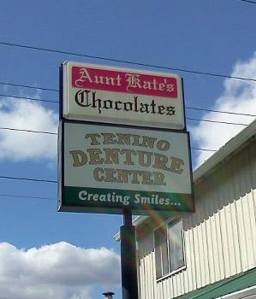
Your characters subtly identify with the community they live in. Small town or large city, village or hut in the forest – where they are from shapes how they think, how they see the world. This is true of fantasy and sci-fi stories as well as murder mysteries and thrillers.

Visualize your own community and write a word picture of it. Then visualize the community your characters live in and write a word picture of this imaginary place.

Ambient sounds, odors, places the characters regularly frequent—these form the general environment, the setting of your story. This is the immediate world, the world of community.


Credits and Attributions

Photos and images in this post are from the authors personal collection © Connie Jasperson 2019

5 Comments

Filed under writing

World Building – creating political structures #amwriting

Every society, fantasy, sci-fi, or real-world, must have an overarching political structure—a government of some sort. Humans are tribal – like all primates we are comfortable when we have a hierarchy of decision-makers to guide the tribe.

A simple society might consist of an elder and several trusted advisors.

A more complex society might have a monarch leading a society composed of multiple layers:

Monarch/Royalty

→Nobility

→→Lesser Nobility

→→→Upper Middle Class

→→→→Middle Class

→→→→→Lower Middle Class

→→→→→→Lower Class

→→→→→→→Poorest Class

Every human society, large or small, is divided into layers and classes, whether we want to admit it or not. Change the word “Monarch” to “Mayor,” Governor,” “President,” “Pope,” or “Prime Minister,” and the society they lead falls into the same layers.

This is because someone is always more important, richer, has more power, makes the rules.

The politics of a society are an invisible construct that affects every aspect of a story, even if it isn’t directly addressed. Our characters have a place within that structure. When you know what that place is, you write their story accordingly. If you know your characters’ social caste, you know if they are rich or poor; hungry or well-fed. This will shape them throughout the story:

  • Hunger drives conflict
  • Well-fed could mean a complacent society

Every society has laws, inviolable rules. Breaking these laws has consequences.

Some small tribal societies have unwritten codes of ethics, but they are as firmly enforced as any written laws. When a character goes against the commonly accepted rules, they must face the consequences.

That flouting of civil laws is an opportunity for conflict.

Sometimes I run short of words on a new project but I can’t set it aside. At that point I go deep into the backstory and examine the hidden underpinnings of their society. Little, if any, of this backstory will enter into the finished product. But I have found that when my characters are sure of what their station in society is, I can write their journey with confidence and authority.

I need to know who they are, how they see themselves and their future, and how they fit organically into their world.

One aspect that is a hidden support structure of every fantasy society is the government.  Even if it doesn’t come into the story, take a few moments to examine the political power structure of your world. It’s a good idea to write down a page or so of information detailing the political and monetary structure of the world your characters inhabit.

As I create the political power-structure, I find that the opportunities for creating tension within the story also grow. I keep a list of those ideas so that when I run short on creativity, I have a bit in the bank, so to speak.

However, in order to convey that information logically and without contradictions, you must have an idea of how things work. Does the government/legal system affect your characters? If not, this exercise is a waste of time, sorry.

  • Who has the power and privilege in that society, and who is the underclass?
  • How is your society divided? Who has the wealth?
  • Who has the power? Men, women—or is it a society based on mutual respect? Is one race more entitled than another?
  • Monarchy, Elected officials, Warlords, Shamans, or what?
  • How do they get that power? Hereditary, elected, military coup?
  • What laws affect your characters or hinder them?
  • How are the governing people perceived? Foolish or wise? Honest or Corrupt?
  • What place does religion have in this society? We examined religion last week in the post Creating Power Structures and Religions.
  • What passes for morality? You only need to worry about the moral dilemmas that come into your story.
  • If a character goes against society’s unwritten or moral laws, what are the consequences?

One critical aspect of society that governments have control of is money. If you have a fantasy society, design a simple monetary system. Keep it simple, so you don’t contradict yourself over the course of the story.

I use the same system in all three of my fantasy worlds. A Gold is comprised of 10 Silvers. A Silver is comprised of 10 Coppers.

In a sci-fi world, you can get away with using a blanket term like credits. These are easy concepts for a reader to imagine without your having to go into detail. Examples might be:

  • Innkeeper: “A mug of ale is three coppers. No coppers, no ale.”
  • Spaceport pawnbroker: “It’s unregistered. A weapon like this is worth five hundred credits, don’t you agree?”

If you’re writing in a speculative fiction world and you absolutely must use created names for money and positions, make those words simple to read and pronounce, and once you have established them, don’t deviate from them.

Good world building takes the familiar and shapes it into unfamiliar ways. It’s only my opinion, but I suggest you keep to familiar terms for leaders. King/queen, president, mayor, admiral, captain—these are terms that convey an image with no effort on your part. Anything the reader doesn’t have to research is good. If you are too enthusiastic in creating an entire language in order to convey a sense of foreignness, you have gone to a great deal of trouble only to lose the majority of readers.

When you are building a world that only exists on paper, you must be sparing with the space you devote to conveying the social, religious, and political climate of your story.  This is atmosphere. This is knowledge the characters have, but the reader does not.

There is no need to have an introductory chapter describing the laws and moral codes of the religious order of St Anthony, or the political climate of East Berlin in 1962. The way you convey this is to show how these larger societal influences affect your character and his/her ability to resolve their situation.

You show this in small ways, with casual mentions in conversation ONLY when it becomes pertinent, and not through info dumps.

Familiar words convey familiar images. Use them wisely in showing an entire fantasy world. Consider the politics in a medieval setting:

Setting:

  1. the village of Imaginary Junction, in the Barony of Blackthorn.

General atmosphere:

  1. the weather is unseasonably cold

Introduce the protagonist and show him in his situation:

  1. In an alley, a bard, Sebastian, is  hiding.

Introduce the antagonist(s):

  1. Soldiers of Baron Blackthorn, whom Sebastian has inadvisably humiliated in a song are searching for him.

Introduce the way politics and power affect the protagonist:

  1. the soldiers surround and capture Sebastian
  2. he is hauled before the angry baron and
  3. thrown into prisonsentenced to hang at dawn.

The bolded words above offer a reader powerful images of both the physical and political world Sebastian lives in. These words are familiar to every reader of fantasy. They convey emotions and a feudal atmosphere without you having to resort to an info dump of the history of Imaginary Junction.

Show the coldness of the alley, show the irate nobleman’s anger, show the wretchedness of the protagonist in prison, show the arrogance of the soldiers. Use familiar terms to convey entire packets of images wherever possible, and they will be unobtrusive, allowing the reader to live the story, to fear the coming dawn as much as Sebastian does.


Image Credits and Attributions:

Henry VIII by Hans Holbein 1540 / Wikimedia Commons contributors, “File:Enrique VIII de Inglaterra, por Hans Holbein el Joven.jpg,” Wikimedia Commons, the free media repository, https://commons.wikimedia.org/w/index.php?title=File:Enrique_VIII_de_Inglaterra,_por_Hans_Holbein_el_Joven.jpg&oldid=344005488 (accessed June 2, 2019

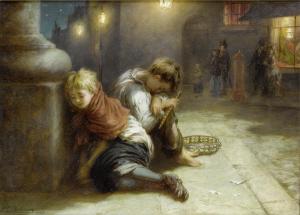
Wikimedia Commons contributors, “File:Augustus Edwin Mulready Fatigued Minstrels 1883.jpg,” Wikimedia Commons, the free media repository, https://commons.wikimedia.org/w/index.php?title=File:Augustus_Edwin_Mulready_Fatigued_Minstrels_1883.jpg&oldid=335802594 (accessed June 2, 2019).

Wikimedia Commons contributors, “File:Ernst Meyer – A Roman Alley – KMS2097 – Statens Museum for Kunst.jpg,” Wikimedia Commons, the free media repository, https://commons.wikimedia.org/w/index.php?title=File:Ernst_Meyer_-_A_Roman_Alley_-_KMS2097_-_Statens_Museum_for_Kunst.jpg&oldid=330745323 (accessed June 2, 2019).

7 Comments

Filed under writing