Monthly Archives: January 2021

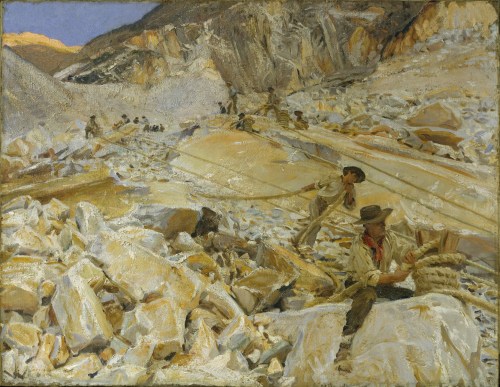
#FineArtFriday: Bringing down marble from the quarries to Carrara, Sargent 1911

Artist: John Singer Sargent  (1856–1925)

Title: Bringing down marble from the quarries to Carrara

Date: 1911

Medium: oil on canvas

Dimensions: Height: 71.4 cm (28.1 in); Width: 91.8 cm (36.1 in)

Collection: Metropolitan Museum of Art

Inscriptions: Signature bottom left: John S. Sargent

What I love about this painting:

This picture details the relentless heat of the day, the back-breaking labor of men cutting marble. This is how quarrying was done prior to World War I, with steam-donkeys and great physical peril. The ropes are huge and heavy, and these men secure the dangerous load with practiced ease.

Carrara Italy is an important center for the extraction and processing of marble. The famous stone is white and exceedingly valuable.

One of Sargent’s great skills was the ability to convey the sensory impressions of an environment, depicting his characters outdoors in all the seasons.

About the Artist, via Wikipedia:

John Singer Sargent, January 12, 1856 – April 14, 1925) was an American expatriate artist, considered the “leading portrait painter of his generation” for his evocations of Edwardian-era luxury. He created roughly 900 oil paintings and more than 2,000 watercolors, as well as countless sketches and charcoal drawings. His oeuvre documents worldwide travel, from Venice to the Tyrol, Corfu, the Middle East, Montana, Maine, and Florida.

Born in Florence to American parents, he was trained in Paris before moving to London, living most of his life in Europe. He enjoyed international acclaim as a portrait painter. An early submission to the Paris Salon in the 1880s, his Portrait of Madame X, was intended to consolidate his position as a society painter in Paris, but instead resulted in scandal. During the next year following the scandal, Sargent departed for England where he continued a successful career as a portrait artist.

From the beginning, Sargent’s work is characterized by remarkable technical facility, particularly in his ability to draw with a brush, which in later years inspired admiration as well as criticism for a supposed superficiality. His commissioned works were consistent with the grand manner of portraiture, while his informal studies and landscape paintings displayed a familiarity with Impressionism. In later life Sargent expressed ambivalence about the restrictions of formal portrait work, and devoted much of his energy to mural painting and working en plein air. Art historians generally ignored artists who painted Royalty and “Society” – such as Sargent – until the late 20th century.


Credits and Attributions

John Singer Sargent, Public domain, via Wikimedia Commons

“Carrara.” Wikipedia, The Free Encyclopedia. 16, 2021, 12:36 utc. 29 Jan 2021, 03:23 <//en.wikipedia.org/w/index.php?title=Carrara&oldid=118022943>.

“File:John Singer Sargent – Bringing Down Marble from the Quarries to Carrara (1911).jpg.” Wikimedia Commons, the free media repository. 15 Jun 2019, 13:13 UTC. 29 Jan 2021, 03:24 <https://commons.wikimedia.org/w/index.php?title=File:John_Singer_Sargent_-_Bringing_Down_Marble_from_the_Quarries_to_Carrara_(1911).jpg&oldid=354733943>.
Comments Off on #FineArtFriday: Bringing down marble from the quarries to Carrara, Sargent 1911

Filed under #FineArtFriday

Conveying Mood part 2: adverbs #amwriting

Today is the second installment of a series on modifiers, words we use to describe nouns and verbs. I’m on a quest to find ways to use fewer of them and make the most of the ones I do use.

In the previous post, I  mentioned going to an online thesaurus and looking up your overall mood word. This is where you will find synonyms for your mood words and also the opposites.

In the root form, adverbs are adjectives, words that modify nouns. Add the suffix ‘ly’ to them, and they become words that modify verbs.

Adverbs tend to be fluffy. Most readers don’t like fluffy prose. I suggest you don’t muck up your modifiers by adding ‘ly’ at the end of them unless it is the only thing that works.

With that said, my rule is don’t write clumsy prose just to avoid using ‘ly.’

In the first draft, modifiers are brain-storming words. They show us what we intended to convey when we first wrote the narrative.

For that reason, they are essential parts of English and can’t be completely discarded as some deluded authors loudly swear they have done.

I suppose one could write a novel without using any modifiers whatsoever, but I wouldn’t want to read it. However, modifiers can weaken verbs by telling the story rather than showing it.

I don’t self-edit my first drafts as I write, so my prose is always a mess when I begin revisions.

This year’s NaNoWriMo novel was written with no outline, so it’s an example of my worst “thinking habits.” It is a sea of adverbs and adjectives, but these words are the roadmap that tells me what prose need reshaping to show the story.

At the time, I was imagining the scenes and plotting as I wrote. When I look back, the early drafts for all my work are littered with adverbs.

When you imagine your adverbs as signals from your creative mind, you see them a guide leading you to the story you really wanted to write.

In the second draft, I want to inject impact into the opening paragraphs and all the sentences that follow right to the grand finale. But I also want them to show what I envision.

That requires rewording the sentences to make them active. Look at your sentence structure.

Sentence structure matters.

Where you place an adjective relative to the noun they are modifying affects how a reader perceives it. Noun-verb is a strong lead in. Nouns work best when one strong, well-chosen adjective shows us what the point-of-view characters sees, hears, smells, touches, and tastes, rather than fluffing the verbs and hindering the action.

Sunlight glared over the ice, a cold fire in the sky that cast no warmth but burned the eyes.

The example sentence contains four nouns, one modifier (an adjective), and three verbs. The sentence is structured this way: noun-verb (sunlight glared) adjective-noun (cold fire), verb-adjective-noun (cast no warmth), and finally, verb-article-noun (burned the eyes).

Verb followed by noun shows us what the noun did. Verb-adjective-noun shows us how the noun looked (smelled, tasted, or felt) during the action.

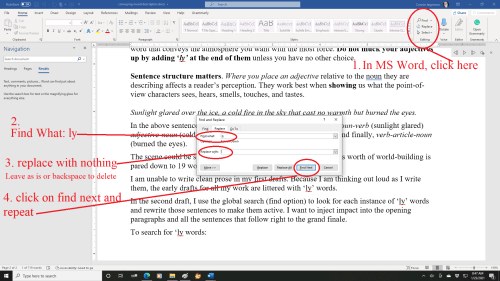
To search for unnecessary adverbs, look for ‘ly’ words in MS Word:

1: Click replace in the upper right corner of the Home tab.

2: Type ly into the “Find What” box.

3: Leave the “Replace With” box blank.

4: Look at each instance individually and decide to keep the ly or delete it. Many words, such as early or easily, have ly as their suffix, so look at each instance and decide if it stays or goes.

5: Once you have decided, click find next and repeat the process.

The above instructions are for MS Word, but Google Docs and Open Office both have some kind of search and replace function. Go to the internet and find the instructions!

In the first draft, the important thing is to get the idea down without self-editing. For this reason, we don’t publish our first drafts.

If you are like me in your first drafts, cleaning up and strengthening the prose could take a while, especially in a large manuscript. However, it is part of the revision process and is well worth the time you put into it.

The English language has evolved over the last century. The word very has become a ‘fluff word’ that sticks out when we see it written too freely in a narrative. It has a purpose but is easy to overuse. In that case, it adds nothing of value to the prose, so editors will suggest you remove it to make your sentences stronger.

Below is a list of modifiers, words that paint an image of the world our characters inhabit. Some will change the voice from active to passive, so be wary of how you use them.

When you do use a modifier, be creative. Sometimes, using an unexpected adjective lends life to an otherwise ordinary scene.

Nouns like a well-placed modifier, but most of the time, verbs are stronger when they work alone.

313 Modifiers for Nouns

  • Abnormal
  • Absentminded
  • Accidental
  • Adventurous
  • Afterward
  • Almost
  • Always
  • Annual
  • Anxious
  • Arrogant
  • Awkward
  • Bashful
  • Beautiful
  • Bitter
  • Bleak
  • Blind
  • Blissful
  • Boastful
  • Bold
  • Brave
  • Brief
  • Bright
  • Brisk
  • Broad
  • Busy
  • Calm
  • Careful
  • Careless
  • Cautious
  • Certain
  • Cheerful
  • Clear
  • Clever
  • Close
  • Coaxing
  • Colorful
  • Common
  • Continual
  • Cool
  • Correct
  • Courageous
  • Cross
  • Cruel
  • Curious
  • Dainty
  • Dear
  • Deceiving
  • Deep
  • Defiant
  • Deliberate
  • Delightful
  • Diligent
  • Dim
  • Doubtful
  • Dreamy
  • Easy
  • Elegant
  • Energetic
  • Enormous
  • Enthusiastic
  • Equal
  • Especial
  • Even
  • Even
  • Eventual
  • Exact
  • Excited
  • Extreme
  • Fair
  • Faithful
  • Famous
  • Far
  • Fast
  • Fatal
  • Ferocious
  • Fervent
  • Fierce
  • Fond
  • Foolish
  • Fortunate
  • Frank
  • Frantic
  • Free
  • Frenetic
  • Frightful
  • Full
  • Furious
  • General
  • Generous
  • Gentle
  • Glad
  • Gleeful
  • Graceful
  • Grateful
  • Great
  • Greedy
  • Happy
  • Hasty
  • Healthy
  • Heavy
  • Helpful
  • Helpless
  • High
  • Honest
  • Hopeless
  • Hungry
  • Immediate
  • Innocent
  • Inquisitive
  • Instant
  • Intense
  • Intent
  • Interesting
  • Inward
  • Irritable
  • Jagged
  • Jealous
  • Jovial
  • Joyful
  • Joyous
  • Jubilant
  • Judgmental
  • Just
  • Keen
  • Kidding
  • Kind
  • Kindhearted
  • Knavish
  • Knowing
  • Knowledgeable
  • Kooky
  • Lazy
  • Less
  • Light
  • Like
  • Limp
  • Live
  • Lofty
  • Longing
  • Loose
  • Loud
  • Loving
  • Loyal
  • Mad
  • Majestic
  • Meaningful
  • Mechanical
  • Merry
  • Miserable
  • Mocking
  • Month
  • More
  • Mortal
  • Most
  • Mysterious
  • Natural
  • Near
  • Neat
  • Nervous
  • Never
  • Nice
  • Noisy
  • Not
  • Obedient
  • Obnoxious
  • Odd
  • Offensive
  • Official
  • Often
  • Open
  • Optimistic
  • Overconfident
  • Painful
  • Partial
  • Patient
  • Perfect
  • Physical
  • Playful
  • Polite
  • Poor
  • Positive
  • Potential
  • Powerful
  • Prompt
  • Proper
  • Punctual
  • Quaint
  • Queasy
  • Queer
  • Questionable
  • Quick
  • Quicker
  • Quiet
  • Quirky
  • Quizzical
  • Random
  • Rapid
  • Rare
  • Ready
  • Real
  • Reassuring
  • Reckless
  • Regular
  • Reluctant
  • Repeated
  • Reproachful
  • Restful
  • Righteous
  • Rightful
  • Rigid
  • Rough
  • Rude
  • Safe
  • Scarce
  • Scary
  • Searching
  • Sedate
  • Seldom
  • Selfish
  • Separate
  • Serious
  • Shaky
  • Sharp
  • Sheepish
  • Shrill
  • Shy
  • Silent
  • Sleepy
  • Slow
  • Smooth
  • Soft
  • Solemn
  • Solid
  • Sometimes
  • Soon
  • Speedy
  • Stealthy
  • Stern
  • Strict
  • Successful
  • Sudden
  • Supposed
  • Surprising
  • Suspicious
  • Sweet
  • Swift
  • Sympathetic
  • Tender
  • Tense
  • Terrible
  • Thankful
  • Thorough
  • Thoughtful
  • Tight
  • Tomorrow
  • Too
  • Tremendous
  • Triumphant
  • True
  • Truthful
  • Ultimate
  • Unabashed
  • Unaccountable
  • Unbearable
  • Unethical
  • Unexpected
  • Unfortunate
  • Unimpressive
  • Unnatural
  • Unnecessary
  • Upbeat
  • Upright
  • Upside-down
  • Upward
  • Urgent
  • Useful
  • Useless
  • Usual
  • Utter
  • Vacant
  • Vague
  • Vain
  • Valiant
  • Vast
  • Verbal
  • Very
  • Vicious
  • Victorious
  • Violent
  • Vivacious
  • Voluntary
  • Warm
  • Weak
  • Weary
  • Well
  • Wet
  • Whole
  • Wild
  • Willful
  • Wise
  • Woeful
  • Wonderful
  • Worried
  • Wrong
  • Yawning
  • Year
  • Yearning
  • Yesterday
  • Yielding
  • Youthful
  • Zealous
  • Zest
  • Zestful

Previous in this series:

Conveying Mood Part 1: Adjectives

Short Story part 1: word choice

The Short Story part 2: Setting and Atmosphere 

Theme part 1

Theme part 2

7 Comments

Filed under writing

Conveying Mood part 1: adjectives #amwriting

This week we are continuing our exploration of words. I’m on a quest to find ways to use fewer of them and make the most of the ones I do use.

I’ve said many times that words are the colors we use to show entire worlds. Today, I’m exploring the many ways we use words for better impact.

I like to find my information easily, so I make a new file for every story I write. Once I know what the mood for the story I intend to write is, I go out and look for the mood words I want to have on hand. I list them in a document that I will save in that file with a proper file name, such as: mood_words_Rainbows_End.

This takes very little time, and I have a supply of mood descriptors to draw on to build my world without having to stop and look things up. Having this list helps me avoid crutch-words.

Because I am currently writing several pieces with a Gothic mood, my example word last week was ominous. It is an adjective that conveys the impression that something bad or unpleasant is going to happen.

But first, what is an adjective? For those of us who can’t remember what we ate for dinner last night, much less what we learned in grade school, adjectives are words or phrases that modify a noun, which is a person, place, or thing. They add to (or grammatically relate to) a noun and act to modify or describe it.

We don’t want to get crazy with adjectives, because they’re like salt–too much and you’ve ruined your food.

However, they are a fundamental part of English grammar, and while we can be sparing with them, we can’t eliminate them because (again) they are like salt: some are essential.

I use the Oxford Dictionary of Synonyms and Antonyms. But if you don’t own a good thesaurus, the Merriam-Webster online thesaurus is your best friend. https://www.merriam-webster.com/thesaurus

You will find many words, some of which are obscure.

Do yourself a favor and choose words that are fairly common, ones most readers with an average education won’t have to stop and look up.

Synonyms for ominous I can use: baleful, dire, direful, foreboding, ill, ill-boding, inauspicious, menacing, portentous, sinister, threatening.

Related words to subtly reinforce the mood: black, bleak, cheerless, chill, cloudy, cold, comfortless, dark, darkening, depressing, depressive, desolate, dim, disconsolate, dismal, drear, dreary, forlorn, funereal, gloomy, glum, godforsaken, gray/grey, lonely, lonesome, miserable, morbid, morose, murky, plutonian, saturnine, sepulchral, somber/sombre, sullen, sunless, threatening, wretched.

Other related words:

discouraging, disheartening, hopeless, unfavorable, unpromising, unpropitious, ill-fated, ill-starred, star-crossed, troubled, unfortunate, unlucky, evil, malign, malignant.

Antonyms for ominous, opposites I can use to provide contrast, so my mood is made more explicit: unthreatening.

Near Antonyms for ominous:

auspicious, benign, bright, encouraging, favorable, golden, heartening, hopeful, promising, propitious, prosperous. [1]

Toward the end of my work, I will want things to feel hopeful. So, I have researched the word auspicious the same way as I did ominous.

Definition of auspicious: having qualities that inspire hope or pointing toward a happy outcome.

Synonyms for auspicious: bright, encouraging, fair, golden, heartening, hopeful, likely, optimistic, promising, propitious, rose-colored, roseate, rosy, upbeat.

Words related to auspicious:

cheering, comforting, reassuring, soothing, assured, confident, decisive, doubtless, positive, sure, unhesitating, favorable, good.

Antonyms for auspicious: bleak, dark, depressing, desperate, discouraging, disheartening, dismal, downbeat, dreary, gloomy, hopeless, inauspicious, pessimistic, unencouraging, unlikely, unpromising.

Near Antonyms for auspicious: cheerless, comfortless, doubtful, dubious, uncertain, grim, negative, unfavorable, funereal, glum, gray/grey, miserable, wretched. [2]

If you are writing any kind of genre work, the best way to deploy your descriptors is to find the word that conveys the atmosphere you want with the most force.

Sentence structure matters. Where you place an adjective relative to the noun they are modifying affects a reader’s perception. They work best when showing us what the point-of-view characters sees, hears, smells, touches, and tastes.

Sunlight glared over the ice, a cold fire in the sky that cast no warmth but burned the eyes.

In the above sentence, the essential parts are structured this way: noun-verb (sunlight glared) adjective-noun (cold fire), verb-adjective-noun (cast no warmth), and finally, verb-article-noun (burned the eyes).

The scene could be shown in a multitude of ways, but a paragraph’s worth of world-building is pared down to 19 words, three of which are action words (verbs).

In my next post, we will go deeper into the uses and abuses of modifiers.


Credits and Attributions:

[1] “Ominous.” Merriam-Webster.com Thesaurus, Merriam-Webster, https://www.merriam-webster.com/thesaurus/ominous. Accessed 23 Jan. 2021.

[2] “Auspicious.” Merriam-Webster.com Thesaurus, Merriam-Webster, https://www.merriam-webster.com/thesaurus/auspicious. Accessed 23 Jan. 2021.

4 Comments

Filed under writing

#FineArtFriday: The Art of Joos van Craesbeeck revisited

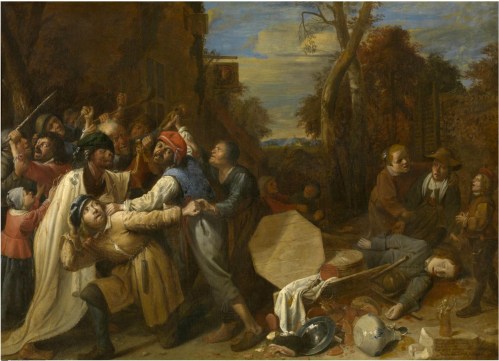
Joos van Craesbeeck (c. 1605/06 – c. 1660) was an interesting character, one who stood out among the many interesting characters of the seventeenth century Flemish art community. He was a baker and an artist, a friend and contemporary of  Adriaen Brouwer. They most likely met while Brouwer was jailed in the citadel of Antwerp, although why he was imprisoned is unknown. But the bakery in the Antwerp citadel was operated at that time by Joos van Craesbeeck.

Van Craesbeeck was fascinated with the portrayal of violence and the senses of taste and smell. He painted the dissolute side of life, shocking in its intensity and honesty. Death is Violent and Fast: Quarrel in a Pub, is an excellent example of his almost brutish depiction of peasants brawling. Blood flows, one man lies dead, and in the lower right hand corner, Death smiles, pleased with that night’s work.

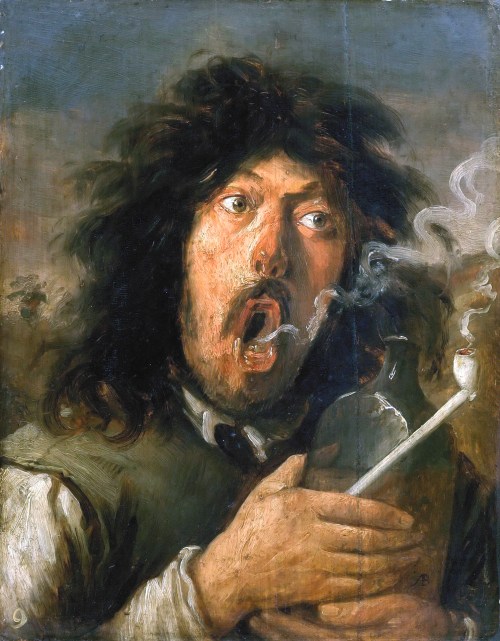
He often painted himself, as is seen in The Smoker, a self-portrait that was at one time attributed to Adriaen Brouwer, depicting the senses of smell and taste. He shows himself clutching both a bottle of hard liquor and a pipe, as if they are the dearest things to him. He exhales a stream of smoke, savoring it.

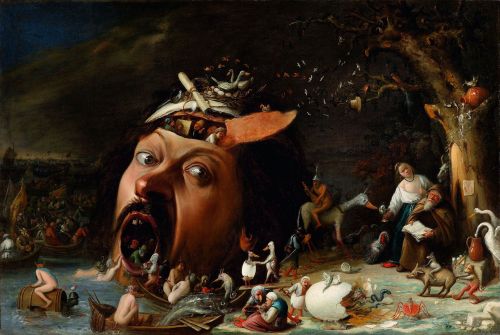
He also painted his own self-portrait as the central nightmare from which other nightmares spawn in the Temptation of St. Anthony. Note the way his mouth is full of little demons entering and leaving, and his head is open to reveal an artist painting beneath wild dark hair in which geese nest. St. Anthony himself is small, placed to the right, almost unnoticed in the onslaught of demons and temptations, both physical and moral. A cacophony of violence and evil rages as Anthony clings to the scriptures. This is a revealing portrait of how the artist viewed himself and the demons he battled, in my opinion.

The work of Joos van Craesbeeck is not comforting or warm. It is always allegorical, showing us something we don’t like about the world we live in. Violence and vice were as much a part of life in his time as they are today, and perhaps will always be.

Quote from Wikipedia: Van Craesbeeck painted at least five portraits which are presumed to be self-portraits and in which he depicts himself in a ‘dissolute’ manner. The dissolute self-portrait was a genre that had taken root in Dutch and Flemish genre painting in the 17th century. It was an inversion of the Renaissance ideal of the ‘pictor doctus’: the artist as an intellectual and gentleman. This ideal was replaced by the new model of the prodigal artist who is characterized by his creative inspiration and talents. These self-portraits emphasized the artists’ dissolute nature by creating associations with traditional moral themes such as the Five Senses and the Prodigal Son in the tavern. Van Craesbeeck painted himself four times in low-life guises depicting the sense of Taste.


Credits and Attributions:

The Art of Joos van Craesbeeck first appeared here on Life in the Realm of Fantasy 20 July 2018.

Wikipedia contributors, “Joos van Craesbeeck,” Wikipedia, The Free Encyclopedia, https://en.wikipedia.org/w/index.php?title=Joos_van_Craesbeeck&oldid=823865809 (accessed July 20, 2018).

Death is Violent and Fast: Quarrel in a Pub, painting by Joos van Craesbeeck, ca. 1630 – 1635 PD|100 via Wikimedia Commons.

The Smoker, Joos van Craesbeeck ca.1635 – 1636 [Public domain], via Wikimedia Commons

The Temptation of St Anthony, Joos van Craesbeeck ca. 1650 [Public domain], via Wikimedia Commons

Comments Off on #FineArtFriday: The Art of Joos van Craesbeeck revisited

Filed under #FineArtFriday

The Short Story part 2: Setting and Atmosphere #amwriting

When I begin writing a short story, I want my first paragraphs to surprise an editor in a good way, to make them suspend their disbelief long enough to finish reading the story.

Especially in a short story, we must use the setting to establish a feeling of atmosphere, a mood that will hint at what is to come. Atmosphere is the part of a world created by your inclusion of colors, scents, and ambient sounds. The words you choose determine how the visuals are shown.

A reader’s perception of a setting’s reality is affected by emotions they aren’t even aware of. So, in a short story those first paragraphs must give the reader a sense of familiarity even though it’s a place they’ve never been.

We give the reader something they can understand without being bluntly told.

Do you want to convey a sense of danger? Imagine a woodland pond. On a windless day, the pool will be calm, still. The sky and any overhanging trees will be reflected in it. When a storm rolls in, things change. The waters move. Ripples and small waves stir the surface, reflecting the dark gray of the stormy sky.

Use the colors of the sky, the chill of the wet earth. Allow the scent of rotten leaves to linger in the air.

In the previous installment of this series, we talked about how important word choice is when attempting to communicate a feeling of action.

This is also true when you want to show the atmosphere of a setting. A dark, gloomy setting created by “weighted words” establishes an ominous atmosphere. This will be reflected in the mood of your characters.

“Weighted words” are those with strong descriptive power. Choose words that are intense and bold in their own right. This is crucial when writing a short story because you have a word count limit to consider.

Lighter words, such as those that begin with softer consonants, will create an atmosphere that feels gentler.

We have mentioned this before: while the two terms, mood and atmosphere, are usually used as synonyms, they are different from each other. In literature, mood refers to an individual’s internal feelings and emotions as often as it does the piece’s overall atmosphere. The term atmosphere is always associated with a setting.

The characteristics we call mood and atmosphere are created by inference. We offer the reader a word-picture that is hinted at and suggested rather than bluntly stated. Writers give the reader something to infer, something they can interpret.

What is the interpretive aspect of this layer? The author’s job is to use inference so that the reader can interpret their intention. That is, a reader can effortlessly understand what the author was attempting to convey.

The general mood is heavily influenced by other aspects of the narrative: setting, theme, ambiance, and phrasing.

A reader’s perception of a setting’s atmosphere is affected by a character’s emotions. Emotion, as written on the page, is the character’s experience of transitioning from the negative to the positive and back again.  As the characters’ emotions change from high to low throughout the story, the overall mood is influenced.

In this layer, visual objects in a room or an outdoor space color the atmosphere and affect the characters’ moods. Think about the word” Gothic.” Gothic atmosphere has a winter feel to it, even in summer.

Barren landscapes and low windswept hills feel gothic to me. The word Gothic in a novel’s description immediately tells us we are looking at a dark, moody piece set in a stark, desolate environment. We know it will include some supernatural elements.

The atmosphere/mood dynamic of any narrative is there to make the story’s emotional experience specific. It is not a substitute for emotions that an author can’t figure out how to write.

For me, as an author, creating the right atmosphere leads to shaping the characters’ overall mood. The right mood can help you articulate specific emotions.

Environmental symbols are subliminal landmarks for the reader. Thinking about and planning symbolism in an environment is key to developing the general atmosphere and affecting the mood.

In a short story, you have only the first few paragraphs to set the scene and establish the mood. If you can do it in one sentence, even better.

Sunlight glared over the ice, a cold fire in the sky that cast no warmth but burned the eyes.

And so, to wind this up, setting, atmosphere, and mood are intertwined. Getting those three aspects right and establishing them at the outset means making good word choices. Where you find atmosphere in the setting, you also find mood in the characters.

To do that, go to the thesaurus and look up synonyms and antonyms for your mood word. Are you writing a dark story? Is the mood ominous?

Synonyms & Antonyms of ominous

Definition: being or showing a sign of evil or calamity to come.

Synonyms: baleful, dire, direful, doomy, foreboding, ill, ill-boding, inauspicious, menacing, portentous, sinister, threatening.

Related words:

black, bleak, cheerless, chill, cloudy, cold, comfortless, dark, darkening, depressing, depressive, desolate, dim, disconsolate, dismal, drear, dreary, forlorn, funereal, gloomy, glum, godforsaken, gray (also grey), lonely, lonesome, miserable, morbid, morose, murky, plutonian, saturnine, sepulchral, somber (or sombre), sullen, sunless, wretched.

Other related words:

discouraging, disheartening, hopeless, unfavorable, unpromising, unpropitious, ill-fated, ill-starred, star-crossed, troubled, unfortunate, unlucky, evil, malign, malignant.

Antonym for ominous: unthreatening.

Near Antonyms for ominous:

auspicious, benign, bright, encouraging, favorable, golden, heartening, hopeful, promising, propitious, prosperous.


Previous in this series:

Theme part 1

Theme part 2

Short Story part 1 word choice


Credits and Attributions:

“Ominous.” Merriam-Webster.com Thesaurus, Merriam-Webster, https://www.merriam-webster.com/thesaurus/ominous. Accessed 19 Jan. 2021.

3 Comments

Filed under writing

The Short Story part 1: word choice #amwriting

Last week, we discussed how important exploring the theme is when writing for a themed anthology. This week, we are going deeper, finding ways to show a story and keep it within the word count limits.

Skill as a writer comes with practice. As we continue to work with our writing groups, we become technically better at the mechanics (grammar and punctuation).

Voice is how we bend the rules and is our authorly fingerprint. It will always be distinctly ours, because we all speak differently. However, many of the ways we express ourselves when speaking don’t translate well to writing within a tight framework.

Writing to a strict word count limit forces an author to pare away all that is unnecessary. To do that in 4,000 words or fewer, we choose words that have power.

We have talked about this before: active prose is Noun-Verb centric. If you are writing only for yourself, write any way you choose. But if you are hoping to sell books, it’s wise to keep in mind that today’s reader has high expectations and a great many other books to choose from.

We who write genre fiction (Sci-fi, Fantasy, Mystery, Thriller, Romance) must use words that are dynamic and convey a feeling of action.  In English, words that begin with hard consonants sound tougher and more powerful.

Say you have been invited to submit your work to an anthology. You have been given the theme which plays well to an idea you’ve had for a short story, and you are ready to write it.

But what is the mood you want to convey with your prose? Where you place the words in the sentence dramatically affects the mood, which either highlights or plays down the theme.

  • Placement of verbs in the sentence
    1. Moving the verbs to the beginning of the sentence makes it stronger.
    2. Nouns followed by verbs feel active.

Let’s look at four sentences, two of which are actively phrased, and two are passive. All describe the same self-destructive person, and none are “wrong.” Each conveys a different mood because of how they are expressed.

  1. She runs toward danger, never away.
  2. She never runs away from danger.
  3. Danger approaches, and she runs to meet it.
  4. If it’s dangerous, she runs to it.

I like it when an author makes good use of contrast when describing the difference(s) between two or more things in one sentence. Simplicity has impact. When looking for words with visceral and emotional power, consonants are your friend.

Sunlight glared over the ice, a cold fire in the sky that cast no warmth but burned the eyes.

Verbs are power words. If you choose forceful words, you won’t have to resort to a great deal of description. Weak word choices separate the reader from the experience, dulling the emotional impact of what could be an intense scene.

How we add depth to our prose without weakening it takes time and involves thought in the revision process. Consider word order, think about where you place your verbs, and use ordinary words that most people know and don’t have to look up in a dictionary.

We who write fiction create pictures without paint. We must learn to convey an inner landscape and imaginary world by painting a picture of the setting with a few deliberately chosen words. We also must show the atmosphere, the emotions, and the action.

Readers want us to use words that are “primary colors,” the words most people with an average education understand without having to go to a dictionary.

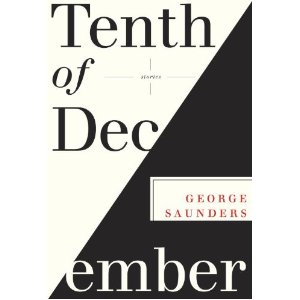
An example of this is Escape from Spiderhead,” a short science fiction story written by George Saunders and published in his 2013 anthology collection Tenth of December. It was first published in the New Yorker on Dec. 13, 2010.

This is a riveting story, one that challenges the reader to consider the ideas of free will and determinism. It also points out how easy it is for a society to strip certain individuals of their humanity, and how we justify it to ourselves.

Escape from Spiderhead is gut-wrenching and memorable because the words Saunders used to paint it with and the way he used them have power.

Emotional impact is created when an author combines common, everyday words in uncommon ways. I love finding an author whose words speak to me. Their stories surprise me, and the ideas they transmit fundamentally alters my perceptions of the world around me.

Previous in this series:

Theme part 1

Theme part 2

7 Comments

Filed under writing

#FineArtFriday: Peasant Wedding, David Teniers II (revisited)

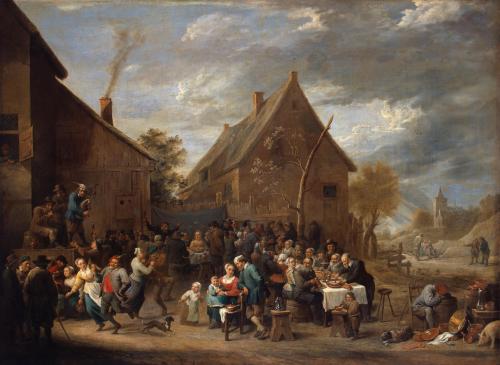
The Peasant Wedding by David Teniers the Younger  first appeared here on Life in the Realm of Fantasy on Nov 2, 2018. It’s one of my favorite Flemish paintings, because it depicts an event that is intrinsic even in today’s society–the wedding. The families of the bride and groom go all out, and weddings tend to be as big a party as the pair can manage no matter how rich or poor they are.

This painting is full of movement and life, and shows real people having a great party. The musicians are playing, some people are singing, some are talking, and some are dancing. Most are eating and just enjoying themselves. A few of the men are becoming a little familiar with the ladies, who are not really having any, and a few people have indulged a little too much.

Even the dog is having a good time.

Teniers was a prolific and skilled artist, a man remembered today as much for his lofty social ambitions as he is for the quantity and excellence of his work. He wanted to be a nobleman; indeed he once falsely laid claim to being descended from a noble line. Several times he nearly succeeded in this ambition, but nobility was one accolade he never achieved.

About David Teniers II, from Wikipedia:

Teniers married into the famous Brueghel artist family when Anna Brueghel, daughter of Jan Brueghel the Elder, became his wife on 22 July 1637. Rubens, who had been the guardian of Anna Brueghel after her father’s death, was a witness at the wedding.

Through his marriage Teniers was able to cement a close relationship with Rubens who had been a good friend and frequent collaborator with his wife’s father. This is borne out by the fact that at the baptism of the first of the couple’s seven children David Teniers III, Rubens’ second wife, Hélène Fourment was the godmother.

Teniers’ wife died on 11 May 1656. On 21 October of the same year the artist remarried. His second wife was Isabella de Fren, the 32-year-old daughter of Andries de Fren, secretary of the Council of Brabant. It has been suggested that Teniers’ main motive for marrying the ‘spinster’ was her rather elevated position in society. His second wife also brought him a large dowry. The couple had four children, two sons and two daughters. His second wife’s attitude to Teniers’ children from his first marriage would later divide the family in legal battles.

At the behest of his Antwerp colleagues of the Guild of Saint Luke, Teniers became the driving force behind the foundation of the Academy in Antwerp, only the second of such type of institution in Europe after the one in Paris. The artist used his connections and sent his son David to Madrid to assist in the negotiation to successfully obtain the required licence from the Spanish King. There were great celebrations in Antwerp when, on 26 January 1663, Teniers came from Brussels with the royal charter creating the Antwerp Royal Academy of Fine Arts, the existence of which was due entirely to his persistence.

Teniers petitioned the king of Spain to be admitted to the aristocracy but gave up when the condition imposed was that he should give up painting for money.

He was an innovator in a wide range of genres such as history,  genrelandscapeportrait and still life. He is now best remembered as the leading Flemish genre painter of his day


Credits and Attributions:

Wikimedia Commons contributors, “File:David Teniers de Jonge – Peasant Wedding (1650).jpg,” Wikimedia Commons, the free media repository, https://commons.wikimedia.org/w/index.php?title=File:David_Teniers_de_Jonge_-_Peasant_Wedding_(1650).jpg&oldid=225700063 (accessed November 2, 2018).

Wikipedia contributors, “David Teniers the Younger,” Wikipedia, The Free Encyclopedia, https://en.wikipedia.org/w/index.php?title=David_Teniers_the_Younger&oldid=858638339 (accessed November 2, 2018).

Comments Off on #FineArtFriday: Peasant Wedding, David Teniers II (revisited)

Filed under #FineArtFriday

Theme part 2 #amwriting

Not every anthology is themed, but many are. Most will also be restricted to one genre (romance, sci-fi, fantasy, crime) or a particular location, like a city or a place such as a coffee shop, etc. This is because theme alone isn’t enough to unify a book encompassing ten or more stories that are widely divergent in genre.

The concept of how to create a cohesive anthology was explained to me this way:

Consider a community art project where you ask five local artists to paint murals of cats to be displayed in the local community center. You will get five wildly divergent styles, and clashing colors, and cats that don’t go together well. But, if you ask them to paint black cats (or orange or red), your community wall art will have a consistency that celebrates the variety of the artists’ different styles rather than an eye-bleeding jumble of cats.

Therefore, when planning a story for a particular anthology, you must take the theme and any other setting or genre restrictions and run with it.

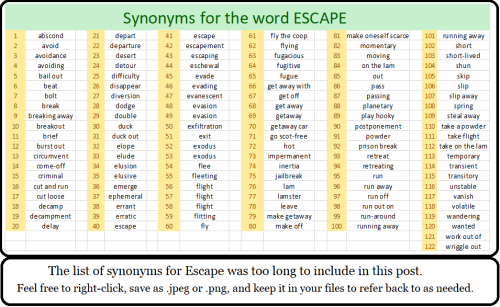
The first thing I do is research all the synonyms for that word. I recently wrote for an anthology with the theme of Escape, and it had to be set in the Pacific Northwest. I set my story in Olympia, Washington, in the area I grew up in. With my setting established, I went online and looked up every synonym for the word “escape.”

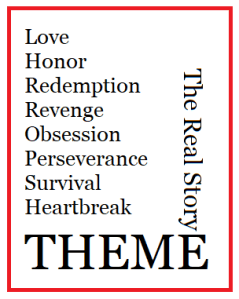
The above list is an image and not text, but feel free to copy it for your files.

Then after I had all the synonyms, I looked for the antonyms, the opposites.

Capture. Imprisonment. Confront.

Once I had a full understanding of all the many nuances of the theme, I asked myself how I could write a fantasy set in my real-world environment. My solution was to set it in a historical time, the late 1950s. I was a very small child then so anything I know about that era is a fantasy that I learned from television.

Then, I began plotting. I asked what my character needed most in her effort to escape. My gut answer was courage.

Sometimes, it helps if I use polarities (opposites, contrasts) to flesh out a character. These polarities helped me in fleshing out a protagonist and also the antagonist:

  • courage – cowardice
  • crooked – honorable
  • cruel – kind

As an editor, when I begin reading a short story, I want the first paragraphs to hook me. Those opening sentences establish three vital things:

  1. They introduce the problem.
  2. They introduce the characters and show us how they see themselves.
  3. They introduce the theme.

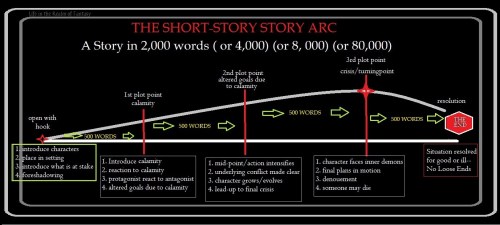
When writing a short story, it helps to know how it will end. I suggest you put together a broad outline of your intended story arc. I’m a retired bookkeeper, so I have a mathematical approach to this. Divide your story arc into quarters, so you have the essential events in place and occurring at the right time.

Assume you have a 4,000 word limit for your short story.

The Setup: The first 250 words are the setup and hook. You must have a compelling hook. In some cases, the first line is the clincher, but especially in a short story, by the end of the first page, you must have your reader hooked and ready to be enthralled.

The next 750 words take your characters out of their comfortable existence and launch them into “the situation” –will they succeed or not? What will be your inciting incident? How does it relate to the theme?

The next 2,500 words detail how the protagonist arrives at a resolution. What is the goal/objective? How does it relate to the theme? How did the underlying theme affect every aspect of the protagonists’ evolution in this story?

The final 500 words of your story are the wind-up. You might end on a happy note or not—it’s your story, but no matter what else you do, in a short story, nothing should be left unresolved. For this reason, subplots should not be introduced into the short story.

Word Count: Many times, publications and anthologies will have strict limits on the word count, such as no more than 4,000 or less than 2,000. For this reason, when writing short stories, we keep the cast of characters to a minimum.

When you’re only allowed 4,000 words, you must make each one count. You want that story to be the one the publication’s editor can’t put down.

We also keep the setting narrow: one place, one environment, be it a cruise ship, a restaurant, or a gas station—the location shouldn’t be epic in scale.

In a novel, side-quests and subthemes help keep the story interesting. This should go without saying, but you would be surprised at how often it doesn’t: you have no room to introduce side-quests in a short story.

When your writing mind has temporarily lost its momentum, and you are stretching the boundaries of common sense, it’s time to stop and consider the central themes. It helps to remind myself of the elements that really drive a plot.

Allegory is an essential tool for the author who wants to underline a theme and express crucial ideas with the least number of words. Using allegory and symbolism in the objects in the environment is a way to subtly underscore your theme. It allows you to show more without resorting to info dumps.

Consider a scene where you want to convey a sense of danger. Go to the “D” section of the Oxford Dictionary of Synonyms and Antonyms and look up “danger”:

  • danger – safety

Just past danger, we find

  • dark – light

And just beyond dark, we find

  • despair – hope

All of the above polarities would play well to the theme and would give your characters depth.

In any work, novel or short story, once you have identified the main theme, you can write the story in such a way that it is shown through:

  • Actions
  • Symbolic settings/places
  • Allegorical objects deliberately placed within the setting
  • Conversations

One final suggestion: Don’t think you can pull out some old story you have in a drawer, dust it off and tack on the theme word in a few places. No editor will be fooled.

Editors will look for many things when they are reading submissions. But no matter how brilliant the story is, if it doesn’t explore the theme well enough, they won’t accept it.

11 Comments

Filed under writing

Theme part 1 #amwriting

As an editor, one aspect of a story that I look at is theme. It is the invisible backbone of your story, a thread connecting disparate events that would otherwise appear random. Themes are often polarized, and multiple themes can emerge, creating opportunities for adding depth.

How do you identify your theme? Sometimes it’s difficult unless you start out with one in mind. Most of my books are based around the hero’s journey and detail how large events shape, and sometimes skew, the protagonists’ morals and ethics.

A common theme in fantasy is the juxtaposition of chaos and stability (or order). Good versus evil is a trope of the speculative fiction genre. Evil is usually portrayed by taking one or the other of these concepts to an extreme.

Riffing on the hero’s journey allows me to employ the theme of good vs. evil and the sub-themes of brotherhood and love of family. These concepts are important to me personally, so they find their way into my writing.

What themes are important to you? When you look for a book, what catches your interest? I am not talking genre here; instead, I am speaking of the deeper story. When you look at it from a distance, what do all the stories you love best have in common? That commonality is probably the theme.

A crucial consideration in planning a short story is plot structure or how the story is arranged. The underlying theme is introduced with the first paragraph and supports the plot through to the end.

Theme is rarely stated baldly. Even if it isn’t overtly stated, it’s a unifying thread that goes through the story from beginning to end.

When an author is new to writing short stories, limiting the background information, and sticking to the theme can be the most challenging part. In my own early drafts, I often have a lot of information that doesn’t advance the story.

Still, I have found that writing backstory is a form of mind-wandering, an exercise that helps to cement the story in my mind. For this reason, I write the backstory in a separate document.

In the final draft, that 2000 words of background information I so lavishly laid down is not needed. Nor is any background on the setting required unless the location is a core plot point.

You must focus on one idea in a short story and riff on it until you reach the end. If you are writing for a themed anthology or magazine, you are fortunate! The editors have given you a framework on which to hang your plot.

So, what is theme actually? It’s different from the subject of a work. An example that most people know of, is the Star Wars series and franchise. The subject is “the battle for control of the galaxy between the Galactic Empire and the Rebel Alliance.” The themes are “moral ambiguity” or “the conflict between technology and nature.”

At some point, serious writers become brave enough to submit their work to a magazine or anthology. Most anthologies and many magazines are themed.

When you choose to submit to an open call for themed work, your manuscript must demonstrate your understanding of what is meant by the word ‘theme’ as well as your ability to craft compelling prose and produce a clean, well-edited manuscript.

I write and submit many short stories. It’s always intriguing how some find good homes in anthologies and other publications, and others don’t. When the story is good enough but “lacking something” indefinable, even our writing group members may not see why a particular story doesn’t work.

Possibly, there is no unifying theme to give events and conversations meaning.

The next installment in this series will go further into building a plot around a theme, or conversely, identifying and expanding on the theme in your already-written story.

8 Comments

Filed under writing

#FineArtFriday: The Way you Hear it is the Way you Sing It by Jan Steen ca. 1665

Artist: Jan Steen  (1625/1626–1679)

Jan Steen: ‘As the Old Sing, So Pipe the Young’

Title: ‘The way you hear it, is the way you sing it’

Genre: genre art

Date: circa 1665

Medium: oil on canvas

Dimensions: Height: 134 cm (52.7 in); Width: 163 cm (64.1 in)

About this painting:

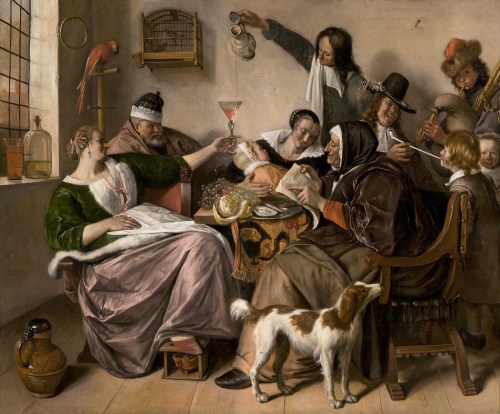
Jan Steen’s work The Way you Hear it is the Way you Sing It depicts a Dutch Proverb, As the Old Sing, So Twitter the Young. It shows us a family carousing and overindulging in rich foods. Luxurious fabrics, a foot warmer, and rare birds show off this family’s wealth, which they are spending lavishly as fast as they can.

A young piper, who closely resembles a young Jan Steen (possibly one of his sons?), entertains them. He looks directly at us as if to ask what he’s gotten himself into.

Mother and Father, dressed as the King and Queen, are sumptuously attired, being served wine in an overlarge crystal goblet by the family’s servant. Both are indifferent to the chaos, too sated and drunk to care.

To the right of Father (his left, our right), a younger woman, perhaps an unmarried sister or eldest daughter, is holding the baby but has nodded off, having indulged too freely.

The wasting of money on so much luxury that one can’t consume it all is clearly represented here. Mother raises her glass high to have it refilled, as if it is the most important thing–indeed, the wine cascading down into the crystal goblet is the focal point of the picture.

A bottle of clear liquor (distilled?) and a beaker of ale are set on the windowsill behind Father, and a covered pitcher stands on the floor beside Mother. The table is laden with grapes and oysters, expensive luxuries.

Grandmother is singing from sheet music, leading the song that the family sings. This is the direct allegory for the proverb, as the old sing, so twitter the young.

A youngish man, either the eldest son or the Drunk Uncle (every family has one), finds it hilarious to teach the children to smoke.

Neither the dog nor the piper is impressed with the carrying on, and the servant has no comment, merely serving the wine as required.

In essence, Steen tells us that children learn what they live, so if you want sober, morally upstanding children, you must be a sober, morally upright parent.

About the Artist, via Wikipedia:

Jan Havickszoon Steen (c. 1626 – buried 3 February 1679) was a Dutch Golden Age painter, one of the leading genre painters of the 17th century. His works are known for their psychological insight, sense of humour and abundance of colour.

In 1648 Jan Steen and Gabriël Metsu founded the painters’ Guild of Saint Luke at Leiden. Soon after he became an assistant to the renowned landscape painter Jan van Goyen (1596–1656), and moved into his house on the Bierkade in The Hague. On Oct 3, 1649 he married van Goyen’s daughter Margriet, with whom he would have eight children. Steen worked with his father-in-law until 1654, when he moved to Delft, where he ran the brewery De Slang (“The Snake”) for three years without much success. After the explosion in Delft in 1654 the art market was depressed, but Steen painted A Burgomaster of Delft and his daughter. It does not seem to be clear if this painting should be called a portrait or a genre work.

Steen lived in Warmond, just north of Leiden, from 1656 till 1660 and in Haarlem from 1660 till 1670 and in both periods he was especially productive. In 1670, after the death of his wife in 1669 and his father in 1670, Steen moved back to Leiden, where he stayed the rest of his life. When the art market collapsed in 1672, called the Year of Disaster, Steen opened a tavern. In April 1673 he married Maria van Egmont, who gave him another child. In 1674 he became president of the Saint Lucas Guild. Frans van Mieris (1635- 1681) became one of his drinking companions. He died in Leiden in 1679 and was interred in a family grave in the Pieterskerk.

Daily life was Jan Steen’s main pictorial theme. Many of the genre scenes he portrayed, as in The Feast of Saint Nicholas, are lively to the point of chaos and lustfulness, even so much that “a Jan Steen household”, meaning a messy scene, became a Dutch proverb (een huishouden van Jan Steen). Subtle hints in his paintings seem to suggest that Steen meant to warn the viewer rather than invite him to copy this behaviour. Many of Steen’s paintings bear references to old Dutch proverbs or literature. He often used members of his family as models, and painted quite a few self-portraits in which he showed no tendency of vanity.

Steen did not shy from other themes: he painted historical, mythological and religious scenes, portraits, still lifes and natural scenes. His portraits of children are famous. He is also well known for his mastery of light and attention to detail, most notably in Persian rugs and other textiles.

Steen was prolific, producing about 800 paintings, of which roughly 350 survive. His work was valued much by contemporaries and as a result he was reasonably well paid for his work. He did not have many students—only Richard Brakenburgh is recorded—but his work proved a source of inspiration for many painters.


Credits and Attributions:

The Way you Hear it is the Way you Sing It, Jan Steen, Public domain, via Wikimedia Commons

Wikimedia Commons contributors, “File:The way you hear it.jpg,” Wikimedia Commons, the free media repository, https://commons.wikimedia.org/w/index.php?title=File:The_way_you_hear_it.jpg&oldid=428340634 (accessed January 8, 2021).

Wikipedia contributors, “Jan Steen,” Wikipedia, The Free Encyclopedia, https://en.wikipedia.org/w/index.php?title=Jan_Steen&oldid=994869815 (accessed January 8, 2021).

Comments Off on #FineArtFriday: The Way you Hear it is the Way you Sing It by Jan Steen ca. 1665

Filed under #FineArtFriday