Do you consider yourself a professional writer? If writing is your real career (regardless of your day job), this is a good time to consider your path. One of the best ways to get your author name out there is by having your work published in magazines and anthologies.
 A new year has begun, and open calls for spring and summer contests and anthologies will start appearing in various forums that I frequent. Finding places to submit your work can be challenging, but here are links to two groups on Facebook where publishers post open calls for short stories.
Open Submission Calls for Short Story Writers (All genres, including poetry)
Open Call: Science Fiction, Fantasy & Pulp Market (speculative fiction only)
- You must apply to be accepted into these groups and answer specific questions to prove you are legitimately seeking places to submit your work.
- Once approved, the rules of good conduct must be followed for a happy coexistence. Troublemakers and trolls are unceremoniously ejected.
Some will be open calls for anthologies that are not paid, and others will pay royalties. Be wary and carefully research the unpaid ones to ensure that the publisher is reputable and that there is a good reason why you are being asked to donate your work for no compensation.
Don’t get sucked into submitting to “charity” anthology mills, no matter how fancy their website is. These publishers give legitimate charity anthologies a bad reputation. The only cause these vanity mills support is the publisher’s pocketbook, so they are thinly disguised vanity presses.
Despite their claims, many charity anthology mills are for profit, with less than 10% of any royalties going to the specified charity and the rest remaining as the publisher’s source of income. The only volumes they sell are the ones the individual authors can pressure their friends and families to purchase.

For those authors new to the mean streets of publishing, vanity anthology mills seem good because they’re guaranteed to be published by these predators. The publishers do little to no editing. So, you must ask yourself this: do you want your author name listed on the cover and forever associated with that pile of awfulness?
We must do a little research and only submit our work to publications that respect both the work they publish and their authors.
And on that note, be sure any contracts you sign limit the use of your story to that volume only, and you retain all other rights.
- You should retain the right to republish that story after a finite amount of time has passed, usually 90 days after the anthology publication date.
SFWA has a list of predatory publishers you should avoid doing business with. They also have useful information on things that might be found in predatory contracts. You don’t need to be a member to access these. https://www.sfwa.org/
But there are legitimate calls for extremely short fiction by highly reputable publishers.
These publishers pay for the work they publish and offer reasonable contracts. The compensation will be small as the work they are buying isn’t long, but it is payment. Sometimes reputable publishers have open calls for charity anthologies and those are worth submitting to, with one or two well-known authors donating a short story and the rest will be work by up-and-coming writers.
You could be one of those up-and-coming authors–but you need to have written something that you can submit.
Writers gain proficiency in all aspects of writing fiction by writing short stories and essays. We increase our ability to tell a story with minimal exposition and learn ways to use intentional prose.
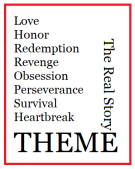
For practice, try picking a theme and thinking creatively. Think a little wide of the obvious tropes (genre-specific, commonly used plot devices and archetypes). Look for an original angle that will play well to that theme, and then go for it.
 My problem is this: all my stories want to grow longer than 1,000 words. It requires weeks of effort to get my work to fit within that parameter. So, I often write practice stories, limiting myself to telling the whole story in 1000 words or less. These practice shorts serve several purposes:
- I have a finite amount of time to tell what happened, so only the most crucial information will fit within that space.
- Space is limited, so the number of characters is restricted to just the important ones.
- There is no room for anything that does not advance the plot or influence the outcome.
- The fewer the words, the more important the theme becomes. One learns how to use a theme to their advantage.
Best of all, writing a new short story each week builds a reserve, a “bank” to draw on when I need a good piece to submit to a contest. If you select a different theme for each tale, and you may have just the right story in your files to submit to a themed anthology.
When you choose to submit to an open call for themed work, your work must demonstrate your understanding of what is meant by the word “theme.” This is as important as skill as your ability to write clean and compelling prose.
When you submit your work to various places, you need to keep a record of it. Most publishers won’t accept simultaneous submissions. To avoid that, you should list:
- what was submitted,
- links or email addresses of where it was sent to,
- when submissions close,
- what date the contest ends,
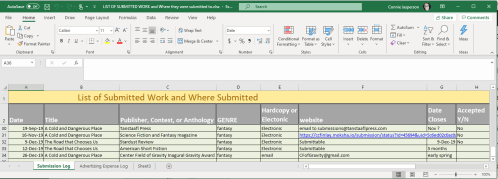
To that end, I suggest you create a database for your work. I use an Excel spreadsheet that lists the title, word count, completion date, where and when I submitted the work, how much I earned for it, etc.
Below is a screenshot of what my list of submitted work looks like. I started this file in 2015 and am still using this spreadsheet to track my submissions.
I also suggest you track your productivity by keeping a daily log of your writing sessions, a writing journal. Each time you sit down to write, make a little note to yourself of how long your writing session was and your word count at the end of the session. Make a note of the time of day you were writing as well.
It’s fun to look back and see the ebb and flow of your productivity. It’s also an excellent way to determine what time of day is your most creative.
Writing is my job. I see this little productivity diary as my way of clocking in to work. It inspires me to develop a writing routine and encourages me to write at least 100 new words every day.
In extremely short fiction such as drabbles and other flash fiction, you must include only the most essential elements of a story.
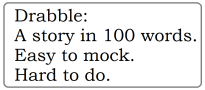 As a poet, I find it far easier to tell a story in 100 words than in 1,000. That 100-word story is called a drabble and is an art form in itself.
You can find publications with open calls at Submittable. Unfortunately, that site is not as useful regarding speculative fiction as it was several years ago. However, I have seen anthology calls for spec fic there. Still, poetry collections, literary anthologies, and contests use Submittable, so that is an option. https://www.submittable.com/
Some more suggestions you could implement during the forthcoming year that fall under the heading of the business of writing are:
- Find time for education—I attend writing conferences and seminars.
- Find time for reading—I read for two hours every evening, often longer.
- Follow editors on Facebook, Instagram, and also their Twitter feeds if you are still using that platform. Consider following the magazines you submit to (or would like to send work to) on each social media platform you use.
This is something a fellow author suggested: keep a networking notebook. It should include the names of people in the industry you have spoken to, who they work for (if an agent or editor), their emails and/or business cards, etc., as you never know when that contact will come in handy.
Finally, you must invest in your career, and that does require a little money. You must develop the habit of saving for future expenses, so I suggest you set aside two dollars for every day you write. That isn’t much, but it adds up and can help pay for a seminar or a conference, or any number of expenses that will come up.
 That way, you won’t be left wondering how to attend a conference and still cover your household bills.
This list of suggestions is meant for authors who intend to write professionally. It’s a business, so these little bookkeeping habits help keep me focused and on track.
In my next post, I will explore the various forms of short fiction publishers are looking for and how the market drives what they will buy.
Credits and attributions:
Coins, courtesy of Microsoft content creators, accessed December 31, 2022. Non-commercial use.

 Artist: Carl Julius von Leypold (1806–1874)
 We are looking for markets that will pay you for your work. They are difficult to get into, but once you are in, you will be offered more opportunities.
 Fantasy & Science Fiction
 Third, they want work that looks professional, as if the author read their submission guidelines for formatting the manuscript and followed them. Publishers have specific, standardized formatting they want you to use, and these guidelines are posted on their websites.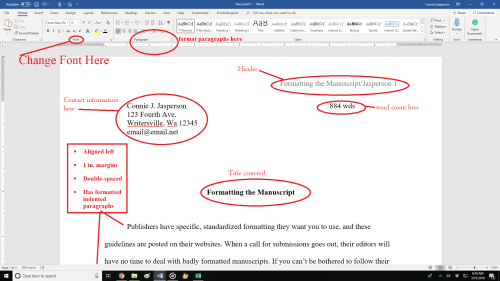
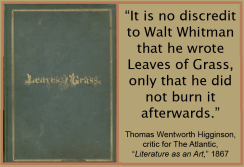 Don’t be discouraged by rejection. Rejection happens far more frequently than acceptance, even to famous authors. Don’t let fear of rejection keep you from writing pieces you’re emotionally invested in.
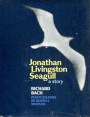 Remember, 18 publishers thought a story about a seagull was ridiculous before Richard Bach’s novella,


 Life in the Realm of Fantasy