
Worldbuilding involves far more than the visible environment. We know worlds are comprised of plants, animals, and geology. But if intelligent life forms live in that world, societies will also exist.
 Intelligent creatures communicate in their own languages with each other, sounds that we humans interpret as random and meaningless or simply mating calls. But scientists are discovering their vocalizations must have meanings beyond attracting a mate, words that are understood by others of their kind. This is evident in the way they form herds and packs and flocks, societies with rules and hierarchies.
The BBC says that AI is learning the language patterns of other species. How will that change our view of the world? Will the Powers That Be persist in the view that humans are the only species with internal lives and emotional connections? How artificial intelligence is helping us talk to animals (bbc.com)
So, let’s talk about worldbuilding.
 We humans are tribal. We prefer living within an overarching power structure (a society) because someone has to be the leader. We call that power structure a government.
As a society, the habits we develop, the gods we worship, the things we create and find beautiful, and the foods we eat are evidence of our culture.
If your society is set in modern suburbia, that culture and those values will affect your characters’ view of their world. You will still have to build that world on paper. But the information and maps are all readily available, perhaps in your backyard.
If your story is set on another world, alternate earth, or even in a different era, you must create the background material to show your world logically and without contradictions. Are there specific places or environments where the different fantasy or alien races exist?
A common trope of fantasy is that elves are close to nature and prefer to live in the forests. If you have other races coexisting with humans, you need to make a map. Where do their territories border your protagonist’s country? Are they at peace with one another? How does this affect your story?
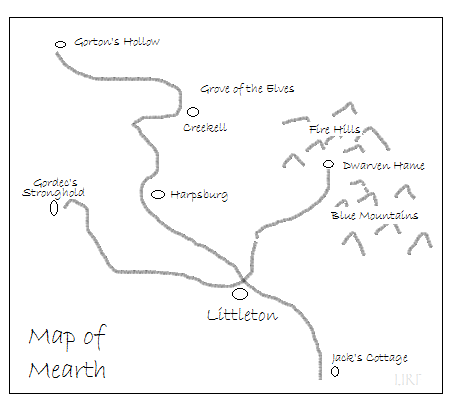 Worldbuilding requires us to ask questions of the story we are writing. I go somewhere quiet and consider the world my characters will inhabit. I have a list of points to consider when creating a society, and you’re welcome to copy and paste it to a page you can print out. Jot the answers down and refer back to them if the plot raises one of these questions.
Merchants, scientists, priests, soldiers, teachers, healers, thieves – no matter the setting, how is your society divided? Who has the wealth?
- Is there a noble class?
- Is there a servant class?
- Is there a merchant class?
- Is there a large middle class?
- Who makes up the most impoverished class?
- Who has the power, men or women—or is it a society based on mutual respect?
Ethics and Values: What constitutes morality, and how do we treat each other? Is marriage required?
- How are women treated?
- How are men treated?
- How are the different races viewed?
- Is there a cisgender bias or an acceptance of different gender identities?
- How are same-sex relationships viewed?
- How are unmarried sexual relationships seen in the eyes of society?
- How important is human life?
- How is murder punished?
- How are betrayal, hypocrisy, envy, and avarice looked upon?
- What about drunkenness?
- How important is honesty?
- What constitutes immorality?
- How important is it to be seen as honest and trustworthy?
- What is taboo? What is “simply not done” among that group?
Power structures are hierarchies and chains of command. A government is an overall system of restraint and control among selected members of a group. Think of it as a pyramid, a few at the top ruling over a broad base of citizens.
Excalibur London_Film_Museum_ via Wikipedia
In a medieval-type society, the accepted age for when a child becomes legally an adult will be much younger than we consider it today. When the majority of people die before the age of forty, adulthood comes at the same time as puberty. Fourteen- and fifteen-year-olds have minimal life experience. They let their hormones do the thinking and are quick-tempered and volatile. When a teenager becomes king or queen, and all of their advisors are also teenagers or in their early thirties at most, a country could suffer. The ruling class might be uncaring of how their decisions affect the lower classes.
Wars take the laborers out of the fields and put them on the front lines, limiting food production. While this hurts everyone, it destroys trade, ruining the merchant class. War falls heaviest upon the peasant class, but the middle class pays most of the taxes. Without a good-sized middle class, one can’t pay an army.
Religion can be a sci-fi trope and often figures prominently in fantasy work. In sci-fi, science and technology frequently take the place of religion or are at odds with it. They both have similar hierarchies and fanatics but with different job titles.
Archbishop might be replaced with Head of Research and Development.
Cardinal or Pope might be replaced with General, Admiral, or CEO (Chief Executive Officer).
Level of Technology: no matter the setting, each occupation has a specific technology. What tools and amenities are available to them? What about transport?
- Hunter/Gatherers?
- Agricultural/farming?
- Greco-Roman metallurgy and technology?
- Medieval metallurgy and technology?
- Pre-industrial revolution or late Victorian?
- Modern-day?
- Or do they have a magic-based technology?
- How do we get around, and how do we transport goods? On foot, by horse & wagon, train, or space shuttle?
Government: There will be a government somewhere, even if it is just the local warlord. Someone is always in charge because it’s easier for the rest of us that way:
- Is it a monarchy, theocracy, or a democratic form of government?
- How does the government fund itself?
- How are taxes levied?
- Is it a feudal society?
- Is it a clan-based society?
- How does the government use and share the available wealth?
- How do the citizens view the government?
Crime and the Legal System: What constitutes criminal behavior, and how are criminals treated?
Foreign Relations: Does your country coexist well with its neighbors?
- If not, why? What causes the tension?
Waging War: This is another area where we have to ask what their level of technology is. Do the research and choose weaponry that fits your established level of technology.
- What kind of weaponry will they use?
- How are they trained?
- Who goes to battle? Men, women, or both?
- How does social status affect your ability to gain rank in the military?
A common trope in fantasy is magic, which brings up the need to train magic-gifted people. Do your sorcerers/mages rely on
- dumb luck and experimentation?
- apprenticing to sorcerers?
- training by religious orders?
- or, as in the case of Harry Potter, a school of some sort? What are the rules of your magic?
The Church/Temple is the governing power in many real-world historical societies. The head of the religion is the ruler, and the higher one rises within the religious organization, the more power one has. The same is true of both universities and research facilities.
 Power in the hands of only a few people offers many opportunities for mayhem. Zealous followers may inadvertently create a situation where the populace believes their ruler has been anointed by the Supreme Deity. Even better, they may become the God-Emperor/Empress.
Some people are prone to excess when presented with the opportunity to become all-powerful.
Brainstorming worldbuilding is a good exercise if you have a character with a story that needs to be written. If you were unsure what your plot was before you got to this stage, now you might have a real villain, one presented to you by your society.


This is a helpful post. And your last words resonate. I have a story where I know the beginning and the end, but not the middle. I realised I hadn’t done much world building, and now I’ve read this, it’s helped. I need to know my world first.
LikeLiked by 1 person
We help each other, V! I’m glad you found something useful here!
LikeLiked by 1 person
I think setting is all important, so my first steps in creating my sci fy world were to build a map and to describe the geology/flora/fauna. Your checklists for building the societal components of an alien species is very helpful.
LikeLiked by 1 person
Hello, Jane! I’m glad you found something useful here today!
LikeLiked by 1 person