
We have been plotting a novel for the last seven weeks in our series, Idea to Story. The previous installments are listed below, but at this point, we have our two main characters, Val (Valentine), a lady knight, and the enemy, Kai Voss, a court sorcerer. Both are regents for the sickly, underage king.
 We also have our ultimate enemy, Donovan Dove, Kai’s half-brother and most trusted advisor. We have plotted our basic story arc (an enemies-to-lovers romance) and have a working title that speaks to the genre of romantasy (fantasy romance), Valentine’s Gambit.
We have allowed the characters to tell us the story, and we have begun building their world, placing the set dressing in each scene.
But we have more world-building to do. This is background info that will be hinted at in the narrative, shown in small ways rather than dumped. But this is crucial information for us, the author, as it tells us why our characters see things in a certain way and what their gut reactions will be.
A character’s place in their society affects the way they interact with each other and how they interact with people they meet. Whether they hold a position of privilege or grub the soil on an absentee lord’s estate, they will have assumptions to overcome. Social class is the window through which they view the world, the root of their gut reactions and judgments.
Val (Valentine) comes from a lower middle-class background, having worked her way up through the ranks of the Royal Guard. She was raised by her grandmother, a respected herb-woman and healer for their village. Gran gave Val the best education she could, teaching her to read and write and count coins, insisting she speak properly. “People don’t respect you when you use gutter-talk.”
The fact that she was educated in the basics and taught early in life to speak properly is why she was able to rise through the ranks to become Captain of the Royal Guard.
Val’s regional accent gives away the area she grew up in, and she speaks more like a member of the merchant class than a peasant. A soldier at heart, she dislikes court dinners but attends them because she is one of Edward’s guardians.
Let’s just say that Val has a lot to learn about her assumptions.
Kai is the sheltered heir to an earldom. He is highly educated but completely ignorant of many things that the majority of people in their society are familiar with. Our sorcerer is fully at home at court, the epitome of what a nobleman of his society should be. He will lose everything he has ever known, and like Val, his most cherished assumptions will be challenged entirely by the time we reach the midpoint of the story.
In most communities, a family’s social class determines their level of education and the neighborhood in which they grow up. Local dialect forms their casual speech habits and regional accents.
No one “has no accent,” although some will claim that. We all have an accent that reflects our roots.
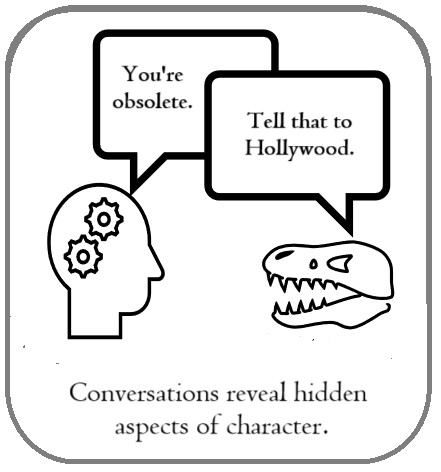 We sound like the people in our hometown unless we make a conscious effort to erase our roots. If dialect is holding us back, we might retrain ourselves to sound more like what we perceive as the upper echelons of society, to make ourselves sound “posh.”
World-building requires us to ask questions of the story we are writing. I go somewhere quiet and consider the world my characters will inhabit. I have a list of points to consider when deciding where my characters fit in in their society. Here are a few of them:
First, who has the wealth?
- Is there a noble class?
- Is there a servant class?
- Are those who enter religious orders a separate class?
- Is there a large middle class?
- Who makes up the most impoverished class?
- Who has the power, men or women—or is it a society based on mutual respect?
Ethics and Values: What constitutes morality, and how do we treat each other? Is marriage required?
- What is taboo? What is “simply not done” among that group?
In any village or town, someone is always in charge. There will be a government of some sort, an overall system of restraint and control. Think of it as a pyramid, a few at the top ruling over a broad base of citizens.
 Something to consider if you are writing historical fiction or fantasy: In a medieval-type society, the accepted age for when a child becomes legally an adult will be much younger than we consider it today. When the majority of people die before the age of forty, adulthood comes at the same time as puberty. This includes kings and queens.
- Regardless of their age, the ruling class might be unaware of how their decisions affect the lower classes.
Val is determined to raise young King Edward to understand even the lowest of his subjects and have compassion for them. At first, Kai doesn’t think sheltering him from the realities of peasant life is a problem, but by the end of the story, he will be Val’s strongest ally.
This is because Kai will see firsthand that war breaks up families. It takes the laborers out of the fields and puts them on the front lines, limiting food production.
He will understand that while this hurts everyone in one way or another, it destroys trade, harming the merchant class. The toils of war fall heaviest upon the peasant class, but the middle class pays society’s bills.
 A common trope in fantasy is magic, which brings up the need to train magic-gifted people like Kai and Donovan. Will our sorcerers/mages rely on dumb luck and experimentation? Will they apprentice themselves to other sorcerers?
- Or, as in the case of Harry Potter, are they graduates of a school of some sort?
Magic does come into Val and Kai’s story, so we will discuss how magic can make or break a fantasy before the end of this series.
The Church/Temple is the governing power in many real-world historical societies. Some religions shape how their followers view and interact with the world.
Religion does not come into Val and Kai’s story other than in a peripheral way, but it might in yours.
Some people are prone to excess when presented with the opportunity to become all-powerful. If you were unsure what your plot was before you got to this stage, now you might have a real villain, one presented to you by your society.
 Donovan is our ultimate villain. He is highly educated and privileged but has been shaped by the way his society views his illegitimacy. Beneath the urbane exterior he presents to the world is a man who profoundly resents his father’s casual assumption that he is satisfied to be subordinate to Kai—just because his younger brother was born from the right mother.
We DO NOT want to turn him into a cartoon villain, but he needs to be very dark and complicated.
Next week, we will look at how to ensure that the available technology we write into the narrative fits the era in which we set the story as well as the genre we choose to write in.
PREVIOUS IN THIS SERIES:
Idea to story part 2: thinking out loud #writing | Life in the Realm of Fantasy
Idea to story part 3: plotting out loud #writing | Life in the Realm of Fantasy
Idea to story part 4 – the roles of side characters #writing | Life in the Realm of Fantasy
Idea to story part 5 – plotting treason #writing | Life in the Realm of Fantasy
Idea to story part 6 – Plotting the End #writing | Life in the Realm of Fantasy
Idea to story part 7 – Building the world #writing | Life in the Realm of Fantasy


 Life in the Realm of Fantasy
Pingback: Reblog: Idea to story part 8 – world-building and society #writing | Jeanne Owens, author
I am really enjoying this series.
Society is something I’ve not spent a lot of time on, and should probably spend more. I do have a basic image, but it could be much more detailed.
I like the way you are letting the characters set the scene and type of society.
LikeLike
Thank you, Vivienne. I’m having fun with it too.
LikeLiked by 1 person
Pingback: Idea to story part 9 – technology and world-building #writing | Life in the Realm of Fantasy
Pingback: Idea to Story part 10 – science and magic as world-building #writing | Life in the Realm of Fantasy
Pingback: April 6, 2025 A Bit of Insight by Traci Dowe/Kenworth – Where Genres Collide Traci Dowe/Kenworth NA & College Gothic Fantasy
Pingback: Idea to story, part 11: Genre and expected tropes #writing | Life in the Realm of Fantasy
Pingback: Idean to story part 12 – theme, plot, and the character arc #writing | Life in the Realm of Fantasy