Monthly Archives: November 2025

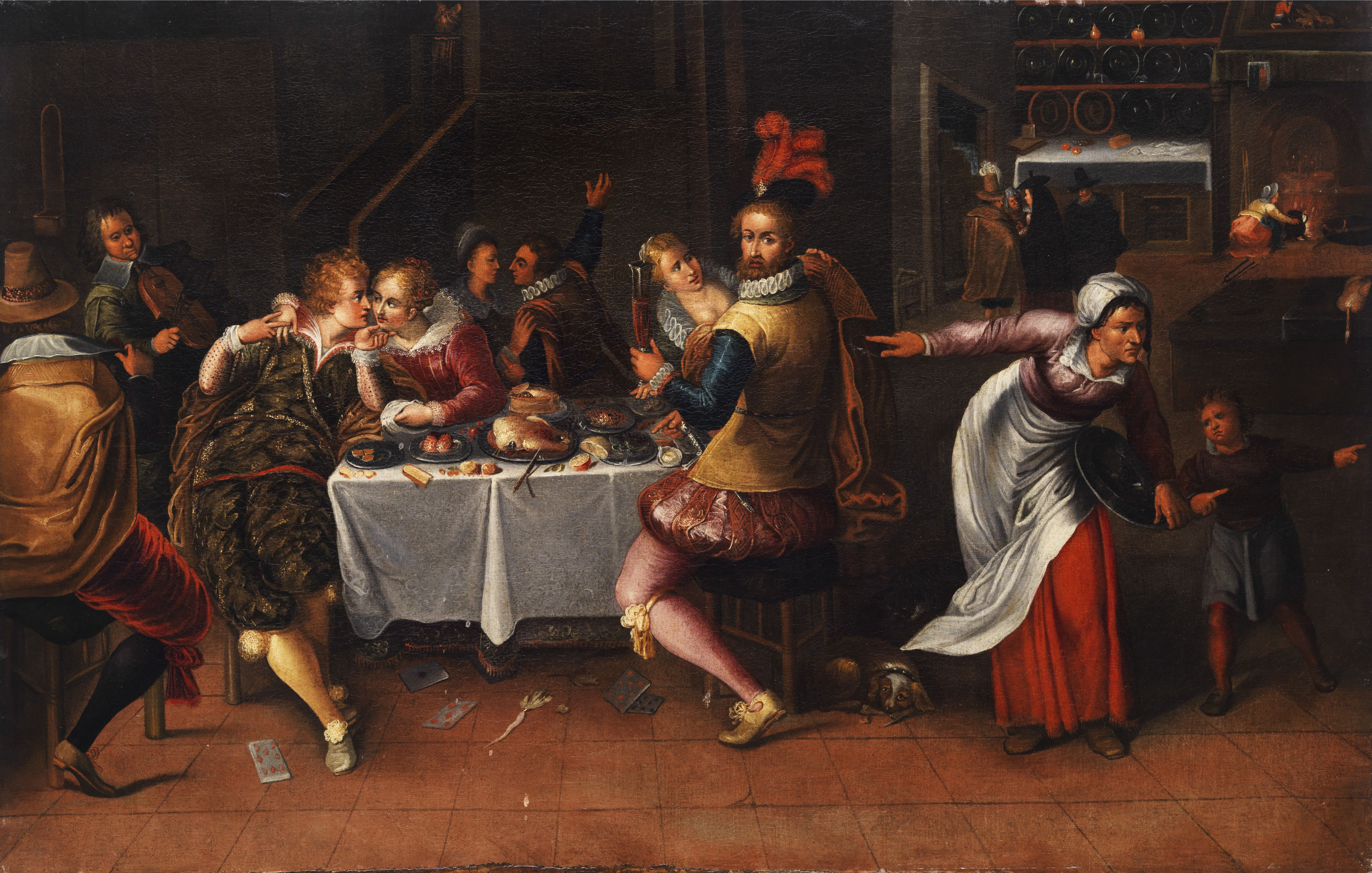
#FineArtFriday: “Feast in the Interior” by artist unknown, 17th century

Title: Feast in the Interior.

Artist: Unknown. Flemish School of the 17th century,

Medium: Oil on canvas.

Size: 57 x 89 cm.

What I love about this painting:

Based on the boy’s interactions with his mother, I would have titled this painting “It’s not my fault!” I assume she is his mother based on the level of frustration she is showing. (Speaking as a mother, frustrations do occasionally boil over.) This painting has been posted to Wikimedia Commons as a 17th-century Flemish painting possibly by the Circle of Frans Francken.

But the more I look at it, the more I wonder why an art historian came to that assessment. To me, this painting looks nothing like any of the paintings I have seen that are attributed to the Francken dynasty of painters. They were definitely active in Flanders during the 17th century, but to me, the composition and style are wrong, and honestly, the subject is a genre scene. The Franckens were more well-known for their excellent cabinet paintings, altar pieces, and religious subjects.

There is one wedding scene attributed to Frans Francken the Elder, which could be why this is attributed to a follower of his. But the people in that painting are quite stiff, a style more reminiscent of Pieter Brueghel the Younger. Frans Francken (I) – The Wedding Dance – Frans Francken the Elder – Wikipedia

These people have a sense of movement and life, the style I think of late 1600s rather than early. This is why I would think it the work of a follower of one of the later artists. An admirer of Jan Steen’s work comes to mind, but it could be a follower of any of the great later genre artist.

The clothing is definitely that of the early 17th century, which is in favor of Frans Francken. However, artists often dressed actors in costumes. Rembrandt most certainly did.

Also, composition of this painting, and certain style features (such as the shape of legs and how the garters are shown) shows us the kind of scene a follower of Dutch Golden Age painter Jan Steen, or a member of his workshop, might have painted.

This painting tells us a story. The tavern is full, the feast is on the table, and the innkeeper’s wife has had enough of Junior’s antics. A well-dressed man turns, ready to jump into the fray, and Junior deflects the blame, pointing to someone just out of the frame.

Beneath the table, several playing cards and a decoration from someone’s garment lie where they have fallen. The wine and ale flow, the ladies of dubious virtue are working the crowd, and the family that owns the tavern is struggling to serve their customers in the midst of the chaos.

This is a story with a moral wrapped in a sense of humor. The composition of this scene is full of symbolism. The positions of various hands, the bounty of oysters, and the clutter beneath the table are deliberately placed to convey subtext that a 17th-century viewer would immediately understand.

The symbolic gestures of the hands could reference tenets of one or the other of the two warring religious faiths, which might have influenced the attribution toward Frans Francken.

You can read about the Francken Dynasty here: Francken family – Wikipedia

And you can read about the brilliant Jan Steen and his merry, chaotic genre scenes here: Jan Steen – Wikipedia

And I wish I could tell you more about the painter who created this wonderful glimpse of tavern life in the 17th century.


Credits and Attributions:

IMAGE: Feast in the Interior, artist unknown. Wikimedia Commons contributors, “File:Flämisch 17 Jh Festmahl im Interieur.jpg,” Wikimedia Commons, https://commons.wikimedia.org/w/index.php?title=File:Fl%C3%A4misch_17_Jh_Festmahl_im_Interieur.jpg&oldid=1113684537 (accessed November 25, 2025).

2 Comments

Filed under #FineArtFriday

Why #writers need to keep reading #NovelNovember

I have a favorite author, one who writes both sci-fi and fantasy. I really enjoy all his work, in both genres. However, I’m not going to name him because I am going to dissect what I love and don’t love about his work.

I never write a review for books I don’t love, and I have reviewed most, but not all, of his work. In this post, I’m going to point out things I notice with my editorial eye and which I want to avoid in my own work, so I’m not naming names.

Let’s start by saying this: the things I don’t love about his work come from having a contract with deadlines to produce two books every year, installments for two widely differing series. That is a commitment he is well able to honor, as he has been publishing two and sometimes three a year since the late 1980s.

The upside of his meeting his deadlines is this: I get an installment in my favorite series every year.

But the downside is that he has a contract and deadlines he must meet.

First, let’s talk about what I like:

His main characters are engaging from page one. I’m always hooked and want to see where he is going to take them.

The main character always has a good arc of growth and is easy to like.

In most installments of my favorite series, the author’s worldbuilding is excellent. One can easily visualize the settings, whether we are in a future space environment or a world where magic exists. He creates mood and atmosphere with an economy of words.

Science is always grounded in known and theoretical physics.

He has excellent systems for the two types of magic inherent in his fantasy world. They fit seamlessly into the story and feel plausible. They both have a learning curve, and even inadvertent misuse of magic can be lethal, so learning is required.

The societies in all his worlds, whether sci-fi or fantasy, are shown through the main character’s eyes. They are believable and feel personal.

What I don’t love about his work:

While I deeply enjoy his work, the author could use a sharp editor, one who’s not swamped with deadlines. The line editing is mostly adequate, but in recent books, one descriptor (sweetly) is used more than a few times and not to good advantage. “I thought so,” she said sweetly.

I dislike that phrasing because it diminishes the female love interest, making her sound a little snarky, as if she feels superior to the protagonist. I doubt that is the author’s intention, but that turn of phrase occurs more than a few times in more than one novel. Whether the main character is a man or a woman, the love interest is often two-dimensional, and this has been a thing throughout the last five or six books in this series.

I forgive that, because I like the main characters, the world, and love the plots.

Structurally, things can be a bit rough. The characters repeat what they have already done at every opportunity, covering old ground and stalling the momentum. Also, they frequently use the phrase “you deserve it” whenever the rewards of their accomplishments come up in conversation.

The main flaw that is showing up in the most recent installments would be fatal in an Indie’s work. It is something that would be ironed out if our author had a full year to take his manuscript through revisions, rather than only six months. Each time the MC is introduced to someone, his accomplishments are brought up and discussed with awe. Whenever he runs into a fellow officer, which is fairly often, they have heard of his exploits through the grapevine and feel compelled to rehash them.

This is aggravating and slows the pacing.

Finally, proofing the finished product seems to have been rushed. This author has a big-name publisher, so one would think they would put a little effort into the final product.

Overall, this author’s work is good and deserves publication. None of these issues occurs often enough to derail the books, and a reader who isn’t a writer would likely never notice them. I can see how they flew under the radar.

It is important for authors to re-read the books they fall in love with. We rarely notice flaws on a first time through. If we do, we ignore them in favor of the story.

When you read a beloved book a second time, look at it with a critical eye.

Analyze what you like about the structure, worldbuilding, and character creation, and apply those principles to your work.

Recognize what doesn’t work and make notes when you come across something that slows the pacing or diminishes a character. Look for those flaws in your own work during revisions.

I have been making headway with my writing goals this November. Most of the plot is finalized, but it is still in outline form and will likely change as the story evolves.

On Saturday, I crossed the 40,000-word mark at ProWritingAid’s Novel November. Most of what I’ve written (30,000 or so words) is background, stuff that won’t make it into the story but which helps me sort out the plot.

I have learned to write the background fluff in a separate document. When I begin filling out a now-skeletal plot, I have the information I need to flesh out a scene.

And hopefully, when I finally get this novel to the revisions stage, I will have an eye for the flaws. My writing group is sharp and when they beta read one of my manuscripts, they give me good advice.

The real trick is keeping the lid on my own repetitive words and gratuitous rehashing. Hopefully, in a year or two, my finished product will be a smooth read.

1 Comment

Filed under writing

#NovelNovember: writing in the blender of life enables world building #writing

I have said this before, but life is like a blended margarita from the ice cube’s point of view. Every now and then, Ice Cube gets a little cocky, cruising along, thinking “The s**t-storm is over! Everything is going to be fine.” Invariably, that’s when the powers-that-be turn on the blender.

Let’s be honest. This is real life.

The s**t-storm is never really over. It’s just paused and lurking in the shadows, waiting to jump-scare you, turning the blender of life on … then off. On – off. The powers-that-be love a good blended margarita, so buckle up, Ice Cube.

This is why I write fantasy. Reality can be processed more easily when it’s set in a mythic alternate universe, one where the fundamental laws of physics allow the chaos to be tamed through perseverance and a light application of plot armor.

My personal plot armor has worn thin lately.

My husband suffers from late-stage Parkinson’s, with the accompanying dementia and myriad other health issues, and last week, emergency surgery. All is well for now, but the underlying problems are not going away.

The last two weeks have been difficult here. I spend three hours writing first thing in the morning. At nine a.m., I put on my “leaving the house” clothes (as opposed to my “hanging around the house” clothes) and don my raincoat. Then I make my way around town, accompanied by driving rain and clogged drains, getting groceries and taking care of other obligations. Daily, I drive through the gloom and poor visibility, visiting my husband, whether he is in the hospital or at the Adult Family Home.

During these two strange and chaotic weeks, I have written 27,318 words, according to the word counter at ProWritingAid’s Novel November challenge. Some of those words might even advance the plot, but I suspect most are just mental fluff.

For the writer of any fiction, real life provides fodder for world-building. Look around you and take what you know, and reshape it into the world of your imagination. Take the time to write a paragraph or two of description and save it in a file for random world-building. You might not use that environment today, but a story may come along that needs it.

If I were to write a page detailing the November weather in my town, I would open a new document and write what I see as a journal entry. I would title that document Scenes_from_November_Storms2025. That title tells me what is detailed, so later, when I need ideas for a day filled with blue skies over a wide field of daisies and birdsong, I don’t have to open file after file and get frustrated.

What would I write? I would write it as if it were a conversation with myself.

The streets everywhere are lined with brown, soggy, windblown cairns built from the corpses of leaves. Wind and torrential rain have stripped many trees naked. The tattered remains of their finery cover the sidewalks, making walking slick and a bit tricky. They fill gutters to the curb, blocking street drains and forming long, soggy, decomposing ridges down the centerline of streets and alleys.

The above paragraph is true. The street-sweeper trucks can’t keep up with the leafy onslaught.

This, I suppose, is the downside of living on the lush green side of the continent. Storms roar across the Pacific and stop here, heavy black clouds blocked by the high Cascade Mountain Range, dumping rain on the lowland cities.

One must be careful when traveling, always alert for surprises. Your vehicle “gets a bit loose” when you hit that innocent-looking puddle at 60 miles per hour. Jack-knifed semi trucks shutting down the freeway during each storm give evidence of that truth. Pooling water on the interstate, combined with the actions of inexplicably stupid drivers, has caused many wrecks over the last month.

I drive the slower city streets as I have no need to take the interstate. Even there, at speeds slower than the posted limit of 25 mph, driving through a surprise puddle can liven things up. The adrenaline almost counteracts the dark, depressing scenery.

Pumpkin Soup with Garlic Croutons

Once I am home and nursing a cup of hot tea, the rain pounding on my windows feels a little cozy. Pumpkin soup with garlic toast for supper pushes back the gloom, cheery comfort food made better when followed by an evening spent with a good book.

Sometimes, that good book is the one I am working on. Some evenings I feel rested enough to make a second stab at writing, adding another 700 to 1,000 words to my daily word count.

Currently, I have no need in my novel for a world covered in moldy leaves or parking lots ankle-deep in water. But someday I might, and I will have that brief description to boost my memory. If needed, I’ll use it to create the scenery and atmosphere that will serve as the backdrop for a short story or novel.

For now, drier days are on the horizon. Spells of sunshine will return, and despite the worry, darkness, and gloom of these last few days, life is good.

I will continue to write my fantasy stories and draw inspiration from the real world. And I will continue to log descriptions of the world around me for later use.

And I will leave you with an image of the beautiful mountains that halt the storms over the lowlands. This scene was found on Wikimedia Commons and is titled Sunset at Image Lake on Miners Ridge in the Glacier Peak Wilderness by Ron Clausen, August 2001.

It’s hard to justify complaining about the dreariness and storms of November when we of the Pacific Northwest are surrounded by such beautiful scenery the rest of the year. It’s times like these that make us appreciate the bounty that lies a few hours’ drive away.


Credits and Attributions:

IMAGE: Screenshot of ProWritingAid Dashboard © Connie J. Jasperson 2025.

IMAGE: Pumpkin Soup and Garlic Croutons © Connie J. Jasperson 2025.

IMAGE:  Sunset at Image Lake on Miners Ridge in the Glacier Peak Wilderness by Ron Clausen, August 2001. Wikimedia Commons contributors, “File:Image Lake Glacier Peak Wilderness.jpg,” Wikimedia Commons, https://commons.wikimedia.org/w/index.php?title=File:Image_Lake_Glacier_Peak_Wilderness.jpg&oldid=484627222 (accessed November 16, 2025).

4 Comments

Filed under writing

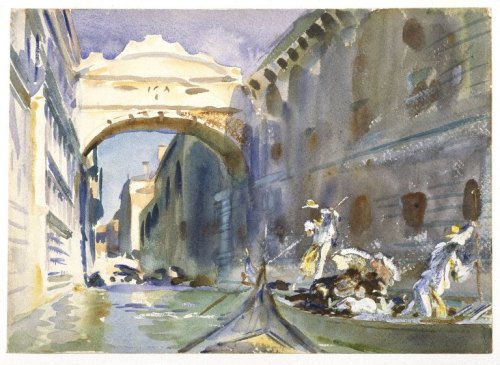
#FineArtFriday: a closer look at “The Bridge of Sighs” by John Singer Sargent ca,1905 – 1908

John_Singer_Sargent_-_The_bridge_of_sighsArtist: John Singer Sargent (1856–1925)

Title: The Bridge of Sighs

Date: between 1905 and 1908

Medium: watercolor on paper

Dimensions: height: 25.4 cm (10 in); width: 35.6 cm (14 in)

Collection: Brooklyn Museum

Current location: American Art collection

What I love about this picture:

I love the work of John Singer Sargent. He was known for his portraits and the scandals that sometimes followed him, but it is his watercolors that fascinate me.

This painting of Venice’s Bridge of Sighs is one of my favorites. Done in every shade of blue and brown, Sargent conveys the heat of afternoons in Venice. He shows us the bridge as a passenger sees it from a gondola, with a view of well-heeled ladies sheltered beneath parasols and passing in the opposite direction.

I especially like the way he shows us the gondoliers as they labor, how their bodies move as they work to propel their passengers to whatever place they are going. Sargent made several watercolors depicting gondoliers while he was in Venice.

The bridge is the true center of the piece. By his choice of colors, Sargent paints the atmosphere of a poignant, tragic place and contrasts it with the freedom and wealth of the sightseers.

They are like me, people with an interest in history but who have no true concept of the reality, the tragedy of the famous place they have come to see.

About this picture, via Wikipedia:

The Bridge of Sighs (Italian: Ponte dei Sospiri, Venetian: Ponte de i Sospiri) is a bridge in Venice, Italy. The enclosed bridge is made of white limestone, has windows with stone bars, passes over the Rio di Palazzo, and connects the New Prison (Prigioni Nuove) to the interrogation rooms in the Doge’s Palace.

The view from the Bridge of Sighs was the last view of Venice that convicts saw before their imprisonment. The bridge’s English name was bequeathed by Lord Byron in the 19th century as a translation from the Italian “Ponte dei sospiri”, from the suggestion that prisoners would sigh at their final view of beautiful Venice through the window before being taken down to their cells. [1]

About The Artist via Wikipedia:

John Singer Sargent (January 12, 1856 – April 14, 1925) was an American expatriate artist, considered the “leading portrait painter of his generation” for his evocations of Edwardian-era luxury. He created roughly 900 oil paintings and more than 2,000 watercolors, as well as countless sketches and charcoal drawings. His oeuvre documents worldwide travel, from Venice to the TyrolCorfu, the Middle East, Montana, Maine, and Florida.

Born in Florence to American parents, he was trained in Paris before moving to London, living most of his life in Europe. He enjoyed international acclaim as a portrait painter. An early submission to the Paris Salon in the 1880s, his Portrait of Madame X, was intended to consolidate his position as a society painter in Paris, but instead resulted in scandal. During the next year following the scandal, Sargent departed for England where he continued a successful career as a portrait artist.

From the beginning, Sargent’s work is characterized by remarkable technical facility, particularly in his ability to draw with a brush, which in later years inspired admiration as well as criticism for a supposed superficiality. His commissioned works were consistent with the grand manner of portraiture, while his informal studies and landscape paintings displayed a familiarity with Impressionism. In later life Sargent expressed ambivalence about the restrictions of formal portrait work and devoted much of his energy to mural painting and working en plein air. Art historians generally ignored society artists such as Sargent until the late 20th century.

With his watercolors, Sargent was able to indulge his earliest artistic inclinations for nature, architecture, exotic peoples, and noble mountain landscapes. And it is in some of his late works where one senses Sargent painting most purely for himself. His watercolors were executed with a joyful fluidness. He also painted extensively family, friends, gardens, and fountains. In watercolors, he playfully portrayed his friends and family dressed in Orientalist costume, relaxing in brightly lit landscapes that allowed for a more vivid palette and experimental handling than did his commissions (The Chess Game, 1906). His first major solo exhibit of watercolor works was at the Carfax Gallery in London in 1905. In 1909, he exhibited eighty-six watercolors in New York City, eighty-three of which were bought by the Brooklyn MuseumEvan Charteris wrote in 1927:

To live with Sargent’s water-colours is to live with sunshine captured and held, with the luster of a bright and legible world, ‘the refluent shade’ and ‘the Ambient ardours of the noon.’

Although not generally accorded the critical respect given Winslow Homer, perhaps America’s greatest watercolorist, scholarship has revealed that Sargent was fluent in the entire range of opaque and transparent watercolor technique, including the methods used by Homer. [2]


Credits and Attributions:

[1] Wikipedia contributors, “Bridge of Sighs,” Wikipedia, The Free Encyclopedia, https://en.wikipedia.org/w/index.php?title=Bridge_of_Sighs&oldid=1096829521 (accessed November 13, 2025).

[2] Wikipedia contributors, “John Singer Sargent,” Wikipedia, The Free Encyclopedia, https://en.wikipedia.org/w/index.php?title=John_Singer_Sargent&oldid=1099859237 (accessed November 13, 2025).

[Image] Wikimedia Commons contributors, “File:John Singer Sargent – The bridge of sighs.jpg,” Wikimedia Commons, the free media repository, https://commons.wikimedia.org/w/index.php?title=File:John_Singer_Sargent_-_The_bridge_of_sighs.jpg&oldid=660236372 (accessed November 13, 2025).

Comments Off on #FineArtFriday: a closer look at “The Bridge of Sighs” by John Singer Sargent ca,1905 – 1908

Filed under #FineArtFriday

Revisiting Voice, Word Choice and Placement #writing


This week’s post is a reprint of a post on voice and how we phrase things. It first appeared here on February 17, 2020.

Writing is journey.

When I began writing, the way I placed my words slowed my prose, made it more passive. As I have grown, I have learned to place my verbs in such a way that the prose is more active. I say the same things, but my style is leaner than it was.

My weekend was spent with my hubby at the hospital (all is well now) and I had no time or inclination to write a new take on how word choices form our writing voice. I hope you enjoy this second look at one of my favorite subjects.


We are drawn to the work of our favorite authors because we like their voice. An author’s voice is the unique, recognizable way they choose words and assemble them into sentences.
With practice, we become technically better at the mechanics (grammar and punctuation) but our natural speech habits shine through. Voice is how we bend the rules and is our authorly fingerprint.

When we begin the editing process with a professional editor, most will ignore the liberties we take with dialogue but will point out our habitual errors in the rest of the narrative.

Many times, what we want to say is not technically correct, but we want that visual pause in that place, in that sentence. Casual readers who leave reviews will have gained some understanding of grammar but if your voice is consistent, they will accept your choice. However, they will notice inconsistencies and illiterate writing.

This is why the process of editing is so important. Knowledge of the mechanics of writing is crucial. If you don’t understand the rules, you can’t break them with authority. (For the first part of this series, see my post Revisions: Self-Editing.)

Consider Raymond Chandler’s dismay when he discovered his grammar had been heavily edited by a line editor and then published without his input in the corrections:

“By the way, would you convey my compliments to the purist who reads your proofs and tell him or her that I write in a sort of broken-down patois which is something like the way a Swiss waiter talks, and that when I split an infinitive, God damn it, I split it so it will stay split, and when I interrupt the velvety smoothness of my more or less literate syntax with a few sudden words of barroom vernacular, this is done with the eyes wide open and the mind relaxed but attentive. The method may not be perfect, but it is all I have.”  – Raymond Chandler, in a letter to Edward Weeks, Editor of The Atlantic Monthly, dated 18 January 1947. (Read the letter in its entirety here.)

When we self-edit, we don’t have to wrestle for control of our work, true. But I have to be honest—I have worked with many editors over the past ten years, and only one tried to hijack my manuscript.

What is the mood you want to convey with your prose? Where you place the words in the sentence greatly affects the mood. Active prose is Noun-Verb centric. Compare these sentences, two of which are actively phrased, and two are passive. All say the same thing, and none are “wrong.”

I run toward danger, never away.

I never run away from danger.

Danger approaches, and I run to meet it.

If it’s dangerous, I run to it.

Can you tell which are passive and which are active? Which phrasing resonates with you? Could you write that idea in a different way?

Where we choose to place the core words, I run to danger, changes their voice but not their meaning. The words we choose to surround them with changes the mood but not their meaning.

Other ways to use the core concept of I run to danger:

Danger draws me. I race to embrace it, to make it mine.

If it’s dangerous or stupid, I will find it.

Danger—who cares. Running away is stupid; it always finds you. Meet it, grab it, and make it yours.

I saw him, and in that moment, I knew I’d met my destiny. He was the embodiment of danger, and I wanted him.

We could riff for half an hour on just four words, I run to danger. Each of us will write that idea with our own brand of brilliance, and none of us will sound exactly alike.

One of the things we must look at in our work is consistency. Is our narrative comprised of a smooth pattern? We don’t want our work to be jarring, so we want to think push, glide, push, glide.

Once you have established the mood you are trying to convey, look at how you have placed your verbs in the majority of your sentences.

Some are: noun – verb – modifier – noun. I run to danger when I see it. (Active)

Some are: infinitive – noun – verb –  modifier – noun. When I see danger, I run toward it. (Passive)

NOTE: PASSIVE VOICE DOES NOT MEAN WRONG!

Good writing is about balance. How we combine active and passive phrasing is part of our signature, our voice. By mixing the two, we choose where we direct the reader’s attention.

Some work you want to feel highly charged, action-packed. Genres such as scifi, political thrillers, and crime thrillers need to be verb forward in the way the words are presented. These books seek to immerse the reader so more sentences should lead off with Noun – Verb, followed by modifiers.

If you clicked on the link and read Raymond Chandler’s letter in full, you will see it is aggressive and verb-forward, just the way his prose was.

In other genres, like cozy mysteries, you want to create a sense of comfort and familiarity of place with the mood. Perhaps you want to slightly separate the reader from the action to convey a sense of safety, of being an interested observer. You want the reader to feel like they are the detective with the objective eye, yet you want them immersed in the romance of it. To do that, you balance the active and passive sentence construction, so it is leaning slightly more toward the passive than a thriller.

Weak prose makes free with all the many forms of to be (is, are, was, were).

  • He was happy.
  • They were mad.

Bald writing tells only part of the story. For the reader to see and believe the entire story, we must choose words that show the emotions that underpin the story.

To grow in the craft, we learn to convey what we see through words.

Passive voice balances Active voice.

It is not weak, as weak prose distances the reader from the experience, and when active prose is interspersed with passive, it does not.

Voice is defined by word choice, and Passive or Active prose is defined by word placement, not how many words are used.

Weak prose usually uses too many words to convey an idea. So, we want to avoid wordiness no matter what mood we are trying to convey.

  • One clue to look for is the overuse of forms of to be, which can lead to writing long, convoluted passages.

How many compound sentences do you use? How many words are in each sentence? Can you see ways to divide long sentences to make them more palatable?

A wall of words turns away most readers. Look at your style, as you work your way through your revisions, and see what positive changes you can make in how you consistently phrase things.

Take a short paragraph from a work in progress and rewrite it. Try to convey that thought in both passive and active voice. Then blend the two. You might learn something about how you think as a writer when you try to write in an unfamiliar style.

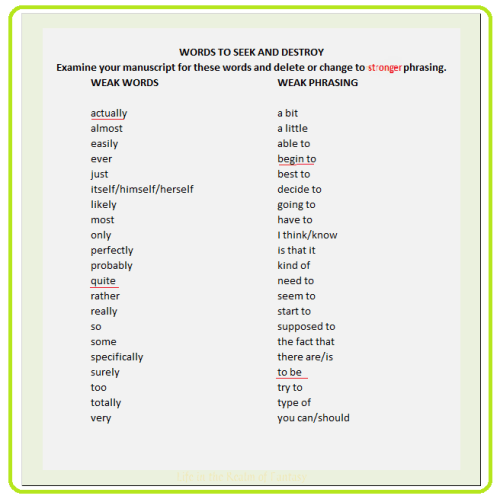
The following is a  list of words I habitually use in a first draft and then must look for in my own work. I look at each instance and decide if they work as they should or weaken the sentence. If they weaken the prose, I change or remove them.
Comments Off on Revisiting Voice, Word Choice and Placement #writing

Filed under writing

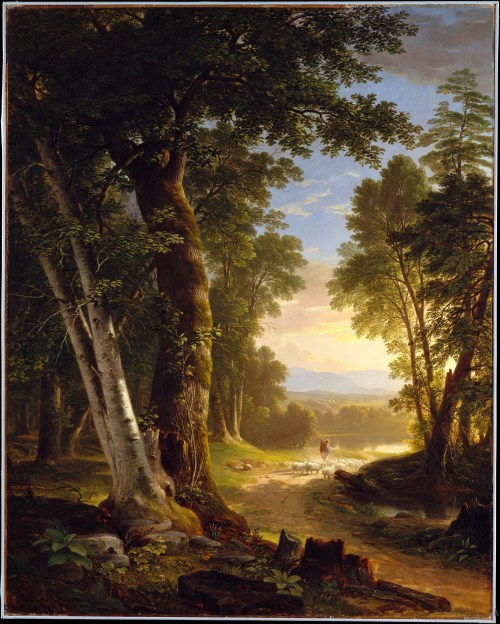
#FineArtFriday: a closer look at “The Beeches” by Asher Brown Durand 1845 #prompt

The_Beeches_MET_DT75Artist: Asher Brown Durand  (1796–1886)

Title: The Beeches

Genre: landscape art

Date: 1845

Medium: oil on canvas

Dimensions: 60 3/8 x 48 1/8 in. (153.4 x 122.2 cm)

Collection: Metropolitan Museum of Art

Current location: American Paintings and Sculpture

What I love about this painting:

It’s been raining cats and dogs here, a regular monsoon. There has been some minor flooding here as the street drains aren’t able to cope with the quantities of rain that has fallen for the last week. It seems like a good time to revisit one of my favorite paintings, one detailing a sunny day painted during a calmer time.

Asher Brown Durand gives us a summer day on the shore of a large pond, in a grove of beech and birch trees. The large beech tree is magnificent, with its rough, moss-covered bark commanding the center stage. In the distance, as if they were accidentally included, a shepherd leads a flock of sheep, a minor part of the scene as compared to the superb majesty of the beech tree.

Yet, nothing in this painting is accidental. The sheep and their shepherd are painted in exquisite detail, with as much attention as he gives to the texture of the bark and the moss. Each leaf, each blade of grass, each stone—every part of this scene is painted with intention. Each component of this landscape painting is as true and perfect as they were in real life.

I love the natural feeling of the plants, the intense colors of nature, the sense of a place that is vibrant and alive.

This painting is not merely a photographic representation of a summer morning in 1845. It has a life, a sense that you are there. We can almost feel the warming sunshine and slight breeze lifting the morning haze, hear the sheep as they walk to the water, perhaps even catch the earthy scent of the woods around us.

What story will you find in this scene? I think there are several. The observer has a story, but so does the shepherd and the sheep. The tree also has a story, but trees rarely tell what they know.

Durand was a master in the Hudson River School, a group of artists who believed that nature in the form of the American landscape was a reflection of God. Durand himself wrote, “The true province of Landscape Art is the representation of the work of God in the visible creation.” [1]

This painting demonstrates that conviction.

About the Artist, via Wikipedia:

Asher Brown Durand (August 21, 1796, – September 17, 1886). (He) was an American painter of the Hudson River School. was born in, and eventually died in, Maplewood, New Jersey (then called Jefferson Village). He was the eighth of eleven children. Durand’s father was a watchmaker and a silversmith.

Durand was apprenticed to an engraver from 1812 to 1817 and later entered into a partnership with the owner of the company, Charles Cushing Wright (1796–1854), who asked him to manage the company’s New York office. He engraved Declaration of Independence for John Trumbull during 1823, which established Durand’s reputation as one of the country’s finest engravers. Durand helped organize the New York Drawing Association in 1825, which would become the National Academy of Design; he would serve the organization as president from 1845 to 1861.

Asher’s engravings on bank notes were used as the portraits for America’s first postage stamps, the 1847 series. Along with his brother Cyrus he also engraved some of the succeeding 1851 issues.

Durand’s main interest changed from engraving to oil painting about 1830 with the encouragement of his patron, Luman Reed. In 1837, he accompanied his friend Thomas Cole on a sketching expedition to Schroon Lake in the Adirondacks Mountains, and soon after he began to concentrate on landscape painting. He spent summers sketching in the Catskills, Adirondacks, and the White Mountains of New Hampshire, making hundreds of drawings and oil sketches that were later incorporated into finished academy pieces which helped to define the Hudson River School.

Durand is remembered particularly for his detailed portrayals of trees, rocks, and foliage. He was an advocate for drawing directly from nature with as much realism as possible. [1]


Credits and Attributions:

Image:  The Beeches by Asher Brown Durand, PD|100. Wikimedia Commons contributors, “File:The Beeches MET DT75.jpg,” Wikimedia Commons, the free media repository, https://commons.wikimedia.org/w/index.php?title=File:The_Beeches_MET_DT75.jpg&oldid=617658539 (accessed November 6, 2025).

[1] Wikipedia contributors, “Asher Brown Durand,” Wikipedia, The Free Encyclopedia, https://en.wikipedia.org/w/index.php?title=Asher_Brown_Durand&oldid=1129313847 (accessed November 6, 2025).

2 Comments

Filed under #FineArtFriday

#NovelNovember – the quest has begun #writing

As many of you know, every November I set a writing quest goal for myself. Some years, it is to write the skeleton of an entire novel in 30 days. Other years, the goal might be to write a complete short story every day.

Caution I stop for Hallucinations © Connie J. Jasperson 2025This year, my goal is to write the skeleton of a novel that is the second half of a duology. I can’t publish the first book until the second book is finished, as I intend to publish the two halves of that story simultaneously.

Also, I need to source the proper cover art for a different book that is ready for the final stage of the publication process. I have found some good candidates, but none are exactly what I am looking for.

Writing 50,000 words in thirty days has never been a problem for me. I just sit down and let my fingers spew random stuff that sometimes turns into a usable novel, so getting a desired word count has never been a problem.

Unfortunately, meeting the goal of writing a complete story arc for a novel in only 30 days is, and always will be, a struggle. Thus, I work from an outline. That helps rein in the randomness.

Writing for at least an hour every day without fail for an entire month takes determination.

Meeting that goal builds discipline.

I do have some strategies I developed during my 12 years as a municipal liaison for the now-defunct organization, NaNoWriMo.

  • Set aside time to write every day, at least one hour.

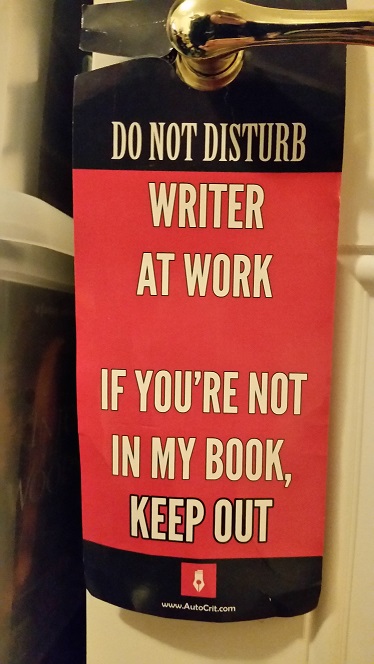
If you need quiet time, make that hour inviolable, an hour during which you are NOT to be bothered unless an amputation has occurred or the house is on fire. When I was still working, I found that by rising an hour early, the kids were still sleeping and the house was quiet. I also wrote while everyone else was watching TV.

The most important thing about developing a writing process is to find one that works for you.

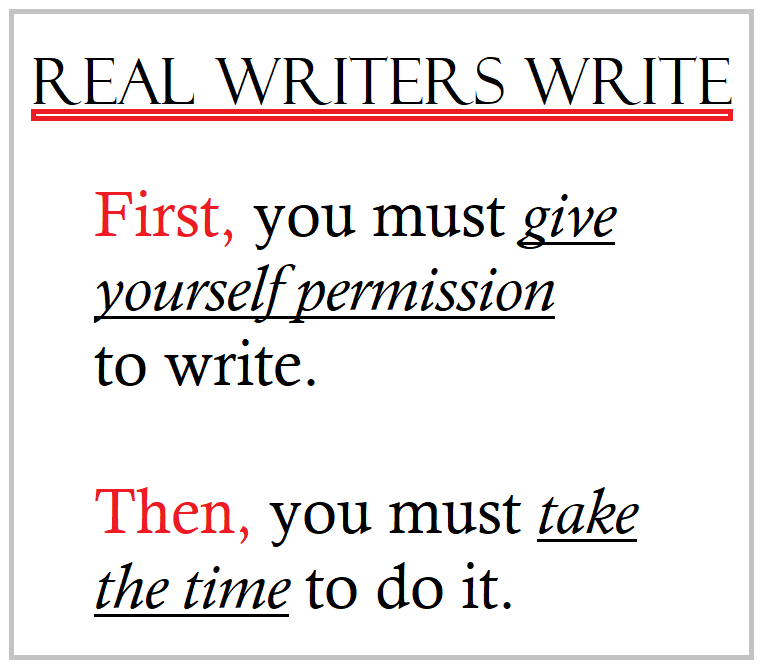
Give yourself permission to try different things until you find something that works.

  • Do you work best in short bursts?
  • Are you at your best when you have a long session of privacy and quiet time?
  • Or is your process something in the middle, a melding of the two?

What if my style changes? What if the way that worked last month no longer works?

Give yourself permission to change and find a way that works best for you. Be willing to be flexible.

I have my best ideas when I’m about to leave the house. That’s no joke. If that is a problem you also have, do as I do and write those thoughts down. I keep a notebook in my bag just for those moments.

You will be productive once you find your best style.

But first, you must give yourself permission to write.

  • Go to a coffee shop or the library to write. You might find the place packed with other writers!

My regional NaNoWriMo group had over 250 writers. Your region may have had that many or more. We have evolved into a more diverse group, one that is not focused on achieving word count in November. Your local region may have also reformed with a new direction.

As a group, we old hands are nurturing budding novelists, playwrights, poets, and songwriters. We hold in-person write-ins at coffee shops and also virtual write-ins via Zoom. New and aspiring writers in our area can find us through our Facebook group and also through our Discord channel.

  • Sit your backside down and write your ideas as they come into your head. Don’t delete and don’t cut anything just yet.

Don’t worry about story arc, or worldbuilding, or anything like that. Get the characters and the plot on paper. Once you begin writing those characters, their story and their world will take shape. You can worry about info dumps and issues like that later.

The exposition you put into your first draft is your brain doing the worldbuilding and character development that is necessary to take the story from the opening page to “the end.” You will trim back the exposition and expand on the important things after the first draft is finished and revisions have begun. Right now, you need the info your crafty mind is dumping into the story.

  • To be happy, we must have a balanced life.

Writers and other artists must make sacrifices for their craft. It’s just how things are.

But you don’t have to sacrifice your family for it. Sacrifice one hour of sleeping in, or something ephemeral and unimportant, like one hour of TV.

That is why I scheduled my writing time when I had to hold down a job. I had to cook and clean for my family and ferry them to their various after-school activities. They helped with the housework if I nagged long enough, but sometimes it was easier to admit defeat and do it myself.

I take comfort in the fact that they are raising their own teenagers now.

(Insert evil laugh here.)

Give yourself small rewards for every milestone, writing or otherwise. It might be a batch of cookies or an afternoon of binging on that show you love so much.

I’m a grandma now and living alone, as my spouse has late-stage Parkinson’s. He is being well cared for in an Adult Family Home, one staffed by wonderful people who are trained to care for patients who require that much assistance. I visit him every morning without fail, and I schedule everything, including my writing, around his needs.

Cartoon writer wondering "I am their creator. Why do they not listen to me?" 
I am their creator © Connie J. Jasperson 2025Nowadays, I have to force myself to do the ordinary household tasks (like laundry, my least favorite of all). My reward for doing that is an hour or two of reading or writing, whichever I am in the mood for.

However, for the month of November, my afternoons will be spent writing.

I will reward myself for achieving my writing goals. My self-indulgence is rewatching my favorite episodes of “The Brokenwood Mysteries.” Smart dialogue, wildly creative plots, great cast, and lovely New Zealand scenery.

Whatever your writing goals and however you choose to reward yourself, I hope you have a great and productive November.

If you are looking for something similar to the old NaNoWriMo (before it went off the rails) ProWriting Aid is running a Novel November quest, with a wordcount counter and plenty of ways to connect with other writers. I have signed up for this, just to see if it’s a good fit for me.

Go to What is Novel November? – ProWritingAid Help Center


Credits and Attributions:

Caution I stop for Hallucinations © Connie J. Jasperson 2025

I am their creator © Connie J. Jasperson 2025

2 Comments

Filed under writing