Category Archives: Literature

#amreading: Night Watchman Express by Alison DeLuca

Alison DeLuca HeadshotOne of my dear friends is author Alison DeLuca, who is the main driving force behind Myrddin Publishing.  Alison is the idea woman, and has the follow-though needed to successfully run the equivalent of a small publishing house these days.

Alison is a superwoman. Not only does she guide 25 authors through the wild west of indie publishing, she is the mother of an active pre-teen, a working author and blogger, and is one of the finest editors I know.

My husband and I share 5 children, and so we have “a passel” of grandkids, as my grandma would have said. While I generally write books more geared for adult readers, Alison has written a young adult Steampunk collection of books, the Crown Phoenix series.

She has written several other novels, and numerous short stories more geared for mature readers, and if there is one thing I can say about Alison, everything she writes is classy and well-crafted.

I am always looking for good, challenging books for my grandkids to read, ones that will keep their interest and stretch their minds, so I was thrilled when I met Alison and discovered her young adult work.

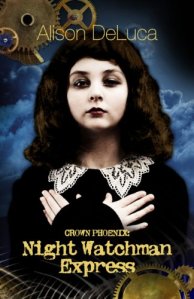
night watchman expressThe first book of hers that I ever read was the Night Watchman’s Express. I loved this book. The story never stops moving until the last page. Miriam, an unhappy young girl is orphaned when her wealthy industrialist father dies. With no other family, her father’s business partners, the Marchpanes, become her guardians. The Marchpanes immediately move into Miriam’s house, and take over her father’s rooms. (Mrs. Marchpane is deliciously evil.) They make their attempt to gain full control of Miriam’s money and her father’s company.

Gradually, Miriam begins to find common ground with the Marchpane’s son and their other young ‘guest’ when a nanny, who is both wise and skilled in certain magics, is hired. Mana is a woman who is of a race of people, who are considered to be second-class citizens, and contrary to the Marchpane’s hopes, she turns out to be exactly what both Miriam and the two boys needed.

There is a reluctant camaraderie that develops between Miriam and the two boys. The three of them do a certain amount of exploring the grounds of the estate, and discover a strange machine that her father has constructed. Another interesting thread is also Miriam’s strange emotional attachment to her father’s typewriter-like machine, which she has claimed for her own since his death, and keeps hidden in her room.

This book was so good for a rainy-weekend read that I read it twice. And guess what? It’s currently a free download for your Kindle, but if you are into paper, it also available in that format for $12.99.

This month, Alison is participating in The #BigBookGiveaway, which starts today, July 1st. For avid book lovers, this is an awesome deal! Sponsored by Girl Who Reads, two boxes of books donated by multiple authors and publishers will be given away through Rafflecopter, and the link to enter that contest is here: #BigBookGiveAway via RafflecopterJust click on that link and it will take you to the contest page, and you too could end up with a large box of books to while away your summer with, and Alison DeLuca’s Night Watchman Express is only one of them.

Christmas O'clock 2013Girl Who Reads is a great resource for avid readers like me, as it’s a website where you can find balanced book reviews, many of them indie books. Books are being offered in this giveaway by many wonderful authors, several with larger publishers, such as Penguin Books and Random House. Alison is also including a copy of Myrddin Publishings children’s’ anthology, Christmas O’Clock.

I did pen one of the stories in that collection, a little thing called A Christmas Tail.  I loved writing that tale—I was in a Toad Hall mood apparently, and Ratsy’s adventures with his friends are reminiscent of that wonderful series of tales.

Alison is one of the easiest people to work with I’ve ever known. We began this publishing adventure in the summer of 2012 as refugees from a bad publishing situation, and while it was rocky in the beginning, we have never regretted our decision to go indie. Our publishing cooperative began with a great group of authors who were all as committed to the indie way as we are, and every year we have gained new authors who bring new ideas and new fire to our collective. Alison is the glue that binds us together.

You can find Alison and more of her work here:

Facebook: http://www.facebook.com/alison.deluca.author

OR http://on.fb.me/TNWEfb

Twitter – http://twitter.com/ – !/AlisonDeLuca

Google + http://bit.ly/ADGoogle

Amazon Author Central:  http://amzn.to/ADeLucaAuthorCentral

Pinterest: http://pinterest.com/alisondeluca/

4 Comments

Filed under Books, Fantasy, Literature, Self Publishing, writer, writing

#FlashFictionFriday: The Cat, the Jeweler, and the Thief

Barliman gazed at the statue of the cat, and then out the polished window, not seeing the passersby. His eyes turned back to the stylishly dressed thief who stood before him. “It’s a nice enough  statue, well-made. What makes it worth the amount you are asking?”

Scuttle smiled. “It’s more than merely well-made. It’s brilliant. Look at it—have you ever seen such detail rendered in marble?” Thin, with a face slightly resembling that of a pleasant, well-favored weasel, he kept his desperation tightly tamped beneath a business-like demeanor.

Scuttle’s lady, Mari, was so ill that an ordinary herb doctor wouldn’t do. Their landlady believed she had contracted river fever and insisted only a healer from the Church could resolve it. But the Church never healed the poor; only the wealthy could afford a Church Healer. For that reason, Scuttle had to have those coins. He put on his most persuasive voice. “This is a miracle of art, created in marble. The hand of a master freed this cat from the stone.”

“I agree it’s beautiful, but I doubt you came by it honestly. I will be limited in who I can resell it to. Who made it? If I can at least tell a prospective purchaser whose hand created it, I will understand its value, and be better able to get a fair price for it.”

Scuttle snorted. “A fair price…usury has no concept of ‘fair.’ But all right, I’ll tell you who I believe to have made it. Benevolio.” Raising his hand, he forestalled Barliman’s comment. “I have no proof, and there is no maker’s mark on it anywhere.” Picking up the statue he held it to the light, turning it to reveal the remarkable craftsmanship. “Look at the face. Each hair, each whisker, every feature is there in the most minute detail, as if a cat had turned to stone as it sat there. Even soles of the paws which can’t be seen unless one picks the statue up–only Benevolio himself could have created such a masterpiece.”

Silence reigned in the shop as Barliman digested that comment. He pulled his magnifier from his pocket and examined the life-sized statue inch by inch. Scuttle had expected he would, and occupied himself with calculating the value of the objects displayed in the shop. Silver tea services, gold-handled cutlery, delicate jewelry set with precious stones—all rested on dark velvet in glass cases, gleaming in the light cast by wide diamond-paned windows. The fact they were on display meant those items had been purchased from more reputable sources.

The thief had come to Barliman because the jeweler sometimes supplied the wealthier class with things they could acquire nowhere else. Scuttle was a discreet thief, a man who ordinarily only stole on commission. However, the cat had been liberated from the house of a prosperous merchant newly in town, something he had only done because of Mari’s illness. The fact he was there in person to sell the statue indicated to the jeweler that this had been a private matter, making Scuttle’s bargaining position perilous. The jeweler was his only resort–no one else would have given him a copper for the statue, much less what he needed.

What Mari needed.

Barliman set the cat back down on the counter. He replaced the magnifier in the pocket of his vest. “With no maker’s mark, I can’t guarantee authenticity. That will substantially lower the price I can get for it. Therefore, I can’t give six golds coins. Three is my offer–consider, it please. It comes to three months wages for an ordinary man.”

“Five would be less than fair for a statue of this quality, and you would still make an absurd profit. If you can’t offer five, I must withdraw it.” Scuttle had no idea what he would do if Barliman refused. He didn’t dare take the time to go all the way to Westerberg. Three days there and back—Mari would be dead before he returned.

Barliman pursed his lips, deliberating. “Five golds, then.”

Though he felt like dancing, Scuttle comported himself with dignity as the coins were handed over. Barliman placed the cat statue beneath the counter and bowing, the thief departed the shop.

>>><<<

As the door closed behind the thief, the curtain behind the jeweler whisked open. Cardinal Valente stood framed in the doorway. “Good.” The Cardinal’s acidic tones fell like lead in the shop. “Here is your five golds, plus fifteen more for your trouble.”

Barliman handed Valente the heavy, marble statue. “Whose hand created this cat?” he asked. “Even Benevolio could never have done such fine work.”

Instead of answering, the Cardinal set the statue on the counter. “Observe.” He muttered some incomprehensible words, passing his hands over the cat.

Fantasy Desk With Books And Scrolls © Unholyvault | Dreamstime.com

Fantasy Desk With Books And Scrolls © Unholyvault | Dreamstime.com

To Barliman’s surprise, the statue stretched and yawned, then stood up and jumped down. Twining about the Cardinal’s ankles, the cat purred.

“God’s hand created this cat. A spell turned it to stone, and I placed it in the home of my concubine. Then I allowed rumors of its existence to come to Scuttle’s ears.”

Barliman could not conceal his dismay. “Why? Was it to trap him? He has…skills. He’s useful, and not only to me. Imprisoning him would be bad for my business.”

“He is indeed useful. However, a personal matter  interfered with my thief’s ability to gain an artifact I must have. He needs coins to resolve the issue but he is not a man to ask for charity, and I am not known for my generosity. Hence, I devised a way for him to help himself.” The Cardinal laughed, a grating sound. “By the day after tomorrow at the latest, my thief will resume the important task I have set before him, and soon I will have my artifact.” A sly smirk lit his bony features. “And now I know what matters most in the world to my thief, and where to lay my hands on it if I should ever need a bargaining chip. That knowledge alone was worth twenty golds. Never forget this: knowledge is power, Barliman. It’s good to be the one with the knowledge.”


The Cat, the Jeweler, and the Thief © Connie J. Jasperson 2016 All Rights Reserved

Comments Off on #FlashFictionFriday: The Cat, the Jeweler, and the Thief

Filed under #FlashFictionFriday, Fantasy, Literature

#amwriting: A Writer’s Armamentarium by Jennifer Vandenberg

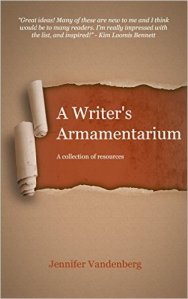
armamentarium coverWe all have times when we are at a loss for an idea. I love books that will give the creative muse a little kick in the pants. An intriguing little book in the writer’s arsenal is available for pre-order now.  A Writer’s Armamentarium, by Jennifer Vandenberg is a nifty little compendium of lists and writing prompts–things to  nudge your muse when you are a little bit stalled and blocked.

I came to know Jennifer through the online community of the Lewis County Writers Guild, a wonderful group of people I met at the 2015 Southwest Washington Writers Conference

CJJ: A Writer’s Armamentarium is an awesome title for book. What exactly is an Armamentarium?

JV: An armamentarium is a collection of resources used for an activity. It is often used in a medical context, but I loved the idea of creating a collection of lists that writers could use when they needed a bit of inspiration.

CJJ: Who did you create this book for?

JV: At first I created it for me and all the varied topics I’m interested in. As I started getting remarks from beta readers I learned that writers were more interested in these lists than non-writers so I included the chapters that writers would find most interesting. I hope that all writers, from hobbyists to professionals, can find inspiration for their stories among these lists.

CJJ: What made you decide to embark on such an ambitious project?

JV: I had dreamed of creating this book from my personal lists for about four years. I finally felt I had collected enough knowledge to fill out a book and I was excited to get started. Cleaning up and fact checking these lists took longer than I expected, but I loved every minute. This book is definitely a passion project for me.

CJJ: I was fortunate to read an advanced copy of this book, and loved the list of unusual words. What is your favorite unusual word, and why?

JV: I have so many favorite words that it is hard to pick just one. My favorite word from the Writer’s Armamentarium is omnology, which means the study of everything. I consider myself an omnologist, which sounds better than “someone who can’t decide what to focus on.”

CJJ: Let’s talk about your other work. Tell us about your Travis Eldritch series of short stories. Who is Travis, and how did you come to write about him?

JV: I love my Travis Eldritch series. He’s a private detective living on a moon in a system that has thirteen moons. In this system everyone is given a Problem at birth by the gods. Travis’s Problem is that he turns into a statue at random moments. This Problem has both advantages and disadvantages. Travis follows his gut more than his brains, but he and his partners manage to stop the bad guys eventually.

Each story is about 9,000 words. Six books have been published so far as eBooks on Amazon and in total there will be twelve books. Each story stands on its own, but there is an overarching subplot that connects all the books.

I’m a discovery writer and sometimes I just sit down and start writing with no idea of what is going to happen. I had this Sam Spade-like character talking to me so I started writing down his thoughts. Travis was born and he continues to tell me about his adventures.

CJJ: You have also written a book, Goofy Tips for a Happy Disney Vacation. What inspired that book?

JV: For three years I wrote a Disney travel blog at www.agoofyidea.com. New posts came out on Monday, Wednesday, and Friday. At the end of each post I wrote a Goofy Tip, a quick suggestion to improve the reader’s Disney vacation. I put all of the tips from the first year of the blog into a book so people could access helpful tips in one source.

This July I will be overhauling A Goofy Idea. I am creating a serial that is part fantasy, part Disneyland travelogue, about a teenage girl who was born in a book, but now lives in our world, and her fight with story spirits that want to pull her into their worlds. This story will be published on the website one chapter a week. It will be free to anyone who loves Disneyland and great stories.

CJJ: I love serials–some of the best work out there began as a serialized novels. I look forward to reading this. But, what has been the largest hurdle for you as an indie author?

JV: I love to write but I don’t love to market. My largest hurdle is balancing my time between the creative end and the business end of indie publishing. If I could have someone else do my marketing I would, but instead I’m working at finding techniques that are both successful and enjoyable.

CJJ: It is indeed a business, whether you are indie or traditionally published. The indie has a more difficult path as they must finance the entire endeavor on their own, and nothing happens overnight. So what advice do you have for the author just embarking on the indie path to publishing?

JV: Join Facebook groups. Join both virtual and in-person writing groups. Sign up for helpful blogs. Writers love to talk about writing and you can learn so much, but more importantly you need to surround yourself with a group of people who will support you as you embark on this exciting and sometimes difficult path.

CJJ: If you had it all to do over again, what would you do differently?

JV: I’d write more. Every day I didn’t write set me back from achieving my publishing dreams.

CJJ: Finally, where can the reader find your books?

JV: All of my books are published as eBooks on Amazon. All my books are listed on my author page.

CJJ: Thank you, Jennifer, for taking the time to talk with me today about your forthcoming book, A Writer’s Armamentarium.

This intriguing little book is a fun and useful little guide for the author who may need a little jump-start to their creative muse. Once Jennifer has it in paperback form, it will also be a nifty little book to have on the coffee table as a conversation piece, or as a gift for anyone who likes odd little self-help books.

>>><<<

steampunk Jennifer - CopyGeology student, National Park ranger, secretary, tax preparer, swim instructor, Hallmark sales associate, school aide, library assistant, children’s bookseller, merchandise supervisor, property curator, volunteer, food service employee, farmer, and blogger. Jennifer has had all these jobs and she’s not even old enough to receive social security. However, no matter where she worked, Jennifer has always been a writer.

In 2014 she won the Short Fiction Writers Guild Flash Fiction award for her evil Christmas entry, Advice from Siblings. She was a panelist at 2015 Left Coast Crime and gives writing workshops around her southwest Washington community.

Check out her website www.jennifervandenberg.com to learn about all her various writing projects. She has turned her Mattie Garrets/Jackson Pierce mystery series into a podcast on iTunes and will be starting a YouTube channel in summer 2016. She also plans to publish her first non-fiction book in May and start a fantasy/Disney travelogue serial in July. There are no limits to Jennifer’s imagination.

You can find Jennifer at:

Jennifer’s Author Website:

2 Comments

Filed under Literature, Self Publishing, writing

#FlashFictionFriday: Jayne Has the Final Word

answering machineJayne Knight entered her kitchen from the garage, taking her shoes off and placing them on the rack beside the back door, and setting her purse on the counter.

The red light on the old answering machine that her husband had never gotten rid of was still flashing, as it had been for days. She continued ignoring it. She no longer had any friends, no one who would call her so it was either a message for Cameron, one more thing he had left dangling, or it was a telemarketer’s robo-call.

The funeral had been lengthy, and as she was the grieving widow, she had felt obligated to stay for the entire reception afterward. She had shaken hands with everyone, answered greetings, and thanked people for their condolences, but other than the employees she had met that week, she had recognized no one at the service. They were all people Cameron knew through his business or the Rotary—two aspects of his life she had been excluded from. Still, she had done her duty.

She had always been a quiet, somewhat naïve woman, even at thirty-two when she met Cameron. She had applied for a job at his firm, and gotten it. At the interview, she had met a large, handsome, charismatic man who gave the impression he was a secret romantic. He had seemed kind.

Despite having fallen for him at first sight, she had refused to date him for more than a year. Eventually, she had succumbed to his charm and agreed to have dinner with him. They were married two months later.

His death had happened so suddenly. One minute she was cleaning the attic, and the next minute she was answering the door, talking to two policemen who told her that her husband had been killed in a terrible accident on the expressway.

She had thanked them for letting her know what had happened.

They had been concerned about her and asked if she had any relatives or close friends to come and stay with her. She didn’t, but had lied, saying she would call a friend. The truth was, she had no one to celebrate with, so she had called a cab and went to the mall. She bought a smart new wardrobe, all in celebratory black, picked up a new laptop computer, and then bought a cell phone and an iPad.

Cameron had taken away her cell phone, saying it was too expensive, and she didn’t need one. It was the same reason he’d given for taking away her car. The only computer she had had the use of was the old one that was hers when they were married, and it was barely functional.

When she arrived home that night, she had a few moments of panic that he would find out she had spent the money, but soon her common sense reasserted itself. She was still a licensed CPA and would need all those things if she was going to get a job.

Cameron had cut her off from her friends and taken the joy of living from her, and no matter what she did to try to please him it wasn’t enough.

From the instant she had signed the marriage certificate, his sole purpose in life had been to control her every waking moment. He had never physically abused her, but he seized every opportunity to drive home how dependent on him she was, how she was nothing, without him.

And no matter what, Cameron always had to have the last, triumphant word.

For the last five years, she had wished him gone. Never dead, but just…not there. And now he was gone.

Not just gone, but dead.

After her first rush of euphoria, Jayne had put away her credit card, wondering how she would pay the bills as they never seemed to have any extra money. The first thing Cameron had made her give up was her job. He claimed he earned enough, and her working made him look bad. She hadn’t pursued it, as she had learned early on that no one ever got anywhere by disagreeing with him—Cameron always had the last word.

The next morning, Jayne went to the office at nine o’clock and introduced herself to the employees, none of whom had been there for more than a year. She explained what had happened, and asked them to continue working as if Cameron were there. She also said that the office would be closed for his funeral, which she thought would be on Friday.

They seemed stunned and offered her their sympathies. She sensed they hoped his demise meant they could look for work elsewhere, but were too polite to ask. After that, she made one more splurge and had her hair cut in an edgy new style at the shop next door to Knight Accounting.

Then she met with their attorney to make the funeral arrangements. That was when she discovered that Cameron had left her rather well off.

Rich, actually.

The lawyer had set her up with all the authorizations she needed to prove to the financial institutions that she was Cameron’s surviving spouse. As she didn’t actually know anything about their finances or how he managed them, she had then gone to the bank, getting printouts of all the monthly statements. That night she had made a detailed spreadsheet of who she owed money to, and how much.

During the next week, while the lawyer handled the details of her husband’s estate, Jayne immersed herself in Cameron’s financial life. The day after her visit to the lawyer she had purchased a modestly priced car and then returned downtown to the offices of Knight Accounting.

Ignoring the curiosity of the staff, she locked herself in Cameron’s office and methodically inspected his private files. It had been easy to log into his computer, as he used a ridiculously stupid login for everything—his birthday.

What she had discovered had given her pause.

Cameron had been systematically funneling money out of his own company and into offshore banks where he would owe no taxes. Not embezzling from the clients—thank god, not that.

It also appeared that he had lost many of his long-time customers, good clients who had left him for other, friendlier firms.

His funeral was finally over. All week long, she had been laying the groundwork for…what? She didn’t know, yet. But while she had sorted through everything and gathered information, she had deliberately put planning her future on hold until after his funeral.

And now that was done. She made herself a pot of tea.

Jayne had some crucial decisions to make. She could sell everything, sell the company and leave town. If she did that, she could start all over on a beach somewhere warm and sunny. She could live well, and would never have to worry.

But where was the challenge in that?

What she really should do, was sell the house and move into the rooms over Knight Accounting. If she worked at it, she could turn Knight into a respectable firm again. But she would change the name to Jayne Knight, Accounting.

She opened her iPad and began detailing a list of what she intended to do, starting on Monday when she would appear at Knight accounting and let them know her plans and that she was their new employer. The announcement of her changes would be followed by interviews with each employee and raises for those who chose to continue with her.

She glanced up and saw the light on the answering machine, still flashing. Sighing, she crossed the kitchen and pressed the button, allowing the message to play.

She nearly dropped her tea when Cameron’s voice emerged from the tinny speaker. Jayne shook her head, thinking about the man she had never actually known until she was married to him. “Traffic is hell tonight. I’ll be late….” His voice broke off, drowned out by a horrible cacophony of grinding, crashing sounds.

“Yes, Cameron.” She pressed ‘delete message,’ denying him the last word. “Indeed, you are.”


Jayne Has the Final Word © 2016 Connie J. Jasperson, All Rights Reserved

2 Comments

Filed under #FlashFictionFriday, Literature, writing

#amwriting: so you want to be a writer

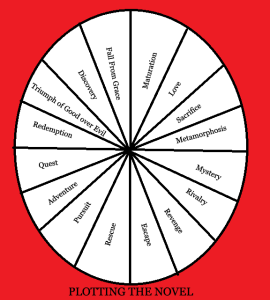
Dial-a-PlotSo, you want to be a writer. You have written several unpublished short works, and they were darned good, if you do say so yourself. Your novel is half finished, and your cousin, Phil, says he’s never read anything like it.

One of the many things I didn’t realize when I first began this crazy journey, is that your family and friends are not editors. Even if they are teachers, it’s likely they won’t notice anything but the most glaring errors in your work, and they will miss a great many of those.

Unless your cousin Phil is an author himself, he won’t mention places where you have repeated yourself ad nauseum, nor will he point out places that are phrased in a convoluted way.

Because these places are both annoying and confusing, Phil has most likely skipped over them, and didn’t mention it because he didn’t want to hurt your feelings. Large plot-holes, inadvertent use of clichés, and intriguing auto-correct mistakes get missed when your eager-to-help friends try to edit your work.

Your friends might know they don’t like what you wrote, but they don’t know why they don’t like it so they plow through it as fast as they can just to get the misery done with. They will spot a few problems, which helps, but isn’t going to make your manuscript readable.

Oh, your friends aren’t going to tell you they don’t like it, but they will think it: “This is awful. What’s up with the dog…is he an arsonist? No…it was apparently the Guinea pig but…no. God, this is the worst drivel I’ve ever read. How do I get out of this? Um…I’ll tell her it was great, I loved it.”

Consider joining an online beginners’ writing group. A lot of useful information can be found through these two free resources:

  • NaNoWriMo (National Novel Writing Month) nanowrimo.org They operate year round and have many resources available to help you get started.
  • Critters Workshop critters.org

Critter is an excellent place to get feedback on your work, in a way that doesn’t feel threatening. New authors should definitely consider joining the critters workshop.

a writer's stylePLEASE don’t publish your work without first having it edited professionally, or at the very least, read by an advanced writers group. You have no idea what your manuscript actually looks like. An advanced writing group will tell you the ugly truth, and they won’t be kind about it, but once they are done with you, you will reconsider your decision to not hire an editor.

If you plan to submit it to a large publisher, do hire an editor so that what you submit will be the best you can offer them.

If you are in the beginning stages of your writing career, invest in books on the craft of writing. Many books are available used through Amazon dot com, and many are available as affordable eBooks, also through Amazon. And you don’t need a Kindle, as you can download the free app for your PC, Mac, Android, or Apple device.

Books on the craft that are on my desk and in use today:

  • The Chicago Manual of Style
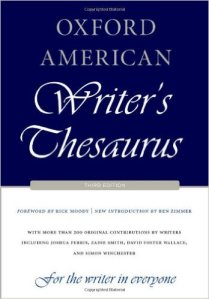
  • The Oxford American Writer’s Thesaurus
  • Rhetorical Grammar by Martha Kolln
  • Story: Substance, Structure, Style and the Principles of Screenwriting by Robert McKee
  • The Sense of Style by Stephen Pinker
  • The Sound on the Page by Ben Yagoda
  • Outlining Your Novel by K.M. Weiland

Books that help when I am stuck:

  • The Negative Trait Thesaurus by Angela Ackerman and Becca Puglisi
  • The First Five Pages by Noah Lukeman

Three websites a beginner should go to if they want instant answers in plain English:

Writing is not just a career for me—it is an obsession. Anything involving books is the proverbial shiny thing for me. All of my inspiration has come from the many excellent writers whose works moved me.

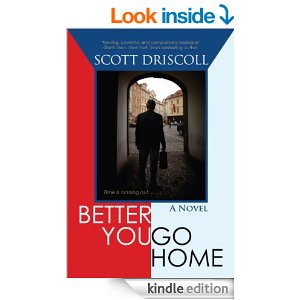
Better You Go Home, Scott DriscollI am also inspired by those authors whose workshops I have been fortunate enough to attend. Consider this high quality online option for learning the craft of writing:

Introduction to Fiction Writing at The Writer’s Workshop, instructor, Scott Driscoll.

This is admittedly not  free, but it is an exceptionally in-depth exploration of the craft. I have attended some seminars offered by Scott at several conferences and have never come away disappointed.

Remember, writing is a career path that requires dedication, and commitment to learning and growth. The money you spend going to workshops and conferences is an investment you make in your career. You not only learn about the craft of writing, but you will also learn the business aspect, and make no mistake: regardless of whether you are traditionally published or indie published, this is a business.

via buzzfeed

via buzzfeed

It’s not always easy, and sometimes it is hard to see progress. But with each completed project you gain strength and confidence. Your work evolves, growing in readability and your voice as an author becomes recognizably yours.

Writers finish their work. Many people will begin walking this path, believing they want to be writers. They like the idea of being a writer, and may claim to be a writer, but when you ask them about their work, they will tell you they don’t have time to write, and their work was only halfway begun when they had to stop.

The fact that you once sat in a Ferrari does not make you a Formula One driver.

I always urge writers to write every day, even if it is only for fifteen minutes. If you are not committed to writing regularly, your novel will never see the light of day.

Write regularly, and finish that book.

9 Comments

Filed under Literature, writer, writing

#amwriting: Wattpad, serializing your novel, and Shaun Allan

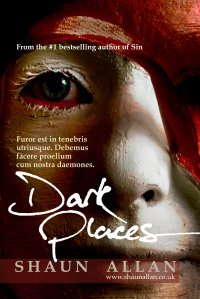
Dark Places Front Large (1)One area of writing that I have lately discovered is the serialized novel.

In the 19th century, many of the most popular novels ever written began their lives as serials in magazines or newspapers. Such diverse authors as  Charles DickensGeorge Eliot, Thomas Hardy, Anthony Trollope, and William Makepeace Thackeray all published novels in serial form.

At times, these intrepid writers missed deadlines, and I can see why: life intrudes, and writing halts, for whatever reason. It’s been said that Thackeray was highly critical of authors who didn’t have the endings worked out before the opening chapters were published–which just about covered all of his contemporaries.

Today we’re talking with my good friend and fellow co-founder of Myrddin Publishing Group, UK author, Shaun Allan. He is the author of several award-winning children’s stories, copious amounts of poetry, and the adult horror novel, Sin, which has garnered a great deal of critical acclaim and is one of the most popular books on Wattpad.

According to Wikipedia, as of April 2014:

  • 85% of Wattpad’s traffic and usage comes from mobile devices,
  • the site has 35 million unique visitors per month,
  • there are over 100,000 story uploads per day,
  • there have been over two million writers.

Along with writing novels and poetry, Shaun was approached by the people at Wattpad, asking if he would be willing to write an original story based on the premise of the movie The Purge. Of course, he was, and out of that came the five-part serial, Mr. Composure.

Mr. Composure was wildly successful, and since then, Shaun has had great success with his most recent serial, And the Meek Shall Walk, a thirty-three-part story which he also published on Wattpad as he wrote it.  Already it has garnered close to 10,000 reads.

On Sunday, Shaun and I were able to chat a bit about the experience of serializing your work as you are writing it.

CJJ: From my perspective, serializing a novel has many pros and cons—in some ways it’s a double-edged blade. For me, I have to have an outline and a story arc to write to, so that I don’t get sidetracked. How do you approach this?
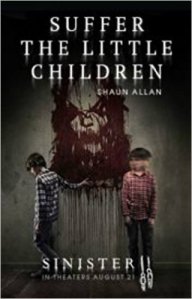
Suffer the childrenSA: Sometimes I wish I could, or think I should, create an outline.  I’m not sure if it’s because of my time issue.  I have so little, I want to get into the story and, if I’m outlining, I’m not writing.  On the other hand, I quite enjoy finding out the story as I go.  I like to be surprised when I meet new characters and wonder how I (or my characters) might get out of sticky situations.

As such, I’ve almost always written off the cuff.  I’ve followed the story where it would take me, following its meandering course to what is, hopefully, a brilliant ending.

With the writing I’ve done for Wattpad and their partners, such as Universal, that’s changed somewhat.  For Suffer the Little Children, written for the movie Sinister 2, I was asked to write an overview first to present to them.  Luckily I’d seen, and enjoyed, the first film, but I had to, in the space of a weekend, produce the path the story was going to take.  That wasn’t an easy task for someone unused to doing so.  I found, when I’d started, the idea came quite easily.

With the serialization of And the Meek Shall Walk, it was a little easier.  Knowing both the Disney version and the classic Hans Christian Anderson original meant the story arc, or the basis of one, was already written.  I felt I was writing just the current chapter rather than the story in its entirety.  I only needed to work on the existing part.  I did get to the point, however, where I thought it best to put down my own version of events.  I was about two-thirds of the way through the book at this point.  I knew, more or less, what was going to happen (teasing parts from both previous versions), but I was giving the story my own twist. The overview I wrote was very brief, but it gave me some focus.

CJJ: You have to be able to write quickly and concisely, and edit your work well, because what goes out will be an immediate reflection of your entire body of work. I always worry that if it’s crap, I will have turned off all my potential readers! Has that idea affected how you work in any way?
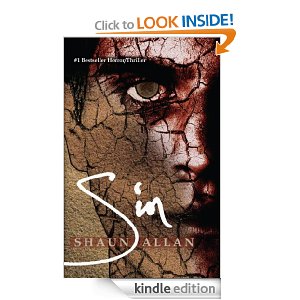
sin - Shaun AllanSA: Not at all.  Well, not really!  I write, essentially, for me.  My dream was to become a writer.  The fact people really seem to be enjoying what I produce is both wonderful and humbling.  I write to the best of my ability and feel I can do little more than that.  If I like my work, I’m happy with that.  If others do too, I’m ecstatic.  I usually find, too, if I reread my stories, I generally don’t change things.  That’s not to say I shouldn’t, but I try not to second guess myself.  The frame of mind and ‘alternative world’ I’m in when I write isn’t the one I’m in when editing so changes don’t… taste right.  Another pair of eyes could find things which should be changed, and I’m fine with that.  Maybe I’m blind to my errors lol!

CJJ: You have a high-profile job in the corporate world, and you are also the owner of a barber salon. On top of that, you are a dedicated, hands-on father of two daughters. Yet you turn out new installments on time, and also find the inspiration and time to write new, separate literary work. How do you make the time to be as prolific as you are? Do you have that Harry Potter Time Turner thingy?

SA: I wish I did have the Harry Potter Time Turner doodad.  I don’t.  I have a half hour lunch break.  I have an understanding wife.  And I have a burning need where ideas bug the hell out of me until I get them down.  I wake up thinking of what’s going to happen next.  I even deliberately think of the story arc at night.  It relaxes me, and I drift off to sleep.  I’ve yet to dream it through, though.  Smartphones help – I can scribble sentences or paragraphs down and save it to the Cloud ready for joining it up with the main story when I can.

Oh, the Tardis parked out back comes in useful now and again.

CJJ: Let’s talk about And the Meek Shall Walk. It is dark, as all your mainstream fiction is, definitely fantasy with a horror twist. I found it really scary.  Yet it was your daughter who gave you the idea?

SA: It certainly was!  I’m so proud!  I’d just finished Suffer the Little Children whilst on holiday in the Lake District.  Wattpad does a regular #JustWriteIt promotion inviting you to write 10,000 words in a month.  I fancied having a go (I sometimes have a break between stories but was buzzing in this case) but, after having just written about pagan deities and child possession, my mind was a little fried.  My daughter (12) threw the idea in the air:  The Little Mermaid where, instead of magically being given legs, she cuts her own tail off and sews a pair of human legs in their place.  That was the start.  How could I resist?

She’s also got me working on the Rapunzel story too, but I won’t give away what she came up with.  I’m currently, now that And the Meek Shall Walk is done, writing a new take on the Queen of Hearts from Alice in Wonderland.  This is a story close to my heart.  I dressed as the Mad Hatter for a themed birthday party for my daughters, and also have the Cheshire Cat tattooed on my shoulder!

As for the darkness, you can’t have the darkness without the light.

CJJ: Kurt Vonnegut famously said (and I find it true) that every character should want something. Who is your main character and what does she want? And who is the villain, and what do they want?

SA: My main character is Aren.  She is a mermaid and a princess.  Her father believes her to be meek, but she regularly flouts the rules governing their lives beneath the sea.  She has a secret cave where human body parts float, tied to vines.  The parts are from the people she has killed.

Aren believes humans were responsible for her mother’s death.  As such, she seeks revenge on those responsible and goes to excessive lengths to carry this out – including, as I have said, cutting off her own tail and having her forked tongue sealed together, rendering her mute.

I’d rather not say who the villain is as you don’t know immediately, and I don’t want to give it away.  You might, indeed, say it’s Aren herself!

CJJ: What setbacks have you overcome in this endeavor with Wattpad and what advice would you give authors new to publishing their work on Wattpad?

SA: Apart from my time limitations, I’ve generally found Wattpad to be an amazing experience.  I’m one of the Wattpad Stars, a program of their most popular writers.  This has led to exposure and opportunities I would otherwise, potentially, never have been offered.  One of the things I love about the site is it’s a real community.  I have had some of the most amazing comments you could imagine.  Mr. Composure was called the ‘best story ever’ and And the Meek Shall Walk has already been described as ‘one of the best stories on Wattpad.’

Sin was my first serialized novel on the site.  I’d originally posted the Prologue, and they asked if I’d be willing to put the whole story up.  I agreed, and it’s now had almost 765,000 reads!

On Wattpad, you can connect with so many other writers and readers.  Those readers can connect with you, vote and leave comments.  It’s wonderful.

CJJ: And finally, do you have any writing-craft advice for authors who want to serialize their work?

SA: Trust in yourself.  Trust in your story.  Whether you create overviews or write as you go, it’s your story.  As you post each chapter, engage with your readers.  Let them know you appreciate their feedback.  As much as you enjoy their contact with you, they enjoy yours with them.

Writing should be about enjoyment, after all.

>><<<

To Read: And the Meek Shall Walk on Wattpad click HERE
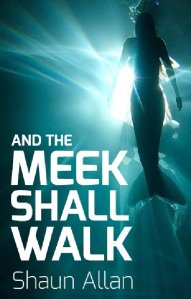
And the Meek Shall Walk coverPrincess Aren is determined to make the human who killed her mother and exiled her people to the bottom of the ocean pay. To do so, she must go to extremes of pain and heartache in her search for justice. Aren, however, is no sweet, happy mermaid. To kill is to ignite a fire of passion in her heart which only the savage letting of blood can satiate. She will go to any lengths to find the man responsible, including cutting off her own tail and sewing, in its place, a pair of human legs – legs she tore from one of the many humans she had murdered. With the unwilling help of the sea witch, Princess Aren must go ashore and hunt for her mother’s killer. But, in doing so, the worlds above and below the ocean will clash in ways neither thought possible!


Profile

A creator of many prize winning short stories and poems, Shaun Allan has written for more years than he would perhaps care to remember. Having once run an online poetry and prose magazine, he has appeared on Sky television to debate, against a major literary agent, the pros and cons of internet publishing as opposed to the more traditional method. Many of his personal experiences and memories are woven into the point of view and sense of humour of Sin, the main character in his best-selling novel of the same name, although he can’t, at this point, teleport.

A writer of multiple genres, including horror, humour and children’s fiction, Shaun goes where the Muse takes him – even if that is kicking and screaming. He has written for Universal, DC Vertigo Comics and Goosebumps and regularly holds writing workshops at local schools.

Shaun lives with his wife, two daughters and two cats. Oh and a manic dog. Though his life might, at times, seem crazy, he is not.

Honest.

Links:

5 Comments

Filed under Fantasy, Literature, Self Publishing, writer, writing

#FlashFictionFriday: Edna’s Garden

Fairies Looking Through A Gothic Arch John Anster Fitzgerald

Fairies Looking Through A Gothic Arch, John Anster Fitzgerald

This morning I noticed there were fairies in the back garden.

I was a little surprised. At first, I thought they were a side effect of my medication. But hallucinations were not listed on any of the labels, which, by the way, I had to read with the magnifier. I decided they weren’t, and several hours later they were still there.

At first, I couldn’t see them well, and wasn’t sure if they were bugs or birds, but no…when I looked closer with my magnifier, I could see they were definitely fairies.

It seems odd to me, to think that after all these years of wishing for a fairytale ending in my life, I should finally have a garden full of fairies. But life is what it is, and sometimes the things you want elude you until you no longer need them.

When I had lunch, they had progressed to building a rather large bower in the yew hedge. I was glad to see that because it meant they were staying, and they’re a lot more interesting to watch than birds.

They ignored me as they went about their business, rather like the rest of the world, probably just seeing a really old lady, nothing to worry or fret about. I was concerned that Rufus would pester them, but they didn’t interest him. He is the laziest cat, but he does sometimes work up the energy to bother the birds.

I thought about sharing the information with Violet, as they’re something she would enjoy, but she worries about me too much. If I were to call her up and say, “Violet, guess what! Fairies are nesting in the back yard,” she would say, “That’s nice, Edna. Have you a unicorn now too? Perhaps you should stop driving.” She would immediately call my daughter.

That would be bad.

Violet should talk…she’s as bad off as me or worse. But I think we’re doing quite well, for a couple of old crackpots. Funny how ninety-two doesn’t feel as old when you’re wearing that birthday hat as it seemed when we were young and whining about turning sixty-two.

So now I have a garden full of fairies. I wonder if they eat the same sort of things the birds like? Maybe I should get some of that fancy wild-bird food with all the sunflower seeds. And I should probably fill the birdbath.

Then I’ll give Violet a call and invite her over for coffee on the back porch, just to see if she notices anything out of the ordinary. If she does, I’ll pretend like I don’t see them.

She’s always moaning about how nothing exciting ever happens in this town, so this should be good for a laugh.


“Edna’s Garden” © 2016 Connie J. Jasperson, All Rights Reserved

Click here to read part 2

3 Comments

Filed under #FlashFictionFriday, Fantasy, Literature, writing

#amwriting: rejection is not the end of the world: keeping track of submissions

lasceax prize

Recently I realized I had submitted a short story to two places. One place was a magazine that pays per word, the other was an anthology that offered no remuneration, but was being published by a well-respected professional group.

Quite often publishers prefer that you not make simultaneous submissions, although some don’t care. Most will want a story to be new and previously unpublished, but again, some don’t care.

Fortunately, this particular tale was not what the anthology was looking for–no money was involved there and I try to concentrate on submitting my work to paying gigs as often as possible.

Thus, I have begun to keep a list of what short story was submitted to what magazine or anthology. If it is rejected with comments, I consider the remarks, address them if they are valid and immediately submit it elsewhere. The fact is, rejection can be a positive thing.

Of course, I have enough rejections to wallpaper an outhouse. Not everyone will love your work. You have to keep trying, but eventually you will sell a story.

When I first began this journey I didn’t understand how specifically you have to tailor your submissions when it comes to literary magazines, contests, and anthologies.

When you have a great story that you believe in, you must find the venue that might be interested in your sort of work. This means you must buy magazines, read them, and write to those standards.

Go to the publisher’s website and find out what their submission guidelines are and FOLLOW THEM. (Yes, they apply to EVERYONE, no matter how famous, even  you.) If you skip this step, you can wait up to a year to hear that your ms has been rejected, and they most likely won’t tell you why.

Formatting your manuscript is crucial. If you are unsure how that works, see my blogpost of July 24, 2015,  How to Format Your Manuscript for Submission.

It’s not worth a publisher’s time to teach you how to be a writer–you have to learn that on your own.

A sci-fi magazine like Analog Science Fiction and Fact will not be interested in fantasy from an unknown author. If you read Analog, you can see they mostly publish hard, technology driven sci-fi. If they publish a fantasy piece at all, it will be by one of their regular contributors, and will likely have been solicited by them for a particular feature.

Analog’s Submission page clearly says: “Basically, we publish science fiction stories. That is, stories in which some aspect of future science or technology is so integral to the plot that, if that aspect were removed, the story would collapse. Try to picture Mary Shelley’s Frankenstein without the science and you’ll see what I mean. No story!

The science can be physical, sociological, psychological. The technology can be anything from electronic engineering to biogenetic engineering. But the stories must be strong and realistic, with believable people (who needn’t be human) doing believable things–no matter how fantastic the background might be.”

You have been warned. They want science, not magic.

Therefore, I never submit to this magazine as I don’t write hard science fiction. I don’t enjoy the kind of work they publish, and that is an important clue: If you don’t read what they publish, you likely can’t write it to their standards.

An excellent article that addresses that well is  “What Editors Want; A Must-Read for Writers Submitting to Literary Magazines.”

Because I have so many short pieces floating around in the ether, I now keep a list, organized like this:

Submissions log

Remember, only submit your best work. If you have a well-written piece that reads smoothly when read aloud and is rejected for whatever reason, find a different magazine, contest, or anthology to submit it to. Chances are it simply didn’t resonate with the editor at that place, and who knows–it may be exactly what the next place is looking for.

If you are stumped for places to send your work, there are several sites that offer classified ads calling for submissions:

NewPages Calls for Submission

Every Writer’s Resource

Let’s Write a Short Story

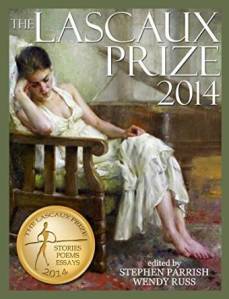
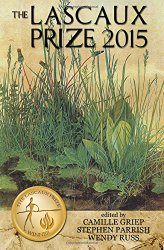
Lascaux 2015If you are new to this, a good place to start is the Lascaux Review. This is a literary magazine, but they have great contests, and their rules are fairly relaxed:

The Lascaux Prize in Flash Fiction http://lascauxreview.com/contests

The Lascaux Prize in Flash Fiction is presently open for submissions. Stories may be previously published or unpublished, and simultaneous submissions are accepted. Winner receives $1,000, a bronze medallion, and publication in The Lascaux Review. The winner and all finalists will be published in The 2017 Lascaux Prize Anthology.

12 Comments

Filed under Literature, Self Publishing, writing

#flashfictionfriday: A Little Love Story

In the long ago days, before every home had a word-processor, and even before I had my beloved secondhand typewriter, I wrote stories. My writing was for myself, or for my children, as it never occurred to me that I could ever really “be a writer,” although that was what I always answered when asked.

My handwriting was better in those days, perhaps because I wrote daily. Some of my short tales were good, some were bad, and most have vanished over time.

This little tale survived the many moves and purges, and dates back to 1984.

Duet, by David Teniers de Jonge - (1640s) via Wikimedia Commons

Duet, by David Teniers de Jonge – (1640s) via Wikimedia Commons

A LITTLE LOVE STORY

An old man and his wife of many years sit on a rough bench outside the door to their home.  It’s a rough cabin, just one large room with a large attic. The furniture is rough but sturdy and clean from daily scrubbing as is the rest of the home.  Everything in their home they built or made for themselves, right down to the small flute the old man plays as the old woman mends his rough, homespun shirt.

It’s just the two of them now; their son has long since married and moved away. Occasionally they walk the two day’s journey to see him and his family, but it’s unlikely they will ever do so again.

To look at them it would be hard – nay – impossible to believe they ever were young and beautiful or strong and handsome but once upon a time they were just that.

Once upon a time, the old woman had abundant dark hair, thick and curling to her knees when it was unbound.  Her dark eyes were full of fun and her red lips smiled often.  When she thought of what her life would be like, she knew without a doubt she would be as rich as a queen, and as happy as any woman could ever be.  To her, the future was as bright as new-minted gold; all things were possible.

Her laughter made the grumpiest person smile.  The entire village loved her, and though many a handsome, well-to-do young man wanted her for his wife, her eyes saw only the poor but hardworking son of the carpenter’s widow. Whenever she was asked, she vowed she would only marry the young man with the easy smile that charmed all who saw him.

Once upon a time, the old man was handsome, tall and strong, with a smile to melt the hardest heart. But no matter how many beautiful girls danced with him, or tried to kiss him, he only saw her – the merchant’s daughter. She filled his dreams and he vowed to all that he would wed only her.

Everyone said theirs was a story of true and eternal love.

He worked hard, and built the small house for her with his own hands, swearing it was only the beginning of the fine mansion he would build for her and vowing she would live a life of ease and luxury.  Her father was pleased and gave him her hand in marriage.

She didn’t care. She would have lived in a mud hut if it meant she would be with him.

One beautiful spring day and they were married and the entire village celebrated. They lived blissfully for the first year, and the following spring they were blessed with a child.

It is sad but true: to know what happiness is, a person must understand sorrow and pain. Their infant son didn’t live for more than a day. Heartbroken, they buried their child and tried to go on with their life.  Over the next five years, they buried three more children. Only the love she had for her husband kept her going. In his arms, she found solace and peace.  His steadfast love and support carried her through those dark days, and though she was not the merry girl she once had been, she was still a good-natured, loving wife.

The good old king died, and his son took the throne. The young king’s rule was not as kind or as benevolent as his father’s rule had been.  He taxed the people cruelly and life became hard, but still their home was their haven.

Each night they fell asleep in each other’s arms and in the morning they woke happy.

One spring the brash young king’s men came to the village and took her husband to fight the war in a land far away. Bereft and alone, she struggled to keep the home they had built, taking in sewing and laundry, working hard and praying morning and night for her husband’s safe return.

After two seasons had passed, the goddess heard her prayers. Though she feared he would be lost to her, her husband came home, wounded and with a limp which he never lost, but alive and still strong in his love for her. His smile had grown melancholy while he was away, but still melted her heart whenever he smiled at her, which he did at every opportunity.

At long last they were blessed with a healthy boy, and not only did he survive, he thrived in the sunshine of his parent’s love.

And their days passed, turning into years. The king’s taxman saw to it they never grew rich, but he could never steal their true wealth. The boy grew to be a strong, handsome lad and one day he married, leaving his parents somewhat lonely but happy for their son.  And still time passed.

In middle age the woman was still striking; strong and nice to look at, though she had grown somewhat stout. Her laugh was jolly, and her smile still as free as it had always been and she was known by all to be a good and generous woman. When good advice was needed the village sought her out, and her wisdom never failed them; she was as a mother to them all.

The man was still strong but needed a straw hat when working, as his hair was growing thinner with the years. The younger men admired his strength and heeded his wisdom.

Each night the man and woman kept each other warm and every morning they woke happy, knowing they would spend it working together in the little kingdom which was their home.

The old woman’s hair became thin and white, and her smile lacked all the teeth she once had, but the old man still saw the most beautiful girl in the world.

The old man’s pate became as bald as an egg, and his scraggly beard white as snow. He too lacked some teeth, but when she looked at him she saw the one boy in the world who made her heart skip a beat; the boy for whom she would have done anything to have for her own.

An old man and his wife of many years sit on a rough bench outside the door to their home.  When they sit there, they are rich.  Their home is finer than any castle ever known and their lives more blessed. Every promise the man ever made to his wife was kept, if not in the manner he once had planned, although he has only just recently come to understand that.

Every dream she’d ever had came true, though she too only realized it as she became an old woman.

The Goddess of Hearth and Home looks on them and smiles.  One day soon, they will be young and strong, and merry and free again. One day soon they will rise from the bench hand in hand and walk into the sunlight, together forever and always, leaving old shells behind, no longer needed.

One day, soon.


A Little Love Story, © 2016 Connie J. Jasperson

2 Comments

Filed under #FlashFictionFriday, Literature, Romance, writing

#amwriting: using repetition as a literary device

fitzgerald-great gatsby memeUnconsciously using the same words too often in our descriptions is one of the pitfalls of writing. It happens to all of us, and for me it occurs most often when I am laying down the first draft. I’m hurrying and trying to get the ideas out of my head and onto the paper and my vocabulary can’t keep up.

Many common words (the, and, etc.) don’t really stand out when used more than a few times in a paragraph, and you couldn’t write well if not for those words. However, some words will always stand out more than others, and if you use them more than once in a paragraph it looks like you’re unimaginative or a lazy writer. This is especially true if the word in question has a lot of synonyms you could have used instead of repeating the same word. Having a good thesaurus at hand is a great help to the brain-stranded author.

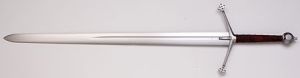
Scottish claymore replica Albion Chieftain, Søren Niedziella, CC BY 2.0

Some words don’t have a lot of obvious synonyms so you get hung up on the few you can find.  In my own work, the word sword is one of the main culprits. The type of blade my characters wield in the World of Neveyah books is a claymore, and four ensorcelled blades figure prominently in the Tower of Bones series.

Therefore, some obvious synonyms will not work as these are distinct blade types that are in no way like a broadsword.

  • Rapier
  • Epee
  • Foil

Because of this constraint, I am limited to:

  • Sword
  • Blade
  • Weapon
  • Steel (if I’m desperate, but I despise using that to reference a weapon that isn’t an epee or a rapier)

ozford american writers thesaurusHowever, sometimes we use intentional repetition:

Sometimes we want to emphasize a concept and repetition is the way to do it. Some of the best authors use the repetition of certain key words and phrases to highlight an idea or to show the scene. This technique is an accepted rhetorical device and is commonly found in mainstream fiction. It is used to evoke an emotional response in the reader, and can be exceedingly effective when done right.

Literarydevices.net says, “The beauty of using figurative language is that the pattern it arranges the words into is nothing like our ordinary speech. It is not only stylistically appealing but it also helps convey the message in much more engaging and notable way. The aura that is created by the usage of repetition cannot be achieved through any other device.”  (End quoted text)

Also according to literarydevices.net, repetition as a literary device can take these forms:

  • Repetition of the last word in a line or clause.
  • Repetition of words at the start of clauses or verses.
  • Repetition of words or phrases in opposite sense.
  • Repetition of words broken by some other words.
  • Repetition of same words at the end and start of a sentence.
  • Repetition of a phrase or question to stress a point.
  • Repetition of the same word at the end of each clause.
  • Repetition of an idea, first in negative terms and then in positive terms.
  • Repetition of words of the same root with different endings.
  • Repetition both at the end and at the beginning of a sentence, paragraph, or scene.
  • A construction in poetry where the last word of one clause becomes the first word of the next clause. (End quoted text)

Some famous examples of repetition as a literary device:

“Every book is a quotation; and every house is a quotation out of all forests, and mines, and stone quarries; and every man is a quotation from all his ancestors.”  Ralph Waldo Emerson, Prose and Poetry

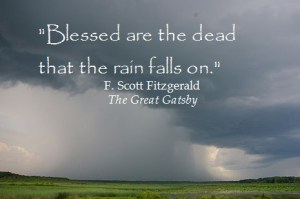
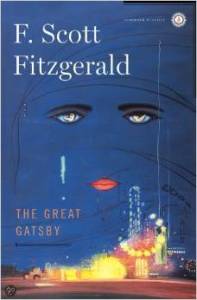
f scott fitzgerald The Great Gatsby“About half way between West Egg and New York the motor-road hastily joins the railroad and runs beside it for a quarter of a mile so as to shrink away from a certain desolate area of land. This is a valley of ashes—a fantastic farm where ashes grow like wheat into ridges and hills and grotesque gardens, where ashes take the forms of houses and chimneys and rising smoke and finally, with a transcendent effort, of men who move dimly and already crumbling through the powdery air.” F. Scott Fitzgerald, The Great Gatsby

When an author writes it intentionally to drive home a point, repetition is an effective tool. It is when words are inadvertently used with a lack of creativity that repetition ruins a narrative.

Consider buying a thesaurus or make use of the many online thesauruses that are available.

I have a well-worn copy of the Oxford American Writer’s Thesaurus. This book has become just as important to me as my copy of the Chicago Manual of Style. This large book of synonyms can be purchased used from Amazon, for as little as $9.99 in the hardcover form. I do recommend purchasing this as a paper book rather than an ebook. Once you see the amazing variety of words at your disposal, it’s one you will refer back to regularly.


4 Comments

Filed under Literature, writing