Category Archives: Fantasy

#FlashFictionFriday: Edna’s Garden, Part 2

I’m packing up to move. Selling the house was more work than I thought it would be. My agent assured me the large sum of money I spent replacing the old carpets with laminate, and getting new, natural-stone counter-tops would more than pay for itself when I found the right family to sell the place to. Frank Lanier, my real estate agent, has known me for years. He accepts that I believe more is at stake than mere money and was willing to write some unusual clauses into the contract.

My daughter doesn’t know this, but I told Frank that if the right people wanted the house, I would accept any offer they made, even if it was a little low.

The problem is, I’ve buried two husbands, and now I’ve outlived my handyman, Jasper. He seemed so healthy too. But he dropped dead of a heart attack at the young age of only eighty-two. Jasper did everything I couldn’t for the last thirty years, mowing the grass, cleaning the gutters, fixing the wonky electric system, or repairing the roof. I don’t want to have to train some young know-it-all in how things should be done, such as not running the lawnmower over the sprinkler heads. I’ve accepted that I can’t care for the place anymore.

But I do have a responsibility to see to it the right family moves in here. They must be able to see past the expected, must have an imagination, and absolutely must be committed to preserving…nature.

Marjorie, my daughter, is only in her seventies and, unfortunately for her husband, she’s as healthy as a racehorse. The way she carries on about every minor ailment, you’d think she was at death’s door. Arthur, Marjorie’s husband, is the least spirited man I’ve ever met. I suppose forty-eight years of being tied to her has long since beaten anything resembling a backbone out of him. Marjorie has the notion her life will be much easier if they sell everything and move to Florida.

I know what my extraordinarily lazy daughter is up to.  By purchasing a condominium in a resort for well-heeled seniors, Marjorie will have housekeepers to order around and will never have to cook again. They could eat every meal in the community dining room. I’m sure Arthur sees that as a point in her favor since Marjorie can’t even boil water without burning it.

It sounds like a cruise ship but without the Norovirus. However, she needs me to foot the bill, because she always spent her and her husband’s salaries faster than they could earn it, and then she insisted on retiring early. So, they’re out of money now, but she has a new retirement plan–me. She’s been pretending I’m senile and petitioned the court to be given custodial power over me and my assets “for my best interests.”

That will never happen. She now hates my lawyer, because he made it clear that I am in complete possession of my wits, and the judge rather bluntly asked her what she was hoping to gain. She became quite offended, saying it was her duty to care for me in my declining years.

Of course, she came apologizing afterward, trying to convince me to move in with them, but I told her I had plans that involved having a life. Marjorie got that pouty look, the one she wears anytime she’s balked. After we had left the court, I did tell Violet that booking myself into the lowest-rated nursing home in a Bombay slum would be preferable to putting myself and my money in Marjorie’s power. Violet knows Marjorie, and had to agree.

With Jasper’s untimely death, I had to do something about the house, but I have a responsibility to the “guests” in my garden. I didn’t tell Frank why I wanted only a certain kind of family, but the truth is, whoever purchased this place had to be people with an open mind. They had to be able to see my fairies and understand they are an endangered species and that they have a sacred duty to protect them. That’s why I had Frank put the clause in the contract that the new owners must never cut the hedge.

Frank finally found the right people. Kaitlyn and Martha fell in love with it. When they looked at the garden, Kaitlyn spotted the fairies and got all excited, pointing and whispering to Martha that this was the place for them to build their life together, and she had to have it, no matter what.

Martha agreed.

So now, that perfectly sweet couple will live here, and my fairies will be safe.

As the judge advised me to, I’m spending Marjorie’s inheritance. Frank found me the perfect little condo downtown near the senior center, and I can bring my cat, Rufus. It’s only a few blocks from the farmer’s market, and it’s on the bus line so I can sell my car, which will make my insurance agent happy.

Once I get settled there, Violet and I will take a two-week trip to Italy. We have a lot of plans, and making a pilgrimage to Fabio’s birthplace is just the beginning.

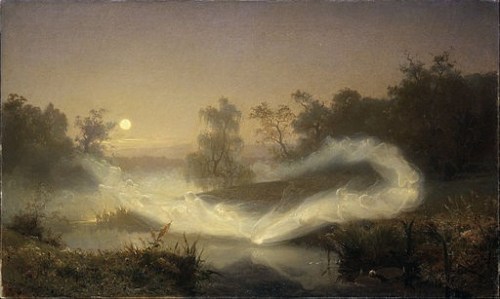
512px-August_Malmström_-_Dancing_Fairies_-_Google_Art_Project


Edna’s Garden, Part 2 © 2016 Connie J. Jasperson, All Rights Reserved

Click here to read part one of Edna’s Garden 

Comments Off on #FlashFictionFriday: Edna’s Garden, Part 2

Filed under #FlashFictionFriday, Fairies, Fantasy, writing

#flashfictionfriday: The Sea Doves

sanddollar

For more information on the life cycle of the common sand dollar, go to http://www.gma.org/tidings/sand-dollar

An older lady walking with a cane, and a young boy of about four strolled along the beach, following the line of shells and debris left by the retreating tide.

“Grandma, what’s this?” The boy picked up a round, flat shell, with a design that looked like a flower etched on the rounded top.

“It’s a sand dollar,” replied the grandmother. “When the little creature inside dies, it leaves its teeth behind. Their teeth are shaped like doves. If you shake it you can hear the doves inside, rattling around.”

“Real doves? Like the ones by our house?” He peered intently at it, turning it over in his chubby hands and then, holding it up to his ear, he shook it.  He  danced with excitement, his eyes bright. “I can hear them!”

They walked a while further and the boy bent down again, picking up another sand dollar. “This one is is broken. What happened to the doves? Did they fly to my yard back home?”

The grandmother chuckled. “Perhaps they did. Shall we open one and see if they’re the kind of doves that fly?”

“Okay. I’ll find one.”  After a few moments of searching, the boy shouted, “I found it.” Quickly bending down, he picked up his find and held it out to his grandmother. “Can you open it now?”

“We’ll need a rock,” said Grandma. “Get me a good rock for pounding on things, about the size of your fist.”

Soon the two were bent over a driftwood log, with the sand dollar lying ready to be opened. “What should I do?”

“Give it a good whack. Not too hard, but just enough to crack it open.”

The boy shook his head. “I’m too strong. What if I smash it? I’m much stronger than you, so maybe you should whack it.”

Laughing again, Grandma complied. Soon the shell was opened and the little dove-shaped teeth were exposed.

The boy waited for a moment, then asked, “How come they aren’t flying away?”

Grandma thought for a moment. “Perhaps they only fly when we aren’t looking at them. Maybe we have to close our eyes and wish as hard as we can.”

The boy did so and after a moment Grandma said, “Look!”

His eyes flew open and he saw in the distance five white birds, flying away. “They did it! We let them loose! But they turned into seagulls.”

Grandma fingered the tiny bones in her pocket. “You’re right. Those were seagulls. Maybe they only turn into sea doves if we let them break out naturally.”

“Okay. We won’t hatch any more. I think there are enough seagulls on this beach right now. What we need are sea doves.”

Grandma agreed. The two walked on, stopping occasionally and examining the amazing finds left behind by the tide.


The Sea Doves, © Connie J. Jasperson 2016, All Rights Reserved

7 Comments

Filed under #FlashFictionFriday, Fantasy, writing

#flashfictionFriday: Sonnet 116, by William Shakespeare

Wm Shakespeare Amazon Author Central portraitWe haven’t waxed poetic over Shakespeare recently, and I think it’s time to consider the prose of the master, both its meaning and its construction. To that end, I give you

Sonnet 116

Let me not to the marriage of true minds

Admit impediments, love is not love

Which alters when it alteration finds,

Or bends with the remover to remove.


O no, it is an ever fixèd mark

That looks on tempests and is never shaken;

It is the star to every wand’ring bark,

Whose worth’s unknown although his height be taken.


Love’s not time’s fool, though rosy lips and cheeks

Within his bending sickle’s compass come,

Love alters not with his brief hours and weeks,

But bears it out even to the edge of doom:


If this be error and upon me proved,

I never writ, nor no man ever loved.

Sonnet 116 is typical of what we think of as a classic English sonnet. The English sonnet has three quatrains (verses), followed by a final rhyming couplet. It follows the typical rhyme scheme of iambic pentameter, which is a type of poetic meter: one short (or unstressed) syllable followed by one long (or stressed) syllable.

The interpretation of this poem is open to many speculations, the most compelling of which I found in Cliffs Notes, and which I quote here:

Despite the confessional tone in this sonnet, there is no direct reference to the youth. The general context, however, makes it clear that the poet’s temporary alienation refers to the youth’s inconstancy and betrayal, not the poet’s, although coming as it does on the heels of the previous sonnet, the poet may be trying to convince himself again that “Now” he loves the youth “best.” Sonnet 116, then, seems a meditative attempt to define love, independent of reciprocity, fidelity, and eternal beauty: “Love’s not Time’s fool, though rosy lips and cheeks / Within his bending sickle’s compass come.” After all his uncertainties and apologies, Sonnet 116 leaves little doubt that the poet is in love with love.

The experts at Shakespeare Online say:

Sonnet 116 is about love in its most ideal form. The poet praises the glories of lovers who have come to each other freely, and enter into a relationship based on trust and understanding. The first four lines reveal the poet’s pleasure in love that is constant and strong, and will not “alter when it alteration finds.” The following lines proclaim that true love is indeed an “ever-fix’d mark” which will survive any crisis. In lines 7-8, the poet claims that we may be able to measure love to some degree, but this does not mean we fully understand it. Love’s actual worth cannot be known – it remains a mystery. The remaining lines of the third quatrain (9-12), reaffirm the perfect nature of love that is unshakeable throughout time and remains so “ev’n to the edge of doom”, or death.

In the final couplet, the poet declares that, if he is mistaken about the constant, unmovable nature of perfect love, then he must take back all his writings on love, truth, and faith. Moreover, he adds that, if he has in fact judged love inappropriately, no man has ever really loved, in the ideal sense that the poet professes.

Five hundred years after his time on this earth, the Bard of Avon’s crafting of ideals and emotions into words evokes powerful feelings in the reader. He is immortal, because we hear his words and feel their impact.

The secret poet within me hopes to one day develop more poetic skill, whether it is writing free-verse, or crafting a more traditional rhyming style of prose. To that end, I practice writing poetry when I am in the mood, and read the masters, and attend local poetry-slams. It’s amazing, the talent in your local poetry groups.


References:

Cliffs Notes, Sonnet 116 © 2016 Houghton Mifflin Harcourt. All rights reserved.

Shakespeare, William. Sonnet 116. Ed. Amanda Mabillard. Shakespeare Online. 8 Dec. 2012. http://www.shakespeare-online.com/sonnets/116detail.html

Comments Off on #flashfictionFriday: Sonnet 116, by William Shakespeare

Filed under #FlashFictionFriday, Literature, Poetry, writing

#ammwriting: Firing Chekhov’s gun

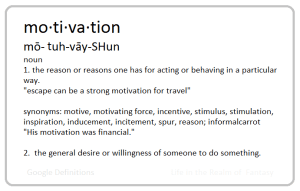
Motivation memeThis last weekend, I attended PNWA’s annual writing conference in Seattle, Washington. I garnered a great deal of advice from industry professionals and took seminars offered by well-known authors, agents, and editors.

I attend this conference every year. PNWA is where I come to learn both the craft of writing and business of publishing. Craft and business: two aspects of writing that every serious author must know whether they are going indie or taking the traditional route.

Today’s post is about identifying what motivates your characters. Well-known writing coach,  Lindsay Schopfer, gave a seminar on this, which unlocked ideas for my works in progress. That is how writers’ conferences work for me—they pry loose the ideas that have been stuck and help me verbalize them.

You have probably heard of the literary rule known as Chekhov’s Gun, which says nothing should appear in the scene that has no use. If a rifle is important enough to be shown hanging on the wall, someone had better fire it, or it should be removed from the setting.

Firing Chekhov’s gun brings us to motivation. When I was in elementary school, I was taught  “the 5 Ws” of journalism. I feel sure they still teach this, but just to remind you, they are:

  • Who
  • What
  • When
  • Where
  • Why

These five words form the core of every story. Who did what? When and where did it happen?

Why did they do it?

In some stories the author had made the what quite clear, but the why is murky. I hate it when the author is at a loss as to why their protagonist wants to do the task set before them.

If a character commits a murder, you’d better know why they were compelled to do it. Random events inserted to keep things interesting don’t advance the story.

When a character arrives at the inciting event, the things that motivate him/her should already be established. Identifying what makes your character do the things they do is the core of character development. Some characters are easy:

  • Edwin wants to save Marya.
  • Wynn wants to get back to his wife and his forge.
  • Huw wants to avoid being hanged for treason.

Some characters have motives that are more difficult to identify. Motives are driven by need, what a character desires, and what they are willing to do to attain it.

Suppose we have a protagonist who realizes her marriage is failing. We’ll call her Anna. Before we begin writing, we need to do a little brainstorming about Anna and find out who she is and what makes her tick.

She is a well-educated, professional woman, a writer of paranormal fantasy. She is married to another writer, David.

What motivates her? David is strong, charismatic and brilliant. There is nothing he doesn’t feel entitled to, and he will do anything to achieve his goals. Although she is a best-selling author of popular fiction and is the person paying the bills, Anna has made a habit of catering to his needs.

At first, she wants to keep her marriage together and presents herself as whatever she thinks David wants her to be. She feels as if she casts no shadow of her own. As the summer progresses and events unfold, she evolves, becoming an individual who no longer needs his validation. In the process, Anna finds that she is, and has always been, the strong one in the relationship.

With those paragraphs, we know the main protagonist’s desire—on the surface she has a deadline for her book and wants to save her marriage, but really she is seeking her sense of self-worth, trying to find who she is.

Now, let’s find out who the other characters are:

Anna and David rent a secluded house on the wild Washington coast for the summer. They invite 3 companions to join them for the summer, as a working retreat. All five characters have deadlines, and that is their official reason for accepting Anna’s invitation. However, the four other characters each have their own agendas. Other than Anna, they each have strong personalities, are charismatic, and are used to a certain amount of privilege. At first, although it is subtle, each of them uses and manipulates Anna for their own purposes.

Every member of the cast has a secret, including Anna. With the revelation of each secret to the reader, the motivations for subsequent actions become clear. Someone will attempt murder to ensure their secret is kept. In the end, three will die by accident, and two will be left to pick up the pieces.

With this information complete, we know the genre–this novel is a contemporary fiction, and is the story of Anna’s journey to self-knowledge. It will be slower paced than a thriller, and will be about the people and their relationships more than the events. However, the events will shape the people.

LOTR advance poster 2Unless each character’s wants and needs are clearly defined, the events won’t make any sense. Without clear motivations, it’s just a bunch of drama queens cooped up with a psychopath, in a house by the gloomy Washington North Pacific coast. Once we know their motivation, it becomes a story. And as a writer trying to flesh out characters, it becomes easy to picture these five people as individuals possessing depth and desires.

Motivation is the character’s quest to fulfill his/her deepest needs. Consider Frodo: he has seen what the ring did to Bilbo and Gollum, but more than that, he loves the Shire and does’t want it to fall to shadow. Without a real, personal motivation, there is no reason for Frodo to  agree to walk to Mordor and certain death just to toss a ring into an active volcano.


1 Comment

Filed under Literature, writing

#FridayFiction: The Bolthole, part 2

The next morning, Eddie, Gertie, and Billy packed what few possessions they had and made ready to leave The Powder Keg, meeting Walter and his son Willie on the way downstairs. Severely hungover, the Bastard sputtered and cursed, but finally agreed that he could make a bit more gold if more merchants were able to travel. By mid-morning, they had made their goodbyes and were on the road north to Eddie’s lodge.

A storm was blowing fiercely atop Windy Ridge, which made the narrow, muddy road treacherous, slowing them. It was late afternoon when they arrived home, although the thick forest of tall firs made it seem later.

>>><<<

Just after noon on the fifth day of Eddie’s new venture, five mercenaries he’d ridden with during his tenure with the Wolves rode in, bringing all their possessions, hoping to sign on with Eddie’s new crew. They asked him what he was naming his mercenary band, and he confessed he hadn’t picked a name yet.

To his son’s rather visible joy, one of the new recruits was Dame Bess, a noblewoman who claimed no last name. Another was Alan Le Clerk, a younger merc of Billy’s age. Lady Barbara (Babs) Gentry, Lily Rhys, and George Finch rounded out the crew.

Dame Bess was the coldest woman Eddie had ever met, hard as steel. He wasn’t sure what his son saw in her, but the lad was completely smitten, despite the fact she ignored him the way she did every man, or woman for that matter. Still, she was one of the best sword-swingers in the business, level headed when anything bad went down, and a quick thinker in an ambush. He counted himself lucky to have her on his crew.

After they picked their bunks and settled their things upstairs, they sat down to supper, pleasantly surprised at the meal Eddie’s son, Billy, set before them. Alan said, “I never knew you could cook.”

“This is good. Better than Marien’s.” Bess took a few more bites of fish-stew, then said,”There’ll be one or two more Wolves coming along in the next day or so. They’re taking their time, wanting to see how the Bastard changes things up, so they’re working without a contract until they make up their minds. They have until the day after tomorrow before they have to make a commitment.”

George Finch, the younger son of a baron, spoke up, his clipped, northern nobleman’s accent sharp with indignation. “You got your son out there just in time, Walter. Guess who turned up, right after you left? Good old Bloody Bryan. He showed up as soon as he knew Marien was safely in the ground.”

Lily nodded. Her thick Eynierish accent was hard to follow, and an angry look marred her darkly attractive features. “Sure enough, the Bastard took him back, claiming he was shorthanded because you had taken half the crew and started your own ‘band of thieves and rowdies.’”

George’s scorn could have peeled the bark from a woodwraith. “After what that degenerate did, ruining our good name—”

Eddie snorted. “The Bastard always did have the worst taste in friends, but taking Bloody Bryan back…I don’t understand it.” He shrugged. “Anyway, I hope you’re aware that I have no jobs yet. We might be doing a lot of fishing here if we can’t find work.”

Lily’s grin lit up the room. “I love to fish—I’d rather do that than anything else. Besides, I wouldn’t spend another night in the Powder Keg, now Bryan is there no matter how hard things get here.”

Bess smiled, and when she forgot to be hard, she was pretty. “Just so you know, the Bastard is already referring to us as a bunch of highwaymen and rowdies whenever anyone asks and telling folks our shack is naught but a bolthole in the woods.”

The whole group laughed, Eddie most of all. “A bolthole–I like that. Coming from him it’s a compliment. You have to admit, it’s a pretty solid shack.”

“This place is a lot sturdier than the Powder Keg,” Walter said. “I hated living upstairs there during a high-wind storm. The top floors shake so bad, it’s like the whole place will blow down.”

“You have that right, Walter.” George leaned back against the wall, taking in his surroundings. “This is a damned log palace, compared the Powder Keg. Plus, the Keg get’s flooded every year when the river rises. This place is dry, with no moldy smell. I don’t care if I do have to share quarters—I can live without the mold.”

The next morning, just after midday, a knock sounded at the door. Eddie answered it. A merchant he recognized, John Caskman, stood there. “Hello, Eddie. I was just in Somber Flats and heard the news about Marien. The Bastard tells me you’re leading a new band of mercs called the Rowdies? If so, I have a job, for you, leaving Monday next. It’s a small wagon train for you to escort to Galwye, from Dervy. Three wagons, so I’ll need six guards for six days.”

Eddie shook his hand, and a smile split his face. “Yes, I think we can fit you into our schedule.” That evening he hung a shingle over the front steps:

the bolthole sign

With that, the names were established, and the Rowdies settled into a routine.

>>><<<

Five weeks had passed since Mad Marien’s funeral. The court papers had arrived at the end of the second week, and Eddie MacNess was officially granted a patent to form a mercenary outfit, the Rowdies. Things had gone far better than Eddie had dreamed they would, and even the Bastard had been forced to admit business was better than ever with the Rowdies funneling paying customers his way. Eddie now had sixteen Rowdies, including a trained provisioner,  a runaway sailor from Lanqueshire named Romy. Business was good and the Rowdies were working all the time.

It was a clear day, with blue skies and birds singing. Eddie, George, Allan, and Billy had just arrived back at the Bolthole. Eddie dismounted, handing his horse’s reins to young Willie. He’d just realized the birds had stopped singing, when the sounds of horses galloping caught his attention, and he looked up, seeing five knights in royal colors riding as hard as they could, heading for the safety of the barn.

The knight leading the group shouted, “Dragon! Get your livestock under shelter.”

Eddie caught the bridle as the man leaped from his horse. “Where was it last?”

The knight in charge was Lord Mat St. Coeur. “Just north of Psalter Pass. We were fighting it, but the damned thing flew away. Do you have any livestock?”

“Just a few chickens, which we keep in the barn. We keep the horses in the paddock by the stable because I haven’t had a chance to repair the main stockade yet. Where was it headed? I have a crew of Rowdies who should be coming home this afternoon, and they may already be on the Galwye road.” Gertie, Lily, Bess, and Babs had guarded a small merchant caravan from Dervy to Galwye and back. Eddie looked at the sun, thinking they should have just left the quarry town. They would be about two or three hours away, depending on the weather up in the hills. A ball of lead formed in his stomach as he realized he had no way to warn them, but he stuffed down his panic. “Was it wounded?”

“Yes, but he was still able to fly. He was headed this way, then disappeared. I think he may have landed, but he could still be flying around out there.”

Both men jumped deeper into the shadows of the stable as an immense shadow crossed the stableyard, flying low. Eddie’s bowels turned to water. The roar of flames lit the clearing, and the shadow passed.

The flickering light of a fire, however, did not. Willie grabbed Eddie’s arm. “Look to the house, Captain Eddie! The thatch is alight!”

St. Coeur leaped to action. To Eddie, he said, “Fetch a ladder and rakes.” He turned to Willie. “Boy—get everyone out of the house. Tell them to bring out every bucket and container they can find.” He turned back to Eddie. “I’ll go up on the roof and rake the burning thatch down to the ground. Once I have it on the ground you lads put out the flames.”

Young Willie’s eyes were terrified, but he had himself under control and ran to the house as instructed.

Racing to the tool shed for the ladder and rakes, Eddie called over his shoulder, “St. Coeur, you’re a fool! You’ll be right up there where the dragon can get you.”

Following Eddie, St. Coeur shuddered. “If so, I’ll be his dinner. We need to save your house. It’s the only dry shelter for miles!”

Willie emptied the house of people. Billy joined St. Coeur on the roof, working as fast as they could, raking and dragging every last bit of burning thatch off the roof. Down on the ground Eddie and the others had formed a bucket brigade, passing water up to the men on the roof while Willie and Romy drizzled water  and stamped on what St. Coeur and Billy threw to the ground.

Finally, the fire was out. One whole side of the house had no thatch, bare to the split-rails laid over the rafters, but the smoke had cleared, and the house was saved.

The two men carefully examined the rest of roof, to make sure no embers were hiding, pouring buckets of water over it, just in case.

Eddie stood in the clearing, staring up at the thatchless side of his house. His heart sank at the thought of the work ahead of him in repairing the damage over the next few days, but at least he still had his home.

However, that disaster paled in comparison to his real worry. What if the dragon had passed over Gertie’s crew? There was nothing he could do about her and the other ladies, so he forced himself to keep on working.  “I guess we’d best see if we can find enough canvas to keep the rain out of the attic while we get this fixed.” His jaw was clenched to keep his teeth from chattering. Visions of his lady being snatched up or trying to fight an enraged dragon kept stopping him in his tracks.

At last, he found several good-sized tarpaulins, canvases for covering freight-laden wagons. He sent Billy up on the roof with St. Coeur to help the knight secure the sheets of canvas. The two men bound them tightly to the rafters with stout hemp cords so the wind wouldn’t blow them off during the night. Finally, they were back down on the ground.

Billy grabbed his father’s arm. “Dad—we’ve done what we can here. I want to go look for the ladies.” He was demanding, it, and wouldn’t hear “no” if Eddie said it.

Eddie wanted nothing more, but he was captain. It was his duty to make sure everything was in order before he went looking for his lover.

Billy tried again. “Please? It’s Gertie, Dad…and Bess.”

Caving in to his own fear, Eddie nodded and turned to the knights. “St. Coeur, Romy will feed you and your lads, and get you settled for the night. I have a crew on the Galwye Road I need to go meet.” He turned to the Rowdies. “Alan, Lonnie, and Walter—you’re with Billy and me. Willy, let’s get these horses saddled.”

However, the thunder of hooves announced Gertie’s crew returning. The ladies rode hard into the stableyard but pulled up when they saw all was well. Once in the barn, Gertie jumped down, and Eddie grabbed and swung her, relief making him giddy.

Laughing as he set her down, Gertie said, “We saw a dragon flying off to the north. Then we saw a column of smoke rising from here and feared the worst.”

St. Coeur said, “Which way was he headed?”

Gertie shivered. “North along the foothills, below the Western Range. He wasn’t flying too well, and he was far away, but we stayed hidden under the forest.”

“Too right, we hid,” said Babs, winking at St. Coeur. “We had no intention of dancing swords with a dragon. Hello, Mat. Remember me from court? Lady Barbara Gentry.”

“I do remember you, Babs—and how well you got along with the queen regent.” Mat covered his laugh with a cough. “The snake in her dressing table was a lovely parting gift when you left to marry the elderly Earl of Grandon. I never knew you’d taken up the sword, though.”

Babs laughed. “To my noble father’s eternal embarrassment, I’m not really cut out to be a countess, so the night before the wedding I eloped with my sword.”

St. Coeur eyed Babs appreciatively, but said to Eddie. “The dragon’s lair is likely up in those mountains, then. They’re pretty smart. Maybe he won’t come this close to civilization again—we did manage to wound him.”

“What are you lads going to do about him?” Eddie couldn’t get the size of the shadow out of his mind. “We can’t fight something like that. You have those bespelled shields and majik amulets.”

St. Coeur nodded. “And even with those to assist us, we lost two men. We were about six men short to have a proper chance at killing him. But I suppose we’ll be sent on a dragon hunt up in the wilds. We don’t just let those sorts of creatures roam freely.”

Babs linked her arm with St. Coeur’s, smiling up at him through dark lashes. “Mat darling, have you ever considered becoming a mercenary? We have so much more fun than you noble younger sons who must do all the dirty work with so little appreciation from her royal bitchiness.”

Mat replied, “Well, I did receive an offer from the Ravens last week, and I may take them up on it. Outside of the occasional dragon hunt, court life bores the hell out of me.”

“You’ll be an asset to them, and if things don’t work out there, I’m sure Eddie could keep you busy here. We’re never bored.” She drew the knight toward the lodge, their voices dwindling as they left the stable.

>>><<<

Later that night, alone in the privacy of his room Eddie held Gertie, overcome by the thought that he’d nearly lost his home. But more importantly, during the ruckus, once everyone was safely out of the burning house all Eddie had been able to think about think about was that Gertie was on the Galwye Road, and the dragon was heading her way.

“I love you, Gertie Smith,” he said, kissing her forehead.

“I love you too. But I’m not giving up the sword.”

“I know, and I don’t care.” And he didn’t. He had as much of his lover as he ever would. He had his mercenary crew, he still had the Bolthole, partially roofless though it was, and he still had his son. No one had died. He didn’t need anything more than that to make him happy.

Gertie slept in his arms, and he laid there listening to the unfamiliar sound of rain hissing on the canvas that now protected his attic. Eddie had no idea what the next day would bring but at that moment he was filled with contentment. Still smiling, Eddie fell asleep.


To read part one of The Bolthole, click here

“The Bolthole, in two parts” © 2016 Connie J. Jasperson, All Rights Reserved

Comments Off on #FridayFiction: The Bolthole, part 2

Filed under #FlashFictionFriday, Fantasy

#amwriting: Physician to The Vampire

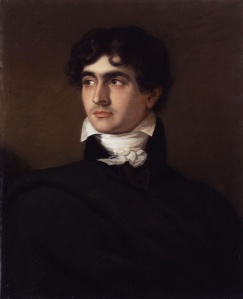
John William Polidori (7 September 1795 – 24 August 1821) was an English writer and physician. He was best known for his involvement in the Romantic movement, an artistic, literary, musical and intellectual movement that originated in Europe toward the end of the 18th century. He is considered by many as the originator of the vampire genre of fantasy fiction. His most successful work was the short story The Vampyre (1819), which was the first published, modern vampire story.

Perhaps because John Polidori was a physician, he was able to bring all the disparate elements of 19th-century vampirism mythology into a coherent, compelling short story.  With just that one short story, he spawned an entire literary genre.

How did this come about? The story had its genesis in the summer of 1816, the Year Without a Summer when Europe and parts of North America underwent a severe climate abnormality.

Lord Byron and his young, twenty-year-old physician, John Polidori were staying at the Villa Diodati by Lake Geneva.

On the run from creditors and Shelley’s ailing, understandably jealous wife, Percy Bysshe Shelley, Mary Wollstonecraft Godwin (who later became Mary Shelley) and Claire Clairmont, Mary’s stepsister, visited them.

The group was kept indoors by the incessant rain of that cold, wet, unpleasant summer during a three-day stretch in June. Bored at being cooped up, the five turned to telling fantastic tales, and which inspired them to write their own.

Reportedly, they were fueled by ghost stories such as the Fantasmagoriana, William Beckford’s Vathek, and laudanum, to which Byron was addicted. Mary Shelley, in collaboration with Percy Bysshe Shelley, produced what would become Frankenstein, or The Modern Prometheus.

Polidori was the outsider, the man who was only included as he was in the employ of Byron. Lord Byron made him the butt of many jokes at dinner parties, taking great pleasure in humiliating him. This cruel treatment of anyone in his power was well documented by his contemporaries.

the-vampyrePolidori was inspired by a fragmentary story of Byron’s, Fragment of a Novel (1816), which is also known as “A Fragment” and “The Burial: A Fragment.” Over the course of several mornings, he wrote “The Vampyre.” The manuscript was overlooked for three years when it was discovered by a disreputable publisher, Henry Colburn. He published it in his New Monthly Magazine under the title “The Vampyre: A Tale by Lord Byron.” It was received with acclaim, much to Polidori’s surprise and chagrin.

Polidori struggled to assert his rights to the work, and Lord Byron did have the grace to declare promptly the work was Polidori’s and not his. Despite that assertion, proper credit for authorship of the story was muddy for many years.

Still, Byron was firm that he was not the author. Apparently, Byron felt that the destruction of a man’s soul was no great thing, but theft of his intellectual property was a crime.

Polidori’s work had an immense impact on his contemporary readers. Numerous editions and translations of the tale were published. The influence of The Vampyre as described by Polidori has continued into the twenty-first century, as until recently, his work was frequently considered the primary source of what is accepted as “canon” when writing about vampirism.

What are the traditional tropes of vampire fantasy? First of all, we must think Lord Byron. He was an arrogant, self-centered, charismatic, sociopath with a gift for writing brilliant poetry. From birth, Byron suffered from a deformity of his right foot and by the time he hired Polidori, he was addicted to laudanum which had been prescribed for the pain. He treated the young Polidori atrociously, engendering deep antipathy for his patient in the young doctor.

John_William_Polidori_by_F.G._GainsfordWithin the pages of Polidori’s diary, I see “The Vampyre” as an allegory of Byron’s abuse of John Polidori himself. It is easy to visualize Byron as a man possessed of the power to drain one of their soul when seen through the eyes of the man he had in his power, and whom he treated abominably as an employer.

Byron was described as the devourer of souls in the book, Glenarvon, by Lady Caroline Lamb, one of Byron’s former lovers.  “Ruthven” is the name Lady Caroline Lamb referred to Byron as in her novel. Polidori had read Glenarvon that summer, and blatantly used Lamb’s protagonist’s name for his vampire, and Byron proudly admitted he was the role model.

The Public Domain Review article, The Poet, the Physician and the Birth of the Modern Vampire, says this about the rocky relationship between Polidori and Byron:

“It was no great leap for Polidori to believe that Byron was sucking the life from him, just as others had accused Byron of possessing a charismatic power that eclipsed their own identities. Amelia Opie, one of the many women Byron had charmed, described him as having “such a voice as the devil tempted Eve with; you feared its fascination the moment you heard it,” a mesmeric quality that critics also found in his verse, which had, according to the critic Thomas Jones de Powis, “the facility of…bringing the minds of his readers into a state of vassalage or subjection.”

So we know vampires are charismatic and seductive. Their bite would enslave their victims. Folktales from hundreds of years ago tell us they can take the form of bats and fly through the windows of even the tallest buildings. Historically, vampires are powerful, but unable to withstand the light of day, which would burn them, and destroy them forever.

A patch of Dry Skin, Stephen SwartzHowever, that which was once canon regarding vampires is no longer set in stone.

Modern vampires are often able to stay outside during the day, and some even sparkle.  Many are model citizens who get their blood from robbing blood banks.

I love Stephen Swartz’s medical take on vampirism in his book, A Dry Patch of Skin.

But underneath it all, I still have a fondness for the mad, bad, dangerous to know Lord Byron style of vampire.

7 Comments

Filed under History, Literature, vampires, writing

#amwriting: Sturm und Drang

hp-touchsmart-320-1030-full-setMy main, desktop computer died on Saturday. It’s been limping along for a while. We had into the shop about six months ago, and should have known then it was terminal. The thing is, while I love Sturm und Drang in my literature, I prefer my electronic life to be stress-free.

Limping along on my ancient, half-functional laptop, I can get by well enough to write the odd blogpost or work on my own work. But the screen is too small for me to use to edit for a client. Also, I can’t do any work requiring Photoshop, as that program is on my dead dinosaur.

I have my headphones on and the laptop strategically positioned, so it blocks the 50-inch technological disaster that is our TV and which seems to take up an entire wall. It also needs replacing as a series of vertical lines obscures the view on part of the screen but I doubt that will happen this year–TV is not that important. Music is mostly my form of entertainment.

Greg’s laptop is older than this one, although he is keeping it alive. All our technology is older than dirt. So, after I finish writing this blogpost, we are going shopping and two new machines will come to our house.

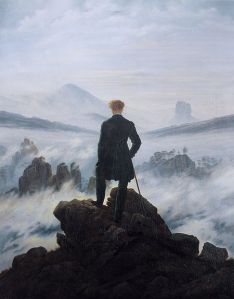
Caspar David Friedrich, Wanderer Above the Sea of Fog, 1818

Caspar David Friedrich, Wanderer Above the Sea of Fog, 1818 PD|100 via Wikimedia Commons

Let’s talk about Sturm und Drang. The English translation is literally, Storm and stress.

Google defines it as: a literary and artistic movement in Germany in the late 18th century, influenced by Jean-Jacques Rousseau and characterized by the expression of emotional unrest and a rejection of neoclassical literary norms.

What does this mean in simpler terms?

Sturm und Drang as a literary form evolved during the time of the American Revolutionary War, which a period of global unrest and great hardship, especially in Europe. The main feature is the expression of high emotions, strong reactions to events, and often, rebellion against rationalism. It is characterized by violent individualism and complex emotions. Literature and music written in this style were aimed at shocking the audience and infusing them with extremes of emotion.

Classical literature in this style began in 1772 with “Prometheus,” a poem by Johann Wolfgang von Goethe, in which the character of the mythic Prometheus addresses God (as Zeus) in misotheistic accusation and defiance. Misotheism is the hatred of God, or the Gods, in literature described as stemming from a moment in a person’s life where one feels the gods have abused and abandoned him. Misotheism requires a firm belief in a God or Gods.

Again, Wikipedia tells us this: Prometheus is the creative and rebellious spirit which, rejected by God, angrily defies him and asserts itself; Ganymede is the boyish self which is adored and seduced by God. One is the lone defiant, the other the yielding acolyte. As the humanist poet, Goethe presents both identities as aspects or forms of the human condition.

Modern genre and indie literature using this style can be found as an underlying trope in Cyberpunk.

Wikipedia defines Cyberpunk as: a subgenre of science fiction in a future setting that tends to focus on the society of the proverbial “high tech low life[1][2] featuring advanced technological and scientific achievements, such as information technology and cybernetics, juxtaposed with a degree of breakdown or radical change in the social order.[3]

DoAndroidsDreamIt is exemplified by post-industrial dystopias that tend to feature wide divisions in the social order and extreme chaos in society. Protagonists acquire and make use of technology in ways never anticipated by its original inventors (“the street finds its own uses for things”).  Much of the genre’s atmosphere is heavily film noir, and  employs techniques and style reminiscent of detective fiction.

The difference between classical Sturm und Drang and modern Cyberpunk is Technology and Industry are the Gods whose knowledge the mortals desire, and whom they seek to replace. All aspects of Sturm und Drang can be found in Cyberpunk.

Cyberpunk began as a niche rebellion by authors like Phillip K. Dick, and is now mainstreamed and growing in popularity.

Authors writing in the early days of speculative fiction were Indies who were finding success getting short stories published in popular sci-fi magazines, and who were fortunate enough to have some farsighted editors take chances with publishing their longer work. They formed publishing companies and became giants. That opportunity will always be out there.

Indie authors have a great deal of latitude in their choice of what to write, as we can write and publish edgy work that would be deemed too chancy by traditional publishers. Authors always engage in artistic rebellion, and society always appreciates it—years afterward.

And tonight, I will continue my artistic rebellion while getting my new computing thing, whatever it shall be, up and running.

2 Comments

Filed under Fantasy, Literature, Uncategorized, writing

#FlashFictionFriday: Astorica

800px-Ladies_safety_bicycles1889Chance Jensen approached The Duck Walk Inn, aiming for the front door. It was classier than most of Astorica’s cocktail lounges, and was the third place she’d looked that afternoon. She entered, peering around to see if Jack was there.

He was, and ignoring the worried glances from the few men who were present in the otherwise empty bar, she walked toward him.

Stella, the bartender, chatted with Chuck Moore, Astorica’s lone hooker. Chuck’s clientele was comprised mostly of lonely, blue-collar laborers, women who worked in the shipyard. Stella nodded at Chance, as she lit Chuck’s cigarette.

Chuck exhaled a cloud of smoke, and glared at Chance. “You’ve been neglecting him, Chance Jensen. Don’t take your husband for granted. You’re a lucky woman to have a man like Jack. He shouldn’t be sitting in a place like this.”

“I know. I’ll do better, I promise.” She did have to smile, getting advice on her marriage from the local whore. But, she supposed, Chuck had seen plenty of marriages fail.

“Good. I don’t want to have this conversation again.” With a flounce, Chuck turned back to Stella.

The nervous-looking men at the corner table had moved their handbags to hide their cocktails, obviously regretting their decision to be so daring as to go into a cocktail lounge unaccompanied.

Jack looked out of place at the bar, dressed in his usual proper, suburban, house-husband style. He glanced up from his iced-tea. “What do you want? I’m not going back unless you’ve changed your mind.”

“Jack, we had a quarrel. I’m sorry I shouted. But, you can’t file for a divorce, as you don’t have grounds. I don’t beat you or cheat on you. You’re just angry because I can’t afford to buy you a bicycle like Loris did her husband.”

Jack straightened his sweater and crossed his trouser-clad legs. “You’re right, I am unhappy about that. I might not be able to get a divorce, but I don’t need one. I’m not interested in dating, so I have no desire to be single. But no law says I have to share your roof. If I got a job as a waiter or a housekeeper, I could support myself and buy my own bicycle. One with a good-sized basket for carrying things.”

Chance attempted to reason with him. “Jack, if you took a job outside our home what would people think? They’d think I can’t manage on my salary. I’m just starting out with this company. I don’t need that kind of image dogging me, holding me back, or I’ll never be promoted. They’re assigning me better routes now, so things will improve. I promise.”

He burst out, “I have needs too, you know. I want to go places, and do things. I’m tired of being cooped up, with nothing to do but slave away, making sure that when you come home, you find a clean house and a hot meal. Where’s the joy in that?” Jack wiped a tear, a sure sign he was really worked up. His voice, however, was calm. “It’s just, if we had a child, I would feel needed. I don’t have a purpose, Chance.” He met her eyes. “Give me a purpose, and I’ll stay.”

Chance sighed. It always came back to that. “I’d like a child too. I don’t know why we haven’t been blessed. We’re both healthy. There’s no reason we haven’t conceived.”

Jack looked around the room. “See? They’re the same as me. We’re bored stiff. Playing bridge on Tuesdays and going to Tupperware parties just doesn’t fill the void. It’s not just us. Fewer and fewer babies—something’s wrong with this world, and no one will admit it.” He stared down at his handbag. “It’s more than that. It’s everything. I get up at five to cook  breakfast and fix your lunch. The darkest corners in our house are so clean they glow in the dark! I do laundry. I wash windows. Every day, the same things.”

Chance started to agree, but Jack cut her off.

“At ten I get all dressed up and take the bus to the market, then I haul the groceries home and put them away. Once that’s done, I change and go out to work in the flower beds, because God forbid the neighbors should see an untidy yard! Once every bloody just-sprouting weed has been yanked, I prepare your dinner, and fifteen minutes before you get home I get all dolled up, just to look good while I serve you dinner. Then I have to clean the kitchen. The next day it starts all over again. My life revolves around cooking, cleaning, and what the damned neighbors might think of us.”

Hoping to calm him, Chance said,“I know it’s difficult for you, depending on public transportation. But I’m a truck driver. You knew that when you married me. Maybe I’m not as romantic or rich as the wives in your soap operas, but I do try. Don’t I give you a large enough allowance? I never ask how you spend it. I don’t care if you have lunch out with the boys, or have your hair done twice a week. I love you! I married you for keeps, and I respect the vows we took.”

“You could tell me you love me more often.” Jack sat  hunched in on himself.

“I know. I’m not good at saying how I feel.” Chance put her hand on his shoulder. “I’ll try to do better.”

Jack burst out, “I could learn to drive, but men aren’t allowed to. I could vote and help pass laws that would improve society, but no, men aren’t allowed to. We’re too emotional, too high strung to be allowed the same privileges as women.”

Desperate to head off the men’s emancipation argument, Chance said, “I know you’d be great at all those things, better than some women if I’m truthful. But it’s the way things are, and we have to live with it. And guess what—I got a raise, today.”

Jack’s eyes it up. “Really? That’s wonderful.”

Pressing her advantage, Chance said, “You know what that means? We can save up for your bicycle. If we’re careful, next month you can buy it.”

Picking up his handbag, Jack stood up. “Let’s go home. I’ll make a pie to celebrate your raise.”

Relief flooded Chance. Taking his elbow, she opened the door for Jack and guided him across the parking lot, reminding herself that men were the fairer sex, and required gentle handling. Chuck was right–she had been neglecting Jack’s emotional needs. She resolved to be more attentive.

She loved Jack , but he confused her. He had an overabundance of paternal instincts. It occurred to her that a puppy might take Jack’s mind off things. And, it just so happened Chance’s new boss, Carol, was trying to find homes for six dachshund puppies.

That was a brilliant idea. She’d gain favor with the boss and surprise Jack with a puppy, solving both problems in one swoop. Smiling, Chase opened the car door for her husband, helping him into the sedan.


“Astorica” © 2016 Connie J. Jasperson, All Rights Reserved
4 Comments

Filed under #FlashFictionFriday, Fantasy, writing

#amreading: Night Watchman Express by Alison DeLuca

Alison DeLuca HeadshotOne of my dear friends is author Alison DeLuca, who is the main driving force behind Myrddin Publishing.  Alison is the idea woman, and has the follow-though needed to successfully run the equivalent of a small publishing house these days.

Alison is a superwoman. Not only does she guide 25 authors through the wild west of indie publishing, she is the mother of an active pre-teen, a working author and blogger, and is one of the finest editors I know.

My husband and I share 5 children, and so we have “a passel” of grandkids, as my grandma would have said. While I generally write books more geared for adult readers, Alison has written a young adult Steampunk collection of books, the Crown Phoenix series.

She has written several other novels, and numerous short stories more geared for mature readers, and if there is one thing I can say about Alison, everything she writes is classy and well-crafted.

I am always looking for good, challenging books for my grandkids to read, ones that will keep their interest and stretch their minds, so I was thrilled when I met Alison and discovered her young adult work.

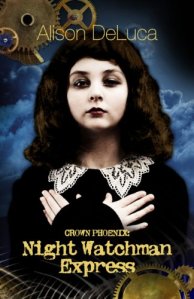
night watchman expressThe first book of hers that I ever read was the Night Watchman’s Express. I loved this book. The story never stops moving until the last page. Miriam, an unhappy young girl is orphaned when her wealthy industrialist father dies. With no other family, her father’s business partners, the Marchpanes, become her guardians. The Marchpanes immediately move into Miriam’s house, and take over her father’s rooms. (Mrs. Marchpane is deliciously evil.) They make their attempt to gain full control of Miriam’s money and her father’s company.

Gradually, Miriam begins to find common ground with the Marchpane’s son and their other young ‘guest’ when a nanny, who is both wise and skilled in certain magics, is hired. Mana is a woman who is of a race of people, who are considered to be second-class citizens, and contrary to the Marchpane’s hopes, she turns out to be exactly what both Miriam and the two boys needed.

There is a reluctant camaraderie that develops between Miriam and the two boys. The three of them do a certain amount of exploring the grounds of the estate, and discover a strange machine that her father has constructed. Another interesting thread is also Miriam’s strange emotional attachment to her father’s typewriter-like machine, which she has claimed for her own since his death, and keeps hidden in her room.

This book was so good for a rainy-weekend read that I read it twice. And guess what? It’s currently a free download for your Kindle, but if you are into paper, it also available in that format for $12.99.

This month, Alison is participating in The #BigBookGiveaway, which starts today, July 1st. For avid book lovers, this is an awesome deal! Sponsored by Girl Who Reads, two boxes of books donated by multiple authors and publishers will be given away through Rafflecopter, and the link to enter that contest is here: #BigBookGiveAway via RafflecopterJust click on that link and it will take you to the contest page, and you too could end up with a large box of books to while away your summer with, and Alison DeLuca’s Night Watchman Express is only one of them.

Christmas O'clock 2013Girl Who Reads is a great resource for avid readers like me, as it’s a website where you can find balanced book reviews, many of them indie books. Books are being offered in this giveaway by many wonderful authors, several with larger publishers, such as Penguin Books and Random House. Alison is also including a copy of Myrddin Publishings children’s’ anthology, Christmas O’Clock.

I did pen one of the stories in that collection, a little thing called A Christmas Tail.  I loved writing that tale—I was in a Toad Hall mood apparently, and Ratsy’s adventures with his friends are reminiscent of that wonderful series of tales.

Alison is one of the easiest people to work with I’ve ever known. We began this publishing adventure in the summer of 2012 as refugees from a bad publishing situation, and while it was rocky in the beginning, we have never regretted our decision to go indie. Our publishing cooperative began with a great group of authors who were all as committed to the indie way as we are, and every year we have gained new authors who bring new ideas and new fire to our collective. Alison is the glue that binds us together.

You can find Alison and more of her work here:

Facebook: http://www.facebook.com/alison.deluca.author

OR http://on.fb.me/TNWEfb

Twitter – http://twitter.com/ – !/AlisonDeLuca

Google + http://bit.ly/ADGoogle

Amazon Author Central:  http://amzn.to/ADeLucaAuthorCentral

Pinterest: http://pinterest.com/alisondeluca/

4 Comments

Filed under Books, Fantasy, Literature, Self Publishing, writer, writing

#FlashFictionFriday: The Cat, the Jeweler, and the Thief

Barliman gazed at the statue of the cat, and then out the polished window, not seeing the passersby. His eyes turned back to the stylishly dressed thief who stood before him. “It’s a nice enough  statue, well-made. What makes it worth the amount you are asking?”

Scuttle smiled. “It’s more than merely well-made. It’s brilliant. Look at it—have you ever seen such detail rendered in marble?” Thin, with a face slightly resembling that of a pleasant, well-favored weasel, he kept his desperation tightly tamped beneath a business-like demeanor.

Scuttle’s lady, Mari, was so ill that an ordinary herb doctor wouldn’t do. Their landlady believed she had contracted river fever and insisted only a healer from the Church could resolve it. But the Church never healed the poor; only the wealthy could afford a Church Healer. For that reason, Scuttle had to have those coins. He put on his most persuasive voice. “This is a miracle of art, created in marble. The hand of a master freed this cat from the stone.”

“I agree it’s beautiful, but I doubt you came by it honestly. I will be limited in who I can resell it to. Who made it? If I can at least tell a prospective purchaser whose hand created it, I will understand its value, and be better able to get a fair price for it.”

Scuttle snorted. “A fair price…usury has no concept of ‘fair.’ But all right, I’ll tell you who I believe to have made it. Benevolio.” Raising his hand, he forestalled Barliman’s comment. “I have no proof, and there is no maker’s mark on it anywhere.” Picking up the statue he held it to the light, turning it to reveal the remarkable craftsmanship. “Look at the face. Each hair, each whisker, every feature is there in the most minute detail, as if a cat had turned to stone as it sat there. Even soles of the paws which can’t be seen unless one picks the statue up–only Benevolio himself could have created such a masterpiece.”

Silence reigned in the shop as Barliman digested that comment. He pulled his magnifier from his pocket and examined the life-sized statue inch by inch. Scuttle had expected he would, and occupied himself with calculating the value of the objects displayed in the shop. Silver tea services, gold-handled cutlery, delicate jewelry set with precious stones—all rested on dark velvet in glass cases, gleaming in the light cast by wide diamond-paned windows. The fact they were on display meant those items had been purchased from more reputable sources.

The thief had come to Barliman because the jeweler sometimes supplied the wealthier class with things they could acquire nowhere else. Scuttle was a discreet thief, a man who ordinarily only stole on commission. However, the cat had been liberated from the house of a prosperous merchant newly in town, something he had only done because of Mari’s illness. The fact he was there in person to sell the statue indicated to the jeweler that this had been a private matter, making Scuttle’s bargaining position perilous. The jeweler was his only resort–no one else would have given him a copper for the statue, much less what he needed.

What Mari needed.

Barliman set the cat back down on the counter. He replaced the magnifier in the pocket of his vest. “With no maker’s mark, I can’t guarantee authenticity. That will substantially lower the price I can get for it. Therefore, I can’t give six golds coins. Three is my offer–consider, it please. It comes to three months wages for an ordinary man.”

“Five would be less than fair for a statue of this quality, and you would still make an absurd profit. If you can’t offer five, I must withdraw it.” Scuttle had no idea what he would do if Barliman refused. He didn’t dare take the time to go all the way to Westerberg. Three days there and back—Mari would be dead before he returned.

Barliman pursed his lips, deliberating. “Five golds, then.”

Though he felt like dancing, Scuttle comported himself with dignity as the coins were handed over. Barliman placed the cat statue beneath the counter and bowing, the thief departed the shop.

>>><<<

As the door closed behind the thief, the curtain behind the jeweler whisked open. Cardinal Valente stood framed in the doorway. “Good.” The Cardinal’s acidic tones fell like lead in the shop. “Here is your five golds, plus fifteen more for your trouble.”

Barliman handed Valente the heavy, marble statue. “Whose hand created this cat?” he asked. “Even Benevolio could never have done such fine work.”

Instead of answering, the Cardinal set the statue on the counter. “Observe.” He muttered some incomprehensible words, passing his hands over the cat.

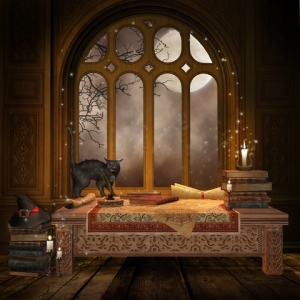
Fantasy Desk With Books And Scrolls © Unholyvault | Dreamstime.com

Fantasy Desk With Books And Scrolls © Unholyvault | Dreamstime.com

To Barliman’s surprise, the statue stretched and yawned, then stood up and jumped down. Twining about the Cardinal’s ankles, the cat purred.

“God’s hand created this cat. A spell turned it to stone, and I placed it in the home of my concubine. Then I allowed rumors of its existence to come to Scuttle’s ears.”

Barliman could not conceal his dismay. “Why? Was it to trap him? He has…skills. He’s useful, and not only to me. Imprisoning him would be bad for my business.”

“He is indeed useful. However, a personal matter  interfered with my thief’s ability to gain an artifact I must have. He needs coins to resolve the issue but he is not a man to ask for charity, and I am not known for my generosity. Hence, I devised a way for him to help himself.” The Cardinal laughed, a grating sound. “By the day after tomorrow at the latest, my thief will resume the important task I have set before him, and soon I will have my artifact.” A sly smirk lit his bony features. “And now I know what matters most in the world to my thief, and where to lay my hands on it if I should ever need a bargaining chip. That knowledge alone was worth twenty golds. Never forget this: knowledge is power, Barliman. It’s good to be the one with the knowledge.”


The Cat, the Jeweler, and the Thief © Connie J. Jasperson 2016 All Rights Reserved

Comments Off on #FlashFictionFriday: The Cat, the Jeweler, and the Thief

Filed under #FlashFictionFriday, Fantasy, Literature