Category Archives: #FlashFictionFriday

#FlashFictionFriday: Elegy for Hawking

Stephen Hawking, Star Child,

Entered the world in the Year of the Horse

While bombs fell over London.

Rebel,

Always went his own way

Even when his way was difficult.

Revolutionary,

Freed his mind to travel the cosmos.

Sat taller in his chair than giants stand.

Quantum thinker,

Body shrunken to a singularity,

Mind as expansive as the universe.

Dreamer,

Stephen Hawking

Left us in the Year of the Dog

While we baked Pi for Einstein

And marveled at what we had lost.


Stephen Hawking,

Born 8 Jan 1942; died 14 Mar 2018 at age 76.

Author, Motivational Speaker, English Theoretical Physicist.

Hawking was the Lucasian Professor of Mathematics at Cambridge University, a position once held by such notables as Charles Babbage and  Sir Isaac Newton. Afflicted with amyotrophic lateral sclerosis (Lou Gehrig’s disease, or ALS), Hawking was confined to a wheelchair and was unable to speak without the aid of a computer voice synthesizer. However, despite his challenges, he made remarkable contributions to the field of cosmology, which is the study of the universe. His principal areas of research were theoretical cosmology and quantum gravity.

Hawking also co-authored five children’s books with his daughter, Lucy.

Hawking’s book list can be found at Amazon: Stephen Hawking’s Author Page 

Popular books

  • A Brief History of Time (1988)
  • Black Holes and Baby Universes and Other Essays (1993)
  • The Universe in a Nutshell (2001)
  • On the Shoulders of Giants (2002)
  • God Created the Integers: The Mathematical Breakthroughs That Changed History (2005)
  • The Dreams That Stuff Is Made of: The Most Astounding Papers of Quantum Physics and How They Shook the Scientific World (2011)
  • My Brief History (2013)

Co-authored

  • The Nature of Space and Time (with Roger Penrose) (1996)
  • The Large, the Small and the Human Mind (with Roger Penrose, Abner Shimony and Nancy Cartwright) (1997)
  • The Future of Spacetime (with Kip Thorne, Igor Novikov, Timothy Ferris and introduction by Alan Lightman, Richard H. Price) (2002)
  • A Briefer History of Time (with Leonard Mlodinow) (2005)
  • The Grand Design (with Leonard Mlodinow) (2010)

Forewords

  • Black Holes & Time Warps: Einstein’s Outrageous Legacy (Kip Thorne, and introduction by Frederick Seitz) (1994)

Children’s fiction

Co-written with his daughter Lucy

  • George’s Secret Key to the Universe (2007)
  • George’s Cosmic Treasure Hunt (2009)
  • George and the Big Bang (2011)
  • George and the Unbreakable Code (2014)
  • George and the Blue Moon (2016)

Stephen Hawking, StarChild, Image By NASA [Public domain], via Wikimedia Commons

Wikipedia contributors, “Stephen Hawking,” Wikipedia, The Free Encyclopedia, https://en.wikipedia.org/w/index.php?title=Stephen_Hawking&oldid=830584312 (accessed March 15, 2018).

Elegy for Hawking, by Connie J. Jasperson © 2018 All Rights Reserved

5 Comments

Filed under #FlashFictionFriday, Poetry, writing

#FlashFictionFriday: The Marriage Counselor

I shook my head to get rid of the sudden, loud buzzing sound in my ears. Feeling a little disoriented, I looked at the calendar, which said Thursday, the day I dreaded most. Sometimes I felt like it was always Thursday. It was nearly time for my regular two o’clock appointment… the couple from hell, pardon my cursing. After my heart attack about six months before, they had begun coming to me, and were likely to give me another. They never missed an appointment no matter how I wished they would.

I watched the clock tick from one fifty-nine to two o’clock.

My receptionist opened the door. “Mr. and Mrs. Haydes are here. Shall I show them in?”

>>><<<

I lifted my pen from the notepad and regarded the couple seated across from me. “Would you listen to yourselves? You make marriage sound like hell. It doesn’t have to be that way. You both sabotage it every chance you get.”

“Of course marriage is hell,” said the husband across from me, dressed in a double-breasted, blue suit, giving him an almost nautical appearance. Add a captain’s hat and he’d look like a cast member on The Love Boat. “It’s the absolute worst thing that could possibly have happened to a once studly man like myself. But just like the moth flying into the flame, I had to do it. ‘Don’t go toward the light,’ my friends all said. But did I listen? Hell, no!”

His wife snorted. “Luke always does the exact opposite of what anyone advises him to do. That’s what he gets for being a devil-may-care, I’m-gonna-do-it-my-way sort of a guy. He’s Satan. That makes me Satan’s wife. Of course it’s hell—it comes with the territory. If I can put up with him, he can put up with me.” This week she wore little makeup, and was neatly coiffed with not a hair out of place. In a counterpoint to Luke’s dashing attire, she wore a beige wool suit, cut to just below her modestly crossed knees, with low-heeled pumps. Mrs. Haydes could have been a proper matron from any Protestant congregation, right down to her puritanical sense of morality.

This forty-five minute session of misery began promptly at two o’clock every Thursday. They booked their appointments under the pseudonyms, Lucifer and Persephone Haydes. He preferred to be called Luke, and she preferred to be called Mrs. Haydes. After six months of working with this pair of nut cases, I was beginning to suspect they were playing a game of mess-with-the-counselor.

Last week she’d been dressed like a teenaged skateboarder, and he as an English literature professor. The week before that, she was a hippie, complete with headband and love beads, and he was a cricket player.

Every week it was something different but always opposites. Mrs. Haydes seemed to choose her wardrobe based on what she thought would annoy him most, and he went with the opposite because he really couldn’t do anything else. He had the worst case of oppositional defiant disorder I had ever seen.

“Why are you here?” I had to ask, despite knowing I wouldn’t get an answer. “I no longer understand what you are trying to save here. You never take my advice. And you’ve been aware since the outset that I am a pastor, not a magician. What do you hope to gain from this?” I tapped my foot and looked at the clock. We were only fifteen minutes into this session, and I was already exhausted. “What you really need is a good divorce lawyer, not a counselor. I can tell you every reason why you should stay married, and if you are looking for religious affirmation, I can give you chapter and verse on the apostle Paul’s views regarding marriage. Over the last six months, I have done so repeatedly.  We’ve discussed what you originally saw in each other and what you each want from your relationship, but you’re still at this impasse.  I think that at this stage divorce is the only answer for the two of you.”

Luke snorted. “Don’t bother telling me anything the apostle Paul said—I wrote that book. I was delusional.”

“I think the pastor is right,” said Mrs. Haydes, primly folding her hands. “Divorce is the only option. I’m sure no one would blame me for leaving a devil like you.”

“I’m not giving up half of everything I own,” said Luke, clearly aghast at the notion. “Do you know how many divorce lawyers she has access to? No way am I going to let her off so easily.”

“I come from a broken family,” said Mrs. Haydes, discreetly wiping a tear. “I don’t want our children to grow up in a broken home. But it would be better than Anaheim. It’s a bad environment to raise children in. I want to move back to our palace in Hell. All it needs is a little remodeling.”

I couldn’t stop myself. I had to ask it. “And you think Hell is a good environment to raise kids in?”

“Well, at least there’s no crime in hell. We have the finest law enforcement professionals in the universe.” She glared at me defensively. “Where should I be raising them? Seattle? I’m not exposing my children to a bunch of pot-smoking vegans who ride bicycles and wear socks with sandals.”

Luke brightened up. “I love Seattle—perhaps we should move there. I could get some goats or raise alpacas. They have the best coffee in the world!”

Mrs. Haydes sniffed. “The place is full of vulgar vegetarians. They’re always taking their children to yoga and soccer, where everyone gets a trophy whether they win or lose—it’s just wrong. We will most certainly not be moving to Seattle.”

“Enough,” said Luke. “I’m going vegan and we’re moving to Seattle and that’s final.” He turned to me and missed her small, satisfied smile. “What I really want to talk about is the stint we did on ‘Home Hunters.’ She destroyed me in front of millions of people, and I have to watch it every time they rerun that episode, which they seem to do three times a week.”

“Well dear, it airs on one of your networks, and you make the rules. You’re the one who decides why the television viewing public has 999 channels available to them, and all but three of them at any given time are showing the same reruns of Pawn Shop Heroes, Home Hunters, or Gator Boys.”

From the look on Luke’s face, Mrs. Haydes had the knife and was twisting it for all she was worth.

She continued, “Besides, I said very clearly that I wanted the extremely modern condo, with all the sleek furnishings and the gorgeous terrazzo floors. I said it at least six times. It’s on the videotape of the show.” She smiled at him smugly. “You just had your heart set on that cozy, little pink bungalow with the seventies’ décor and the orange shag carpet. You insisted, and so, of course, I gave in. Once you make up your mind, it’s impossible to change it.”

“See?” Luke exploded. “See how she manipulates me? How could I not go for the house she said she didn’t want? It was like asking the dog not to eat the chocolate you left on the coffee table. I’m Satan! I’m not really an agreeable sort of guy, and she knows exactly how to manipulate me, so now, twice a week, everyone in America gets to watch me buying grandma’s overpriced, decorating nightmare. It’s been voted the most popular episode of all time! She embarrassed me in front of God and the world.” He dropped his head into his hands. “We’re moving to Seattle now, and it’s going to be hell trying to sell that dump in Anaheim. I won’t even be able to rent it out for enough to cover the carrying costs. What a life!”

I knew this session was going nowhere. Their sessions never went anywhere positive because they were masters at circular reasoning. “What is it you want from me? You must have some reason for putting me through this agony every week.”

“I despise him, so I want a divorce, of course,” said Mrs. Haydes, with a smug, little smile. “I’ll be happy with my half of everything, and, of course, alimony. I gave up my career to raise our children, you know, and they will need child support.” She aimed her tight, fundamentalist smile at me. “We won’t waste your time any further.”

“No. No. No!” Luke’s eyes widened and he leaned forward. “No divorce. I adore you, Persey—you’re the love of my life!” He kissed her hand.  “I would be lost without you. Think of the children.”

“I love you too, Luke—I just hate being around you. And now you’re going to be forcing all your hippy, vegetarian food on me.” She turned away from him, primly pursing her lips. “You know how I love steak.”

“No dear, not vegetarian. Vegan. It’s good for you, you’ll love it. Why, I’ve a recipe for smoked tofu that will put a smile on that pretty face in no time.” Luke smiled his most charming. “If there is one thing I understand, it’s how to barbecue. You’ll adore my smoked tofu salad.”

“If you say so, dear. I’ll likely throw up.”

The two rose and left my office. I sighed.

Luke might claim to be Satan, and yes, it was even possible given how contrary he was, but if that was case, Mrs. Haydes ruled in Hell. There was no mistake about that.

I heard my receptionist speaking in the anteroom. Yes, Mrs. Haydes was scheduling another appointment…two o’clock next Thursday.

Satan might move to Seattle, or he might not. Somehow, I knew his new penchant for tofu and coffee wouldn’t get me off the hook.

I shook my head to get rid of the sudden, loud buzzing sound in my ears. Feeling a little disoriented, I looked at the calendar, which said Thursday, the day I dreaded most. Sometimes I felt like it was always Thursday. It was nearly time for my regular two o’clock appointment… the couple from hell, pardon my cursing. After my heart attack about six months before, they had begun coming to me, and were likely to give me another. They never missed an appointment no matter how I wished they would.

I watched the clock tick from one fifty-nine to two o’clock.

My receptionist opened the door. “Mr. and Mrs. Haydes are here. Shall I show them in?”


The Marriage Counselor, by Connie J. Jasperson © 2015-2018, All Rights Reserved, was first published on 06 March 2015, at Edgewise Words Inn. Reprinted by permission.

8 Comments

Filed under #FlashFictionFriday, writing

#flashfictionfriday: A summer evening spent fishing

A summer evening spent fishing

On black waters beneath a sunset sky.

Forested hills climbed high in the west,

As dark as shadows and just as safe.

Bears and their young came to fish the creek

That runs past the woods next door.

Deer swam across the lake to eat

Grape leaves and my mother’s roses.

Sunsets seen from my father’s boat

While fishing for perch or crappie.

And morning came, bright and young,

Filled with the scents of home.

Of potatoes and onions, crisp and brown,

And fish frying for breakfast,

And cinnamon rolls just out of the oven,

And coffee perking on the stove.

Smells that signified Sunday morning.

And when the washing up was done

I took my book to the alder grove

And drowsed the day away.


Credits and Attributions

A Summer Evening Spent Fishing, by Connie J. Jasperson © 2018 All Rights Reserved

Indian Sunset: Deer by a Lake, painted by Albert Bierstadt [Public domain], via Wikimedia Commons ca. 1880 – 1890

2 Comments

Filed under #FlashFictionFriday, Poetry

#flashfictionfriday: Going Home

October had arrived in the Pacific Northwest, chill and damp as always. Our friends, Jonna and Jake, lived on Black Lake, on the north end of the lake where my sister and I had spent our childhood. A true Northwesterner, Jonna had planned a day on the lake despite the weather. A women’s day out with my sister, Sherrie, our old school friend, Evonne, and our dear friend from Texas, Irene. We planned to cruise the lake and show Jonna and Irene where we had lived from 1963 through the 1990s.

Jake was worried we would wreck the boat, calling instructions as we pulled away from the dock. “Don’t worry,” we called back to him. “Jonna knows how to drive.” Nevertheless, he stood in the rain, fretting at sending his beloved boat out under his wife’s control, loaded with sparkling cider and a group of women he knew all too well. This despite the fact Jonna would drink no wine until after we returned.

Despite Jake’s misgivings, Jonna neatly negotiated the deeper channel between the half-sunk, rotting posts of the old Black Lake Mill, which had burned in 1918, and was never rebuilt. Like many parts of my childhood, the old posts had simply been left where they were, rotting corpses of a time when Timber was King, and money grew in the forest surrounding Black Lake.

Our boatload of women and laughter slowly passed the new summer homes and palaces of the nouveau riche jammed onto narrow lots, professionally landscaped and manicured. Crammed between the mansions were the familiar, now-ancient mobile homes and the older, rundown shanties. Our childhood friends, “Black-Lakers” all, had lived year-round in these flimsy, drafty homes. Oil was expensive, so feeding the fireplace or woodstove was how we stayed warm back then.

In the 1930s, when my father grew up in the hills above the other side of the lake, the area had been exceedingly rural, a poor place teetering on the edge of poverty. In the 1960s, when I was growing up, it was working-class but still small and insular. Many of the people around the lake had gone to school with my father, and he knew them well.

Jonna slowly followed the shore past those homes, old and new. It was surprising which tattered old cabins stubbornly held on, clinging to their places despite being elbowed aside by the beautiful new homes of the well-heeled few.

Hugging the shoreline, we went south, passing down the eastern side of the lake toward the house that had been my family home for thirty-five years. I was curious, wondering what it looked like. As we idled along, I thought about those years that we had spent there, the good and bad.

How many evenings had I sat beside my grandmother at the picnic table, gazing out across the water to the Black Hills rising above the lake and dominating the view? How many campfires in the fire-pit on the beach, and barbecues? How many summers were spent swimming from morning to evening? I couldn’t wait to see it again.

When we approached the place our home had been, we only recognized it because the contours of the shoreline hadn’t changed. Having fished those waters for so many years, Sherrie and I knew which half-sunken log meant we were nearing the neighbor’s house. Ours had been beyond the woods next door.

The neighbor’s house had seemed large and modern when I was young and had been referred to as “the airplane hangar” by the locals when Ken Nolan built it. I was surprised to see how small it really was. It was greatly changed, but I recognized the mid-century wall of glass facing the lake. The new owners had abandoned the small lawn and gone to simply having a large deck, surrounded by tall salal and Oregon grape. They had sacrificed much of the view from inside in the interests of privacy, I suspect.

Even though the neighboring house was so changed, I was filled with anticipation for the first sight of our childhood home, with me going on and on, telling our friends how beautiful the property was.

We never saw that house, despite my eager searching.

Just beyond the now-ancient grove of alders that had separated our property from the neighbors was a rundown building. It did resemble my parents’ house but was definitely not the home I had grown up in.

It had been made into a duplex and was clearly a rental unit for the large house that now sat behind in what had once been the swamp. The acre of lawn and gardens that had been my parents’ pride and joy was lost to the wilderness, with a dilapidated fence cutting the yard in two. On either side of the fence, narrow paths snaked through the weeds, muddy trails to the beach. Grass and weeds stood waist-high, obscuring the once-beautiful home.

The beach and swimming area were gone. A marina dominated the waterfront, with five dilapidated power boats moored at several docks. Thinking back on that sight, I suspect that summers there see few children playing in the shallows, as the formerly sandy beach is now a swampy morass.

I confess I was devastated to see the old family home in such disrepair.

The last time I had approached the house from the lake had been in 1995 after my grandmother passed away, while my mother still lived there. That day, as we returned to the shore, I had viewed the modest home in its park-like setting, with a broad lawn that took an hour to mow even with the riding mower. Cherry trees, alders, and maples had shaded the yard, with roses, camellias, rhododendrons, and other heirloom shrubs framing the house. Blueberries, cascade blackberries, and loganberries had pride of place in the immense vegetable garden that was to the right of the house when viewed from the lake.

When we were growing up there, the inside of our home was cold and damp and frequently in disrepair. There were no carpets because Mama said they would be ruined, and certainly the linoleum hadn’t stood the test of time. Our furniture had been worn out, and Mama wasn’t really into interior decorating.

Besides, as she was always reminding us, there was no money to fix things up. Dad had a good job, but money was tight. Nevertheless, however shabby it had been compared to the homes of our wealthier classmates who lived in town, it was immaculately clean inside and out. Nothing was ever out of place, because what would people think? Mama had strong opinions about people with poor housekeeping habits and was rather vocal about it.

As I said, the house itself had been nothing special, but the yard… 350 feet of waterfront and five acres going back toward the road. The yard and the view were what my parents had made themselves house-poor for.

When I was a child, the yard had been a magical place of refuge from disapproving adults, with many places to hide and read and to be important to someone, even if it was only the cat.

I didn’t know what to think when we saw the rundown hovel with a flock of boats parked in front. I was glad to be in the company of my friends and my sister, as I fought the sting and burn of tears. I think because I’m four years older than Sherrie, her memories were of happier times than mine, when Mama rebelled against Dad’s wishes and got a job outside the home so she could have some extra money.

Our friends in the boat, Irene, Evonne, and Jonna – they knew. These women could tell what had occurred, how it had set me back. They were united, a wall of strength, silently commiserating and allowing us to just take it all in, yet there for us if we needed to talk about it.

I didn’t. I couldn’t.

At last, Jonna turned the boat, and we idled along the shore, cruising south around the swampy end where the Black River begins its journey to the Chehalis River, and then to the “new” development of Evergreen Shores, built in the 1970s. Then we went north along the west shore, passing the strange dichotomy of shanties mingled between high-end vacation manors. Having circled the lake, we finally negotiated our way back through the rotting pilings at the north end and approached Jonna’s dock.

Jake had been standing there the whole time, likely expecting we would sink his boat. But we hadn’t, and bless him, he was happy to help Jonna park it.

I’m an author now, middle-aged. I’ve lived a long and interesting life, and still I find I have lessons to learn. A place is a place, and a building is only a home when someone lives there. I think that what I really discovered by going back to the lake house is that you don’t go home by returning to the scene of your childhood.

My childhood home still shines in my memories, but nowadays home means comfort and cozy evenings on the back porch with my husband. Home is a wall with photographs of our children and grandchildren.

I carry home within my heart and memories, and wherever I am, that is home.


Credits and Attributions

Going Home, A Memoir by Connie J. Jasperson © 2018, All Rights Reserved, was first published on Myrddin Publishing Blog, on January 17, 2018

Black Lake Sunset, by Florence Lemke, 1973. Painted by the author’s aunt, image reproduced from the private collection of Connie J. Jasperson. © 2018 All Rights Reserved. Printed by permission.

2 Comments

Filed under #FlashFictionFriday

#FlashFictionFriday: The Garden Choir in February


The crocus suite opens with a lone voice

A tenor, singing a hymn.

Gradually voices join, rising together

Swelling until a symphony of color

Blankets a pocket corner

Of the winter garden

In February.

The first lone soldier

Standing tall and singing

With voice and color proclaiming

This is my time! This is my corner,

My season in the garden

Is February.


Credits and Attributes

The Garden Choir in February, by Connie J. Jasperson, ©2018 All Rights Reserved

Woodland Crocus, By H. Zell (Own work) [GFDL (http://www.gnu.org/copyleft/fdl.html) or CC BY-SA 3.0 (https://creativecommons.org/licenses/by-sa/3.0)%5D, via Wikimedia Commons

2 Comments

Filed under #FlashFictionFriday, Poetry

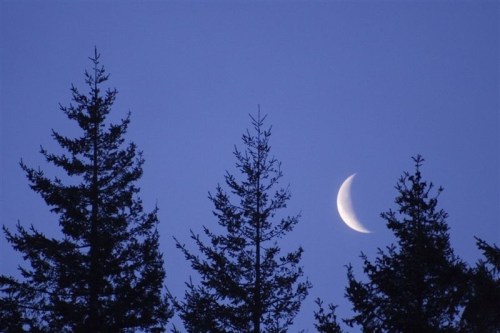
Early Morning Moon #flashfictionfriday

Early morning moon

Waltzing across the sky at dawn

Lights the frozen land beneath.

Winter morning moon

Not blue, not blood,

Unique only for its rarity.

Early morning moon

Naked, uncloaked by clouds,

Waltzing across the sky at dawn.


Credits and Attributions:

By Jeff Fennell from Oregon, USA (Early Morning Moon) [CC BY 2.0 (http://creativecommons.org/licenses/by/2.0)%5D, via Wikimedia Commons

Early Morning Moon, poem by Connie J. Jasperson © 2018 All Rights Reserved

2 Comments

Filed under #FineArtFriday, #FlashFictionFriday, Poetry

A Dog’s Tale #FlashFictionFriday

I used to spend a lot of time in the backyard, howling. What can I say? I was young and impulsive in those days.

However, Dave bought me this new collar, which, while it’s nice to look at, has an inherent flaw. It becomes terribly uncomfortable when I howl or announce the arrival of that vandal who shoves trash through the slot in our door. He seems to be targeting our house. Since I can no longer yell at him to go away, I nip at his fingers through the slot. But he’s crafty now and doesn’t get close enough for me to do any damage.

I’m not complaining, though. I’m no different than any other girl. I’m quite partial to jewelry, but more importantly, I’m a responsible man owner. Since Dave is my human, I always show my appreciation for his thoughtfulness, even though he has no idea what sort of collar I’d really like. It’s the thought that counts.

Caring for a pet human teaches a dog to be patient and adaptable. Humans have a compulsion to keep redecorating their nests, and no amount of scolding on your part will change it—it’s the way humans are. Sure, it’s annoying to discover they have changed things around just when you finally had things arranged the way you like it. But putting up with trivial annoyances is part of the job of owning a pet.

Dave is no different than any other human, and it’s one habit I’ve been unable to train him out of. I don’t think he understands that the new cover he puts on the sofa when he leaves is not comfy at all. It buzzes and zaps me, so I just give up trying to get comfortable and sleep on the floor.

Dave seldom puts me in the kennel when he’s gone, the way some humans do. Bonzo, the dachshund from next door, spends all day in his kennel, which his human bought specially for him. Bonzo doesn’t like it but is too polite to complain as it was a gift. And there again, it’s the thought that counts. I’m only asked to sleep in mine when Dave and that woman have a sleep-over.

It took a while, but I have Dave pretty well trained now. He’s loyal, and never forgets to feed me, and he has never once left me alone in the car on a hot day. It’s a good life.

I’m feeling sleepy now, so I’ll just go nap by the front door, and wait for the vandal. He shows up nearly every day just before noon. Today, if he’s careless, maybe I’ll finally draw blood, and he’ll stop throwing trash into our house.


The Dog’s Tale, © Connie J. Jasperson, 2017-2018

This little bit of flash fiction was inspired by the above photo, found on Wikimedia Commons and first appeared here Feb 03, 2017.

Image: Pomeranian, By Chunbin (Own work) [CC BY-SA 4.0 (http://creativecommons.org/licenses/by-sa/4.0)%5D, via Wikimedia Commons

10 Comments

Filed under #FlashFictionFriday

#Drabble “Ted”

Today is the first day of 2018! An area of writing that I really enjoy is called The Drabble. Writing such short fiction forces the author to develop economy of words. We will be exploring Drabbles and the craft of writing short fiction more closely here on Life in the Realm of Fantasy during the month of January.

A Drabble is an extremely short story, usually no more than 100 words, although some contests will allow as much as 300 words.

My first Drabble was this one, penned in 2013, and it remains one of my favorite short pieces.


TED

Edna stirred her coffee and looked out the window toward the shed.

“Did you feed the chickens?” Marion always asked, despite knowing Edna had.

Edna tore her gaze from the shed. “Of course.” Her eyes turned back to the small building. “We won’t be able to keep him in there much longer. He’s growing too big. We should have a barn built for him.”

“Ted was always a greedy boy.” Marion sipped her coffee. “I warned him he behaved like a beast, and now look.”

A rumbling bellow shook the shed. A long green tail snaked out of the door.


“Ted,” by Connie J. Jasperson ©2013 – 2018

Garden Shed, Australia, By Rod Waddington from Kergunyah, Australia (Garden Shed, Australia) [CC BY-SA 2.0 (https://creativecommons.org/licenses/by-sa/2.0) ], via Wikimedia Commons

Comments Off on #Drabble “Ted”

Filed under #FineArtFriday, #FlashFictionFriday, writing

#Christmas at the Drunken Sasquatch (reprise)

Merry Christmas from my home to yours. This post first appeared here last year, and several of my friends asked to see it again, so without further ado, live from the Other Side of Seattle, I bring you everyone’s favorite were-dragon, Dan Dragonsworthy, and Christmas at the Drunken Sasquatch. No vampires were harmed in the making of this tale.


Vampires have a sick sense of humor, especially Alfredo, although he pretends to be cultured. Just over a year ago he got me banned from here, by switching my orange juice for an orange soda… that dirty trick was more than embarrassing. Covering the cost of the damages to the scorched floor, replacing the furniture, and buying Sylvia Wannamaker a new coat ate into my hoard quite heavily.

Worst of all, I was banned from participating in November’s pool tournament.

However, I’m a were-dragon. We like our revenge served up cold and well calculated.

The anniversary of my disgrace has passed, which would have been the obvious day for me to seek retribution. Most people have forgotten the whole incident.

But not me.

I know I look like any other old has-been reporter—I’m still hanging in there, digging up the political dirt in Seattle with the best of them, and I know I tend to go on and on about the glory days. While that observation isn’t real flattering, it’s true. I drink more orange juice than is good for either of my livers, and I hang out here at the Drunken Sasquatch because I have nowhere else to go.

I don’t discuss it for obvious reasons, but during my years in the Middle East, Dan Dragonsworthy was far more than just a flying battle wagon. I spent a lot of time on covert missions, and one thing I learned was how to be patient, and how to spot the chinks in your opponent’s armor.

I’ve been watching Alfredo since New Year’s Eve when Bloody Bill finally lifted my punishment and allowed me back. I don’t intend to harm the old blood-sucker, but I’m going to give him a taste of his own medicine. I’m a reporter—I know for a fact there are substances vampires shouldn’t ingest, and Alfredo may have forgotten that.

A vampire tripping on chocolate is bad for everyone. I’d never do that, especially to Alfredo. Fortunately, they don’t like the flavor of it. However, they do have a passion for maraschino cherries, which can cause problems for the weaker willed vampire since those fruity morsels of goodness are frequently found wrapped in dark chocolate. With one exception, the smart ones don’t succumb to temptation inside the Drunken Sasquatch, because Bloody Bill won’t tolerate that sort of behavior.

Most importantly for my purposes, vampires can’t tolerate coffee. On tiny amounts, they tend to pee themselves copiously, which the rest of us find hilarious. Vampires get quite huffy when their vampiric dignity is besmirched.

As if MY dignity meant nothing to me.

When you want to impress Alfredo, you buy him a jar of the special maraschino cherries from Italy, made with the best cherry liqueur. He can smell maraschino liqueur from anywhere in the room and, being a vampire, he lacks a conscience.

No maraschino is safe from Alfredo.

The annual Christmas party and the gift exchange drives him mad. Every witch, wizard, or elf has a recipe for that most wonderful of traditional holiday treats, maraschino chocolate cordials. These kind friends are always generous with their gifts to those of us who lack their magical culinary skills.

It’s more than his old vampire heart can stand, and despite having received his own jars of cherries sans-chocolate, he takes incredible risks.

I’ll give Alfredo credit—he’s good. I’ve watched him sneak up behind Grandma and suck the cherries out of a box of cordials without getting his fangs dirty. She suspected it was him, but could never prove it. Fangs do leave holes, but it could have been any vampire.

It takes a brave (or desperate) vampire to mess with Grandma. I’d tell you to ask the Big Bad Wolf, but you can’t.

She’s wearing him.

So, anyway, last week, Grandma and I had a chat. I got on the internet and ordered the finest ingredients. They were delivered the day before yesterday, and she immediately got busy in the kitchen.

This year, one unattended box of cordials under the tree at the Drunken Sasquatch will have cherries in liqueur with unique centers. This particular batch will be vampire safe—no chance of accidental hallucinations here. Grandma created white-chocolate shells filled with Cherry brandy, with a maraschino cherry floating in the middle.

However, each cherry will be filled with a special coffee liqueur .

It will be a joy to watch Alfredo try to deny his culpability in this year’s draining of the maraschinos as the evidence spreads around his feet.

I hope vampire pee isn’t too acidic, although I’ve heard the stench is an excellent Zombie repellent, and no matter how you scrub, it’s impossible to get rid of the odor. Sylvia Wannamaker swears by it in a diluted form as a slug repellent in the garden, as using it there will turn your hydrangeas the brightest blue. They don’t make good cut flowers though, as they smell too bad to keep in the house.

I’m sure a pool of vampire urine won’t be as dangerous for the innocent bystanders as when he caused me to inadvertently belch fire in close quarters.

Come the day after this year’s Christmas party at the Drunken Sasquatch (even though his cash outlay won’t come near matching the damages I had to pay when he slipped me the Mickey) at least Alfredo will be out the cost of a new pair of boots. And if he can’t find a good drycleaner, he’ll be out the cost of replacing that gaudy, lace-trimmed, purple velvet suit he thinks is so stylish.

Grandma and I are both looking forward to this year’s party. Christmas could just become my favorite holiday.


Christmas at the Drunken Sasquatch, © 2016-2017 Connie J. Jasperson, All Rights Reserved. Originally published 02 December 2016, on  Life in the Realm of Fantasy.

Whole and split Cella chocolate-covered cherries, By Evan-Amos (Own work) [CC BY-SA 3.0 (https://creativecommons.org/licenses/by-sa/3.0)%5D, via Wikimedia Commons

11 Comments

Filed under #FlashFictionFriday

Keeping the Goliardic Spark Alive #amwriting #NaNoWriMo

This week has been a struggle, what with cooking a Thanksgiving feast for my extended family and trying to keep my wordcount output up for #NaNoWriMo, so today I am reprising an essay written in 2015, on irreverent humor, the Carmina Burana, and medieval frat boys. Enjoy!


Crazy humor at the expense of the establishment is nothing new. It’s part of the Human Condition. And to that end, I love goliardic poetry.

Carl Orff and his amazing cantata, Carmina Burana, catapulted me into the poetry of the Goliards. But who and what were the goliards?

During what we call the Middle Ages, noble and wealthy middle-class families had a tradition that the eldest son inherited everything, the second son went into the church, and the younger sons went to the crusades.

The old-fashioned practice of “primogeniture” or bestowing the rights of inheritance upon the eldest son, often leaving younger sons penniless, is responsible for some of the most ribald and hilarious poetry of the middle ages. This was because the church had far too many clergymen who weren’t all that enthusiastic about having been forced into taking the ecclesiastical path, and who became, for lack a better definition, medieval frat-boys.

There was such an abundance of well-educated clergy that most were unable to gain a decent appointment within the church, despite good family connections.

Having been educated at the finest universities of France, Germany, Spain, Italy, and England these men weren’t content to spend their lives hidden away in a rural monastery painstakingly copying the great books written by others when they could be writing their own.

Going indie (or rogue) is nothing new.

They took their show on the road, going from town to town, protesting the growing contradictions within the church through song, poetry, and performance.

The disillusionment and disappointment they experienced regarding the hypocritical, abusive, greedy state of the hierarchy of the Catholic Church of that time, was fertile soil for medieval mockery on a grand scale. 

Not unlike the current political climate here in the US.

Most goliardic poetry is written in Latin, as Latin was the language of commerce, and every educated person understood and read it. Remember, if someone could read, they were well off, and if they could read, they read Latin. Those were the people the indie was writing books for in the early Middle Ages.

Some of the goliards’ more popular church services when they would arrive in a new town included celebrating the annual Feast of Fools, a brief social revolution, where roles were reversed, and power, dignity, and impunity were briefly conferred on the lowest of the social order. Thus, the town drunk or the local fool would be made mayor for a day, feted and given the status of a lord for a day.

As you might imagine, the nobility was unimpressed with that particular “holy” festival, and rarely participated.

Even less popular with those in power was the Feast of the Ass. From Wikipedia, the holy fount of all knowledge: A girl and a child on a donkey would be led through town to the church, where the donkey would stand beside the altar during the sermon, and the congregation would “hee-haw” their responses to the priest.

So, I guess you could say the goliards were a traveling Monty Python type of show, painfully hilarious and sometimes too good at what they did for the censor’s comfort.

Their point was that too much emphasis was placed on the pageantry and trappings of faith in Medieval Europe.

But the disaffected goliards couldn’t run forever. Their satires were almost always directed against the church, attacking even the pope, and the church didn’t take that well. Heresy, during the Middle Ages, was not something you wanted to be accused of, as the famous heretic and collector of goliardic poetry, Peter Abelard would tell you. Yet, though he was harshly punished, he remains one of the most respected philosophers and freethinkers of the Middle Ages.

By the 14th century, the word goliard had become synonymous with minstrel, no longer referring to this group of rebellious clergymen. However, a century after the overabundance of bored poor-little-rich-boy clergymen that spawned the goliards had been squashed by the church, that tradition of irreverence was carried on by Geoffrey Chaucer in his Canterbury Tales.

For me, Orff’s cantata was a ‘gateway drug.’ From first becoming intrigued by the libretto to  Carmina Burana, I moved on to “the hard stuff,” studying modern translations of the works of an author who was highly influenced by goliardic poetry, Geoffrey Chaucer.

Of course, that meant I had to go to the source, learning a great deal about the roots of our modern English language at the same time.

Chaucer was unique, in that he wrote in Middle English, the vernacular of his time, rather than in Latin. Because of this, and the enduring hilarity of his works, Chaucer is considered the Father of English Literature.

The goliardic works that survive to this day still surprise us with how relevant the concepts put forth in those poems and tales are to contemporary society.

It is through the surviving literature and song that the truth of a past culture is discovered. The true nature of the common medieval man and woman survives in the rebellious, ribald literary tradition of the naughty clergy, the goliards.

We may be separated in time by centuries, but we are not too different from those ancestors of ours who survived the Dark and early Middle Ages by getting drunk and singing bawdy songs and poking fun at the establishment.


Credits and Attributions:

Keeping the Goliardic Spark Alive, by Connie J. Jasperson, first appeared on Life in the Realm of Fantasy on September 28th, 2015.

Wikipedia contributors, “Feast of the Ass,” Wikipedia, The Free Encyclopedia, https://en.wikipedia.org/w/index.php?title=Feast_of_the_Ass&oldid=796169305

(accessed November 24, 2017).

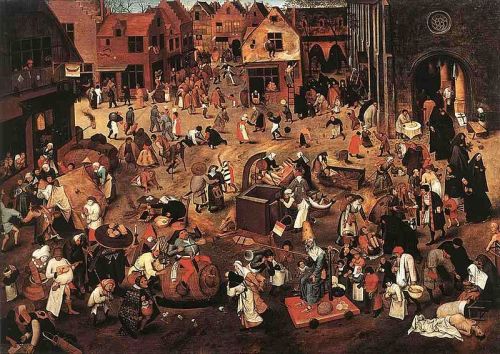
Image, The Fight Between Carnival and Lent, Pieter Bruegel the Elder, ca 1559  PD|100 via Wikimedia Commons

6 Comments

Filed under #FineArtFriday, #FlashFictionFriday