Category Archives: Vegan

What to do…what to do….

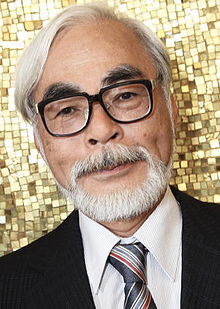
220px-Hayao_MiyazakiI found out today that the great Japanese artist and filmmaker  Hayao Miyazaki is retiring from making movies. His career has spanned over fifty years. Miyazaki  attained international acclaim as a maker of anime feature films. He and Isao Takahata co-founded Studio Ghibli, a film and animation studio. The success of Miyazaki’s films has been compared to that of  Walt Disney, British animator Nick Park and American director Robert Zemeckis. To be honest–I LOVE his work.

I first heard of Miyazaki in 1986, when my ex husband bought a little VHS movie for our daughter, Meg, called Warriors of the Wind. It was a wonderful movie, and we watched it over and over, but it felt incomplete, as if we only had part of the film.

It turns out that was indeed the case: the true name of the movie was Kaze no Tani no Naushika, translated to Nausicaä of the Valley of the Winds.  The movie tells the story of a young princess of the Valley of the Wind, Nausicaä (Shimamoto),  who gets involved in a struggle with Tolmekia, a kingdom that tries to use an ancient weapon to eradicate a jungle of mutant giant insects. Nausicaä must stop the Tolmekians from enraging these creatures.

230px-Nausicaa2coverThe underlying story is so powerful and is told so well that I was immediately hooked on Miyazaki’s work. According to Wikipedia, the most prominent themes of that movie are the anti-war and environmental focus of the film. (quote)  “Nausicaä, the heroine, believes in the value of life regardless of its form and through her actions stops a war. Loy and Goodhew state there is no evil portrayed in the film, but the Buddhist roots of evil: greed, ill will and delusion. Fear is what drives the conflicts, the fear of the poisoned forest results in the greed and resentment. Nausicaä, besides from being a transformative force, leads people to understand and respect nature which is portrayed as a welcoming, spiritual, and restorative for those who enter it peacefully.[6]

Nausicaä’s commitment to love and understanding—even to the point of death—transforms the very nature of the conflict around her and changes the attitudes and the hearts of those whose stubborn adherence to their biased views have brought the conflict to the boiling point.

It is said that Miyazaki’s inspiration for Nausicaä sprang from the works of Ursula Le Guin‘s EarthseaBrian Aldiss‘s HothouseIsaac Asimov‘s Nightfall, and J.R.R Tolkien‘s Lord of the Rings

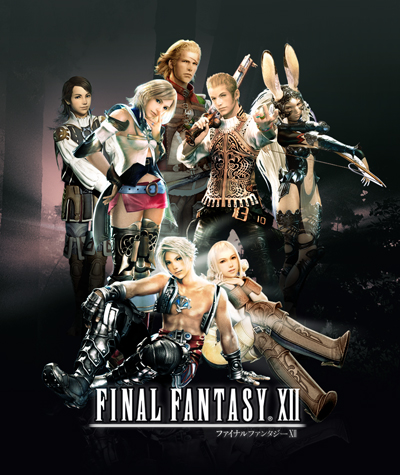
Ff12castAll I know is his work in this movie is gripping, sweeping and superlative. My Tower of Bones series was originally written to be an anime based RPG, that was proposed but never built. When I began plotting the game, I had the great Final Fantasy style plots in my mind, and Miyazaki’s art and influence is clear to anyone who has played them as obsessively as I have. When the game fell through, I was so in love with the story and the characters that I HAD to make it into a book. In my mind, my characters are much like the ones in the poster to the left. Sadly, I’ve never been able to get a cover designed that reflects this.

Because of Miyazaki I have been a devoted fan of Anime and Manga since the 1980’s. That love of sweeping sagas where good triumphs over evil at the cost of great personal sacrifice drives my own work today.

Mr. Miyazaki, I will miss your brilliant work, but I will continue to to cherish those wonderful movies you have so diligently and carefully crafted for us over the years. I can only wonder what your poor heart is feeling now, with the ever-worsening, mindbogglingly horrific Fukushima disaster. My heart and my prayers are with the people of Japan and indeed with the Pacific Ocean as the same water that washes the shores of Japan also washes the coast of Washington State.

Miyazaki’s great works taught me that we are all just one small living, breathing world, and each one of us is responsible for making it better or worse.

I choose to make it better.

1 Comment

Filed under Adventure, Battles, Brendan Fraser, Fantasy, Final Fantasy, Japan, Literature, mythology, ninjutsu, Vegan, writer, writing

Ah–sweet mysteries of life….

The Joy of Childhood  © Leah Reindl 2012

The Joy of Childhood
© Leah Reindl 2012

I’ve been babysitting The Boy this week.  This child has mad skills at keeping Grandma hopping.  We have played endless hours of hide-and-seek, we have watched “The Boy Who Cried Werewolf” five times, and we have scootered around the house until Grandma is dizzy.

Well, let’s be honest–Grandma was a bit dizzy when she got here, but you know what I mean.

And talk about fine cuisine–we walked down to the Java Haus for a pink cookie! The pink cookie was awesome, although Grandma makes the best ramen.

Yum!

Writing has been problematic, but you can’t have everything.

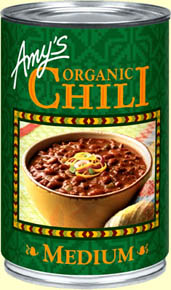
000510Being vegan sometimes conflicts with dining options, when I am not home.  A fully loaded pizza with three different meats and extra cheese is not really vegan. Sorry, son-in-law.

Yeah, I know it’s not a steak, but truthfully pizza is not a vegetable. Thanks for the thought anyway, dear. No worries, I have this lovely toast, made from Dave’s Killer Bread to go with my Amy’s Vegan Chili. Yay for portable processed food that not only tastes good, it’s good for you!

The wise vegan brings her own meals.

So now we are at the end of summer. School is about to begin and NaNoWriMo is just around the corner. I am not yet ready for NaNo, but I have my backup plan in place. I will get my 50,000 words, as always. I know what I have to do when my brain grinds to a halt and medieval warfare no longer rings my bells.

young frankensteinI Frankenstein it.

Yep! Some years at the end of November I have three different stories going in one manuscript. When I run out of ideas on one, I start another.  When it comes to getting your 50,000 words you have to do whatever you can. I stitch them together, using  a different colored font for each.

Using different colored fonts makes it easy at the end of NaNoWriMo to unzip the manuscript. Then when you are at a standstill on one work in progress you can easily move on to another.

Sigh.

The Boy starts first grade in only five days. I can’t believe summer is almost over.  It  feels like it only just began!

2 Comments

Filed under Battles, Books, Fantasy, Food, Literature, Vegan, writer, writing

Madcap Moments of Literary Mayhem

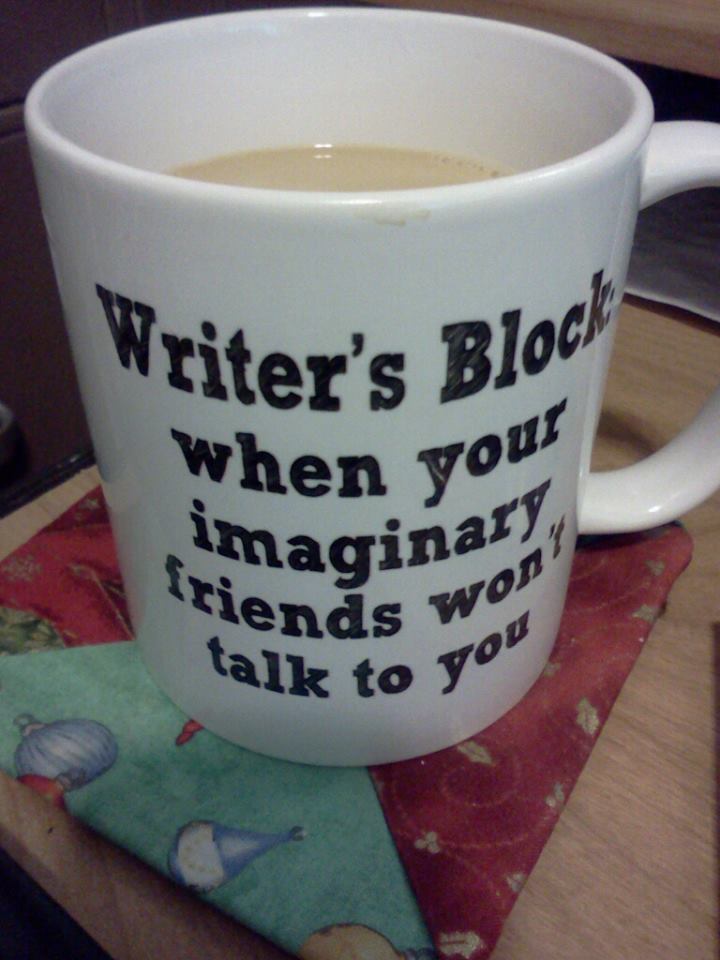
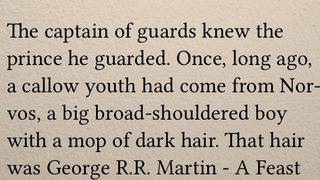
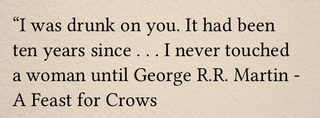
My Coffee Cup © cjjasp 2013This weekend I saw a hilarious post on Facebook, one pointing to an article at NYDaily.com that details the fatal-flaws in the eBook version of George R.R. Martin’s  book,  A Feast for Crows.

Now, I just want to say at the outset, the only book of his I’ve read was the book, A Game of Thrones. But that was a long time ago, when it first came out as a Science Fiction Book Club book of the month. I was not really that impressed with it. I found the book distinctly hard to follow, and nearly quit reading it several times.

But just because I don’t find his work to my taste does not mean I consider him to be a hack! On the contrary, Mr. Martin deserves every one of his many awards and good for him! This is a rough business, and I love it when people succeed as authors. There are many fine, popular authors out there whose books don’t ring my bells. My own work is certainly not to everyone’s taste, although I am sure it should be. (Insert Shameless Plug Here: buy my books, please.) (The buy-links are to the right, clearly labeled.) (Just sayin’.)

Needless to say, Mr. Martin’s publisher is one of the Big Boys (Bantam Books) and one would think  SOMEONE would have caught these wonderful bloopers.  The  author put his faith in the publisher, and the publisher let him down.

George R.R.Martin formatting issue 3 via book blog page views, margaret eby

***

George R.R.Martin formatting issue 1 via book blog page views, margaret eby

There is the remote possibility these moments of literary mayhem could have been caused by a last-minute global change to the manuscript. If so, it is a good example of why we should never click “Replace All” when we discover a particular word we need to change. Instead we should take the time to see each appearance of the word, and determine whether or not to make that change individually.

But in this case, I don’t think that is the problem. There doesn’t seem to be any pattern to the words the blooper replaces.  I think it is an OCR error (see number 5 below.)

George R.R.Martin bormatting issue 2 via book blog page views, margaret eby

***

George R.R.Martin bormatting issue 4 via book blog page views, margaret eby

What these images of the book from the NY Daily tell me is that formatting issues are common and are a hurdle the indie must overcome. If the big boys have problems with this, then formatting is a real skill set that we must develop, because we all compete on the same field, only we indies have fewer advantages.

There are a few simple ways we can avoid some of the more common issues:

1. Do not put extra empty spaces between your paragraphs. If it is a section break, make sure to put something there to indicate it:  ***  centered in the empty space will do the task of indicating the section break, and will not look ugly.

2. Make sure your page breaks are “hard” i.e. NOT made by repeatedly hitting the “enter” key. You must limit those empty spaces to less than three, preferably only one. Go to the ribbon at the top of your WORD page and use the “Insert” tab. With the cursor next to your chapter heading, click on “Insert Page Break”.

3. Do Not Use Drop Caps to begin your first paragraph, no matter how pretty they look in the print edition. They screw the heck out of eBook formatting, causing all the paragraph indents to go away, making the book nothing but a WALL of words.

4. Stick to standard serif fonts like Times New Roman, and make it a decent size, like 11 pt. Use NOTHING larger than 16 pt. and use that only for chapter headings.

5. Random inexplicable letter changes can be caused by Optical Character Recognition (OCR) errors when the uploader for Kindle or Smashwords converts the manuscript to PDF format. Converting it to PDF yourself first does not help, because the errors are hidden in the PDF. Thus you may find  all the “p”s converted to ‘bl’s. (people becomes bleople.)  I am not very knowledgeable about the WHY of this, but I have learned how to avoid it:

I always save my eBook ms in Rich Text Format (.rtf) and I NEVER upload a manuscript to eBook  format that contains headers or footers. Remove the headers and footer BEFORE you upload to Kindle, Nook or Smashwords. I think this is what happened to A Feast of Crows. Headers and footers use OCR elements and this confuses the uploader program. My theory is: someone at Bantam forgot to remove the header before it was uploaded. But I could be wrong– this whole formatting thing is magic after all, and magic is an iffy science at best.

6. Comb your eBook ms for extra spaces at the end of paragraphs and remove them. I’ve been told this will eliminate the random “Words     Spread     Across     The    Page”  problem.

7. DO NOT USE THE TAB key to indent your paragraphs!!!  DON’T DO IT!  Go to the ribbon at the top of the page and use the paragraph formatting option. Set the indent to 3 or 5 pt.  But 3 is the optimal for me as a frequent eBook reader.

The bottom line is this:  the indie must spend many long hours combing the ms for the random extra spaces, removing all the possible error producing elements before we upload it. THEN you must use the option Kindle and Nook both provide and spend more time seeing what the book actually looks like BEFORE you hit the publish button.

Unlike George R.R. Martin, you won’t be able to blame the big-name publisher if your book looks like the dog’s dinner when your friends buy their downloads. This is our curse. We indies only have ourselves to blame for our less than perfect efforts.

3 Comments

Filed under Adventure, Books, Fantasy, Literature, Uncategorized, Vegan, writer, writing

What I’ve learned from Tad Williams and Neil Gaiman

Over the course of my vacation I read two books, besides working on my own. I love to read the works of other authors, immersing myself in the way they handle plot twists and show the mood of a tale.  Oddly enough, both tales are told from the first person point of view, something I usually don’t gravitate to.

the dirty streets of heaven, Tad WilliamsFirst up, I read Tad Williams’s  irreverent thriller, The Dirty Streets of Heaven, Book I of Bobby Dollar.  That was fun, a real trip down the sometimes mean streets of the afterlife.

Tad Williams’s style of writing in the Bobby Dollar series is a non-traditional take on the traditional in-your-face, hard-boiled detective novel. Bobby is an angel, but even angels have their problems.

With the first sentence on page one, Williams establishes the mood of the piece and the society Bobby Dollar lives in, and he remains true to that concept throughout the entire tale.

“I was just stepping out of the elevator on the 43rd floor of the Five Page Mill building when the alarms began going off–those nightmarish, clear the building kind like the screams of tortured robots–and I realized I’d pretty much lost any chance at the subtle approach.”

Tad Williams’s work encompasses an incredibly wide range of styles, from fairy tales, to epic fantasy, to this hard-boiled detective story with his own paranormal twist.  At no point in the manuscript does the author forget where he is, or whose point of view the tale is told from. He never loses control of the many threads interwoven into this plot. The atmosphere is dark and seedy, and the demons Bobby Dollar deals with are some of the nicest people he knows.  Every sentence, every paragraph remains true to the mood established in that first sentence.

The ocean at the end of the lane Neil GaimonThe second book I read this last week was a completely different kind of tale, but it too was told in the first person.  Neil Gaiman’s The Ocean at the End of the Lane.

Neil Gaiman’s prose is astonishingly beautiful. It is told in the style of an old-fashioned fairy-tale, and the protagonist is never named. Ordinarily, the fact the protagonist is never named would have irritated the heck out of me, but the tale captivated me at the first line and held me enthralled to the final page. This is a stunning, harsh tale, frightening and yet comforting in a strange way.

“It was only a duck pond, out back of the farm. It wasn’t very big.

Lettie Hempsteck said it was an ocean, but I knew that was silly. She said they’d come here across the ocean from the old country.”

I didn’t buy this book for the blurb or the cover– the blurb is nonexistent, and the cover is merely okay–I bought it for the title, and for Neil Gaiman.  I knew without a doubt his prose  would more than make up for the cover and I was not wrong. The protagonist is a man of late middle age on his way to the funeral for a loved one. He stops at his childhood home, and also visits the neighbor. While there he is transported in his memories back to a terrible time in his life.  There is magic, and there is mystery here, and he tells this tale from the point of view of a seven-year-old child viewing adult situations he has only a dim grasp of. The mood is dark, and yet magic.

MH900442497We indies must continually strive to produce this kind of variety and excellence in our own work.

Sometimes we are writing in a desert, a place where the words won’t come. We feel that our work is dry and uninspiring.

But I guarantee the most famous and well-loved authors have suffered the same dry-spells, suffered the same feelings of miserable failure we aspiring indies feel.

When I read their beautiful, harsh and diverse work I am inspired to believe I can do this crazy thing. I remind myself that, for me, it’s not about numbers and sales, because it can’t be. My sales are sort of dismal at best, as I don’t really push them through the traditional indie route of obsessively nagging people to death on Facebook and other social media. For me it has to be about improving the quality of my work and the telling of the tales I have locked in my brain, and getting them out there in book form to the best of my ability.

Reading and understanding how the great authors write is one of the keys to unlocking our own potential. We indies have to use every tool we have available in this rough business, and we have to know what we want to achieve. I want to achieve great sales, of course. But more than that I want to write compelling tales that move my readers. I may never achieve the first, but I think I can do the second.

Comments Off on What I’ve learned from Tad Williams and Neil Gaiman

Filed under Books, Fantasy, Humor, Literature, Vegan, writer, writing

The art of procrastination

MH900341616I have mad skills at the fine art of procrastination.  I can conjure the most amazing reasons to avoid doing tasks that would be so much simpler if I just got off my *** and did them.

I was gone all week last week, and still my house is  trashed. A mountain of dirty laundry lurks in the hall by the washer. Every inch of counter-top in the kitchen has some item (non-perishable)  of food waiting to be put away.  Sand from the beach made the journey home in our clothes and now the carpet needs a good vacuuming and perhaps a shampooing, but that’s another story.

We got home late Saturday night, and we did manage to unload the car.

That was about it. Oh yeah, the food that had to be refrigerated got put away, but the rest of it? Not so much.

MH900383000Everything sits where it was dropped, and gradually the detritus of our holiday is finding its way to the proper place.

And I don’t really find myself too bothered by the chaos. That is odd, for me.

Recovering from being sick for most of the summer and not being allowed to lift more than 10 lbs has put a bit of a damper on the cleaning frenzy I usually indulged in following our past years’ vacations.

I sit and write, and then get up and do a bit of putting away, then I sit and write again.  While in Cannon Beach I made serious headway on one of the new sections of Lackland’s tale, and yesterday, instead of cleaning house, I finished it.

Sort of.

Now I just have to flesh-out the chapter I just finished, and then there are two chapters left to write. The problem is, I know what I have to write for those chapters, because I’ve outlined them, and they are really good, action-packed chapters. It will be simple, and for me, it’s a tale that practically writes itself.

MH900399384But I can’t make myself do it.

Some will die.

I will be letting go of people I love, saying goodbye forever.

I will do many crazy things to avoid that, even if it means I actually finally clean my house.

In fact, I probably should make hummus.  Clean the kitchen, do the laundry and make hummus…avoid the whole end of the book problem….

2 Comments

Filed under Adventure, Battles, Fantasy, Humor, Literature, Vegan, writing

Stormy Weather

Amaranthus and Savvy at the needles by haystack rock cannon beach Haystack Rock Cannon Beach ©cjjasp 2012

Amaranthus and Savvy at the needles by haystack rock cannon beach Haystack Rock Cannon Beach ©cjjasp 2012

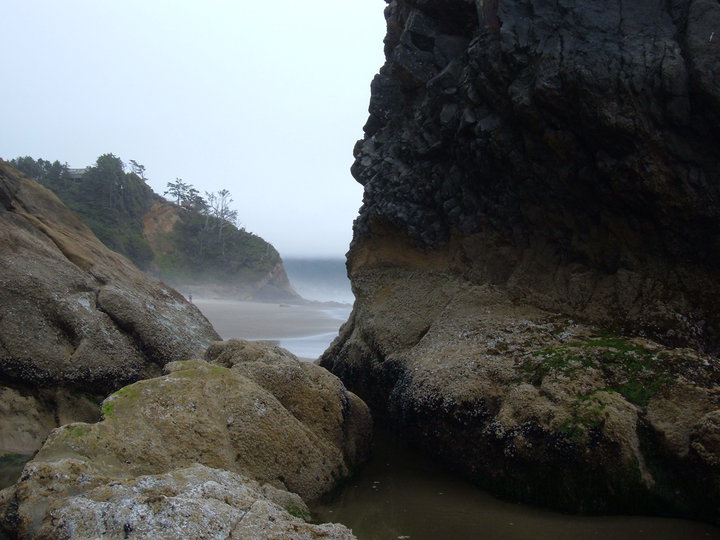
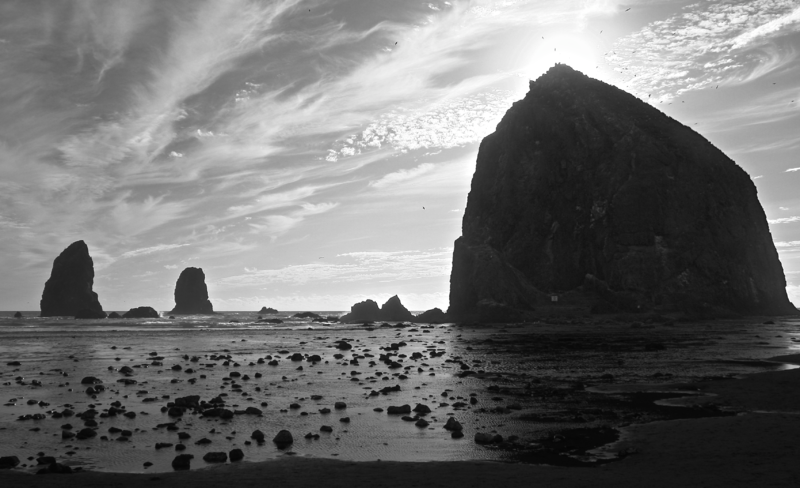
We are on holiday in Oregon, at a little town called Cannon Beach. This is a wonderful place, famous for the rock formations and caves, and the scenery was featured in the film, The Goonies.

Even in August, the northeastern Pacific Ocean on the Oregon Coast is cold and frequently cloudy and rainy. But when the sun shines, it is amazing.

Watching the storms roll in from the safety of the porch of the condo is nothing less than awesome. The beach is uncrowded, and Amaranthus and Savvy can play to their heart’s content, running wild the way cousins have always done since time began.

Amaranthus digs bunkers, and wades waist deep in Ecola Creek where it runs into the ocean. He rides his skim-board along the edge of the ocean like a pro, using his skate-boarding skills to the max. When he steps onto the porch, he is chilled to the bone, and his 6 foot tall, 14 year-old frame is shivering. His lips are blue from the cold, and he doesn’t even have to be told to take a shower–he’s a man now. He knows what to do.

Leah and Christy Cannon Beach 2012 © cjjasp 2012

Leah and Christy Cannon Beach 2012 © cjjasp 2012

Savvy is bright-eyed and deeply interested in creating marvelous sculptures of sand, just like her mother, my daughter Christy and her Aunty Leah. All our children were keen sandcastle engineers! The girl also rides her skim-board and stays out until she is blue from the cold.

It’s a family tradition.

Savannah is 11 and she’s a girl, so she also doesn’t have to be told to warm up. She wants only to sit in the Jacuzzi when she finally has to abandon her sand castles.

Sandcastle Sam 2010

Sandcastle Sam 2010

Nephew Samuel is 16, and is fixated on riding his bike the length of the beach, from Rockaway Point to Ecola Creek as many times as he can fit into the vacation. He is also a sand castle excavator, bringing spades, a pick-axe and many other large implements for proper excavation. No matter how cold, blue and near death from hypothermia Sam is, he won’t take any advice on how to get warmed up, preferring to sit in a corner looking like death-warmed-over. Did I mention Sam is 16?

Rockaway Beach © cjjasp 2013

Rockaway Beach © cjjasp 2013

This year I’m here resting up, recovering from my surgery, and writing intense scenes for the revised version of Julian Lackland’s story. This is the perfect environment for me, and with everyone else checking out the caves on Rockaway Beach and trudging down to Haystack Rock, I have the perfect combination of peace, quiet and beautiful scenery to motivate me. Throughout the rest of the year I live for this week of writer’s paradise.

Local legend says Ursula K. Le Guin spends time writing here in Cannon Beach, which seems right since she lives in Portland, 1 hour and 45 minutes away. I know that this place inspires me more than any other place we go.

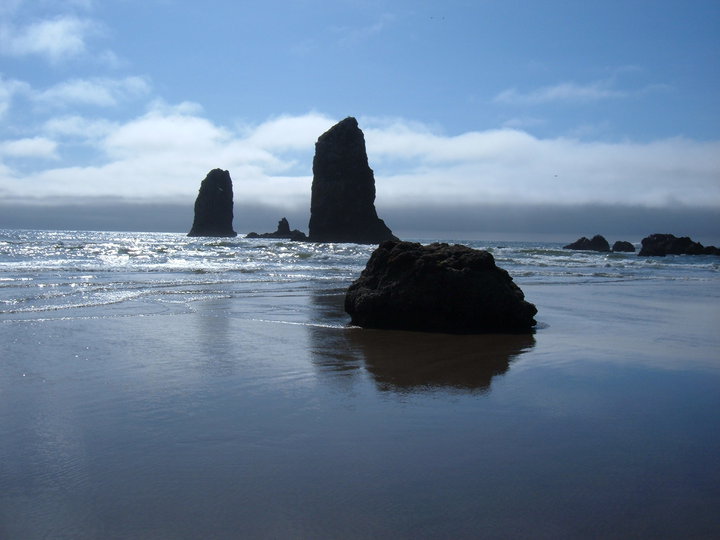
The Needles at Cannon Beach ©cjjasp 2013

The Needles at Cannon Beach ©cjjasp 2013

The weather is frequently awful, but we know it, and we plan for it. But there will be two days of glorious skies of a blue impossible to adequately describe.

The moods of the Pacific Ocean are anything but peaceful. It is a wild, beautiful thing, that is never the same two days running.  The waves crashing against the sea stacks and  the cries of the sea birds combine with the wind to clear my mind, and at last I am free to just write.

Haystack_rock_monochrome

7 Comments

Filed under Adventure, Books, Fantasy, Literature, Uncategorized, Vegan, writer, writing

Unplanned Obsolescence

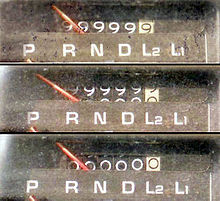
220px-Odometer_rolloverI turned sixty in June. The very next day I started falling apart. I am not kidding, my internal organs began failing the next day. Well, at least my gallbladder gave out on me.

Who knew planned obsolescence applied to the human body? At 60,000 miles you need a new timing belt, and possibly a brake-job.

Several expensive tests and a trip to urgent care later, it turned out I didn’t have gallstones. My gallbladder simply was failing, or as the doctor put it, dysfunctional. If you only knew my family, you wouldn’t be surprised.  I’m sure it’s not the only dysfunctional internal organ in the family.

ad_chevy_vega_gt_orange_1974I felt rather like the 1974 Chevy Vega we once owned, the vehicle with the duct-tape interior.  We had proudly bought it new, but at 50,000 miles the armrests fell off, the dashboard began cracking, the seats came apart–the interior was nothing but duct tape; a vast sea of silver. And the car was only three years old.

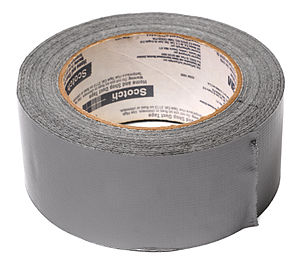
Duct tape is also known as “hundred-mile-an-hour-tape” in my family. Uncle Jim had a purple 1962  Chrysler station-wagon with both the rear-view mirror and the back bumper duct-taped on and he drove it like that for two years while he worked in the woods, planting trees.

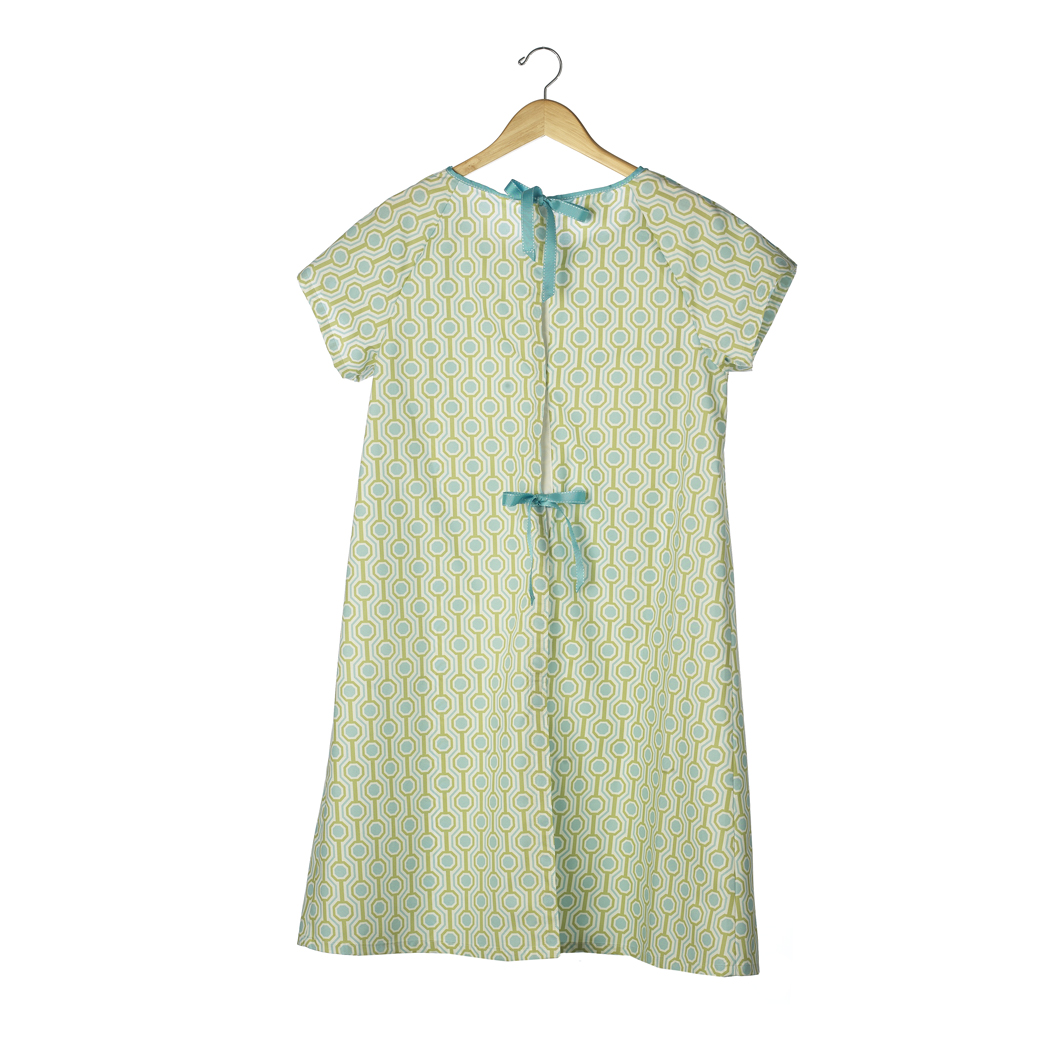
libby-gown-front_01So last Wednesday I had surgery.  It was just a bit of internal housecleaning–out with the debris cluttering up the place. Unlike Dr. Frankenstein’s monster I had nothing new to replace it with, but the gallbladder is apparently an internal organ we can do without.

Today I am hanging around the house, waiting for tomorrow when I will get the staples out.

I know! Staples–almost as classy as duct tape! My Father would have been proud!

300px-Duct-tape

11 Comments

Filed under Adventure, Battles, Books, Uncategorized, Vegan, writer, writing

Hurricane Hilton

MH900175582Last week I attended a 4 day convention in Seattle where there were several glitches on the dietary front.

The kitchen at the hotel failed miserably on Thursday and Friday, but by Saturday they had figured it out at least for the final dinner.  In the meantime, there were a lot of starving authors sharpening their pens and busily writing culinary reviews that were less than glowing.

When we reserved our place in January, we were asked what dietary requirements we had, and were given many options.  The breakfast buffet was nothing but donuts, muffins and bagelsnone of which are vegan or gluten-free – options that were offered to registrants at the time of my original sign-up.

I am not gluten intolerant, but I am vegan, and not for moral reasons. I am vegan for health reasons, as I get horribly ill from eating even small amounts of meat and dairy. So, when I realized there was NOTHING for breakfast or lunch that I could eat, I figured I’d just go to the restaurant and order side dishes off the menu. I have usually found that to be an option that works for me. After all, hash browns and steamed veggies are usually easy for the kitchen to turn out.

MH900400553When faced with a simple request, such as, “Can I have veggies sautéed in olive oil instead of butter please?” or “May I have my toast with no butter, please?” the waiters and waitresses got the deer-in-the-headlights look.  

I know what it’s like to be faced with a horde of prima donnas who think they should have special treatment.  I worked in the food service industry as both a waitress and a dishwasher, and I was a hotel maid for 12 years, actually, during the Reagan and Bush Sr. years. That was one of my 3 jobs. I was also a free-lance bookkeeper and a darkroom technician during those years. Three part-time jobs kept the kids fed and the roof over their heads, right?

Trickle down economics didn’t always trickle down too far.

It’s amazing how many hotels and restaurants are not prepared for guests with strange dietary needs like those weirdo hippy-freak vegans.

I get it, and I understand it.  I left good tips in the VERY expensive coffee shop anyway, because everyone did their best, and why be more of a pain than you have to be? My fried spuds and steamed veg averaged $15.00 to $20.00 per meal for breakfast and lunch for 4 days. Hurricane Hilton blew through my wallet leaving behind a budgetary disaster.

curry and sweet potato soupBut in this case, I was not the only hungry author there.  There was little concession made for any of the other people who’d been offered diet options, including the carnivores.  In fact the first three days were total catering catastrophes, and hardly anyone was pleased with the pathetic offerings.

By Friday, things were looking up for me but the Carnivores were starving. The catering team had gotten the 3 vegans at the convention served, and the plate they put in front of me was lovely.

Yep. There I was alone, surrounded by starving authors, armed only with a plate of grilled asparagus.

The carnivores were all looking at my veggies covetously. Irene Roth Luvaul suffered worse than me. She was told that  A: they had run out of food, and B: they weren’t going to cook any more. 6 people at our table were yet to be served.

Irene is an editor. Did I mention that? Just in case I didn’t, I will just say it’s bad juju to cross an editor. And the room was full of them.

There was blood in the water.

The announcement that no food would be forthcoming didn’t fly well with the comma-Nazi. Irene said, “What do you mean, you aren’t going to cook any more food?” Her clipped Texas tones could have shaved the fur off a cat at fifteen feet, they were so sharp.

This was the voice of the woman who edited briefs for the Texas State Supreme Court. She wrangled lawyers for a living.

The server brought her a plate of cold ravioli in pale tomato sauce.

Faced with a resounding plea-bargain, Irene desperately wished she was a vegan, and eyed my asparagus with longing.

However, by Saturday night the catering staff had redeemed themselves beautifully with a lovely, well-prepared meal that even the gluten-free authors were pleased with, along with copious quantities of decent wine, proving that giddy, well-oiled authors are a bag of fun.

Despite near starvation, it was a fun week, and meeting Greg Bear was awesome. But making new friends and connections with both sides of the industry was the best part of this for me.

4 Comments

Filed under Battles, Fantasy, Food, Literature, Uncategorized, Vegan, writer, writing

Thoughts on Internal Monologues

Young Woman Sitting Looking at Laptop ScreenI had a conversation with a friend in my writing group the other day. He paid for an expensive edit, but was not pleased with the results. The editor gave his ms only one fairly good look, and gave him a report with suggestions and ideas, but he was left more confused than ever. She has not worked with him to help him resolve those issues, and wants to be paid for a second look. This was more of a beta read than an edit, and that fact should have been disclosed when he hired her.

The professional editors I know do expect to be paid for their work, but they also work closely with the authors to help their clients turn out books that are finished to the best of their ability, thus giving the author their money’s worth. This involves many revisions of entire sections and lots of back and forth communication between the editor and the author.

When I looked at his ms, I could see one thing that stood out immediately.  His characters have a lot of internal dialogue. The editor told him not to set it off with italics, and technically she was correct, but she offered no insight to him on how to correctly portray his character’s thoughts. Unfortunately, with no way of distinguishing it, I found it difficult to differentiate the internal dialogue.

Now don’t get me wrong, the editor was technically correct. The  Chicago Manual of Style agrees with her, and in some ways, so do I.  As a reader, a wall of italics is daunting, and causes the eyes to get tired. If she was truly acting in his best interest, she could have shown him ways to get around the whole issue of internal dialogue, instead of just saying don’t use italics.

But I do use italics to set off certain thoughts in my own work, so how do I balance this apparent hypocrisy?  I have learned to use less internal dialogue, trying to only use it now when it is natural in the context of the scene.

As I look at my body of work, I can see it evolving toward a leaner style of writing, and less emphasis on idle thoughts is key to that style. My early work is rife with internal dialogue. In my recent work there is some internal dialogue, but not as much. The context of the story determines whether it is necessary or not.

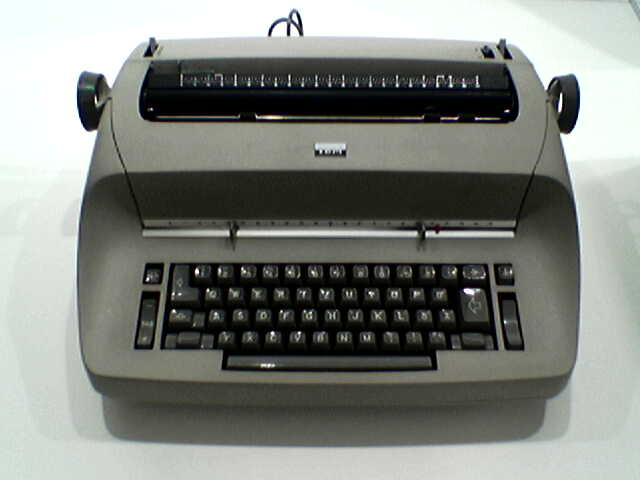
IBM_SelectricIn the days before computerized word processing and desktop publishing, the publishing process began with a manuscript and/or a typescript that was sent to a print shop where it would be prepared for publication and printed. In order to show emphasis—to highlight the title of a book, to refer to a word itself as a word, or to indicate a foreign word or phrase—the writer would use underlining in the typescript, which would signal the typesetter at the print shop to use italic font for those words.

Nowadays we have word-processors.  Authors can italicize to their hearts’ content and the ms will not be full of underlined words that distract the editor.  This has lead to some authors being a bit too free with italics, and I have been guilty of that.

The important thing to remember is that everything your  main characters think does not have to be written. When it is necessary, there are ways to get it across without resorting to italics except in the most important instances.

Indie author Karen Fox has an awesome post on common mistakes made by authors.  She says, (and I am directly quoting from http://www.karenafox.com/commonmistakes.htm,)

(Interior Monologues are) very important in writing. Reveals parts of the story not available through dialogue. A powerful way to establish character, but often overwritten. Again don’t explain if emotions or details are already shown through dialogue or action. This should be unobtrusive. Long passages of internal monologue often become ways of telling the reader information instead of showing.

One way to do this is to get rid of speaker attributions. Instead of Why had she said that? Because he drove her crazy, she thought, use Why had she said that? Because he drove her crazy.  He wondered what he’d done to make her leave can be transformed  to What had he done to make her leave?

Interior monologue helps set point of view. It is not the same thing as description, though the two can blend together.  Use impressions obtained through the POV character’s senses.  We use our sight, hearing, smell without thinking about it.   Your character will, too.

You can use italics to show a character’s thought, but use sparingly. Too many italics are irritating, but they can be a good way to set off a more important thought in the middle of a monologue.”

MP900321209Internal dialogue is necessary, but not if it is a crutch.  Authors tend to be lazy. Once we find an easy way to get a point across it becomes our go-to tool when a particularly tough scene is refusing to unravel for us. We tell ourselves it is “our voice” and therefore it is our style.

Yes, that can be true, but we must never rely on easy tricks to tell our stories.  Readers always notice, and it makes our work less enjoyable for them.

8 Comments

Filed under Adventure, Books, Humor, Uncategorized, Vegan, writing

Life Goes On, Maybe

Office Workers Clapping at Office PartySometimes you are going along just fine, flying like the wind and living the dream. Everyone loves you–you are riding high. Then the gods of perversity decide you’ve been having way too much fun and decide you need another one of those little reminders of your own mortality.  Perhaps you said something that offended someone, perhaps you didn’t say something you should have.

Perhaps you were less than kind when you should have been generous.

It appears to be an unfortunate fact of life in our society that when someone in the public spotlight appears to enjoying their success too much (Paula Deen, Frank Gifford), the carrion-eaters gather about them, waiting for them to stumble, plotting their downfall, desperate to be part of the feeding frenzy that is sure to follow.  That which passes for ‘news’ at 6:00 is frequently little more than juicy gossip and holier-than-thou finger-pointing by people with something to gain from the debacle. To me, the personal failings of public figures is not news, it is a terrible glimpse into someone else’s life that I wish I had never seen. People do wrong all the time–how can that be news? It reminds me of my mother and my Aunt Jo gossiping at the kitchen table about some neighbor caught with their pants down.

Eye on Flat Panel MonitorTo me, the real news isn’t that even famous people do cringe-worthy things.  The real news is on a more global scale. The real news never gets any airtime, because the real news-makers have the power to see to it that the populace is spoon-fed pap like who used the ‘N’ word (which is most certainly NOT cool) or who has been cheating on his wife (also not cool.) While I agree these are not good things for anyone, much less respected public figures, to do, I simply feel it is gossip and not news. This is the sort of thing that better belongs in scandal-rags like People or The National Enquirer.

In the US we have a free-press.  This means what you see on the television is what the big corporations want you to see, since they own the press, and it ‘s a free country, after all. We hear little of the real news, mentioned only in passing, such as the recent proposal for a  regulation by the European Parliament and of the Council. This proposal regulates the production and availability on the market of plant reproductive material (plant reproductive material law.) (Seeds.)

What this proposed law says (quoted from The Real Seed Catalogue):

The law starts from the premise that all vegetables, fruit and trees must be officially registered before they can be reproduced or distributed. This obviously is a major restriction on seed availability, as there are all sorts of costs in both time and money dealing with the bureaucracy of a central Plant Variety Agency. Then, after making that the basic rule, there are some exceptions made in limited cases:

  • Home gardeners will be permitted to save and swap unregistered seed without breaking the law.
  • Small organisations can grow and supply unregistered vegetable seed – but only if they have less than 10 employees
  • Seedbanks can grow unregistered seed without breaking the law (but they cannot give it to the public)
  • There might be easier (in an unspecified way) rules for large producers of seeds suitable for organic agriculture etc, in some (unspecified) future legislation – maybe.

There are also clauses that mean the above concessions could be removed or reduced at any time in the future without coming back to the Parliament for a vote.”

MH900438728Who benefits from this law? Only the ten largest seed companies in the world, who also just happen to be the largest pesticide producers in the world.

1.Monsanto (US)
2.DuPont (US)
3.Syngenta (Switzerland)
4.Groupe Limagrain (France)
5.Land O’ Lakes (US)
6.KWS AG (Germany)
7.Bayer Crop Science (Germany)
8.Sakata (Japan)
9.DLF-Trifolium (Denmark)
10.Takii (Japan)

Source: ETC Group

Variety in our seed crops is an absolute must, if we are to have strong, healthy sources of food. Genetically modifying crops so they are resistant to certain chemicals (patented, produced and sold only by these companies) and creating a monoculture food chain is not beneficial to the world, no matter how these companies proclaim their charitable desire to feed the world.  If they truly did care about that, they would not be trying to put the small farmer out of business. If their motives were truly as benevolent as their propaganda declares them to be they would be supporting and encouraging small farms, not putting them out of business and destroying entire cultures.

I leave you with this quote from the Daily Mirror–oddly enough I did find ‘news’ in a newspaper!

MH900438718“The social impacts of large-scale monocultures are often disastrous for communities who continue to grow local foods using sustainable practices. Small-scale farmers often cultivate local species which not only contain important minerals for the soils and for human health, but also have adapted to the local environment over many years.

When small-scale farmers are confronted with industrial large-scale monocultures in their area, they are faced with water and other resources shortages, contamination from pesticide spraying and from GMO crops.

The takeover of land by monocultures also causes rural depopulation, destroying local community life and local economies. Monoculture plantations usually provide only temporary labour, for which workers are often hired from outside the region. Land grabbing and forced evictions of local populations are strongly linked to the expansion of monocultures.”

This, to me, is the real news.

I leave the gossip to the corporate news giants who cultivate it as a way to divert our attention from the true threats to our existence, and to those who find pleasure in watching others fall from grace.

2 Comments

Filed under Adventure, Books, Epilepsy, Food, Literature, Vegan, writing