
One character archetype essential to any tale is the villain. Yet, despite being crucial to the story, this character is often less developed and two-dimensional.
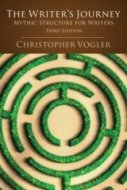
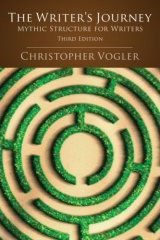 In his book, The Writer’s Journey, Mythic Structure for Writers, Christopher Vogler discusses how the villain of a piece represents the shadow. The enemy injects the narrative with the momentum of dark energy, powering the plot.
Some of the best narratives I’ve read feature the antagonist as the protagonist. We want to see them succeed, yet we fear they will and know it can’t end well. This tension creates a memorable narrative.
One novel that stuck with me was Grunts! by Mary Gentle. She features the orcs as the protagonists, and one feels a great deal of sympathy for the devil.
From Wikipedia:
Grunts! (1992) is a satiric fantasy novel by British writer Mary Gentle. It is set in a basic fantasy world taken from the usual The Lord of the Rings mould, with orcs and elves using magic and typical medieval weaponry, but it plays heavily on black comedy and strong doses of violence and graphic description, frequently depicting scenes “over the top.”
The story follows a group of orcs who always find themselves on the front lines of battle against the carefully prepared and always triumphant forces of good. The orcs decided to organize themselves and fight back. As a satire of high fantasy the novel mocks most of the conventions of the genre from using traditional villainous races, orcs, as the protagonists, to having the noble characters have much less than noble motivations and secrets.
The opening of the book plays up the orc warleader sent to reclaim a weapons cache in preparation for the ‘Last Battle’ between good and evil, which is well on its way. They are assisted by a pair of halflings whose cute demeanor is contrasted with extremely violent acts. [1]
In any narrative, the shadow provides opportunities for contrast. Whether a person, a creature, or a natural disaster, the antagonist represents darkness (evil), against which light (good) is shown more clearly. Also, the shadow, whether a person, place, or thing, provides the roadblocks, the reason the protagonist must struggle.
Large predatory animals will be aggressive toward humans because hunters need a large habitat and hefty prey. They are unpredictable and will attack when we enter what they see as their territory. This is plot-fodder for many a scary horror novel.
Storms and natural disasters make perfect antagonists. Everyone loves a good disaster novel or movie because when nature throws a tantrum, it’s terrifying and deadly. People love nothing more than tales of humanity surviving and overcoming the worst that nature can do.
Animals and natural disasters are straightforward antagonists with little room for backstory.
 However, when the antagonist is a person, I ask myself, why this person opposes the protagonist? What drives them to create the roadblocks they do? Why do they feel justified in doing so?
Perhaps you are writing a memoir. Who or what is the antagonist? After all, memoirs are written to shed light on the difficulties the author has overcome, so who or what frustrated your efforts? In some autobiographies, it is a parent or guardian. Other times it is society, the standards and values we impose on those who don’t fit into the slots designated for them.
For many novels, the enemy is the protagonist’s inhibitions and self-doubt.
In others, the two main characters have a sharply defined good versus evil chemistry. (Trust me, the antagonist is a main character, or the hero has nothing to struggle against.)
The struggle makes the story. The characters on both sides of the battle must recognize and confront the darkness within themselves. They must choose their own path—will they fight to uphold the light? Or will they take the easier way, following the shadow?
When the protagonist must face and overcome the shadow on a profoundly personal level, they are placed in true danger. The reader knows that if the hero strays from the light, they will unknowingly offer up their soul.
The best shadow characters are shown to have many layers, and not all of them are bad. They are charismatic because we can relate to their struggle. We may hope events will change them for the better but know in our hearts they won’t.
Characters portrayed as evil for the sake of drama can be cartoonish. Logic must support their actions, or the villain is not believable.
The most fearsome villains have deep stories. Yes, they may have begun life as unpleasant children and may even be sociopaths. Something started them down that path, reinforcing their logical reasons for what we consider villainy.
Speculative fiction has a trap waiting to snare the unwary writer. When the plot centers around the pursuit of a desired object, authors spend enormous amounts of time working on all the supporting reasons for the quest. They give the hero firm, logical reasons for struggling to acquire the Golden McGuffin.
Where some fantasies fail is in depicting the enemy. The villain must also have a plausible explanation for going to the lengths they do to thwart our heroes.
A mere desire for power is NOT a good or logical reason unless it has roots in the enemy’s past. Why does Voldemort desire that power? What fundamental insecurity drives them to acquire absolute control over every aspect of their life and to exert control over the lives of their minions?
 We must remember that the characters in our stories don’t go through their events and trials alone. We drag the reader along for the ride the moment we begin writing the story. They need to know why they’re in that handbasket and where the enemy thinks they’re going, or the narrative will make no sense.
Ask yourself a few questions:
- What made your villain turn to the darkness?
- What events gave them the strength and courage to rise above the past, twisted though they are?
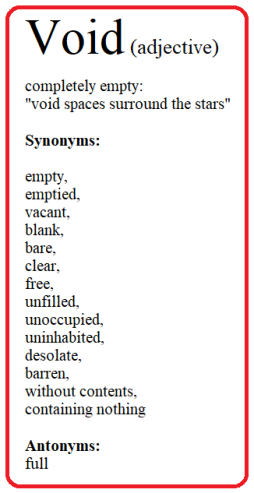
- What is the void that drives their agenda?
- What do they hope to achieve?
- Why do they believe achieving their goal will resolve the wrongs they’ve suffered?
None of this backstory needs to be dumped into the narrative. It should emerge in tantalizing bits and hints as the plot progresses and conversations happen.
We must make the hero’s ultimate victory evoke emotion in the reader. But we also want them to think about the dilemmas the characters have faced.
The villains we write into our stories represent humanity’s darker side, whether they are a person, a dangerous animal, or a natural disaster. They bring ethical and moral quandaries to the story, offering food for thought long after the story has ended.
Credits and Attributions:
[1] Wikipedia contributors, “Grunts!,” Wikipedia, The Free Encyclopedia, https://en.wikipedia.org/w/index.php?title=Grunts!&oldid=1117040155 (accessed August 6, 2023).
 Indies occasionally have to write a synopsis if they submit their longer work to contests, agents, or publishers. When a literary contest or publisher asks for a synopsis, they don’t want a book blurb, which is a “this is why you should buy my book” teaser.
 Don’t label your synopsis file with a generic name like “synopsis.docx.” Be specific and include the book title in the label:
 I recommend you go to the Jericho Writers site and follow their guidelines if asked for a synopsis. The article there is one of the most comprehensive and useful ones I’ve read anywhere. Again, that article can be found at
  I quickly regretted that decision.
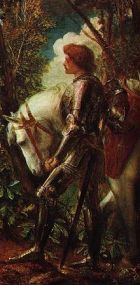 Arthur and his court originated as ordinary 5th or 6th-century warlords. But the tales featuring them were written centuries later. Their 11th-century chroniclers presented them in contemporary armor as worn by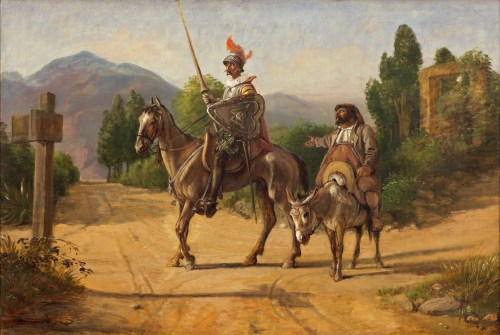
 I am an abject fangirl for Don Quixote, so different versions of both Galahad and Quixote appear regularly in my work.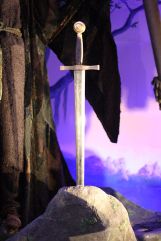
 And sometimes a theme refuses to let go of me. I took Arthurian myth and the chivalric code and turned them inside out with the characters of Lancelyn and Galahad in
  Some authors despise that process so much that they go indie, thinking they won’t have to leap that hurdle. But there is no escaping it.
 Writing these kinds of personal introductions is a pain—but only because we don’t know what is expected or what we should include.
 Please do NOT give it the hard sell. The
  Large Publishing Houses: Large traditional publishers want agented submissions only. On the rare occasions they open the doors to unagented authors, their editors expect a 1-page, 300-word description of your novel. This is the query letter, as described above. Your manuscript is not attached to this—if they like what they see in the query, they will look at the synopsis and possibly ask for the first chapter.
 Sometimes my queries get good results, and sometimes not. I’ve said this before, but query letters are like ice cream. Everyone likes certain flavors and must be pushed to try new ones.
 During the 1980s and 90s, I listened to music on the stereo, writing my thoughts and ideas in a notebook while my kids did their homework. I drew dragons and fantasy landscapes and worked three part-time jobs to pay the bills.
 For most of my writing life, I was like a toddler given a package of
 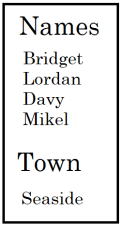 Build a glossary of words and spellings unique to your story, and be sure to list names. I use an Excel spreadsheet, but you can use anything you like to help you stay consistent in your spelling.
 The master file might be titled: Lenns_Story
 I gained a fantastic local group through attending write-ins for NaNoWriMo, the Tuesday Morning Rebel Writers. Since the pandemic, and with several of our members now on the opposite side of Washington State, we meet weekly via Zoom. We are a group of authors writing in a wide variety of genres.
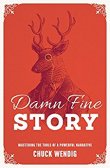 Learn about structure and pacing from successful authors. Spend the money to go to conventions and attend seminars. You will learn so much about the craft of writing, the genre you write in, and the publishing industry as a whole—things you can only learn from other authors. I gained an extended professional network by joining
  The year that followed was filled with mistakes and struggles. Legitimate publishers NEVER contact you. You must submit your work to them, and they prefer to work with agented authors.
 Short stories and micro fiction are a training ground, a way to hone your skills. They’re also the best way to get your name out there. I suggest you build a backlog of work from 100 to 5,000 words in length. Keep them ready to submit to magazines, anthologies, and contests.
 When I plan a character, I make a simple word picture of them. The word picture is made of a verb and a noun, the two words that best describe each person.
 When I write my characters, I know how they believe they will react in a given situation. Why? Because I have drawn their portraits using words:
 Sometimes the path to publication is fraught with misery; next week, we will discuss that. Other times, the book writes itself and flies out the door. Who knows how my next novel will go?
 A character’s preconceptions color their experience of events. We readers see the story through their eyes, which shades how we perceive the incidents.
 This is a literary theme and is known as the hero’s journey. But it is only the overarching theme. For that hero’s main character arc to work, they need subthemes.
 What is the “hero’s journey” and why am I so fond of it?
  When
When Other novels are entirely character-driven, focusing on the protagonist of the narrative. Much thought is given to how prose is crafted stylistically, using a wide vocabulary. These novels feature thoughtful, in-depth character studies of complex, often troubled, characters. The story is in their day-to-day dealings with these issues. Action is less important than introspection, and the setting frames the characters and their arcs of growth.
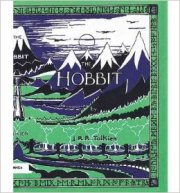
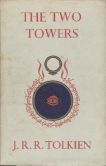 Let’s look again at J.R.R. Tolkien’s
  When we are constantly prodded to make our work focus on action and events, it becomes easy to forget that characters have an internal arc. They must grow for good or ill.
 I step away from my project for a week or two or even longer when stuck. When I come back to it, the characters and their journey is new again, inspiring me to finish their story. This is why I am a slow writer.
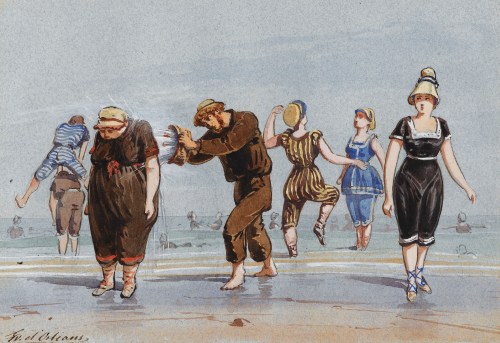 Artist: François d’Orléans, prince de Joinville (1818-1900)
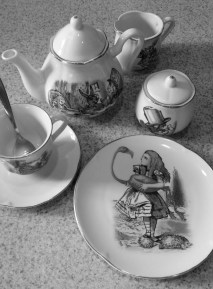
 It’s a mystery. The cup is full, and then it is empty, a Schrodinger’s cup of tea, there and not there.
 Humans are amused by things and incidents that violate the accepted way things should work and which do so in a non-threatening manner. We see the characters having difficulty in certain situations and find humor in the fact their dilemmas are so relatable.
 I like things that surprise me, situations that detour sharply from the expectations of normal. In
 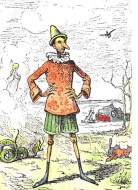 I do have a cruel streak when it comes to my written characters. The ability to laugh at oneself and to learn from missteps is critical in real life. Admitting you are the architect of your own disaster and accepting your own human frailty is a major step to adulthood.
 Do you write your heroes with few flaws, or do you portray them as “warts and all?” That becomes a matter of what you want to read.
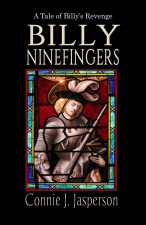 Still, I write stories about people who might have existed and have their own views of morality. In each tale, I try to get into the characters’ heads. I want to understand why they sometimes make terrible choices, acts that profoundly change their lives.
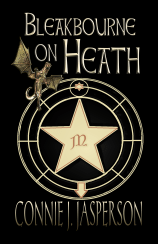 To me, the flawed hero has much to offer us. In my most recently published book, a stand-alone novel called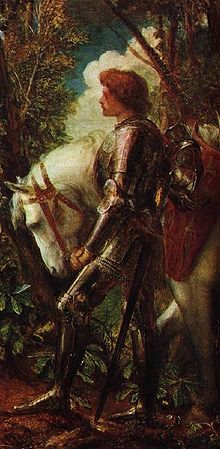
 The difference between the antagonist and the hero is the amount of grayness in their moral compass. When does the gray area of morality begin edging toward genuinely dark? What are they not willing to do to achieve their goal?


 Life in the Realm of Fantasy