
Today’s offering is a short story that was written and first posted here in 2016, Christmas at the Drunken Sasquatch. It features one of my favorite characters, Dan Dragonsworthy, were-dragon. Dan has taken on a life of his own and is featured in my short story, the Elevator Pitch. (Available at Amazon for .99 cents).
So now, live from the Other Side of Seattle, I bring you everyone’s favorite were-dragon and Christmas at the Drunken Sasquatch. As always, no vampires were harmed in the making of this tale.
 Vampires have a sick sense of humor, especially Alfredo, although he pretends to be cultured. Just over a year ago he got me banned from the Drunken Sasquatch, by switching my orange juice for an orange soda… that dirty trick was more than embarrassing. Covering the cost of the damages to the scorched floor, replacing the furniture, and buying Sylvia Wannamaker a new coat ate into my hoard quite heavily.
Worst of all, I was banned from participating in November’s darts tournament.
However, I’m a were-dragon. We like our revenge served up cold and well calculated.
The anniversary of my disgrace has passed, which would have been the obvious day for me to seek retribution. Most people have forgotten the whole incident.
But not me.
I know I look like any other old has-been reporter. I’m still hanging in there, digging up the political dirt in Seattle with the best of them, and yes, I tend to go on and on about the glory days. While that observation isn’t real flattering, it’s true. I drink more orange juice than is good for either of my livers, and I hang out here at the Drunken Sasquatch because I have nowhere else to go.
I don’t discuss it for obvious reasons, but during my years in the Middle East, Dan Dragonsworthy was far more than just a flying battle wagon. One thing I learned was how to be patient, and how to spot the chinks in your opponent’s armor.
 I’ve been watching Alfredo since New Year’s Eve when Bloody Bill finally lifted my punishment and allowed me back. I don’t intend to harm the old bloodsucker, but I’m going to give him a taste of his own medicine. I’m a reporter—I know for a fact there are substances vampires shouldn’t ingest, and Alfredo may have forgotten that.
A vampire tripping on chocolate is bad for everyone. I’d never do that, especially to Alfredo. Fortunately, they don’t like the flavor of it.
However, they do have a passion for maraschino cherries, which can cause problems for the weaker willed vampire since those fruity morsels of goodness are frequently found wrapped in dark chocolate.
With one exception, the smart ones don’t succumb to temptation inside the Drunken Sasquatch, because Bloody Bill won’t tolerate that sort of behavior.
Most importantly for my purposes, vampires can’t tolerate coffee. On tiny amounts, they tend to pee themselves copiously, which the rest of us find hilarious. Vampires get quite huffy when their vampiric dignity is besmirched.
As if MY dignity meant nothing to me.
When you want to impress Alfredo, you buy him a jar of the special maraschino cherries from Italy, made with the best cherry liqueur. He can smell maraschino liqueur from anywhere in the room and, being a vampire, he lacks a conscience.
No maraschino is safe from Alfredo.
The annual Christmas party and the gift exchange drives him mad. Every witch, wizard, or elf has a recipe for that most wonderful of traditional holiday treats, maraschino chocolate cordials. These kind friends are always generous with their gifts to those of us who lack their magical culinary skills.
It’s more than his old vampire heart can stand, and despite having received his own jars of cherries sans-chocolate, he takes incredible risks.
I’ll give Alfredo credit—he’s good. I’ve watched him sneak up behind Grandma and suck the cherries out of a box of cordials without getting his fangs dirty. She suspected it was him but could never prove it. Fangs do leave holes, but it could have been any vampire.
It takes a brave (or desperate) vampire to mess with Grandma. I’d tell you to ask the Big Bad Wolf, but you can’t.
She’s wearing him.
So, anyway, last week, Grandma and I had a chat. I got on the internet and ordered the finest ingredients. They were delivered the day before yesterday, and she immediately got busy in the kitchen.
 This year, one unattended box of cordials under the tree at the Drunken Sasquatch will have cherries in liqueur with unique centers. This particular batch will be vampire safe—no chance of accidental hallucinations here. Grandma created white-chocolate shells filled with Cherry brandy, with a maraschino cherry floating in the middle.
However, each cherry will be filled with a special coffee liqueur.
It will be a joy to watch Alfredo try to deny his culpability in this year’s draining of the maraschinos as the evidence spreads around his feet.
I hope vampire pee isn’t too acidic, although I’ve heard the stench is an excellent Zombie repellent, and no matter how you scrub, it’s impossible to get rid of the odor. Sylvia Wannamaker swears by it in a diluted form as a slug repellent in the garden, as using it there will turn your hydrangeas the brightest blue. They don’t make good cut flowers though, as they smell too bad to keep in the house.
I’m sure a pool of vampire urine won’t be as dangerous for the innocent bystanders as when he caused me to inadvertently belch fire in close quarters.
Come the day after this year’s Christmas party at the Drunken Sasquatch (even though his cash outlay won’t come near matching the damages I had to pay when he slipped me the Mickey) at least Alfredo will be out the cost of a new pair of boots.
And if he can’t find a good dry cleaner, he’ll be out the cost of replacing that gaudy, lace-trimmed, purple velvet suit he thinks is so stylish.
Grandma and I are both looking forward to this year’s party. Christmas could just become my favorite holiday.
 To meet Alfredo, Grandma, and Sylvia Wannamaker, Dan’s next adventure, The Elevator Pitch, is Available at Amazon for .99 cents.
Credits and Attributions:
Christmas at the Drunken Sasquatch, © 2016-2020 Connie J. Jasperson, All Rights Reserved. Originally published 02 December 2016, on Life in the Realm of Fantasy, and reprised on 26 December 2018.
 I have planned the menu for Christmas Eve and Christmas Day, but a few things still need some forethought if I want those gatherings to go well. We’ve been invited to a New Year’s Eve potluck. I’m torn between making an avocado-cucumber-tomato salad or stuffed mushrooms—both are easy.
 No more tape in my hair, no more naughty words, and no more hunting for the scissors I just had in my hands.
 This is my recipe for the most delicious ONION AND MUSHROOM GRAVY:
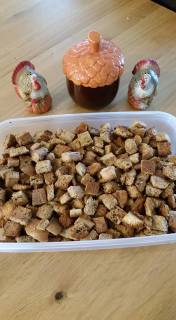 1 bag bread cubes for stuffing, or 10 cups 1/2 inch bread cubes from 1 large loaf of day-old wheat or other sandwich bread. Sometimes I bake my own bread, sometimes not.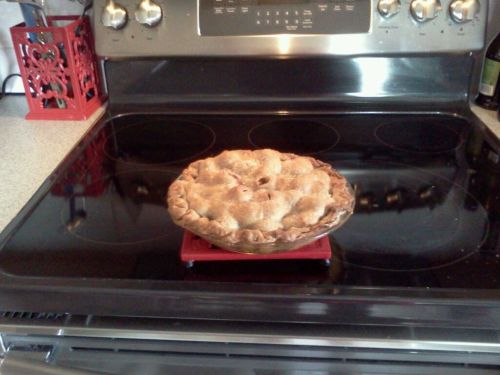
 That timeless story was written in 1843 as a serialized novella. It has inspired a landslide of adaptations in both movies and books and remains one of the most beloved tales of redemption in the Western canon.
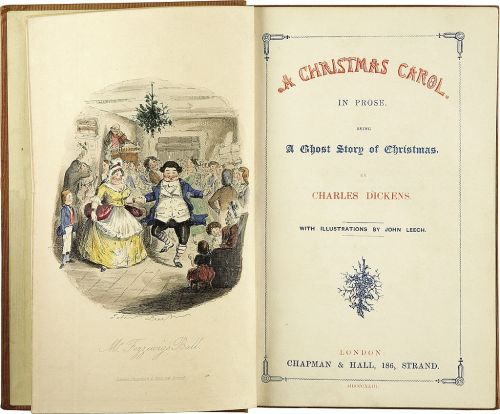 I wish he could have seen how beloved his creation is now, one hundred and eighty years later.
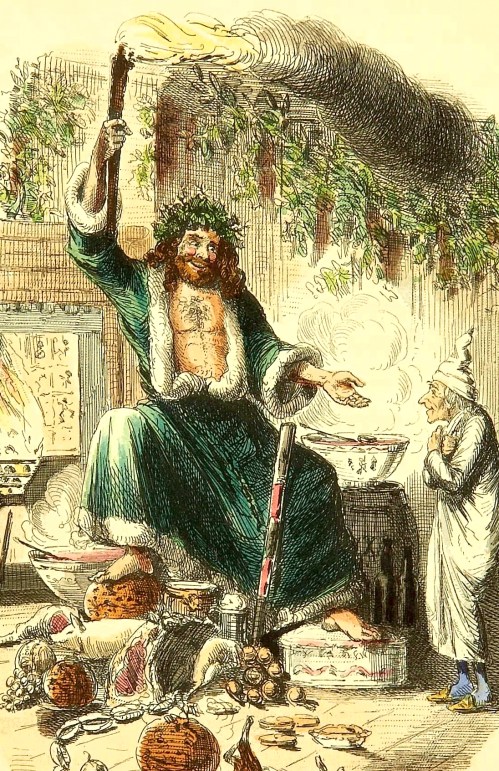 Charles Dickens showed us that charity and generosity to those less fortunate must become a year-round emotion. Our local community is a good place to start.
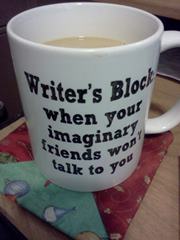
 However, this year, I am experiencing something I haven’t before—the post-NaNoWriMo slump. My creativity levels are low, and my words seem reluctant to join the party. I know many authors who suffer through this, but since I began this journey in 2010, I have never experienced it.
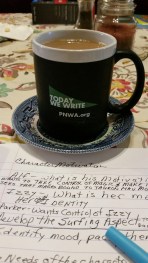 My first drafts tend to be ugly. The story emerges from my imagination and falls onto the paper (or keyboard), warts and all. Each first draft I can write “the end” on is a hot mess of repetitions, awkward phrasing, and cut-and-paste errors. I set them aside when they’re complete and often forget I’ve written them.
 Then, I turn to the last paragraph on the story’s final page and cover the rest of the page with a sheet of paper. I begin reading again, starting with the ending paragraph, working my way forward, and making notes in the margins.
 It works the same way for novels. I print out each chapter and go through the steps I described above. Then, I make the revisions in a new file labeled with the date and the word “revised.”
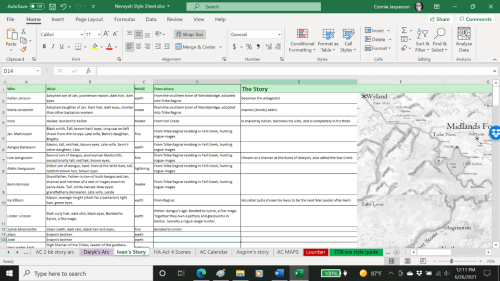 You can get fancy and use a dedicated writer’s program like
  But we’d prefer the snow to stay in the mountains where it belongs. Something about the slightest dusting sends the Pacific Northwest into a panic.
 BBC: From memoir and self-care books to comic novels, writing about our flaws and imperfections has never been so popular. But can failing ever be a success? Lindsay Baker explores this question. Read the story here:
  Also from Publishers Weekly: A confident mood prevailed among independent booksellers over this November holiday sales weekend. (…) Sales data from
 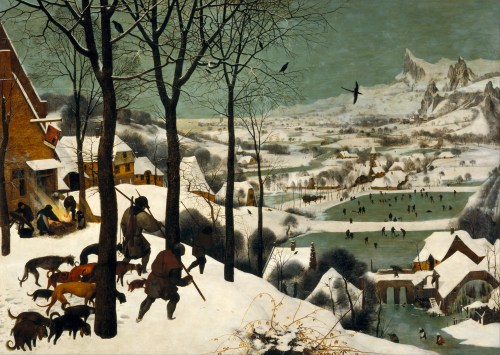 Artist: Pieter Brueghel the Elder (1526/1530–1569)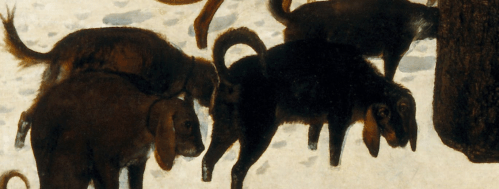
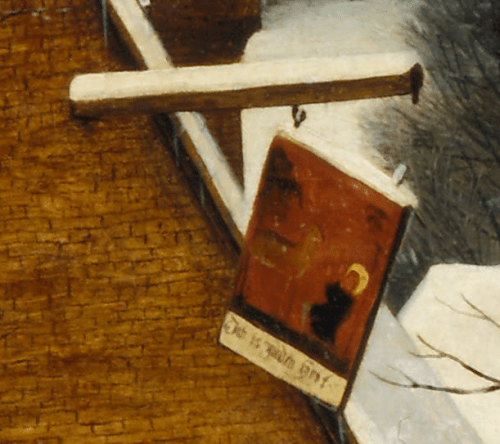
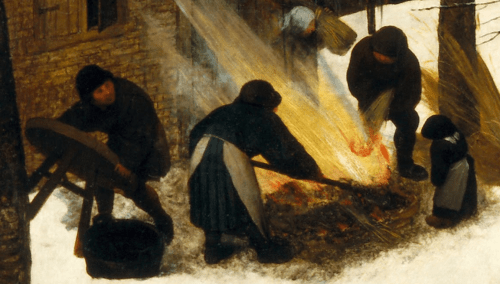

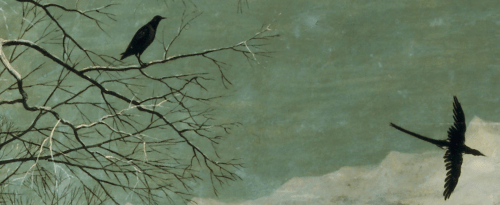
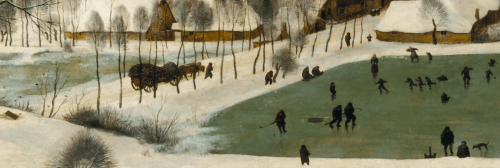 But they are indistinct and far away, shown in a fantastic, mountainous landscape, rather than the flat terrain of the Netherlands. It is almost as if they are visions of what winter could be when the harvest had been good, rather than the truth of the lone fox, hounds with empty bellies, a bankrupt tavern, and the rabbit that got away.
 That question is a good place to start, but it is only the surface layer of the pond.
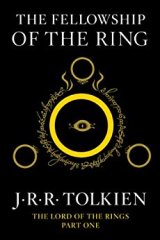 It is a conversation scene, driven by the fact that each person in the meeting has knowledge the others need. Conversations are good when they deploy necessary information. Remember, plot points are driven by the characters who have critical knowledge.
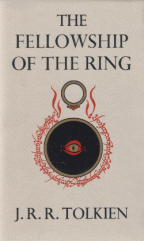 Information/Revelation: The Council of Elrond conveys information to both the protagonists and readers. It is a conversation scene, driven by the fact that each person in the meeting has knowledge the others need. Plot points are propelled by the characters who have critical knowledge. Again, limited information creates tension.
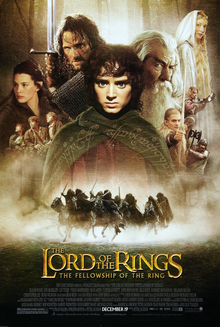 The movie portrays this scene differently, with Pip and Merry hiding in the shadows. Also, in the book, the decision about who will accompany Frodo, other than Sam, is not made for several days, while the movie shortens it to one day.
 We who write fantasy invent people and give them lives in invented worlds. Their stories involve them doing invented things. Unfortunately, there are times when we realize we have written ourselves into a corner, and there is no graceful way out.
 In 2019, I had accomplished many important things with the 3 months of work I had cut from that novel. The world was solidly built, so the first part of the rewrite went quickly. The characters were firmly in my head, so their interactions made sense in the new context.
 So, in 2019, I realized the novel I was writing is actually two books worth of story. The first half is the protagonist’s personal quest and is finished. The second half resolves the unfinished thread of what happened to the antagonist. Both halves of the story have finite endings, so the best choice is to break it into two novels.
 And a “passel” of short stories and novellas.
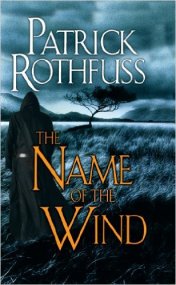 I think of
  When I can’t write anymore, I eat chocolate and read trashy romance novels about vampires.
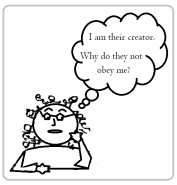 I need to spend several days visualizing the goal, picturing each event, and mind-wandering on paper until I have concrete scenes. I need to write a few paragraphs that will become the final chapters.
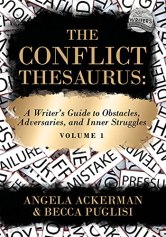 My heroes and villains all see themselves as the stars and winners in this fantasy rumble. They intend to prevail at any cost. What is the final hurdle, and what will they lose in the process? Is the price physical suffering or emotional? Or both?
 My mental rambling is accomplishing something. My characters are all getting their acts together. They are finding ways to resolve the conflict and are ready to commence the fourth act, where they will embark on the final battle.


