Category Archives: writing

Thoughts on the craft #amwriting

We who write all begin this journey with a story we think would make a great book, and a certain amount of natural talent for storytelling. However, unless we have an exceptional memory for the obscure and boring lectures we endured in grade-school grammar, authors who are serious about the craft must learn how to write.

This means they must learn how to construct a sentence using accepted rules of grammar. They must also learn how to construct a story, so it has a beginning, a middle, and an end. The core features of a great story are:

  • Originality
  • Plausibility
  • Plot arc
  • Character arc
  • A satisfying end

Within those pages, we want to see:

  • Unique characters
  • Well visualized settings
  • Compelling dialogue
  • Tension and pacing
  • Hooks and transitions that make a reader want to turn the page

Knowledge of grammar and writing craft is crucial if you want a reader to stay with your story. As I’ve mentioned before, commas are to clauses what traffic signals are to streets—they govern the flow of traffic, although, in the case of sentences, the traffic is comprised of words, not cars.

The opportunity to learn writing craft is out there on the internet, and it costs nothing.

Education in America is under fire at all levels. The determined learner can still get that education simply by going to the library and asking questions. Start there and use the information you glean there to lead you to other places to learn writing craft via the internet.

This is why it is crucial for us to support the libraries in our towns, both financially if possible, and with our patronage. In places where the education system is broken, libraries are the last bastion of opportunity for both children and adults with limited funds and unlimited curiosity.

If you are fortunate enough to have a secondhand bookstore in your town, purchase secondhand books on writing craft, and invest in technical manuals detailing different aspects of writing.

For the financially strapped author wanting to increase their knowledge, an amazing resource is the website Writers’ Digest. They are also for profit, but they offer an incredible amount of information and assistance for free.

So here are several sources of online information about the craft of writing (and I’ve listed them before):

I’ve also mentioned before that Harlequin has one of the best websites for teaching authors how to develop professional work habits, which is critical to being productive. I highly recommend you go to websites that specialize in writing romance novels regardless of what genre you write in.

I say this because the romance publishers have it right: they want to sell books, and they want you to succeed:

  • They get down to the technical aspects of novel construction and offer many excellent tools for getting your work out the door in a timely fashion–something I need to work on.
  • They also offer tips on marketing your work.

Many authors are able to get a degree in creative writing. But many talented authors don’t have the money or education to get into a program like that. They are working day jobs to support their families and money is tight.

However, an education can be obtained at little or no cost–but it takes effort and determination. Though we may not have the money or time to get an official degree, many of us will become knowledgeable the craft of writing by obtaining information in bits and pieces over time. This is the method I have used–a combination of some college classes, writers’ workshops, and many hours of reading books on the craft of writing.

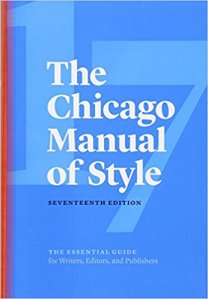
If you only have two books on your desk, one should be the Chicago Manual of Style, and the other should be the Oxford American Writers’ Thesaurus. Besides those two books, these are a few of the books I keep in hard-copy and refer to regularly:

Story, by Robert McKee

Dialogue, by Robert McKee

The Writer’s Journey, by Christopher Vogler

The Sound on the Page, by Ben Yagoda

Rhetorical Grammar, by Martha Kolin and Loretta Gray
You may not be able to afford to take writing classes or have the time to go to college and get that degree. But you may be able to afford to buy a few books on the craft, and it’s to your advantage to try to build your reference library with books that speak to you and your style. You will gravitate to books that may be different than mine, and that is good. But some aspects of our craft are absolute, nearly engraved in stone, and these are the basic concepts you will find explained in these manuals.

Reading is the key. Read widely, and you will begin to understand many different forms of literature. We all know that reading widens your horizons and opens your mind to possibilities in your own work that you otherwise wouldn’t consider.

Most importantly, you must lose the fear of being stuck reading works you don’t enjoy.

An essential skill for you to gain as a writer is the ability to clearly identify what you don’t like about a given work.

By reading widely, you will become less inclined to make broad statements, such as “I don’t like sci-fi.” You will be able to identify what it is that you don’t like about a given novel rather than dismissing an entire genre.

So much can be done at no cost financially, but it does require a desire to learn and the willingness to try.

If you have some funds to dedicate to learning the craft of writing, you can take online classes or attend seminars in your local area.

Look at the calendar of your local library and see if they are offering any FREE seminars on writing craft. If you check in your local area, you will be surprised just how many opportunities there are to learn about the craft of creative writing.


Credits/Attributions

IBM Selectric, By Oliver Kurmis (Self-photographed) [CC BY 2.5 (http://creativecommons.org/licenses/by/2.5)%5D, via Wikimedia Commons, accessed Feb 26, 2017

The Chicago Manual of Style, University of Chicago Press; Seventeenth edition (September 5, 2017) Fair Use

12 Comments

Filed under writing

Language, words, and relevance #amwriting

I’ve said it before, and I will say it again, English is like water–it shifts, it flows, and it takes what it wants from every other language it comes across. That naughty  penchant for word-thievery is what makes English so much fun to play with.

This continual evolution is also what makes it so difficult to work with. The very roots of English encourage the continual changing soundscape, because it is a living language.

Think about it–a bunch of smart guys in Victorian England applied the rules of a dead language, Latin, to an evolving language with completely different roots, Frisian glued to Old French, added a bunch of made-up words and usages invented by William Shakespeare, and called it “Grammar.”

Consider these words that either signify lazy speech habits or a shift in the language:

  • Supposably… oh wait, did you mean supposedly?
  • Liberry… no sir you must go to the library for those books–the liberry is not a truthful fruit and may give you hives.
  • Feberry... I hope you mean it will happen in February because Feberry will never come.
  • Honestness... In all honesty, I am not sure what to make of that one.

My favorite new word is Prolly, which my granddaughters seem to think means Probably, but in all honestness, doesn’t.

It’s not a new problem.

Jonathan Swiftwriter and dean of St. Patrick’s Cathedral in Dublin, complained to Robert Harley, 1st Earl of Oxford and Earl Mortimer, in 1712: “Our Language is extremely imperfect. Its daily Improvements are by no means in proportion to its daily Corruptions; and the Pretenders to polish and refine it, have chiefly multiplied Abuses and Absurdities.” He went so far as to say, “In many Instances, it offends against every Part of Grammar.”

I feel that may prolly be a little harsh.

But this all boils down to what our current language really sounds like, and what it may become in fifty years. If a true classic like The Hobbit is written in too old-fashioned a style for young people to read now, that doesn’t bode well for the longevity of the books we authors are so carefully crafting now.

But these shifts in sound and accent and the influx of new words into the language have a side effect I find disturbing. As frequently happens, this problem is caused by people with good intentions.

A great commentary was posted in the Guardian a while back, called The word-hoard: Robert Macfarlane on rewilding our language of landscape, written by Robert McFarlane and posted February 27, 2015. He states that many common words are being omitted from school dictionaries now in an effort to modernize them. (Acorn, beech, bluebell, buttercup, catkin, conker, cowslip, cygnet, dandelion, fern, hazel, heather, heron, ivy, kingfisher, lark, mistletoe, nectar, newt, otter, pasture, and willow.)

How will a modern reader understand a book like Watership Down if the meanings of those words  which describe common plants and animals are no longer relevant? And that beautiful, highly controversial book was only first published in 1972.

If I could say one thing to those who compile dictionaries, it is that all the many words that make up our English language have relevance and should be included in what is being marketed as a truly comprehensive dictionary.

At some point, a curious reader is going to want to know the meaning of a word. If that word appeared in the dictionary at one time, why must it be removed just because a committee of scholars with narrow life experiences don’t use it in conversation? This is especially important in a school dictionary.

At least the publishers of most dictionaries seem to be aware of this modern fact: In an on-line dictionary they have unlimited space and the per-page cost is not an issue as it is in a printed book. So, as the language shifts, I hope they continue to ensure the comprehensiveness of their online dictionaries by adding the new words and meanings and continuing to explain the old.

Conversation and literature both occur in Modern English, but conversation and literature are completely different mediums. For us to omit words from the dictionary because they have fallen out of common use in some people’s conversational milieu is shortsighted. At that point, the dictionary is not as comprehensive as we are pretending it is.

How will the landscape of our language look in fifty years? I sometimes doubt I will be understood, speaking in my ancient Northwest American dialect, using words that have no relevance. Without a comprehensive dictionary, how will the words I write today be understood by my great-grandchildren?

Prolly they won’t be.


Credits and Attributions:

Watership Down, by Richard Adams, first edition cover, Rex Collings, Publisher, 1972, Fair Use via Wikimedia Commons

Wikipedia contributors. (2018, May 8). Watership Down. In Wikipedia, The Free Encyclopedia. Retrieved 23:37, May 13, 2018, from https://en.wikipedia.org/w/index.php?title=Watership_Down&oldid=840171659

14 Comments

Filed under writing

The problem with hitchhikers…

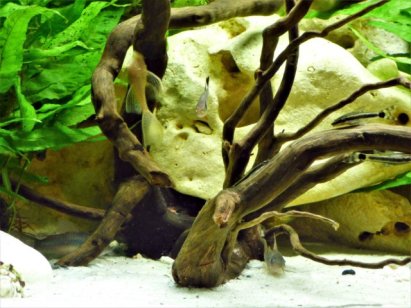
A good poem for a Saturday, written by Sue Vincent!

Sue Vincent's avatarSue Vincent's Daily Echo

They’re lurking in there,
This I know,
I put them there
Some time ago;
The are the fish
The eye forgot…
And have I seen them?
I have not.

*

A barbelled snout
I just might see
If I am looking
Carefully,
But over head
And wormlike tail
Their reticence
Has drawn a veil.

*

I’m told they do
Come out to play,
Though not, apparently,
By day.
They do their foraging
At night
And keep their colours
Out of sight.

*

Now given choice,
I might have bought
Some fishes
Of a different sort;
The type that might,
Occasionally,
Come out
That I might
Watch and see.

*

My loach had hitched
A ride with me,
Within a plant
He came for free.
But lonely loaches
Can’t be done,
It isn’t fair
To have just one,

*
And that is why
Within the water,
I have fish
I didn’t…

View original post 15 more words

3 Comments

Filed under Poetry, writing

Manners and Toxic Professional Relationships #amwriting

This last week’s #CockyGate furor has stirred a lot of people up and brought down some harsh criticism for the offending author.

Ceri Clark in her blog for Myrddin Publishing summed it up quite well in her article, The #CockyGate Trademark Kerfuffle: “The danger of letting this trademark happen is that authors could trademark other common English words. This could be the or billionaire, or how about star?”

This made me think about manners and the world of the ephemeral. Everything we say and do as public people is open to scrutiny—forever. To that end, I thought it time to reprise a post from 2017 regarding our personal reputations, Manners and Toxic Professional Relationships.


Working authors rely on the world of the internet. We must not only have our own website, but we must also have a Facebook page, a LinkedIn page, a Goodreads page, a Twitter page, and now we must also use Instagram.

In this electronic world, an icon or avatar is the pictorial representation of our alter ego or character. This is the image that appears beside our user-name on every comment we post on any forum on the internet and is our internet face.

We carefully select what we put up to represent us because we want people to see us as who we think we are.

The common courtesy that we would extend in a face-to-face conversation should extend into our online conversations. These conversations are places where we are represented in two ways:  by the picture we have selected as our ‘icon’ or ‘avatar’ and by what we write in the comments sections of public forums.

How we interact with other authors is public information and is visible to the world. When an interested reader Googles our author name, our online interactions at Goodreads and every other public forum will be available for eternity.

In my own life, I have learned to  phrase my comments with care, because some hypersensitive souls become deeply wounded by what they perceive as casual slights, and things blow up way out of proportion.

We must have a care about the way we behave.  We are judged by the way we act and react in every online interaction.

This brings me to the breach of common courtesy that brought this subject up in my mind. This turned up, posted on my Facebook author page, out of the blue:

Thank you Connie for the invite to your page coming to say hello and bring some love. Hope to have some in return here: https://www.facebook.com/—-/ Be sure to check out my writing group –(deleted group name)– where Writers can post blurbs, giveaways, get beta readers, and more here: https://www. facebook.com/groups/——-/

This was a surprise, as I had not ever to my knowledge met or spoken to this person, nor had I invited her to like my page. I don’t engage in those sorts of antics as I want readers to find my page. My author Facebook page is for readers to find my work, engage with me about it if they choose, and perhaps find a book they might like.

If you, as an author, are invited to ‘like’ another author’s Facebook page or website AND you choose to do so, it’s not appropriate for you to then post a comment on their page that you have done so and also post the links to your pages or books.  The proper way to inform the author you have ‘liked’ their page is to send them a personal message saying you have done so and include those links in that message.

Some of these offenders have no idea how rude such behavior is. However, most do and don’t care, as they’re only interested in advancing themselves. These are what I think of as Toxic Professional Relationships, and I refuse to interact with them unless they are playing nice. I set boundaries.

Random authors who post ads and links for their books and websites are not welcome on my Facebook author page. Their posts are immediately deleted. I won’t disparage them, but I refuse to be a part of their PR team.

If you are desperate for FB likes and believe anything will help, there are groups out there on Goodreads for authors who want to engage in “Facebook Page Like Parties.” When I first began as an author, I was advised to do that. I ‘liked’ about 50 authors’ pages, and only about 10 of those ‘liked’ me back.

I soon realized that Goodreads ‘Like’ Parties didn’t help me find readers, which is what an author needs to do. I made a personal commitment to ‘like’ the pages of authors whose work I enjoy and not worry about whether or not they like my page in return because it doesn’t matter.

We live and interact in a world of the electronic ephemeral. It has no physical place in our lives as a tree or an animal might, but the ramifications of what we do and say in that world are monumental.

The internet never forgets.

The internet is forever and deleting a comment you regret making won’t make it go away because it has already shown up in the in-boxes of all the users on that forum.  We communicate instantly and frequently with no filters between the brain and the keyboard.

In this world of instant communication and myriad opportunities for damaging your own reputation, it is critical to think before you do.

To that end, I offer up this list of suggested “manners” for authors in the world of the internet. I didn’t invent them; they are copied directly from the website “Common Sense Media” and made to apply to indie authors trying to make their way in the cruel world of the internet:

Rules for Online Etiquette

Context is everything. If you want to have a silly online name that conforms to the convention of a particular online community and only your friends there will see it, fine. But for more formal communication — like email addresses, posting comments, or anything to do with work or school — choose a respectable screen name (though not your real name) that you wouldn’t be embarrassed to utter out loud in front of, say, your grandmother. If it is an author related forum, it’s okay to use your author-name.

Double-check before you hit “send” or “post”:  Could something you wrote be misinterpreted? Is it so littered with slang that it requires a Ph.D. in Urban Dictionary to be understood? Were you upset when you wrote it? Check to see if it’s rude, mean, or sarcastic. If so, don’t post it.

Take the high road (but don’t boast about it). Chatting, texting, and status updates are all “in-the-moment” communication. But if there’s an escalating sense of rudeness, sign off. No good will come of firing off a nasty comment. Authors (who are touchy, hypersensitive creatures at best) will NEVER forget how you flamed them. You can always write out a response to get something off your chest … without sending it.

Grammar rules. Rumors of grammar’s demise have been greatly exaggerated. (I love that line!) But again, context is key. An IM to a friend can dangle as many participles as you want, but anything more formal — for example, a public online comment or a note to a colleague — should represent your best self. This applies to capital letters, too. By now, everyone knows that writing in all caps means that you’re shouting, but it bears repeating once your kid starts interacting online.

Keep a secret. In today’s world, photos, texts, and videos can be posted, copied, forwarded, downloaded, and Photo-shopped in the blink of an eye. If you think something might embarrass someone, get them in trouble, compromise their privacy, or stir up drama of any kind, keep it to yourself — and maybe delete it from your timeline or the thread for good measure.

Remember the Golden Rule. Don’t post something online that you wouldn’t say to someone’s face. If you do have something negative to say, discussing it in person is a better way to resolve your issues. Post nothing on someone else’s wall that you would not be glad to have on your own.

These suggestions translate directly to Do No Harm.

Behave with dignity and extend the common courtesies to others that you wish to have extended to you.


Credits and Attributions:

#amwriting: manners and toxic professional relationships by Connie Jasperson, © 2017, first published January 17, 2017, on Life in the Realm of Fantasy.

Common Sense Media  7 Rules to Teach Kids Online Etiquette By Caroline Knorr posted 5/5/2011, accessed Jan 1, 2017

Eye on Flat Panel Monitor, Image by © Royalty-Free/Corbis


16 Comments

Filed under writing

Five Thoughts On Writing #amwriting

Today, I have five thoughts for your consideration:

One: Some people don’t know what to do with commas and attempt to do without them altogether. This is not a good idea. Commas are to clauses what traffic signals are to streets—they govern the flow of traffic, although, in the case of sentences, the traffic is comprised of words, not cars.

  • Commas follow introductory words and clauses. Instead, they took a left turn.
  • Commas set off “asides.” Her sister, Sara, brought coffee.
  • Commas separate words in lists: We bought apples, oranges, and papayas for the salad.
  • Commas join two complete sentences, and once joined, they form one longer sentence. When used too freely, linked clauses can create run-on sentences.
  • Commas frequently precede conjunctions but only when linking complete clauses. When linking a dependent clause to a complete clause, don’t insert a comma. “I intended to come back to the Swords but found myself here instead.”

Consider how many sentences you link together with the word and. Could brevity strengthen your prose? Conjunctions are the gateway to run-on sentence hell. If you are deliberate in your use of conjunctions you will also use fewer commas. Craft your prose, but use grammatical common sense.

Two: Don’t write self-indulgent drivel. Go lightly with the praise, adoration, and general lauding of your characters’ accomplishments.

Three: Use active phrasing. There were Small colorful flowers growing grew in each raised bed. and some slightly Larger flowering plants growing grew around the fountain at the center. With a mixture of mild pastels and vivid colors, it was beautiful.

Four: Don’t waste words describing each change of expression and mood. Consider this hot mess of fifty-one words that make no sense: Eleanor looked at Gerard with concern. His voice changed so much in the telling of the story as his emotions came to the surface that it still seemed so raw, as if Timmy’s death had happened only days ago. In addition, his expressions also changed and his current one was akin to despair.

It could be cut down to fourteen words that convey the important parts of the sentence: Gerard’s raw despair concerned Eleanor, seeming as if Timmy’s death had happened only days before.

Five: Simplicity is sometimes best. “Delicious sounds captivated their eardrums. Please, just say it sounded amazing. If music touches the protagonist’s soul, it’s good to say so. We want to convey the fact the music was wonderful, and we don’t want to be boring. But when we try to get too artful, the prose can become awkward. Odors and sounds are part of the background, the atmosphere of the piece and while they need to be there, we don’t want them to be obtrusive, in-your-face. This is an instance of prose working better when it isn’t fancy.

Five thoughts to get your writing week started–now, go! Write like the wind!

15 Comments

Filed under writing

Character Development #amwriting

I see characters in books as if they were real people living through the events life hands them.

When a character in a book experiences confusion, it’s an opportunity for them to learn new things. If they are frustrated, they must devise a way around that frustration, and if they are tested to the limits of their endurance, they will become stronger. Keep this in mind when you are writing. Don’t make things too easy for your beloved characters—their struggle is the story.

  1. How is she emotionally destroyed by the events?
  2. How was her own personal weakness responsible for this turn of events?
  3. How does this cause the protagonist to question everything she ever believed in?
  4. What makes her pull herself together and just keep on going?
  5. How is she different after this personal death and rebirth event?

We want to write compelling characters who react to events in a realistic, natural way. We want the reader to believe it couldn’t have happened any other way, so we need to know WHO our character is on a personal level.

As we write the first draft, traits will emerge that create our characters, and this information is lodged in our mind. We know how and why they react a certain way, and so we write, write, write.

There are problems with this method. Sometimes I read work where the characters all sound and feel the same. When that is the case, it is the author speaking and not the characters. In a great book, the characters speak for themselves.

A good way to avoid that is to create a short history of each character’s life as it was before we met them in the first sentence of the story.

I do this once all the characters have been introduced.

This way, I know what their personalities are like, there is no blurring of reactions and comments. It’s crucial for me to know what will trigger reactions like anger or joy in each different person as these are things that will come into play as the events of the story unfold.

Knowing my characters makes their actions and reactions natural, and believe me, my trusty beta-readers will let me know when I have failed at that.

But there is a caveat to using this method of writing a history for your characters: Any background we write about a character’s life before the moment of the first meeting on the first page of the novel is for our eyes only. For me, this is my “meet and greet” moment, a chance to flesh them out so that when they appear, they are real in their actions and reactions.

The information you compile in this document must be kept off-scene. One of the main pitfalls of the first draft is the info dump. These boring stretches of background info are for you, the author, and are meant to set the character as a human being in your mind.

You know the rules, and don’t want info-dumps in the finished piece. But they slip into your work in insidious ways, so ask yourself if the information you are about to dispense is relevant to the character’s immediate need.

Does that background information advance the story?

  1. Resist the urge to include character bios and random local history with the introduction of each new face or place—let that information come out only if needed. Dispense background info in small packets and only as needed.
  2. Resist the urge to explain every move, every thought your character has. This is probably the most annoying thing an author can do.
  3. Is a flashback a scene or a recollection? Recollections are boring info dumps. Scenes take the reader back in time and make them a part of a defining moment. Write scenes, not recollections.

I write stories about people who might have existed, and who have their own views of morality. When writing, my characters stories don’t always follow the outline I had in mind for them. They sometimes go in directions I never planned for them to go, which throws my whole story-arc into disarray until I figure out how this new development fits.

In one of my current works in progress, a rewriting of my first novel, I never intended for my protagonist and a companion to fall in love. They did though, and that took the story in a direction that was a surprise to me back in 2010 when I first wrote it—and I think it’s one of my favorite side-plots. In the rewriting process, I have been able to use that relationship to great advantage.

In each story I write, I try to get into the characters’ heads, to understand why they make the frequently terrible choices that change their lives so profoundly.

In my work, I sometimes stretch the bounds of accepted morality, not for the shock value, but because the story demands it. And when I do this, I need to make sure that each individual character is a separate entity with unique emotional responses. They must be like real people, each one an individual who does NOT react to an event the same way their companions do.

Some people naturally work well under stress, and others don’t. Growth is essential to creating great character arcs. How characters grow and change under these events is the real story. Who they were on the first page should be an unfinished version of the person they are on the last.

My greatest trouble is in keeping the backstory off the page, so by having a file where it is documented, I don’t feel compelled to dump it into my narrative.

8 Comments

Filed under writing

#FlashFictionFriday: The Morning Crier by Shannon M. Blood

Every now and then I come across a poet whose work really strikes a chord in my soul.

Local Olympia area poet, Shannon M. Blood, produces work that is deep and lays bare the raw emotions we all keep hidden.

The Morning Crier appeared on her blog yesterday, and I found myself thinking about her prose and turns of phrase off and on all day.

When you get to the end of my reblogged sample, please click on the link to read the rest!


THE MORNING CRIER

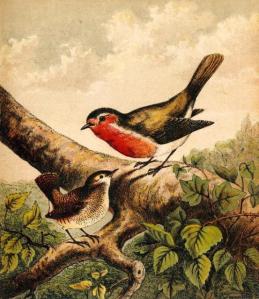
It’s 4 a.m. and Robin Redbreast

scrapes nails over chalkboard

Sól lights her pine-fed torch

stabs bloody fingers deep in earth


I play possum to your prod

shun the unwashed kiss

oak floor groans with your retreat

a williwaw births new gooseflesh


(read the rest of the Morning Crier at Tidbits by Shannon)


Credits and Attributions:

The Morning Crier, © 2018 by Shannon M. Blood, All Rights Reserved

Book Illustration of a Robin and Wren By Plate printer Joseph M. Kornheim (1810-1896) published by Frederick Warne & Co. [Public domain], via Wikimedia Commons


1 Comment

Filed under #FlashFictionFriday, Poetry, writing

Beta Reading VS. Editing #amwriting

Once again, the question of the difference between beta reading and editing has arisen in one the many forums I frequent on Facebook. So, I feel the need to revisit a post from 2015, Beta Reading VS. Editing. If you’ve already seen this post, nothing has changed in the world of editing and beta reading since this first appeared. But thank you for stopping by!


Indies rely heavily on what we refer to as beta readers to help shape their work and make it ready for editing. But in many online forums, authors use the term used interchangeably with editing, and the two are completely different.

And unfortunately, some indie published works are clear examples of work by authors who don’t realize the importance of working with an editor, although it is apparent that they have had assistance from beta-readers.

What is quite disappointing to me, is the many traditionally published works that seem to fall into the same lack-of-good-editing category, and I am at a loss as to why this is so.

So, what is the difference between a beta reader and an editor?

Well, there is a HUGE difference.

Editing is a process, one where the editor goes over the manuscript line-by-line, pointing out areas that need attention: awkward phrasings, grammatical errors, missing quote-marks, or a myriad of things that make the manuscript unreadable. Sometimes, major structural issues will need to be addressed. It may take more than one trip through to straighten out all the kinks.

  1. In scholastic writing, editing involves looking at each sentence carefully and making sure that it’s well designed and serves its purpose. In scholastic editing, every instance of grammatical dysfunction mustbe resolved.
  2. In novel writing, editing is a stage of the writing process in which a writer and editor work together to improve a draft by correcting errors and by making words and sentences clearer, more precise, and more effective. Weak sentences are made stronger, nonessential information is weeded out, and important points are clarified, while strict attention is paid to the overall story arc.
  3. The editor is not the author She can only suggest changes, but ultimately all changes must be approved and implemented by the author.

Beta Reading is done by a reader. One hopes the reader is a person who reads and enjoys the genre that the book represents. Beta reading is meant to give the author a general view of the overall strengths and weaknesses of his story.

The beta reader must ask himself:

  1. Were the characters likable?
  2. Where did the plot bog down and get boring?
  3. Were there any places that were confusing?
  4. What did the reader like? What did they dislike?
  5. What do they think will happen next?

Beta Reading is not editing, and the reader should not make comments that are editorial in nature. Those kinds of nit-picky comments are not helpful at this early stage because the larger issues must be addressed before the fine-tuning can begin, and if you are beta reading for someone, the larger issues are what the author has asked you to look at.

This phase of the process should be done before you submit the manuscript to an editor, ensuring those areas of concern will be straightened out first.

Editors and other authors make terrible beta readers because it is their nature to dismantle the manuscript and tell you how to fix it. That is not what you want at that early point–what you want is an idea of whether you are on the right track or not with your plot and your characters, and if your story resonates with the reader.

Do yourself a favor and try to find a reader who is not an author to be a first reader for you. Then hire a local, well-recommended editor that you can work with to guide you in making your manuscript readable, and enjoyable.

If you notice a few flaws in your manuscript but think no one else will notice, you’re wrong. Readers always notice the things that stop their eye.

In my own work, I have discovered that if a passage seems flawed, but I can’t identify what is wrong with it, my eye wants to skip it. But another person will see the flaw, and they will show me what is wrong there.

That tendency to see our writing ‘as it should be and not how it is’ is why we need other eyes on our work.


Credits and Attributions:

Beta Reading VS. Editing, by Connie J. Jasperson, © 2015 first published on Life in the Realm of Fantasy.

31 Comments

Filed under writing

Character description: too much or not enough? #amwriting

I love eBooks for the simple reason I have over 800 books, and I don’t have to dust them. I do buy paper books, but only those on writing craft or research for my work.

I have managed to get nearly every book I ever loved as an eBook. Every week I add at least two more books to my library. I have become a fan of hundreds of new authors, most of them indies.

Every now and then I read a book that is traditionally published, sometimes taking a dip into general fiction. I did that this week, reading a book I saw advertised on twitter. I picked it up, knowing I might hate it because the critics loved it.

I can live without a happy ending, and even with no ending at all. Not every story ends happily. But please, make the pages that come before that lack of ending something more than self-indulgent hero worship of your protagonist. I get that you’re in love with your characters. I’m in love with mine too.

Just don’t wax poetic about their magnetic beauty on every third page, please.

Unfortunate phrasings that yank me out of a book:

“She lay there staring with her creamy blue eyes, water pooling in the corners.”

“Her eyes were the same color as the deep purple velvet drapes.”

Meh. Enough about their eyes already. Some authors go to incredible (and at times, awkward) lengths to force their personal creative vision of what a character looks like on the reader.

I don’t know about you, but I don’t want to be told what to think when I am reading a book. What I consider beautiful is not necessarily attractive to someone else.

But this brings us to a dilemma that many authors seem to face. How do you describe a character in such a way that the reader will find them as attractive as you want them to be?

You must give the reader enough of a general description that they can fill in the blanks with their imagination.

Generally, you want to show a character’s coloring, hair style/color, eye color, general physical description. Especially, you must somehow mention anything that is unique about their appearance. If they are not too fastidious, mention it, and the same goes for if they are obsessively fastidious.

Actions can reveal physical characteristics and mannerisms. Consider how they fix their hair, what style of clothes they gravitate to, even how they move and interact with both the environment and other characters. What are their habitual facial expressions?

Offer this information up in bits over a period of time rather than dumping it in a police-blotter style of delivery. Just don’t go on and on giving minute, unimportant details.

In my Tower of Bones series, the men in Edwin’s family have this sort of cachet that makes them irresistible to all women. It is the Goddess Aeos’s way of ensuring that the girl she has selected for them falls in love with them, and their bloodline is continued.

But what do Edwin and his father (and grandfather) look like? Edwin and his family are a lot like my uncles were as young men, tall, blondish, blue-eyed, and physically strong from working on their farm. They’re rather average, nothing spectacular. They’re good-looking, but aren’t overly handsome. However, there is something about them that causes trouble in a certain strata of female society that has a rather free approach to life.

So what is this charisma these men have? (And that my uncles did not have.)

Here is where I romanticize them. To most men, they seem no more intriguing than any other person, but to women, they are an irresistible banquet of masculine pheromones. Since they do a lot of traveling, this creates opportunities for mayhem. While writing the Tower of Bones series, I’ve had a lot of fun with that plot-line, especially when it came to Wynn Farmer in Mountains of the Moon.

For my other characters in various books, again we write what we know. In my mind, all my characters are exceedingly good-looking in their own different ways. I am of British Isles stock as is most of my family, but I live in a town filled with people of all races and origins. Throughout my life, my neighbors have been from such diverse places as Japan, Mexico, Alabama, Norway, Cambodia, Nigeria, India, and Minneapolis.

Thus, in my head, my characters are of all races, and all are attractive to me.

Huw the Bard is darkly handsome, blue-eyed with black curling hair, and has a roguish charm that women find irresistible. An incurable romantic and on the run, he loves many, but gives his heart only to a few.

Billy Ninefingers is exceptionally tall and strong, sandy-haired, with a boyish face. He’s competent and a strong leader with a firm sense of justice. He is in love with only one woman, but there are complications.

Reina Jacobs is a middle-aged woman, a retired pilot who has been conscripted back into active duty. She has short iron-grey hair and is a cyborg. She is attracted to Ladeaux, a pilot of her age, but while they are working together, she won’t fall into a romance.

Personally, I don’t find Prosperine as painted by Dante Gabriel Rossetti to my taste, although as a painting it is flawlessly executed. But millions of people find her beautiful, and he certainly did. His model, Jane Morris, was considered a great beauty in her day.

Yet the images of her, both painted and photographed, portray her as sulky-looking, which is not attractive to me at all.

I choose not to beat the reader over the head with my personal vision, other than the general description for the reader to hang their imagination on. I want the reader to see beauty and magnetism in the way that is most appealing to them. I hope that mannerisms, conversations, and other characters’ opinions convey the image the reader wants to see in a protagonist.

And this is the way it is for every author. We are painters who use words to show an image. We want to the reader to see what they believe is beauty.

Your vision of beauty is not what your readers see, and to force too many details on them ruins the flow of the tale.

A good general description, with hints or comments about their beauty or lack thereof, is all that is needed. If you provide the framework, the reader’s mind will supply the rest.

15 Comments

Filed under writing

Billy Ninefingers #amreading #books

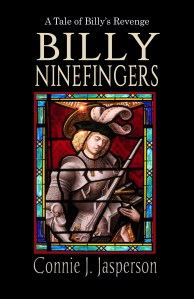
My newest novel in the Billy’s Revenge series, Billy Ninefingers is now on sale at Amazon and all other fine eBook sellers. A literary fantasy, it is set in the same world as Huw the Bard and features some of the same characters.

Billy’s story was begun in 2010. My original view of my protagonist, Billy MacNess, was more callous, more of a pirate than he is today.

For a variety of reasons, I set Billy’s novel aside and moved on to writing Huw the Bard, which was a more intriguing story to me at the time. (I’m still in love with Huw.) Billy appears toward the end of Huw’s book, much as he is today. But, instead of going back to Billy’s story, I wrote three more novels in the Tower of Bones series, and many short stories, both contemporary and fantasy.

In the back of my mind, I always intended to get back to Billy’s story, but never really did until 2016. Over the course of six years, he had appeared in several other works set in his world, which set him and his circumstances more clearly in my mind.

I went back and pulled the original manuscript out of storage and rediscovered a character I had always loved but didn’t know well. With a new goal in mind, I began rewriting it.

Billy’s story is more lighthearted than Huw’s, but it does have its dark moments. His loyal dog, Bisket, keeps him grounded when everything is about to fly apart.

Excerpt: About an hour before supper, a knock sounded on his door. “Captain Billy! It’s me, Willie.”

“I know it’s you. What do you need?”

“It’s Bisket. He almost fell down that old, dry well again. This time he was chasing a skunk.”

Billy opened the door, gazing down at his beloved yellow hound of uncertain parentage. All he needed was for the pooch to fall into a well. Reaching down with his good hand, he scratched Bisket’s ears, receiving an apologetic lick in return. “What am I going to do about you?”

“I only just barely caught him by the tail before he went down.” Willie shivered. “I don’t think Slippery Jack would have let you lower him down it again, just to save a dog that’s stupid enough to keep falling down the same well.”

Billy laughed. “You’re probably right. Lay some boards over it. I’ll do something about it next week, once I’ve healed up a bit. There’s a lot of things I’ve let go around here, and filling in that abandoned well is one of them.” Considering all the projects he and his dad had never gotten around to, he thought that at least he wouldn’t be too bored.

Billy’s story had always intrigued me. I admired how he took the hard knocks life had handed him and made them into something he could live with. The people he attracted were wonderful, and in so many ways their story was his story too.

And so, dear readers, Billy Ninefingers is now available at all fine eBook retailers, including Amazon, Kobo, Nook, Apple, and many, many more. He is also available in paper from Amazon.


But first, THE BLURB:

Billy Ninefingers knows three things.

First, the feud that cost him the use of his sword hand is not over.

Second, if he doesn’t pull himself together and become the leader the Rowdies need, he’ll lose everything his father left him.

Third, despite Bastard John’s best efforts, there’s no way he’ll ever take up farming.

All he needs is a plan, a mountain of luck, and the love of a good woman.

Well, she doesn’t have to be good, but a few scruples would make a nice change. A plan would be nice too, since luck is never on Billy’s side.

Billy Ninefingers knows one thing.

He’s doomed.


Billy Ninefingers is available at Amazon for $2.99 Kindle and $12.99 paperback

Not a fan of Amazon? Click here to purchase Billy Ninefingers from these fine Ebook Sellers for $2.99

5 Comments

Filed under writing