A few years ago, I attended a seminar offered by Lindsay Schopfer, From Body Language to Brawls. While I have a method for describing fight scenes, I liked the way he pointed out that action is about so much more than merely brawling. The concepts he presented were in line with my theory that every scene is an action scene, even the quieter moments.
 Lindsay is also a screenwriter. He offered five thought-provoking questions about planning the action in each scene.
First, he pointed out that thinking is an action scene, as are conversations. In his own writing, he asks himself, “What does this character do while thinking?” He explained that a side character with a certain amount of screen time, but who isn’t the POV character, can feel real when they have a small personal habit that appears from time to time.
However, this is one area where visuals are important, a moment when new writers should be careful. If we give one or two side characters an occasional personal habit, we won’t muck up the visuals with a barrage of personal tics. They are like salt and garlic seasoning: some is good, but too much is disgusting.
Another question he asks of his characters is this: “What does their body language show about them when they are worried?”
That is a good question. At some point in every plot, if our characters aren’t worried, they should be. So, how do we show our characters’ individual ways of handling worry? We all exhibit signs of anxiety in different ways, and writing it in a coherent way takes some thinking and planning.
Lindsay asks three more questions of his characters:
- How do our characters look when they’re happy or excited?
- How do they look when they’re angry?
- How do they look when they’re depressed?
I’ve talked at length about how we can show these emotions through facial expressions or physical reactions, combined with internal dialogue or conversations. But for me, the hardest part of writing is balancing visual indicators of emotion with exposition that shows the deeper, internal clues.
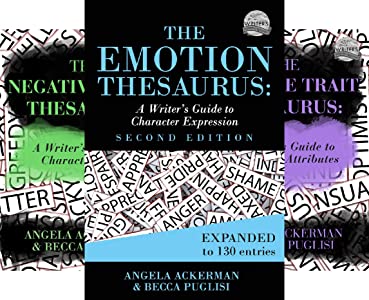 An excellent resource that I regularly recommend is the Emotion Thesaurus by Angela Ackerman and Becca Puglisi. This guide offers helpful hints for showing what a character is feeling when you know what you need to say but not how to phrase it.
However, I must emphasize that discretion is crucial when showing emotions. I say this because when a character’s facial expressions take over the scene, they become cartoonish, two-dimensional displays of emotion with no substance.
A story is like a pond full of words. The words are the surface, and below the surface are several layers. The inferential layer is the layer in which readers draw conclusions from the clues we offer them.
We want to hint at the reasons for the physical reactions. We do this with small bits of exposition. It takes work and practice to write a narrative without telling the reader what to experience.
We must use words that offer the most information in the least amount of space so the words we choose make the narrative worth reading.
I’m still trying to master this.
I do put a book down unfinished when an author leans too heavily on slowly painting visual descriptions of the characters’ internal struggles. Eyebrows regularly going up and down as if they operate independently on every page could be trimmed back to only when necessary.
Another thing came up in this seminar, something I firmly believe: word count matters in a fight scene.
Detailing a war will involve page after page of discussion because that conflict drives the story. But when a fistfight or sword fight takes up three pages of description, I can’t suspend my disbelief as a reader. I say this because physical fights in real life are fast, violent, and over in a space of ten, fifteen, or twenty minutes. It’s not humanly possible to go on and on with no rest. That is why matches between professional boxers are broken into rounds. They fight a while, rest a while, and so on for 15 rounds.
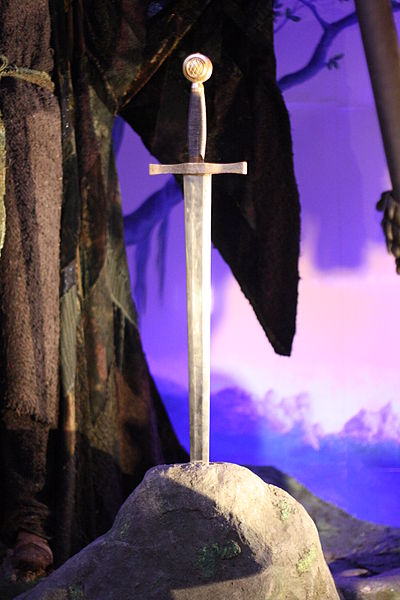
Excalibur London_Film_Museum_ via Wikipedia
Also, if you are writing about sword fights, remember this: they are physically exhausting. At the Olympic level, competitive fencing matches have rest breaks: each bout continues until one fencer scores 15 hits, or until the 9-minute total fencing time is reached. Those 9 minutes are split into three 3-minute periods with a 1-minute break separating each period. That amounts to 12 minutes total, and at the end, both combatants are exhausted.
Mob violence is different. It can go on and on for hours or days. Mob violence is war on a smaller, local level.
So, when a fight scene that should be over in twenty minutes at most runs on for more pages than my patience can handle, I will skip forward, or worse, set the book aside.
Every November, I use those thirty days to write at least 50,000 new words as quickly as possible. In the process, I lean too heavily on my crutch words, relying on a lot of smiling and shrugging.
During revisions, I look for my crutch words. They’re markers for the second draft, words signifying scenes where more effort is needed to flesh them out. This is where writing becomes work.
If you haven’t seen this before, here is a list of telling words that often find their way into a first draft, and sometimes into the final:
- Admiration: Her admiration was clear. (How was it clear? Did someone notice it?)
The rest of my “code words” show up in sentences and paragraphs the same blunt way in that first draft and inspire the same kind of questions:
- Affection
- Anger
- Anguish
- Anticipation
- Anxiety
- Awe
- Confidence
- Contempt
- Defeat
- Defensiveness
- Denial
- Depression
- Desire
- Desperation
- Determination
- Disappointment
- Disbelief
- Disgust
- Elation
- Embarrassment
- Ethical Quandary
- Fear
- Friendship
- Grief
- Happiness
- Hate
- Inadequacy
- Indecision
- Interest
- Jealousy
- Love
- Lust
- Powerlessness
- Pride
- Regret
- Resistance
- Revulsion
- Sadness
- Shock
- Surprise
- Temptation
- Trust
- Unease
- Weakness
 As stories unfold on paper, new characters enter. They bring their dramas and the story goes in a different direction than was planned. When I meet these imaginary people, I assign their personalities a verb and a noun.
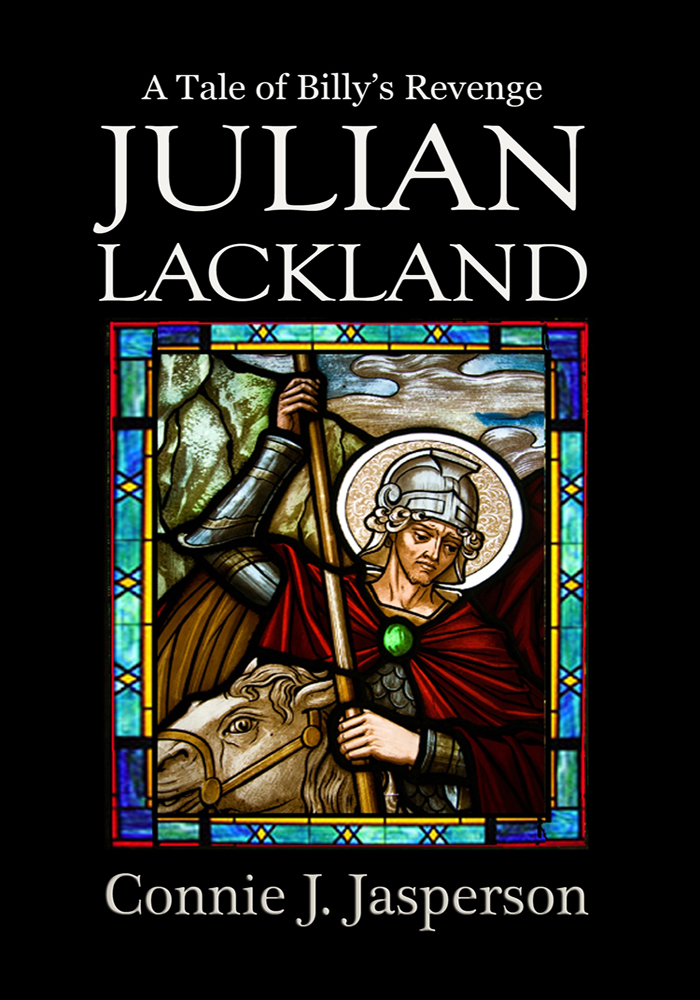 Julian’s noun is chivalry (Gallantry, Bravery, Daring, Courtliness, Valor, Love). He sees himself as a good knight and puts all his effort into being that person. He is in love with both Mags and Beau.
 Next, we assign a verb that describes their gut reactions, which will guide how they react to every situation. They might think one thing about themselves, but this verb is the truth. Again, we also look at sub-verbs and synonyms:
 Have you thought about the two words that describe the primary weaknesses of your characters, the thing that could be their ultimate ruin? In the case of Julian’s story, it was:
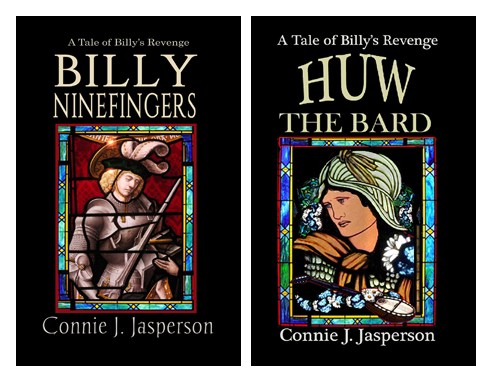 Julian Lackland took ten years to get from the 2010 NaNoWriMo novel to the finished product. He spawned the books
 I’m not a Romance writer, but I do write about relationships. Readers expecting a standard romance would be disappointed in my work which is solidly fantasy. The people in my tales fall in love, and while they don’t always have a happily ever after, most do. The other aspect that would disappoint a Romance reader is the shortage of smut.
 In his book
 When a beta reader tells me the relationship seems forced, I go back to the basics and make an outline of how that relationship should progress from page one through each chapter. I make a detailed note of what their status should be at the end. This gives me jumping-off points so that I don’t suffer from brain freeze when trying to show the scenes.
 I think our characters have to be a little clueless about Romance, even if they are older. They need to doubt, need to worry. They need to fear they don’t have a chance, either to complete their quest or to find love.
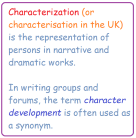
 When I begin writing a first draft, I try to approach writing each scene as if I were shooting a movie. We know that each conversation is an event that must advance the story, but it must also give us glimpses of who each person is.
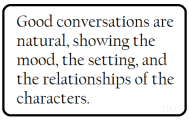 Having the fundamentals of the conversation to work with sharpens the scene in my mind, enabling me to frame it properly. Once I know what they are talking about and have the rudimentary dialogue straight, I add the scenery. Then, I insert the props and add the speech tags. The interaction grows, shedding more light on their relationship.
 My above sample is not perfect, as it is from the first draft of a short story I never actually finished, but you get the idea. We learn more about the characters’ relationship with each other and see their place in this environment. The layers that form this scene are:
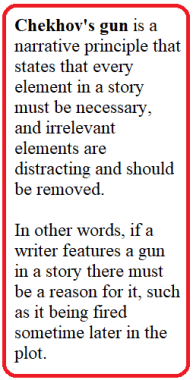 Set dressing (the props you place in the scene) shows the immediate environment. Having characters interact with props provides opportunities to insert hints that a deeper backstory exists. However, only have them interact with props that are organic or crucial to the story. This eliminates the problem of
  By beginning with the conversation and envisioning each scene as if I were filming a movie, I can flesh it out and show everything the reader needs to hang their imagination on. The reader’s mind will supply the details of the immediate setting depending on the clues I give.
 In his book,
 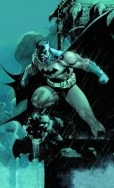 Batman is a
  Apollo 13 (April 11–17, 1970) was the seventh crewed mission in the
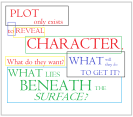
  No matter what genre we write in, when we design the story, we build it around a need that must be fulfilled, a quest of some sort.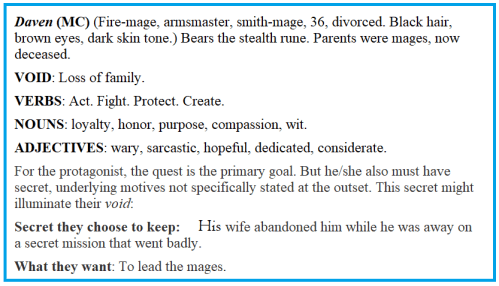
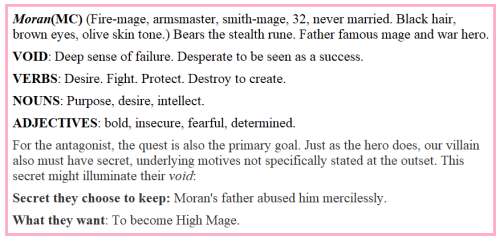
 I recently had a manuscript undergo a complete change from what I originally planned. The original antagonist had such an engaging story that he had become more important to me than the protagonists.
 As a reader, I dislike discovering the author is at a loss as to what their protagonist wants. Without that impetus, they don’t have a good reason for the villain to be there either. Random events inserted to keep things interesting don’t advance the story, but motivation does.
 You’ve taken them through two revisions and think these characters are awesome, perfectly drawn as you intend. The overall theme of the narrative supports the plot arc, and the events are timed perfectly, so the pacing is good.
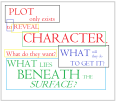 But in real life, I often find little distinction between heroes and villains. Heroes are often jackasses who need to be taken down a notch. Villains will extort protection money from a store owner and then turn around and open a soup kitchen to feed the unemployed.
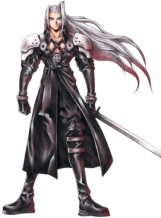 Both heroes and villains must have possibilities – the chance that the villain might be redeemed, or the hero might become the villain. As an avid gamer, I think of this as the “
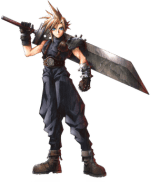 In Final Fantasy VII, the 1997 game that started it all, we meet Cloud Strife, a mercenary with a mysterious past. Gradually, we discover that, unbeknownst to himself, he is living a lie that he must face and overcome to be the hero we all need him to be.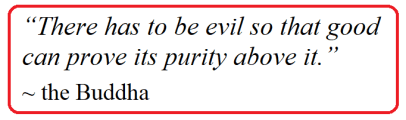
 I try to keep the ensemble narrow in my work, limiting points of view to only one, two, or three characters at most. I keep the core cast limited to four or five, as it takes a lot of effort to show more people than that as being separate and unique.
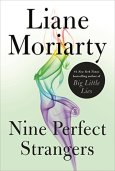 Moriarty’s characters are immediately engaging. They sucked me into their world in the opening pages. I couldn’t set the book down, as I wanted to know everyone’s dark secrets. I was hooked; I had to understand what led these people to book themselves into that exceedingly unusual health spa.
 The guests are immediately thrust into an unknown and possibly dangerous environment. The food they are offered is high quality but not what they are used to and varies from guest to guest.
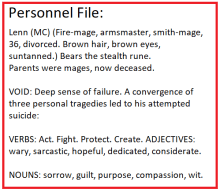 Character Names. I list the essential characters by name and the critical places where the story will be set.
 These exercises will only take a few minutes unless you want to spend more time on them. They’re just a warmup, getting you thinking about your writing project. Each post will tackle a different aspect of preparation and won’t take more than ten or fifteen minutes to complete. By the end of this series, my goal is for you to have a framework that will get your project started.
 I recommend you create a file that contains all the ideas you have in regard to your fictional world, including the personnel files you are creating. I list all my information in an Excel workbook for each book or series, but you can use any kind of document, even handwritten. You just need to write your ideas down. See my post,
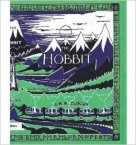
  So, who is the protagonist of my intended story? Truthfully, in some aspect or another, they will be the person I wish I were. That is how it always is for me—living a fantasy in the safe environment of the novel. Bilbo was J.R.R. Tolkien’s younger self, an inexperienced man discovering the broader world through his wartime experiences. Luke Skywalker was the hero George Lucas always wanted to be.
 If we know their void, we should write it down now, along with any quirky traits they may have. Next, we decide on verbs that will be the driving force of their personality at the story’s opening. Add some adjectives to describe how they interact with the world and assign nouns to show their characteristics.
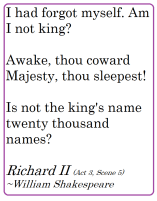 Making lists of names is essential. You want their spellings to remain consistent and being able to return to what you initially planned is a big help later on. When we commence writing the actual narrative, each character will have an arc of growth, and sometimes names will change as the story progresses. Do remember to make notes of those changes.
 Unfortunately, although we asked for a ground-floor condo, we were assigned a second-floor unit. My husband is managing the stairs – slowly. On the good side, we have the god’s-eye view of a wide stretch of beach, the perfect deck overlooking it all.
 Writing is going as well as ever, a little up and down. I’m building the framework for a new story, which I will begin writing on November 1st. The world is already built; it’s an established world with many things that are canon and can’t be changed. So, I’m working my way through the bag of tricks that help me jar things loose.
 Protagonist HER: Anna Lundquist, an unemployed game developer. She inherited an old farm and has moved there. She embarks on creating her own business designing anime-based computer games. Anna is shy, not good with men unless discussing books or computer games. VOID: Loss of family. VERBS: Create, Build, Seek, Defend, Fight, Nurture. Modifiers: Adaptable, ambitious, focused, independent, industrious, mature, nurturing, private, resourceful, responsible, simple, thrifty.
 Antagonist HIM: Matt Gentry, owner of MGPopularGames and Anna’s former boss, is angry at Anna for leaving his firm. On a skiing trip with an old fraternity brother who owns an art supply store in Starfall Ridge, he sees her entering Nic’s coffeeshop. Matt discovers that Anna is now living in that town. He learns she has started her own company and is building an anime-based RPG. He goes back to Seattle and files an injunction to stop her, claiming that he owns the rights to her intellectual property. VOID: Narcissist. VERBS: Possess, Control, Desire, Covet, Steal, Lie, Torment.