Dark energy part two—a deeper dive into motivation #amwriting

In the previous post, we discussed how backstory illuminates and makes our characters’ motives logical and reasonable.
WritingCraft_Dark_EnergyBut we all know infodumps are an insidious poison, so how do we apply this backstory without losing the reader?

I spend a lot of time thinking about plot and character, imagining the story, and writing. I have a vision of the story but getting it down isn’t easy. Ideas slip away unless I get them on paper first.

This is the method I use. I create a separate document that is for my use only, and I label it appropriately:

BookTitle_Plot_Core_Conflict.docx

I boil the conflict down to a few paragraphs and refer back to it whenever I find myself rambling.

Most of us know what motivates our protagonist. But our antagonist is frequently a mystery, and the place where the two characters’ desires converge is a mystery. We know the what, but the why eludes us. This can make them less important than the protagonist. Yes, the protagonist is the character we want the reader to sympathize with. But we also want the reader to see the reasoning behind the enemy’s actions, or they won’t be able to suspend their disbelief.

What follows is an example of the short document that is my reminder. These paragraphs summarize the story and detail what motivates the characters. It keeps me focused when I have lost my way:

The root of the matter: The Dark God has assaulted and imprisoned his brother in an effort to steal his wife, and the universe intervened. Now, the gods can only act against each other through the clergy of their world. However, they can corrupt another deity’s clergy through a tainted physical object.

The story: The protagonist and antagonist begin as members of a sect of hunter-mages sworn to serve the Goddess that rules their world. Most of the time, they are mages working as smiths and masons and working as ordinary community members in other crafts. Sometimes they are called to hunt rogue mages and empathically gifted healers who follow the Dark God.

dream catcherCharacter A is a shaman, a fire-mage smith and warrior, and is slated to be the next War Leader of the tribes. His shamanic purpose is to unite the people, both the tribes and those citadels who have turned tribeless. He is the chosen champion of the Goddess his sect of mages serves, and his success or failure will determine her fate.

Character A must survive the high shamanic trial to become War Leader. Then he must defeat the Dark God’s champion if he is to have the chance to fulfill his shamanic purpose. Unfortunately, his closest childhood companion is now the champion of the dark side.

Once a devoted follower of the Goddess, Character B triggered a mage trap and was forcibly converted by the Dark God. Character B has always been a traditionalist, a firm believer that the way of the tribes is the only way to keep the people strong. The Dark God twists his loyalty to the tribes and his tribal heritage into a weapon he can use to conquer the Goddess and annex her world. The deities are immortal and can’t be killed, so his quest for total domination threatens the universe’s balance. Each world must have its creator deity, and there can only be one deity for each world.

Before his conversion, Character B was the most dedicated of the sect of rogue mage hunters. After triggering the mage trap, he sees them as the enemy, a cult that stifles and weakens the tribes. He is determined to lead the tribes to conquer the tribeless citadels and regain the power the tribes once wielded.

The Dark God is adept at twisting people’s deeply held beliefs to serve his purpose. He is the ultimate antagonist, acting through the tainted artifact that was able to corrupt Character B. Therefore, Character A’s ultimate goal must be to destroy the mage trap in Character B’s possession. In doing so, he removes Character B’s source of dark power and can fight him on equal ground.

Character A represents teamwork succeeding over great odds. Character B represents the quest for supremacy at all costs.

  • Both must see themselves as the hero.
  • Both must risk everything to succeed.
  • Both must believe they will ultimately win.

When I create the personnel file for my characters, I assign them verbs, nouns, and adjectives, traits they embody. Verbs are action words that reflect how they react on a gut level. Nouns describe their personalities.

They must also have a void – an emotional emptiness, a wound of some sort. Character B knows he has lost something important, something that was central to him. But he refuses to believe he is under a spell of compelling, a pawn in the Gods’ Great Game. He must believe he has agency—this is his void.
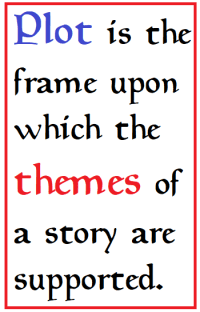
plot is the frame upon which the themes of a story are supportedThis void is vital because characters must overcome fear to face it. As a reader, one characteristic I’ve noticed in my favorite characters is they each have a hint of self-deception. All the characters – the antagonists and the protagonists – deceive themselves in some way about their own motives.

My task is to ensure that the stories of Characters A and B intersect seamlessly. Motivations must be clearly defined.

I ask myself what their moral boundaries are. This is where I explore the lengths they will go to achieve their goal. I like to know their limits because even cartoon supervillains draw the line at doing something.

Even if it is only refusing to eat Brussels sprouts.

Like me.

The way my creative mind works, plots evolve out of the characters as I begin picturing them. When I sit down to create a story arc, my characters offer me hints as to how their story will develop.

This evolution can change the course of what I thought the original plot was and sometimes does so radically.

But at some point, the plot must solidify.

The story must finally have an arc that explores the protagonist’s struggle against a fully developed, believable adversary.

My method works for me. It might work for you and takes very little time, only a few paragraphs describing the core of the conflict.
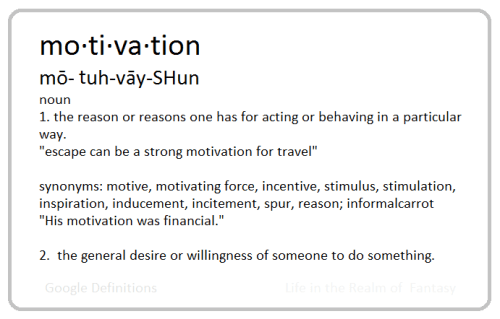
Motivation meme

2 Comments

Filed under writing

Dark energy—villainous motivation #amwriting

One character archetype essential to any tale is the villain. Yet, despite being crucial to the story, this character is often less developed and two-dimensional.

WritersjourneysmallIn his book, The Writer’s Journey, Mythic Structure for Writers, Christopher Vogler discusses how the villain of a piece represents the shadow. The enemy injects the narrative with the momentum of dark energy, powering the plot.

Some of the best narratives I’ve read feature the antagonist as the protagonist. We want to see them succeed, yet we fear they will and know it can’t end well. This tension creates a memorable narrative.

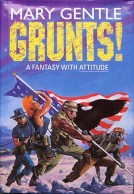
One novel that stuck with me was Grunts! by Mary Gentle. She features the orcs as the protagonists, and one feels a great deal of sympathy for the devil.

From Wikipedia:

Grunts! (1992) is a satiric fantasy novel by British writer Mary Gentle. It is set in a basic fantasy world taken from the usual The Lord of the Rings mould, with orcs and elves using magic and typical medieval weaponry, but it plays heavily on black comedy and strong doses of violence and graphic description, frequently depicting scenes “over the top.”

Grunts!The story follows a group of orcs who always find themselves on the front lines of battle against the carefully prepared and always triumphant forces of good. The orcs decided to organize themselves and fight back. As a satire of high fantasy the novel mocks most of the conventions of the genre from using traditional villainous races, orcs, as the protagonists, to having the noble characters have much less than noble motivations and secrets.

The opening of the book plays up the orc warleader sent to reclaim a weapons cache in preparation for the ‘Last Battle’ between good and evil, which is well on its way. They are assisted by a pair of halflings whose cute demeanor is contrasted with extremely violent acts. [1]

In any narrative, the shadow provides opportunities for contrast. Whether a person, a creature, or a natural disaster, the antagonist represents darkness (evil), against which light (good) is shown more clearly. Also, the shadow, whether a person, place, or thing, provides the roadblocks, the reason the protagonist must struggle.

Large predatory animals will be aggressive toward humans because hunters need a large habitat and hefty prey. They are unpredictable and will attack when we enter what they see as their territory. This is plot-fodder for many a scary horror novel.

Storms and natural disasters make perfect antagonists. Everyone loves a good disaster novel or movie because when nature throws a tantrum, it’s terrifying and deadly. People love nothing more than tales of humanity surviving and overcoming the worst that nature can do.

Animals and natural disasters are straightforward antagonists with little room for backstory.

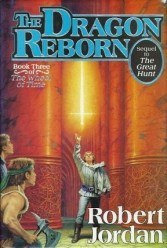
WoT03_TheDragonRebornHowever, when the antagonist is a person, I ask myself, why this person opposes the protagonist? What drives them to create the roadblocks they do? Why do they feel justified in doing so?
Perhaps you are writing a memoir. Who or what is the antagonist? After all, memoirs are written to shed light on the difficulties the author has overcome, so who or what frustrated your efforts? In some autobiographies, it is a parent or guardian. Other times it is society, the standards and values we impose on those who don’t fit into the slots designated for them.

For many novels, the enemy is the protagonist’s inhibitions and self-doubt.

In others, the two main characters have a sharply defined good versus evil chemistry. (Trust me, the antagonist is a main character, or the hero has nothing to struggle against.)

The struggle makes the story. The characters on both sides of the battle must recognize and confront the darkness within themselves. They must choose their own path—will they fight to uphold the light? Or will they take the easier way, following the shadow?

When the protagonist must face and overcome the shadow on a profoundly personal level, they are placed in true danger. The reader knows that if the hero strays from the light, they will unknowingly offer up their soul.

The best shadow characters are shown to have many layers, and not all of them are bad. They are charismatic because we can relate to their struggle. We may hope events will change them for the better but know in our hearts they won’t.

Characters portrayed as evil for the sake of drama can be cartoonish. Logic must support their actions, or the villain is not believable.

The most fearsome villains have deep stories. Yes, they may have begun life as unpleasant children and may even be sociopaths. Something started them down that path, reinforcing their logical reasons for what we consider villainy.

Speculative fiction has a trap waiting to snare the unwary writer. When the plot centers around the pursuit of a desired object, authors spend enormous amounts of time working on all the supporting reasons for the quest. They give the hero firm, logical reasons for struggling to acquire the Golden McGuffin.

Where some fantasies fail is in depicting the enemy. The villain must also have a plausible explanation for going to the lengths they do to thwart our heroes.

A mere desire for power is NOT a good or logical reason unless it has roots in the enemy’s past. Why does Voldemort desire that power? What fundamental insecurity drives them to acquire absolute control over every aspect of their life and to exert control over the lives of their minions?

LarrysPostRapturePetSittingService_EllenKingRiceWe must remember that the characters in our stories don’t go through their events and trials alone. We drag the reader along for the ride the moment we begin writing the story. They need to know why they’re in that handbasket and where the enemy thinks they’re going, or the narrative will make no sense.
Ask yourself a few questions:

  • What made your villain turn to the darkness?
  • What events gave them the strength and courage to rise above the past, twisted though they are?
  • What is the void that drives their agenda?
  • What do they hope to achieve?
  • Why do they believe achieving their goal will resolve the wrongs they’ve suffered?

None of this backstory needs to be dumped into the narrative. It should emerge in tantalizing bits and hints as the plot progresses and conversations happen.

We must make the hero’s ultimate victory evoke emotion in the reader. But we also want them to think about the dilemmas the characters have faced.

The villains we write into our stories represent humanity’s darker side, whether they are a person, a dangerous animal, or a natural disaster. They bring ethical and moral quandaries to the story, offering food for thought long after the story has ended.


Credits and Attributions:

[1] Wikipedia contributors, “Grunts!,” Wikipedia, The Free Encyclopedia, https://en.wikipedia.org/w/index.php?title=Grunts!&oldid=1117040155 (accessed August 6, 2023).

5 Comments

Filed under writing

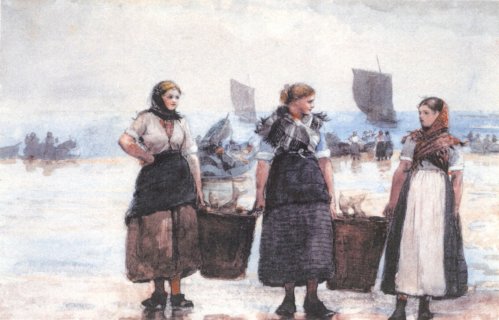
#FineArtFriday: Fisherwomen, Cullercoats by Winslow Homer 1881

Homer,_Winslow_-_'Fisherwomen,_Cullercoats',_1881,_graphite_&_watercolor_on_paperArtist: Winslow Homer  (1836–1910)

Title: Fisherwomen, Cullercoats

Date:   1881

Medium: watercolor and graphite on paper

Dimensions: height: 34.2 cm (13.4 in); width: 49.2 cm (19.3 in)

Collection: Honolulu Museum of Art

What I love about this painting:

Homer shows us a foggy morning at the beach, capturing the quality of light on the strand at Cullercoats, Tyne and Wear, England. He paints the background with an impressionist’s eye and gives us realistic portraits of the working women whose labors fed the country.

The fish baskets are heavy, but they share the load. Their sleeves are rolled up for work, and skirts are shorter than if they were in town—no one wants wet skirts dragging around their ankles.

I love the way he shows these women as they were that day, treating them with respect. During his lifetime, Winslow Homer depicted men and women of all races, slaves and former slaves, and soldiers. He showed us people who worked hard, not giving us caricatures but painting portraits of real people.

Homer loved the sea and traveled widely, painting everywhere he went. Critics sometimes dismiss his work as “calendar art, appealing to the unschooled masses.” But think about it – calendars and magazines often were the only art poor and working-class people had in their homes. If you don’t have access to art, how can you become “schooled” in it? Some art critics are a little too schooled.

If you are interested in knowing more about the art of Winslow Homer, this documentary is excellent: FAKE OR FORTUNE SE1EO4 WINSLOW HOMER – YouTube

About the Artist, via Wikipedia:

Homer started painting with watercolors on a regular basis in 1873 during a summer stay in Gloucester, Massachusetts. From the beginning, his technique was natural, fluid and confident, demonstrating his innate talent for a difficult medium. His impact would be revolutionary. Here, again, the critics were puzzled at first, “A child with an ink bottle could not have done worse.” Another critic said that Homer “made a sudden and desperate plunge into water color painting”. But his watercolors proved popular and enduring, and sold more readily, improving his financial condition considerably. They varied from highly detailed (Blackboard – 1877) to broadly impressionistic (Schooner at Sunset – 1880). Some watercolors were made as preparatory sketches for oil paintings (as for “Breezing Up”) and some as finished works in themselves. Thereafter, he seldom traveled without paper, brushes and water based paints.

As a result of disappointments with women or from some other emotional turmoil, Homer became reclusive in the late 1870s, no longer enjoying urban social life and living instead in Gloucester. For a while, he even lived in secluded Eastern Point Lighthouse (with the keeper’s family). In re-establishing his love of the sea, Homer found a rich source of themes while closely observing the fishermen, the sea, and the marine weather. After 1880, he rarely featured genteel women at leisure, focusing instead on working women. [1]


Credits and Attributions:

Image: Fisherwomen, Cullercoats by Winslow Homer 1881. Wikimedia Commons contributors, “File:Homer, Winslow – ‘Fisherwomen, Cullercoats’, 1881, graphite & watercolor on paper.jpg,” Wikimedia Commons, https://commons.wikimedia.org/w/index.php?title=File:Homer,_Winslow_-_%27Fisherwomen,_Cullercoats%27,_1881,_graphite_%26_watercolor_on_paper.jpg&oldid=721923030 (accessed August 3, 2023).

[1] Wikipedia contributors, “Winslow Homer,” Wikipedia, The Free Encyclopedia, https://en.wikipedia.org/w/index.php?title=Winslow_Homer&oldid=1168361459 (accessed August 3, 2023).

Comments Off on #FineArtFriday: Fisherwomen, Cullercoats by Winslow Homer 1881

Filed under #FineArtFriday

The synopsis – genre, substance, and luck #amwriting

Last week, we discussed the query and cover letter, so today, we’re talking about the other thing we dread: the synopsis. A synopsis is a short summary, and in this case, it summarizes the content of your story or book.

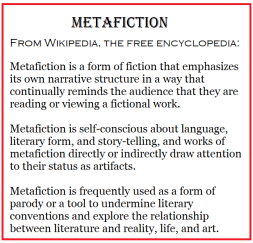
MetacictionIndies occasionally have to write a synopsis if they submit their longer work to contests, agents, or publishers. When a literary contest or publisher asks for a synopsis, they don’t want a book blurb, which is a “this is why you should buy my book” teaser.

They do want a short description filled with all the spoilers so that the work goes to the right editor or (in the case of a contest) reader.

You want an editor or reader who reads metafiction if that is what you are submitting. The synopsis lets them know you understand what kind of work they’re seeking.

Most submissions these days are electronic. I know I say this far too often, but properly naming your files is crucial to a happy work life. You want your submission to be easily found in an editor’s files.

FileDocumentDon’t label your synopsis file with a generic name like “synopsis.docx.” Be specific and include the book title in the label:
  • Don_Quixote_synopsis.docx

Underscores are used in place of spaces in file names because some operating systems don’t recognize spaces. But most operating systems recognize the underscore as a space. You never know if your intended recipient is using a Mac, a PC, or a Linux machine, and you want them to be able to open your files.

The requested length of a synopsis can vary—some agents and editors will want a shorter synopsis, so check their website for the guidelines. For an average novel of less than 100,000 words, 500 to 800 words is a good length for the summary and won’t scare your intended editor/publisher.

No one likes being faced with an endless wall of words.

  • All that is usually required to summarize a short story is a paragraph or two in the cover letter.

You might wonder why agents and editors want a synopsis when they can have the whole manuscript? They receive a mountain of submissions daily and must find the time to look at everything that lands in their inbox.

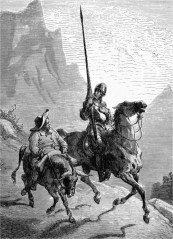
Don_Quijote_and_Sancho_Panza

Don Quixote and Sancho Panza, Gustave Dore PD|100

If they like the cover letter, they will turn to the synopsis. Once you’re past that hurdle, if the characters intrigue them and they like how the plot evolves, they will look at the first chapter or two. After that, they might ask for the entire manuscript.

Your synopsis is not intended to entertain the editor, but you want your voice to interest them. It is meant to briefly recount the who, what, where, when, and why of your entire novel, but it must sound like you.

What do we include in our synopsis if we must boil a novel down to 500 – 800 words? (Which is only around two pages.) This is the most difficult aspect of my life as a writer, and frankly, I stink at it.

I can easily summarize my friends’ novels, but my own? It’s like trying to summarize your child to the new teacher who will be in charge of them for the next year. The quirks and backstory get in the way of an impartial discussion.

The Jericho Writers website tells us to summarize your novel, include all the twists, and don’t give it the hard sell. Start at the beginning and hit the high points of the plot all the way to the end.

Try to make it interesting and still keep it within the word count.

In this, as in most things, the internet is your friend. For a great article with an excellent example of a synopsis, a good template, and many more details on how to write a synopsis, go to https://jerichowriters.com/synopsis/.

The following synopsis is of a book published in 1605, which is 1,072 pages long. A book of this length would require a 2,000-word synopsis to cover the high points.

400-word Synopsis of the first 10 chapters of The Ingenious Gentleman Don Quixote of La Mancha by Miguel de Cervantes

Don Quixote is a metafictional account of the mid-life crisis and adventures of a nobleman (hidalgo) from La Mancha named Alonso Quixano. The first chapters are taken from “the archives of La Mancha,” and the rest is translated from an Arabic text by the Moorish author Cide Hamete Benengeli.

Nearing 50 years of age and living in an unnamed section of La Mancha with his niece and housekeeper, Quixano is usually a rational man. He is obsessed with reading tales of chivalry and knights-errant. However, by not sleeping adequately because he was reading, Quixano is easily given to anger. He believes every word of his fictional books of chivalry to be true.

While he is asleep in his bed, his niece, the housekeeper, the parish curate, and the local barber burn most of his chivalric and other books. The priest must decide which books are bad for morality, so he can know them well enough to describe every naughty scene.

After the books are burned, the niece and priest seal up the room which contained the library, later telling Quixano that it was the action of a wizard.

The loss of his books causes him to lose his mind. Quixano decides to become a knight-errant. He will revive chivalry and serve his nation, under the name Don Quixote de la Mancha.

After a short period of feigning health, Don Quixote requests his neighbor, Sancho Panza, to be his squire, promising him a governorship. Sancho is a poor and simple farmer but is far more practical than Don Quixote. He agrees to the offer, sneaking away with Don Quixote in the early dawn.

They begin their quest to revive chivalry, starting with Don Quixote’s attack on windmills that he believes to be ferocious giants.

The two next encounter two Benedictine friars traveling on the road ahead of a lady in a carriage. The friars are not traveling with the lady but happen to be on the same road. Don Quixote believes the friars are enchanters who hold the lady captive. He knocks a friar from his horse and is challenged by an armed Basque traveling with the company.

As he has no shield, the Basque uses a pillow from the carriage to protect himself, which saves him when Don Quixote strikes him. The combat ends with the lady leaving her carriage and commanding those traveling with her to “surrender” to Don Quixote. [1]

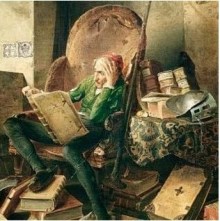
Don Quixote in the library Adolf_Schrödter 1834I recommend you go to the Jericho Writers site and follow their guidelines if asked for a synopsis. The article there is one of the most comprehensive and useful ones I’ve read anywhere. Again, that article can be found at https://jerichowriters.com/synopsis/.
Once you have written your cover letter and synopsis, attach them to the email or submissions website with whatever else the contest or publisher asks for—the first two chapters, possibly the first twenty pages, etc.

This is where luck comes into the equation. We can only hope the submission is opened on the day and moment when the editor is looking for a story exactly like the one we have submitted.


CREDITS AND ATTRIBUTIONS:

[1] 400-word Synopsis of the first 10 chapters of The Ingenious Gentleman Don Quixote of La Mancha by Miguel de Cervantes, condensed from Wikipedia.  Wikipedia contributors, “Don Quixote,” Wikipedia, The Free Encyclopedia, https://en.wikipedia.org/w/index.php?title=Don_Quixote&oldid=943081150 (accessed 1 Aug 2023).

Don Quijote de La Mancha and Sancho Panza, 1863, Gustave Doré [Public domain], via Wikimedia Commons.

Don Quixote in the Library, by Adolf Schrödter, 1834 PD|100, via Wikimedia Commons.

9 Comments

Filed under writing

Plotting alternate history #amwriting

A few years ago, about ten minutes into a NaNoWriMo write-in, I accepted a dare to write an Arthurian tale with a steampunk twist.

MyWritingLife2021I quickly regretted that decision.

Everyone was quietly typing away in that coffee shop, getting impressive word counts.

But not me.

I sat there asking myself where Arthurian and steampunk connect well enough to make a story. On the surface, they don’t. I experienced the mental blankness we all feel when a story refuses to reveal itself.

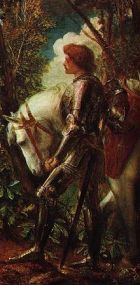
220px-Sir_Galahad_(Watts)Arthur and his court originated as ordinary 5th or 6th-century warlords. But the tales featuring them were written centuries later. Their 11th-century chroniclers presented them in contemporary armor as worn by Crusaders and with medieval customs and moral values.
Over the centuries, subsequent authors continued to romanticize the story but with their own twist. Alfred Tennyson’s Idylls of the King reworked the entire narrative of Arthur’s life to fit the romantic ideals of the Victorian era.

When I agreed to the challenge, I decided my protagonists must be real people, flesh and blood. They would be subject to the same emotions and physical needs as any other person.

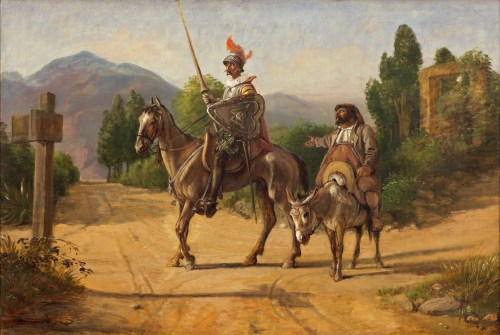
Galahad is traditionally portrayed as a knight errant, which means wandering. The knight-errant was a popular character in medieval romance literature. Miguel de Cervantes‘ mad knight, Don Quixote, believed he was a knight errant and lived his fantasy with hilarious abandon.

Wilhelm_Marstrand,_Don_Quixote_og_Sancho_Panza_ved_en_skillevej,_uden_datering_(efter_1847),_0119NMK,_Nivaagaards_Malerisamling

Wilhelm Marstrand, Don Quixote and Sancho Panza (after 1847) via Wikimedia Commons

The Chivalric Code was a system of values combining a warrior culture, devotion to the Christian faith, and courtly manners. Adherence to the code of chivalry ensured a knight epitomized bravery, honor, and nobility.

They roamed the land looking for heroic tasks, engaged in knightly duels, or went in pursuit of courtly love. The medieval romance of highly ritualized courtly love was a rigid literary structure. It defined the written behaviors of noble ladies and their lovers and was woven with the principles of chivalry.

Medieval and Victorian authors loved superheroes. To them, nothing was more impossible or super-heroic than a man who lived a virtuous and self-sacrificing life.

I randomly picked an Arthurian knight, Galahad, and began making notes as I pondered the problem. What kind of a person might Galahad have been had he truly existed?

The established canon dictates that Galahad isn’t attracted to women. He goes on quests to find strange and magical objects, such as the Holy Grail. Since he’s not attracted to women, how about men? I asked myself, what if Galahad and Gawain were lovers?

And what really happened after the Grail was found? With no answer to that, I moved on to the next question. Where does steampunk come into the story? Steampunk is science fiction set in Edwardian times using only technology available during the reign of King Edward VII, who reigned from 1901 to 1910.

Thinking about what steampunk really is triggered the cascade of plot points:

What if finding the Grail somehow opened a door in time?

What if all the magic in the world vanished with the Grail?

What if Galahad was marooned in Edwardian England with Merlin?

How would Galahad get back to Gawain?

I sat in the coffee shop with my friends, all of them writing their novels. The November rains pounded on the windows and drowned passers-by, but I didn’t care—I had the plot I needed.

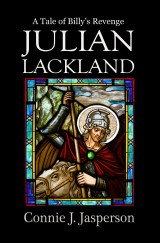
Julian Lackland Cover 2019 copyI am an abject fangirl for Don Quixote, so different versions of both Galahad and Quixote appear regularly in my work. Julian Lackland was inspired by my love of Don Quixote. they’re both insane, both deeply committed to doing good, and both have moments of hilarity mixed with the tragedy.
And Galahad–nowadays he’s considered a minor knight. However, what we regard as canon about him is taken from Sir Thomas Malory’s 1485 work, Le Morte d’Arthurin which he and his quest have a prominent role.

Malory’s collection was a reworking of traditional tales that were hundreds of years old, even in his day. Also, he wrote it while in prison for a multitude of crimes, so we can be sure it’s not historically accurate.

Traditionally, Galahad is an illegitimate son of Lancelot du Lac. He goes on the quest to find the Holy Grail and immediately goes to heaven, raptured as a virgin.

When I began plotting the tale my friend had challenged me to write, I wondered why Malory said Galahad was raptured. Why was the notion of a virgin knight and being taken to heaven before death so important to medieval chroniclers? Why would they write a saint’s virginity and rapture as though it were factual recorded history?

People always rewrite history to suit the times in which they live.

Religion and belief in the Christian truths espoused by the Church were in the very air the people of the time breathed. All the physical and material things of this world were entwined and explained by the religious beliefs of the day.

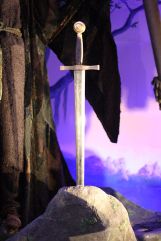
Excalibur London_Film_Museum_ via Wikipedia

Excalibur London_Film_Museum_ via Wikipedia

Literature in those days was filled with religious allegories, the most popular of which were the virginity and holiness of the Saints, especially those deemed holy enough to be raptured.

Death was the common enemy, an inescapable event kings feared as much as beggars did. Those saints who were raptured did not experience death. Instead, they were raised to heaven, living in God’s presence for all eternity.

Galahad as written by Malory and later authors never married. But humans tend to be human, so why assume he was a virgin? Galahad’s state of virginity and grace was written to exemplify what all good noblemen should aspire to.

The High Middle Ages was the period of European history that commenced around the 10th century and lasted until the 14th century (or so). That era saw a flowering of historical-fantasy writing among the clergy and educated nobility. Medieval chroniclers detailed the people and events of 300 to 400 years prior. Their sources were the oral histories as told in well-known bardic tales and local legends.

Malory was writing during the final decades of the Crusades and trying to fit the old stories into his modern time. Rumors and stories passed down became historical truths, reshaped to justify the desire for conquest. After all, the New World was just over the horizon, vast cities of Inca gold ripe for the taking.

We 21st-century authors have excellent records of 15th and 16th-century political struggles. Yet, we make things up about the Tudors and Elizabethans, because they were interesting people. We love to imagine what they must have been like.

We all know the written records from before the time of Elizabeth I are highly questionable. Sifting medieval fact from fiction is the life’s work of many historical scholars. However, they’re entertaining fantasy reads, leaving fangirls like me free to riff on them and create our own mythologies.

So, that is how my creative process works. Someone gives me an impossible idea, and I fight with it until it beats me. Once that idea has me by the throat, I know what has to be written. That tale became a short story, Galahad Hawke.

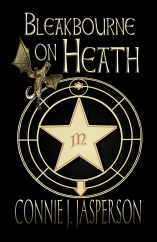
Bleakbourne front Cover medallion and dragon copyAnd sometimes a theme refuses to let go of me. I took Arthurian myth and the chivalric code and turned them inside out with the characters of Lancelyn and Galahad in Bleakbourne on Heath.
I feel quite sure I haven’t written my last Alternate Arthurian tale. Galahad Hawke may get an expansion into a novel–after all, he didn’t get the traditional happy ending.

Or maybe not. I do have an epic fantasy on deck so … maybe next year.

Comments Off on Plotting alternate history #amwriting

Filed under writing

#FineArtFriday: Mount Adams by Albert Bierstadt (revisited)


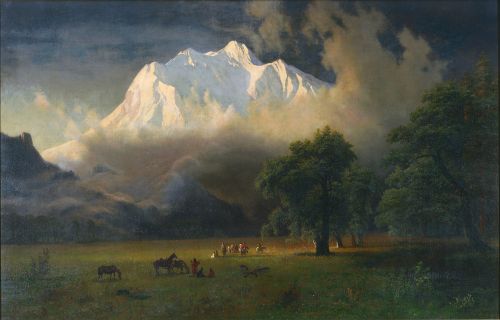
I live just north of Mount Adams. When you drive down past Mt. St. Helens, you often catch glimpses of this majestic volcano, but it is not usually on the tourist routes. Several of our native tribes call this mountain Klickitat, and some call it Pahto. Although Adams has not erupted in more than 1,000 years, it is not considered extinct.

I find it interesting that while it is the second-highest mountain in Washington State, after Mount Rainier, it is the least well-known to me. As a child, we stayed at Spirit Lake Resort (long before the 1980 eruption of Mt. St. Helens) and often camped at places near Goat Rocks. Sometimes I saw it from afar and wondered but never visited.

My father was an amputee, and 1940s prosthetics were rudimentary at best. He was unable to wear his prosthetic leg and walked on crutches. He adored fishing, but couldn’t hike for any distance, so we trailer-camped in places where he could fish from a boat. While there were camp sites in the Mt. Adams area, one often had to hike into them. But despite Dad’s disability, we traveled every summer and saw as much of our beautiful state as we could.

I don’t know if Bierstadt actually visited Mt. Adams, or painted this from what he was told–he was famous for painting scenery he had never seen and doing it with some accuracy.

Quote from Wikimedia Commons: Albert Bierstadt enjoyed great success in the years surrounding the Civil War, producing finely detailed vistas of nature’s splendor in majestic canvases that were similarly invested with significance beyond their surface appearance.

The first technically advanced artist to portray the American West, Bierstadt offered to a rapidly transforming nation pictures whose spectacular size and fresh, dramatic subject matter supplied a visual correlative to notions of American exceptionalism, while also contributing to the developing concept of Manifest Destiny.

Trained in the highly finished manner of the Düsseldorf Academy, Bierstadt’s precise style imbued his works with a reassuring sense of veracity despite their sublime subjects and occasional liberties with geographic reality. In Mount Adams, Washington, he characteristically combined an impressively scaled natural background with a foreground view of American Indian life, which serves to heighten the picture’s putative realism even as it enhances its exotic appeal.

The implied movement of the clouds and the sunlit figures on horseback similarly off to the right seems to open up the depicted space for the viewer to inhabit, providing an apt pictorial metaphor for the actual occupation and exploitation of the West by the eastern interests that constituted the artist’s clientele.


Credits and Attributions:

Mount Adams by Albert Bierstadt [Public domain], via Wikimedia Commons

Wikimedia Commons contributors, “File:1875, Bierstadt, Albert, Mount Adams, Washington.jpg,” Wikimedia Commons, the free media repository, https://commons.wikimedia.org/w/index.php?title=File:1875,_Bierstadt,_Albert,_Mount_Adams,_Washington.jpg&oldid=272380899 (accessed March 9, 2018).

4 Comments

Filed under #FineArtFriday

Cover Letters and Queries #amwriting

Every author who wants to sell their work will find themselves crafting a query or cover letter at some point in their career. This is frequently a requirement for submission to a magazine or contest.

MyWritingLife2021BSome authors despise that process so much that they go indie, thinking they won’t have to leap that hurdle. But there is no escaping it.

The difference between queries and cover letters is this: while both are letters of introduction, cover letters assume the editor will read the attached work. Editors ask for them when they have open calls for short stories.

Queries are letters requesting permission to submit unsolicited work to an agent or publisher. They have not requested it, so don’t assume the attached synopsis and first chapter will be read—your query must convince the editor to look at your work.

money_computer_via_microsoftWriting these kinds of personal introductions is a pain—but only because we don’t know what is expected or what we should include.

I’ve attended several seminars on queries and cover letters. While I no longer query agents, I have written many cover letters. Submissions to anthologies, contests, and magazines all require cover letters.

The best place I have found with a simple description of what your query letter should look like is at the NY Book Editors website.

Boiled down, what they tell you is this:

  1. If you are mailing it or submitting a cover/query letter as a separate document, be formal:
  • Your address goes to the right and should be justified.
  • The agent’s address goes to the left.

how to head a formal letter screen shot

In an email, you don’t do step one. However, you DO make sure your contact information is in your signature.

  1. Be personal and polite. Greet and acknowledge the agent or editor by name:
  • Dear Ms. Stuart

The body: This is important – the body of your query letter should not exceed three to five paragraphs. The 1st paragraph is where you introduce yourself. Perhaps you met at a convention or seminar or are a fan of one of the authors they represent. If you have a connection with the agent or editor you are approaching, mention it but be brief.

If you have no previous connection, NY Editors suggest you get down to business right away with your attempt to sell your short story or book. Their point of view on this is that you only have a few paragraphs to sell your work, so make those words count.

The 3 most important things to include in the 1st paragraph are:

  1. Title of the story (or novel)
  2. Genre
  3. Word count

The 2nd and possibly 3rd paragraphs must briefly describe the work. Showcase the plot and tell them why you believe it fits their publication. Make it as brief as possible—do NOT write a 3,000-word synopsis.

ALL prospective publishers, whether for magazines or larger houses, want the hook and the essence of that short story/novel in these paragraphs. They want to get a feel for who you are as an author.

Shkespere bio memePlease do NOT give it the hard sell. The www.NYBookEditors.com website says: “You must walk a very fine line between selling your manuscript without coming across like the parent who knows his kid is the best player on the bench.”

In the final paragraph, you post a short (as in BRIEF) bio of yourself. Mention your published works and whatever awards you have acquired. If samples of your work are available on your website, say so.

The submission guidelines will differ when submitting queries to anthologies or magazines. They are widely different, and their editors seek specific kinds of work. However, the basic cover or query letter will be the same.

Magazines: Most magazines are available online nowadays rather than in print, and they usually want electronic submissions. Many publishers use Submittable, a service offered by a submissions manager software that makes the process simpler for both authors and editors. If they want their submissions sent via email, the body of the email is your cover letter.

desk_via_microsoft_stickersLarge Publishing Houses: Large traditional publishers want agented submissions only. On the rare occasions they open the doors to unagented authors, their editors expect a 1-page, 300-word description of your novel. This is the query letter, as described above. Your manuscript is not attached to this—if they like what they see in the query, they will look at the synopsis and possibly ask for the first chapter.

Every magazine, publisher, editor, or agent has a website detailing how they want things submitted. In general, the larger publishers and agents want to receive letters and/or emails formatted to the rules posted on their websites.  You must read and follow those guidelines carefully.

I have mentioned the word “brief” numerous times in this post—and hopefully, you see why. Choose your words carefully so that your brief paragraphs showcase you and your work in the best way possible.

Most importantly, don’t forget to double-check your letter for typos and spelling errors. We all make them and don’t want them to be our legacy.

A sample email cover letter might read:

Dear Ms. Editor,

My name is Connie Jasperson. I was introduced to you at the 2022 PNWA conference during the book signing event. I hope my story, A Cold and Dangerous Place, might fit the theme of your proposed anthology.

A Cold and Dangerous Place is a quest tale about forgiveness and human frailty, with some elements of high fantasy. It has a strong female protagonist and is 3,500 words in length. It has never before been published. I have attached the manuscript as a Word document in Vonda McIntyre’s manuscript format, as specified in the submission rules.

I live and write in the Olympia area of Washington State and am active in several writing groups. I am a founding member of Myrddin Publishing Group, an indie cooperative, and have independently published nine novels. My short stories have appeared in several anthologies. One of my stories was included in the 2019 anthology Swords, Sorcery and Self-Rescuing Damsels, featuring stories by authors such as Jody Lynn Nye and Katie Cross.

Thank you for your consideration,

Connie J. Jasperson

123 Writer Rd. SE.

Buymybook, WA 01234

c.jasperson@writer.com (email)

123-456-7890 (phone)

The body of any cover or query letter will be laid out in the same fashion. Title, word count, and genre are important. Agents and editors want to know that you offer the kind of work they specialize in.

icream_via_microsoft_stickersSometimes my queries get good results, and sometimes not. I’ve said this before, but query letters are like ice cream. Everyone likes certain flavors and must be pushed to try new ones.
You can only cross your fingers and hope your manuscript and letter arrive on a day when the editor or agent in question is in the mood for a story exactly like what you are selling.

Rejection only means that editor isn’t the right one. Keep trying.

14 Comments

Filed under writing

The Business of Writing – Lessons I’ve Learned #amwriting

I have always thought of myself as a writer. Unfortunately, for about forty years I didn’t know how to write anything longer than a poem or a song. I wrote hundreds of poems and songs and sang them to my children, went to open mics, and performed in various bands.

MyWritingLife2021During the 1980s and 90s, I listened to music on the stereo, writing my thoughts and ideas in a notebook while my kids did their homework. I drew dragons and fantasy landscapes and worked three part-time jobs to pay the bills.

My pen and ink ramblings weren’t writing as I see it now. However, they were frameworks containing ideas that later became full-fledged stories. In 1987, my father bought me a secondhand IBM Selectric Typewriter, and my writing addiction took off. My typewriter sat beside the hamster cage in the kitchen—not a wise placement choice—and while my kids did homework, I pecked away at short stories.

One of those frameworks evolved into a proto-novel in 1994 when we were given a secondhand Apple Macintosh Performa, and I began writing a novel. Five years and 225,000 words later (including a switch to a Windows 98 PC), I realized I had a mess on my hands that would never be finished.

I didn’t know what to do with it.

Markers 1090px-Caran_d'Ache_FilzstifteFor most of my writing life, I was like a toddler given a package of magic markers and told to go wild. My enthusiasm exceeded my ability.
  • I didn’t have the information I needed to make my work readable or know how to get it.
  • I felt embarrassed for even thinking that I could be an author.

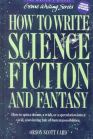
One day in 1990, I stumbled upon a book offered in the Science Fiction Book Club catalog: How to Write Science Fiction and Fantasy by Orson Scott Card. The day that book arrived in my mailbox changed my life. Since acquiring that book, I have amassed a library of books on the craft. Some are brilliant, some not so much, but I always learn something from them.

Personal experience, good and bad, is a great teacher. So, here are a few things I wish I had known in 2010 when I stumbled upon NaNoWriMo and began this journey in earnest:

One: Make a style sheet (also known as a storyboard or bible) as you go.

rudimentary stylesheetBuild a glossary of words and spellings unique to your story, and be sure to list names. I use an Excel spreadsheet, but you can use anything you like to help you stay consistent in your spelling.

And even though I think I am developing a thorough glossary, my editor will find many words to add to it.

Two: Develop a logical, consistent system for naming your files. Save your document regularly.

Save each version of your manuscript in its own master file, and give each subfile a different name so you can go back and retrieve bits you may need later. I use a system like this:

  • fileFolderThe master file might be titled: Lenns_Story

  • The subfile might be: L_S_V5.docx

That stands for Lenn’s Story version five. I work out of Word, so the extension is automatically a docx. Each master file will contain many subfiles before a story or book is published.

Three: Find a local group of writers to meet with and talk about the craft.

Authors need to network with other authors because we need to discuss the craft with someone whose eyes don’t glaze over.

ICountMyself-FriendsI gained a fantastic local group through attending write-ins for NaNoWriMo, the Tuesday Morning Rebel Writers. Since the pandemic, and with several of our members now on the opposite side of Washington State, we meet weekly via Zoom. We are a group of authors writing in a wide variety of genres.
We’re like midwives, helping each other bring new books into the world through beta reading and critiquing. But more than that, we are good, close friends who help each other through life’s twists and turns.

Four: Never stop educating yourself. It requires dedication and a small investment of money, but you can do it.

Learn how to say what you mean with your unique voice and style. A college education may be out of reach, but you can buy books on grammar, style, substance, and writing craft.

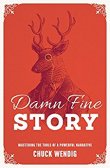
Wendig_Damn_Fine_StoryLearn about structure and pacing from successful authors. Spend the money to go to conventions and attend seminars. You will learn so much about the craft of writing, the genre you write in, and the publishing industry as a whole—things you can only learn from other authors. I gained an extended professional network by joining The Pacific Northwest Writers Association and attending their conferences.
Five: Don’t even consider signing with the slick-talking publisher that contacts you out of the blue.

In 2010 I made my word count and became a firm believer in the principles behind NaNoWriMo. If you sit down and write at least 1,667 words every day, you will complete your novel.

I didn’t know that while a novel might have the complete story arc, it isn’t finished.

orson_scott_card_write_scifi_fantasyThe year that followed was filled with mistakes and struggles. Legitimate publishers NEVER contact you. You must submit your work to them, and they prefer to work with agented authors.
I, of course, didn’t know this. There were some low points and a devastating falling out with my first publisher. Ultimately, I retained the rights to my work. After years of revisions, I did finally bring that novel back to a new life in 2020. But that is another story.

Ask yourself this: how can a publisher possibly want work they haven’t seen? And how did they get your email address?

Make use of SFWA’s Writer Beware site. You won’t benefit from the predator publisher’s “services,” but they will profit from your desperation to be published. They will charge you for services they don’t provide and publish your work in its raw, unedited form, and you will never see a dime.

Six: even though you’re writing that novel, keep writing short stories too.

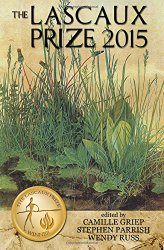
Lascaux 2015Short stories and micro fiction are a training ground, a way to hone your skills. They’re also the best way to get your name out there. I suggest you build a backlog of work from 100 to 5,000 words in length. Keep them ready to submit to magazines, anthologies, and contests.
Every scene and vignette that rolls through your head can be made into something you can use.

Get the Submittable App and start submitting your work, and don’t let rejections stop you. Keep sending that work out to new places because someone will want it.

Seven: Never Stop Reading. Read widely and in all genres. Read critically and apply what you learn about writing, both good and bad, to your work.

These are a few of the many things that I wish I had known when I first started writing professionally but didn’t. I hope it makes your writing life a little smoother.


Credits and Attributions:

Image: Macintosh Performa, Wikimedia Commons contributors, “File:Macintosh Performa 5200.jpg,” Wikimedia Commons, https://commons.wikimedia.org/w/index.php?title=File:Macintosh_Performa_5200.jpg&oldid=729233027 (accessed July 23, 2023).

Image: Markers, Wikimedia Commons contributors, “File:Caran d’Ache Filzstifte.JPG,” Wikimedia Commons, https://commons.wikimedia.org/w/index.php?title=File:Caran_d%27Ache_Filzstifte.JPG&oldid=506240371 (accessed July 23, 2023).

6 Comments

Filed under writing

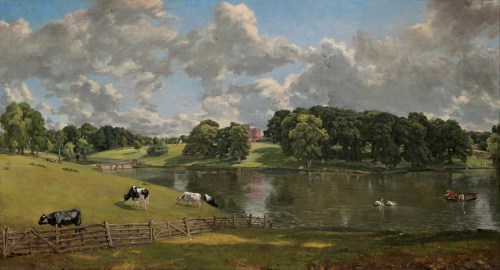
#FineArtFriday: Wivenhoe Park, Essex by John Constable 1816

John_Constable_-_Wivenhoe_Park,_Essex_-_Google_Art_ProjectArtist: John Constable  (1776–1837)

Title: Wivenhoe Park, Essex

Genre: landscape art

Date: 1816

Medium: oil on canvas oil on canvas

Dimensions: height: 56.1 cm (22 in); width: 101.2 cm (39.8 in)

Collection: National Gallery of Art

What I love about this image:

This is the painting that made John Constable’s name. It contains everything he idealized about his native country, England. He gives us a deceptively simple image of a summer’s day, with white clouds drifting above a peaceful scene.

So beautifully composed, and so relaxing. When life is crazy, a Zen picture as painted by a master reminds me to slow down and enjoy the scenery.

About this painting, via Wikipedia:

The National Gallery of Art holds this painting as one of its highlights:

A pleasant sense of ease and harmony pervades this landscape of almost photographic clarity. The large areas of brilliant sunshine and cool shade, the rambling line of the fence, and the beautiful balance of trees, meadow, and river are evidence of the artist’s creative synthesis of the actual site.

The painting was commissioned by the owner of Wivenhoe Park, Major General Francis Slater Rebow, who was among the artist’s first patrons, being a close friend of the artist’s father, Golding Constable. Wivenhoe Park is 200 acres (81 ha) of parkland, purchased by the Rebow family before 1734. Slater-Rebow commissioned several paintings from Constable, including a portrait of the general’s seven-year-old daughter in 1812. She also figures in this painting, in a donkey cart to the left. This painting, finished in September 1816, earned the artist enough money to allow him to marry his long-time love, Mary Bicknell. They married in October 1816.

Constable’s art is always penetrated by longing, melancholy and a yearning for the simple, natural life, for a bucolic, pastoral idyll, to rural subjects and aspects of life in the countryside, a “golden age” when people lived together in harmony with nature, a world on its way of disappearing when he painted his landscapes thanks to the beginning of the Industrial Revolution. He was aware of the issue of urban growth, of urban life’s unpleasantness, which he contrasted to life in the countryside. Constable’s art was rather unconventional for his time, and he loved simple things, a natural landscape without the ruins, dramatic effects or exalted, often excessive feelings, like the ones displayed in the paintings of his contemporary, J. M. W. Turner. His landscapes are flooded by a silvery brilliant light in the water and air and in the sky, and are characterised by a special intensity that is such an important feature of this artist’s works. [1]

About the Artist, via Wikipedia:

John Constable RA (11 June 1776 – 31 March 1837) was an English landscape painter in the Romantic tradition. Born in Suffolk, he is known principally for revolutionising the genre of landscape painting, with his pictures of Dedham Vale, the area surrounding his home – now known as “Constable Country” – which he invested with an intensity of affection. “I should paint my own places best”, he wrote to his friend John Fisher in 1821, “painting is but another word for feeling”.[3]

Constable’s most famous paintings include Wivenhoe Park (1816), Dedham Vale (1821) and The Hay Wain (1821). Although his paintings are now among the most popular and valuable in British art, he was never financially successful. He became a member of the establishment after he was elected to the Royal Academy of Arts at the age of 52. His work was embraced in France, where he sold more than in his native England and inspired the Barbizon school. [2]


Credits and Attributions:

[1] Image: Wikipedia contributors, “Wivenhoe Park (painting),” Wikipedia, The Free Encyclopedia, https://en.wikipedia.org/w/index.php?title=Wivenhoe_Park_(painting)&oldid=1163430201 (accessed July 20, 2023).

[2] Wikipedia contributors, “John Constable,” Wikipedia, The Free Encyclopedia, https://en.wikipedia.org/w/index.php?title=John_Constable&oldid=1162727967 (accessed July 20, 2023).

4 Comments

Filed under #FineArtFriday

The Character Arc part 2 – the void that drives them #amwriting

I am in the process of making an outline for a new novel, which I intend to begin writing in November for NaNoWriMo. I have the setting and the society, as it’s an established world, and I have the basic idea for the plot—a murder. But before I get to that, I need the characters.

writing craft - voidWhen I plan a character, I make a simple word picture of them. The word picture is made of a verb and a noun, the two words that best describe each person.
At the outset, I want to know the good things about these characters. I make a personnel file for them. But I need more than a picture of my favorite actor and a brief bio. I must decide the verb (action word) that drives them and the noun (object of the action) that holds them back.

This is their void, the emptiness they must fill.

First, I assign nouns that tell us how they see themselves at the story’s outset. I also look at sub-nouns and synonyms, which means I must put my thesaurus to work.

Let’s look at four characters from my novel, Julian Lackland, published in 2020. Each of these side characters impacts Julian’s life for good or ill.

Julian’s Noun is: Chivalry (Gallantry, Bravery, Daring, Courtliness, Valor, Love)

Beau’s Noun is: Bravery (Courage, Loyalty, Daring, Gallantry, Passion)

Lady Mags’s Noun is: Audacity (Daring, Courage)

Bold Lora’s Noun is: Bravado (Boldness, Brashness)

The way we see ourselves is the face we present to the world. These self-conceptions color how my characters react at the outset. By the end of the story, how they see themselves has changed because their experiences will both break and remake them.

Next, we assign a verb that describes their gut reactions, which will guide how they react to every situation. They might think one thing about themselves, but this verb is the truth. Again, we also look at sub-verbs and synonyms:

Julian has 2 Verbs. They are: Defend, Fight, (Preserve, Uphold, Protect)

Beau’s 2 Verbs are: Protect, Fight (Defend, Shield, Combat, Dare)

Lady Mags’s 2 Verbs are: Fight, Defy (Compete, Combat, Resist)

Bold Lora’s 2 Verbs are: Desire, Acquire (Want, Gain, Own)

void - definitionWhen I write my characters, I know how they believe they will react in a given situation. Why? Because I have drawn their portraits using words:

Julian must Fight for and Defend Chivalry. Julian’s commitment to defending innocents against inhumanity is his void, and ultimately it breaks his mind.

Golden Beau must Fight for and Protect Bravery. Beau’s deep love and commitment to protecting and concealing Julian’s madness is his void. Ultimately, it breaks Beau’s health.

Lady Mags must Fight for and Defy Audacity. She’s at war with herself in regard to her desire for a life with Julian and Beau. Despite their often-expressed wish to have her with them, a triangular marriage goes against society’s conventions more than even a rebel like Mags is willing to do. That war destroys her chance at happiness and is her void.

Bold Lora must Fight for and Acquire Fame. She believes that to be famous is to be loved. Orphaned at a young age and raised by various indifferent guardians, she just wants to be loved by everyone. Julian’s fame has made him the object of her obsession. If she can own him, she will be famous, adored by all. This desperate striving for fame is Lora’s void.

Placing a verb phrase (Fight for and Acquire) before a noun (Fame) in a personality description illuminates their core conflict. It lays bare their flaws and opens the way to building new strengths as they progress through the events.

Or, it will be their destruction.

By the end of the book, the characters must have changed. Some have been made stronger and others weaker – but all must have an arc to their development.

What two words describe the primary weaknesses of your characters, the thing that could be their ultimate ruin? The case of Julian’s story, it was:

Julian Lackland: Obsession and Honor

Golden Beau Baker: Love and Loyalty

Lady Mags De Leon: Stubbornness and Fear (of Entrapment)

Bold Lora: Fear (of Being) Forgotten

So, in that story, a girl who was ignored by everyone, a child who’d lived on the outside of things, decides that the one person who had ever shown her kindness should become her lover, and then fame would follow. The way she goes about it changes everything.

Julian Lackland took ten years to get from the NaNoWriMo novel to the finished product. He spawned the books Huw the Bard and Billy Ninefingers, both of which were written and published before the final version of Julian’s story was completed. Billy and Huw play a huge role in shaping Julian’s life.

Plot-exists-to-reveal-characterSometimes the path to publication is fraught with misery; next week, we will discuss that. Other times, the book writes itself and flies out the door. Who knows how my next novel will go?
I do have four characters for my next novel. I have discovered their verbs and nouns—and I need to settle on one of these people as my protagonist. I’ve written a great deal of backstory for each of them and still haven’t figured out who can best tell this story.

Plotting and pacing is my next problem. When I make the outline, I must place events in their path so the plot keeps moving forward. These events will be turning points, places where the characters must re-examine their motives and goals.

I am a step ahead in this process, though. When I begin plotting the events for my next novel, I already know my characters’ weaknesses. I just need to discover the situations they believe they can’t handle.

magicA character’s preconceptions color their experience of events. We readers see the story through their eyes, which shades how we perceive the incidents.

Our characters are unreliable witnesses. The way they tell us the story will gloss over their own failings. The story happens when they are forced to rise above their weaknesses and face what they fear.

But the truth is, once I begin writing on November 1st, the characters will ignore all my hard work and drive the story far off the plotted track. But that’s fodder for a mid-November blog post.

4 Comments

Filed under writing