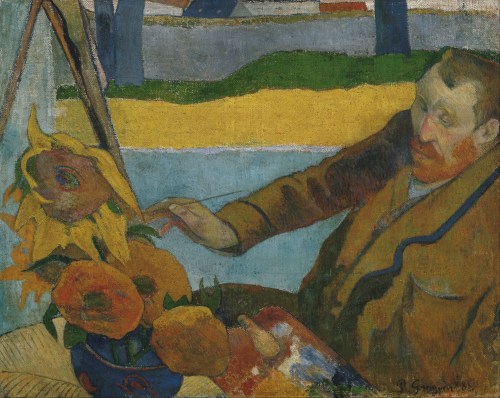
#FineArtFriday: Vincent van Gogh Painting Sunflowers by Paul Gauguin 1888 (revisited)

Title: Van Gogh Painting Sunflowers

Artist: Paul Gauguin

Genre: portrait

Date: 1888

Medium: oil on jute

Dimensions: Height: 73 cm (28.7 ″); Width: 91 cm (35.8 ″)


For a brilliant look a the life and art of Paul Gauguin, see:

Why Is Gauguin So Controversial? (Waldemar Januszczak Documentary) | Perspective – YouTube

For a wonderful documentary on Vincent’s Sunflowers, see:

The Mystery of Van Gogh’s Sunflowers | Raiders Of The Lost Art | Perspective – YouTube


About this Painting, via Wikipedia:

The portrait was painted when Gauguin visited Van Gogh in Arles, France. Vincent had pleaded with Gauguin to come to Arles to start an art-colony. Gauguin eventually agreed after funding for the transportation and expenses was provided by Vincent’s brother Theo Van Gogh; however Gauguin only stayed for two months as the two often quarreled and the famous incident where Van Gogh severed his left ear with a razor occurred after an argument with Gauguin.

Van Gogh’s first impression on seeing the painting was that Gauguin had depicted him as a madman. He later softened his view. “My face has lit up after all a lot since, but it was indeed me, extremely tired and charged with electricity as I was then.”

About the Artist, via Wikipedia:

Eugène Henri Paul Gauguin (UK: /ˈɡoʊɡæ̃/, US: /ɡoʊˈɡæ̃/; French: [øʒɛn ɑ̃ʁi pɔl ɡoɡɛ̃]; 7 June 1848 – 8 May 1903) was a French post-Impressionist artist. Unappreciated until after his death, Gauguin is now recognized for his experimental use of color and Synthetist style that were distinctly different from Impressionism. Toward the end of his life, he spent ten years in French Polynesia, and most of his paintings from this time depict people or landscapes from that region.

Gauguin’s relationship with Vincent proved fraught. In 1888, at (van Gogh’s brother)Theo’s instigation, Gauguin and Vincent spent nine weeks painting together at Vincent’s Yellow House in Arles. Their relationship deteriorated and eventually Gauguin decided to leave. On the evening of 23 December 1888 according to a much later account of Gauguin’s, van Gogh confronted Gauguin with a razor blade. Later the same evening, van Gogh cut off his own left ear. He wrapped the severed tissue in newspaper and handed it to a woman who worked at a brothel both Gauguin and van Gogh had visited, and asked her to “keep this object carefully, in remembrance of me”. Van Gogh was hospitalized the following day and Gauguin left Arles.


Credits and Attributions:

Vincent van Gogh Painting Sunflowers by Paul Gauguin 1888 [Public domain]

Wikipedia contributors, “Paul Gauguin,” Wikipedia, The Free Encyclopedia, https://en.wikipedia.org/w/index.php?title=Paul_Gauguin&oldid=899278654 (accessed May 31, 201 Wikipedia contributors, “The Painter of Sunflowers,” Wikipedia, The Free Encyclopedia, https://en.wikipedia.org/w/index.php?title=The_Painter_of_Sunflowers&oldid=853391418 (accessed May 31, 2019). 9).

Wikimedia Commons contributors, “File:Paul Gauguin – Vincent van Gogh painting sunflowers – Google Art Project.jpg,” Wikimedia Commons, the free media repository, https://commons.wikimedia.org/w/index.php?title=File:Paul_Gauguin_-_Vincent_van_Gogh_painting_sunflowers_-_Google_Art_Project.jpg&oldid=321446852 (accessed May 31, 2019).

5 Comments

Filed under #FineArtFriday

Life, Parkinson’s, and writing to an outline #amwriting

Writers live one life on paper and another in the real world. No matter what genre we write in, the real world can be more challenging to navigate, more confusing, and more important to enjoy to its fullest.

MyWritingLife2021We have gotten a grip on my husband’s battle with Parkinson’s Disease. We can mitigate his symptoms with the right diet, exercises, and medications, simple things that help no matter what your underlying health issues are.

While rough terrain and loose soil or sand are a problem, he can still go for long walks and enjoy the natural world. We choose our paths carefully and have found that bike trails and running paths are excellent places to walk.

Our small town has a large park built around an old flooded quarry. The trail through there follows an old railroad grade and is a beautiful place to walk year-round.

As I have mentioned, we are preparing to sell our house and move twenty miles north, back to the city where we were raised. We need to be where there is good public transportation and easy access to our health care providers.

We’ve been in this house since 2005, and if I had one wish, it would be to pick our house up and move it to where we need to be. We have made many memories in this house, and it’s what our grandchildren think of as home.

When we bought this house, it was the height of the housing bubble, and for many years we owed more on the house than we could have sold it for. Now is the right time to put the house on the market. It’s a good time to embark on our new adventure.

We will indulge ourselves with plays and concerts, going to parties at night – things we haven’t been able to do since the doctor banned my hubby from driving. I don’t drive at night because of my night blindness, so he always drove after dark.

In the town where we plan to move, the streets are well-lit by streetlamps, and I have no trouble seeing even in the rain. But out here in the country, the roads are pitch black. Right now, we need to be home before sunset.

This week we are making another foray, possibly getting on the list for the apartment we want. We have our eye on three places, each with different amenities. No matter where we go, we need two bedrooms, as one will be the office.

Parkinson’s Disease has made us more aware of what truly matters in life. I’m turning seventy this June, and I feel no different than when I was thirty. I don’t have as much crazy energy, but I’m still that woman. Just a little wiser.

And slower.

And Greg is still that man. His diagnosis has motivated us to make the most of life, and in our new town, we will have plenty of opportunities to do just that.

yoga04182023LIRFLSVT BIG therapy has taught my otherwise quiet and reserved husband to live large and loud. Actually, anyone can benefit from these exercises.

I have found that the more I accomplish on the packing up and sorting front, the better I write. I’m not the world’s best housekeeper. Dust is dealt with when it becomes a problem, but I cannot handle clutter. I need my space to be visually organized, or I can’t focus.

Unfortunately, clutter is the name of the game at this point. We take a carload of objects to donate and then pack a few things we don’t want to part with. Then we stack the boxes in this corner (if they are keepers) or that one (if they are going to charity).

Things that can go to the unheated storage unit will be taken there, but pictures and certain documents must be stored in a dry heated space.

On the good side, our daughter had her piano moved to her home sixty miles north of here, which gave us a place to stack those boxes that can’t go to the storage unit.

Right now, in my writing life, my work-in-progress is at a place where I am trying to push the story forward. Below is where I am at in my outline – the crossed-out scenes have been written, and I am working on the next one, which will be crossed out when I move on to the chapter that follows this section.

Second plot point in Lenn’s Story

  1. Lenn goes to the port first, then walks back up the High Street, past the Temple complex, and to the East gate.

  2. Nutter questions him about the Tax Man. Lenn explains that the man isn’t from the Temple but is a thief.

  3. Lenn, Mikel, and Callie go to the Portside Inn, get more info on the Tax Man. The local ale hound, Rahlie, is a little too interested in Callie.

  4. Lenn steps in before she can zap the idiot with her magic. Initially upset with Lenn, Callie relaxes when he tells her he doesn’t want anyone to know she is more than just a healer. He wants her other abilities to be a secret weapon.

  5. New chapter: The following day Salyan arrives with the recruits. His drama ensues.

  6. Lenn convinces Salyan to return to glassmaking despite his father’s wishes, and it ends well. Irina asks Salyan to walk to the Odensday market with her.

boxLIRF04182023Mornings usually find us wondering what we can get done that day, and evenings are often spent contemplating what could have gone better. I write whenever I can, and often end up rewriting something that seemed like a good idea at first, but which no longer works.

But no matter how the day goes, we laugh at the silliest things. And that is what life should be – full of laughter and plenty of reasons to wake up the next day.

2 Comments

Filed under writing

Creating drama by adding the unexpected #amwriting

As writers, our job is to take a one-dimensional idea and give it depth. Our goal is to make the reader believe our narrative unfolds in a real, three-dimensional world.

WritingCraft_dramatic_ironyWe add depth and dimension to our work layer by layer. Some layers are more abstract than others, but each layer adds an element that gives a sense of reality to the fictional world.

When you add a layer of the unexpected to a scene, the reader becomes interested in discovering more. They keep turning the pages.

One literary device I enjoy when it’s done well in a novel is irony. Irony can be unexpected. Adding irony or satire gives a scene an element of surprise and the reader experiences a moment of “ah hah!” The mundane becomes special.

Wikipedia says this about irony:

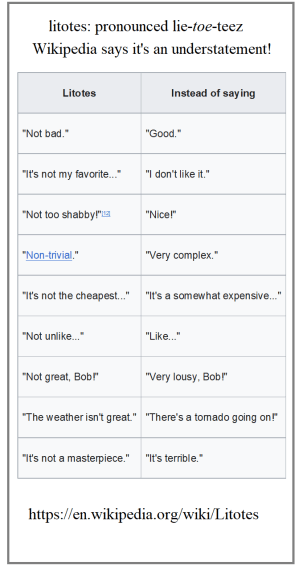
Irony can be categorized into different types, including verbal ironydramatic irony, and situational irony. Verbal, dramatic, and situational irony are often used for emphasis in the assertion of a truth. The ironic form of simile, used in sarcasm, and some forms of litotes can emphasize one’s meaning by the deliberate use of language which states the opposite of the truth, denies the contrary of the truth, or drastically and obviously understates a factual connection.

I love authors who inject the different forms of irony and drama or both into their work without being heavy-handed.

Politics, even on a local level, offer plenty of opportunities for drama, which is why I don’t watch the evening news. But let’s plot the first quarter of a contemporary novel about a struggling marriage. We will make one spouse the mayor of their small town and the other a lawyer working for a large corporation. The corporation wants to establish more of a presence in the community, and it’s his job to lobby for that.

What_Is_a_Litote_LIRF04152023The mayor likes their community’s small-town feeling and ambiance and doesn’t want it to change. Her husband is trapped, as his job is to ensure his employer gets their foot in the door. He struggled for years to rise to his current position and can’t imagine giving it up.

This is the source of friction in their relationship.

Soon after we establish the domestic dynamics of the couple, let’s create a scene where the mayor is doing her job, overseeing a meeting involving a committee’s conversation about what to do with a plot of land.

A third group who has an interest in the property has been deliberately excluded from the discussion. They are demanding the land be turned into community gardens. Their aggressive dialogue and confrontational picketing have led to the meeting being closed to the public.

In itself, the topic of choosing whether to fund a senior center/boys and girls club or sell it to a corporation that will hire hundreds of local people would be boring.

But by closing the meeting to all but two parties, we imply that something shady may be going on.

In the scenes leading up to the meeting, we meet the other influential people in this town. Their private conversations before the meeting will offer snips of background information as they move the story toward the scene in the conference room.

Once the meeting has been called to order, arguments will ensue as both sides present their case. Outside, the picketers who want the community gardens make their voices heard.

These dynamics offer many opportunities for ratcheting up the tension. The conversations inside the meeting and outside will be full of information only those parties have but which the reader must know. Irony could be injected in the blatant ignorance of some characters on all three sides and the comments they naively (or arrogantly) make.

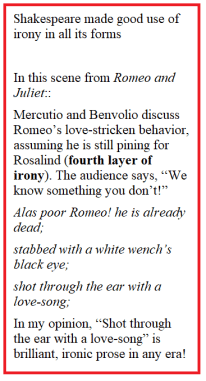
So let’s add some dramatic irony to this scene. This literary device gives the reader information that at least one of the characters in the narrative is unaware of. This puts the reader a step ahead but is also a hook because wanting to see how this plays out raises the tension.

In our scene, an unknown woman makes her first appearance. She enters the empty conference room ahead of the meeting and places a backpack under the table. She isn’t involved with any of the three concerned groups, so who is she? What is her agenda? She is a member of a hidden group of anarchists who intend to bring down the corporation, and this is their opening volley.

This is where dramatic irony comes into play: the reader watches as she adjusts the backpack’s contents, sets the timer to go off at 19:25 (7:25 pm), and then departs, careful to leave no fingerprints.

Dramatic irony – the reader knows a device has been planted in the room, but the players in the scene do not.

Now every second that the conversation drags on ratchets up the tension. Each time a committee member gets up to get a glass of water or make a phone call, and the clock on the wall ticks toward 7:25, you wonder: will they escape death or terrible injury?

MErcutio quoteAnd we, the readers, desperately want our protagonist, the mayor, to get up and go to the coffeemaker. We can’t rest until we know if she either gets up and steps away from the table or someone notices the abandoned backpack and clears the meeting room.

Drama works best when presented so the reader feels the emotion but hasn’t been told what to think. We want to experience the stories ourselves.

Satire, sarcasm, irony, and understatements in conversations can lend a lighter tone to a dark passage. These lighter moments make characters feel relatable, showing them as being self-aware.

Dramatic irony is knowing something the players don’t. We know the backpack is beneath the conference table and fear the outcome.

But will that outcome be what we expect? Another layer of dramatic irony is applied when the backpack is detonated by the bomb squad, spraying the room with glitter and red paint.

8 Comments

Filed under writing

#FineArtFriday: Rhetoricians at a Window by Jan Steen ca. 1666 (revisite

Artist: Jan Steen  (1625/1626–1679)

Title: Rhetoricians at a Window

Genre: genre art

Date: c. 1661-66

Medium: oil on canvas

Dimensions: Height: 759.46 mm (29.90 in); Width: 586.23 mm (23.07 in)

Collection: Philadelphia Museum of Art

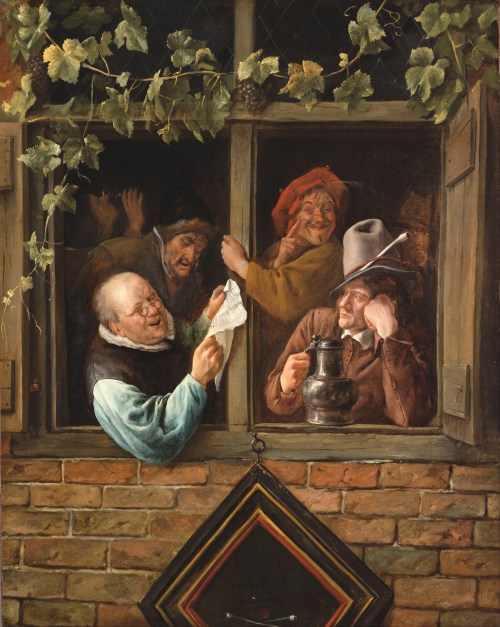
I regularly look to art for ideas. One of my favorite images is this one, Rhetoricians at a Window by the Dutch master, Jan Steen. It has appeared here several times, but no matter how often I see this painting, I find something new to appreciate about it.

What I love about this painting:

This is one of my all-time favorite Dutch genre paintings. The vivid characters who inhabit the scene inspired some the characters who pass through my Billy’s Revenge stories, people my protagonists meet along the way. These jolly rogues have such vivid personalities that the viewer immediately feels a kinship to them. Who were they? Did they keep their day jobs?

The reading of a poem or play was clearly the opportunity for the performers to have a good time. At left, the group’s orator reads a paper titled Lof Liet (Song of Praise), while the poet who composed the verse looks on over his shoulder. From the drinker in the shadows of the background, to the grapevines growing around the window, Steen tells us that wine and rhetoric are clearly entwined.

I love the inclusion of both “the critic” who leans his head on his hand and listens analytically, and the man behind him, who is clearly “a little over the limit,” and supports himself by grasping the window frame and heartily agreeing with some point.

The actor who reads is clearly enjoying himself, as are the others.

Symbolism: Some have said the characters in this painting represent the different emotions of the human condition:

  • Sanguine, (active, enthusiastic, and social)
  • Choleric, (fast, irritable, and short-tempered)
  • Melancholic, (analytical, quiet, and wise)
  • Phlegmatic, (peaceful and relaxed)

Thanks to Eelko Kappe’s wonderful article on this painting, Rhetoricians at the Window by Jan Steen, I now have four new words to broaden my vocabulary. I may never have a use for them, but now I know what they mean!

About the Artist (Via Wikipedia):

Jan Havickszoon Steen (c. 1626 – buried 3 February 1679) was a Dutch Golden Age painter, one of the leading genre painters of the 17th century. His works are known for their psychological insight, sense of humour and abundance of colour.

Daily life was Jan Steen’s main pictorial theme. Many of the genre scenes he portrayed, as in The Feast of Saint Nicholas, are lively to the point of chaos and lustfulness, even so much that “a Jan Steen household”, meaning a messy scene, became a Dutch proverb (een huishouden van Jan Steen). Subtle hints in his paintings seem to suggest that Steen meant to warn the viewer rather than invite him to copy this behaviour. Many of Steen’s paintings bear references to old Dutch proverbs or literature. He often used members of his family as models, and painted quite a few self-portraits in which he showed no tendency of vanity.

Steen did not shy from other themes: he painted historical, mythological and religious scenes, portraits, still lifes and natural scenes. His portraits of children are famous. He is also well known for his mastery of light and attention to detail, most notably in Persian rugs and other textiles.

Steen was prolific, producing about 800 paintings, of which roughly 350 survive. His work was valued much by contemporaries and as a result he was reasonably well paid for his work. He did not have many students—only Richard Brakenburgh is recorded—but his work proved a source of inspiration for many painters. [2]

About this painting, Via Wikipedia:

Chambers of rhetoric (Dutch: rederijkerskamers) were dramatic societies in the Low Countries. Their members were called Rederijkers (singular Rederijker), from the French word ‘rhétoricien’, and during the 15th and 16th centuries were mainly interested in dramas and lyrics. These societies were closely connected with local civic leaders and their public plays were a form of early public relations for the city. [1]

In 1945, Sturla Gudlaugsson, a specialist in Dutch seventeenth-century painting and iconography and Director of the Netherlands Institute for Art History and the Mauritshuis in The Hague, wrote The Comedians in the work of Jan Steen and his Contemporaries, which revealed that a major influence on Jan Steen’s work was the guild of the Rhetoricians or Rederijkers and their theatrical endeavors.

It is often suggested that Jan Steen’s paintings are a realistic portrayal of Dutch 17th-century life. However, not everything he did was a purely realistic representation of his day-to-day environment. Many of his scenes contain idyllic and bucolic fantasies and a declamatory emphasis redolent of theater.

Jan Steen’s connection to theater is easily verifiable through his connection to the Rederijkers. There are two kinds of evidence for this connection. First, Jan Steen Steen’s uncle belonged to the Rhetoricians in Leiden, where Steen was born and lived a substantial part of his life. Second, Jan Steen portrayed many scenes from the lives of the Rederijkers, an example being the painting Rhetoricians at a Window of 1658–65. The piece is currently held in the Philadelphia Museum of Art which was established in February 1876. The humanity, humor and optimism of the figures suggest that Jan Steen knew these men well and wanted to portray them positively.

With his lavish and moralising style, it is logical that Steen would employ the stratagems from theater for his purposes. There is conclusive evidence that the characters in Steen’s paintings are predominantly theatrical characters and not ones from reality. [2]


Credits and Attributions:

This post first appeared here on Life in the Realm of Fantasy  in September of 2020.

[1] Wikipedia contributors, “Jan Steen,” Wikipedia, The Free Encyclopedia, https://en.wikipedia.org/w/index.php?title=Jan_Steen&oldid=950709901 (accessed September 10, 2020).

[2] Wikipedia contributors, “Chamber of rhetoric,” Wikipedia, The Free Encyclopedia, https://en.wikipedia.org/w/index.php?title=Chamber_of_rhetoric&oldid=975283829 (accessed September 10, 2020).

Wikimedia Commons contributors, “File:Jan Steen, Dutch (active Leiden, Haarlem, and The Hague) – Rhetoricians at a Window – Google Art Project.jpg,” Wikimedia Commons, the free media repository, https://commons.wikimedia.org/w/index.php?title=File:Jan_Steen,_Dutch_(active_Leiden,_Haarlem,_and_The_Hague)_-_Rhetoricians_at_a_Window_-_Google_Art_Project.jpg&oldid=355150081 (accessed September 10, 2020).

2 Comments

Filed under #FineArtFriday, writing

The Mushy Midpoint #amwriting

I am not good at winging it when plotting a novel. I might begin with nothing but a few characters and a loose idea for a plot, but somewhere toward the middle, I will lose momentum.

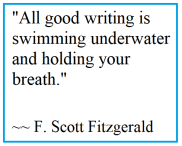
F Scott Fitzgerald on Good Writing LIRF07252022I will have to spend a day or two thinking about the story as a whole and writing an outline as a framework to guide the story. The plot points I originally planned to occur at each of the four quarters of the story will be met, but how?

In my head, I know that character plus objective plus risk equals a story. In practice, it’s more complicated than it looks.

Every story begins with the opening act, introducing the characters and setting the scene. It then kicks into gear with the occurrence of the “inciting incident,” that first plot point that triggers the rest of the story.

I’m very good at getting this part on paper. But here is where my storytelling skills sometimes fail me.

At the midpoint of my outline, another serious incident is scheduled to occur, an event setting them back even further. They will be aware that they may not achieve their objectives after all.

While I  know that bad things have to happen at this place, I sometimes can’t figure out what those things are.

In my logical mind, I know that the protagonists must get creative and work hard to achieve their desired goals. I know they must overcome their doubts and make themselves stronger.

But what are those doubts?

We have arrived at the first pinch point. The characters are on the hunt for the MacGuffin. The antagonist makes an appearance, and the heroes survive the first roadblock and—

Nothing.

This sudden blank wall is where creating an outline comes into play. But since I know what the ending is that I must write to, I approach this part of the outline as if I were writing a murder mystery.

When I can’t figure out the middle, I start at the end of my story and work my way backward until I have joined the dots connecting the ending to the beginning.

Crime writers ask themselves several things when they begin plotting a mystery. We can all learn from their method:

  • What crime was committed?
  • Who committed the crime?
  • How did they pull it off?
  • Why did they do it?

So, I look at what I originally planned for the ending and ask, “What led us to this point?”

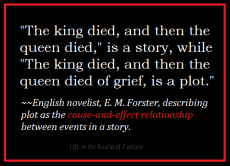
e.m. forster plot memeThe midpoint of the story arc is often where the protagonists lose their faith or have a crisis of conscience. Something terrible happens, and they must learn to live with it.

What was that terrible thing?

Maybe the protagonist has suffered a terrible personal loss or setback. Because of this, maybe she no longer believes in herself or the people she once looked up to.

How was her own personal weakness responsible for this turn of events?

How does this cause the protagonist to question everything she ever believed in?

What gives her the strength and the courage to pull herself together and finish the job?

How is she different after this personal death and rebirth event?

This midpoint crisis is where the protagonist makes the hard decisions and learns she truly has the courage to do the job. The antagonist has had their day in the sun and could possibly win.

What I sometimes forget is this: plot arcs hinge on our characters and their reasons for being there. No matter what genre we’re writing in, giving the individual players strong motivations makes the story easier to write.

If I haven’t made their motivations strong enough by the midpoint, I will lose track of the plot.

At the beginning of my story, I will know what “the crime” is, the incident that throws my characters into the action. I never lose track of that—it’s the middle that gets mushy for me.

I will know who the antagonist is and why they are acting against my main characters. I will even know why it is all happening.

The part I struggle with is the how.

WilliamBlakeImaginationLIRF05072022So, starting at the end, I look at my characters’ location when the story finishes. Then I ask myself what they were doing just before the final encounter.

And before they did that, what were they doing? What did they accomplish to move the story forward to that place? What location did they begin that part of the journey from, and why were they there?

I work my way backward through each step of the problem. It’s not a perfect method, and may not work for everyone. But by working in reverse from a known point, I can see what needs to happen and begin to write the story again.

3 Comments

Filed under writing

Character, Objective, and Risk #amwriting

Sometimes I lose the plot. I know that character plus objective plus risk equals a story, but sometimes I can’t figure out the risk part.

Or the objective.
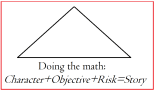
StoryMemeLIRF10052021This happens even when I have an outline. I will get to a place where I don’t know what to write, and the characters stand around doing nothing. I repeat the same old crisis with slight variations, which is tedious.

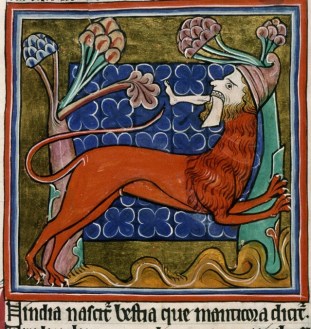
It’s a medieval fantasy, and manticores are quite prominent in medieval heraldry.

Unfortunately, my imagination is stuck on manticores but even in fantasy they’re a rare beast. My hero just killed the last one so I’m unsure what to do now. Readers don’t like it when you milk a plot twist over and over, no matter how you change the scenery around it.

I hate this job.

So let’s look at the plot outline again. I’m all about giving your characters agency, but sometimes it takes divine intervention to get the plot moving again.

Sir Percival stands at my elbow, looking over my shoulder. “Ahem.” He stares at me. “You there. Are you the person plotting this book?”

My characters no longer surprise me when they intrude, but being polite when I am disturbed is impossible. “What do you want?” I prefer it when my heroes don’t feel compelled to harass me.
Bodleian_Library-MS_Bodl_764-fol_025r-manticoreHe says, “I rescued Lady Adeline, and the manticore is dead. Did you notice?”

“Yes. I wrote that scene, and if I do say so myself, you were magnificent.” One problem with heroes is their obsessive desire for obscene amounts of praise. Sir Percival is a prime example of that.

“Thank you,” he replies, attempting to appear modest and failing. “Well, the thing is, Lady Adeline has thrown herself into wedding preparations.”

“I know,” I reply. “I’m designing the dress.”

“Well, you’ve been doing that for the last twenty pages, but who’s counting. Anyway, I’ve been booted outside because no one needs the groom until the big day. I need something to do.”

I never noticed it before, but Percy isn’t handsome when he scowls. Is there some way I can make him look like an adult? I don’t like beards, but he needs something to disguise his serious lack of a chin.

Sir Percy taps his foot. “You know, you’re really good at telling folks how to plot a book, but you suck at it yourself. We’re 25,000 words into your novel, and you’ve already wasted the big scene.”

What? This man who owes his very existence to my creative genius is picking a fight with me? He’s in for it now. “What are you talking about? I have numerous quests just waiting to leap off the page and occupy your idle hands.” See? I can give a dirty look too, and I don’t whine about it.

He just stares. “Well?”

I despise sarcastic heroes.

He whines, “If you intend this to be a novel, you have at least 50,000 or so words left. I have nothing to do.'”

The idiot has a point. I mistimed the big finale, so now I need a new objective for him, something entailing risk.

Trolls?

No, I did that in Billy Ninefingers.

I know! Carnivorous fairies … but no. I did that in Billy Ninefingers too.

This could take a while. I gaze at Sir Percival the Prim, wondering what I was thinking when I made a whiney inbred nobleman like him the star of this charade. “I can’t work with you staring over my shoulder. Find something to do for a few minutes.”

Of course, he flounces off to the living room. I should have given him a few more social graces.

clicker“Look, why don’t you sit here and watch TV for a while?” I park him in front of the TV and give him the clicker.

He looks first at me and then at the clicker. “What is this?”

Sighing, I show him how to turn the TV on and help him find something he’ll enjoy.

That takes an hour. Nine hundred channels and nothing interests him. Eventually we settle on old Star Trek reruns.

Finally, I am back at the keyboard and scraping the bottom of the barrel for a few more terrifying plot twists, hoping to keep this bad boy busy. The trouble is, all I can think of is manticores, but he’s already killed the only one that was left in the world.

Besides, readers hate it when authors milk plot twists.

Of course, my knight in shiny armor has acquired a certain amount of skill in manticore murdering, but how can you build a career out of that?

“Ahem.”

I look up, only to see Duchess Letitia, his future stepmother-in-law standing at my elbow. “Yes?”

Book- onstruction-sign copy“I’m sorry to bother you, but we desperately need a certain magical ingredient for my special anti-aging cream.” She looks at me expectantly. “My stepdaughter’s wedding is a big deal. But the outline says Percival and Adeline will assume the throne upon their marriage. It’s canon now, so I’m done, kicked to the curb in the prime of my life.” She dabs the corner of her squinty eyes with a silken handkerchief. “You set this story in an era where women have few career options. I simply must have my beauty cream, or I won’t be able to snare a new hubby.”

She has a point. “And that ingredient is…?” I hope it’s not a complicated thing because now I have two bored characters nagging the hell out of me.

A sharklike smile crosses her features. “Manticore’s milk.”

How odd. Another thing I never realized until this moment is how evil Adeline’s stepmother looks when she smiles like that. I love this woman.

She says, “I’m sure Sir Percival can get some since he’s just sitting around watching a magic box filled with other people having adventures.”

Duchess Letitia’s malicious smirk offers me no end of possibilities. I consider this for a moment. I could rewrite the original battle scene and subtract the dead manticore part.

He could get killed milking the manticore.

Or perhaps only mutilated.

Lady Adeline would have to rescue herself and then him. But what the hell. He’s a hero, right? Bad days at the office come with the territory. I walk to the living room, finding him sitting with his dirty boots on my coffee table.

This means war. Oh, yes. I promise, there will be mutilation in his future. Rather than deleting his character from the story and starting anew, this jackass will live. Percy the Prim and Proper will beg me to kill him off.

You know, manticores are an endangered species.

Lady Adeline won’t approve of his attempting to murder the last one so there will be trouble in paradise. The noble idiot will have misadventure after misadventure until my new coffee table is paid for.

“Percy, I have a task for you! Take this bucket and get some manticore’s milk. It’s a matter of life and death.”

He looks up. “I will in a minute, but I must see how this story ends. Captain Kirk might die if Spock can’t get the medicine!”

That’s another good plot twist. Note to self: have Duchess Letitia supervise stocking the medical supplies in Percy’s kit.

The duchess was wrong about one crucial thing. Nothing is actually canon until the book is published. I think the duchess deserves a much larger role in this story.

Excalibur London_Film_Museum_ via Wikipedia

Excalibur London Film Museum via Wikipedia

So does my new hero, Lady Adeline.

A lady hero who needs armor and a sword.

And a horse.

A horse that’s a unicorn.

I love this job.

7 Comments

Filed under writing

#FineArtFriday:The Alyscamps, or The Three Graces at the Temple of Venus by Paul Gauguin 1888

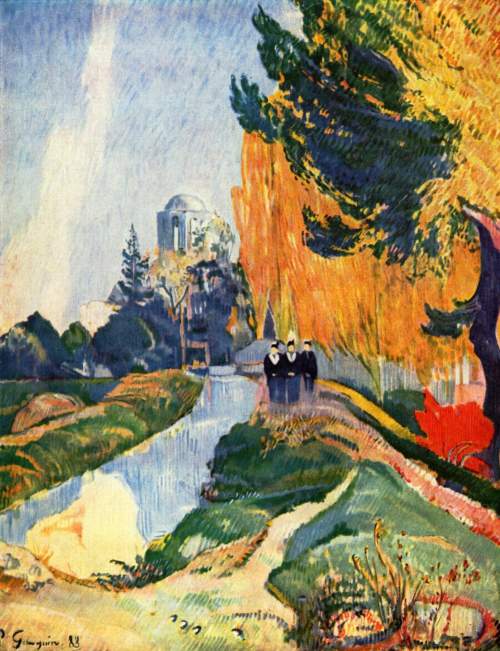
Paul_Gauguin_les_alyscamps085

Artist: Paul Gauguin (1848–1903)

Title:  (English)The Alyscamps, or The Three Graces at the Temple of Venus

French: French: Les Alyscamps, ou Les Trois grâces au temple de Venus

Date: 1888

Medium: oil on canvas

Dimensions: height: 91.6 cm (36 in); width: 72.5 cm (28.5 in)

Collection: Musée d’Orsay

What I love about this painting:

Color! I love the vivid colors contrasted against the pale sky. The Three Graces in classical mythology are the goddesses of charm, beauty, nature, human creativity, goodwill, and fertility. They have come to symbolize faith, hope, and charity.

The traditional mythology Paul Gauguin explores in this composition demonstrates his early education and his appreciation of classical art. Before he became an artist, he was both a stockbroker and an art dealer/collector.

Although he never trained formally, Gauguin is known for his use of bold colors, simplified forms, and strong lines. This painting is a prime example of his study of form and color.

The eye is drawn to the vertical lines of the temple standing tall on the hill behind the figures. They are also depicted with a sense of height, and the hills beyond are tall and narrow.

A calm stream flows from beneath the temple, the river of time. The three women stand almost in the background, yet impressive, observing as time passes them. They are as strong and unmovable as the rocky hills and the temple.

Gauguin tells us that time may pass, and things may change, but the Temple of Venus rises above it all. Does this Temple of Venus represent “agape,” a love that is selfless and unconditional? A kind of love that is spiritual in nature? Paul Gauguin was a complicated man, conflicted and tormented by the contrasts of morality and the realities of his life.

Who knows what that temple meant to him on the day he created it, but either way, Gauguin’s Three Graces, Faith, Hope, and Charity stand almost in the shadows, offering him comfort. They are as solid as the mountains and eternal as time. And who is the dark, mysterious fourth who peers over their shoulder?

Paul Gauguin lived an eventful life. For a wonderful documentary on the man and his life, go to:

Why Is Gauguin So Controversial? (Waldemar Januszczak Documentary) | Perspective – YouTube

Also, check out Paul Gauguin – Wikipedia.


Credits and Attributions:

Image: Wikimedia Commons contributors, “File:Paul Gauguin 085.jpg,” Wikimedia Commons, https://commons.wikimedia.org/w/index.php?title=File:Paul_Gauguin_085.jpg&oldid=710795058 (accessed April 6, 2023).

7 Comments

Filed under #FineArtFriday

The Business Side of the Business: book signing events, income, and expense #amwriting

In my previous post, we discussed the logistics and costs of in-person sales events, so today we are revisiting managing our expenses. I did cover this a few months ago, so if you already have seen this, thank you for stopping by!

If you intend to make personal appearances at local bookstores, fairs, or conventions, you should have an inventory of books to manage and account for at the end of the year. You will have expenses to report. This can be quite a headache if you have more than one or two books to track.

Its a BusinessThe good businessperson has a spreadsheet of some sort to account for this side of the business, as it will be part of your annual business tax report. An excellent method for assembling the information we generate for your tax report is discussed in a guest post by Ellen King Rice, The Business Sequence for Writers. Her article offers an excellent framework for keeping our business records straight, so filling out our annual tax forms will be easy.

As a former bookkeeper, I strongly suggest you keep an account of your costs for each book. This is for tax and insurance purposes if the stock of books is lost or damaged in a house fire or flood.

You can do this on notebook paper with a pencil, a ruler, and a calculator. However, a green or yellow ledger book with eight to twelve columns is already set up for you to begin using. These are available at Amazon and can be found at all office supply stores and some grocery stores.

I began working as a bookkeeper in 1982, using the industry-standard tools of the trade for the time. We noted each transaction with a red or black pencil in ledger books of varying sizes (2 to 32 columns). In those days, we used rulers or yardsticks to ensure we tracked a particular item on the correct line across all the columns. The handiest electronic device on my desk was the calculator with a printout tape.

The tools for this method of accounting are still available in the stationery section of any store and are quite affordable.

I use Excel for all my accounting purposes, but no matter how you create your spreadsheet, each title you have on hand to take to book fairs or shows has several associated costs.

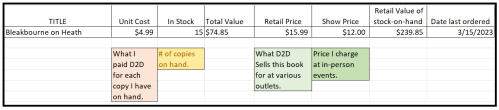
The first column contains the heading Titles: under that heading, list the title of each book you take to shows. We will use my most recent book, Bleakbourne on Heath, as our example book.

On the same line as the word Titles, working to the right in column 2, write unit cost. This is the price you pay for each copy you must take to a show and varies from title to title by the book’s length and trim size. On the same line as the book’s title, write the cost you pay D2D, KDP, Ingram Sparks, or your publisher for that paper book. In this case, I pay Draft2Digital  $4.99.

Column 3 is the current stock-on-hand at the end of the taxing quarter: Quantity in stock: 15

calculatorColumn 4 is the sum of column three times column twoInventory value: $89.11. That is what you would have to pay to replace those books. It is also what some Departments of Revenue may tax you on at the end of the year if the value of that stock is over a specific limit, say $5,000.00. The total value of stock-on-hand for all my books combined rarely exceeds $500.00.
Annual inventory taxes are why retail stores have end-of-the-year sales. They need to offload their inventory to keep their taxes low.

Column 5 is the retail price. This is what Draft2Digital charges for the book: $15.99. You set your retail price to cover the cost of replacing the book, with some revenue to cover table and vendor fees at shows and conventions (see my previous post, the Business Side of the Business: budgeting for in-person sales events,) and still allow for a small profit.

Column 6 is the special show price (if you discount your books at shows): $12.00.

Column 7 is the retail value of your stock on hand. It is the sum of column 3 times column 6: $228.00.

stock-on-hand-demo-LIRF04042023

Did you collect sales tax from your customers? When you apply for your business license, you will receive a pamphlet with all the taxing jurisdictions in your licensing area and their tax rates. These range between .08 and .11 here in Thurston County.

Washington State has no income tax, so all our revenues come from quarterly business and sales taxes collected at the time of purchase.

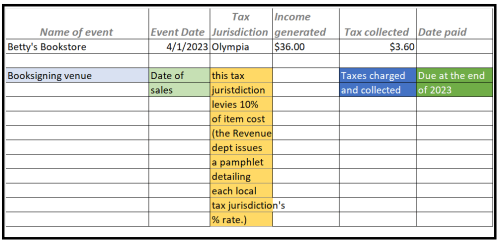
Note the tax jurisdiction where the books were sold, as you may be required to forward the taxes collected to your state or province’s Department of Revenue. If you are smart, you will make another page with these columns:

Income-statement-demoLIRF04042023

At the bottom of both spreadsheets, total each column. That will give you the stock expenses for all your titles. There will be no scrambling at the end of the quarter for Business and Occupation taxes if you live in a state like Washington State or at the end of the year if you live elsewhere. Be smart and set aside the money collected as sales tax because it is not yours and is not part of your income.

That way, you will have it at the end of the year if you only do a few shows a year like me, or quarterly if you do shows and signings every week.

Bookkeeping should take less than an hour after each show. If you have kept your spreadsheets updated, filling out annual business tax forms for your state and federal agencies will go quickly. You will have all the numbers you need to back up your reports if you are audited.

Also (and this is important), you will know the exact number of books you have on hand in each title. You will know when it’s time to reorder more stock. There is a two-to-three-week lag in printing and shipping time, so ordering books in advance is critical. You don’t want to waste money by purchasing stock you have plenty of, but you need to have a supply of your better sellers.

My personal spreadsheet is a little more detailed and is saved in the cloud, as are all my business and other records. I also back up my files to an external drive because it never hurts to be vigilant.

Something we rarely consider is the infrequent natural disaster. I live on the northwest coast of the US, so we must sometimes deal with forest fires, earthquakes, volcanic eruptions, Pacific hurricanes, and, occasionally, tornadoes. They don’t happen often, but it can be devastating when they do.

water not a friend of booksDepending on where you live, the natural world can be hazardous. If something should happen to your stock of books due to theft, fire, or flood, you will be able to claim your business loss.
Many authors are far more prolific than I am. Replacing the stock of 1 to 30 titles is a burdensome expense to carve out of the family budget unless an author has sold enough to cover that cost.

Are you covering your costs? Keeping good records will ensure you can see where you stand and allow you to make good decisions regarding your expenses.

6 Comments

Filed under writing

The business side of the business: budgeting for in-person sales events #amwriting

Spring and summer are conference and convention seasons. Regardless of your publishing path, indie or traditional, you must budget for certain things. You can’t expect your royalties to pay for them early in your career. And just so you know, many award-winning authors must still work their day jobs to pay their bills long after becoming bestsellers.

Its a BusinessAt first, getting your books in front of readers is a challenge. The in-person sales event is one way to get eyes on your books. This could be at a venue as small as a local bookstore allowing you to set up a table on their premises.


Or it could be as large as a table at a regional conference or convention.

Signings at writers’ conferences are usually a bit pricy for the number of books you might sell, but they are great ways to network.

What are the minimum costs for working a table at a signing event?

The bare minimum expenses:

You must have a stock of books on hand. You can’t sell books that you haven’t ordered. I order well in advance, as it can take three weeks for an order to arrive via the least expensive shipping method. Paying for overnight shipping of fifteen to twenty books is well out of my price range.

coins

Coins, Microsoft content creators

We must consider the table fee. A bookstore might not charge you anything for the table, but they may take a small cut if they run your sales through their cash registers.

However, large conferences and conventions will charge table fees ranging from $70.00 to as high as $300.00 or more. This varies with the size and type of conference, the venue where the convention is being held, and the vendors you will be competing with.

Sci-fi and Fantasy fan conventions can be quite pricy. You will be in an immense, crowded room, competing with big-name RPG game franchises and movie franchises, plus all the vendors of memorabilia and collectibles that are available in the vendors’ alley.

If you are able to get a table at a major fan convention, you must pay for transportation, food, and lodging. These costs could be gas, parking, airfare, hotel, etc., if you don’t have friends or family in that area. If you are planning to stay in a hotel, take simple foods that can be prepared without a stove. Being vegan, I tend to be an accomplished hotel-room chef, as most coffee bars don’t offer many plant-based options. While that bias is changing, I still go prepared.

Bring at least one pen for signing your books. I bring four or five because sometimes the pens don’t work as advertised.

Square Card Reader 1The final thing you will need is a way of accepting money. I have a metal cash box, but you only need something to hold cash and some bills to make change with. A way to accept credit cards, something like Square, is a good option. You will find a lot of vendors use Square, but there are other options out there.

These things are the bare minimum you will need to provide. At many shows, you’ll be given a table with skirting and a sign attached to the front with your name in block letters. You can get by with this if you’re on a tight budget. New vendors manage with this minimal setup all the time. This option lets you squeak by on little more than the cost of your books. Your setup and teardown time will be short, and you’ll have little to transport—always a positive, in my opinion.

My good friend, Lee French, is a pro when it comes to selling at conventions. She co-wrote the book, Working the Table: An Indie Author’s Guide to Conventions with Jeffrey Cook. She tells us that to really succeed, you’ll need to invest a bit more.

It helps to have some kind of promotional handout. I find bookmarks and business cards are the most affordable option. I know a few authors who have all sorts of little buttons and promotional trinkets relating to their books made. They give them out to everyone who passes their table, buyers or not.

However, most of my friends agree that business cards and bookmarks are the best bang for the buck in promotional material. They are less expensive when purchased in bulk, so I get as many as my budget allows.

You will need a business license to sell books at most conventions. Each state in the US has different requirements for getting these, so do the research and get whatever business license your local government requires. This allows you to get a reseller’s permit, enabling you to buy copies of your own books without paying sales tax. If your state doesn’t assess sales tax, you don’t need this, but you’ll still need the business license.

If you live in a state like Washington State, be smart and set aside the money collected as sales tax. It is not yours and shouldn’t be considered part of your income.

Investing in some large promotional graphic, such as a retractable banner, is a good idea. A large banner is a great visual to put behind your chair. A second banner for the front of the table looks professional, but they do require some fiddling with pins.

Lee French suggests getting a custom-printed tablecloth that drops over the front of the table, acting as a banner. It looks more professional, and the books will hold it down, so you don’t have to mess with pins. You can find a wide variety of sizes and shapes of banners and graphic promotional props on the internet.

I have an inexpensive black tablecloth for under my books, but you can get one in the color of your choice. Venues will often provide a white tablecloth, so buying one isn’t necessary, but it makes your display look more professional. Most shows offer a 6×3 table.

steampunk had holding pen smallI suggest buying book stands of some sort. Recipe stands work, as do plate and picture stands. Whether they’re fancy or cheap, be sure you know how to use them properly so they aren’t falling over when someone bumps the table. I use folding plate stands as they store well in the rolling suitcase I use for my supplies.
This brings us to storage and shifting goods. We must move our gear between the table and our vehicle, and sometimes we’re forced to park in inconvenient places. Many people use wheeled bins or fold-up handcarts. Luggage carts are a great, lightweight option when you only have a few books. I use a large wheeled suitcase, as I travel pretty light.

I have a plastic container with a good lid for storing pens, bookmarks/cards, book stands, and other whatnot.

I suggest you keep it simple because the more you add to your display, the longer setup and teardown will take. The shows and conferences I have attended offered plenty of time for this, but I’ve heard that some require you to be in or out in two hours or less.

Aside from the table fee and transportation, Lee French says it will cost about $400 for your stock of books, banners, bookmarks, and odds & ends. The way inflation is going, it may take more than that.

Shop the internet for sales on banners and similar items. You will need to replace bookmarks, business cards, and book stock, but most larger promotional items won’t need to be repurchased for a year or two.

working the tableIf you plan to get a table at a large conference this year, I highly recommend Working the Table: An Indie Author’s Guide to Conventions by YA authors Lee French and Jeffrey Cook. This book has all the tips and tricks you will need to successfully navigate the wild seas of selling your books at conventions.

And if you choose to embark on the in-person event circuit, I wish you good luck and many happy sales.

4 Comments

Filed under writing

#FineArtFriday: Red hollyhocks in the garden of the Ancher family at Markvej in Skagen by Anna Ancher ca. 1916 (revisited)

Anna_Ancher_-_Røde_stokroser_i_haven_ved_Ancher-familiens_hus_på_Markvej_i_SkagenArtist: Anna Ancher  (1859–1935)

Title: English: Red hollyhocks in the garden of the Ancher family at Markvej in Skagen.

Date: circa 1916

Medium: oil on canvas

Dimensions: Height: 63 cm (24.8 in); Width: 47 cm (18.5 in)

Collection: Unknown

Inscriptions: Signature bottom right: A. Ancher

What I love about this painting:

Winters tends to be dark and rainy here in the Pacific Northwest. Sunshine is brief and gloomy skies seem eternal. I need a summer day! I found us this gorgeous painting last year and loved it so much. One of my favorite artists, Anna Ancher gives us a perfect day in Skagen a century ago.

She is mostly known for her interiors, but Anna Ancher captured the essence of summer in this painting. Along with foxgloves, hollyhocks are my favorite summer flowers. Anna’s are beautiful, contrasted against the blue sky. Her eye for color was amazing. The yellow and red flowers perfectly complement the color of the building behind the garden.

I feel so much better for having had this glorious day in Anna’s serene garden.

About the Artist via Wikimedia: Anna Ancher preferred to paint interiors and simple themes from the everyday lives of the Skagen people, especially fishermen, women, and children. She was intensely preoccupied with exploring light and color, as in Interior with Clematis (1913). She also created more complex compositions such as A Funeral (1891). Anna Ancher’s works often represented Danish art abroad. Ancher has been known for portraying similar civilians from the Skagen art colony in her works, including an old blind woman.

While she studied drawing for three years at the Vilhelm Kyhn College of Painting in Copenhagen, she developed her own style and was a pioneer in observing the interplay of different colors in natural light. She also studied drawing in Paris at the atelier of Pierre Puvis de Chavannes along with Marie Triepcke, who would marry Peder Severin Krøyer, another Skagen painter.

In 1880 she married fellow painter Michael Ancher, whom she met in Skagen. They had one child, daughter Helga Ancher. Despite pressure from society that married women should devote themselves to household duties, she continued painting after marriage. [1]


Credits and Attributions:

Anna Ancher, Public domain, via Wikimedia Commons. Wikimedia Commons contributors, “File:Anna Ancher – Røde stokroser i haven ved Ancher-familiens hus på Markvej i Skagen.jpg,” Wikimedia Commons, the free media repository, https://commons.wikimedia.org/w/index.php?title=File:Anna_Ancher_-_R%C3%B8de_stokroser_i_haven_ved_Ancher-familiens_hus_p%C3%A5_Markvej_i_Skagen.jpg&oldid=616771666 (accessed January 14, 2022).

[1] Wikipedia contributors, “Anna Ancher,” Wikipedia, The Free Encyclopedia, https://en.wikipedia.org/w/index.php?title=Anna_Ancher&oldid=1041257716 (accessed January 14, 2022).

5 Comments

Filed under #FineArtFriday, writing