Chapter breaks are transitions. I have found that chapter breaks fall naturally at certain places as I write. I’ve discussed this before, but I’m always happy to repeat myself. In my opinion, chapters can be the length they need to be.
 When we commit to writing daily, our writing style grows and changes. When I began writing, some chapters totaled over 4,000 words.
As my writing style evolved, chapters became shorter. Now they average between 1,500 to 2,250. Some will be much shorter and some might be longer if the story demands it.
I try to consider the comfort of my reader. Many readers are like me—they want to finish a chapter in one sitting. Several years ago, I attended a seminar by a well-known author who said he has a specific word-count limit for chapter length.
I’ve read and enjoyed many books where the authors made each scene a chapter, even if it was only two or three hundred words long. They ended up with over 100 chapters in their books, but the chapter length went unnoticed by me when I read it. L.E. Modesitt Jr. sometimes has chapters of only five or six hundred words, which keeps each point-of-view character’s storyline separate and flows well.
So, chapter length is a personal choice. But it does affect how the pacing of the overall story is perceived by the reader.
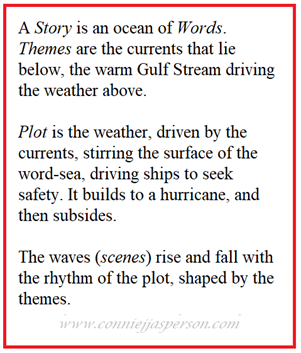 As a reader, books work best for me when each chapter details the events of one large scene or several related events. I think of chapters as if they were paragraphs. Paragraphs are not just short blocks of randomly assembled sentences.
- A paragraph is a group of sentences that fleshes out a single idea.
- That means that only one thought or speaker is featured in each paragraph.
Chapters are hard breaks. They are like paragraphs and can affect the overall pacing of the narrative. Packing too many unrelated ideas into one place makes them feel erratic and disconnected and throws off the pacing. It’s only my opinion, and in the end, you must decide what your style is going to be.
The way an author handles transitions is the key to a smooth, seamless narrative. As discussed in my previous post, a transition is a connecting scene moving the story forward to the following incident.
Conversely, the transition can be a scene that opens or closes a chapter by offering a tidbit of information that compels the reader to turn the page—the hook:
Conversations should detail something one or more characters don’t know. A conversation is an opportunity to close a scene or chapter with a hook.
Fade-to-black: I’m not too fond of fade-to-black transitions except as a finish to a chapter. Fading-to-black in the middle of a chapter makes the story feel mushy.
Hard scene breaks: Sometimes, we must indicate that a space of time has passed with nothing happening that’s important or worth wasting words on. When a length of time has passed between the end of one scene and the beginning of the next, it makes sense to use the old 1-2-3:
- Wind the scene up with a firm finish.
- Leave the reader with a hook that makes them want to turn the page.
- Start a new chapter.
Sometimes an event occurs where more than one character has a point of view that needs to be shown. How you navigate this will significantly affect the readability of the narrative.
Most readers find it easier to follow the story when they are only in one character’s mind for the majority of the narrative.
If you switch POV characters, I strongly suggest changing scenes with a hard, visual break such as a blank space between paragraphs or ending the chapter.
Some editors suggest you change chapters, no matter how short when you switch to a different character’s point of view. That is my choice also, as a hard transition between characters is the best way to avoid head-hopping.
Head-hopping: first, you’re in his head, then you’re in hers, then you’re back in his—it gives the reader “tennis neck” and makes following the storyline difficult.
 I’ve mentioned before that one of the complaints some readers have with Robert Jordan’s brilliant Wheel of Time Series is how he wandered around between storylines as if he couldn’t decide who the main character was.
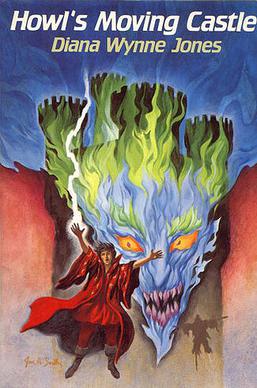
Then there is Howl’s Moving Castle, by Diana Wynne Jones. She consistently wrote two points of view into one paragraph. The story and characters are brilliant, but that habit made the dialogue difficult to follow in some places.
I don’t write at the level of Robert Jordan’s or Diana Wynne Jones’s prose and storytelling, so I try to focus on one storyline per scene and not head hop.
Now we come to a commonly asked question: Should I use numbers or give each chapter a name?
There is no rule—only authorial preference.
What is your gut feeling about how you want to construct this book or series? If good titles pop up in your mind for each chapter, by all means, go for it. Otherwise, numbered chapters are perfectly fine and don’t throw the reader out of the book.
Whether you choose numbered or titled chapter headings, be consistent and stay with that choice for the entire book.
To sum things up:
- Limit point of view characters to one per scene.
- Each chapter should detail related scenes and events rather than a jumble of unrelated happenings.
- In regard to chapter length, you, as the author, must decide what the right word count is.
- End your chapters at a logical place, but doend each chapter with a hook that begs the reader to continue on to the next chapter.
One final thing – Some literary contests and publications have a “novella,” a “novelette,” and a “short story” category. The length for these categories is based on word count.
 Short stories run up to 7,000 words, with under 4,000 being the most commonly requested length. 7,500–17,500 is the expected length for novelettes, and between 17,500 and 40,000 words are the standard length for novellas.
Short stories are constructed like novels but with one difference. If you are writing a short story, dividing it into chapters isn’t an option, but you may feel that a hard break is required at the end of a scene. In that case, editors with open calls for short stories will often ask that you insert an asterisk or hashtag to indicate a hard scene break.
Longer novelettes might have chapters. Novellas will probably be broken into chapters. The piece’s length determines whether or not hard chapter breaks are useful.
We each have an idea of how we want our finished work to look. We know what works for us as readers. Go with your gut, and chances are you will do fine.
 In my work, the first draft is really more of an expanded outline, a series of scenes that have characters doing things. But those scenes need to be connected so each flows naturally into the next without jarring the reader out of the narrative.
 We are always told, “Don’t waste words on empty scenes.” I find this part of the revision process the most difficult. Frankly, I have a million words at my disposal, and wasting them is my best skill.
 If you ask a reader what makes a memorable story, they will tell you that the emotions it evoked are why they loved that novel. They were allowed to process the events, given a moment of rest and reflection between the action. Our characters can take a moment to think, but while doing so, they must be transitioning to the next scene.
 Visual Cues: In my own work, when I come across the word “smile” or other words conveying a facial expression or character’s mood, it sometimes requires a complete re-visualization of the scene. I’m forced to look for a different way to express my intention, which is a necessary but frustrating aspect of the craft.
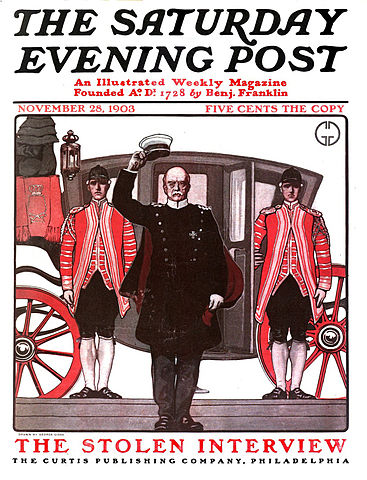
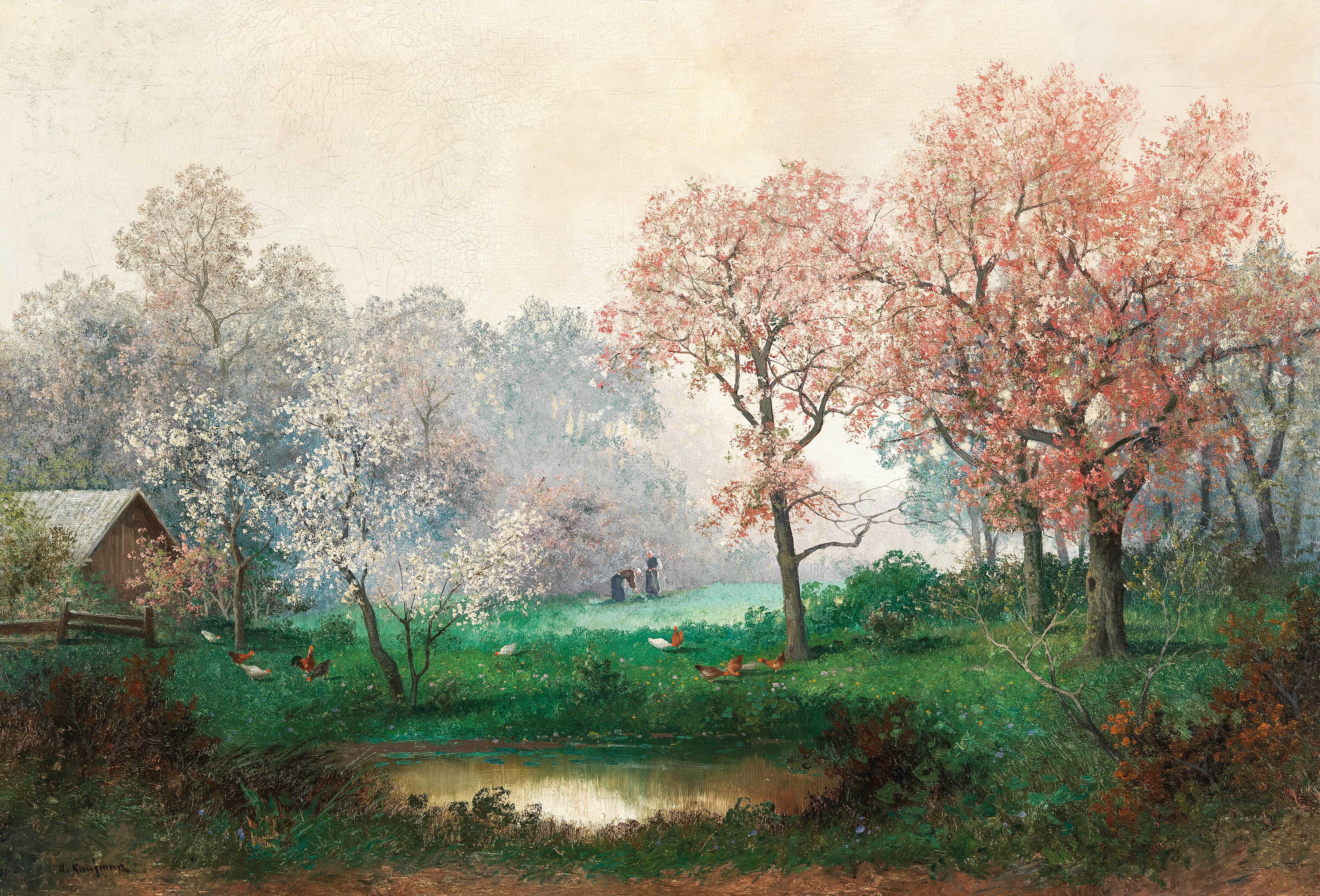 Artist: Adolf Kaufmann (1848–1916)
 But when it comes to having a website, don’t sweat it. WordPress and Blogger (Google’s platform) offer free blogs and theme templates. You can have a nice-looking website, with only a small amount of effort and a little self-education.
 A blog post doesn’t have to be long. Think of it as a slightly longer tweet or Facebook post. Just write a paragraph or two about what you are interested in at that moment. You will have 300 – 500 words written in no time.
 After six months, you’ll have a history of stats to look at. Use that information to gauge what topics did best. Make sure the time the blog goes live is a good slot. You want to post it when people are looking for something short to read, like when riding the bus or train to or from work.
 Who needs a box of corkscrews? Apparently, we do as they go along with our three boxes of wine glasses. Greg’s medication precludes alcohol consumption, and I am a teetotaler. But we proudly serve
 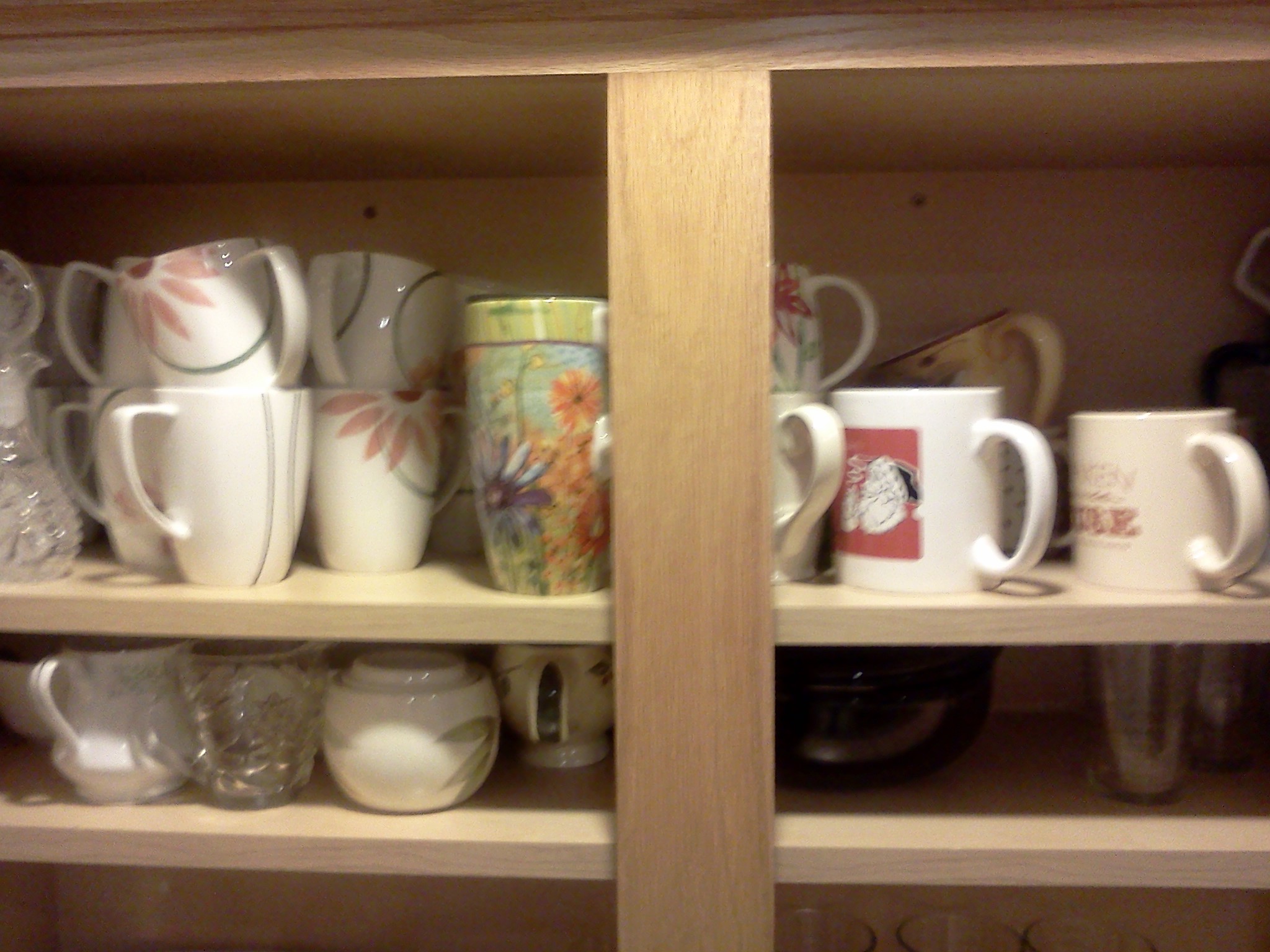 The house seems to have a rhythm. In the morning, a tide of ancient artifacts rolls into the living room from every closet and corner, making me irritable. The afternoon sees boxes of items ebb out to the car, driven away to be donated to charities. By evening the sea of clutter is down to a moderately tidy level, only for the tide of chaos to rise again the next day.
 And over here, we have three PlayStation consoles (1, 2, and 3), an early Wii, a Super Nintendo console, and a cabinet full of the games that go with every platform. I quit playing console games after the PS3, and now I play on the PC with an Xbox controller. It’s simpler and takes up less space.
 Yes, getting our house ready to put on the market is a daunting task, and it sometimes makes me crazy. But something gets done every day, and we’re inching closer to being able to make that final decision.
 If you enjoy reading magazines like
  The narrative essay conveys our experiences and ideas in a form that is easy to digest, so writing this kind of piece requires authors to have some idea of the craft of writing.
 A narrative essay is a story that begins with an experience you once had. You know how that event began and ended. Just like any other form of short fiction, a narrative essay has a plot arc.
 We don’t want to disclose too much information about ourselves or the people we have encountered. An honest narrative essay contains an author’s opinions. Sometimes those sentiments are not glowing accolades. One can lose friends if they aren’t careful.
 Take some time to review what you submitted, keeping those comments in mind. Then form a plan to address those issues with a rewrite.
 When a new writer decides to begin their career by embarking on writing a novel, the magnitude of the undertaking soon becomes apparent.
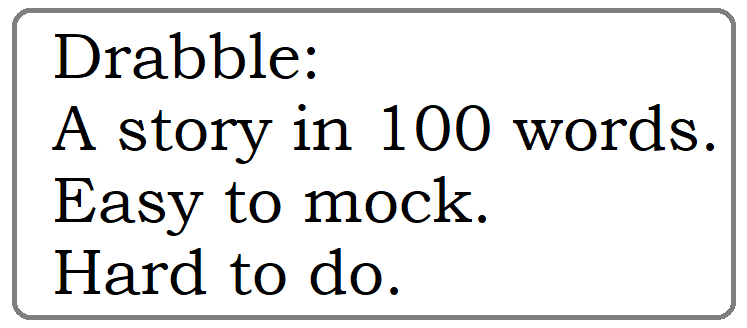
 Writing a drabble takes less time than writing a 3,000-word story or a 70,000-word novel, but all writing is a time commitment. When writing a drabble, you can expect to spend an hour or more getting it to fit within the 100-word constraint.
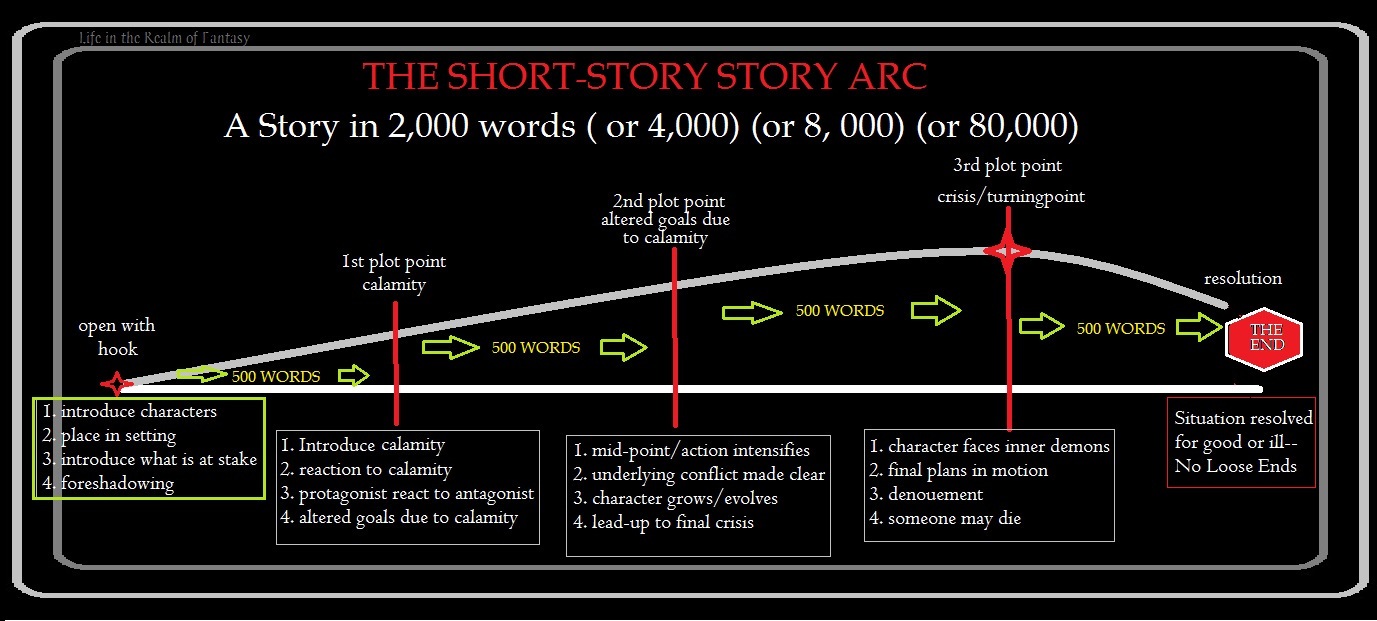
 I use a loose outline to break the arc of every story I write into acts, each with a specific word count. (I’ve included a graphic at the bottom of this post.)
 I mentioned rewards in the title of this post. The completed story is a small gift you give yourself, and the surge of endorphins you experience in that moment of “Yes! I can write after all!” are the reward.