
This week I found myself looking at random notes I had taken when reading. Some were from trade paperbacks and others from cheap eBooks. Only one was a deal breaker. All had one issue or another, but their good points far outweighed the flaw.
 So, one book made the “Oooh! Gross!” list in my notebook, and it happened to be from a traditionally published author. It contained all of the fatal flaws within the first two chapters. I confess I didn’t finish it.
One: Be careful to not write self-indulgent drivel. Go lightly with the praise, adoration, and general lauding of your characters’ accomplishments throughout the book.
Please. We know they are the children of your creative heart, but truthfully, they may be unruly, spoiled little monsters. An author who constantly praises a character and rehashes their accomplishments is asking for readers to put their book down without finishing it.
An author I love occasionally indulges in various side characters repeating how much everyone admires the main character. He rehashes that character’s exploits whenever a new side-character is introduced, which detracts from an otherwise stellar story. I can’t give his work more than a three-star review because of that failing.
 Two: Don’t waste words describing each change of expression and mood. Consider this hot mess of fifty-four words that make no sense: Joan looked at Gary with concern. His voice changed so much in the telling of the story as his emotions came to the surface that it still seemed so raw, as if his son’s death had happened only days ago. In addition, his expressions also changed, and his current one was akin to despair.
It could be cut down to sixteen words that convey the important parts of the sentence, and it won’t feel choppy: Gary’s raw despair concerned Joan, seeming as if his son’s death had happened only days before.
Three: Commas and Conjunctions: Some people don’t know what to do with commas and attempt to do without them altogether. Don’t fall into the snare of the lazy author, the one who doesn’t have the patience to learn a few simple rules of punctuation. Commas are to clauses what traffic signals are to streets: they govern the flow of traffic.
- Commas follow introductory words and clauses. Instead, they took a left turn.
- Commas set off “asides.” Her sister, Sara, brought coffee.
- Commas separate words in lists: We bought apples, oranges, and papayas for the salad.
- Commas join two complete sentences, and once joined, they form one longer sentence. When used too freely, linked clauses can create run-on sentences.
- Commas frequently precede conjunctions, but only when linking complete clauses. When linking a dependent clause to a complete clause, don’t insert a comma. “I intended to go back to Seattle but found myself here instead.”
Once an author knows and understands how sentences are constructed, they can choose to break those rules, IF doing so conveys their idea more clearly.
This is where an author’s “intention” comes into play.
If a client tells me they want a comma in a place where it wouldn’t ordinarily go, I don’t argue. I say this because an author’s voice is as much how they break the rules as it is their word choices and the rhythm of their habitual sentence structure.
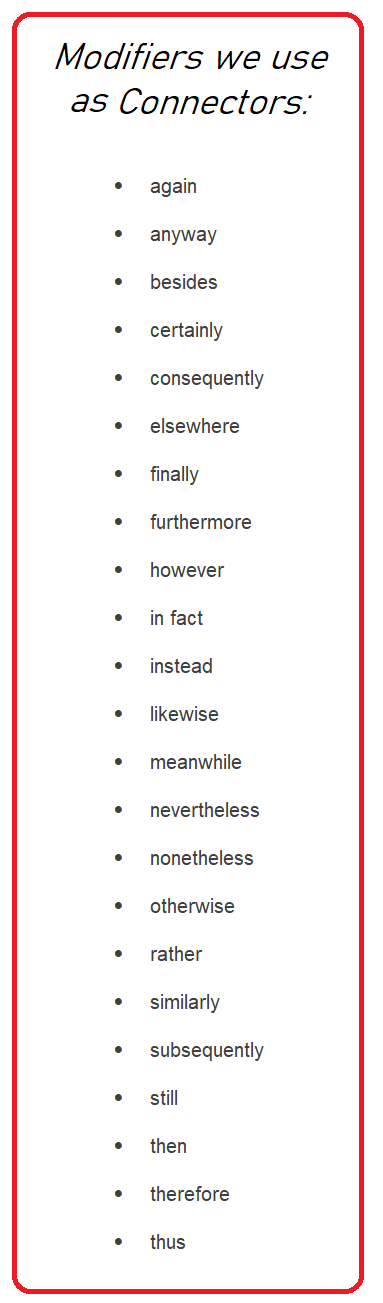 Conjunctions need the same kind of attention as commas. How many sentences have you linked together with the word and in that paragraph? Could brevity strengthen your prose? Conjunctions and commas are the gateway to run-on sentence hell. This is where the revision process sometimes fails. It often takes an unbiased eye to see that a sentence or paragraph doesn’t make sense. However, if you are deliberate in how you use these connectors, your work will be readable.
We all want our work to be readable. However, sometimes the pacing of our narrative demands that we break them. Knowing the mechanics and rules of grammar well enough to break them with style is what sets an author apart from the crowd. Craft your prose, but for the sake of your readers, use grammatical common sense.
Four: Use active phrasing. There were Small colorful fish swimming swam in a large, clear pond.
All the forms of the word “be” must be used carefully. “There were” is a form of the verb “was” and must be used with care.

Five: If you are writing genre fiction, simplicity is sometimes best. Please don’t write something like, “Delicious sounds captivated their eardrums.” Just say the music touches the protagonist’s soul, or something similar. We want to convey the feeling that the music was wonderful, or the smells were mouthwatering, etc., but let’s not get too artsy.
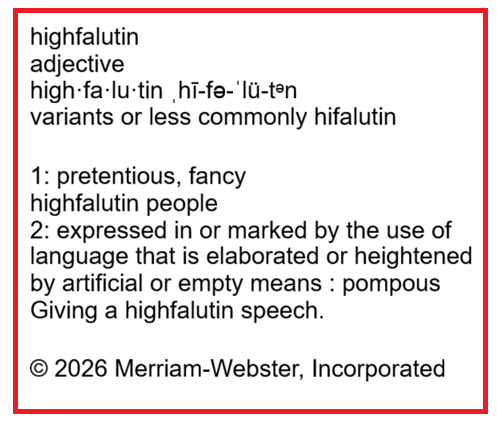 No one wants to write boring prose. However, when we try to get too highfalutin, the prose can become awkward. Odors and sounds are part of the background, the atmosphere of the piece. While they need to be there, we don’t want them to be obtrusive, in-your-face. This is an instance of prose working better when it isn’t fancy.
BUT feel free to go for the gusto if you are writing poetry! Use all those fabulous words you have been saving for a special occasion. Rhyme them if you want or don’t.
It’s your poem and your choice.
So, thanks to the hard work of several authors I have never met, I was able to compile a few thoughts to get your writing week started.
Now, go! Write like the wind!


